Cameroon at an Inflection Point
Regardless of who is announced as the winner in this month’s election, change is coming for Cameroon.
By experts and staff
- Published
 Michelle GavinCFR ExpertRalph Bunche Senior Fellow for Africa Policy Studies
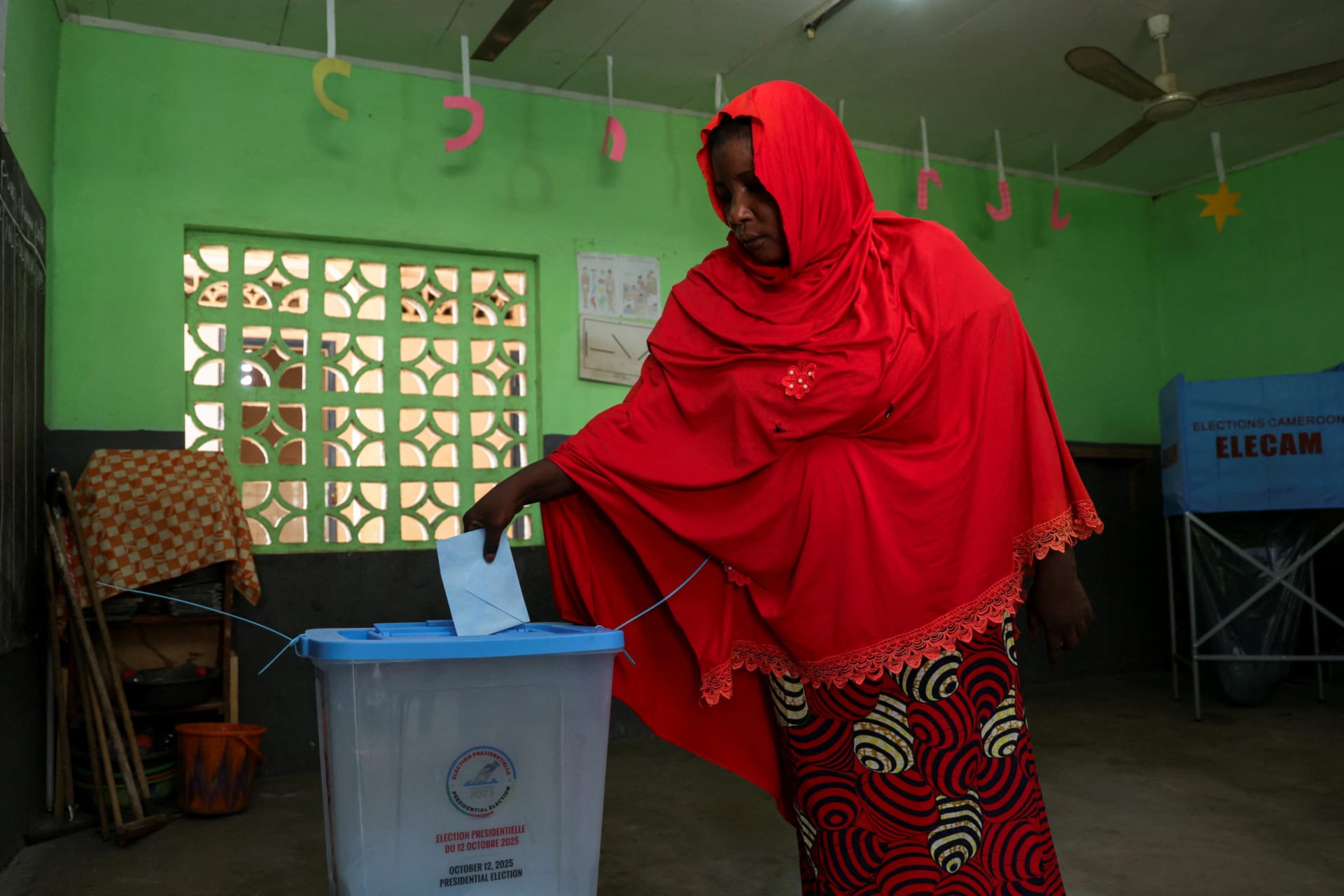
On October 12, the west-central African country of Cameroon held presidential elections, and the official results are expected later this week. Government spokesperson-turned-opposition candidate Issa Tchiroma Bakary claims to be the real winner, defying the state’s ban on any preliminary announcement of results. He has succeeded in bringing some of his supporters to the streets, but if past is prologue, the announced winner will be Paul Biya, who has been president of the country since 1982. Now in his nineties, infirm and rarely seen in the country he purports to govern, he is seeking an eighth term in office with the curious campaign slogan, “Greatness and Hope.” During his long tenure, the population of Cameroon has more than tripled, and the median age is now 18, indicating that the country’s population, like many in Africa, continues to be dominated by young people. Polling shows that over 75% of citizens—the vast majority of whom have never known a different head of state—believe their country is going in the wrong direction. Can more of the same governance possibly be what citizens hope for?
Cameroon is often called “Africa in miniature” because of its jaw-dropping linguistic, ethnic, and geographical diversity. But its many paradoxes also reflect broader trends throughout the region. Its voters are overwhelmingly young but its political class is geriatric. Political consistency is conflated with stability, even as violent extremism has taken hold in the north and armed separatism in the west. Citizens are better educated than their parents but have fewer dignified job prospects. Elections occur, but constraints on political activity and speech undermine any democratic sense of a country guided by the will of the voters. Throughout Africa and beyond, the weight of these contradictions feels increasingly unsustainable. In country after country, Africans are signaling a voracious appetite for political change. Something has got to give.
For Cameroon, the tipping point will likely come sooner rather than later. Even if this election proceeds much like the last, Biya cannot govern forever. A change decided at the ballot box would be less disruptive than a jump ball moment, when the president abruptly leaves the stage and would-be successors scramble to seize power. Opportunists in fatigues could launch yet another coup d’etat, a possibility so widely considered in online discourse in 2023 that the government had to warn citizens that such chatter could lead to arrest. External actors interested in enlarging their sphere of influence in a country rich in resources with an Atlantic coastline could rush to provide protection for political elites, as Russia has in the Central African Republic, Mali, and elsewhere, or offer up new technologies to surveil and repress citizens, as China has done in Ethiopia, Uganda, and Zambia. Or, young people could take to the streets, as they have throughout the region, from Togo to Kenya to Madagascar, questioning the rules of the political game and demanding change, with varying degrees of success.
Against this backdrop of uncertainty and eroding political stasis, the Trump administration’s resolve not to comment on the integrity of elections abroad in order to “respect national sovereignty” seems like a particularly ill-timed choice. Tchiroma’s claims may not be valid, but the irregularities observed by civil society organizations certainly give citizens reasons to doubt that the process was fair. Alignment with the status quo may have been a good bet in the past, but it looks awfully risky today. By no means are young Africans clamoring for self-righteous lectures from Americans on the finer points of governance, but they reject blind support for authoritarians in the name of stability, elite deal-making, and convenience. They absorb the latest news from neighboring states, and from further afield in Bangladesh and Nepal, where popular uprisings have led to change. The vitriol directed at France throughout the continent because of its history of support for corrupt and authoritarian leaders is an object lesson in how not to position the United States for the future.
Change is coming to the world’s youngest and fastest-growing region. Paying attention to the aspirations and frustrations of young Africans will be a far more practical strategy for building future partnerships than relying on the imagined greatness and dashed hope represented by the past.