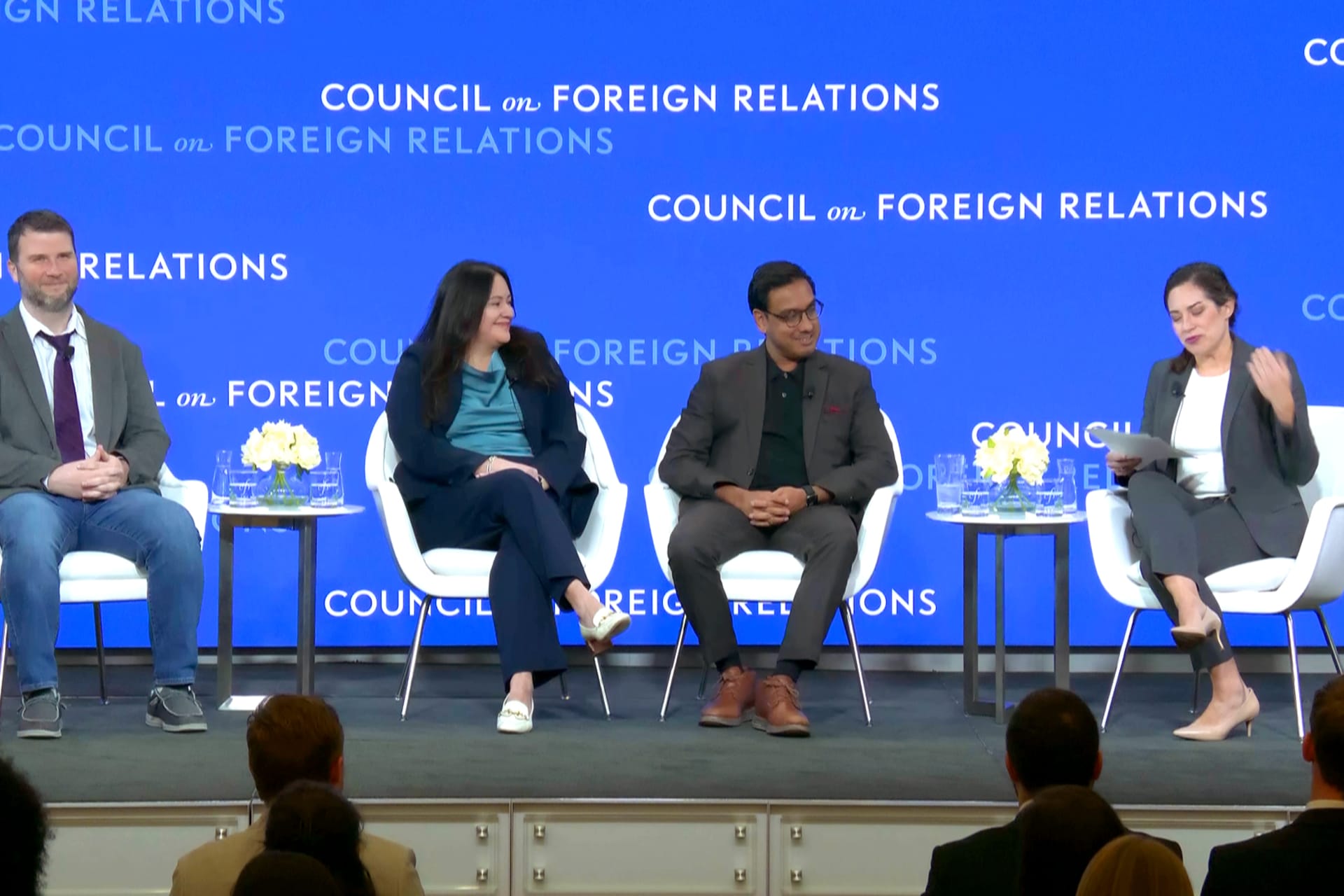
CFR Fellows’ Book Launch Series: The Age of Change: How Urban Youth are Transforming African Politics
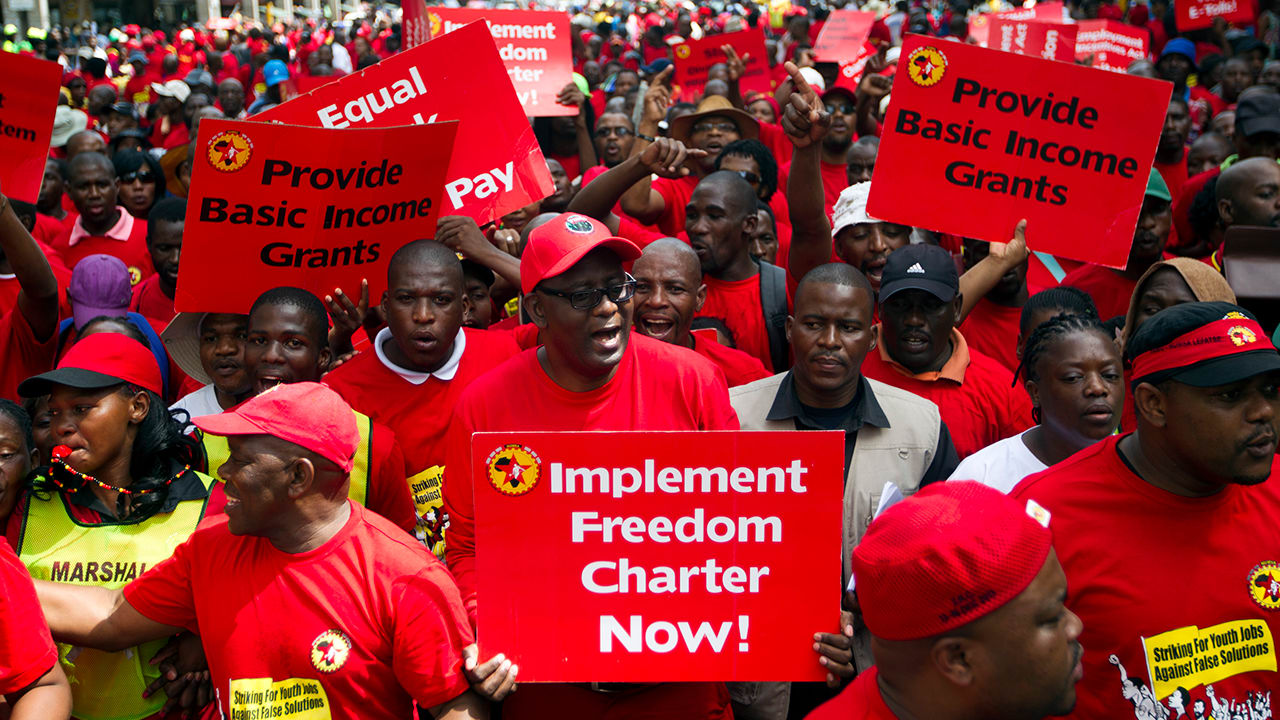
Event date
Speaker
- Michelle GavinCFR ExpertAuthor, The Age of Change; Ralph Bunche Senior Fellow for Africa Policy Studies, Council on Foreign Relations
Presider
- Shannon K. O'NeilCFR ExpertSenior Vice President, Director of Studies, and Maurice R. Greenberg Chair, Council on Foreign Relations
In The Age of Change: How Urban Youth are Transforming African Politics, Michelle Gavin explains how demographic trends and unsatisfying political narratives are converging to trigger new volatility in African politics, and how that volatility informs African countries’ engagement with the rest of the world. It is written for a reader interested in the geopolitical shifts driving global events, not just experts in African affairs. Tapping into the irreverent humor and insight of African political discourse on social media, the book helps readers jettison anachronistic ideas about African societies, understand how specific histories inform individual countries’ trajectories, and recognize that a regional search for new political models is underway.
The CFR Fellows’ Book Launch series highlights new books by CFR fellows.
O’NEIL: All right. Well, welcome. Good evening, everyone. I’m Shannon O’Neil. I’m the Maurice R. Greenberg chair and the director of studies here at the Council on Foreign Relations.
And it is my great pleasure to preside over this meeting with Michelle Gavin. And we were just talking back in the Dillon Room, and I met Michelle not quite twenty years ago, but I met Michelle when I had first started here, and she was an international affairs fellow. She had stepped away from her role in the Senate and working there, and was looking at lots of issues.
She then went on and, you know, went into the NSC, then went to be ambassador to Botswana. She did all kinds of great things. And then we were lucky enough to kind of lure her back after she’d had a taste of CFR as an international affairs fellow, back as a senior fellow here. And because of all of that, we’ve had the pleasure today to celebrate the launch of her book. So it is The Age of Change: How Urban Youth are Transforming African Politics, and that’s what we’ll be discussing tonight.
There’s lots of food, drink, and people here in the room. We have nearly 200 people as well online, so they will be asking questions. But I get to ask the first set of questions for this first part, and then I’ll open it up to all of you.
So you know, let me start off asking a question about how you start off the book. And so when you read this book, you will see that she starts off with a personal story and reflection, and she talks about how in the 1990s she was a college student, and she went to go live in and study and do some research in Cameroon. And at the time, Paul Biya was the president.
Now today, decades later, and since then, as we just heard, Michelle has had an illustrious career. She has a family. She has a daughter who’s applying to college. Lots of things have happened, and indeed, Paul Biya is still the president of Cameroon.
And throughout the book, you show that Cameroon is not an outlier, that this is something that you see again and again in Africa. You see the same people, the same presidents, or you see the same families, or you see the same political parties for years and years, for decades and decades. So let’s start looking back a little bit. Why is it that you see so much political stasis in Africa, which I don’t think you see in any other part of the world?
GAVIN: Well, I think part of it has to do with how very, very young most African countries are, and some of these kind of founding narratives about why someone is entitled to govern, which aren’t always sort of based in a will of the people argument but more about having, you know, the—in southern Africa having delivered liberation, for example, or in Uganda, having delivered a country from a period of tremendous political violence and turmoil in the Amin and Obote years. So I think it’s partly that.
I think it also has something to do with the way the wave of democratization in the early ’90s, or the end of the Cold War, swept across Africa, and there was a sort of extremely superficial, in a lot of contexts, adoption of some democratic practiced but maintaining a great deal of control, and so you end up with democratic authoritarianism that ensures elite survival and persistence despite, you know, holding regular elections.
So I think it’s a set of historical factors that combined and then—and this is a great time for my forever caveat—Africa is never doing all one thing, right? This is an incredibly vast continent, lots of different political histories and political economies. So I’m not suggesting that it’s always the same story, but there are these throughlines that I talk about in the book that do apply in a lot of different contexts and cases. So I think there’s a set of reasons, including the fact that at the start of independence, a lot of these were primarily rural societies, which just lends itself to a different political paradigm. But all of that is changing.
O’NEIL: So let’s talk about that, tight? You’ve had so much stasis, and you think now the next thirty years isn’t going to look like the last thirty years, and maybe the next three years is not going to look like the last thirty years. So talk a little bit about why all of a sudden you’re expecting this dynamism or volatility.
GAVIN: Yeah, absolutely. So the big idea of this book is that there are these four factors, really, that are converging on the continent in these wildly different contexts and cultures. You have this incredible demographic explosion, right? And it really is singular. I cannot over stress how what’s happening demographically in Africa is not like what happened in Asia, and it’s not like what happened in Latin America, that the size of the youth population is dramatically larger. So you have these very youthful demographics. You have very rapid urbanization. So by 2035 most Africans will live in urban settings.
You have access to communication and digitization that’s making political conversation and comparison a lot easier. And circling back to that earlier point, you have a sort of rapidly approaching, or having recently passed, expiration date on a lot of big political narratives as countries mature. And all of those factors create this demand, an insatiable demand for governance that can meet the moment.
So you have all of these young people. They’re by and large better educated than their parents were. But where are the jobs? African economic growth has not been accompanied by job creation at anything like a parallel rate. So you have a desperate need for jobs in these rapidly growing cities, and they will continue to grow, even if rural to urban migration stopped right now, just the natural rate of growth in the cities. You have these cities without adequate affordable housing, sanitation, transportation, healthcare, policing, all the things everybody needs in a city, right?
And when you’re there, you can see very clearly the socioeconomic inequalities that exist in your society. It’s much easier to see that when you’re an urban dweller than if you’re living in a rural area. So it’s also easier to organize. It’s easier to communicate. And so there is a tremendous frustration, desire for change, and that’s really what the book is trying to highlight.
So I think that manifests itself in all kinds of different ways. There isn’t going to be one story, but a pretty reliable throughline today and going forward is going to be about populations demanding change, because what’s being tried in all kinds of different contexts is not delivering.
O’NEIL: So one thing when I read this book that—is that not only do you have these big theses, right, but you are a great storyteller, and you tell the story of many countries and the thread in there. And so I wonder if you could just elaborate one of the stories, you know, how demographics and urbanization and sort of technologies and social media and the sort of, you know, waning of the old narrative that’s been there a little too long, little too long in the tooth, perhaps, how does that come together in maybe one of these cases?
GAVIN: Sure. So let’s take Kenya, because people are probably familiar with the headlines from the Gen Z protests that we saw two summers ago and this most recent summer.
So Kenya is rapidly urbanizing. It’s not just Nairobi, and that’s an important point. The urbanization is not just about the mega cities, right? It’s the secondary cities as well. It’s extremely youthful.
But for a while, there was a sort of narrative about young people in Kenya, driven by the fact that they had extremely low voter turnout numbers in the last election that said, oh, they’re apathetic. Kenyan youth aren’t interested in politics.
Well, that that was pretty clearly a misinterpretation of the situation, and that I think we saw those low voter turnout numbers because of this sense that the story about Kenyan politics was no longer resonating for a lot of young people.
So Kenya has seen lots of transfers of power of different political formations, but it’s really the same cast of characters that keep being on the ballot. It’s a set of political elites who are known quantities and who increasingly are associated with a popular critique around corruption and an absence of accountability.
So people didn’t participate in an election that they didn’t think meant anything. And there was a celebrated essay in Kenya, “Elections About Nothing,” that John Githongo wrote in the Elephant. And it felt like—and this is not an argument unfamiliar to lots of Americans, right? It felt like it’s all the same. Whatever happens, it’s going to be political elites serving themselves.
But when you had President Ruto elected, and then he found—and he campaigned trying to get that youth vote, right? He campaigned with a message to the hustler nation, young people out there hustling, trying to make a go of it, largely in the informal economy. He was going to deliver for them. This is a very, very tall order when you have such limited fiscal space. The debt crisis in Kenya and in many other countries means that you can listen to the electorate and know what they want, but once you get into power, it’s very, very difficult to deliver any kind of stimulus or job creation.
In fact, the pressure that Ruto was feeling was to raise, generate more tax revenue to satisfy the IMF so that they could get out of fiscal peril, so the taxes keep going up and corruption is not being addressed, and those so-called apathetic young people use technology to organize what they called, you know, a leaderless, tribeless movement of resistance. The first was about resisting some new taxes in a finance bill, but very quickly it grew to be something bigger. It is about resisting the continued dominance of the political elite, resisting police brutality, resisting an unaccountable government that continues to enrich itself while most Kenyans struggle.
O’NEIL: Let me ask you, I mean, some of the things you’re talking about and you just referenced, you know, are happening elsewhere, right? People feel like their political parties aren’t, you know, thinking about their needs, or they’re just all the same. You know, I see this in Latin America. You know, outsiders come in and promise the world and are sort of unable to deliver. So is this sort of part of a global trend, or what aspects are kind of distinctly to you African versus a general sort of, you know, young people are unhappy with the political system and they have access to social media?
GAVIN: Right, no, fair enough, fair enough. So this is why the singular nature of the demographic moment matters, right? Because you’re right.
O’NEIL: Maybe give us some real numbers on that.
GAVIN: Yeah, absolutely.
O’NEIL: This is why the reading glasses are on, because I want to get it right for you.
Okay, so when we think about youth being really powerful and consequential on the political scene, right, I think for Americans, the reference point is 1968 right? So in 1968 Americans age fifteen to twenty-four—so not all of voting age yet, but definitely politically aware—age fifteen to twenty-four comprised about 23 percent of the adult population. So we’re leaving out children, 23 percent.
What about the Arab Spring, right? In Egypt in 2011 the fifteen to twenty-fours were less than a third of the adult population, OK? In at least a dozen African states, that cohort is 60 percent or more, in many cases over 70 percent. It is not the same thing.
There’s long been this desire to take the East Asian sort of economic miracle and say, oh, this is fantastic. There’s a demographic dividend to be derived here. There’s all this booming labor force.
The demographic dividend comes when all those people, young people, get jobs, right, and development sort of proceeds culturally. Typically, birth rates fall, and the population kind of stabilizes, and everybody is wealthier and better off.
It’s not what we’re seeing right now. And the job creation imperative is not like one any other region has ever faced. We’re seeing this desperate need for jobs at the dawn of the AI revolution, right? We’re all worried about where our jobs are going to come from. It is a really difficult dilemma, made more difficult by a bunch of structural inequalities in the international system that have left African states, you know, struggling with debt burdens, with unreasonable, in my view, sometimes assumptions around risk, difficulty with financing. So it’s a really hard problem to solve, and that means that grievance base isn’t going anywhere.
O’NEIL: Well, let me ask you a bit about sort of, you know, the sort of views of Africa, as you just started, you know, the sort of worry here, the potential, right? So one of the narratives is, right, this is the demographic dividend. This is the moment. And you know, in your book you call it sort of the Africa rising narrative, right? This is the time of, you know, young people are entrepreneurial. They’ll come in. It’ll be an engine for growth and the like.
And then you talk about sort of the opposite view of sort of, you know, this is a ticking time bomb. You know, it’s going to lead to instability, maybe violence, maybe mass migration, which, obviously, people in other places worry about.
So as you think about—and obviously, these are two ends of a spectrum. There’s a lot of in the middle. But as you look at these many, many countries, you know, where do you fall in that spectrum? Maybe it depends on where you’re looking.
GAVIN: Absolutely.
O’NEIL: But give me a little sense of how do you see those narratives that have sort of picked up here in the U.S. and in other places.
GAVIN: Well, one reason for writing this book was to try to do my part to combat these kind of sweeping generalizations, right, where young Africans are either magically going to transform the economy through entrepreneurship, you know, everybody’s going to start their own business. This is ridiculous. There are wonderful African entrepreneurs, right? But you can’t meet this job creation imperative with entrepreneurship training.
But equally, this idea that young Africans are a huge threat, I try in the book—and I think the best part of the book is the voices of young Africans themselves taken from social media conversations, right, where you can hear both their frustration, their humor, their aspiration. It’s impossible, I think, to read through that and have some kind of undifferentiated idea of threatening mobs.
O’NEIL: Tell us a little bit of some of those conversations, because they’re pretty funny, or paraphrase.
GAVIN: So let’s just go back to one of my absolute favorite comments when we talked about Kenya and young people’s frustration with President Ruto when a social media commentator quite memorably called President Ruto Pandemic-African in the streets, but Bretton Woods in the sheets. It’s really—it’s funny, it’s meaningful. There’s so much to learn in it. I think, if nothing else, it can get us past this kind of otherizing, where we imagine that African politics are about something unknowable, somehow, or impossible to understand.
You know, they’re using the same memes, but adopting them for their conversations. There’s a section in the book that there was a discourse on social media about girl math and boy math. It was largely a discourse around gender roles and consumerism here. But there, people said, well, what would be Nigerian math? And it becomes a huge conversation about corruption in government, right?
So we’re all—it’s not so distant and so other, and it’s endlessly interesting. And it’s not all driving toward mass migration or some kind of explosion of violence. If we look at what happened in Senegal, for example, in their last elections, where you did have a huge grievance base, young people need jobs. Desperate Senegalese are dying every day trying to get to Europe and on very unsafe nautical routes.
And young people were angry at government around job creation. They were very angry about corruption. They were angry about repression and the way the state had been trying to kind of manipulate the political situation so that opposition candidates who presented a real threat were ineligible to run. And they mobilized in huge numbers, in some cases, at risk to their lives, and they kind of forced the government to back down and to allow for an election that was a legitimate expression of the will of the people.
It’s kind of incredible, right? Senegal has got all this pressure on it from the Sahelian states that are ruled by military juntas, from the Russian-backed bots that are trying to suggest African dignity is found only in the military seizure of power. And these young people resist all of that. Are they angry at France? Absolutely. Do they believe that their democracy is a Western product? Absolutely not, and they’re willing to defend it.
So this is incredibly, I think, moving and powerful. But then the question becomes, what is the rest of the world going to do to help this new government in Senegal succeed? Because they can’t magically create the jobs that they need. They’re dealing with the debt burden from the previous administration. And so, you know, I am a creature of my context, right? I’ve been working in U.S.-Africa policy most of my life, and it raises a set of questions about what external partners really need to be thinking about and focused on that I think are even more important now in the wake of the kind of collapse of the old development paradigm.
O’NEIL: Well, let’s turn to that, right? We can come back a bit within Africa, but what can the United States do, or others in the region? Like what has been productive, what has not been productive, as you look at it?
GAVIN: So I think often in government, we misunderstand—we mistake our own obsessions for the obsessions of Africans, right? So the great power rivalry obsession is not—it’s real in the sense that there are major powers competing for influence, both overtly and covertly, all over the continent. But the idea that that is what’s going to determine the sort of trajectory of these African states, I think, is absurd. What’s going to determine the trajectory is going to be these youthful urban populations that are trying to figure out how to create a dignified future for themselves and are keenly aware of what’s happening in the rest of the world. If you want some more funny social media tidbits you should have seen Cameroonians’ remarks on Joe Biden deciding not to run for re-election.
And so I think, you know, there’s the anachronistic ideas, the othering, and then there’s something that has frustrated me for a very long time, where, you know, as a U.S. ambassador, you would go out to talk to people and tell them how important their future was and how much the U.S. wanted to be a partner and wasn’t it great that we’re providing so much public health assistance?
And look, I think that assistance is something every American can be proud of, the PEPFAR initiative, the lives—25 million lives saved, right? That’s not the kind of partnership that people are asking. It doesn’t mean it’s not valuable. That doesn’t mean it doesn’t matter. But that doesn’t resonate for a young, educated, ambitious, thoughtful, patriotic young person who wants to build a life of meaning and make their contribution.
So we spent a lot of time, I think, with our development lens failing to see how important jobs are, and think really thinking critically about what you need to generate jobs, which isn’t just fiscal space, but it’s access to power, right? And it’s transportation so that workers could actually get from wherever they lived—all of these pieces that we’ve not been interested in as a government for quite some time.
O’NEIL: So how does—I mean, let’s say we have an opportunity in that the, you know, traditional development infrastructure of the United States is not any more the traditional infrastructure development. What would you do? How would you design something that would be useful and appeal to that African who’s ambitious and educated and has different interests and has different thoughts about it?
GAVIN: Yeah.
O’NEIL: How do you create jobs? I guess that’d be the question.
GAVIN: If I had the answer to that I, as much as I love this august institution, I think I’d be somewhere more lucrative.
I don’t know how you create all those jobs. I haven’t met anybody who does. I haven’t met a labor economist who knows. I think there are discrete places, countries, and industries where I can see a path forward, and then there are places where I’m just not sure how you would do it.
But I do know what we should not do, which is sort of imagine that the future is going to look like the past, invest a lot in elite relationships—and this is, I think, very much a path that we’re headed down right now with a vision of transactionalism that’s about meeting with the powerful and doing a deal.
I’m just not sure. I don’t think we’re going to see the kind of staying power at the top that we’ve seen in the past. And elite deals may not have a very long shelf life, and they tend to come with a lot of suspicions around corruption and self-enrichment. And this is where I think we are. We had, for all the frustrations with the West—and there are many; we haven’t even gotten into to that, how easy it is to see the dominant power on the global scene for these last few decades as a malign force that intentionally created this scenario. I mean, there are actors, you know, very much, trying to get people to seize that narrative.
But I think that what the U.S. had that gave us some advantage was a reputation for not engaging in corruption. So the Foreign Corrupt Practices Act that had been so frustrating to so many really did have resonance overseas. And when you look at polling in African societies, which means you’re looking at polling of young people, right, because they are the dominant portion of the population—after jobs, fighting corruption tends to be the top priority.
So the more we say, eh, well, let’s just do some deals, it’s not up to us to decide, you know, if bribes are OK or not, or to be tracking down illicit financial flows. The more we take one thing that made the United States different from some of its competitors and sort of toss it aside, very much to our disadvantage.
O’NEIL: I’m going to ask one more question before I open it up to members, so please be ready with your question here or online.
And let me take you back and ask you a bit about how you see the political future of Africa, right? You see one that is much less stability, right, and volatility.
GAVIN: Yes.
O’NEIL: But you know, to put it short, is it going to be a democratic future? And so as you think about the forms of government that come, you know, is it more democracy? Is it more, you know, coups? Is it more different authoritarians sort of taking the mantle? And you know, maybe it differs. How do you think about it? Are there certain places that you feel much more optimistic about, or others that you you’re a little bit worried about?
GAVIN: There are—yes. The answer is yes. I mean, I think we’re going to see a lot of experiments, right, as people are trying to find something that works. I think that—and the polling shows, so it’s not just about what I think. The polling shows that people are extremely frustrated with democracy that doesn’t seem to actually equate to accountability. And you see that even in pretty well-established democratic states.
But I don’t think democracy is dead on the continent, and certainly the Senegalese people would argue it’s not. But this relationship between elections and democratic practice and believing that there is actual connective tissue between the governed and the governing, that’s very much up for grabs in a lot of African societies, and interestingly, in states that have had experience with military governance earlier in their history, what you find is that the younger cohort of the population is more willing to consider a return to military rule than their elders who actually experienced it, right? Because they’re casting about looking for something that might work.
So that’s another reason I wrote this book. It’s a really politically interesting time.
And I think we’ll see some experiments that might give us some great new best practices in how governance can perform better for urban-dominated societies. You know, it’s not as if there aren’t going to be success stories. I think there absolutely will be in that that we should be paying attention.
But this grievance base, right? In some cases, this group seeking change will be met with repression, which doesn’t make the grievance go away, but can be quite ugly. And we’re absolutely seeing this, not just in individual countries, but we’re increasingly seeing in some regions governments working together to try to silence voices that are critical of the way government is run, of particularly policing, because that’s the place where urban dwellers interact with the state most frequently. So that’s going to be part of this struggle and part of what’s happening on the continent. And instead of saying, oh, you know, this country is closer to China than they are to Europe and the U.S., and that’s a problem we should be thinking about is this, is this demand for change being met by repression, which only makes the grievance stronger, right, and more extreme, or is there some kind of good faith effort, right, to hear this demand signal and respond?
O’NEIL: Well, let me open it up to questions from members. Remember, this meeting is on the record.
And let me start right here in the front. And please wait for the microphone, introduce yourself, and ask your question.
Q: Thank you very much. My name is Joanna Weschler.
And I agree with you our moderator, Shannon, that Michelle is a great storyteller, and I wanted to ask you, what is your story about Uganda and Museveni? Because Museveni has been in power longer than most of the electorate has been alive.
GAVIN: Exactly.
Q: And in 2021 there was this incredible mobilization of young people, many of whom paid with their lives for participating in the mobilization and then elections, people who conducted independent monitoring of the electoral places were kidnapped. Some of them never showed up again. So what is the story? I would like you to have an optimistic, uplifting story for the next election, which is around the corner.
GAVIN: I am endlessly impressed with the resilience of Ugandans, right, in the face of the kind of political violence that you’re talking about. And Uganda is another one of those cases that’s particularly rich in humorous and pointed online discussion of what’s happening politically. In fact, they did something really clever around corruption, which was this sort of online exhibition project where first it was the Ugandan pothole exhibition, and people would just post photos— right?—of roads in poor repair and make a comment about where did the money go that was supposed to be allocated for this.
But then it became healthcare. Then it became policing, right? Really clever, increasingly sophisticated, and organized expressions of what they see as what’s going wrong with their government. And Uganda, I think, is also a great example of one of these political narratives past the sell by date, because you’re quite right. President Museveni in power since the mid-’80s, right? If you look at his campaign materials, they’re not so much responding to the demands of the population as they are reminding everybody just how scary it was before President Museveni and the NRM came to power. In fact, he celebrated his birthday, one of his recent birthdays, at the site of a major battle from the Civil War and sliced into this giant cake decorated with camouflage frosting. And you know those edible photos of soldiers with guns on the ground, you know the message around he’s not the head of state, right? He’s the soldier in chief who’s going to keep you safe. This just does not resonate for young people have no experience of the Amin and Obote years and are dealing with crime in the cities and unfair policing.
And so I don’t think it’s going away, the movement around the opposition, no matter how many opposition leaders they throw in jail or shoot. What’s very worrying to me right now about Uganda is this collaboration we’re seeing with leadership in Tanzania and Uganda and in Kenya to work together to suppress each other’s activists. But that is being countered by young people working together to protect each other, to share tactics and techniques around resistance. And so I’m worried about the U.S.-Ugandan relationship, particularly with this latest agreement to accept deportees, right, where it’s clear where our priorities lie, but I would not count out the Ugandan people who are looking for something different.
O’NEIL: Right there in the back please.
Q: Hi. Phillip Ellison.
Ambassador, I’m wondering what you could say about those cases where the voter participation has been minimal, or at least low, about organized professional elites or sub elites such as the Muslim Brotherhood in various countries, and what impact they may have as a political force in at least temporarily moving elections, and God knows what happens after an election and who the elites who actually govern become. But I think there’s a role for them, and I’m wondering, I’m sure they think so too.
GAVIN: Yeah, no, I think you’re right. There is this incredible danger, right, in the majority of the population kind of opting out of a system that they see as meaningless, as sort of theater designed to legitimize forever political class, and that that does create opportunities for elite networks of different flavors to have outsized influence.
I sympathize in some ways, though, with these young people who are who are unwilling to participate in a charade, right? I mean, candidly, if I were a Cameroonian voter, I’m not so sure that I’d be headed for the polls, because I would be hard pressed to believe it would matter. So I think that’s a really important point and argument and something that maybe should be discussed more widely. You know, there’s obviously been a long debate about tactics around boycotts and the limits of boycott strategies, which made, perhaps, more sense when there was an international seal of approval someone was looking for from an election. And there are a lot of problems with that formula and who gets to approve what and what their interests are. But we find ourselves, I think, in new territory, and it’s going to be young Africans in the context we’re talking about to decide whether elections are the way they believe they can change their system or not.
O’NEIL: Take one question from online please.
OPERATOR: We will take our next question from Pearl Robinson.
Q: It’s great to be here. It’s Pearl Robinson, Tufts University.
I’m looking forward to reading and possibly teaching the book next semester. But listening to you, has the Council on Foreign Relations or have you thought about doing a book tour at African universities around this book, perhaps inviting some local scholars to join you as you go to different places? Because I think, one, it would be—if you’re allowed to do it, it would be an opportunity to broaden the perspectives and get more African perspectives to talk about this.
And I’ve taught at Makerere University and Dar es Salaam. When people would come for these talks, it’s covered in the local press, lots of people come around, and then there’s a narrative that continues for months after.
GAVIN: Well, I always love traveling to the region, and have been, you know, shouldering my way into conversations with people far younger than I for quite some time. So great idea, Pearl. Thank you.
And I think it’d be interesting too to discuss these ideas, because I’m aware of the lens I’m looking through, right? I’m a middle-aged American who’s been working for the U.S. government for a long time, right? That’s a particular perspective, right?
But I always learn from conversations like that. I will say, though—and I want to give credit to the research assistants and interns who helped me comb through social media who are much savvier than I about how to spoof an Angolan address so you can get the algorithm to feed you a discourse about what’s happening in Luanda, right?—there’s a ton to be learned from this available conversation where you don’t have to worry that someone is responding to you telling you what they think you want them to say, which is so often the case when anyone is being interviewed. And I’m just so grateful for the work that they did. And really, if you like nothing else about the book, I defy you not to enjoy some of these snippets of social media conversation.
O’NEIL: I’m going to come over to this side. Yes.
Q: Also Phillip Ellison. And so—(laughter)—and surprisingly, Pearl Robinson also my professor at Tufts University. So, Phillip Ellison, right. There we go. Phillip Ellison, New York Power Authority, also a lecturer at Tufts University in entrepreneurship and innovation.
My question is at the interplay of political economy and tech and society, so on both sides. If you could speak to, you mentioned institutions are not sufficient for providing the amount of jobs that are needed. But technology is being—is like deployed or penetrated, is there. And so what does it look like in terms of technology’s role in economic opportunity, either in Kenya or another country?
And then on the other side, surveillance. When we think about social media, we think about phones. You know, the Arab Spring, right, was a leaderless movement. Eventually, the technology, the network, you know, led to being able to surveil and stamp out that movement.
GAVIN: Yes.
Q: So I wanted to touch on political economy of job opportunity and surveillance when it comes to technology.
GAVIN: Terrific. So there’s a chapter in the book called the status quo strikes back that gets at some of this attempt to catch up, essentially, to their own population on the technology front and use it, yes, for surveillance, for influence campaigns, and you know, speaks a bit about the external actors that are very much a part of helping with that.
You know, so far, there are only a couple African states where I think at this point this sort of governing elite has the upper hand, and that will probably change over time, but it’s another reason I think this moment is so interesting on the continent.
And as far as, you know, jobs so, yeah, you have—please know, I’m not an Afro pessimist. I’m not claiming that every young African is sort of unemployed, sitting around with nothing to do. It’s not the case. And you have a, you know, very dynamic tech sector, particularly in Kenya, but also in Nigeria and in other places. But it’s not enough. It’s not even close to enough jobs.
And I think there’s some really interesting ideas, for example, in Kenya around carbon storage, around sort of what the green economy could mean for job creation. I think Kenya is in a better position than some other societies, right, to try to figure out how to tackle this huge need and demand.
But it’s very specific. It’s specific to the skill sets of young Kenyans, the nature of the Kenyan economy, right, which has not been extractive, and the even just the geology of Kenya itself. So it’s very much a case by case, you know, a la carte menu. And even the sort of tech optimists I’ve talked to, no one has given me any kind of convincing scenario or kind of across the board you’re going to be able to create enough jobs for people to have the kind of dignified future that that everybody wants.
O’NEIL: Yeah.
Q: Thank you, Shannon.
Michelle, let me ask a question first at the generic level, and then with two windows, particular countries, to look at it through. To what extent have both urbanization and these explosions of social media erased the kind of language and ethnic identities and made people think of themselves as Ghanaians first, or Tanzanians first, or whatever. And to what extent has this really been irrelevant that the younger people feel the same kind of ethnic attachments in a pluralist society as their elders?
And the two cases I wanted to ask you to answer that question with specific focus on would be Ethiopia, which had avoided—say, for six unpleasant years of Mussolini’s ambitions—avoided colonial rule and is entirely indigenous and had its history and remains riven on ethnic grounds with an exploding population, and the other Tanzania, which had been under Julius Nyerere, the left’s ideal of a genuine and loving and selfless leader, leading his country into socialist equality and poverty. And today, how does Tanzania adhere or cohere as a state that transcends the traditional tribal divisions, and whether it be a local or a onetime colonizer’s language?
GAVIN: It’s a great question, something I’ve thought about a lot. I do think that in general, urbanization provides an opportunity and an exposure to others in your society that can help eliminate some of the sort of fear, right, and sense of, oh, it’s an environment of resource scarcity. It’s my team or yours. You start to see that the scarcity is just affecting everyone, and that the team that’s winning is a set of elites of what—you know, that may be of multiple different ethnicities.
But I think, too, that identity for everybody is complicated, right? And everybody is wearing a lot of hats at once. And if you look at—this is not the case you asked me about, but if you look at the recent Nigerian elections and the youthful online enthusiasm for Peter Obi in some big urban centers, it appears that did transcend concerns around region, religion, ethnicity, language, but not enough countrywide for a third-party candidate with no real party infrastructure to succeed.
So I have been wondering, you know, as these urban populations, as you get new generations, right, people less likely to return for important holidays to the village, less likely to be certain they’ll be buried back in the village, will that create a different political salience for these kinds of identities? And you know, Ethiopia is less urban than a lot of other African countries, and in its major urban center in Addis, right, ethnicity has been such a huge part of how urban space is governed and allocated. And you know, the remaking of Addis has been at the expense of very specific communities. And so I think in that instance, it’s only kind of hardened lines and perceptions of a competitive political situation.
And in Tanzania, I think it’s clear that under the surface, different identities remain very, very important in politics, but it’s equally clear that there is increasingly a questioning among Tanzanian young people about whether this is serving.
O’NEIL: Back there please.
Q: Thank you so much. Raymond Gilpin with UNDP.
Let me start by thanking Michelle for a very timely and pertinent book. I look forward to reading it, and I also appreciate the nuanced views on African youth, because, yes, we do have the Musevenis and the Paul Biyas, but we also have Botswana and ministers that are less than thirty years old. So I think when we look at the continent with that diverse lens, it’s helpful and we are able to identify entry points.
I’d like to go back to your point on how do we create jobs. Because I think you put your finger on exactly what we need to start reconnecting the youth within the context of the social contract to a democracy or a form of governance that delivers. And you look at the jobs—and I do agree with you. Entrepreneurship is not going to do it. But what fuels growth in the countries? In some countries, it’s consumerism, but in most it’s trade. And what are your thoughts on what countries like the United States can do to realign the global value chains and open markets? I’m not talking just about things like AGOA, but real trade to ensure that you have growth that creates jobs and also ensures that the fiscal space in African countries expands.
GAVIN: That’s a great question. I want to just note Ray and UNDP’s great work. I spent a fair bit of time in this book slicing and dicing through some of the great data from a major UNDP report around military governance vice democratic governance.
And just to really quickly stay in this cul-de-sac for a second, the great polling data that found, you know, the number one reason for people supporting a military seizure of power, time for a change. Just looking to try something new.
But your question is such a good one. And look, I mean, I think it will be no surprise to people that I think we’re moving in entirely the wrong direction as far as the U.S. being the kind of partner that can help create the kind of prosperity that would give us then new consumers to sell to, right? There’s a version of this story that’s a virtuous circle. It’s not where we’re headed. And I think, you know, the Lobito Corridor project, it’s just one project. But I think that began to get at the right idea of how the U.S. could deploy resources in a way that is really thinking about job creation and the value chain and responding to specific needs. But one project isn’t going to do it. And so if I am an African leader, I am going to take every possible opportunity to discuss what is unfair about the international financial architecture, but also double down on trying to make the African continental free trade area a reality, because in this specific political moment, I just don’t see the U.S. playing the constructive role it might play. I hope at some point again in the future.
O’NEIL: We have a question online.
OPERATOR: We will take our next question from Jonathan Klein.
Q: Hello, it’s Jonathan Klein. For this purpose the hat I’m wearing is I’m the chairman of the board of Jumia, which is Africa’s largest multi-country e-commerce business.
Just to touch on I think the key area which a number of people, including Michelle, have mentioned, and that is the question of jobs, I think a major issue—and I’m keen to hear Michelle’s view—is the debt burden that these countries are struggling under.
When you have an economy the size of Nigeria and 75 percent of the government revenue goes towards interest—Kenya is lower, Egypt about the same—you’re in a situation where it’s going to be very difficult for them to get out of that bind, for want of a better word, leaving aside the fact that there’s a significant amount of economic activity in the informal sector which the government gets no revenue from.
So I’m quite interested in Michelle’s view about the interplay between the long-term interest and debt burden and growing these economies without which we cannot have job creation.
GAVIN: You’re absolutely right, and it’s setting governments up for Mission Impossible. I think Zambia is a great example where you did have this youth-driven, digitally organized movement in the face of significant political repression to elect a long-time opposition leader and try something new in the Zambian government, just shortly after Zambia became the first country to default during COVID.
And so this new leader comes in, finds that there’s even more debt than they had realized. There was secret debt too. And then this painfully attenuated process through the G-20 to try and deal with its debt restructuring, year after year of more talks. And it’s tough, right? It’s herding cats. There’s a lot of blame to go around.
But the upshot is, if you believe that President Hichilema of Zambia had every intention of delivering on his campaign promises, he had almost no capacity to do it.
And if you care about democracy, or if you are afraid of mass migration, or you wonder where the new markets are going to come from, it’s just not in our interest.
And so yes, the debt crisis is a really important piece of the puzzle, but it’s very interesting to see young people, for example, in Kenya, saying, don’t do debt forgiveness without anti-corruption measures. We have had it. We’re just going to end up indebted again and this political class is going to get richer and richer. So these things need to happen together. And it’s a huge mistake to underestimate the sort of political salience of corruption in these societies.
O’NEIL: So we’re reaching the end of our hour. You have heard from Michelle her depth and breadth of knowledge and thinking about Africa. Much of it is in this book, plus lots of other really good anecdotes and snippets and social media posts. And we want to welcome everybody here to celebrate with her at a reception. And she will be signing books. So please get a book. Please have her come sign it, but join me now in thanking her. (Applause.)
(END)
This is an uncorrected transcript.