Media Briefing: Previewing the G7 Summit
Event date
Speakers
 Brad W. SetserCFR ExpertWhitney Shepardson Senior Fellow, Council on Foreign Relations
 Heidi E. Crebo-RedikerCFR ExpertSenior Fellow, Center for Geoeconomic Studies, Council on Foreign Relations; CFR Member
 Rebecca PattersonCFR ExpertSenior Fellow, Council on Foreign Relations; CFR Member
Presider
 Matthias MatthijsCFR ExpertSenior Fellow for Europe, Council on Foreign Relations; CFR Member
CFR experts preview the upcoming Group of Seven (G7) Summit in Évian-les-Bains, France.
CHANG: Thanks for joining us this Friday morning. We will have a media briefing in preparation for the upcoming G-7 summit. I just want to note that the contents of this briefing and Q&A will be on the record and we will post a recording and transcript of this discussion at the conclusion.
This briefing is a part of the Council’s ongoing mission to inform U.S. engagement in the world. You will find analysis and resources posted across our channels, including CFR.org and ForeignAffairs.com. In particular, I want to point you to a couple of resources already available, including an expert brief that Heidi Crebo-Rediker wrote on Macron’s agenda meeting Trump’s at the G-7 summit, and the latest episode of The Spillover podcast with Rebecca Patterson, in which the hosts take on G-7 debates around global imbalances. Rebecca, I hope I got that right.
PATTERSON: You did. And we had guest, Brad Setser, on that podcast episode.
CHANG: That was going to be the surprise.
PATTERSON: Oh, sorry.
CHANG: So, indeed, we have a robust lineup of our Council experts for you today. So, I will turn it over to our moderator, Matthias Matthijs. Thanks very much.
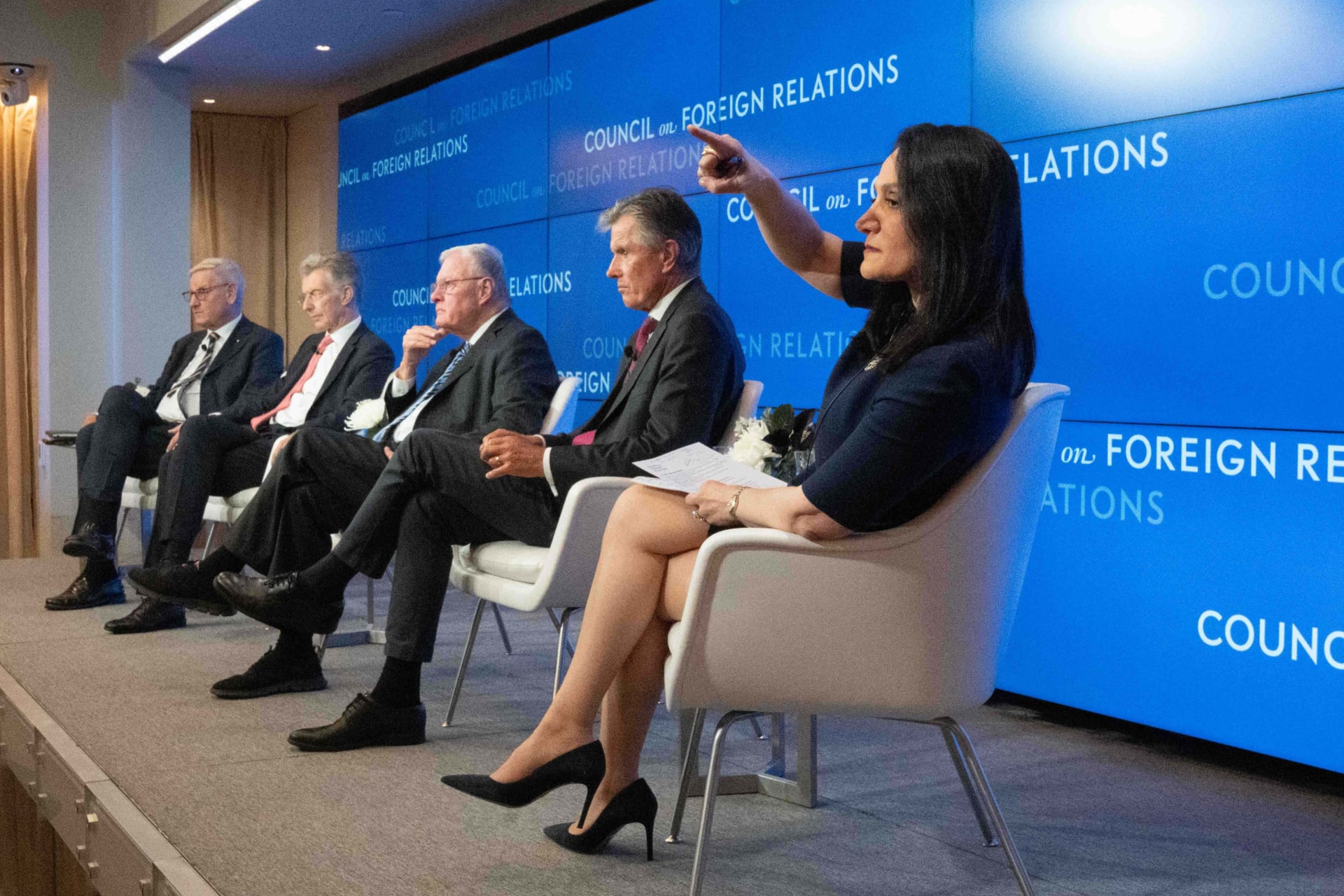
MATTHIJS: Thank you very much, Ben. And also from me, very good morning and welcome to this Council on Foreign Relations media briefing. I’m Matthias Matthijs, senior fellow for Europe here at the Council. And I’m delighted to be joined by three of my colleagues who work broadly in the international economic realm and in geoeconomics at CFR—Heidi Crebo-Rediker, Rebecca Patterson, and Brad Setser.
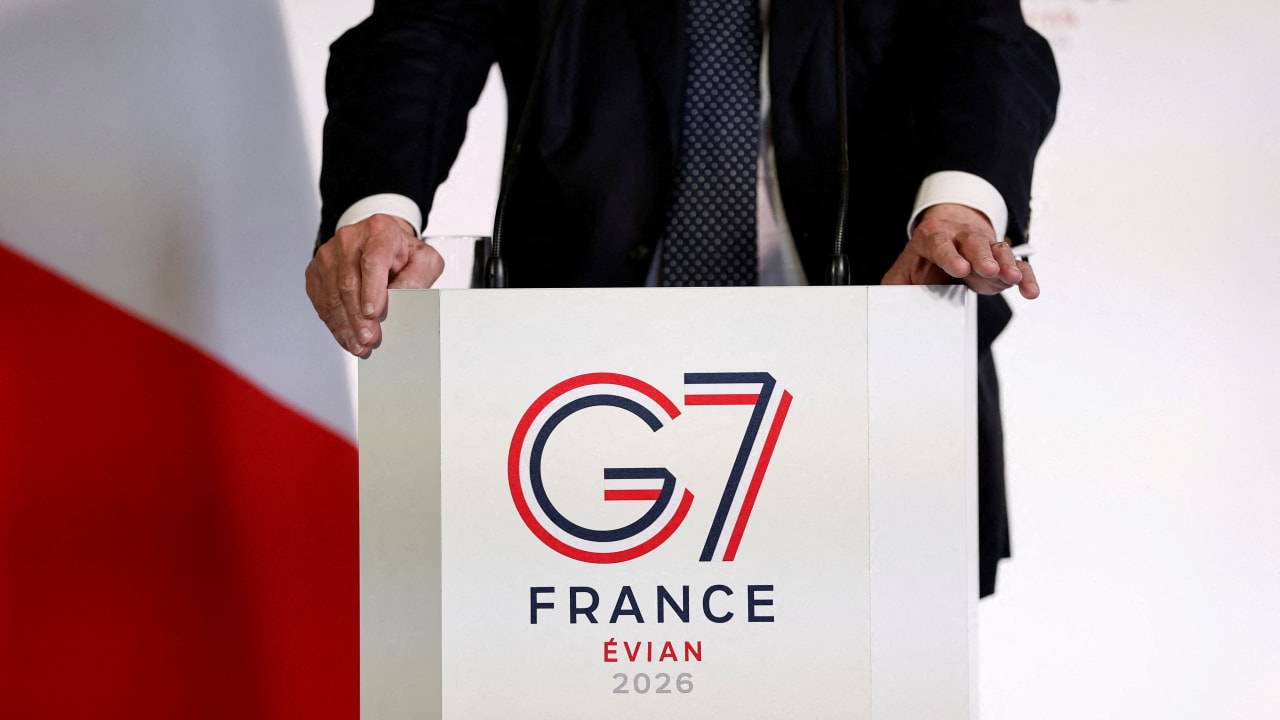
We’re going to preview next week’s G-7 summit, which takes place in Évian in France, from June 15 to 17. And there’s a certain symbolism in this venue. For those of you old enough to remember, Évian last hosted this gathering in 2003, when it was still the G-8, when Jacques Chirac welcomed George W. Bush, just weeks after the Iraq invasion had split the Atlantic alliance, twenty-three years on. Today Emmanuel Macron is hosting again. It’s his second time as host. Last time was in French Basque country in Biarritz, just south of Bordeaux, in 2019. And the alliance management challenge is, if anything, harder today.
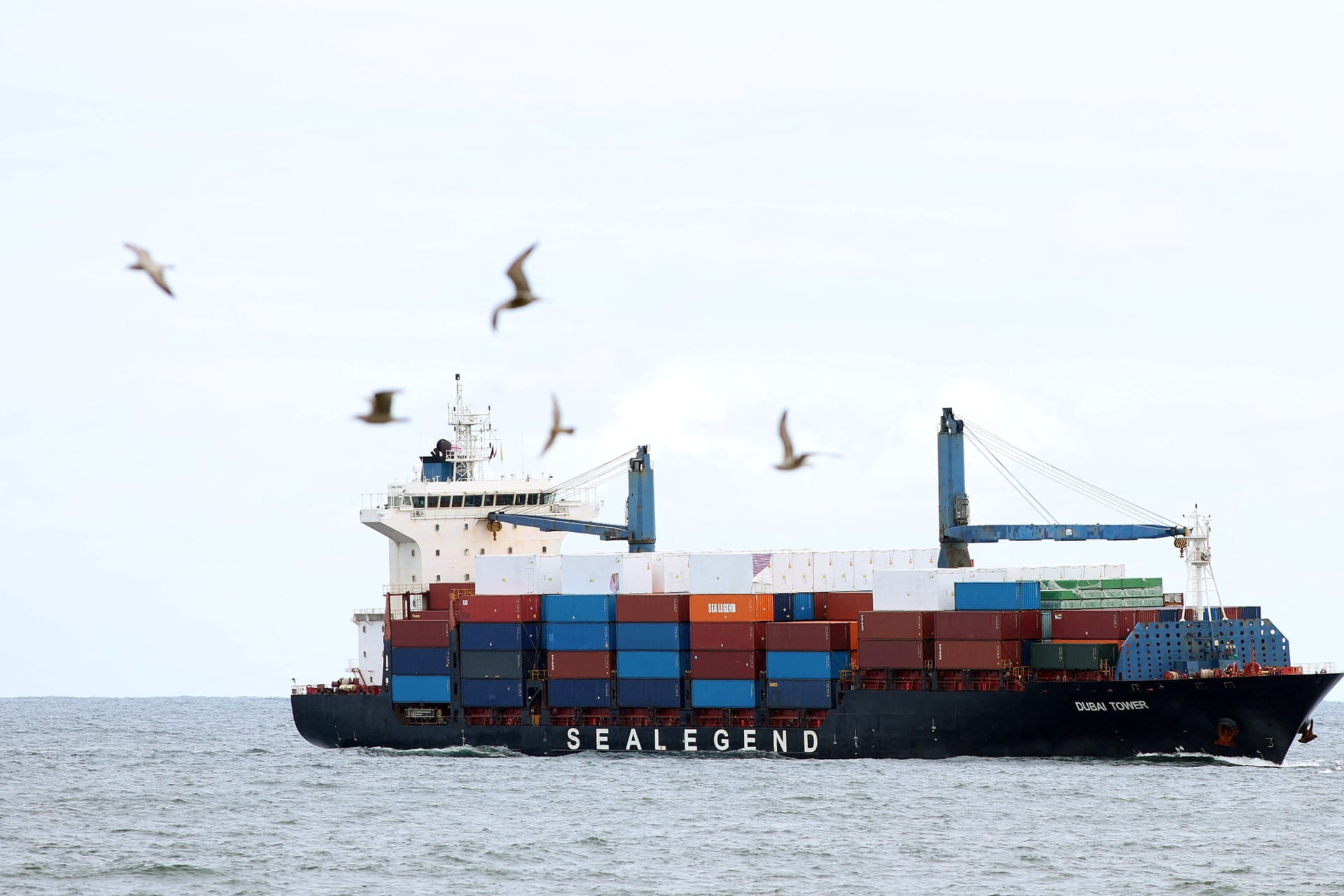
So Reuters reported just yesterday that the wars in the Middle East and Ukraine are set to dominate the summit, with the French presidency crafting an agenda aimed at projecting unity and, above all, avoiding confrontation with President Donald Trump. The economic story of this summit runs straight through the Strait of Hormuz. Its closure following the Iran war has unleashed energy supply chain and commodity shocks and renewed inflationary pressures that will shadow every session at the Hôtel Royal in Évian. But even beyond Iran, this is fundamentally an economic story, right? Which is why we’ve assembled this panel.
So consider the backdrop. In February, Supreme Court ruled six to three that IEEPA does not authorize presidential tariffs, invalidating the reciprocal and fentanyl tariffs at the heart of the administration’s trade agenda, up to 175 billion (dollars) in potential refunds. And the administration is now rebuilding its tariff wall on other statutory foundations. On Ukraine financing, the EU’s reparations loan, based on frozen Russian assets, collapsed in December, with leaders instead opting to raise 90 billion euros on financial markets through kind of joint euro bonds. Again, leaving the burden-sharing question squarely on the G-7 table, with four of the seven, of course, EU—sorry, three of the seven EU members, plus the U.K. And the French presidency has loaded the finance track with work on global imbalances, on cross-border payments, and also non-bank financial stability. All very unglamorous stuff, but consequential, nonetheless.
So the question for our panel today is whether Évian produces substance or choreography, and what the journalists on this call should actually be watching for. So let me start with you, Heidi. I should note, you know, as Ben already said, has a piece on CFR.org just published late yesterday afternoon, Macron’s Agenda Meets Trump’s at the G-7 Summit, previewing exactly some of these dynamics. So, Heidi, your core argument in that piece is that France will confront two competing summit agendas, right? The one it planned—macro imbalances, economic security, critical minerals, reforming development partnerships—and then the one that geopolitical events and President Trump have created, above all the fallout from the Iran war, the closure of the Strait of Hormuz. So you write that Macron’s challenge may be less about advancing his own initiatives than about managing the summit itself.
So, let me put it to you directly. Which agenda wins at Évian? You suggest success may depend less on the formal agenda than on whether seven increasingly divergent partners can keep moving, however imperfectly, in the same direction. So what does that look like in practice? What’s the minimum viable outcome that counts as keeping the G-7 flame alive, if you want, before Macron passes the torch to the United States, which we should talk about as well, which assumes the presidency in 2027?
CREBO-REDIKER: So thank you very much for the invitation to speak, and for calling out the piece on CFR.org. Yes, I think there are two very different dueling agendas. And France did a very good job planning all last year to focus on exactly those economic issues that you pointed out, in particular how to tackle growing global macroeconomic imbalances, how to secure supply chains, and particularly focus on critical mineral supply chains—something that’s carried over from the past several G-7 meetings in Canada and Japan—and then to focus on what is the next—what is the development model? How do combined g members step up and develop—and support development?
And, you know, we have to remember that President Trump is going to be having just had his birthday on the White House lawn with the UFC. And so one of the questions is, really, you know, is he just—you know, what is—what Trump is going to show up? Will he be in a fighting mood? He announced on Truth Social, in announcing the attendance at G-7, talking about the claw on the White House lawn, UFC event, his birthday, most entertaining night in American history, and also that this claw on the White House lawn was as great as the Eiffel Tower. So he might only want to talk about this specific event on his birthday. But I think that probably, since Iran and the geopolitical backdrop are going to be, you know, high and ever present, is that if you have a fighting Trump showing up at this, he might want to show up to berate allies for not stepping up to fight in the Gulf.
And you have—you do have this reality check that on the economic agenda you do have, post-U.S. and Israeli attack on Iran, the retaliation and the closure of the Strait of Hormuz. We have energy supply chain and commodity shocks. And they’re wreaking havoc on the global economy. So whether it’s, you know, rising transportation costs or concern about fertilizer supplies, food security, helium, and all of the relevant inflationary pressure. And then speaking of, you know, geopolitical backdrop, you have Ukraine as well. So, again, Macron laid out a very good agenda. And I think, you know, we have to give him credit.
The macro imbalances question is something that should play to Trump in terms of what he wants to talk about vis-à-vis Chinese overcapacity. But I do think that there’s going to be a clash, and managing this is going to be a challenge. And the wind is going to be actually not one or the other. Hopefully some combination of the agendas, where there is overlap in interest. And I hope he keeps it together to pass that baton to the U.S., and present—and prevent the dueling agendas from really overwhelming the broader purpose of the G-7, which should remain—after fifty years, it really should be preserved. But this is going to be a diplomatic feat for the president of France.
MATTHIJS: Great. Rebecca, let me turn to you. I mean, tariffs and things like that. Markets have lived through, what, eighteen months of tariff whiplash, imposition, escalation, judicial invalidation, rebuild under sections 232 and 301, and now a Hormuz-driven commodity and inflation shock on top of it. So how are global investors actually pricing G-7 dysfunction at this point? Is there is sort of an Évian risk premium? Or have markets concluded that these summits are just noise and only the hard policy, like the Fed meeting next week or the next tariff schedules or fiscal trajectories, are the real signal to be looking for?
PATTERSON: Well, thank you for having me. And thanks to everyone for joining us today for this briefing.
There’s definitely a lot going on right now for investors, between the SpaceX IPO, the two hot wars, a Federal Reserve meeting next week with a new chair, as you just mentioned. It’s not a surprise that investors are not talking much, yet at least, about the coming G-7 meeting. That said, I think there’s still a lot of reason that this meeting is very much worth watching, both tactically and more structurally. I think tactically, you know, however the meeting goes, whether we get a formal communique from the leaders or not, we are likely to get comments from officials on the sidelines of the meeting. That’s something that’s happened at every meeting for decades. And you do get market-moving comments from them, as well as a sense from the meeting, as Heidi just suggested, whether we still have any degree of collaboration between the G-7 or not. And I think that directional signal can also be something that makes its way through financial markets. So that’s what I’d be watching for, tactically—comments on the sidelines and, directionally, do we see more or less collaboration.
Structurally, I think the G-7, from an investment and financial market point of view, is still a very critical event. The global imbalances have gotten worse in recent years. And while global imbalances are nothing new, and G-7s have been talking about them for decades, I think the duration and the size of the imbalances does make them something very much worth watching. And, to your point on risk premium, Évian risk premium, I think we most clearly see that today in government bond yields, particularly longer-term bond yields. You know, in mid-May when the finance ministers released their communique, which is a preparatory meeting for next week, you know, at that moment in time—and this wasn’t necessarily causal; it could have been coincident, but it still kind of paints the picture—we were seeing the U.S. thirty-year treasury bond above 5.19 percent. That’s the highest since the financial crisis. We saw the U.K. thirty-year gilt yield trading around 5.77 percent.
So these large and persistent budget deficits absolutely worsen the supply-demand balance, and they raise long-term sustainability questions around deficits, and they push yields higher. And that has an economic cost and a potential financial contagion risk. So I would say that, even if tactically it’s hard to get people focused on the G-7 right now given everything else, including President Trump’s birthday and the fireworks that literally will follow, structurally and tactically I think next week is still going to be a pretty important event for investors to pay attention to.
MATTHIJS: Very good. Brad, let’s turn to one of your hobby horses. It’s been mentioned a few times now, global imbalances with China dialed in. So Heidi’s piece on CFR.org flags that Macron planned to bring China into the imbalances conversation directly, chairing a video call with representatives from China, G-7, and other countries on global imbalances and shared responsibility. Is that a gimmick or is that a genuine opening? I mean, given China’s record manufacturing surplus, is there really anything the G-7 can meaningfully do on imbalances, or is this just an agenda item about managing the transatlantic imbalance in sort of polite language?
SETSER: So, any pre-summit video call will, by its very nature, be more gimmicky than substantive. If you are going to hash out a substantive agreement, you generally do not do it over a Zoom. And I think it’s almost impossible to have a productive platform Zoom with a Chinese representative who actually is not—does not have any authority over the finance side, and you know, several scores of people on one big call. So the events yesterday was by design theater designed to in a sense show that China needs to be a part of the solution but also to have China illustrate through its comments the obstacles. I think the Chinese made it quite clear that they view the—their surplus and other countries’ deficit as a sign of other countries lack of competitiveness and not a sign of any internal imbalances in China’s economy. I think it is useful to understand that point of view.
I do give the French credit for trying to make imbalances an issue. It is the case that the imbalances have been getting bigger. It is also the case that unless something changes, they will continue to get bigger. Like China is getting more growth from net exports or almost as much growth from net exports the past couple of years as it has gotten from domestic demand, and that looks set to continue this year. So there is an underlying need to find a solution.
I think France has run into some difficulties, partially because the Chinese did not fully embrace the possibilities of joining this conversation in a constructive way and running the risks that most of the traditional G-7 countries would beat up on them, and in part because President Trump, even though he has historically expressed a lot of concern about trade deficits, he tends to think that the U.S. trade deficit, at least the deficit that he cared about with China, has been solved because of his tariffs and the bilateral deficit with China is going down. And he tends, or at least his representatives have tended to pull back the communique language into more bland statements out of concern that a stronger statement might disrupt the Busan truce. So, ironically, an agenda that was meant to please the United States has not produced full consensus.
What could the G-7 do? Well, eventually the G-7—and this would require a shift in European policy, which seems to be happening, and a shift in U.S. policy—could agree to take some form of united action if China doesn’t address the concerns about its rising surplus constructively.
And I think in some ways, you know, other than the theater about whether President Trump walks out of Évian the way he walked out of Carney’s summit last year and says, you know, this is no longer a grouping that is worth my time implicitly—I mean, Macron has worked hard to avoid that outcome, and I think he will—the other key discussion that may take place behind closed doors at Évian will be a discussion amongst the European countries about how they collectively respond to the pressure that China is putting on their economies and whether the big European countries can reach an accord going into their own set of summits on imbalances.
So I think it is clear that the G-7 is not fully united around this issue. It should be. But I think it is also important that it has been placed squarely on the agenda.
MATTHIJS: Excellent.
Heidi, let me turn back to you and ask you about Ukraine financing and the G-7. So, with the European Union in December deciding to borrow 90 billion euros on its own account and basically guaranteeing Ukraine’s fiscal accounts for ’26 and ’27, what is left of G-7 burden sharing? Because a lot of that conversation before that loan happened in the G-7 context, especially during the Biden presidency. So is there any realistic prospect that Évian moves the needle on immobilized Russian assets, for example, or has the center of gravity on Ukraine financing permanently shifted now from the G-7 to a Europe-only format?
CREBO-REDIKER: So, I think the latter. And, you know, it’s an important question because last year before—and there were several things that happened before President Trump threatened invading Greenland—Europe was really laser focused on making sure that the U.S. was on board to maintain financial support, particularly for military, for Ukraine, and to not rock the boat because they were very, very dependent on the U.S., both for the budget support as well as the military support.
Greenland shocked Europe into really making deep recalculations, de-risking from the U.S., defending itself and defending Ukraine. And you’re right, the stepping up to support Ukraine after the failed attempt to actually use the immobilized Russian sovereign assets forced the EU into a place where they did have to collectively borrow 90 billion to support basically two-thirds of Ukraine’s financing needs for two years.
And I actually can’t underscore how important it is that there was a collective borrowing that happened in the capital markets. So, I mean, this is something that I think that Draghi would be very happy if the EU were to move forward with this as a test case for doing far more collective borrowing in the future. But for Ukraine, I mean, this is actually, we’re in a very different place for Ukraine this year. They have become their most powerful defender themselves. They are at the forefront of weapons manufacturing, design. They are literally the cutting edge of warfare, and they’re able to do deep strikes into Russia right now. So, I would say tactics are working.
Sanctions, which are also a very important part of G-7 conversations on Ukraine, Ukraine is really enforcing through kinetic means sanctions. They’re blowing up oil and gas infrastructure, which is quite more effective than managing the sanctions regime.
But I would also say that your question about where do we go forward on the G-7 and the frozen assets, well, the G-7 was the planning ground for the extraordinary revenue acceleration using the frozen assets to—using effectively the interest on those frozen assets to repay a loan that was made by the U.S., EU, Canada, U.K., Japan, and the European Union.
So, the G-7 has traditionally been where that conversation has happened. I do not think that you get the U.S. onboard right now for using those immobilized assets, and certainly not out of this particular G-7 meeting. But I do think there will be likely pressure on Europe in particular to increasingly use those assets and find new structures to be able to access funding as they themselves face fiscal challenges domestically, that there’s a very large pool of money that’s still out there that is meant to pay for damage caused to Ukraine.
MATTHIJS: Great.
Rebecca, I want to turn to the dollar and the safe asset question. So, I mean, you have watched the slow rotation out of dollar assets, the gold bid, the questions about treasury demand. So, if you were advising the famous G-7 Sherpas, what’s the one thing the G-7 could say or should refrain from saying at Évian in France early next week that would matter most for confidence in the dollar-based systems? And what would a communique accident look like on this, or will they just avoid this altogether?
PATTERSON: Sure. You know, I think probably the most important thing the G-7 can do for confidence next week is not show any disagreement over currency policy. If we had an abrupt change or anything that could smell like a currency war, that would be very destabilizing. It’s similar to the strong dollar policy that the U.S. Treasury Department has advocated for the last several decades. The G-7 has had a similar policy stance with language that was largely intact meeting to meeting. You know, you had several phrases you could count on. Exchange rates should be market determined. Governments should not target currencies for competitive advantage. Policymakers should refrain from competitive devaluation and so on. Excess volatility is not welcome. So, those were the pieces that you tended to see in every communique and you could kind of check them off as you read the communique. So, we don’t want to see any change in that language. I think it’s unlikely we would see any change, but that would be the first thing I’d be thinking about.
Beyond that, you know, I think one of the most interesting questions in terms of currency and safe haven assets today is, what is a safe haven? You know, throughout my career, we thought about a small handful of items, you know, the dollar and dollar-based assets like treasuries or dollar-based cash. We thought about gold, the Japanese yen, the Swiss franc. You know, there were a small handful of things that tended to consistently work as safe havens in times of market stress.
When you look now at the last, call it eighteen months or so, you know, I’m not a huge Star Wars person, but I will refer to it feels like there’s a disturbance in the force. You know, the way these assets have moved in the last eighteen months is very unlike how they moved in the previous few decades. And I don’t think a new world order in terms of safe havens has been decided, but I think today there are increasing questions around what truly is a safe haven.
MATTHIJS: Excellent. I like that line, disturbance in the force in the world of money. There’s definitely been disturbances in the world of trade.
Brad, let me ask you about the tariff aftermath and how this will play out in the next G-7. So, maybe in just a few minutes, walk us through what the Supreme Court’s IEEPA ruling actually changed in the trade numbers, the refunds, the pivot to sectoral tariffs under Sections 232 and 301, the revenue picture. Do America’s G-7 partners now face a more predictable U.S. trade policy because it has run through slower statutory channels or a less predictable one because a lot of G-7 partners of the U.S. are thinking that this administration is improvising?
SETSER: So the Supreme Court’s ruling struck down, as you mentioned, the reciprocal tariff, which had generally been at a rate of between 10 and 20 percent, although a few countries had not done deals. And if you didn’t have a deal, you might be well above 20 percent. And then it struck down the fentanyl tariff, which was a 20 percent tariff on China without any exceptions or exclusions. So, it actually was quite binding and hit electronics and was having a meaningful impact. So, by far the biggest rollback associated with the IEEPA decision was a rollback in the tariffs on China. The term two tariff on China went from 30 (percent) to roughly 10 (percent) when the new 122 balance of payments tariff was put into place.
The other important change is that without the flexibility of the International Economic Powers Act, IEEPA, it’s much harder to change tariff rates overnight. So, there is some additional predictability in that the administration has to go through the format and the procedures of 232 or 301. The president can make an announcement that he’s going to start at 232 or a 301 but actually putting in place the tariff takes a period of notice and comment, several months of delay. So in that sense, there’s been more predictability.
That said, the repeal of the tariff and then the introduction of the 122 tariff, which only lasts for 120 days and will expire in August, has introduced its own uncertainty. In general now, U.S. tariffs are below the levels that other countries accepted in the various deals that were negotiated before the Supreme Court struck down IEEPA. And the U.S. is using various authorities, some with more strong economic and legal grounding than others, to try to bring tariffs back up. There’s a big forced-labor case. You might ask how big of a competitive advantage do European countries and Japanese countries get from importing products made by forced labor in Xinjiang. And you might say that turns out it would be very, very small. But the U.S. is trying to say, well, this is the basis for the new base tariff, a new 10 percent tariff.
Most trading partners don’t think there’s strong merit to the case, but they also recognize that this is an effort to bring the tariff up to the level that was in the deals that were done last year. And they are inclined to allow the U.S. to see if it can get this through domestic legal checks, not to challenge it directly, so long as the tariffs don’t go above the levels negotiated in the deal. There is absolutely no willingness on the part of the Europeans to allow the U.S. to go—to put any tariff above the level that was negotiated at Turnberry last year. But as long as the U.S. uses these various authorities to stay within the Turnberry truce, their inclination is to avoid a new round of escalation. So we’re neither in a world of predictability nor are we in the same world that we were before the Supreme Court. And perhaps the most significant structural shift is that the tariff on China has come way down and, as of yet, the administration hasn’t clearly signaled a desire to push that back up to towards 20 (percent).
MATTHIJS: So, Brad, just one small correction, but correct me if I’m wrong. Is it 150 days for 121, or 120, as you said?
SETSER: Probably 150. And it goes through mid-August.
MATTHIJS: Yeah, that’s mid-August. And then it goes—OK, great.
Final round before we turn it to questions. Heidi, where cooperation can actually deliver, right? So that’s what I want to focus on. Your piece notes that Trump’s priorities and French objectives actually genuinely overlap in places—economic security, derisking critical mineral supply chains from Chinese control, and even parts of the AI agenda where Macron has even invited Sam Altman of OpenAI into the summit discussions. So if you had to bet on one concrete deliverable coming out of Évian, whether it’s minerals stockpiles, buyer coordination, AI infrastructure, what would it be? And, conversely, you write also that on everything beyond the formal agenda, diminished trust in Washington is pushing the other six to coordinate more closely among themselves. So should we start thinking of this as a G-6+1? And is that sustainable?
CREBO-REDIKER: So I think the biggest area of interest and overlap between the G-6 and the U.S. is on the economic security question, and especially on critical mineral supply chains. It’s really the ripest area for collective action. And this whole concept of needing to collaborate through the G-7 on this area, you know, it was very strong within the Japanese G-7 presidency, even stronger on the critical minerals side with Canada last year. And we’ve seen since then significant escalation in export controls by China, up and down the supply chain. Sort of weaponizing their near monopoly, but going from extraction to processing to manufacturing things like magnets, especially permanent magnets, the technology involved, you know, wanting to dig deep into the company balance sheets and their supply chains to understand exactly where Chinese content will be used. And that was incredibly intrusive.
So I think the one issue with the G-7 is that while that has been one of the drivers of collaboration, the U.S. has really taken a lead in this in this effort for multilateral approaches. You know, they’ve created complicated overlapping agreements, like FORGE. They’re doing bilateral, plurilateral, or they’re doing—you know, the Quad just came up with a new agreement. And at the end of the day, China’s chokehold threatens all advanced economies. So there’s really a consensus that you need a shared solution. So, I mean, really this is the ultimate—China has the ultimate chokehold. And the U.S. is forced to work with its allies.
On AI, I haven’t heard that Sam Altman accepted the RSVP. I know that there are—Europe is keen to develop its own tech stack and AI. And France in particular wants to see itself as a future AI hub, an AI hub in Europe. So it is on—it is on the agenda. And I think one of the—one of the big areas where you might see cooperation is the demand outside the U.S. for access to Anthropic’s Mythos. So autonomous cybersecurity and software engineering capabilities. There’s really a—there’s a genuine need to plug holes, not only in financial systems but in critical infrastructure. So I do think—and there was one win already on the digital side. There was an agreement for the first ever joint approach to protecting children online. So we do have already a win coming out of this G-7.
Whether there is a G-6+1, I think we’re kind of—we’re flirting with that moment. We had Prime Minister Carney in Canada talking about this rupture. You have, you know, in the background a lot of countries that are derisking, whether it’s defense or tech, worried about kill switches, data risks, data privacy. And Japan really stepping up in the Asia-Pacific, and they need to have the U.S. at its back, but there will be plenty of side conversations at this G-7 that cover all of these areas where you’re not necessarily going to get the U.S. on board, nor would you even want the U.S. in the room. Because you just don’t—you don’t have that natural inclination by the Trump administration to want to actually collaborate on these issues.
And I think, you know, in addition, you know, we already talked about Ukraine and trade, digital sovereignty regulation. Climate policy, other countries still care about that. And I do think that while there are some areas for collaboration, we do have an ever-growing desire amongst our allies, and particularly G-7 allies, to reduce their strategic dependencies on Washington. So it’s going to be, again, a delicate balancing act for President Macron.
MATTHIJS: Yeah. Actually, Sam Altman has confirmed, as have others, like Dario Amodei from Anthropic, Arthur Mensch from Mistral, Demis Hassabis from Google DeepMind. So personal invitations from French presidents to nice places still go a long way.
Rebecca, we haven’t talked about the Hormuz shock and financial stability. And so let’s talk about the commodity side. The closure of the strait has pushed up energy and transport costs and reignited—especially in Europe, right, and Asia—reignited inflation worries, just the central banks thought they were through the worst. ECB was the first big central bank to raise rates this week. So two parts for you. First, how much of this shock have markets already absorbed? And where do you see the remaining vulnerabilities? Is it energy, food fertilizer, or somewhere in the financial plumbing of the world economy? And, second, the French finance track has been working on exactly that plumbing, non-bank financial intermediation, system-wide stress testing, and so on. Is that where a crisis could actually show up? And is the G-7 going to do anything, or enough, about it?
PATTERSON: OK. Great. You know, it is really interesting, as the strait has remained closed, even though it’s kind of truce, no truce, truce, no truce, sort of by the day, or sometimes by the hour, financial markets seem to get more comfortable that a resolution will come sooner rather than later, partly given political calendars. And it’s not in anyone’s economic interest for the strait to remain closed over the long term.
But because of that view, and because we have seen buffers globally—the use of inventory, strategic reserves, helping China, obviously, tapping into its reserves, and now we’re seeing some ships getting through the strait quietly, without transponders on, getting a little bit of oil out. Oil, some going through pipelines above ground as well. All of those things together, but I’d really emphasize the expectation for a short-lived conflict. Because of all that, the oil futures curve is priced for a very benign resolution. And just to remind people who maybe don’t live in the financial market world, you know, oil trades on monthly contracts. And so you can see what expectations are month to month going forward. And when you look at December, for example, the end of this year, it would suggest that the war is done, things are getting back to a nice equilibrium relatively quickly.
The problem with that is it makes risks asymmetric. Youk now, if we do have a resolution pretty quickly, because those buffers are running out, the downside for energy prices, I would argue, is still somewhat limited, because we have had facilities damaged that could take a while to get going. Normalizing shipping is going to take weeks or months. So there is going to be some tail from this that could hold prices higher than they would have been otherwise. Remember, at the very beginning of this year, before any of this started, the International Energy Agency was forecasting oil prices to fall about 10 percent this year from starting level. So ending this year in the mid-fifties—I’m talking about Brent crude—because we had greater supply than demand growth. So what we’re seeing today, even with a resolution, is oil prices that are probably somewhere around $30 higher than had been expected at the start of the year. So that is a fairly meaningful shock.
Anyway, the risk is asymmetric. If we have a benign resolution soon prices certainly could come down from current levels, but probably a limited amount in the near term, the next several months. The upside risk, I would argue, which could be much more destabilizing, that’s to me where the risk is biased. And that could flow through in the short term to monetary policy expectations, longer-term bond yields, currency markets, and equities. So I would be watching that and those spillovers.
You mentioned the European Central Bank, the ECB, delivering its first rate hike this week in a year, and explicitly stating the energy-driven inflation from the conflict. It also revised its inflation forecast up for this year, I believe to 3 percent. We have the Federal Reserve policy meeting next week. We have a Bank of Japan meeting next week. Bank of Japan was already expected to raise rates next week. I don’t think the Federal Reserve is going to raise rates next week, but how the different members of the FOMC vote and see rates going forward is going to be a market-moving event.
You know, so I do think there are still quite a few financial risks around this, some short term and, to your point, Matthias, also in the longer run. You know, the lack of fertilizer is already being felt. There are some dire issues in certain countries, particularly in Asia. But even next year, you know, anecdotally I’m talking to ranchers who are already expecting higher beef prices a year from now because of how it affects crops and the crops used as feed for the animals. So there is a longer tail that could come from this that affects inflation well into 2027.
On the nonbank financial players—so things like asset managers, private equity, private credit—you know, I think it’s great that policymakers have more focus on this, trying to understand where those risks are. It’s always going to be harder to pinpoint those risks because there is significantly less transparency from those organizations on their positioning on the leverage used. They don’t have the same disclosure requirements that other types of investors have. So the risk is you don’t know what you don’t know. But I—so I think that could be a comment and a topic that comes up at the G-7 next week, but, frankly, I’d be a lot more worried about what’s going to happen with inflation, and what that means for monetary policy, and how higher rates feed through those curves and into markets.
One last quick, quick thing from me. You know, I think one other imbalance issue that comes from the commodity shock and the Strait of Hormuz is rearmament. And I wrote a piece on CFR.org a few weeks ago about global rearmament, and everything I’m hearing and reading and seeing from the advanced economies around the world is a reinforced desire to have good self-defense. And so you see budgets increasing spending on rearmament at the same time that they’re increasing spending on domestic priorities as well. So a policymaker wants guns and butter; and, frankly, they can’t afford much of either, given debt profiles in these countries. And so that’s also something flowing through to higher bond yields right now.
MATTHIJS: Excellent, guns and butter.
Last one, Brad, and it’s the forward-looking question. The other six G-7 economies are caught in a bit of sort of pincer, no? Like, Chinese manufacturing overcapacity flooding their markets on the one side—you’ve written on that—and U.S. tariffs hitting their exports on the other. You’ve also written on that. So the four Europeans, Japan, and Canada all face the same dilemma, right? Is there a realistic scenario in which the G-7 minus the U.S. coordinates trade defenses against Chinese overcapacity, antidumping safeguards, transshipment rules, even without Washington, or does the fear of diversion from the U.S. tariff wall make them more likely to cut separate deals with Beijing? Where do the trade flows since 2025 tell us this is actually heading?
SETSER: Look, there are a lot of things that are going on in the world. One is the tariffs that the U.S. has put in place. Those have had an impact. You see that impact on specific sectors, including sectors of importance to Europe. There is an impact on the European automotive sector. The AI buildout and all the investment in AI is an offsetting shock, and that is pulling up U.S. imports in an important way. The tariffs did not have an enormous aggregate impact on global trade. The typical outcome was that when the fentanyl tariff was in place, and everything coming out of China faced at least a 20 percent tariff, and tariffs elsewhere were generally lower, was a diversion where many goods went from China to a third-party market for final assembly, and then came into the U.S. So there was not an enormous aggregate reduction in trade associated with the tariffs.
The actual shock that is having the biggest impact on the global economy right now is what I call the second China shock, where China is exporting, and export volumes are growing way faster than global trade. And until the first quarter of this year, which was an outlier, Chinese imports were not growing. So, yes, the tariffs were a shock to the rules, but they were not as big of a shock to actual trade flows as expected.
In that context—and I fully recognize that the U.S. complicates Europe’s choices. It would be much easier for Europe to put strong tariffs on China if they thought that the offset—they could offset some of China’s retaliation in their market by selling to the U.S. But right now all the factors are pushing Europe to coordinate without the U.S. The diversion puts more goods in Europe’s markets. I actually don’t think there’s good evidence there’s a lot of diversion. I think it’s an easy rhetorical argument because you don’t have to blame China, but you don’t actually see a shift in trend associated with U.S. tariffs. And on the automotive sector, the U.S. wasn’t importing from China to begin with. This is mostly just China in dealing with China’s own dynamics. But the theory there’s some diversion pushes Europe to act, not to not act. And then the magnitude of the shock is pushing Europe to act.
So I actually think it’s almost certain that there will be a tougher policy. The real question is whether Europe sticks within a set of actions that would generally be understood as being more or less within the norms of the WTO. Safeguards are allowed in the face of an import surge. Now, they may push that a bit, but they could arguably stick within—more or less close to WTO-consistent actions. Or whether Europe concludes that they need more flexibility, more leverage, some of the tools that the Trump administration has used, and whether Europe thereby ends up combining more aggressive use of traditional trade tools with the creation of some additional mechanics for insulating their market from China. But at this point my personal view is that Europe has concluded that it has to take stronger action because it has been on the receiving side of such a big shock.
MATTHIJS: Excellent.
We have about twelve, thirteen minutes left for questions.
(Gives queuing instructions.)
If there’s no questions, I have plenty more. So, any questions? Erica Green (sp), go ahead,
Q: Oh, unmuted. Hello. Thanks so much for doing this call. It’s been—it’s been awesome.
I am wondering if you all have any thoughts on how President Trump’s relationships with Putin and Xi, and his desire—expressed desire—(laughs)—to strengthen relations with both of those, you know, countries, his very apparent affinity for both of those leaders, will play into the dynamics of the G-7, particularly because, you know, we have the Ukraine war. You know, we also have the G-7 wanting to take—you know, maintain their hard line with China as well. But we have a leader who is clearly—I mean, honestly, you know, some would argue is more aligned with his adversaries—(laughs)—than his allies right now. So I’m just wondering if you think, you know, that will factor into to any of the dynamics that we see play out next week.
MATTHIJS: All right. Let’s—
SETSER: I’ll take that and then I’m sure Heidi—
MATTHIJS: A G-2 or a G-3, Brad?
SETSER: Look, it’s a G-4-ish world in some ways already.
President Trump’s desire to have a different relationship with Putin has already meant that the Russia sanctions conversation, the frozen assets conversation, is a conversation where the U.S. is largely not central. So in that sense, it’s already had an impact.
President Trump’s bilateral relationship with Xi and the desire to continue bilateral summitry and do bilateral deals is one reason why the G-7 imbalances conversation didn’t get further. The U.S. hasn’t been interested so far in pushing the G-7 to act collectively against imbalances. Trump prefers direct negotiations. And then, as Heidi mentioned, the U.S. will be taking over the G-20—already is the president of the G-20, and will be taken over the presidency of the G-7. One of the big issues for next year is whether President Trump tries to invite President Putin to make it a G-8 again, which is a realistic possibility. He is certainly rumored to be looking forward to President Putin’s visit to South Florida for the G-20. So it is—it is hanging over the summit. And it does limit the scope for collective G-7 action in areas of where you might think there are shared G-7 interests.
MATTHIJS: Hmm.
Heidi, on this.
CREBO-REDIKER: So I would agree with everything that Brad just said. I do think when it comes to the relationship with the EU, taking over, really, the responsibility for both financial and military support, increasingly, for Ukraine, the conflict that that they are facing is that Trump seems to have a greater affinity for President Putin than he does for many European leaders. (Laughs.) And so the—to the extent that that is psychologically very challenging for EU members, it does drive home the inability to bring any of those issues related to Ukraine onto the agenda for the G-7, collectively.
MATTHIJS: Great. Rebecca.
PATTERSON: If I could add, yeah, just very briefly, I would just highlight all the work, Erica (sp), that Brad has done on the Chinese currency. You know, if Macron is focused on imbalances, one could imagine the G-7 would want to have a conversation about the potential revaluation of the Chinese currency, which is estimated to be pretty significantly undervalued, as that would be one mechanism that could help address the exports coming from China and the domestic demand lacking in China. But, given President Trump’s desire to have these additional summits go smoothly with President Xi, it seems unlikely that that conversation will take place, at least at a G-7, at a full group—in a full group way at this meeting.
MATTHIJS: Great.
We have Bastian Brauns (sp) next. Bastian (sp), you should be unmuted any moment, and then you can ask your question. Go ahead.
Q: Yeah. Hi. Thank you also for doing this.
Just a question, because it is said that—or, no one is really expecting a communique, right? At the end of the G-7. That’s what I heard, at least. So how would you, like—yeah, how would you measure the outcome, like the substance of the summit after all? Do we more have to look after what, I don’t know, sherpa has negotiated, or how can we best measure the outcome, or if it was just for the pictures?
MATTHIJS: Yeah. Or what line should we look for, whether this is a success or a failure, this summit? Heidi, do you want to go first?
CREBO-REDIKER: So I don’t—I wouldn’t bet on a communique, but I don’t think that that’s a sign of a failed summit because I think going into this there was not a great deal of area where there was—where there was collective agreement. I would see potentially more on the economic security side, if we do have something, some kind of a—you know, a geopolitical breakthrough on—particularly with regard to Iran, that could be a statement that could surprise. The other is that we—you know, we focus on the summit, but there are all these—all of these strains of the G-7 that—you know, particularly with the finance ministers and central bank governors—that are doing a lot of deep work. And while we don’t see the outcome of those in communiques, I think it has actually been quite valuable and robust. So I don’t think we’ll see a communique, but I don’t think it really matters so much.
MATTHIJS: Rebecca.
PATTERSON: I was just going to add in the—if we don’t have a communique—and, honestly, I don’t have a strong view on that—I think either way there would be statements from the individual attending groups, countries, at the G-7. And, going back to my very first question today, I would look to see how much cohesion you have in those statements, how much they agree versus disagree. This is going to be a wonderful opportunity to use your favorite AI LLM and run the statements through and see how much they changed from last year, and how much they agree and disagree. That would be a way to do it very quickly. And then, of course, there’s lots of press conferences and quick, you know, grabs that the journalists get of the leaders while they’re there on the sidelines. That’ll also give you a sense of whether they, the policymakers, felt like this was a successful summit or not, based on their own expectations. So even without a communique I think there’s plenty we can look at to get a flavor of what is the state of the world for collaboration right now.
MATTHIJS: Excellent. Any other questions? If there are no more questions, I have a last one for all three panelists. So let me—let me ask it. The big shift after Évian goes to the G-20 summit in the U.S., and then next year the G-7 is also in the U.S. I mean, it’s going to be Trump’s birthday, but he’s going to be the birthday boy at every birthday party it seems like, right, because it’s literally a U.S.-focused two years. And then, of course, the World Cup just started. U.S. is playing tonight. And so what can we expect of this? Hold that thought, because I have one more question for Mercedes Gallego. Mercedes, go ahead. You should be unmuted any moment now. Yeah, go ahead.
Q: OK. Hello. Thank you very much for the opportunity to ask.
It’s been discussed here the fine line that Macron will have to walk on regarding—to lower dependency on the U.S. What are the ways that this could happen in this summit? What can we expect to come out, in that sense? Thank you very much.
SETSER: I’ll take that, because it’s pretty straightforward. You know, a G-7 is not the format for discussing reduced dependence on the U.S. That will depend on a set of European policy actions that will be done outside of the U.S. One of the things the Europeans have noted, and they’re a little bit uncomfortable with, is that the closure of the strait and the loss of Qatari gas has increased Europe’s dependence on American gas and on American energy. And that is a profound challenge for Europe going forward. And Europe is also uncomfortable, particularly in the light of the fractures associated with President Trump’s threats to Denmark and Greenland, with overreliance on American military technology.
And, frankly, the fact that the U.S. now is in a position where all defense production in key areas has to go to rebuild depleted stores of armaments that were used up in the conflict with Iran is sort of forcing the world to become more self-reliant on their own defense production. And I think we’ll be watching to see how far Europe goes, and whether they can sort out all the competing interests in Europe about who gets to build a fighter jet, and so forth and so on, and be effective. And then there’s this overarching issue about whether AI ends up increasing dependence on U.S. technology, which is already quite high. So, those are all big issues.
Matthias, I have to run so I’m going to answer your question very quickly. I think the challenge for the U.S. is to come up with an agenda for the G-7 that is something more than a birthday party for President Trump. In all honesty, President Trump has moved towards a bit much, I would say—and I would be surprised if Bob Lighthizer wouldn’t agree with this—towards a world of summitry for the sake of pageantry and summitry, without much emphasis on substantive agreement or substantive cooperation. I suspect that will be—the G-20 in Florida will be high on pageantry, low on substantive accomplishments, which is sort of the norm for the G-20. And I think the challenge for the U.S. is to come up with an agenda and any concrete achievements out of the U.S. leadership next year. Right now, the bar is very low. And I would hope the administration overperforms.
MATTHIJS: Thanks, Brad. So, no Mar-a-Lago accords in December. Rebecca and then Heidi, let me tie together last thoughts on this.
PATTERSON: Sure. So, very briefly, you know, my sense from what we’ve seen so far is that, to the degree we have a formal agenda going into the G-20 or next year’s G-7 hosted by the United States, they’ll reflect a lot of the White House’s commercial priorities. So we know for the G-20, for example, that digital payments are going to be a focal point, and that’s something that’s near and dear to the Trump administration—so things like dollar stablecoins and also the future of finance. So I would—I would look at it through this lens: If you’re trying to figure out what the G-7 summit will be next year, what are the commercial priorities for this White House? And then back into: Where could they be wanting something from the rest of the G-7 to help the United States? I wouldn’t be surprised if that is a way we get to an agenda.
MATTHIJS: Great.
Heidi, you get the final word.
CREBO-REDIKER: I would—I would key off what the current agenda is for the G-20 in Miami, and, you know, a strong focus on energy independence and probably, you know, doubling down on not only the critical minerals side but on the advancing—you know, advancing old reliable fossil fuel energy to strengthen the energy security needs for the U.S. and its partners. And you know, the U.S. has, obviously, benefited—U.S. oil and gas companies have benefited in their—in their exports because of the cutoff of the Strait of Hormuz. So depending on where we are, you know, it’s—you know, you always hear President Trump talking about the boon to U.S. energy companies.
AI is on the agenda and emerging technologies on the G-20 side. That is very hard to do with the—with the membership of the G-20.
And the—and regulatory burdens. I’m not sure how that will play out in the G-7, but I could see that being a thread carried through by the U.S. in the G-7 next year.
MATTHIJS: Great.
That’s all the time we have. My thanks to Heidi Crebo-Rediker, Rebecca Patterson, and Brad Setser; as well as Ben Chang and Lilly Behbehani from the CFR Communications team; and Will Cornell, our event manager; and of course, all the journalists who joined us.
A reminder that this briefing was on the record. The audio and transcript will be posted on CFR.org. And our experts are available for follow up through CFR’s Communications team. We’ll be watching Évian closely early next week. Thank you, and have a great weekend.
PATTERSON: Thank you. Have a good weekend.
(END)