A Conversation With Anwar Gargash
Event date
Speaker
- Diplomatic Adviser to the President, United Arab Emirates
Presider
- Israel Bureau Chief and Senior Editor, Bloomberg; CFR Member
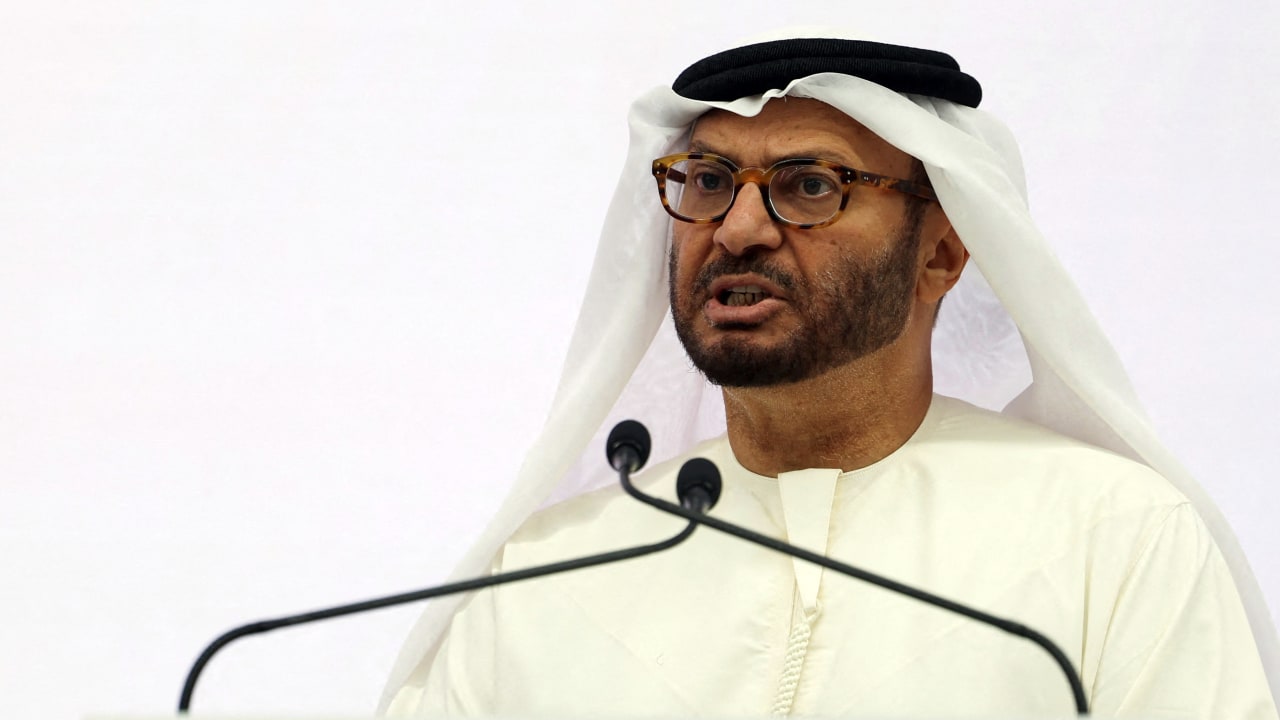
Dr. Anwar Gargash, diplomatic adviser to the president of the UAE, discusses the rapidly evolving conflict involving Iran, Israel, and the United States and its implications for the Middle East, including the diplomatic and security challenges facing Gulf states.
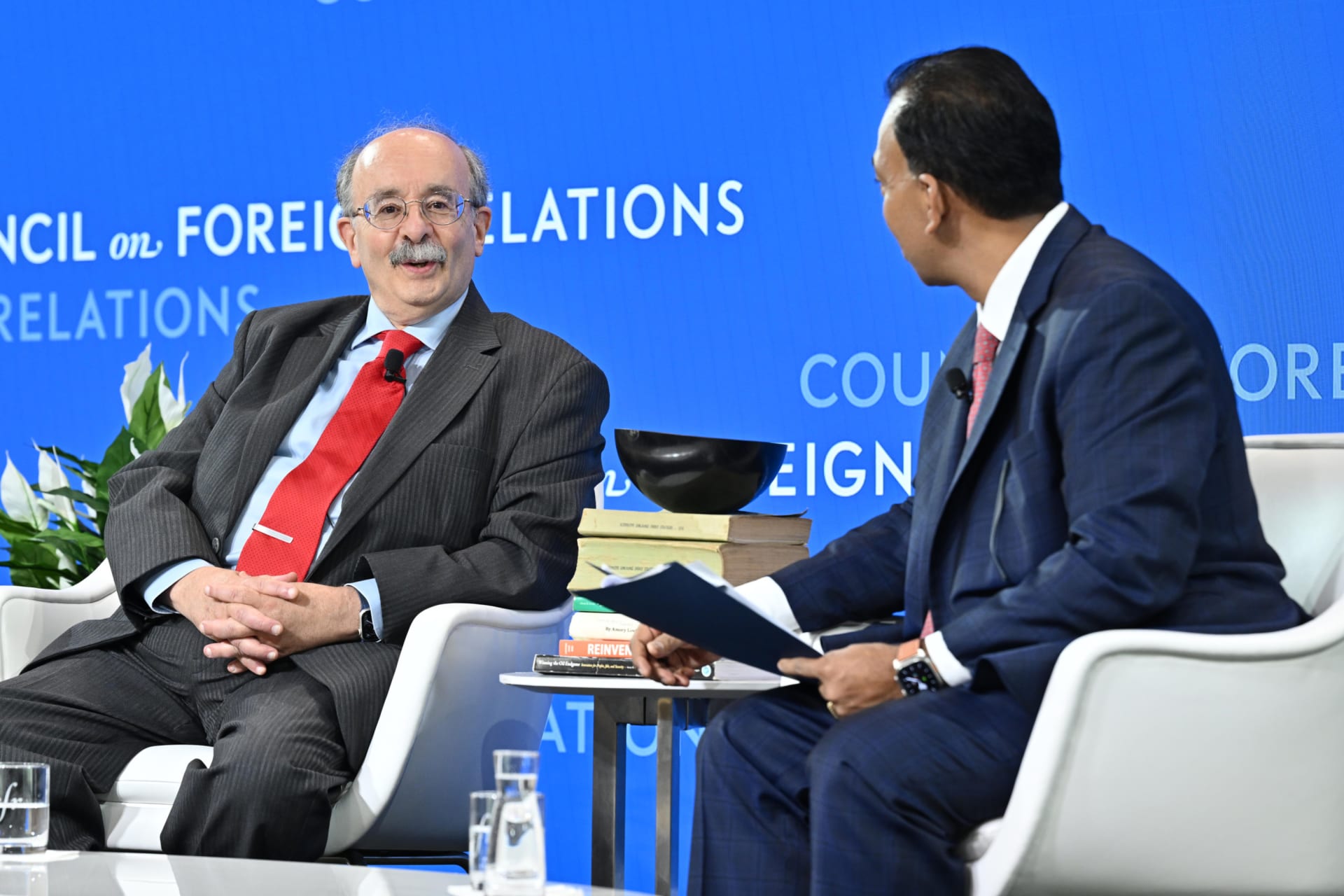
BRONNER: Thanks, Talia. Welcome to today’s Council on Foreign Relations discussion with Dr. Anwar Gargash. I’m Ethan Bronner. I’m the Israel bureau chief and a senior editor for Bloomberg in the Middle East, and I’ll be presiding over today’s discussion. Dr. Anwar and I will talk for thirty minutes and then the participants will ask their questions.
So I want to thank you, Dr. Anwar, for joining us here today. And it’s—it’s been actually a fairly active day—and I live in Tel Aviv—in terms of volleys of missiles coming from Iran. I know that the UAE has had its share in recent days and weeks too. So let’s hope this goes OK.
Dr. Anwar, you recently accused Iran of misleading the public about its targets. What were you referring to? What has Iran hit that you think it outside its appropriate military objectives?
GARGASH: I think the Iranian narrative with regards to the Gulf states is that they are targeting American military facilities. But the reality is not. The reality is perhaps anywhere between 7 and 15 percent of whatever they hit has anything remotely connected to American interests or military interests for that. So, clearly, we are seeing missiles targeting airports. We are seeing drones targeting, you know, apartment buildings. We’re seeing missiles falling or debris falling on, you know, individuals driving on a motorway. So, clearly, the facts don’t actually support the Iranian claim with regards to what they are targeting.
Today, for example, we were targeted by thirteen ballistic missiles and forty-two—and forty-two drones, and our total tally now since the start of the war is 2,001. We’ve crossed the 2,000 target. We’ve done very well in terms of—in terms of our air defenses, so a lot of these are being intercepted. Many don’t make it. The few that do actually are in many cases targeting more likely civilian infrastructure—airports, oil facilities, and so on and so forth. It’s not really something that they are targeting the United States. And clearly, that charade of them targeting American military facilities is something that they are also abandoning in recent statements, because it just doesn’t hold up.
BRONNER: Sure. So, I mean, you’ve expressed a lot of anger about Iran before and I hear it in your voice now. Are you also angry with the U.S. and Israel for starting this war?
GARGASH: Well, again, I mean, we are—our main concentration is basically—is basically on the Iranian threat on our security. I mean, especially if you see where our position and other Gulf positions were prior to the war, I mean, these are countries that have worked very hard in order to—in many cases to be the mediator, such as in Oman’s case, to be, you know, more or less a facilitator such as in the case of Qatar and the UAE, and in many cases have sent clear messages seeking a political outcome.
We’ve all had a very difficult relationship with Iran over fifty years. Iran has been a bullying neighbor. Iran has been a difficult neighbor. But I think also our own experience with wars in the region—lately, of course, the two-year war that we have seen with Hamas and Hezbollah, and of course the war in Iran—gives us a perspective that wars actually complicate things. And I think from that perspective, where you are working very hard in order to avoid a military confrontation and then two days later you are the recipient of Iranian missiles and drones and—I think we’ve been targeted by more missiles and drones than Israel, actually.
BRONNER: For sure you have.
GARGASH: This is where the anger is and this is where I think the idea, basically, of trying to consider us just as a pawn on the chessboard is something we don’t accept, we totally don’t accept.
BRONNER: But I mean, so I understand that your principal concern now is Iran and its aggression to you, but what I’m trying to understand is this thing began, of course, because Israel and the United States decided that inevitably Iran was going to act on its aggressive rhetoric. Do you think that that’s true? Do you think that it was important to stop them before they were going to do it? Or do you think that, actually, this was not knowable and it was a mistake to move forward the way they did?
GARGASH: Well, I think—I think right now all the—all the skeptics who thought that Iran will not use its missiles or will not use any capacity that it has, I think that there’s an answer to it right now. I think Iran is an aggressive neighbor. We have to be very careful about what Iran has and doesn’t have. And Iran has a tendency and willingness to use whatever it has. I think that answer—that’s already been answered, from our perspective.
And just to sort of give more explanation here, we thought that if the Trump administration was successful in reaching a deal on nuclear weapons where Iran will accept that it cannot enrich uranium, would be a good idea. I think today we are seeing also that Iran’s missile and drone capacity is a real threat and problem to regional stability, because the way that it has been used, it has not been used against the U.S. and Israel; it’s been used at many of the countries that we saw ourselves as peacemakers, and trying to sort of bridge that gap, and try and find a way out. So, clearly, I think we are much more skeptical with regards to Iran owning a nuclear program and owning, you know, a missile and drone program of the size that they do.
BRONNER: I just—I mean, I don’t want to press too hard on it, but I guess what it—it sounds to me like you’re saying that one didn’t know exactly the level of aggression we would face from Iran; now we see it.
GARGASH: Yes.
BRONNER: And so in Israel it’s fairly common for officials and analysts to say quietly the leaders of the Gulf nations are thanking us for exposing what we now have seen and for taking care of this problem. Is that something you feel like doing, quietly thanking the Israelis for this?
GARGASH: Well, I think thanking is a big jump, really, where we are. Thanking is a big jump.
BRONNER: I hear you.
GARGASH: Because we are—I think we clearly don’t want to see a war in the region. Now that the war is there, we want to make sure that any outcome will ensure that we don’t go back to war again. And I think this was also the idea of the whole negotiations, if you see for over fifteen years now the region was really held to the whole idea of a crisis to do with Iran’s nuclear program. Every tension in the Gulf had a clear connection with that. And we were hoping that finally, with the Trump administration being very clear on what it expects in a political deal, that the Iranians will actually yield rather than, you know, break down the whole system, and break down their country and so and so. And I think this is where we were wrong. I think, ultimately, the Iranians, you know—you know, played this sort of dare, you know, the game of dare so to speak, and this is what we’ve—
BRONNER: Right, game of chicken.
GARGASH: Or chicken for that.
BRONNER: Yeah.
GARGASH: And this is what we are seeing. So, clearly, I—
BRONNER: But I mean, that—
GARGASH: The message—
BRONNER: That suggests—yeah, go ahead. Sorry.
GARGASH: Yeah, but the message that is very clear for us is we—that it is very difficult for the region to live with an active Iranian nuclear program. And I will add after the war it’s very difficult for the region to live with an Iranian missile and drone program of the proportions and with no limits such as the one we’ve seen.
BRONNER: But I can’t help feeling that what you’re saying—you’re saying that this was not fixable through diplomacy because they were not telling the truth in their negotiations. So what options are there, apart from what the U.S. and Israel have done? Because you’re not that happy with that either.
GARGASH: No, I think—I think that with regards to the negotiations, I mean, again, let’s step back and say that our relationship with Iran is an old relationship. It’s a complicated relationship. It’s a relationship where there are challenges, but it is also a relationship where there is huge trade. There is a relationship of a lot of economic and social links. It’s a relationship where at every, you know, for example, earthquake that happens in Iran, we and other Gulf countries are the first to help there. It’s a relationship where you have a lot of Iranians working in our region. And so it is a connected relationship. You cannot describe our relationship with Iran with the relationship with Iran and Israel. It’s a very different relationship from that perspective—geographically, socially, economically, et cetera. So to see Iran target us and other Gulf countries, and indeed countries like Oman and Qatar that have been basically the main conduits for a political—you know, a political mediation, you can see the sort of strategy that was taken. We did not expect—we expected that in the event of war, if negotiations broke down, that there will be some limited Iranian attacks in the region, but definitely we did not expect this whole full-throttle failed strategy that we see today.
BRONNER: That’s interesting, I mean, because I was going to ask you whether you thought that Israel and the U.S. had underestimated what Iran would do in return for their attacks. It sounds like you underestimated it, and I’m assuming based partly on conversations with them, huh?
GARGASH: Well, I think—I think, ultimately, there’s been a lot of discussion about what the U.S. is underestimating, but I think it is also—
BRONNER: (Laughs.) Sure.
GARGASH: —yeah, it is also credible to come and see what Iran is underestimating. I think it is. And I don’t think a lot of the sort of, you know, writers and, you know, academics and pundits have really put a lot of attention on that.
So Iran I think has created what I call a clear strategic—(inaudible)—of the region. I think what Iran has done today is counterproductive for Iran’s own long-term prospects. I think the idea, basically, of regime interest has superseded what I would say state interest in the long term. And I think for now, clearly, in the region if you have within the circle of the Levant Israel has been seen as the main threat, I think in the circle in the Gulf Iran is being seen as the main threat. And I think nothing is going to change that for decades to come.
I think the targeting of civilians, this is clear to everybody who is living in the UAE today, and we have over 200 nationalities. They can see that these Iranian attacks are not what they read from Iranian officials. These are actually targeting apartment blocks. They are targeting airports. They are targeting other facilities that we see.
I think traditional mediators are also being affected by that, and I mention here Oman and I mention Qatar; I mean, the folly of this approach of trying to—of actually targeting the mediators that you will need them at one stage or the other.
I think also the Iranian strategy has failed to understand the capacity of the Gulf countries of defending itself. I mean, the Gulf countries are always seen as countries with—you know, with gleaming glass towers, with luxury life, et cetera, that these are countries that will not be able to defend themselves. And now that we face the nightmare scenario of full-throttle Iranian attack, we can see that we can actually withstand that. Of course there will be losses. There will be psychological barriers that will be broken. But I think Iran underestimated that.
And I think, ultimately—
BRONNER: That’s very interesting.
GARGASH: Yeah. And I think, ultimately, there are two more comments here that I want to put to you and perhaps to the—to the discussion later on.
I think also, ultimately—what is extremely important—I think Iran also, by focusing on energy, has tried to create a sort of—you know, an effect that will force the Gulf countries to come back to the United States and say, enough is enough, let’s talk. I think Gulf countries are not there, because Gulf countries today are very cognizant that they don’t also want to live under the shadow of this nuclear and missile threat in years to come.
And finally, I think Iran’s full-throttle attack on the Gulf states will actually strengthen the Israeli role in the Gulf, will not diminish it. So it’ll be counterproductive here because a lot of us in the Gulf today don’t see the missiles coming from Israel; we see the missiles coming from Iran. So, from that perspective, I think that while Israel might be seen as a major threat in the sort of Levant context, I don’t think this is arguably the same case that you will see here.
So we really have to think. You know, as many pundits write about, you know, misconceptions of American strategy, et cetera, we really have to also equally think of misconceptions in Iranian—in Iranian strategy. And clearly—
BRONNER: Yes, that’s a good point.
GARGASH: —in the Iranian strategy we see the interests of the regime much more—takes greater priority on the interests of the state, and this is what we are really seeing in this wholesale, you know, obliteration, really, of Iran’s capacity in the war so far.
BRONNER: That’s very helpful, Dr. Anwar.
You know, the UAE has, as you’ve just been saying, very effectively defended itself, but it’s also expressed that it’s exercising restraint in this military encounter.
GARGASH: Yes.
BRONNER: What would cause the UAE to shift from a restrained position to a more militarily aggressive one or more—you know, more fully defensive, given what we’re facing here?
GARGASH: Well, I think right now we’re handling it very well, to be honest. I mean of course, it is not, you know, normal when one or two drones make it through or a missile make it through, but I think this is something that we have now gotten accustomed to over the last fourteen days. So what happens is your airspace shuts down, then twenty minutes later it resumes, people are (out ?), and so on and so forth. There is, of course, you know—there are sectors that are more affected, but life goes on as close to normal as possible.
So I think right now we are doing enough in order not to expand the war also, because we also have to think: We have capacity. We could do more in terms of what I would call active defense by targeting, you know, where these missiles are coming from, et cetera. But I think right now also one of our goals is not to sort of expand the confrontation here. I think we are doing well there.
Having said that, the—having said that, I can see us, for example, playing a role with other countries in ensuring the safety and security of the Straits of Hormuz. This is something I can see us doing, because we think that, first of all, these are international straits, and the Gulf is not, you know, a small lake belonging to the littoral states. It is an international water. It’s been like that since the fifteenth and sixteenth century. And I think we all have a responsibility to ensure the flow of trade, the flow of energy, and so on and so forth.
BRONNER: So what is it you’re thinking the UAE could do to contribute to the security of the Strait of Hormuz?
GARGASH: Well, again, I think it will be part of what is regarded as an international effort led by the United States. But I think this is something that is in the interests of everybody. Everybody has a responsibility. I mean, if every war closes one of the straits, then we are really at the mercy of certain various players in trying to control this. And I think this is something that is the responsibility, not only of the United States, but—(inaudible)—countries in Asia, countries in the region, countries in Europe, and so on and so forth.
BRONNER: So, I mean, there have been these Indonesian efforts at mediation. And the UAE, if I’ve understood correctly, has been supporting them. What—I mean, given what you’re—what you’re saying this evening, our evening, midday in America—given what you’re saying about the sincerity of Iranian officials over the course—or, their inability to be clear about what they’re—you know, the way you said they play chicken and so on, what is it—what would be a meaningful negotiation? What would be—you know, what do we need? What conditions are required for serious negotiations? And what role could the GCC play versus external mediators?
GARGASH: Well, I think the GCC, through individual—the role of individual countries, and especially Oman, Qatar, and, to a certain extent, the UAE, have been the sort of traditional conduit for this sort of back and forth. And I think right now there is a big, big trust issue with regards to Iran, in view of, you know, bombing the negotiator, so to speak, in many ways. So I think that is an important conduit. It’ll be very difficult, really, to introduce, in my opinion, a new mediator. Because these are things where trust has to be in place, channels have to be there. And I think this is why, in many cases, Iran prior to the war, has always gone back to its traditional conduit. So in my opinion, from our perspective in the UAE, I think who rules and who governs Iran is a matter left to the Iranian people. I don’t think that I or anybody in the UAE government will, you know, pontificate about that.
But I think what is rightfully the position of UAE is, whatever the end result of any negotiations should ensure that Iran does not become an immediate, intermediate, or long-term threat. And that means we have to deal very clearly with Iran’s nuclear program. And now, because also this aggression that we are seeing on countries like the UAE, its missile and drone production.
BRONNER: On Sunday, the Iranian Foreign Minister Abbas Araghchi said that, quote/unquote, “it’s clear the U.S. attacks on Kharg Island over the weekend came from the UAE.” That the U.S. fired those missiles from the UAE. Is that true?
GARGASH: Well, we’ve come out with a statement that said it’s not true. And we have come out also with a statement that said it is—Araghchi actually said that after the UAE was targeted 1,900 times by the Iranians. So it took him 1,900 missiles and drones later to come back to that statement. Again, I think this is all part of the whole fallacy—this whole fallacy of the Iranian strategy. The strategy is really Iran cannot face the Americans. It cannot face the Israelis. And, as a result, the strategy is on creating regional chaos, pushing, you know, the barrel of oil to, you know, close 200 dollars in order for it to create the sort of pressure, you know, on us to pressure the United States.
But, again, we don’t want—we’re not—we don’t appreciate being considered as pieces on a chessboard, and definitely not from Iran. And this, as I said, is going to create really long-term issues and problems in the relationship between the Gulf states and Iran.
BRONNER: You have said that the longer the war lasts the more dangerous the aftermath for the region. So what does that difficult aftermath look like in the Middle East if this continues? What do you look out ahead and worry about and see?
GARGASH: I see a lot of things. I think our lesson—and this is, I think, one of the issues that we’ve always had with wars in the region. We’ve always seen that wars are not conclusive. We always see that wars create their own set of problems. And I think this set of problems, we’ve seen them very clearly after the 2004 war in Iraq. We are still living through some of these repercussions after the two years of war that we have seen in Gaza and in Iran and Lebanon. And our fear here is the longer a war takes, you will see a set of repercussions that can actually affect the region. I mean, these repercussions, some of them will be immediate in terms of loss of security in certain areas. Some of them will be immediate in terms of economic conditions, and so on and so forth. Some will be longer term, that you cannot predict.
If you really think about it, the emergence of ISIS, for example, is very much linked to the Iraq War of 2004. But it took several years for the emergence of ISIS and to see all the effect of the 2000 war. The 2000 war was a military victory, but the repercussions often took a few years to crystallize. And I think this is one of the things that bothers us here and concerns us.
BRONNER: We’re going to turn in a minute to the members to ask their question, but I’ll just ask one last question. You said that you thought it likely that what was happening was going to increase Israel’s role in the Gulf. And is that something you think that the Gulf welcomes? Or, like Iran, is not so sure about it?
GARGASH: Well, I think it’s a reality, whether you welcome it or not. It’s a reality. I mean, on the one hand, the question—again, I think you will see the perception of threat will be more differentiated and terrible. The perception of threat in the Levant area will still see Israel as a major threat. The perception of threat in the Gulf, I think, will be very much affected by what we see today. So while ideologically some people have preconceived notions of what Israel represents, et cetera, but the reality right now for many of the planners, et cetera, I think is going to be different. We’re not seeing 2,000 Israeli missiles and drones targeting us. We’re seeing 2,000 Iranian missiles and drone targeting us.
So I expect that this will—you know, for countries that have relations with Israel, this is—you know, this relationship, in my opinion, will be even more strengthened. For countries that don’t have, I expect that their—that more channels will be open. I think for countries that are seeking to buttress also their defense, their technology. I think it will be more linked. And I think this is also the folly of this Iranian strategy, an Iranian strategy that will actually make the Gulf—make Israel less of a threat and Iran more of a threat. I think the same thing for—there’s been a lot of discussion about the American role.
And I see that this is an important question, because in my opinion in the last three, four years we’ve already factored in that the American role is not a fully comprehensive defense of the region. We’re not waiting for this war to do that. But I think in this war we are seeing how important that American connection is, although that American connection we might criticize it over a certain defense system or over a certain of lack of response, but overall I think the Iranian folly of targeting the region is not in any way diminishing the America role. I think it’s strengthening the America roles.
BRONNER: Very interesting. OK. So, Talia, if you could begin their question and answer. Normally we would end exactly on the hour, but we got started a little bit late and I think this is such an important topic that maybe will go a few minutes over the hour. Thank you, Talia.
OPERATOR: Thank you, Mr. Bronner.
(Gives queuing instructions.)
We will take the first question from Karen DeYoung. Ms. DeYoung, please accept the unmute now button.
Q: Took me a minute. I wanted to broaden the discussion a little bit to say that the Iran war appears to be detracting attention from other problems in the region. Israel seems to be moving toward more of a ground war in Lebanon. And certainly attention toward Gaza in the wake of the Board of Peace announcement and certain commitments that were made now appear to have retreated into the background. I wonder how concerned you are about that, and what your sense is of whether the peace process in Gaza is advancing at all in terms of monetary commitments that have been made, in terms of withdrawal commitments, disarmament commitments. Where do you see that standing now? And how much of an influence do you think the current war with Iran has had on that?
Well, I think it has a lot of influence in terms of putting many of the other regional issues on the back burner. But that, I think, is the way, unfortunately, the international community deals with crisis. The war in Ukraine is still there. The crisis in Gaza is still there. The issue of stability in Syria is still there. The war in Sudan continues. But I think this is the nature of how the international community deals with issues, and especially these issues are a war of this sort of magnitude, the one that we are seeing today. Now that is the first part of the answer. But the second part of the answer is many of these issues also don’t go away. So we still have a duty, and we still have a responsibility in addressing this issue. So I would expect that once this war comes to close or close to a close, I think you will see that there is more oxygen in order to use on other issues and to continue. And I think all Gaza, what we are seeing is the whole issue of continuing on phase two, ensuring also that we don’t have more complications in the West Bank, and ultimately holding for sort of a prospect for two states in the longer—in the longer term. But I think this is the natural cycle when you have a major crisis.
OPERATOR: I’ll take the next question from Douglas Silliman.
Q: Dr. Anwar, this is Doug Silliman, the president of the Arab Gulf States Institute.
I want to go back to Iran for just a moment. Press reports in the United States indicate that the Revolutionary Guards are consolidating control over the government. And I’d like to know what Abu Dhabi sees when it looks toward Tehran. Do you see a unified government, a fractured government? And are you just—are you having talks or discussions with anyone in the Iranian government to move, hopefully, toward a solution and an end to the conflict?
GARGASH: Ambassador Silliman, good to hear you.
I think the first thing is we don’t really have active talks with the Iranians right now. And you can appreciate that—(laughs)—you know, with—I don’t know, with fifty-five attacks on us yesterday this is not time for us to pick up the phone and talk to them. But I think, you know, I read what you read. I have my analysis on Iran. And I’m very, very careful, as a UAE government official, not to pontificate on internal Iranian mechanisms. But I know what we want. We want a neighbor that does not become a threat to us. We want a neighbor that does not represent an aggressive destabilizer for the region. And, you know, I mean, they can choose who they want. That is an Iranian issue. But I think, from the perspective of the region, it is extremely important that we don’t see the sort of deadly combination of a nuclear program and a missile and drone program targeted at us. It is not a theoretical threat anymore. This is a real threat. And I think this is where we are concentrating.
BRONNER: Talia, the next question.
OPERATOR: We’ll take the next—yes. We’ll take the next question from Rishi Iyengar.
Q: Yeah. Dr. Anwar, Rishi Iyengar from Foreign Policy magazine. Thanks for doing this.
I wanted to ask about the UAE and the Gulf discussions with Ukraine, specifically on counter-drone technology. Just wanted to get a sense of what the Gulf states are thinking on that front, and what role you see Ukraine playing, and the possibility of some deals.
GARGASH: Interesting, Rishi. I mean, a few years ago the UAE came to the conclusion that any major threat to the UAE will not be similar to the Iraq invasion. It’ll be more technical. It’ll be more based on missiles, based on drones, and/or based on, you know, some sort of terrorism or cyberattack, et cetera. So I think for the last few years we have been equipping ourselves. We never expected that we will see the sort of fully aggressive Iranian onslaught on us. But I think we were able to create a very formidable defense system composed of different layers. And I think recently you’ve seen also footage where we were able to deploy Apache helicopters also to shoot down drones. So this was a. you know, further innovation of effectively addressing these drones.
I think the Ukraine part, especially the Ukraine, you know, experience in dealing with the Shahed kamikaze drones, is something that’s very welcome. And I think Ukraine’s position also in helping the region with the know-how that it has compiled has been very, very welcome and forthcoming. I think as we move forward definitely we will see more emphasis on creating more layers, understanding also how drone technology itself is going to improve in terms of production, in terms of swarms of drones, in terms of a more—you know, more sort of accuracy in these drones. So I see this as an ongoing issue, where clearly through this Iranian aggression—we can clearly see where we need to protect ourselves.
I have to say, we put all our systems together, but our systems were not tested. But this time they were tested. And they have really proven formidable. And I think this is also part of the Iranian miscalculation, is the thought that will be easier to target countries like the UAE and other Gulf countries. And I think they were hugely surprised by that.
OPERATOR: I’ll take the next question from Odeh Aburdene.
Q: Dr. Gargash, ten years ago in Abu Dhabi General Jim Jones spoke about the creation of an Arab Alliance, akin to NATO. You are there, I recall. Do the current events make it possible that such an alliance will be formed as, at the moment, each Gulf state has its own defense policy? And, two, what role do you see for China?
GARGASH: I think, number one, is out there, as you know, the history of the region is full of wrecks of proposed alliances, from the Baghdad alliance in the 1950s onwards I can count, I don’t know, twenty, thirty declarations or attempted alliances, et cetera. So the region does not really have a very good record of establishing alliances, even in the most difficult times. And common sense actually says that we do need a more, let’s say, collective and comprehensive security architecture. But reality, I think, defies that. So, again, I think for the UAE and other countries we have to approach that, try and do these things, try and sort of build that sort of alliance. And in many cases, you can see that that sort of—where it was U.S. led in 1919 Kuwait, 2003-2004 in Kuwait was a successful one. But the regional alliances themselves have not worked very well. So even while we seek to do that, we have to also understand that the record is quite dismal. So in reality, while we need to do that, we also cannot really count on these alliances based on, as I said, the record of the past several decades.
Vis-à-vis China, I think China is country that has huge trade in the region. It has huge energy also connections with the region. And I think China is also a responsible member of the international community. And I would hope very much that China also will be one of the countries that will ensure the safety of maritime trade and the safety of sort of energy movement through the Straits of Hormuz.
OPERATOR: We’ll take the next question from Khalid Azim.
Q: Good afternoon, sir. I’m Khalid Azim from the Atlantic Council.
What would you like to see the U.S. administration do that they are not currently doing to help and support you?
GARGASH: Well, again, I have to say that, you know, these things are going to be—you know, the relationship with the United States, counter to some of the—some of the op-eds that I have read—I think is going to be much, much stronger with the GCC as a result of this conflict. I think it will be much stronger, not less strong. And let me tell you why is that? I think the GCC has actually come to a much more realistic expectation with regards to the American role in in this decade. These are not expectations that are linked to the old Carter doctrine and issues like that. The energy also now is changed, and so on and so forth. So again, I think what we have done is countries like us and other countries don’t see the United States as our sole defense shield, but we see the United States as a major, major pillar in our defense strategy.
And clearly, what we are doing today in terms of addressing the Iranian aggression, a lot of it is being done with American equipment. And I think this solidifies that pillar. So I expect that our access to American equipment, that will be—that will enable us to defend our countries, defend this very sort of vital area of the world, I think will improve a lot. So from that perspective I think that we are seeing a relationship that will actually—is on an upper trajectory, not as some pundits are describing it as on a lower trajectory. You have to also think, there are about 65,000 Americans living in region. About 9,000 had left because of this fighting. They will come back, families with kids, et cetera, et cetera.
So, again, a lot of these countries, our president had about a hundred telephone calls and meetings with world leaders, prime ministers, and presidents, et cetera. In the majority of these calls an important part of it was world leaders thanking our president for what we are doing for large communities that live here—30,000 French, 200,000 British, and so on and so forth. So what you’re really seeing in the UAE, you’re seeing a microcosm of the world really here. I mean, it was ironic that Sheikh Mohamed bin Zayed, when he went to visit some of the injured because of the Iranian attacks, one of the people he visited was an Iranian national who was injured because of an Iranian debris. So imagine the UAE president visiting an Iranian national living in the UAE who was the victim of an Iranian attack.
So clearly, we have a responsibility towards the safety of this country, towards everybody living in this country, towards every nationality living in this country. And I think this is, you know, what is unique in the Gulf. We’ve got so many other nationalities living here that when we are really protecting people living here, we’re really protecting Americans, we’re protecting, you know, Germans, we’re protecting Indians, we’re protecting, I don’t know, Filipinos, and so on and so forth.
OPERATOR: I’ll take the next question from Missy Ryan.
Q: Hi, there. Thank you for taking my question.
Basically, I want to follow up on some things that you said earlier, Dr. Gargash, about, you know, perceiving any existence of a ballistic missile capability from Iran as a threat in a different way and some of the defensive necessities. Can you just talk a little bit more about how this moment in this war is making you rethink your kind of defense and military strategy, in terms of—obviously, you’d think you’d want more investments in missile defense and things like that. But what about, you know, the way that you position your forces globally? What about, you know, leaning into the U.S. umbrella, versus not doing that? Any thoughts on that front would be great. Thanks.
GARGASH: Thank you. Thank you very much. I think, from the UAE’s perspective, you know, the Iranian threat on the UAE is no longer, as I said, a conceptual threat, theoretical threat. The Iranian threat on the UAE, and indeed on many Gulf countries now, is a real threat. And I think this will affect how we think about threat perception for decades to come. And from that perspective, we really have to, as I said, start thinking, what sort of threat are we going to see? I mean, clearly from this crisis a lot of our sort of thoughts are crystallizing. And these are things that we sort of anticipated, not perhaps in this sort of volume. We anticipated that the likelihood of missile and drone attacks is very high. And I think this is something that we are realizing right now. And we’re doing a good job, but we have to continue also doing a good job with it because that technology itself is developing massively.
Cyber, in my opinion, is another area where we also have been working on, and especially since the UAE is a global hub and also has its own technological and AI ambitions. And I think this is an area also where we have to work more. Terrorism is always also an area where we always have to be careful, because whenever you have issues in the area the real terrorism threat rises by two- or threefold. So this is not, again, a theoretical threat. This is a real threat. I see that in view also of what we are seeing today we will upgrade our capabilities and start looking differently to this threat perception. And I think, again, counter to any logic, if there was any logic actually of Iran attacking its neighbors, it is really creating, in my opinion, two zones of where the threat perception is that are distinct and different.
One zone, as I mentioned earlier, is the Levant, where Israel is seen as the sort of military hegemon. That is not the case in the Gulf. The case in the Gulf I think we’ll see the threat for many, many years to come from Iran, whatever regime there is. Whether it is this regime, whether it is some form of this regime, whether it is a successor regime, it will take a long, long time for Iran to break this canyon, really, of mistrust that it has created in the last fourteen days.
OPERATOR: We’ll take the next question from Alexander Ward.
Q: Yes. Hi, sir. Thanks so much for doing this.
I just want to double check on something you said. You mentioned that the UAE would play a part in the Strait of Hormuz coalition. Just curious if the UAE has signed up to that, and if you know of any other countries that have done so. And is this a sort of—
GARGASH: No, I don’t—I don’t—I don’t see any sort of formal structure plan right now. But I think the UAE’s thinking is that this is an international waterway. The Gulf has traditionally, since the 15th century, been an international sea. The idea of holding the world hostage, whether on issues of trade, whether on issues of energy, is something that is deplorable. And we all need to move in unison to address that. So that is really UAE’s thinking on that, I think it is rightfully that UAE will be part of any construct in order to achieve it.
Q: But there isn’t one—just to be clear—there isn’t one currently formed that the UAE is joining at this moment?
GARGASH: No. I mean, discussions are going, but, again, this is a discussion that is ongoing right now.
OPERATOR: We’ll take the next question from Maziar Minovi. Mr. Minovi, please accept the unmute now button.
Q: Ah, yes. Hi, Dr. Anwar.
How worried are you about the possibility that Houthis can get into the war and threaten the pipeline across Saudi Arabia?
GARGASH: Again, I think any escalation in the war is always a concern for us. I mean, again, if we go back to the early days of the war in Gaza, on Gaza, we clearly see that part of UAE’s strategy was to try and contain the fighting. And, again, I think we all—we are unable to do that collectively. So clearly, I think this is also another area where we will actually need to contain that issue, the whole idea of another front there. But, again, I have to also—I have to collectively—you know, I have to also add to that, that in reality, if you see, for example, today Hezbollah in Lebanon, this is really a shadow of the old Hezbollah. What is really happening in Lebanon is nothing like the capability that Hezbollah had prior to the seventh of October, and the subsequent war.
So, again, the idea basically is to contain this war. The idea basically is to try and find a solution to this war. But the solution has to guarantee for the region that we are not living under the menace of an Iranian nuclear program or under the menace of an Iranian missile and drone war. Clearly, you know, I’m saying that now, following two weeks of the UAE withstanding more than 2,000 attacks by Iran and, you know, doing a good job. But that’s not the sort of region that we want.
OPERATOR: We’ll take the next question from Judith Miller.
Q: Hello, Dr Anwar. It’s great to see you again. And thank you for doing this.
How do you see this war ending? And in terms of the Iranian threat, is a vigorous inspection regime going to be enough to give you the kind of security you need?
GARGASH: Well, again, I hope—(audio interference)—
OPERATOR: It should be OK now.
GARGASH: Yeah. I hope, Judith, that this war, first of all, ends sooner rather than later. And I’m—you know, if optimism is the right word to use in a context like this, I am more optimistic that it will end sooner rather than later. Again, as I said, the nature of the Iranian regime, who rules Iran, et cetera, is something that the UAE has never commented on and will never comment on. I think this is left to the Iranian people. But I think, clearly, we do need the guarantees on nuclear and missile programs of Iran. And I think that needs whatever it takes in order to ensure that they do not become a threat to the region. The whole idea that these missiles and drones were part of an Iranian arsenal defending Iran, from our perspective in the Gulf, this is a false myth. We have seen them targeted at us without the region being a threat to Iran.
Prior to the beginning of this war, we had what we called a sort of gentleman’s agreement, which was not written, that Iran will not target the region, and the region will not allow the use of these facilities and airspace in any sort of attack on Iran. Iran broke that agreement in the twelve day war when it targeted the state of Qatar, but this time I think Iran has thrown that whole gentleman’s agreement basically out of the window with the sort of aggression that we have seen flooding up all the way from Kuwait to Oman, passing through Saudi Arabia, Bahrain, Qatar, and the UAE. So from that perspective, whatever political arrangement is arrived at finally, that arrangement has to ensure that there are guarantees that Iran will not be able to use these programs in order to terrorize the region, or to create aggression against the region.
BRONNER: Talia, let’s just take one more question. We’ll end it at five past. Thank you.
OPERATOR: Great. We’ll take our last question from Ramanan Laxminarayan.
Q: Hi. Thank you so much, Dr. Gargash. You’ve been most patient. And I want to thank you, first, for what you said about, you know, protecting the many nationalities that live in the Emirates. And I think many of them are very grateful to how the Emirates has treated them. And I wanted to add to that.
Let me just say that, you know, in the last couple of hours, Joe Kent, the director of National Counterterrorism Center of the U.S. government, has resigned, saying that there was no real case for the U.S. to go to war in Iran. There was no imminent threat. It seems a rather awkward situation for the Gulf to be dragged into a war, and potentially even worse in the weeks to come, dragged behind the U.S., which itself has been dragged into this war by Israel. And that’s the reason why it seems hard to see what the endgame is going to be. How much damage do you think there has been to credibility of the Gulf states that were acting as interlocutors when in the middle of that mediation this attack happened? Would that be a challenge to Iran coming back to the table and using Oman and others as intermediaries in this discussion? Thank you.
GARGASH: Well, you won’t get any—you won’t get any excuses from me for Iran’s full onslaught on the Gulf. That you will not get from me. I mean. Iran today, with regards to the Gulf, the whole idea of trying to describe itself as an aggrieved party vis-à-vis the United States and Israel falls flat when it chose to target the Gulf. And I think this is the view here. The view here now is Iran has actually hurt its own case at being aggrieved against by the United States and Israel by targeting the Gulf, and has shown us, has demonstrated the intention that it had for its own neighbors and for the region.
I think I want to take also this opportunity to address an issue that you see a lot in the—in some of the media. I mean, again, we have been affected by this war, but I think we are doing a very good job in terms of defending all these nationalities. Life is as close to normal as you will see in any other country, considering the sort of attacks that we are receiving. And I think also, from that perspective, we have a belief in the United Arab Emirates that our fundamentals are strong in terms of the fundamentals that have made the UAE strong over these years, are even stronger today with its ability to defend itself as state. And I think many countries did not expect that.
But, again, for me, right now, rather than, you know, pontificate on what Iran or others think about the U.S. attack or Israeli attack on Iran, my main concern right now really is at this—you know, at this, you know—you know, sort of futile strategy that Iran is embarked on by engulfing the whole region. And I’m telling you right now this is a failed strategy, and it’s not going to work.
BRONNER: So I want to thank all of you for joining us, and for the terrific questions. And, of course, Dr. Anwar Gargash, for your frankness, and, really, I think, for offering us a perspective that not everyone here expected to hear from you. So that’s always interesting. Thank you all. Be well.
GARGASH: Thank you.
(END)
This is an uncorrected transcript.