Skip to content
Symposium

Future of American Strategy Initiative Launch
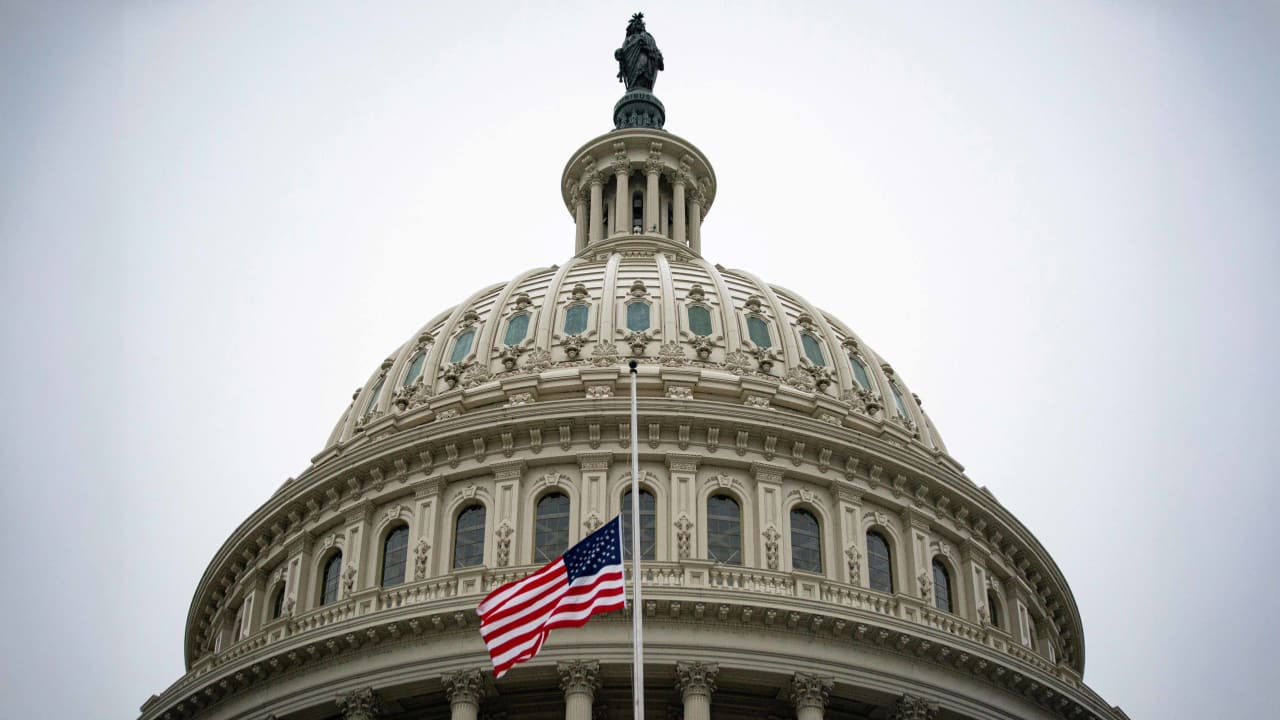
The American flag flies at half staff at the U.S. Capitol Building.
Al Drago/Reuters

Event date


TRANSCRIPT

FROMAN: How about that? There we go. Good afternoon. Thanks for coming to this very special event, the launch of our Future of American Strategy Initiative. We know it’s special because we’ve never seen this room quite so full. And we actually have a spillover room up on the eighth floor, so it’s fantastic that you all are here. We have another 250-or-so people online as well.

I’d like to start by thanking, first and foremost, Rebecca Lissner. She’s been the driving force behind this initiative since joining the Council about a year ago. We’re incredibly lucky to have her. And we’re very grateful to her for all the work that came together to put together this event. So thank you, Rebecca. (Applause.)

LISSNER: Thank you.

FROMAN: I’d also like to recognize some individuals who helped bring this initiative to life—Kim Davis, Henry Cornell, Farooq Kathwari, Howard Cox, and an anonymous donor, who’ve all stepped forward with their support to make sure that we got this initiative off the ground and got us started. We’re really deeply grateful for their commitment.

In a moment we’re going to play a short video about the initiative, but first I just to provide—I’d like to provide a little bit of framing context. Today the country and the world face a moment of disruption more complex, I believe, than any time since the end of the Second World War. And this disruption can be disorienting, but it represents a real opportunity, and another of a series of opportunities, for the Council and its community. In the 1920s, the Council was founded to fight against isolationism and to bring together Americans to discuss the dangers of isolationism and the importance of American leadership in the world. In the 1940s, the Council stepped up to help develop what became the Marshall Plan and NATO. In the 1950s and 1960s, at the peak of the confrontation between the United States and the Soviet Union, the Council was at the center of developing the country’s nuclear strategy. And in the 1990s, with the end of the Cold War, the Council helped develop the concept of geoeconomics, the convergence of geopolitics and international economic policy.

We are living through another inflection point in American foreign policy history. And that’s why we’re launching this Future of American Strategy initiative. This will be a whole-of-CFR, multiyear effort to help shape the next era of U.S. international leadership. And it’s critical that we respond not only to the urgency of the moment, but take an over-horizon view of what the foundation should be for the future. And it’s important that we engage a wide range of perspectives on this issue, not just here in Washington or in New York, but around the country. So, we’ll be engaged in talking with communities around the United States to get their input into our work, and to have a dialogue with them, a civil discourse with them, about the future of American leadership in the world.

Needless to say, this is going to affect the way that we do our work here at the Council, as a convener, as a think tank, as an educator, as a membership organization, as a publisher. It’ll also influence how we operate in terms of collaboration with other institutions and partnerships. And it’s in that spirit that I have the privilege of previewing tonight’s launch. You’ll first—after the video, you’ll hear from Rebecca about the initiative’s substantive agenda. And then we are incredibly honored to have Senator Elissa Slotkin and Senator Tim Sheehy who will be in conversation with Politico White House Bureau Chief Dasha Burns for a live taping of her C-SPAN show, Ceasefire. It’s great to have you all here. It’s great to have this partnership with C-SPAN.

And with that, let me turn to our introductory video.

(A video presentation is shown.)

LISSNER: Good evening. Thank you all so much for being here. It’s great to see so many people in the audience, so many friends and colleagues. I want to start by thanking Mike, thanking Shannon O’Neil for their exceptional leadership of the Council, and also their vision for this initiative. And, of course, an enormous thanks to my many, many CFR colleagues, some of whom are in the room tonight, for all of the effort that went into getting to this launch today. And there’s so much more still ahead in our partnership on this initiative. I also want to thank Senators Slotkin and Sheehy for joining us for this launch event, for contributing their perspectives. I know that we’re all very much looking forward to their comments.

But before we turn to our distinguished guests, I wanted to share a bit about our vision for the Future of American Strategy Initiative, which will be a major, multiyear effort here at CFR. And, exactly as Mike said, if there was ever a time for asking big, bold questions about America’s global role, that time is quite clearly now. There’s so much uncertainty about the future. And it can feel disorienting. It can feel overwhelming. We all live that every single day. But it’s also a tremendously exciting and generative time to be doing the kind of work that we do best here at the Council on Foreign Relations.

So the Future of American Strategy Initiative begins from a central premise. The United States strategic environment at home and abroad is changing in important ways. And those changes will demand fresh and creative approaches to policy and to policymaking. Let’s start with the global context. The international order, as we’ve known it, is undergoing rapid and consequential change. We see global power balances shifting—a more powerful China, belligerent Russia, ascending India, Gulf states with increasing influence, Europe galvanized. And all of this is making the world more multipolar, alongside a United States that remains quite formidable in its power.

We also see changes in the very nature of power itself. Traditional metrics like GDP, like military might, remain important. But those aren’t the only levers of power that matter. Data, AI, energy, physical infrastructure, digital infrastructure, payment systems—these are all tools of influence that matter a great deal today, and will only come to matter more over the next five to ten years. And, critically, in some of these domains private companies and private individuals actually have more influence than nation states.

We’re also seeing changes in the architecture of international cooperation. The postwar multilateral system is stale and it’s faltering, which means the traditional rules, norms, laws, and institutions have less capacity and less relevance than they did before. Whether that’s on trade and economic issues, or use of force, climate change, or global health. Meanwhile, here in the United States, we are also changing. President Trump has invited Americans to question whether our post-Cold War foreign policy has sufficiently placed America first. And for many Americans, the answer is, no.

We’re now engaged in a national debate about the nature of America’s interests in the world. We’re asking whether the United States should still pursue longstanding goals, goals like spreading liberal democracy, spreading human rights, upholding an open economic order, ensuring free access to the global commons, and alleviating poverty. And here at home, we’re also grappling with both capabilities and constraints. The United States still retains immense military, technological, economic, and diplomatic power. And in many ways it seems like AI will only amplify that influence. But we also have important limitations, whether in the form of fiscal strain, industrial capacity, or state capacity.

So all of our work under this initiative will address these trends and ask a basic question, which is: What comes next for American strategy? We’ll consider questions like, how can U.S. defense strategy prepare us to win the wars of the future? What approach to global development best serves American interests? What kind of international economic and trading order do we want to exist within? And what kind of AI strategy best serves America, but also Americans? The list, of course, goes on and on.

As a first cut at these questions, today we launched an immersive multimedia package on our website. It features twenty-seven essays by CFR fellows, along with embedded videos, illustrations by a professional artist, data visualizations. And it really embodies the kind of multimedia storytelling that will be a hallmark of our work. So I hope you all go to our website, visit our social channels, and take a look at what we have already done, with, of course, much more to come.

So the question is, what lies ahead for the Future of American Strategy Initiative over the next few years? And we anticipate that our work will fall into three broad pillars. The first pillar is cutting-edge research and analysis. This is the bread and butter of a think tank like the Council on Foreign Relations. We will publish rigorous scholarship that addresses the central strategic questions of our time, will challenge long-held assumptions and reexamine first principles in considering the way ahead for U.S. foreign policy, and importantly this body of work will be pluralistic by design. We’re going to bring diverse viewpoints into conversation with one another, just as we’re doing on stage tonight. We’re going to offer a range of perspectives and policy recommendations.

The second pillar aims to close the feedback loop between the public and policymakers. Too often, as we all know, foreign policy conversations are hived off from the needs of the American people. With this initiative, we hope to better understand Americans’ perspectives on the United States global role, through grassroots dialogues around the country, through polling, and through other tools of public opinion research. Then we’ll bring those insights back to D.C. to help inform approaches to American strategy that are sustainable because they are grounded in public demand.

And the third pillar of this initiative is we’ll drive the national conversation. We aim to shape the debate about America’s role in the world in the spaces where that debate is actually happening. We will bring our insights to policymakers and policy influencers, and reports, and memos, and private briefings, on-the-record meetings, in legacy media and in new platforms. But we also want to meet Americans where they are. So we’ll complement long-form publications with multimedia storytelling, short-form video, social media campaigns, and newsletters that educate the public and reach people where they are actually consuming information today.

So there’s important work ahead, and we’re excited to do it in partnership with all of you. I hope you will say yes and RSVP and come to our meetings, that you’ll sign up for our newsletters, follow us on social media, and stay engaged as this initiative progresses.

So, with that, I’m very pleased to transition to our panel discussion. It is truly an honor to have Senators Slotkin and Sheehy here with us. Each of them are leading voices on national security, really representing the future of their respective parties. And they will be joining Politico’s White House bureau chief, Dasha Burns, onstage for a discussion and taping of C-SPAN’s Ceasefire. So please join me in thanking them and welcoming them to the stage. (Applause.)

BURNS: What a treat to be with you all. Thank you so much for being here and for being our guinea pigs for our very first on-the-road version of C-SPAN’s Ceasefire.

I want to thank Senator Slotkin of Michigan, Senator Sheehy of Montana for being here with me. These are perhaps some of the most perfect voices for this conversation for the first session of CFR’s Future of American Strategy Initiative, called “The Future of American Power.”

As Rebecca said, I’m Dasha Burns. I’m with Politico, but I also have the pleasure of hosting C-SPAN’s Ceasefire, where we bring Republicans and Democrats together to find a little common ground—disagree here and there, but to do it respectfully. And I know you too will be very good at that, so thank you for doing this with us.

I do want to start with something that you both have in common, which is your military service, which I know will inform this conversation today but I’m sure also informs how you navigate Congress, how you navigate politics day to day. Senator Slotkin, you served three tours in Iraq as a CIA analyst and later held senior national security roles at the Pentagon across multiple administrations. Senator Sheehy, you served as a Navy SEAL, deployed to Iraq and Afghanistan. I want to know how your military service has shaped the way you think about public service and about Congress.

SLOTKIN: Well, again, I wasn’t in the military; I was in the intelligence community. But we were—first of all, hi. Hello, everybody. (Laughter.) I’m deeply regretting wearing a skirt today—(laughter)—but I’m glad to be here with everybody.

You know, I think for me I am so glad that I kind of grew up in national security in a time where it really—I literally served next to people for fifteen years and had no idea how they voted, no idea what their political inclination was, and it was kind of one team, one fight. And I could probably count on one hand the number of times across tours in Iraq or being at the Pentagon or being at the CIA where I even heard someone kind of bring up politics. And that to me is an extremely important anchor for what is now such a politically toxic time; that, you know, people across the aisle can have good ideas, even if I don’t like everything that they, you know, push. And you know, as someone who won on the same ballot with Donald Trump, it is not just an option for me to work across the aisle; it’s a mandate.

So I think that service was an opportunity, thank God, to have, you know, sixteen, seventeen years where I was completely apolitical and was able to look at things on the merits of their—of their ideas and of their mission rather than kind of which side of the aisle someone was on.

BURNS: You got a little inoculation from the politics before you jumped into Washington.

SLOTKIN: Yeah. Yeah. It helps.

BURNS: What about you, Senator Sheehy? How does—what Senator Slotkin is saying, does that resonate with you too?

SHEEHY: I mean, we were in very different communities. I mean, I was in an alpha-male, hyper-testosterone environment where—(laughter)—

BURNS: And she’s onstage in a skirt, so—

SLOTKIN: Let me—let me tell you—(laughter)—

SHEEHY: Which—I think the boots and the skirt look fantastic. So I think—

SLOTKIN: Have you been to the CIA lately? (Laughter.)

SHEEHY: Yes. (Laughter.)

So, you know, having worked closely with our intelligence community and the SEAL teams, you know, it is a different world. Obviously, there’s the paramilitary part of those agencies, but largely the folks that Elissa was leading and part of are the—are the higher level of the IQ scale than my side of the house, which—(laughter)—

BURNS: He’s trying to save—I mean, he’s trying to save himself, I got it. (Laughter.)

SHEEHY: Yes, yes.

But, no, I mean, but truly I completely agree with her that, you know, it was about the mission, I mean, I think we all generally—just this is the fact—you know, generally the barrel-chested door-kickers are conservative guys. I don’t think that’s probably a shock to you. It’s generally just how we are. But it didn’t drive any decisions we made. It didn’t in any way affect how we behaved on a mission or on the battlefield, because it’s only about the mission.

And you know, a popular misconception about any special operations unit—but of course, SEALs are particularly popular these days—unfortunately, to the detriment of our community, is, you know, a SEAL unit, they’re not always best friends; or a special ops unit, they’re not always best friends. Many times you’ll have guys, you know, that don’t even like each other at all personally. In fact, sometimes there’s deep animosity between them. But they’ll still die for each other, and they’ll still cover each other’s six on a target, and they’ll lay down their life for their brother no matter what.

But I think the driving force that kept everyone together, whether the C-17 pilot or an intel analyst or a door-kicker, was the mission. And I think that was something that was really special, you know, across the world—I think Elissa and I both served all over the world; in Iraq, Afghanistan, South America, elsewhere—is there was an alignment of mission, and I think we still do have that. But when the mission is first, everything else kind of falls into place. And it’s important that we always remember that, especially when we’re dealing with our folks that are putting their life on the line in dangerous parts around the world.

BURNS: I think there are some preconceived notions about people that have either served in the military or have worked in national security for a long time, that maybe the hawks come from that community. Do you think that your experience has made you—how has it shaped your perspective on how military might, America’s military might, should be used?

SLOTKIN: I mean, certainly, I think when you serve in this community you understand what goes on in the dead of night that most Americans have no idea is happening to protect them. And it—you have a pretty healthy respect for the threat environment across the world, that you know, the idea that we can just not rigorously defend ourselves is a fantasy, right? And so I don’t know if that makes you a hawk or not, but it certainly makes you a realist about what could befall our country if people aren’t standing watch.

And I think I—you know, I think that the other piece of it is, I mean, I really do believe in American leadership. And I don’t think that’s just because that’s how the postwar—you know, post-World War II generation, like, was taught, right—you know, my grandfather was on the beaches of Normandy and so, you know, we believe this mythology. I’ve actually seen in practice that if the United States doesn’t lead you often leave a vacuum for places like China or Russia or other bad actors.

And so, as bad—and look, if you served in Iraq—and I don’t know if Tim feels this way—but for me, it’s—we all watched our country making fundamental mistakes, right? We all saw it up close and personal. So it doesn’t make me eager to get into war, but I do believe in total that American leadership is better than the alternative. And I don’t know if that makes you a hawk, but it certainly makes me think about the defense of my country and the role I want it to have going forward all the time.

BURNS: I mean, you know what it means to send men and women into war, into combat. How does that shape your perspective on what the U.S. is doing in the Middle East now? I mean, there are a lot of people—there are generational divides about this. There are ideological divides about this. There’s some surprising unity around aspects of Iran. It’s incredibly complicated. But from somebody who has been on the ground, how do you view the current situation in the Middle East as it pertains to Iran?

SHEEHY: Being in the U.S. Senate, for me my highest moral obligation every day is making sure our men and women in uniform are not just being well-resourced, but they’re also being well-served by policy. So I take that incredibly seriously as a combat veteran married to a combat veteran. My wife’s a Marine and all of our best friends are combat veterans; our whole ecosystem of friends and her—both her brothers as well. Like, our whole ecosystem are veterans, so—and many still serving. So we take that incredibly seriously.

And I think the concept of stewardship of the lives and the future of those under our charge, but also the stewardship of the future of this country—to Elissa’s point, you know, we’ve made bad mistakes in lots of places. Wasn’t just Iraq and plenty of other places. You can go back, you know, Bay of Pigs. We can go back to Vietnam. I mean, we can pull American mistakes out of the pile and talk about them all day long. We’re never going to be perfect on that. But American leadership is better than the alternative, which is either chaos; or in the previous era Nazi leadership, Soviet leadership; or in this case Chinese Communist Party or a radical barbarian regime that murders its own people in the most gruesome ways.

So when you ask about the current conflict and about the divides therein, it’s a fair question that has to be asked but I also think the American people have been extremely poorly served by a balanced narrative about what’s actually going on in Iran. I think the average American, whether it’s the Podcanistan people who’ve been bought by Qatar; or whether it’s, you know, activists who intentionally want us to lose this conflict for some reason; or whether it’s just rank anti-Semitism that has somehow taken root in this country again—it’s really shocking. As someone who was raised in the never-again Holocaust era with all of our grandparents stormed the beaches and everything, it’s crazy to think that now we as a nation are going to be host to a new generation of anti-Semitism. It’s a little scary. But I think the average American doesn’t understand the history, not just of U.S.-Iran relations but how far back it goes and how long this has been an issue—not forty-seven years, although it has been, but even further back than that.

And I think this is a generational problem. Three generations of Americans have been fighting the radical Islamist threat of the Iranian Revolutionary Guard Corps and their proxy groups—the Houthis, Hezbollah, Hamas. I mean, we’ve had people skinned alive, murdered in terrible ways, tortured. This regime was founded on a radical vision to destroy our nation, destroy our way of life, and upend the world order, and welcome in a new caliphate, welcome the twelfth imam, and establish a global caliphate, not based in tolerant modern Islam but based in a savage view that the rest of the world should be submitted and destroyed. That is the vision of this regime. That is their goal.

BURNS: Well, where we are now is this regime, despite what the United States has done there—it’s certainly decimated a lot of their military capabilities, but ultimately that regime is still in place. And in some ways some of the more radical factions of that regime are still in place, which is what has made negotiations and making a deal so difficult. So what do you want to see the United States do from here? Because we are where we are. We’re at this uneasy stalemate, this kind of hot ceasefire where some bombs have actually, you know—(laughs)—been flying regardless of the terminology we’re using right now. What is next here? Because it seems that the administration is a little bit stuck at this moment.

SHEEHY: Well, I think that’s an interesting characterization, given we’re ninety days into something that has been lasting for forty-seven years, and six presidents have kicked this can of both parties. And to say that President Trump hasn’t somehow tied this thing off inside of three months that’s been going on for half a century is a little weird.

BURNS: To be fair, he said six weeks. (Laughs.) He said he’d be done with this in six weeks, so I’m following the timeline that was laid out by the White House. I know from my reporting he wanted to get in there, get it done, and get out quickly.

SHEEHY: Yeah, of course. That’s what everybody wants in every war.

BURNS: But that’s not where we are. So I’m curious: From your perspective, what do you want to see next?

SHEEHY: Well, I mean, let’s see. There was about six weeks of active combat operations, in which we lost one plane. No amount of casualties is desirable or good, but at the end of the day in a forty-five-day air war against, you know, Saddam’s army in 1991 he lost—he shot down forty-five of our planes, had our pilots prisoner of war. We lost 160 people in a short period of time. So I think the military operation has been carried out very, very well, but you’re not going to get a fifty-year regime to collapse in ninety days. I think militarily we’ve carried out the targets very well, and at this point it’s a pressure campaign to make sure that we finish the job. And I think we’re in a pretty good spot, given if you had rewound the clock and asked any military expert how long it would take to debilitate the Iranian regime militarily I don’t think they would have said inside of eight weeks we’d be there. And largely we were, and now we’ve been in, as you stated, a stalemate for the last month or so as we’re trying to see where is that economic pressure point where they’re going to come to the table and either make a deal or there’s going to be an internal collapse where the regime is wiped out completely. And I think, obviously, there’s an element of the unknown there that we have to keep the pressure on.

BURNS: There’s a military piece you’re talking about. There’s also the strategic and political piece. And I’m curious for your perspective, Senator, how the strategy here has been carried out. What is the message that we are sending, both in the Middle East to our allies but also globally when you think about NATO and you think about China, you think about other relationships that we are—

SLOTKIN: Yeah. I mean, well, look, the president has taken—you know, conducted military operations in nine places in the world in the first fifteen months. And I think that’s—we went back and looked at it; I think that’s more than any president in history. And so I think it’s—he has shown that he’s willing to use force. And you can have a debate about whether that’s a good thing or a bad thing, but he has shown he’s willing to use force.

This last conflict is pretty much the first one that’s being felt at home, right? The average person is feeling it at the gas pump. They’re driving by the gas station ten times a day and seeing the price of gas, unlike a Venezuela or a Nigeria where they may hear about it, they may not very much, but—

BURNS: Or the twelve-day war in Iran.

SLOTKIN: Right. But they still didn’t feel it in their own pocketbook. So I think that that’s a big distinction, certainly back home in Michigan.

But I think, you know, the thing I feel about the Strait of Hormuz, right—I mean, look, I have no love lost for the Iranian government. I served in Iraq. The Iranian-backed militias killed a lot of friends of mine. And there’s no doubt, I think—I think there’s wide agreement that the Iranian regime, who were just killing people, you know, earlier this year, are a terrible, longstanding American foreign policy problem. That’s different than being able to quickly get through a conflict successfully.

No doubt that we’ve—we have degraded their nuclear capabilities, their ballistic missile capabilities, their terrorism capabilities. But because they can still project power in the Strait of Hormuz and they have that strategic geography—which, I’m sorry, you learn in Middle East 101—then it’s—you cannot, I don’t think in any credible way, declare victory until that Strait of Hormuz is opened up.

What I think about what’s going on and the implications of the Strait of Hormuz, I think about, holy moly, what if that was the Taiwan Straits, right? The implications—the international implications of, like, you think it’s hard when they choked off the place where 20 percent of the world’s oil goes through? Try if China chokes off where 25 percent of all ship traffic goes through—I mean, the pain. So I think the implications are clearly there.

But you know, I think it is also proving, you know, whatever—however long this regime has been there, the president laid out how long this would take and it is just proving to be much more complicated. And the American public is paying that price every day.

BURNS: You know, the last three presidents—Trump, Biden, Obama—all campaigned in some form against U.S. military intervention in the Middle East, and yet here we are again engaged in a military conflict there. Isn’t the whole idea—as we think big picture about American strategy here, is the whole idea of disentangling from the Middle East even realistic?

SHEEHY: I mean, I think it’s not in the near term. I mean, we can all wish for it, but the reality is, as Elissa just noted, it’s a strategic geography that still has a massive play in the—in the global energy markets. And I think what’s also left out of the discussion around Venezuela, around Iran, is that these are not isolated rogue regimes that we’re dealing with in a vacuum; these regimes have fundamental connectivity to a global axis of rogue states—Russia, China, North Korea—that utilize their ability to dodge sanctions and move global energy and oil as a way to create that dark global economy that harms them.

If we cut off Russia’s ability to launder oil through Venezuela, that’s bad for Vladimir Putin and it’s bad for his war in Ukraine. If we cut off China’s discount sanctioned oil access at the counter to Iran, much of China’s energy infrastructure are oil-burning power plants. We don’t imagine those in America anymore; we got rid of those a long time ago. But China uses them because they’re cheap and they’re available, so cheap discounted Iranian oil is fundamental to the Chinese economy. So hampering their ability to use these states as attack dogs, and money laundering and oil laundering operations, absolutely has an impact on this.

And I think, you know, the frustration when folks say, well, Trump said he wasn’t going to start any new wars, well, I would say he hasn’t started any. He’s trying to finish off wars that have been going on for a long time. He’s trying to finish off a Venezuelan regime that’s been flooding our country with terrorists and fentanyl for decades. He’s trying to finish off a forty-seven-year war that many other presidents have made the assessment this is a complicated, tough problem; I’m going to kick it to the next guy because this is a tough problem to solve. I think President Trump, whether you like him or not, has made the decision: I am not going to kick this problem to a fourth generation of Americans. I’m not going to kick this one yet another decade down the road and potentially have another administration that is going to inject $150 billion into a terrorist regime in an attempt to buy them off. We’re not going to award bad behavior with pallets of cash and gold. We’re going to reward bad behavior with lead and bombs to make sure they stop murdering our people and spreading regional instability.

So I think we’d love to disentangle, but for the meantime we’ve got problems we got to solve.

BURNS: Well, so let’s talk about the delicate dance when it comes to the power to declare and execute war. Senator Slotkin, you voted several times to limit President Trump’s war powers in Iran. Senator Sheehy, you voted against that. Is there any common ground there? At what point do you think Congress should have a say?

SLOTKIN: Yeah. I mean, it was notable—and we had some absences yesterday, but yesterday after voting on, you know, proceeding on the war powers resolutions, it finally passed yesterday in the Senate. And I think, you know, look, long before this moment, when we’re both freshmen in the Senate, Congress has basically been shoving off its constitutional responsibilities to declare war. And that’s from the Iraq War, right? That’s the last time a major vote took place on going to war, came to the—to the Senate. And a lot of people lost their jobs over it, right? The war went bad. People, you know, regretted that they voted for it. People lost their jobs. They lost their seats. And so since then Congress on both sides of the aisle has been, like, we don’t really want to exercise this power. And the executive branch through that time, Democrats and Republicans, has been fine with that, right? Obama was fine with it. Trump was fine with it in the first—you know? And so I think, you know, there is—that’s generally the trend that’s happened with the Senate over the last twenty years.

BURNS: You don’t think that’s the right trend.

SLOTKIN: I don’t—I don’t think it’s good. I think that when it comes to longer engagements and war that we should have a popular conversation about that and there should be a vote.

I also like the Constitution and enjoy carrying it out. And this branch of government right now is, like, it’s a little iffy on how many of our constitutionally given missions we’re actually executing in the U.S. Senate. So I have been voting—even though, you know, like I said, I have no love lost for the Iranians, I have been voting on those war powers—war power resolutions. And I think it’s not much of an ask to go to the administration and say: Make your case. You know, explain to us why we need to continue this after sixty, ninety days—why we need the expense, the blood, the treasure. I don’t think that’s a bad thing. And I think no matter who’s in power we should be pushing on that and executing our constitutional responsibility.

BURNS: Some common ground. I think, Senator Sheehy, you probably also like the Constitution. (Laughter.)

SLOTKIN: Big fan.

SHEEHY: Yeah, it’s pretty good.

BURNS: So what do you make of what Senator Slotkin just said there?

SHEEHY: So, you know, the Constitution is, you know, kind of the penultimate document that is the—is the end result of years of craftsmanship to get us there. And it’s interesting, because in the earliest drafts it was the Congress must declare—must authorize the authority to make war, and they specifically changed that term. They crossed it out and put declare war and replaced the term “make war” with “declare war.” And they did that because the Framers understood there would be scenarios where the president would not have time—at the time, we still had to convene a Congress, and get in their horse and carriages, and ride in from who the hell knows—you know, Appalachia, Kentucky, whatever the hell they were coming from. And it’s like, I can’t wait ninety days to convene a Congress.

A lot of people don’t realize the first day they gaveled in the Senate they had to gavel out because we didn’t show up. There was only eight senators and they needed twelve to start the first U.S. Senate in 1789. They said, hey, guys, go home; we don’t have a quorum. So getting people here was hard, quite literally, physically. Believe it or not, we still have attendance issues sometimes. (Laughs.)

SLOTKIN: We do.

SHEEHY: And the Framers said, if the president needs to act quickly we can’t constrain his ability to act with our inability to do our job. And that’s why we’ve only declared war five times in the history of this country, yet we’ve fought a hell of a lot more than five wars.

In the earliest conflict we fought overseas, you know, we were fighting this evil Islamic caliphate that was taking Americans hostage, torturing them, murdering them, closing a strategic seaway, and blocking global trade, and causing havoc for years on end. And it was a really hard problem to solve. And Thomas Jefferson kept trying to deal with the caliph, saying, you know, listen, what is it you need? We were paying them ransom. We were giving them pallets of cash. Sound familiar? And guess what? Didn’t change their behavior. They continued to murder and rob and steal and affect our economy, and at that point we were a mercantile republic. We needed to export our goods and we couldn’t, because they were taking over our ships and killing our sailors.

So Thomas Jefferson sent the Navy and the Marines to Tripoli in North Africa to—on a punitive expedition to destroy the Barbary pirates and put the caliphate back in its place, and he did. And he did not declare war because, quite frankly, he felt: This was an existential threat to the republic. This has been going on too long. I’m going to act on it.

I think the reason I bring that one up, not only are there some regional and tactical parallels to what we’re dealing with, but it set an early marker to say the executive branch does have the authority in certain circumstances. And I think in this case this wasn’t out of the blue. This wasn’t some random comet that hit the Earth. This country has been actively targeting and murdering us for forty-seven years in every way possible, from, you know, narcotics, to terrorist attacks of our allies, to direct missile attacks on our people in the region. It’s not like we came out of nowhere and punched this guy on the side of the head. He’s literally been stabbing us in every part of our body for fifty years and we’ve basically been saying: Please stop. We’ll pay you to stop. Please stop. We’ll negotiate with you to stop. And he didn’t.

So I think this was an effort to finally put an end to a half-century of terror, and I think he has the authority to do it. I hope he finishes the job. I hope we do not constrain him from finishing the job, because at this point agree with this phase of the conflict or not the worst thing we can do is show China and show Russia and show the rest of the world that right when we have our enemy, our boot is on his throat, right when he’s about to draw his last breath, we’re going to back off, reenergize him, and let him reconstitute and be more radical than ever.

BURNS: Well, you transitioned me beautifully because I do want to talk about China. And as you mentioned earlier, none of this is happening in a vacuum. Whether you talk Venezuela, whether you talk Iran, whether you talk Ukraine, all of these conflicts are interconnected. The president just went to China, met with Chinese President Xi Jinping. That summit came amid all of these conflicts in the world, amid tensions over Taiwan, tensions over trade, tensions over AI. I’m curious, first of all, your response to the summit at large. But also, what is keeping you up at night when it comes to China right now?

SLOTKIN: Yeah. I mean, look, you know, we are used to summits being these, like, huge events where there’s a ton of, you know, official documents that come out of it and all the announcements. And I think by that traditional standard not a lot came out of it. I don’t personally have too much of a problem with that.

And I think, you know, with China we have just such immense issues. You know, their economic cheating—if it were me, if I’m queen for the day, their economic cheating; their military expansionism, including issues related to Taiwan and nukes; and then AI, and thinking through what the right—left and right limits are for new technology; those to me would all be on the plate. We know that Iran is something that is a speed bump for both them and us, and so I was glad to see that at least there was some conversation about it. But to me we have huge equities with China, and it—I’m not sure anything really—the needle really moved.

After the summit we heard dribs and drabs. Like, the Chinese readout said they actually had a conversation about AI and agreed to come back and talk. I do not like the conversation around Taiwan that I—that came out of that.

BURNS: Well, actually, that does bring me to my next question, which is that exactly the president is delaying implementing a $14 billion weapons package for Taiwan. Last week he called it a, quote, “bargaining chip” in broader negotiations with China. Senator Sheehy, what do you make of that position from the president?

SHEEHY: Well, when you look at these global engagements, especially with a country like China, I think what we in America, unfortunately, have done, especially in the last few years—but, I mean, it’s embedded in our psyche—is we want instant gratification. We want to have a meeting; we want to leave with a deal. We want to go to a summit and come home with a signed treaty or pronouncement. We want to start a war and have it be over in one and twelve days. We’re so conditioned in every respect for rapid conclusion, instant gratification, and we agree on an outcome and move to the next issue. And, unfortunately, that’s not the way of most of the world, and especially when you’re dealing with someone like China, who thinks generationally. We think by the quarter. We think by the week, by the month. Iran, for example, too. I mean, the Middle East is the cradle of civilization, an ancient part of the world, where they’re thinking about what is their civilization going to look like in a thousand years, not in one quarter.

So I think what this president has always shown us is, you know, I wouldn’t take his rhetoric literally, but take it seriously. And I think, is he literally planning on cutting off Taiwan? Absolutely not. He has never indicated that and he’s never planned that. The reality is he is using all negotiating levers on the table, as he does with most things, to say, what—how can I get the best scenario for America out of a deal with China? And if that involves discussing arms deals with Taiwan, then it does. But I don’t think he’s ever wavered in his position, just like he hasn’t with Israel, just like he hasn’t with NATO—which I think it’s important we be clear on NATO.

Yes, he is trying to strengthen NATO by telling our allies in Europe: You’ve had seventy-five years to strengthen your defenses. Invest in it and do it, because you can no longer count on us to be there, because, guess what, we’ve got other threats we’ve got to deal with. And I don’t think it’s an unreasonable position to take.

BURNS: Are we—

SLOTKIN: I will just say—I have to say, I don’t think the president has been consistent on China between his first term and his second term. I feel like it’s one of the biggest 180s he’s done. On his first term—you know, I think, again, you used the word “hawkish.” Like, I think that there were a number of actually positive things the president did in his first term to kind of put the Heisman on Chinese—on the Chinese. I think about, like, technology, and setting up offices at the Department of Commerce to block some of the really, really egregious and sensitive data-collecting technology that they were bringing into the country. I, like, heralded that. That’s a positive thing. Now we’ve gone the other direction, and he’s selling them some of our most, you know, exquisite and technologically advanced microchips.

BURNS: Yeah, he’s in dealmaker mode.

SLOTKIN: It’s like, it’s in dealmaker mode.

So I would say, of all the things that I look at from a foreign policy lens between Trump’s first term and Trump’s second term, China is the one where I really feel like he’s done a 180. And that is, again, as someone who believes that, yes, we do business with the Chinese—I’m in a manufacturing state, right? We do business with them. But they are a national security concern. I think that is one of my biggest question marks about Trump’s second term.

BURNS: Do you feel any of that rings true? (Laughter.)

SHEEHY: Well, there was, obviously, a lot of activity in four years between that, to include a global pandemic caused by China, that caused massive economic and, obviously, millions of lives around the world. So I think there is a different viewpoint here.

I also think that we’ve seen—

BURNS: But wouldn’t that make you more hawkish? Wouldn’t that make you tougher? If you—no, seriously, like, if you had the pandemic and they’ve become a bigger problem, wouldn’t you be tougher?

SHEEHY: So, is crimping their massive oil supply from fifteen cents on the dollar oil from Iran not being tough on China? Is eliminating the largest ghost fleet broker of sanctioned oil in the world that’s supplying Putin and Xi’s regime, that’s not being tough on China? I think their two most aggressive satellite states, Iran and Venezuela, taking them off the table from being—I mean, you think China likes the fact that we’ve had three aircraft carrier battle groups for thirty years steaming around in circles in an area the size of Lake Erie? Because that’s where they’ve been. They haven’t been in the Taiwan Strait. They haven’t been in West Pac predominantly for the last thirty-five years. We have three deployable aircraft carriers at any one time, generally. And because the Middle East has kept us tied down for almost half a century, that’s good for China. Now they can build islands, they can cut off freedom and navigation, they can control the seas.

And trying to solve those issues—China loves having rogue states to do their dirty work for them. And I think the aggressive action that has been criticized heavily on the Hill by a lot of folks is, in fact, a direct hit on China. I think it’s not a mistake that after we’ve already gone after those two regimes and debilitated them severely—they’re not totally done, I get it, but they are absolutely handicapped—to then go to China after those two events and say: Hey, buddy. Yeah, your two buddies back there who’ve been screwing with us for the last decades, and been killing our people with fentanyl, and been murdering our people with suicide bombs, and giving you cheap oil? Yeah, they’re gone. They’re off the table. So now let’s have a talk. Things are a little more balanced.

So I don’t think it’s been dovish at all. I think rhetoric is one thing. Action has shown that we’ve gone after some of the most vital jugular veins in the world.

BURNS: Just quickly, do you give the president credit for any of that?

SLOTKIN: For taking military action in Venezuela and Iran?

BURNS: And the strategy that Senator Sheehy just described.

SLOTKIN: I mean, I think if you’re—if the logic is we’ve shown China that we’re willing to act, look, there is—you know, there’s capabilities and there’s intentions. And it’s very hard in some cases to convince people we’re willing to take action, even if we have all the funky tools to do it. And I think Trump has made very clear he’s a foreign policy president; he will take action. There’s no question about that. Whether I can actually say that that makes—that gives us more cards and we got anything out of the summit for that—what have we done on their economic cheating? What are we done on—we gave on Taiwan.

So I can’t—certainly, every country in the world is, like, holy crap, America will take military action even when they campaign against it. But whether the actual, like, juice is worth the squeeze with China, I just personally have—can’t say I’ve seen that.

BURNS: I want to end on our alliances around the world. I’m thinking mostly about NATO, because that relationship has changed so dramatically already over the course of this administration. Where do you see our relationship with our allies? Do you think it is stronger or weaker today than it was a few years ago?

SHEEHY: You know, obviously, you’re bucketing all our allies into one, and I don’t think that’s—so I’m going to dodge your question simply by saying different alliances are stronger and different are weaker.

BURNS: Well, let’s talk—let’s talk NATO.

SHEEHY: Yeah.

BURNS: Let’s talk NATO specifically.

SHEEHY: I mean, I think NATO strategically will be stronger. I mean, under Trump they’ve grown. When you look at how they’ve invested in their defense—I mean, if you’re going to count NATO by how many meaningless flags they hang on the wall—people say they’re members. What does it mean when they’re a member? Hey, we join up and we get free American protection. That’s not—that’s not an alliance. That’s not membership. That’s freeloading. Now when you see European countries actually stepping up, saying, OK—Dwight D. Eisenhower said in 1951, who I think was one of our greatest Republican presidents—everyone knows him as the general; they forget what a great president he was—he said in 1951: If there’s American troops in Europe in ten years, NATO’s been a failure. That was a long time ago, and that was a guy who deeply cared about our alliances.

BURNS: You’re Mr. history lesson today. (Laughs.)

SHEEHY: Well, I think—I think we need that, because we’re so short term on Twitter and whatever, we’re flipping left and right, everything’s fifteen seconds, and folks need to take a longer view. These issues didn’t start eighteen months ago when Trump took office. They didn’t start on Obama’s watch or Biden’s watch. Most of the issues we’re trying to solve predate our nation. I mean, Sunni-Shia, Persian-Arab conflict, I mean, 5,000 years, et cetera.

But back to NATO. I treasure NATO. I have the NATO Article 5 service ribbon, deployed with the SAS, SBS. You know, I’ve been to eighty-plus countries, lived on three continents. I treasure that alliance. But it’s also incumbent on our allies to defend themselves. And America, as we’ve shown, we’ll defend anybody who will defend themselves. But if you’re not going to defend yourself, you better damn well not call me and have me send me and my kids and my wife to go die for your country if you’re not willing to fight for yourself.

And I think that’s the crux of this issue, is that for seventy-five years we’ve had an entire continent that has chosen to retire at age forty-nine and play golf and pay greens fees with their taxpayer dollars instead of invest in tanks, bullets, planes, and bombs. And then when they’ve needed them they call us. And, yes, they deployed to Iraq and Afghanistan with us, no question. But if you think Islamic terror is not a threat to Western Europe too, then think again, because it is.

BURNS: Senator Slotkin, has NATO been bolstered in this era?

SLOTKIN: There is—I’m sorry, there is no way to disagree with the factual data that they are spending more on their own defense, that they are having rapid conversations about European defense separate from us. Like, I’m sorry—and I say that as someone who was at the Pentagon and, like, every year went to NATO and was, like: Could you guys please invest more in your own defense? And they were, like, thank you, no thank you, I don’t like—right? And for our European—I’m sure there’s some European friends here. I do not like that in order for them to move they had to be kicked in the teeth, but there’s no denying that they moved. Now, Vladimir Putin had something to do with that too, right? It’s not all Donald J. Trump. But the fact is they’re spending more, they’re having conversations without us.

But I will say that comes at a price, and that price is playing out right now in the Strait of Hormuz. Like, when we called, they didn’t show up. And if you want to understand, like, specifically the value of alliances, is that sometimes, like, they have more minesweepers than you, and you need minesweepers, and you call them to come, and they don’t show up, right? That, to me, is like, there is—if we want to take a long view, I do deeply believe in our alliances. I do deeply believe they need to invest in their own defense, and there’s no doubt. But I think that to say that only having that kind of stick approach with our allies necessarily makes us safer. There are puts and takes there, and we’re seeing that play out in the Strait of Hormuz right now, where they just didn’t show up when we called.

SHEEHY: Well, I don’t think we can give Putin credit for that because he invaded Georgia in 2008, Chechnya in 2010, Crimea 2012, Syria 2014, and finally Ukraine again, and none of those times seemed to spur them. Even the latest Ukraine invasion, you know, didn’t. It wasn’t until President Trump really, as you said, used the stick. So I think Putin is now there, but cause and effect shows that Putin’s continued expansionist invasions have not caused the self-correcting impact that that the president has.

And I think—now, you asked about NATO, but other—take a look at Japan, UAE, Saudi, Israel. Those alliances are ironclad right now. And I think when you see what Japan is doing and what—they’re literally changing their constitution away from the pacifist commitment they had post-World War II that MacArthur wrote and they are saying: Hey, we have an obligation to be the regional source of stability. I think that’s pretty impressive.

BURNS: See, I knew you’d get to all parts of my question. Thank you. (Laughter.)

I see a lot of eager faces in the audience also looking to ask some questions, so I’m going to move to the Q&A portion of this event. Reminder that this is all on the record, so don’t be shy. (Laughter.) Questions? This gentleman right here.

Q: Senator Slotkin, are you interested in running for the presidency? (Laughter.)

BURNS: We’re talking about foreign policy, dude. (Laughter.) Foreign policy. I knew that was going to come. I knew that was going to come. (Laughs.)

SLOTKIN: Yeah. Yeah. Look, I will just say on my side of the aisle, every Tom, Dick—

BURNS: I already tried this, by the way. (Laughs.)

SLOTKIN: Every Tom, Dick, and Harry is going to run, right? Like, it’s going to be—like, I’ve got, like, a spreadsheet of twenty-nine or thirty people who are looking at running. It does not have to be me, but I am interested in being part of the next generation of Democratic leadership that changes the, like, approach and brand of this party, because Democrats have a problem. I think Republicans have a whole other set of problems. I’ll let Tim speak to those. (Laughter.) But that—I want to be a part of the next generation that redefines Democratic leadership. It does not have to be by running for president.

Q: But strategy is required—

SLOTKIN: But thank you—but thank you for the plant. Yeah.

BURNS: All right. Foreign policy, for this gentleman right here in the red tie. Thank you.

Q: Yes. Thanks very much. Thanks, Senators.

Just because Cuba was in the news, it’s been a longtime thing. I’m just interested in, Senators, how you see the Cuba situation playing out. Thank you.

BURNS: Senator Sheehy?

SHEEHY: Well, obviously, we saw the indictment come across today, so I think if we saw anything it would probably look similar to our Venezuela situation.

SLOTKIN: Yeah. It’s looking strikingly like Venezuela, which starts with indictment and, you know, culminates in military action. And it is just very clear to me that the secretary of state/national security advisor has a(n) incredible interest in the Western Hemisphere. And in the National Defense Strategy and other documents they’ve been very clear that they want to dominate the Western Hemisphere. The language—the verbs are strong. And that’s very different than presidents of the past. It’s very different than even President Trump in his first administration.

Again, I think if you—no one doubts at this point that we’re willing to take military action, but is the juice worth the squeeze on a place like Cuba? You know, I don’t know.

BURNS: Senator Sheehny, is the juice worth the squeeze in Cuba?

SHEEHY: What squeeze are we talking about? (Laughter.)

SLOTKIN: Military action.

BURNS: That’s a great question. To do in Cuba what we did in Venezuela.

SHEEHY: I think so. I mean, would you have to—I think it’s—we have these persistent issues—North Korea, Cuba, Venezuela, Iran, Taiwan, China—that you know, we—I guess you, the foreign policy establishment that we’re all now a part of, have kind of just come to accept that, well, you know, this will always be the case; like, we’re always going to have this weird rogue state ninety miles off the coast that at one point was ready to nuke us, or we’re always going to have this hermit kingdom in Korea that’s ready to—you know, like, we just accept these. And I think, you know, Charles Krauthammer, who I was a big fan of, you know, he wrote a piece on Trump many, many years ago and said the guy’s not a liberal or conservative. Really, when you boil it down, he’s a pragmatist. He’s a problem solver. He’s going to look at a problem and say: I don’t like that. I own this golf course resort hotel; I don’t like the way that golf hole is laid out. And instead of looking at it, I’m going to bring the bulldozers in and I’m going to change it. And I think he takes that viewpoint, love him or hate him, and he looks at the world map and says: Why do we tolerate rogue states who actively want to kill us, undermine us, murder us, upend the world order? Why do we just sit here and take it? Why don’t we fix this? And what levers do I have to fix this? OK, oil, blockade, bombs, stealth bombers, indictments, Delta Force, Navy SEALs. What are all the tools I have to effect an outcome to this issue? And I think with Cuba, that’s obviously, I think—I don’t think that was on Trump’s list, but I think our secretary of state/national security advisor/viceroy of Venezuela/you know, lunar governor—(laughter)—I don’t know what else we’re going to have on there now, but—(laughs).

BURNS: The new White House DJ.

SHEEHY: (Laughs.) Exactly. Yeah, yeah.

BURNS: All right. (Laughs.)

All right, next question. In the back there, standing up. Yeah.

Q: Excuse me. Hi. Steven Cook, senior fellow for Middle Eastern studies at the Council on Foreign Relations.

First, I want to thank the three of you. I’ve been at the Council for twenty-two years and I’ve never heard juice and squeeze used like that once—(laughter)—and it’s been used four times in this meeting, so it’s really terrific.

BURNS: Overuse. Overuse.

Q: So definitely a new generation of foreign policy thinkers now.

I wanted to get away from the headlines for a second. You both, in your opening remarks, seemed to agree with each other a lot about American leadership in the world. And so, given the video that we saw and Rebecca’s remarks about the changes in power and distribution of power and the changes going on in the world—Senator Sheehy, you talked about Japan taking—you know, changing its constitution. These are kind of unheard of things. So what in this new era—we’re working out a new global order. What does American leadership look like in this era? That’s why we’re here now. We’re thinking about American strategy. So what—how do we lead in this new—in this new era?

BURNS: Senator Slotkin?

SLOTKIN: Well, I’ll start. I mean, look, I—

SHEEHY: Madam President, please. (Laughter.)

SLOTKIN: I think—I mean, look, everyone is trying to think beyond, you know, the headlines and do some—and everyone knows, or I hope they know, that we’re never going to snap back to the old way of doing things. And if you think that, you’re living on—I don’t know, you’re not living on the right planet or something.

And—but I feel very firmly, and maybe this is a shocking thing to say in a foreign policy audience, that no matter what we’ve talked about here today—whether it’s China, or rogue states, or, you know, Russia, or, you know, whatever—I think the existential threat to America, the biggest threat above all those others, is a shrinking middle class. I believe it in my bones that if we are not going to solve and figure out that problem it doesn’t matter how much nice talk we have about foreign policy, because the American public will not allow us to lead in the way that I think we want to lead abroad. Because they’ll be so focused on what they don’t have, and how they aren’t living the lives that their parents lived, and their kids are set up to do worse than them, that they’re going to say, like we heard the other day: Like, why am I—why am I spending money on places like Iran or Ukraine? What is the point of leading in the world if I can’t send my kid to a good school, good public school?

So I think the most important thing for anyone trying to think out of the box is the job is not, like, how do we get the American public to care about foreign policy. The job is how do they get you to give a shit about what’s going on for them, OK? And that, to me, is the biggest paradigm shift that Washington’s going to have to get through.

I think—you know, I’m not a supporter of President Trump. I won on the same ballot as him. But I will say I think he’s a symptom of a much bigger issue going on in our country, which is for years and years and years, decades after World War II, you knew when you grew up as an American if you worked hard and played by the rules you can get ahead and your kids can do better. And that is looking harder and harder to achieve, whether you’re working at an auto plant or just graduating from a fancy college. So until we deal with that, we’re just going to pendulum swing between his party and my party. We’re going to have four years of foreign policy, and then it’s going to swing on back and we’ll undo everything the previous administration did. And you want to talk about what lack of leadership looks like, you want to look, talk about what it means to hand over leadership to the Chinese, just have us fighting and turned inward on each other in a multiracial, multiethnic democracy, and you have your answer right? So I want to lead, but until we get that issue right, and until we understand that the point of foreign policy is to enrich us here and make our lives better here, we’re just going to be going in circles and pendulums swinging back and forth.

BURNS: I want to connect a couple of dots here, because—(applause)—you mentioned that the way the president sees foreign policy—in fact, the way that he sees a lot of problems, whether it’s domestic or international—is not necessarily by Republican or Democratic standards, or how he solves those problems is not through a Republican rulebook or a Democratic rulebook. I think he has thrown all of the rulebooks fully out of the window. And when I talk to experts on any number of topics, they basically say after Trump you cannot put the toothpaste back into the tube. He has changed dynamics in such a way that this disruption is here to stay. What do you think the Trump foreign policy doctrine, and how it’s viewed domestically and internationally—just a simple question for you—(laughter)—what do you think it ushers in, in terms of the next era of American leadership in the world?

SHEEHY: Well, I don’t disagree with Elissa at all on her statement that, obviously, solving domestic issues is critical to our ability to project foreign policy. Because for us to have credibility on the globe, to go to developing countries and say look at us as an example, it’s hard for us to hold us up as an example when we appear dysfunctional ourselves.

But I think, like, what’s the real desire to put—was the toothpaste that good to begin with? Why do we want to put it back in the tube? The toothpaste that showed that, you know, we were funding global defense while every other country chose not to? The toothpaste that said, you know, illegal immigrants were getting more benefits than veterans? That we have nonprofits siphoning money from the American taxpayer and sending to countries that hate us? So, by, yes, deconstructing some of these things and open up these boxes, saying, oh, wow, well, we thought this box was an instrument of foreign policy strength, but guess what, it was not—this box wasn’t creating strength; it was creating weakness for us by allowing, you know, pick your poison, a nonprofit that was literally funding terrorists trying to kill us. Like, are we funding allies that have chosen not to defend themselves by relying on our defense, and in so doing they’re going to build a dependent state?

So, is the toothpaste going to go back in the tube? No. Do we want it back in the tube? I think the American people have said they do not. And I think probably the rest of the world is now saying, yeah, we’re not going back to that.

But I also think this constant looking backwards—I mean, I revere a lot of the twentieth-century craftsmen like Eisenhower, like Marshall, like Dulles, who early on had that long view to build this twentieth-century stewardship of the global order after the world was literally shattered and we saved it. And I don’t care, I’ll say that: We saved it. So, like, I don’t—I don’t really want to hear from the Europeans about how mean we are and bad we are when twice we had to send hundreds of thousands of our boys over there to solve their intramural squabble that was destroying the world. And quite frankly, just sit down and shut up because the only reason we had to go there in the first place was because of what they did.

So if we—if we want to get serious about how do we put the toothpaste back in the bottle, I think we’ve got to say: What does America look like going forward in the twenty-first century? I think what we’re saying is we’re no longer going to uphold a world order that doesn’t seem to want to work with us. Like, we’re members of the global community and we’re going to stand with you, but we’re not going to subsidize your own security. We’re not going to subsidize your economies. Instead, we are going to advocate for what’s good for us, like pretty much every other country in the world does. Every other country in the world does what’s good for them first. And it’s like, you know, when you get an airliner and they say, hey, put the mask on your child first before assisting yourself—or, I’m sorry, put the mask on yourself before assisting your children, you know? (Laughter.) Yeah. I’m so in my own, you know, space now. And you know, like, as a parent, you love your children. I love all children, but I love my children most first. And if there’s a burning building and my kids are in there, I’m sorry, I’m going to go to my kids first. I’ll go help other kids, absolutely, but I’m going to help my kids first. And I think what we’re seeing is a reversion to call it America first, call it MAGA, whatever the hell you want to call it. But we’re going to look after our interests first in any global situation, whether it’s commerce, whether it’s foreign policy, whether it’s combat, and we’re going to say what’s best for the American people first.

And I think, to Elissa’s point, to justify our actions to the middle class, they say, why are we spending money on space infrastructure? Why are we spending money on fighter jets or battleships? Or, why are we sending our troops there? We have to be able to tie that back to that middle class and say this is being done for the wellbeing of America; it’s not being done for the wellbeing of another country you’ve never been to. And there are times, of course, where we’ll need to take action to protect another country because that is in the benefit of our people as well. But we got to explain that, and of course they got to buy into it.

BURNS: All right. We’ve got juice. We’ve got toothpaste. What else we got? (Laughter.)

This young lady in the first row. Thank you.

Q: Thank you, Toby Gati.

I would like to make a couple of points. The first is that some of our problems are self-inflicted, and we haven’t really talked about them: tariffs, Greenland, Canada thinking about becoming a European member of their group instead of ours. A lot of them are misjudgments about people—Putin, Xi. The idea that some of these are—can be allies in any way I think is very mistaken. But the main point is that you’ve only discussed military tools. I’m shocked there is no mention of Ebola, of what’s going on in Africa, of the use of the radios and the propaganda by other countries which are aimed every day at us, and we no longer have these tools. So we kind of self-disarmed, which is very upsetting.

And your last comment. I’m a mother of two, and I have three stepchildren, eleven grandchildren. I’d like to think that if none of them were in a building I wouldn’t say I’m not going in because they’re my children. And I think it’s very—

SHEEHY: That’s not what I said. I said I’d get my kids first.

Q: I understand that.

SHEEHY: That’s not what I said.

BURNS: Ma’am, do you have a question for these two?

Q: Well, my question is, what about the other tools of our foreign policy? We have totally tied our hands behind our back, and we no longer have them, and we can’t go and help people. All we can do is bomb them. And is that what we want for the next strategy for the U.S.?

SLOTKIN: Yeah. I’ll start. I mean, I think—look, I don’t think we’ll ever snap back to the way the U.S. government was structured before Trump came into power. But I think that he threw the baby out with the bathwater with DOGE, right, and just did it, like, in such a willy-nilly way that really important arms of the U.S. were cut off, right? And that’s everything—look, USAID right, which was, like, one of the first things, I think certainly I saw in Iraq that development and—the role of development could actually calm conflict and prevent us having to engage militarily, right? It’s like the—Jim Mattis or Bob Gates, somebody who said, you know, if you’re—if you’re not going to do development, you better buy me more ammo. I think in certain places that is right. Is that to say that USAID was deeply connected to our national interest in every single project they were doing? No. So the answer is: yes, development; but, no, not exactly the way it was.

I think we should be thinking—and I say this as someone who served in many embassies—like, do we have the right composition of people at our embassies abroad? Should we be rethinking that, right? Other countries have a much heavier economic, like, arm inside their embassies, let’s say again in Africa, right? Like, maybe, you know, it’s not just all political officers with a couple of economic and commerce officers. Maybe we think about it differently. Maybe we have someone who really understands technology who’s sitting in those embassies.

So I just—I think it’s actually an opportunity that—to rethink and re-baseline on things. It’s good that you’re doing this project. But what’s really hard is—especially for people who served in those, you know, departments and agencies before, is how do we actually, like, explode our paradigms and start from a blank sheet of paper. Put aside how pissed people are about DOGE and take it as a moment of opportunity of creative destruction to think about different ways of doing it, and then have some thought leadership for the next generation who’s going to have to—there will be someone after Trump, right? (Laughter.) And so I think it’s important to think about what that—those big, bold ideas are now and not wait.

And, look, I didn’t agree with most of it, but Trump had a Project 2025. Like, what’s the Project 2029? What’s the vision? And I think that, to me, is where we could use a little thought leadership, and I’m glad we’re doing these projects as we are.

BURNS: Senator Sheehy?

SHEEHY: Yeah. I think one thing in your introductory video that Mike mentioned was, I think, always absent in our discussion. In fact, I had the U.S. AFRICOM commander in my office the other day and I said—and this isn’t a Trump issue; this is a multi-generational issue—is that, I mean, we have this giant black hole in our foreign policy, our military policy, our economic policy, and that hole is Africa. I mean, you can put China, the U.S., all of Europe, India, and most of South America inside the landmass of Africa. The average age is under nineteen, the fastest-growing population in the world. Will be the most-populous continent in the world inside of twenty years. China’s population declining. Ours is stable, Europe’s nosediving, Asia’s—Japan and most of North Asia, also declining. The only place in the world with positive population growth is Africa, and it’s not slowly; it’s, like, exploding. You look at what that means for the global economy as they become online citizens, as they become banked citizens of the world through digital currency.

Africa is going to be the continent of the twenty-first century, and we basically have no strategy. We have not a single military base on there, other than Djibouti, which is kind of like a West Berlin deal where us and the Chinese stare at each other every day. It’s not—it’s not about Africa; it’s about the Middle East. So, functionally, we have no focus there. And her point is all you’re talking about is military, and she’s not wrong with that. That was kind of the crux of the discussion. But military bases are more than just military bases. They become projection points for intelligence agencies, for economic engagement.

And I think Elissa is absolutely right. Our State Department, I think, has been hollowed out not by DOGE, but by decades, I think, of a lot of intellectual, you know, I would say stagnation there, where, like, a lot of that craftsmanship of how do we really engage—and it’s not a criticism of the individuals. I think it’s a criticism of us as a country saying, you know, sixty years ago the State Department was deeply embedded. And sometimes we made mistakes, no question. I think a lot of those mistakes, hand on the stove, got burned, we backed up, but in trying to help form a lot of these governments in a way that are good for America and good for our economy.

We should have much more aggressive economic outreach from our embassies around the world, especially in places like Africa where Russia and China, in terrible ways—the Wagner Group across the Sahel; and of course China’s doing bad loan debts all over the continent, buying the way into governments. And we’re essentially—and we’re not even watching. Like, we don’t even have intel gathering going on. It’s really pathetic and it’s a little embarrassing. And again, this isn’t a Trump or a Biden or an Obama issue; this is a generational disengagement we’ve had with that continent. And it’s a very important part of the world.

So I think we have a lot other tools we should be using. We’re not using them enough. And I think that’s going to be an important part of our next generation of American leadership.

BURNS: All right. We’ve got time for one more, but you’re not allowed to do any more history lessons. (Laughter.)

SHEEHY: OK.

BURNS: All right. Lady in the green here.

Q: Hi. Shami Feinglass. I’m a doctor, so this will not surprise you in this question.

So you both have said if the U.S. doesn’t lead there’s a vacuum for someone else to fill. I think global diplomacy has many facets. Health is one of those. How does the safety and security of the American population, how does the focus on another pandemic or something else dealing with health frame what you want to do from a policy standpoint?

SLOTKIN: I mean, unless, Tim, you want to start, I will. I mean, I think actually the—it couldn’t be a more pressing issue given the Ebola reports.

And I think one of the stories, actually, of American leadership was how we helped put down the last major Ebola outbreak in West Africa. And I was at the Pentagon at the time, and you know, we were getting these updates from the CDC, and now it’s this many cases, and this many cases, and this many doctors and nurses who are treating people are getting sick. And I will be honest, the White House at the time was really pushing on the Defense Department to get engaged and help set up field hospitals, and I was like, not our mission, right? Not our job. And then the head of the CDC came back and they were, like, if we do nothing this is how many cases we’ll have in every continent of the world, and they will not be containable. And so the Defense Department saluted and we helped set up field hospitals just so Western doctors and nurses would stay, would treat people who were sick, and help contain the outbreak, so that if they got sick they would have somewhere to go and would stay in country.

That, to me, is an important way that, yes, we keep ourselves safe, right—our kids aren’t going to get Ebola—but also, hopefully, the world’s kids aren’t going to get Ebola. And it took actually not that much American power in order to do it. It was—we had a heads up from a global health network that I understand has been strained under DOGE and other cuts. So to me that’s the kind of thing—I think about that when I think about what should be our public health approach.

Keeping ourselves safe is not just about terrorist attacks or strategic weapons; it is also making sure we don’t get Ebola and other major pandemics again. So I think about it as a policy issue, and I put it in the same pantheon as I do of, like, keeping ourselves safe here in kind of that first-tier responsibility.

BURNS: So I said no history lessons, but do you want to talk about the—

SHEEHY: Oh, I was going to say she was giving a history lesson. (Laughter.)

SLOTKIN: I did it. I did it.

BURNS: If you want to talk about the 1918 Spanish flu, you’re allowed. (Laughter.)

SHEEHY: No, no, she covered it. All good.

SLOTKIN: I’m sorry. (Laughter.)

BURNS: Anything else you want to add to that?

SHEEHY: No. Thanks for having us tonight.

BURNS: All right. Thank you all so, so much. Thank you for your questions. Thank you for being here. And thank you both. (Applause.)

(END)

This is an uncorrected transcript.

TRANSCRIPT

FROMAN: All right. Good evening, everybody. I am not Aaron McLean. (Laughter.) Our moderator is stuck on a train in Wilmington, Delaware, someplace, but I will try and substitute for him the best I can. And I’m delighted to have these two guests with us today.

We’ve got Victoria Coates, who’s vice president of the Kathryn and Shelby Cullom Davis Institute for National Security and Foreign Policy at the Heritage Foundation. She served as several roles in the—in the White House: as special assistant to the president, as deputy assistant to the president, and deputy national security advisor for the Middle East and North Africa, overseeing the maximum pressure campaign against Iran and the negotiations of the Abraham Accords.

And we have Jon Finer, who is a distinguished senior fellow at the Center for American Progress and also at SIPA, aren’t you, up in Columbia?

FINER: Yeah.

FROMAN: Yeah. OK. And he was also a deputy national security advisor, under President Joe Biden from 2021 to 2025. And before that he was global head of geopolitical and policy affairs at Warburg Pincus.

Now, if our chairman, David Rubenstein, was here, he’d say that that was the highest calling that you could ever have—(laughter)—working for a private equity firm, and that Jon’s fall from grace has been precipitous.

But it’s great to have both of you here. In fact, let me start, if we can find—this is all about civil discourse and our nonpartisanship here at the—at the Council. We have two deputy national security advisors. Actually, I was a deputy national security advisor at one point. So let’s see if we can have some bipartisan agreement. Would you all agree that the deputies are the most important—(laughter, applause)—people in the White House?

COATES: Mike, I think we can reach consensus. (Laughter.)

FROMAN: We can reach consensus on that. It’s actually true. They do all the work, and then the principles, the Cabinet just kind of shuffles in and takes the credit for it. But—

FINER: All the glory, yeah.

FROMAN: But, really, it is an incredible job that both of you have had at really critical times in American foreign policy.

As we launch this Future of American Strategy Initiative, we want to take a look back and a look forward at what are the lessons to be learned and where should we go from here. And we just heard from two senators—one Republican, one Democrat—who I think both conveyed that it’s very unlikely we’re going to go back to the way things were, you know, once upon a time. What elements of the old system do you each think are worth preserving? And as we look back, where did we go wrong and what’s changed? Victoria.

COATES: Am I going?

FINER: Sure.

COATES: We’re going to go alphabetically?

FROMAN: (Laughs.)

COATES: No, thank you. Thank you. And thanks to the Council for including me. Jon and I are now apparently on some sort of a gypsy scholar circuit doing these dialogs, and it—I think it’s very important for both the American people and for our international partners to see us debating these things in real time in a way that is civil and respectful. And I always learn from these sessions. So I’m very grateful for this opportunity.

So, with the question being, you know, what’s different, what’s new, what should we keep, the first thing I would keep is the National Security Council staff. (Laughter.) And you know—and I say that as a joke, but I’ve had this thought over the last couple of years that you know, when you look at an issue like, you know, Chinese nationals bringing biohazards into the United States, that’s the kind of issue that departments and agencies are all going to go like this: That’s a hot potato. It’s an unpleasant issue. It doesn’t have clear ownership. If you don’t have a robust National Security Council staff, nobody’s going to own that. You’re not going to manage that problem. And so that problem didn’t turn into a, you know, dumpster fire a couple of years ago; it could have. And so I think, you know, that really argues for why having a both political and career staff supporting the president with whom he is very—he or she is very comfortable is critically important, and so that’s something I think we do need to pay some attention to. And my colleagues in the White House, I’m pleased to say, are thinking about that.

You know, what’s different are the topics that we’re covering. We’re talking about topics in this space that we wouldn’t have talked about ten years ago. (Background noise.) Bless you. And that would have been things like energy, immigration, technology are now central to what we do as national security policy people. And so figuring out how we integrate those new topics into this kind of conversation, into this kind of policymaking, I think is what will be our biggest challenge over the course of the next couple years.

FROMAN: Before I let Jon answer, you were, obviously, in the White House during Trump’s first administration. The sense is, is that the second administration is quite different than the first, including in terms of policymaking. What’s your perspective on that?

COATES: Well, I think, you know, in all frankness, you know, there are reasons the president lost trust in in the NSC, for which I do not blame him. And so I think that that he’s making decisions in a much more streamlined way, and it has gone from my perspective quite well over the course of the last sixteen months. So that—I think going forward having that kind of apparatus to support those decisions will be increasingly important.

FROMAN: All right.

Jon, looking back, what did we get wrong and what’s changed since?

FINER: Yeah. I’ll take a slightly more maybe systemic-level approach to answering this question, although I certainly agree with Victoria about the importance of the NSC staff.

In terms of what we got right, it’s hard not to look at the last fifty, sixty, seventy years of world history and world politics and believe that we didn’t get the big things right when it comes to enhancing overall prosperity, lifting people out of poverty, and from the perspective of an American ensuring and consolidating America as the strongest country in the world, the richest country in the world. All this is to the good.

Where I think those of us who work on these issues made a significant mistake—and actually, I give hesitatingly President Trump some credit for this—is that we stopped talking about what we were doing in the world in terms of the benefits to people in our own country. We almost spoke about our role in the world, even though I do not believe our policy matched the way we spoke about it, as if it were a charitable activity on behalf of citizens around the world, you know, helping them live better lives wherever they happen to be. And President Trump’s big insight, essentially branding his approach to the world America first—the vast majority of which I will stipulate I disagree with—I do think was a message that was well-received by Americans because they stopped understanding what we were trying to do for them, even though—not very well-kept secret—most of the system that we built was actually a game that was stacked in our favor. People didn’t realize it. We didn’t talk about it that way. We didn’t make clear enough the benefits to them.

That’s what we got, I think, right and wrong, actually, over the last however many decades.

FROMAN: Do you think prior presidents put America first?

FINER: I think to a very large extent they did in terms of how they operated in the world. Now, you could debate, like, did this action actually improve people’s lives here or not improve people’s lives here, but I very much believe that few presidents operated in the world on behalf of others even if they sometimes spoke as if they were doing that.

And by the way, you know, I think the other thing that’s important to point out is when you look at how our policy in the world benefited or not people’s lives here, I think there were very real questions that Americans started to raise about whether these actions that were taken on their behalf actually did improve their lives. And I think some of the revision that’s taken place, again under President Trump and I think continued to some extent under President Biden, that led to a different approach to international economic issues, to industrial policy, reflects, I think, a right thinking that actually we need to operate in ways that make clear to people that this is good for them here.

FROMAN: So let’s talk a little bit—go around the world a little bit, of a tour of the horizon, President Trump argued against forever wars in the Middle East. You’ve been part of administrations that tried to pivot away from the Middle East and to—and to Asia. Well done. (Laughter.) Is it possible? Every president seems to come in wanting to do less in the Middle East and ends up doing more. Is it possible to pivot away from the Middle East? And, given where we are today, how do we get out of the situation with Iran and address other critical foreign policy issues?

COATES: Well, as I’m—as I’m fond of saying, I might pivot away from the Middle East; it doesn’t seem to pivot away from me.

FROMAN: Yeah.

COATES: So it’s sort of a fact to be dealt with.

But I just want to make a quick point on top of Jon’s, which is I called what we fell into—and I think it was presidents of both parties—the Starfleet Academy fallacy, that somehow the whole world is going to go and do Star Trek and we’re all in this together. That’s not the case. And I think it’s critically important to recognize that the promotion and preservation of the United States over the course of the last eighty years has been the most beneficial thing we could do for the world. It has, yes, made us the most powerful, wealthiest country in the world, but it has also lifted countless others out of poverty, created security around the world. And so I’m never going to apologize for that. And so I agree, you know, if we are more frank about what we’re doing—I need to preserve and protect the United States of America, but that doesn’t mean that I don’t want the rest of the world to flourish and be secure; that they can, indeed, do so.

Now, in terms of what’s happening in the Middle East right now, obviously, the conflict in Iran is top of mind. Given my relationship with the Iranian regime, it’s never going to make me sad to have people dropping ordnance on them from a height. So, you know, that’s a good thing in my estimation. And I think that we will see a—you know, a real systematic change in Iran over time regardless of how the events of the next six weeks go.

But where the really big change is coming is going to be in global energy, and that is already happening. And it started happening before the war, because one very little noted episode that happened in late February of this year was Saudi Arabia signed a twenty-year natural gas contract with the United States to import our natural gas to fire their electric plants so they could sell oil on the open market. This hasn’t been possible before, where we’ve been working with Saudi this way to manage international energy flows.

Second thing was Qatar bringing Golden Pass online in late March of this month, literally a week after the Iranians did a very stupid thing and shelled their own natural gas field that they coinhabit with Qatar. And it wasn’t one to one, but it was pretty darn close of the product out of Golden Pass that goes to Qatar that made up for that shortfall out of the Persian Gulf field.

And the final thing is UAE getting out of OPEC, which is the best thing that’s ever happened to OPEC—and I hope a whole lot of other people follow suit; it’s a terrible thing, both for free and open global markets—and for freeing up UAE to partner with the United States. So, you know, yes, we will see how the next couple of weeks go, but overall in the long term I’m extremely bullish on how this is going to play out.

FROMAN: So does that mean, given the emergence of the Gulf, as you’ve just laid out, as a(n) important political and economic entity, that our core national interests are very much embedded in the Middle East and we can’t possibly pivot away?

COATES: It just hasn’t worked historically. And I would say that in terms of energy, we are still technically laboring under the Carter doctrine, the premise of which was we had to ensure the free flow of energy out of the Gulf because we needed that energy. That has changed. You know, we are now the world’s gas station of choice. And that gives us enormous leverage over countries like China, for example, which may well be a customer of ours. We are interested in getting those molecules out of the Gulf because we want to manage global markets, not because we want to import them here. That’s a different context.

FROMAN: Should somebody else be opening up the Strait of Hormuz? And if so, whom?

COATES: Well, quite frankly, I’ve been wondering what Oman thinks. (Laughs.) They might be a little concerned about the Iranians deciding that’s their territory. So I think it would be logical for others to take a bigger role there, but right now it’s us.

FROMAN: Jon, pivot or not?

FINER: So I guess I see this a little bit differently, although not completely. I got into foreign policy because I had an experience early in my career as a journalist during the invasion of Iraq, and then the subsequent descent into civil war. So I came to government with a big bias against military intervention in the Middle East. I think that the record is actually a bit more mixed, not just pure failure to pivot away but a lot of attempts to pivot away that had mixed results.

I think Barack Obama was largely elected president—the big differentiating factor between him and Hillary Clinton, and between him and John McCain, were that he was against the Iraq War and they were for it. There were other factors, but that was a major one. He had the Arab Spring take place on his watch. He did not directly intervene militarily until the ISIS crisis broke out. Took a lot of criticism. We spent endless hours in the Situation Room debating should we intervene in Syria or not intervene in Syria. We can debate whether we handled that properly or not. But it was a significant act of unusual, I would say, restraint by an American president not to deploy considerable military force. We helped in other ways in that—in that conflict. ISIS, I think, was a separate problem, very direct threat to United States. He had no choice but to go in and try to deal with it. But he at least sought to, and I think, should get credit for declaring, that Asia was our area of greatest strategic concern and we should shift our effort there.

President Trump should get credit, I think, in his first term for, one, running against the establishment in his own party that had largely brought us the invasion of Iraq, saying that that was wrongheaded; and also for declaring that China was a strategic competitor of the United States. He was the first president to really put that frame on the relationship, and I think basically it was the right one, certainly in that moment.

And then Joe Biden came in, and he had been the only recent president, by the way, who had been, basically, for the invasion of Iraq or at least voted for the Authorization for Use of Military Force. But I worked with him when he was vice president of the United States and actually put in charge by Barack Obama with ending the U.S. military involvement in Iraq and overseeing the troop withdrawal. We also had untold tragedy unfold during our time in office, including in the Middle East, on October 7 and in the aftermath. And his military involvement, direct intervention, was limited at best. Defensively on behalf of Israel when it was attacked by Iran was sort of the limit of our direct military involvement. I’m not sure if another president would have made that same decision.

To me, the big divergence from that period of at least some restraint and significant attempts to shift resources has been President Trump in his second term. Very unexpected to me. The one thing that had been most reassuring about President Trump as a candidate, and even to some extent during his first term, was that he saw these wars as misbegotten, as bad strategy for the United States. And in the second term he joined the twelve-day war, which, you know, I think he had to be talked into but ultimately decided to pursue, and now has gotten us embroiled in a second war in Iran that I think has been strategically disastrous for the United States, first and foremost for this reason, that we’ve now handed Iran a totally new tool to hold the entire global economy at risk that they knew they had but maybe didn’t know how to use. And now they do. And so however we ultimately negotiate or extract ourselves from this conflict, this is a card that they will have in their back pocket to play when they choose to. And that is a pretty significant setback, and that has pulled our resources, including from Asia, into this region again and made it difficult to get out.

FROMAN: Well, let’s talk about Asia. You mentioned that in President Trump’s first term he was—declared China to be a strategic competitor. Are you surprised by the Trump administration’s current approach to China? He just came back from Beijing, from a beautiful summit, many screaming children and others. Are you surprised? Do you feel that his second-term approach to China is different than his first? And if so, why?

FINER: It looks very different to me. Look, this is the president that, again, kind of kicked off this era of framing the U.S.-China relationship as fundamentally a competitive one; and then launched a series of significant competitive actions against China, the sort of advent of the tariff-war approach to international economic policy. And in the second term he sort of started off down this path. We went up to whatever it was, 150 percent tariffs—at least threatened; never fully implemented—against China early in the term. But since then he seems to have put the United States on what feels like a downslope of this era of competition. And we’ll see how far it goes, but he has rolled back, nominally at least, U.S. export controls on advanced semiconductors when it comes to China. He has called into question, I think more than any other president in my lifetime, the U.S. commitment to security of the Indo-Pacific, and particularly to the security of Taiwan. And you know, we’ll see how that plays out over the course of the coming years. But he seems to be prioritizing a kind of atmospherically positive relationship with China over what I think are some pretty poor American strategic interests in that region.

FROMAN: Isn’t it good that the two largest economies, two largest militaries in the world, actually are getting along well and talking to each other?

FINER: Well, we’ll see how well we’re getting along, because since President Trump left the region Xi Jinping has hosted Vladimir Putin. And there was a story today that he’s likely to visit North Korea for a state visit with Kim Jong-un soon. So we just have to be clear-eyed about who the leader of China is, who the Chinese Communist Party is, what they’re for, and what they’re against.

Do I believe that the United States should be on a collision course with China? No. I think that would be a disaster for us, certainly a disaster for them, a disaster for the rest of the world. The relationship has to be managed responsibly, diplomatically. There are certain issues in the world that can only be addressed if the United States and China, if not on the same page, are at least rowing in roughly the same direction. And I think you have to be clear-eyed about that, too.

But these are not our friends, at least not in their current incarnation. And their interests, as they see them, are very different.

FROMAN: Victoria, what’s your assessment of the U.S.-China relationship at this point?

COATES: Well, I think it’s very different, actually, than it was in the first term. And having worked on the 2017 National Security Strategy that did lay out that framework that Jon was describing, I think that was a very important moment and a moment of real clarity for us in the kinds of issues we dealt with with China. Primarily the 5G issue in the first term, did, I think, wake everybody up to that.

But then we’ve had a number of things happen since. You know, we’ve had all of the revelations during COVID about our supply chain vulnerabilities to China and the kinds of advantages they have over us in, say, rare earths; the kind of advantages we have over them in, say, energy; that this is creating a little bit of a different playing field.

And the other thing that’s been quite eye-opening to me over the last year is at the Heritage Foundation we did our first large artificial-intelligence-based sort of tabletop game, if you will, of a twelve-month conflict between the United States and China. And running thousands and thousands of scenarios, we did four different AI platforms. Strongly recommended. It’s called Project TIDALWAVE. The methodology chapter was actually the most educational for me. But the biggest consensus of all of the scenarios we ran was that in the opening day of a conflict between the United States and China the global GDP takes a 10 percent hit just off the top. That’s global recession, if not depression. And it doesn’t matter how long it goes on and it doesn’t matter who wins, that just is going to happen immediately in the event of the conflict. And if you don’t believe me, strongly recommend you take a look at TIDALWAVE because it is chilling. And this is the first report we’ve ever done as a think tank that we were asked to redact portions of because of what AI is now revealing about potential vulnerabilities for us, vulnerabilities for China.

So we are in a different world than we were six, seven years ago. And I do think the president’s trip to Beijing was designed to manage that relationship to get through a period of potential conflict.

And I would push back a little bit, Jon, on Taiwan. I mean, the president was extremely clear we are supporting status quo. We do not want any party to unilaterally change the situation. That has been done in conjunction with our friends in Taiwan over, again, presidencies of both parties, and the president did not stray from that, and Secretary Rubio followed it up. So I don’t think we’ve seen a material shift on Taiwan.

But I think we do have a change in how we’re planning to manage this relationship to hopefully, for all of our sakes, avoid conflict over the next couple of years.

FROMAN: Does this mean we need to pull our punches vis-à-vis China?

COATES: I don’t necessarily think that it means in any way appease the Chinese. I think you’re managing things in a certain way and looking at the points where we have the most leverage and using those to—you know, to balance it.

I’m going to date myself here. I drive a stick-shift car. You know, so when you’re balancing the clutch and the—and the gas, and you—

FROMAN: Do you have an 8-track tape recorder in there, or? (Laughter.)

COATES: I do not. But it’s—you know, it’s a way that you need to be mindful. And I think right now, given the demographic problems China has—and those are real severe, and they can’t fix them—I would really like to see us under any president Jon might serve, any president I might serve, get through the next ten to fifteen years without that devastating conflict, because when we get over that hump, again, they have problems they can’t solve.

FROMAN: Speaking of problems, let’s talk about Europe.

COATES: Our friends.

FROMAN: How concerned are you about the trajectory of Europe these days? And—or how optimistic are you that between President Putin on one hand and President Trump on the other there may finally be the pressure necessary for Europe to get its act together?

COATES: Well, I worked for Don Rumsfeld, so I like to think about New Europe and Old Europe, which Old Europe doesn’t like very much. But New Europe is on a great trajectory, and they are investing in their defenses the way they absolutely have to. They are on a quasi-wartime footing. They understand what the threat is coming from—coming from Russia. And I think that Europe writ large missed a real opportunity at the beginning of the Iran war to say, you know, this isn’t our fight, but you know what we’re going to do, we’re going to focus on Europe, because Putin’s three-day war just went into its fifth year. And so why don’t we focus on dealing with Europe while you guys are dealing with the problem in the Middle East? I think that would have been a really good way to manage that situation.

You know, different choices were made. I think there’s a lot of strain on some of these bilateral relationships. I’m interested to see what happens at the NATO summit next month. I think there are going to be some very difficult conversations that are going to happen. And you know, it’s going to have to be a choice for Europe, which has based a lot of its policies on cheap security from the United States, cheap oil from Russia, and cheap goods from China, and that has allowed them to spend a whole lot of money on other things. And all three of the pillars are being taken away, and so, you know, it’s really a question for Europe—which has a collective GDP that’s roughly the equivalent of the United States—how do they want to go forward? I want them to be our good and great partners. Then we’re close to $50 trillion a year of GDP. Fantastic. That should be a really powerful tool. But not if—not if they are indulging in what seem to be extremely counterproductive policies.

FROMAN: They are committed, and they are—do seem to be spending more money on defense and national security. Are you comfortable that they’re spending it on the right things, and at the end of the day they’re going to be a more secure Europe? And can we tolerate or do we even want a more capable, autonomous Europe?

COATES: Oh, I would be thrilled with a more capable, autonomous Europe. I think that it becomes a greater, more effective partner to the United States. And what I’ve told all of my European interlocutors is, you know, when you go to Ankara next month, bring receipts.

FROMAN: All right.

Jon, Europe.

FINER: So, look, you may think this—

FROMAN: How permanent is the rupture, the so-called rupture? Or is this just a temporary blow?

FINER: You may think this is Pollyannish, but it’s sort of what I believe so I’m going to say it anyway: I think, actually, Europe is a good news story when you look around the world today in the following sense. Europe was handed just a strategic earthquake with the Russian invasion of Ukraine, and then a second strategic earthquake with the United States signaling in every possible way that we are going to do less there with them and on behalf of their security. Total mindset shift required to deal with those two kind of cataclysmic, from their perspective, events, and they had some options.

One option I think was to follow the United States down a far-right path. And that, I think, is a specter that still sits just over the horizon for a number of European countries, but they haven’t gone that way yet and they just threw Viktor Orban out of office, which I think in every way is a good thing for American interests, for European interests.

The second option they had was to massively hedge in the direction of some other great power, either back toward dependency on Russian gas—which, by the way, I think is another specter that sits on the horizon, just given the uncertainty about the Middle Eastern supply, and candidly about our own when we’re threatening invasion of European territory and tariffs and every other thing—but they haven’t yet fully gone back toward that; or in the direction of hedging, you know, economically toward China in a major way, and again something that they could do more significantly but haven’t.

The third option they had—go far-right, hedge—was to try to stand on their own two feet and become an alternative power center, and they’re at least trying to do that. And I think that’s a good thing that should be fully supported by all of us, by the United States government.

The big problem that Europe has now is continually being undercut, in my view, by the current American administration, including becoming this bizarre collateral damage of the Iran war, which I get it that the president didn’t need their help, of course didn’t need their help, asked for their help, never expected to get their help, didn’t get their help, and is now angry at them for that. I get that. (Laughter.) But the risk of continuing—

FROMAN: Thank you for explaining that to us, by the way. (Laughter.)

FINER: I’m just quoting the message coming out of the—of the White House on this. But continuing to signal in every way that that means, you know, maybe don’t call us the next time you have a security crisis I think significantly increases the risk that a security crisis like that takes place. And you’re already seeing a Russia that is, by the way, badly bogged down in Ukraine, and the Ukrainians—this is the last piece of the good news story—are actually, for the first time in four years, taking territory back, not in large amounts but in small amounts, on the battlefield, which we just have not seen up till now, and are largely doing it on their own with weapons they are building themselves, that we have seeded and helped them develop but that they are doing themselves, which is another good thing. And the big risk is that we, the United States, undercut all of that progress—progress towards being able to stand on their own two feet—by saying, mmm, if Russia happens to mess around in the Baltics or somewhere else or enhance these gray-zone sabotage activities they’re conducting all over Europe day in, day out, and that are being kind of fought off tooth and nail, that we might not be there for them. I think that’s a mistake.

And it actually is related to the Taiwan point. Victoria’s right, President Trump did not shift U.S. declaratory policy toward China. But he did say I like the fact that I can hold up these weapons sales to Taiwan as a bargaining chip with China, which is unprecedented in recent foreign policy history. We have never negotiated those arms sales with China. We have never considered them a bargaining chip to use with China. We have supported Taiwan because we are obliged to under the Taiwan Relations Act, and because it’s in our interest for them to be able to defend themselves.

FROMAN: As I recall there were a few instances during the Biden administration when the president went out and said something about Taiwan and coming to its defense.

FINER: A few times, yeah.

FROMAN: Then some unnamed deputy national security adviser—

FINER: The policy hasn’t changed, was the—

FROMAN: Said, the policy hasn’t changed. (Laughter.) Now people sort of attributed that to some disarray and chaos. Others have said it was a concerted strategy. Of maintaining strategic ambiguity.

FINER: What could be more strategic ambiguity?

FROMAN: OK. You’ve heard it here first.

FINER: Describing a new policy and then saying it hasn’t changed.

FROMAN: Perfectly planned.

FINER: You got it. You nailed it, Mike.

FROMAN: All right. Before we open it up to questions, one last question. This is all about sort of charting a way forward, and bringing in a wide range of perspectives, and seeing where American foreign policy ought to go going forward. Is there anything left of the bipartisan foreign policy consensus? Can each of you name three principles, three policies that you think enjoy bipartisan support? Victoria.

COATES: Well, I would say military modernization. I do think that is massively in the best interest of the United States. I think the president’s proposed $1.5 trillion defense budget is the most important manifestation of his policy. And, again, I’ve mentioned this repeatedly to European partners and allies, if you think he’s not committed, you know, to our mutual defenses, look at this. And that we should do that in a bipartisan way. Obviously, it’s going to have to get through Congress, so we’re going to have to deal with members in both houses, of both parties. That’s critically important.

I also—I mean, I think China is a growing consensus, and that this is our preeminent threat. We can differ on various degrees of ways we might manage it, but I think this is an area where we really can come together. And then finally, I’d say Western Hemisphere. That we’re starting to see some real movement in the Western Hem. You know, if we can figure out a way to make Cuba into not a disastrous national security threat to the United States ninety miles from our shore, that should be something we can all come behind. And the disastrous—you know, sixty-plus years of Castro rule, that would just be great for the United States.

FROMAN: Jon, three principles or policies of agreement.

FINER: So I think this is easier to describe if you just pretend the administration doesn’t exist and talk about bipartisan consensus in Congress, or even among the American people. When you pull the administration into it, for me, candidly, it’s harder. But I do think there are some areas. One, we are all wrestling, I think, with how to think seriously about a kind of racing ahead development of artificial intelligence, and the national security implications that that will have. Up until the last month I would have said this was an administration, a Congress, that just did not take this seriously enough. I think you would make the same accusation of our administration, even though I know how much time we spent thinking about these things and trying to develop a policy for it.

I think the development of the Mythos model and the disclosure of that model by one AI frontier lab to the Trump administration has sobered the administration to a point that they are now starting to take this significantly more seriously in a way that I think could ultimately generate a bipartisan consensus, even, God forbid, legislation along these lines, which I think at some point is going to be required. Now whether we get that right or wrong I think is a much harder question. But I do think, finally, I think the sort of quarter is starting to drop and people are starting to take this issue more seriously, as opposed to a just anything goes, laissez-faire approach that I think characterized the first year of the Trump administration. That’s one.

Second, on industrial policy inside the United States. And, you know, here is where our politics really does sometimes get in the way, even where there are areas of agreement. I think President Trump wants to bring, for example, chip production from overseas. He talks about this all the time. You know, Taiwan stole our chip industry. We want to take it back. Look, we didn’t quite say it in those terms, but the CHIPS Act and the Biden administration’s industrial policy was designed to bring chip production back to the United States. In part because it was passed in a different administration, it has not fully been embraced by President Trump. But the motivation, the objective, reindustrialization in the United States, I think, is similar if not the same. So that would be a second area.

And I do think China is a third, with the exception of the administration, at least of some quarters of the administration, and maybe just the president. One area in which you are seeing Republicans in Congress push back against President Trump is on export controls, and in particular export controls related to advanced semiconductors that have a national security implication. Bill after bill is being passed with a Republican-led majority on the House Foreign Affairs Committee, with numbers that you do not see in the Congress—forty-two to two and thirty-six to four, one after another, after another. And haven’t come to the floor yet, for a whole range of reasons related to who’s actually running things in Congress, but there is bipartisan support for, I think, putting a floor under some aspects of U.S. technology competition with China, that both Democrats and Republicans agree with.

FROMAN: Brian Mast, the Republican chairman of the House Foreign Affairs Committee, was here last Friday, very much made that point. Terrific.

Let’s open it up to the audience here and online for questions. Yes, right here. There’s a microphone.

Q: Thank you. Anna Therese Day, independent journalist and new term member.

My question is for Jon Finer. Jon, during and following your tenure there’s been an abundance of reporting on not only your colleagues’ ethical outrage with your U.S.-Israel policy, but also the inconceivable naivete with which top Biden and Harris foreign policy hands dealt with the Israelis, and produced and accelerated these appalling and entirely predictable outcomes. In recent weeks, you’ve been among the subjects of several new pieces on the re-emergence of the so-called genocide class, or genocide squad, reporting that sourced from both your Democratic national security peers as well as nonpartisan career specialists, all voicing their profound disturbance—

FROMAN: We’re going to get to a question here, right?

Q: All voicing their profound disturbance that elite institutions have rewarded, insulated, and are thus functionally whitewashing top officials with dangerously unserious and irresponsible records of failure. You haven’t responded to this recent round of press. The public and my fellow journalists will thank CFR if you choose to do so now. And what do you say to those peers who claim that this very event tonight demonstrates their concern that you’re openly fielding questions in a comparably safe space on the future of responsible U.S. strategy, versus continuing to avoid substantively responding to your critics, let alone your victims and their families?

FROMAN: OK.

FINER: So, leaving aside the personal dimension of this about me and my colleagues, which is fair game, but I’ll respond on the substance. Look, I have said, and I will repeat here, that I believe a mistake that our administration made was not prioritizing enough reducing civilian harm and ultimately trying to end the war. In particular, the war in Gaza. I think there are a number of ways in which we could have gone about doing that. You know, I think I have described some of that. And I’m happy to describe more of it, but I do think that that’s both a legitimate criticism and something that each of us who worked in this administration will speak to in our own way. But that’s been my view. And I’ve written it and I’ve said it previously.

FROMAN: OK. Yes. Right here.

Q: Thank you so much, Asha Castleerry-Hernandez, NYU and also Army veteran.

So, I have a question with regards to the international system. I do believe that the administration right now is covertly in agreeance to creating some sort of tripolar world, where looking at the military posture right now, and the ships, right? Just yesterday we saw that there’s been a downsize with regards to U.S. troops leaving out of Europe. Do you think this administration right now is looking into agreeing with China that you can dominate in Indo-Pacific, Russia, you can dominate in Europe, and United States, we’re going to just prioritize the Western Hemisphere? Thank you.

COATES: No. I don’t think that’s the case at all. And I think that is clear in the work that we’re doing right now in the Indo-Pacific. If you look at the way our relationship with Japan is evolving, the way our relationship with Australia is expanding, South Korea. We are doing—I mean, that’s where most of the administration was in the lead up to the Beijing summit, was very much to send the message to China that, no, we are not ceding these areas to you. And I think the support for a stronger Europe, that Europe can take care of Europe’s security needs, is extremely important. But at the same time, for the first time, this administration has said that, yes, we are going to prioritize security in our hemisphere.

We have done a terrible job with this over the course of, I mean, however many years you want to count. I mean, our doctrine goes back to Monroe. So we—I mean, as much as I actually support that doctrine, and I think it probably could use a little bit of a refresh. And so I think what you’re seeing is an administration realizing it has obligations all around the globe, and that being the sole provider of security in all of those areas is not tenable. That we need capable partners and allies to help us in those areas. But I certainly don’t see any particular interest in in ceding so-called spheres of influence to China and Russia, especially because they’re not terribly sensitive about ours. So, you know, if the Chinese want to get out of Nassau, and the Russians want to get out of Cuba, that would be something different.

FROMAN: Does Cuba pose an imminent national security threat to the United States?

COATES: Cuba has been our most proximate national security threat. I’m not quite old enough to remember the Cuban Missile Crisis, but I certainly know all about it. And that was the closest we ever came to nuclear war, came out of Cuba. It’s been a horrible problem. You know, it’s been a very personal problem for everyone from our secretary of state to my former boss in the Senate. You know, this is—this is a big problem for the United States. And if you look at the map of the Caribbean, it can be an incredible asset. And, you know, the Cuban people excel everywhere else on the planet in every possible realm. And the one place the Cuban people don’t do well is Cuba. And that doesn’t make a lot of sense.

FROMAN: Jon, you want to comment on spheres of influence?

FINER: So I do think that this administration has said some of the right things, at least in terms of how I think about this idea of spheres of influence. They have a phrase they’ve used in some of their kind of foundational documents. I think it’s the National Defense Strategy. It talks about favorable balances of power in key regions of the world. I think that is a good way to think about it, actually. We don’t have to be the preeminent dominant military power thousands of miles away from our own territory. But, aligned with allies and partners who bring to bear their own capabilities—this concept of allied scale that Rush Doshi here and Kurt Campbell have written about—I think having the balance of power be favorable to the United States in Europe, in Asia, certainly in our own hemisphere, where we can be the predominant military power quite easily, I think is fundamentally a good thing.

So that’s how I think of how the United States should think of these different spheres. And, you know, where I think the administration has been a bit misguided, even in our own hemisphere, is we think about that almost entirely from the perspective of military force here in the Western Hemisphere. I think they’ve been right to prioritize that hemisphere in terms of an area of strategic priority for the United States. I think that is true. And I think what those countries want from us and what we should be providing to those countries to achieve greater influence is investment, is a trade relationship, is diplomatic capital, not running roughshod over countries that, I will admit, are terrible places for their own people to live.

Venezuela would be in that category. By the way, still in that category under the current leadership, even though the president has been extracted. Cuba would certainly be in that category. But as a direct imminent threat to the United States, I don’t see it. And I believe, and I think we’re kind of learning the hard way now in Iran, that we should reserve our military power for direct threats that require it to be used, not places that we wish were better than they were.

FROMAN: We’re going to take a question from our virtual audience.

OPERATOR: We’ll take the next question from Bertil Lundqvist.

Q: Hello. Thank you for this. I’m a Council member.

There is one entity that hasn’t been mentioned here at all. And that’s the United Nations. So I have a question. Does it have a role? And if it does, can it play that role? Thank you.

FROMAN: Victoria, what’s your position on the United Nations? (Laughter.)

COATES: I’m afraid I’m deeply disappointed in our friends in Turtle Bay. I just—I honestly think we have to look at the track record of the U.N. over the course of its—what are we at, eighty years—of existence, and ask what conflicts they have resolved, what positive role they have played. And, you know, nothing would make me happier than if the U.N. reformed itself, and our current ambassador, Mike Waltz, his deputies, including Jeff Bartos, who is leading the just—I believe is also a Council member—who’s leading the fight for U.N. reform internally. Maybe that can work, but it hasn’t worked so far. And so I am—I am deeply concerned about any kind of additional protocols we would try to use to shackle the United States to the United Nations framework going forward.

And I think we have to think—just give a lot of really strong thought. And it goes back to the topic we were discussing up top, and that probably, in my mind, it’s the most important thing we’ve talked about today, which is why America first is not a bad thing for the world. And I wonder if the United Nations was a detour from that, that has not been productive. So I am unfortunately not bullish—

FROMAN: Do you have the same view of the U.N. operating agencies, like WHO, World Food Programme, UNICEF? Do you feel like they’re also not meeting their objectives?

COATES: Very largely, yes.

FROMAN: Jon.

FINER: So I think when people think about U.N. failure what they’re largely talking about is the Security Council being unable to get consensus on kind of core conflicts and other challenges in the world. That’s kind of self-evident. Any issue that touches the core interests of Russia, China, the United States, and the other members of the Security Council, is going to result in a veto. And I think that’s a bad thing. I think it’s unfortunate that there are major crises on the planet that the U.N. cannot respond to. And, by the way, we’re a part of this. We’ve used our veto to shield even policies that we don’t agree with, because we don’t want the U.N. dealing with issues that are sensitive for us. Obviously, Russia and China have done that to great extent as well. So it has led to just an almost irrelevancy of this organization that—I don’t agree with Victoria that historically it’s played no role in resolving conflicts—but it’s harder now.

Where I think, actually, though, the U.N. continues to be essential is where you just described, the operating agencies that are still out—when governments are retracting and withdrawing from development work, from humanitarian work in the world, they’re still out on the frontlines doing this. And even the Security Council, if there’s an issue that is not one of these hot-button, politically sensitive issues, can act. And during the Trump administration it took one very significant action, in my view. And we’ll see how it plays out, because I think sometimes the way these things get implemented can be a lot worse than how they look when the decision is made. But on Haiti, which the United States is not going to deal with the security crisis that exists in Haiti. Our administration sort of nibbled around the edges of it, did not do a lot to address it, tried to get the U.N. to lean in and authorize some sort of mission. Couldn’t break through with the Security Council. And the Security Council did approve a U.N. mission during the Trump administration. I think it would be a good thing if that were well resourced. And certainly it could benefit the people of Haiti, who need it.

FROMAN: Should the U.S. be willing to give up its veto?

FINER: I mean, not unilaterally, if all the other countries are going to retain it. And that’s the problem that you’ve got. So U.N. reform, I fully agree with Victoria, our administration, others have said there has to be a kind of a reflection of the current balance of power that exists in the world, not the one that existed at the end of World War II. And that means Security Council members from Africa, from Latin America, expansion in India, and other places. But you got to get a consensus behind these ideas, and that’s not easy.

COATES: Well, I’d like to say that if the United Nations does solve Haiti, I’ll come back and apologize.

FROMAN: All right. (Laughter.) We’re going to—we’re going to hold you to that. Here we go, right in the front row.

COATES: (Inaudible)—is a good friend of mine.

Q: Thank you. Nury Turkel. I’m a trade compliance lawyer and a CFR member.

Jon, I wanted to follow up on the export controls issue that you raised. Selling or not selling kind of flattens the argument. It’s not that easy. You know, in the business community, by and large, very confused. The export control laws are not really applicable in today’s technological development, specifically AI chips. What is the balance between national security concern and the return of investment that—investors and the companies’ concern?

FINER: Yeah. So a longer conversation, very detailed, very technical conversation. I’m not here, by the way, to defend the approach that any particular administration took, including, again, the one that I worked in, which dropped a very complicated, very detailed export control rule within a couple of weeks of when we left office, which I don’t think was an ideal approach whatever you think of the substance of the rule. We didn’t have time to explain it or implement it, and then a new administration came in and wiped it away. And so people’s heads were sort of whiplashed by the back and forth.

But I do think, as a basic principle, if the United States produces a technology that is maybe the most important single technology in the world, that has massive national security implications, that we can now see in real time. This Mythos AI model, that was produced with the help of just enormous amounts of computing power that China cannot muster currently to develop its models, enables offensive cyberattack capabilities that are unprecedented on the planet. Also defensive capabilities, which we’re now using to kind of patch our own vulnerabilities. I’m glad that we did that before other countries. And I think export controls played a role in our doing that before other countries. So if we have this capability that is an input to technologies that have the ability to impact our security, I think we should think very seriously about who we allow to import that.

FROMAN: Victoria.

COATES: It’s one reason I would actually encourage Congress to work on this, because, you know, you could have executive orders which are easier to just declare an executive order. But if you actually have to work it through the Congress, particularly with very narrow majorities, you know, you get to a point where you’re declaring the law of the United States. It’s very difficult to wheel back. And so I think the most important thing for us going forward is to have clarity, so it’s not a policy that just keeps shifting and, you know, private industry can plan. So that’s where I would focus.

FROMAN: Should we be having a revenue share for the sale of chips to China? (Laughter.)

COATES: I don’t—that just doesn’t sit well with me. So, no.

FROMAN: Thank you.

Yes, way in the back.

Q: Jordan McGillis, Economic Innovation Group. Thank you all.

Jon, you seem to suggest that there’s a major discontinuity between Trump two and Trump one on China policy. In some respects, sure. But I seem to recall a significant focus on the balance of trade in that first administration, much more than the comprehensive pacing challenge your administration focused on. I even recall shortly after Trump’s election he put Taiwan on the table in the context of trade. It was in December of ’16, just after the election. What would you point to that’s materially different—

FINER: Before he was president. Before he was president, but, yes.

Q: Before he was president, but after he was elected.

FINER: Yeah.

Q: What would you point to that’s materially different, or even rhetorically different, from the president himself this go-around versus last go-round?

FINER: So I think you’re right that, to a large extent, it’s been vibes and atmospherics and rhetoric. I think that is most of what actually this administration’s China policy has been, but with some real exceptions. And, actually, there are some areas in which the vibes and the atmospherics really matter. The exception, I think, has been the scaling back of export controls. We were just talking about the importance of computing power both as an input to Chinese military capability and also to frontier large language models. It was this administration a few weeks after the first meeting between President Trump and Xi Jinping then announced that it was no longer going to be controlling the H200 chip. Not the most powerful chip that’s made by NVIDIA, but a chip that has gone into the development of America’s frontier large language models.

And that Chinese companies—leaving aside whether the government wants them—Chinese companies are desperate to get their hands on to improve their capabilities of their own AI. And so this is what has generated a pretty significant backlash in Congress, led in large part by Republicans. So that’s one area. But it’s not just the scaling back of the rule, it’s also, importantly, the enforcement of the rules that remain on the books but are not being policed, having loopholes closed to the extent that they were in a previous era both by the first Trump administration, which started the export control policy, and by our administration, which then enhanced it. That’s one area.

But I do think, coming back to Taiwan, it is important not to just give a pass to the fact that—I think there was a lot of concern that U.S. declaratory policy toward Taiwan would change during this summit. By the way, there’s going to be two or three more summits for us to worry about this further. But the way the president spoke about the U.S. commitment to Taiwan, you know, it’s just sixty miles off the Chinese coast. It’s 9,500 miles away from the United States. That’s a pretty hard thing to defend. And, by the way, you know, I’m holding up these arms sales, and we’ll see what we get. We’ll see if they move. We’ll see what I hear from Xi Jinping. This is a difference, whether you think it’s proper because turning down the temperature, reducing the risk of conflict, or you think it’s reducing America’s deterrent, it is not the way I heard the president talk about these things in the first term.

FROMAN: We’re going to go to another question from our virtual audience.

OPERATOR: We’ll take the next question from Michael Oppenheimer.

Q: Thank you. Michael Oppenheimer from NYU.

Could you talk to us about policy process? It looks broken. It’s produced some awful decisions, in my opinion. You can have the most brilliant minds in the room and the most brilliant process, and it will last only as long as the next surprise. So to fix the grand strategy problem you have to know kind of how to be adaptable. So how do you do that? I mean, do you build in best practice that transcends administration so you don’t have the problem you did, Jon, you mentioned, with the export controls?

FROMAN: OK. You guys have sat through innumerable hours of Situation Room meetings. Best practice on process.

COATES: Yeah, we don’t want to be having a PCC right now. (Laughter.) No, I mean, thank you for the question, Mike. I mean, I do think new process is important. But in terms of particularly the National Security Council process—which is what I think Jon and I can speak to best—that is entirely personal to the president, because you are on the president’s personal staff. And I strongly recommend everyone, Peter Rodman’s great book, Presidential Command. Maybe the greatest national security advisor we never had. You know, it goes through how different National Security Councils are shaped by the presidents they serve. And so I don’t think the establishment of an ironclad process, because you would have to do that through Congress. The whole point of the president’s personal staff is they are not—you can’t subpoena them, they’re not confirmed by the Congress. This is the president’s personal staff. I just don’t think that’s a viable solution. I do think, as I’ve argued to everyone I know in the administration, a more robust NSC will serve the president better. I understand his issues with the NSCs that we’ve had, but I do think it’s a really, really important tool.

FINER: So I don’t assert my own primacy in many things in the Biden administration. But the one thing I will say is there was probably nobody more sick of meetings in the Situation Room by the end of it—(laughter)—than I was. And, you know, but I joke in part because I think process is the kind of thing that you cannot stand, especially when you’re at the kind of center of decision making, until it’s gone. And then you realize actually the risks of not having it. And to me the Iran war experience is really driving home how policy decision making works and fails when you do not have a process that results in it. And I get President Trump’s apparent desire to use the NSC staff differently, as essentially an organ to implement the ideas and decisions that he makes as opposed to giving him advice in an iterative way and reaching a decision. I understand the impulse behind that. I could have imagined that being desirable in some cases.

But if you don’t have process, you don’t have anybody telling you, here’s the kind of thing that Iran might do should you choose to launch this war, in the Strait of Hormuz, against the Gulf countries. Here are the kinds of impacts this might have on the global economy, on food supplies, on fertilizer, on things in the supply chain that are maybe not front of mind when you think about conflict in the Middle East, and here are how this might actually impact the U.S. economy at some point down the road. And we’re just starting to feel those effects now.

And you can see every time that the president is asked questions and he expresses a degree of either surprise, or, you know, nobody raised this, or I expected this to be over more quickly. I think there were plenty of people in the United States government still to this day, despite the departure of hundreds, if not thousands, if not tens of thousands of career experts during the course of the last year and a half, who could have warned the administration that these are the kinds of things that could go wrong. And maybe they would have decided to do it anyway. And I’m not even saying it would have necessarily been wrong. But at least they would have done it with open eyes and with an opportunity to mitigate some of these effects, as opposed to dealing with them once they had already occurred.

FROMAN: Is it fair to say administrations with a lot of process made mistakes and administrations without process made mistakes?

FINER: Sure. Yes.

FROMAN: Yes. (Laughter.) All right. Last question here on the aisle.

Q: Dan Spiegel.

You’re both foreign policy professionals. I’d like to get your view, as a follow-up to the policy question you just dealt with, diplomacy. Is it in the president’s interest to sideline his secretary of state and turn over America’s most sensitive diplomatic negotiations to a relative and a former real estate partner? I know—I’m not trying—

FROMAN: This is a hypothetical question, of course. (Laughter.)

Q: Excuse me? Yeah.

COATES: Well, I don’t think that’s the case. To my understanding, the secretary of state is one of the most powerful, if not the most powerful, member of the Cabinet. And has been very, very closely involved in these things. I don’t claim to know Special Envoy Witkoff well. I did work very closely with Jared Kushner in the first term. And Jared plays a unique role in terms of being able to speak for the president, being able to get to deals. And, from my experience, getting to the Abraham Accords was one of the best things we did. And I would never apologize for that or minimize Jared’s role in any way, because it was central and it was unique. I wouldn’t say that’s a model to be replicated. I would say that’s just a unique circumstance in this particular presidency.

FINER: I’ll just stipulate that you can assume my answer to your exact question, probably not a mystery. But what I will say, maybe just to end on a moderately positive note—

FROMAN: Thank you. (Laughter.)

FINER: Look, I think there is something in the Trump approach to diplomacy that Democrats and future Republican administrations should emulate. And that is a willingness to talk to just about anybody. I mean, this is a president who sat down with Kim Jong-un, in a way that I would not replicate and with lack of preparation, and ultimately unsatisfying outcomes. (Laughter.) But the willingness to engage someone like that, I think, was an important precedent. He has also sat down directly across the table with Iran. And our administration was not able to do that, largely because the Iranians wouldn’t engage us directly. But it didn’t happen. And I think it was to our detriment. He also put his diplomats directly across the table from Hamas. That ultimately led to the sort of ceasefire that at least gave some relief to the people in Gaza in 2025

All of this, I think, is fundamentally a good thing. Too often we stigmatize talking to people we don’t like as some sort of reward for them, as opposed to an opportunity to advance our own interests. And I think we should treat it the way President Trump has, and just do it better.

FROMAN: I can’t think of a better note to end on. (Laughter, applause.)

COATES: Well done.

FROMAN: But let me just say—let me just say, what a terrific—what a wonderful evening, to have Senator Sheehy and Senator Slotkin, to have the Heritage Foundation and CAP, all on the stage together. (Laughter.) Delighted to be able to have you. And we look forward to working with all of you on this initiative going forward. Thanks very much for being here. (Applause.)

(END)

This is an uncorrected transcript.

In-Person: The Future of American Power

Speakers

  • U.S. Senator from Michigan (D); Member, Senate Armed Services Committee; Member, Senate Homeland Security and Governmental Affairs Committee 
  • U.S. Senator from Montana (R), Member; Senate Armed Services Committee; Member, Senate Veterans' Affairs Committee

Presider

  • White House Bureau Chief and Host, The Conversation Podcast, Politico; Host, Ceasefire, C-SPAN

Introductory Remarks

  • Rebecca LissnerCFR Expert
    Senior Fellow for U.S. Foreign Policy and Director of the Future of American Strategy Initiative, Council on Foreign Relations

In-Person: Charting a New Course for U.S. Foreign Policy

Speakers

  • Vice President, Kathryn and Shelby Cullom Davis Institute for National Security and Foreign Policy, Heritage Foundation; Former Deputy National Security Advisor (Trump administration)
  • Distinguished Senior Fellow, Center for American Progress; Cohost, The Long Game Podcast; Former Deputy National Security Advisor (Biden Administration); CFR Member 

Presider