A Conversation With Sebastian Gorka
Event date
Speaker
- Deputy Assistant to the President and Senior Director for Counterterrorism, National Security Council
Presider
- Foreign Affairs and Defense Correspondent, PBS NewsHour; Host, Compass Points, PBS News; CFR Member
Deputy Assistant to the President and Senior Director for Counterterrorism Sebastian Gorka discusses the administration’s priorities for addressing counterterrorism threats, including ongoing challenges posed by Jihadist networks and the Iran war.
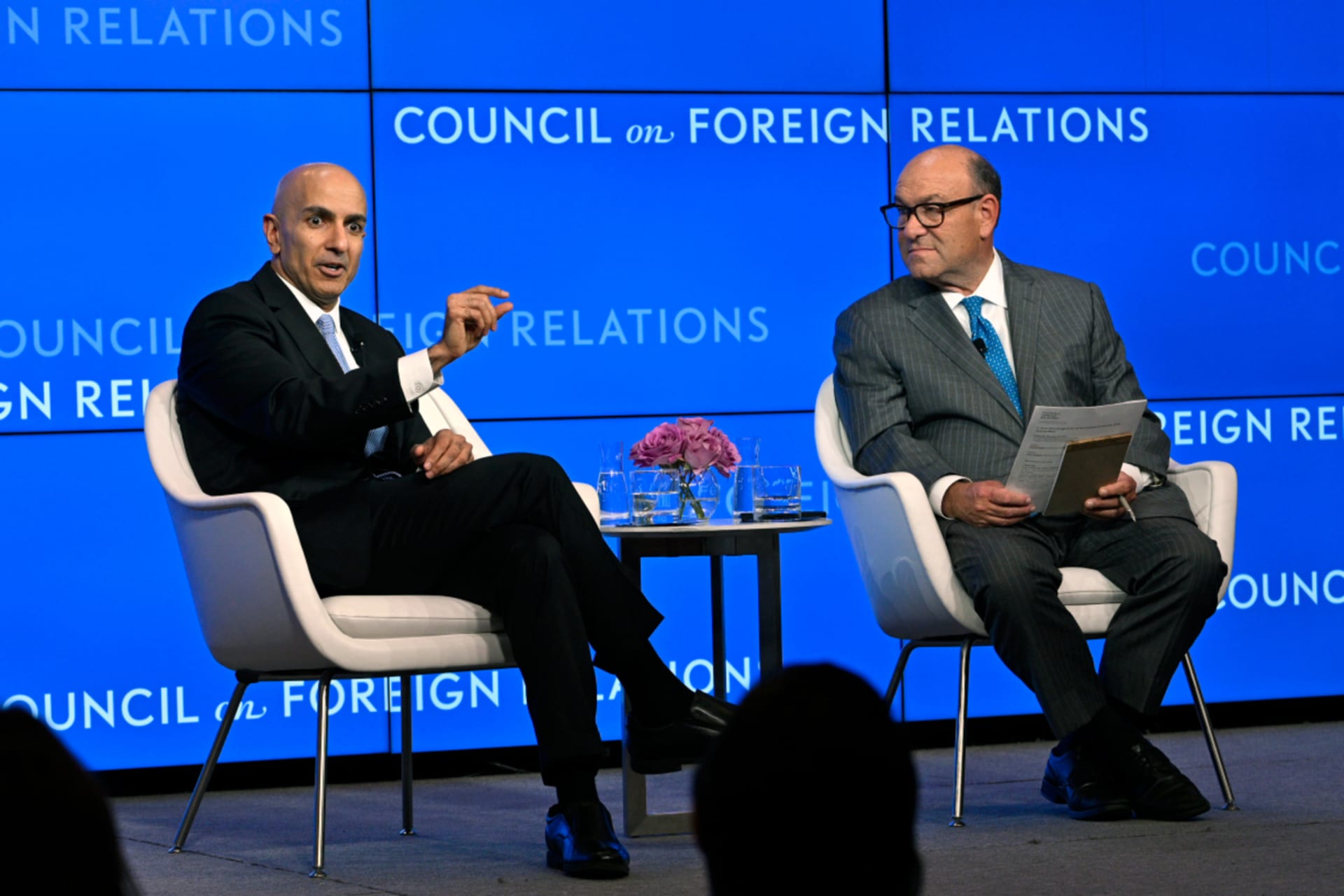
SCHIFRIN: Good afternoon, everyone. Welcome to today’s Council on Foreign Relations meeting with Dr. Sebastian Gorka. My name is Nick Schifrin. I’m the foreign affairs and defense correspondent with PBS NewsHour and the moderator of the weekly foreign affairs show Compass Points on PBS, and I’ll be moderating today’s discussion. A lot to talk about, so we’ll take about thirty minutes or so at the top and we’ll turn it over to all the members in the room.
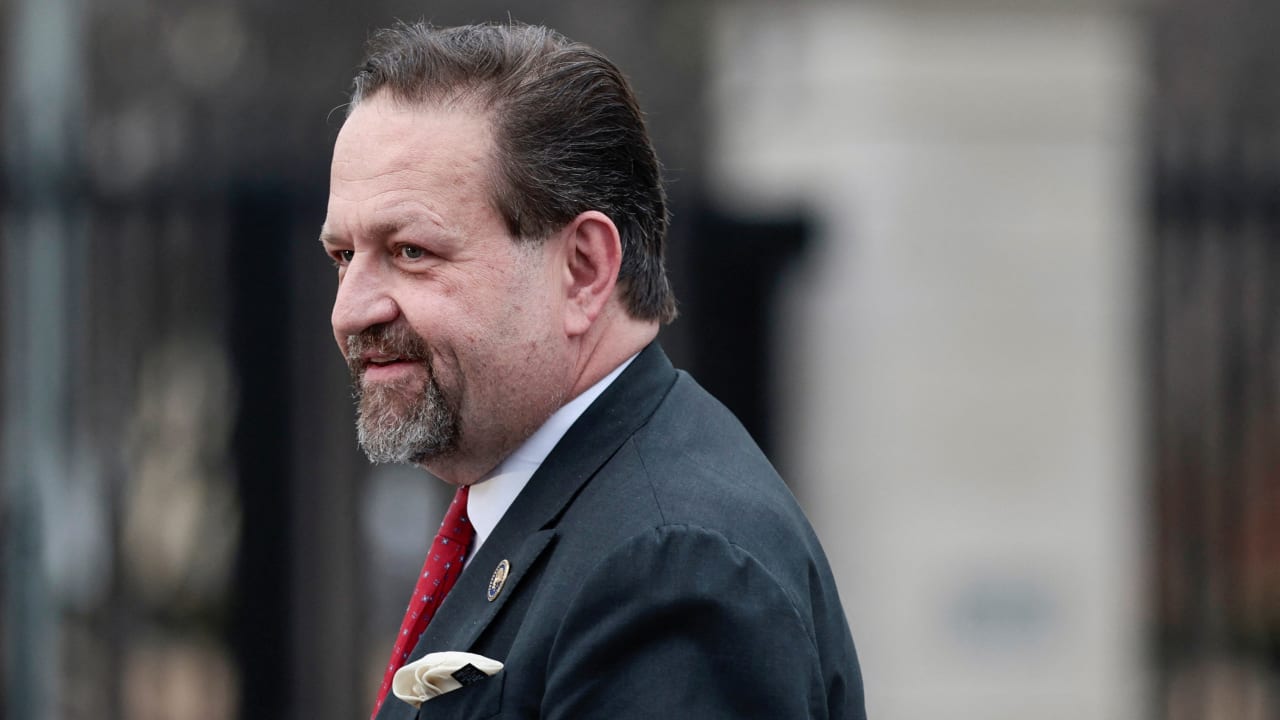
Dr. Sebastian Gorka needs no introduction, but just to reiterate, deputy assistant to the president and senior director for counterterrorism on the National Security Council.
Dr. Gorka, thanks very much. Welcome.
GORKA: Thank you, Nick. Glad to be here.
SCHIFRIN: And thank you for doing this.
We’re going to talk a lot about a lot of topics today. We’ll, obviously, going to talk Iran. We’re going to talk now CT fits into the National Security Strategy. We’re going to talk about counterterrorism around the world and the U.S. We’re going to talk a little bit about Europe and Russia. And hopefully, we’ll get to some other topics, including Syria and some of the Worldwide Threat Assessment.
I do want to start, though, with what has kind of dominated some of the headlines in the last couple days, which is the resignation of Joe Kent, the National Counterterrorism Center director. He wrote in his resignation letter “Iran posed no imminent threat to our nation, and it is clear that we started this war due to pressure from Israel and its powerful American lobby.” In response you wrote on X, quote, “He was a man without honor” and “You disgrace.” Just to be clear, was he wrong about those allegations?
GORKA: Well, you could ask him, because three months ago he said the exact opposite of what he said in his disgraceful resignation letter. So either he was lying then; or he’s lying now; or—most likely—because he’s not a principal, he’s not a Cabinet member, he is not in those meetings where that exquisite intelligence is provided. He said, Iran has to be dealt with, the president is correct, a scant few weeks ago. So what changed, Joe?
SCHIFRIN: What do you think?
GORKA: Personally speaking, I stand by what I said. He’s an utter disgrace.
Well, I’ll tell you the voicemail I left him yesterday: You are an utter disgrace to the uniform you once wore, to the republic for which it stands. And the fact that you used the name of your late wife as a political cudgel against the elected president, the commander in chief, is utterly inexcusable.
SCHIFRIN: You used the word “political” there. So do you think that it wasn’t his being honest and that letter was actually him thinking about future politics, perhaps?
GORKA: Well, he did run for Congress and failed. All I know is—(laughs)—you don’t write a resignation letter on the letterhead of the director for national intelligence. It’s just utterly unseemly. And you don’t question the decision of the commander in chief when we have fighter pilots in the air, when we have deployed sailors, soldiers, Marines. You have a problem with a policy, you resign. But what he did—hard to justify a man who wore the U.S. military uniform doing what he did in times of combat.
So I’ll leave it at that. I think my tweets speak for themselves. But at the end of my voicemail, I said: Good riddance to you, Joe.
SCHIFRIN: You said something just now which I think would surprise some people who have sat in the chair that Joe Kent had before, which is that he wasn’t in the room.
GORKA: Correct.
SCHIFRIN: A lot of NCTC directors who I’ve talked to, including from the first Trump administration, were in the room. Why wasn’t he?
GORKA: No, no, no, there’s no—when it’s a Cabinet meeting, members of the Cabinet are there. Director of NCTC is never a member of the Cabinet.
SCHIFRIN: You were talking about Cabinet meetings only, not deputies meetings, not other meetings? OK, got it.
GORKA: Yeah, the principals, the NSC principals.
SCHIFRIN: OK.
GORKA: Absolutely. And let me be very clear here: One of the reasons that we have had this absolutely historic level of success in everything the president’s done, not just economically but militarily, is because of the way we’ve managed decisions.
I mean, I was in the Situation Room during Operation Midnight Hammer, and just let me tell, you know, an unclassified story. The principals were in the famous room and I was on the watch floor, because I’m not a principal. And our aircraft had left Iranian airspace. They’d left; mission accomplished. And just for a laugh I said to the watch commander, can you turn on Fox and CNN on the big screens we have in the watch room? And he did, and one of them was doing a home improvement show and the other one was doing some reality show. And I said, well, that’s impressive; we’ve dropped, you know, thirty 24,000-pound bombs, we’ve left Iranian airspace, and nobody knows except the people working in those nuclear facilities what we have done.
The operational security of this administration is because how tightly we’ve held these incredibly strategic decisions, which did not involve Joe Kent. And let’s be clear for those unfamiliar with the gargantuan intelligence community that we have, the best in the world: The NCTC is a clearinghouse and coordinating body for intelligence on terrorist threats, and it works for a Cabinet member who happens to be Tulsi Gabbard, not Joe Kent. So let’s be clear what it is and what his job was.
SCHIFRIN: When you and I met earlier this week, you wanted to lay out a vision here for how the war in Iran fits into the National Security Strategy because, as we saw, the Middle East was not the primary part of the National Security Strategy; and also CT, how CT fits into the National Security Strategy, because terrorism is not mentioned as much as in the past. So let me ask you about the CT part. How do you ensure that counterterrorism gets the resources it needs when, at least when I read the National Security Strategy, the word “terrorism” or the discussion of terrorism is less than in the past?
GORKA: So let me correct you. I wasn’t laying out my strategy—(laughs)—for the war in Iran. One person does that, and his name is Donald J. Trump, the president of the United States. What I wanted to be clear on is what I have learnt in the last thirteen months in my position, because when you come into a position in charge of counterterrorism, what do you do? You go out and you meet with the people in the intelligence community who collect the intelligence, you go out and meet the commanders—SOCOM and elsewhere—and you listen to them. And it dawned on me very rapidly that with a little exaggeration every significant terrorist threat we face, especially in the Middle East, once you scratch the surface within a nanometer there’s Iran—not just Shia threats, but Sunni threats as well. We know the nexus to Hamas, to Hezbollah, to the proxies. That’s why the president’s letter to the late shah—to the late ayatollah was very clear three things must end: nuclear weapons, missiles, and proxy support. So as far as I’m concerned, Operation Epic Fury is going to solve perhaps the most trenchant and strategic terrorist threat the world faces today, and God bless all of our warfighters who are engaging to make that happen.
With regards to the NSS, everybody needs to read the NSS. I don’t care whether you’re a—you’re a taxpayer who has nothing to do with national security, whether you’re a member of an allied or partner government. The NSS’s clarity is so refreshing. I’ve been in national security for thirty years now, and most NSSes, whether they were Republican or Democrat, were the antithesis of strategy. They were laundry lists. We will—under the Democrats, it’s we will, you know, save the whale, the Antarctic, the environment, and, you know, the kitchen sink, and everything else. Under Bush and under prior Republican administrations, it wasn’t much better. And to quote my old professor, Graham Allison, when you’ve got a hundred and one priorities you have no priorities. So we made it very clear: America first, not America alone.
And within that, there are philosophical undergirdings to our strategy. The one that is missed most often with the NSS is sovereignty. The sovereignty of nation-states, especially America, is paramount. The president believes in the Westphalian system of national sovereignty. The wall isn’t important qua the wall; it’s because it’s an expression of our sovereignty, controlling who comes into our country. If you don’t control who comes into your country, you are not a sovereign nation. When it comes to counterterrorism, we look at the FTO designations of the eleven cartels and gangs. Imagine if Mexico functioned as a fully Westphalian nation-state that exercised sovereignty in all of its departments and counties. And also, what is the other requirement for a nation-state? Not just sovereignty; monopoly on the use of force. If you have cartels rolling around in up-armored vehicles often armed better than parts of your national armed forces, you do not monopolize the use of force and you do not practice sovereignty. So whether it’s America or our allies or our partners, you cannot be safe from counterterrorism, you cannot be safe from terrorist threats, unless you understand the significance of exercising real sovereignty.
SCHIFRIN: Let’s do Iran and terrorism. In the last few weeks there’s been a few incidents around the world when it comes to Iranian terrorism since the war started. This is from the database kept by the Washington Institute. Azerbaijan thwarted a series of IRGC-led attacks on the Israeli embassy, a synagogue, Jewish community leader. London counterterrorist—counterterror police arrested four connected to Iran after they surveilled locations and individuals linked to Jewish communities. Qatar said it arrested two IRGC cells for gathering intelligence. How has the threat of Iranian terrorism changed since Epic Fury began?
GORKA: Well, the good news is we have an Iran that is so degraded—look, the bigger context is we are the hardest target. Why? Because they don’t have diplomatic cover. They don’t have embassies. They don’t have consulates. They can’t do the usual skulduggery that other inimical nations could do if they had that cover.
Nevertheless, as you enumerated, we have instances of people who may have been motivated, inspired, or in some other fashion—we’ve seen with regards to the Gracie Mansion attack—that events elsewhere motivated individuals to try and kill Americans on U.S. soil. I am not going to tempt fate. I’m not going to paint the devil on the wall. But I will say—(laughs)—the people that I read on every single morning in my intelligence estimates, they are suffering. The people who would do ill to America, to the president, to members of the administration, former members of the administration including military officers who were responsible or involved in operations against Iran, their capacity to do us ill is being degraded every single day. When you are hiding from our forces, from Israel’s forces, it’s very hard to plot and plan, and we intend to make it even harder.
SCHIFRIN: Just to make it explicit—you won’t like this question or answer this question, perhaps—but just to make sure we understand what you’re saying, does that mean that what you’re seeing in terms of the ability for Iran to conduct terrorism internationally or domestically you believe has gone down in the last few weeks?
GORKA: So any kind of warfare—whether it’s irregular warfare, which is counterterrorism and insurgency, or whether it’s conventional warfare—is a function of two things. You know, Clausewitz was absolutely right about this, as was Sun Tzu. It’s capability and intent. I mean, if anybody tells you it’s different, they know nothing about warfare and they’re probably trying to sell you something. It’s about capability and intent.
I would say the intent, if you are preaching death to the Great Satan, death to the Small Satan; if you’re, you know, saying that, you know, the enemy of the regime is America; then the intent likely remains. Capability? I mean, I have an update every morning of all the people who have been removed from the battlefield permanently. That list of—that graphic of photographs with Xs, red Xs on those photographs, gets longer and longer. If you can’t decide, if you don’t have the decision-makers, you will eventually be combat ineffective.
SCHIFRIN: But as you know better than use, Iran has used cells. You know, some people call them sleeper cells; you know, basically, the idea of Hezbollah-controlled or -inspired, whether Europe, South America. We’ve seen these all across the world. That’s irrespective, is it not, of the leadership and whether Israel or the U.S. has taken out the leadership? I mean, won’t this terrorism threat have a tail beyond Epic Fury?
GORKA: So here’s the good news, and you know, I have to stay in the unclassified domain. If you look at the plots we have thwarted here in the United States—mostly to do with Iranian dissidents, dual nationals, Jewish targets—the actors who are plotting to kill, even the recent individual who was put in prison for trying to plot against the president, who were they? Were any of them members of the IRGC? Were any of them members of MOIS? No. They were thugs. They were people who had been recruited. They were, you know, street criminals. Why? Because they don’t have that capability to insert their own operatives. That in and of itself speaks to their weakness operationally.
SCHIFRIN: You mentioned Gracie Mansion. Let me mention a couple more homeland attacks. March the first, a gunman reportedly wearing clothing with an Iranian flag killed two people and wounded fourteen at a bar in Austin. March the twelfth, a man attacked a synagogue in Michigan and the DNI, Tulsi Gabbard, said yesterday he was a family member of a Hezbollah member killed recently by Israel. On the same day, a convicted ISIS supporter stepped into an ROTC classroom at Old Dominion and killed the instructor. So, bottom line, are these incidents inspired or tied to the war in Iran, in your opinion?
GORKA: Well, it depends what you mean by “tied.” The DNI is absolutely right there is a nexus in terms of sympathy that could be motivational or familial connection. But having a brother or a cousin who is a member of an Iranian government entity doesn’t make you an operative of the state. Those are two very different things.
SCHIFRIN: So, right, so, OK. So inspired by the war. But, bottom line, do you believe that terrorism in this country has been inspired by the war, or you’re not seeing that data in your assessments?
GORKA: We see international events always inspire terrorism. October the seventh has inspired rampant anti-Semitism all over the globe. You know, that shouldn’t be news to anyone.
SCHIFRIN: And are we in a heightened period of threat?
GORKA: We are at war. We are undertaking military operations in the Middle East. When you are undertaking military operations, there is always a heightened level of preparedness.
SCHIFRIN: And I assume it goes without saying, but people in the U.S. with family who—you know, family of Hezbollah, convicted ISIS supporters, I mean, these are people we are watching, right?
GORKA: Let me just tell you that when you have the likes of Stephen Miller as homeland security advisor and Tom Homan at the helm of these issues, we have the very best people doing what needs to be done.
SCHIFRIN: I ask that because there have been multiple reports about a diversion from within FBI and DHS resources away from counterterrorism toward immigration enforcement. Have you seen that from where you sit? And has that had any effect?
GORKA: On the contrary, absolutely that’s utterly fallacious.
SCHIFRIN: OK. So those reports are totally wrong? So there’s been no—
GORKA: You mean the media lied about something? What? Oh my gosh, you’re going to talk about Russian collusion next? Wow. Yes, wrong.
SCHIFRIN: And from your perspective, as you know better than us going after leads requires manpower. CT requires running sources. You can’t just surge to defeat counterterrorism, right? You actually have to have people working it day in and day out. From your perspective again, you’ve seen no surge in and out. You’ve seen the consistency of this staff, of these people who have worked on CT stay in those jobs and not be diverted?
GORKA: I run the United States government counterterrorism strategic group every Thursday morning with every element of the counterterrorism enterprise in the United States, from the intelligence community, the FBI, DHS. You name it, they are in my meeting. No, I would not permit it to occur if there were such an attempt to do so. If I failed to do so I would have resigned, but in a much different fashion from Joe Kent. I am still in my position. Therefore, draw the relevant consequences.
SCHIFRIN: Fair enough.
I want to move to Europe because Europe’s seen mysterious fires, assassination plots against weapons producers, train derailments. As you and I have talked about, most European officials describe these as hybrid Russian attacks.
GORKA: Yeah.
SCHIFRIN: What do you describe them as?
GORKA: Well, look, I wouldn’t focus exclusively on Russia. There are other nations involved in these kinds of activities. Iran, of course, is one of them, but there are others.
As we discussed in preparation for today, I don’t like this label of “hybrid.” It makes it sound novel, different, unusual. I’m of a certain vintage, having grown up under the Cold War. We had an existing title for this. It’s called covert action. It’s when a government does things that look like terrorism. If you’re trying to, you know, blow up train tracks but you’re actually a member of an intelligence agency, you are doing sabotage, not terrorism.
I am very encouraged by the number of nations in Europe, as a consequence of the war in Ukraine, as a consequence of Iran being the biggest state sponsor of terrorism, taking this threat seriously. Whatever we call it eventually—and we are grappling with the correct terminology; just this morning I had a meeting with one of our NATO allies—we are going to coordinate our response. I don’t have to go into details, but it’s just logical counterterrorism, right—so policy that would address al-Qaida, or ISIS, or Hamas—is, because of the taxonomy, significantly different in terms of counter-covert action. When the person responsible is not a nonstate actor hiding in a cave in the Golis Mountains of Somalia but a president or a prime minister or an ayatollah in a palace, the responses are different. But we have to come together and address them.
SCHIFRIN: It sounds like what you’re saying—and let me just ask you to be—let me just ask you bluntly: Is Russia committing acts of terrorism in Europe?
GORKA: Russia is doing many things to effect its national interests in ways which are antithetical to the transatlantic alliance and U.S. interests. That’s all I’m prepared to say.
SCHIFRIN: OK. Fair enough.
Have you as an administration looked at the threat of Russian-backed sabotage or Russian-backed terrorism, whatever word you use, and decided that this is something that needs to be confronted not only with NATO allies, but actually at the source, which of course would be political decisions in Moscow?
GORKA: We look at any nation that is using kinetic or non-kinetic means to undermine our interests or the shared interests that we have with allies and partners. Right now, understandably, the president’s priority is to end what we have called in the building the meat grinder that is the war in Ukraine. That’s the priority. But the idea that we are not taking seriously any other irregular threat tied to a nation-state would be incorrect.
SCHIFRIN: Because, as you know, I ask because, as you know, there’s a movement on the Hill to call—to designate Russia a state sponsor of terrorism. Is that something that you think should be considered?
GORKA: I’m going to leave it to Mr. Witkoff and the president to focus on the primary objective, which is to stop the inordinate bloodshed in Ukraine. Other things will be occurring at the same time.
SCHIFRIN: The war in Iran would perhaps have been impossible if Bashar al-Assad were still in power. Iran, of course, lost one of its legs of its forward defense, its strategic stool. Any military commander designing a war plan wants to be able to have overflight and be able to do exactly what CENTCOM had to do in Iraq the other day. And so without (sic) Assad, this could certainly be different.
You have said many times that Syrian President Ahmed al-Sharaa, once a jihadi, always a jihadi. But today, is the Syrian government effectively working with the U.S. against ISIS?
GORKA: So let’s go back to the beginning of what you said. Let’s put it into the correct context. Everybody should laud, should congratulate, should be very happy with the fall of the murderous regime of Bashar al-Assad. Secondarily, the fact that Iran lost this massive resupply route to its proxies to smuggle weapons, monies, individuals is also a hugely geopolitical win.
When it comes to the situation now in Damascus or in Syria writ large, there is a challenge because we go back to the principle of the NSS: When does a nation function? A nation functions when it exercises sovereignty over its own territory. That is the ideal. As a certain member of the Cabinet tasked me back in March after a—after a(n) awful, awful massacre in Syria, what will it take to prevent the next massacre? We would like Sharaa to succeed. We would like the Druze, the Christians, the Alawites, the Sunnis, and the Kurds to all represent a functional part of a working nation-state.
Right now the challenge is exercising that sovereignty and making sure that they have their own counterterrorism capability, because they need it. Who wants to kill Sharaa the most now? It’s his former jihadi colleagues.
SCHIFRIN: Right, exactly.
GORKA: Right? So, you know, he is the man who has put on a suit and tie, trimmed his beard. He is now the recognized head of that state, so he has his own counterterrorism problems. That’s his challenge.
SCHIFRIN: And so what is your assessment of his CT abilities today, and its coordination and cooperation with U.S. officials? Are you working on that right now?
GORKA: Nascent and building. And thank you for asking, because it is right and just to thank our colleagues in the region. Numerous—I’m not going to go into details—numerous Arab states have assisted in the training of those nascent CT capabilities. They know who they are, and we are very grateful for their assistance.
SCHIFRIN: In the Threat Assessment Report released this week, several hundred ISIS detainees—sorry, the Threat Assessment Report says several hundred ISIS detainees and thousands of ISIS-linked women and children escaped or were released from prisons and displaced-person camps previously run by the SDF in northeast Syria when the SDF withdrew and when the government came in. Do you blame the Syrian government for those releases?
GORKA: No, I don’t blame the Syrian government. It was a very, very, very difficult situation. I will, however, thank the SDF for what they’ve done with regards to those facilities since they were established but also, again, the government in Baghdad. What the government in Baghdad has done in the last few weeks to take control of those prisoners has made—
SCHIFRIN: Taking a huge number. And just to be clear, we’re not talking only about Iraqis and Syrians, are we? Right, exactly.
GORKA: No, no, no, we’re talking about jihadis of various nationalities. But what the SDF has done, what the new regime in Damascus has done, and what the—what the government in Baghdad has done has made all of us—all of us—safer.
SCHIFRIN: And so these releases you don’t blame on the Syrian government? Yeah.
GORKA: No. It’s a consequence of warfare, and the nature of the problematic situation and the lack of Westphalian exertion of sovereignty in a challenging situation.
SCHIFRIN: The Threat Assessment Report also concludes Islamist terrorists have shifted attention to executing information operations, and al-Qaida and ISIS plotters intent on targeting the homeland have focused more on virtually recruiting U.S.-based aspirants. I mean, in some ways that’s a success, right, a product of the success of international CT efforts.
GORKA: Uh-huh.
SCHIFRIN: How does that shift the challenge?
GORKA: Yeah. Great question.
So I try to remind my colleagues in government, especially in the military, we need to stop—I know this is the twenty-fifth anniversary of 9/11 and we still have a counterterrorism mission, but we need to stop, pause, take a deep breath, and pat ourselves on the back. Our capacity to find/fix/finish, what the president called in his viral tweet back in March after our first CT—February, our first successful counterterrorism operation, he signed it off in his viral tweet, “We will find you and we will kill you.” Our capacity to do that globally is exquisite. If we know you’ve killed Americans or you’re plotting to kill Americans, we have capabilities, as the Marine Corps says, to reach out and touch you.
Why am I, for example, looking at the Lake Chad basin? Why I—why am I concerned with the Sahel? Because the first Trump administration—(laughs)—crushed the physical caliphate of ISIS. We had been told by Obama for years, direct quote, ISIS is, quote, “a problem”—“a generational problem we have to live with.” Well, President Trump, when he was the forty-fifth president, roundly jettisoned that garbage, said we are not going to live with a physical caliphate controlling territory in Syria and Iraq; we’re going to unleash the U.S. military and destroy that caliphate, which we did in short order. But there are always stragglers. There’s always survivors. When you squeeze the balloon, what happens? Some of them squirt out to other areas of ungoverned space. The fact that Arab jihadists are having to hide out in the Lake Chad basin of Africa is a(n) indicator of our incredible success. So let’s, you know, pat ourselves on the back.
However, what was their response? If they don’t have a caliphate, if they don’t—remember, al-Qaida had training universities. They had camps where, you know, they’d cycle through. We’ve all seen the videos of the monkey bars and everything else. Well, they don’t have that anymore because of the first Trump administration. So what is their answer to that? Well, if we can’t recruit foreign fighters, bring them to installations we’ve created in Afghanistan or elsewhere, well, maybe online is the answer. So that’s their attempt to replicate their capabilities. It is a problem because since 9/11 social media has, you know, matured to a level that it penetrates almost every society. But the fact that that’s what they have to resort to is an indication of their weakness.
What are we doing about it? In the draft Counterterrorism Strategy we’ve prepared for the president—because I’ve been obsessed with his for, you know, decades—my contention is you can have the best counterterrorism killing machine in the world, but at the end of the day if the ideology of the entity you’re working against can still function to recruit new warfighters you are playing a certain version of Whac-a-Mole, or as the Israelis say mowing the grass.
What’s the ultimate victory in counterterrorism against individual groups? It’s the central gravity that is their motivational hub, which is the ideology. So I am focusing—one of my directors in the National Security Council has this expression mission—to revitalize the counter-jihadi propaganda capabilities of the U.S. government. We need to show these people for who they are. They’re hypocrites. They’re losers. They’re ineffectual. Or, basically, they don’t comport with their own ideology. What’s one of the most famous visuals after October the seventh? After one of the Israeli strikes, you saw this, you know, jihadi leader’s wife come out of the tunnel with her $30,000 Louis Vuitton handbag. You’re hardly a representative of the oppressed Muslim masses if you’ve got a $40,000 handbag. What was the most valuable thing we brought back—our operators brought back from Abbottabad in addition to, you know, Bin Laden’s dead body? It was his hard drives with terabytes’ worth of pornography. You’re hardly the great religious leader of the jihadi class if you’ve got multiple accounts on Pornhub. So IO is really important.
SCHIFRIN: So just to be clear, in fact, the people who I talked to who used to do your job actually asked me to ask about that CT strategy.
GORKA: Uh-huh.
SCHIFRIN: So it sounds like—so it’s drafted?
GORKA: Yes.
SCHIFRIN: So the first version’s done. When should we expect it to be released? (Laughter.) Uh-oh, looking at his staff.
GORKA: No, because they don’t know. I received an email this morning, so I’ve had to edit it down. I put my life’s work into this massive document, and then the NSS came out after I did my draft. The NSS is rather short and punchy.
SCHIFRIN: Shorter. Indeed.
GORKA: So I was told: Cut it down, Gorka.
SCHIFRIN: Cut the—
GORKA: So I’ve got till Monday to edit it.
SCHIFRIN: (Laughs.)
GORKA: And then, God willing, you know, go through the paper-pushing process. So keep your fingers crossed. Imminently, that’s what I say. Imminently.
SCHIFRIN: As my father would say, just remove adjectives and you’ll hit—you’ll hit—
GORKA: Yeah, yeah, yeah. No footnotes.
SCHIFRIN: Just quickly because I’m out of time, though, you mentioned Lake Chad and the Sahel. You and I talked about this briefly the other day.
GORKA: Yeah.
SCHIFRIN: The challenge here, of course, is that there is a skepticism of cooperation with the United States.
GORKA: Yes.
SCHIFRIN: Are you getting the cooperation that you believe you need from these countries that are facing this threat that, as we all know, a lot of the CT efforts in the world are based on?
GORKA: Yeah. Very good question.
It was tough in the beginning because after four years of Biden, where they were treated—where these African nations were treated either like dirt, or ignored, vilified, or told that the U.S. embassy, yes, will be flying the transgender lunacy flag, you know, on the flagpole and just ram it down the throats of African cultures that are not quite that modern to believe in the lunacy that is the rainbow flag and transgenderism—we had a lot of repairing of relationships to achieve. I deployed members of my team who did sterling work to begin that discussion.
And, yes, there are some very positive signs, especially with some of the more difficult countries. And there are also other nations from outside the region—I’m not going to reveal who they are—who would like to play an active role catalytically in terms of they understand the president is very much about national security and trade, right? When he goes to the Middle East, he talks about we will work together, we will prosper together. We’d like to see that in Africa as well, and there are certain countries who would like to help effect that burgeoning trade relationship that could be allied to national security, counterterrorism. So good news.
SCHIFRIN: Because this isn’t only about being anti-Biden, as you put it; this is an anticolonial position that many of them are taking, right? Yeah.
GORKA: Yeah. I mean, to ram U.S. cultural proclivities of a left-wing administration down the throats of traditional Christian or non-Christian Arab—African nations, who thought that would actually lead to cooperation? Of course it didn’t. So we’re having to undo all of that colonial attitude of the Biden administration and say: Look, do you have a threat from jihadis? Guess what, we think we have a threat from jihadis. Let’s work together.
SCHIFRIN: OK. I’m out of time.
So we’re going to do all the questions from all the members in the room. Michael Gordon, why don’t you start us off?
GORKA: How’s the book on OEF going, Michael?
Q: Michael Gordon, Wall Street Journal.
Mr. Gorka, which militias have been attacking the U.S. embassy in Baghdad? And what is the U.S. doing about it? And more generally, did the U.S. take proactive action against militias in Iraq backed by Iran at the start of the conflict? Did these groups include Kataib Hezbollah? And what role did you and the president play in identifying the threats that needed to be confronted in Iraq in the context of the current conflict with Iran? Who are you going after, and why?
GORKA: Thank you, Mr. Gordon. I will not be discussing operational issues, but you identified one of them, which is KH. Thank you.
SCHIFRIN: What about just in general, the—
GORKA: General what?
SCHIFRIN: The overall question of what did you guys do to prepare for these kinds of attacks, whether in Baghdad or around the region, knowing full well what we talked about with Iran?
GORKA: This question seems to be predicated on the same kind of utterly fallacious idea that we—oh, the Trump administration, we didn’t prepare for the Straits of Hormuz. I mean, you have to be smoking Hunter Biden’s crack pipe to believe this crap. I mean, really, you know, the basement of the Pentagon is full of MOS strategists whose jobs are to actually prepare these war plans. Oh, we just woke up to the militias being a problem eighteen days ago, it’s risible. It’s risible. We have been working the Straits of Hormuz issue. We have been working the IAMG, Shia, and other militia problems perpetually since January the twentieth at 12:00. So I’m not even going to entertain the idea that, oh, were you preparing? Yeah, we were doing it the whole time.
SCHIFRIN: Yeah.
Q: Thank you. Massimo Calabresi with the New York Times. Thanks for the interesting comments, Dr. Gorka.
I’d like to ask you to drill down a little bit on the connections between Iran and Sunni terrorist groups. Was Iran involved in any way in any of the classic al-Qaida attacks—9/11, USS Cole? And if you can tell us a little bit more about the connections with Hamas.
GORKA: I don’t think I’m wasting anybody’s time here. You can go online and do searches in terms of just not even historic examples like 9/11 or Cole; you can go to Hamas today, I mean, open-source, unclassified information. I mean, this is one of my dreams. I think somebody was interested—somebody who’s here from BOA—in terms of IO. If the people of the benighted nation of Iran were allowed to know how much money the Islamo-facist regime has given to not just Shia proxies, as in Iraq, but Sunni terrorist groups—forget since 9/11; in the last twelve months—if they were allowed to know, if the internet functioned, I’m not sure they’d even believe the numbers.
SCHIFRIN: How much is it?
GORKA: I—no, the real numbers are classified. If we—if we halved—if we told the story of the quarter—one-fourth of the actual number, I believe the mullahs would be swinging from the lampposts in less than a day. The regime would be taken over by the Persians and all the minorities, who would be absolutely horrified that I can’t get electricity to keep my child’s, you know, milk cold, but you’re pumping literally billions of dollars into Sunni terrorist groups simply because in that part of the world the enemy of my enemy is my friend, yeah, it’s high time they knew that this isn’t America vice the Shia world. This is a(n) Islamo-fascist regime, who say they represent the Shia world, who have been funding Sunni jihadism basically since 1979.
Q: Just to follow up—thank you.
GORKA: Yeah.
Q: Not involved in USS Cole or 9/11, but yes involved in other—
GORKA: I’m not going to address specific instances. I’m not—I’m not here to talk about history; I’m here to talk about—
Q: I’ll just follow up.
GORKA: —here to talk about CT today.
Q: The president did say on February 28 that—
GORKA: Good, then listen to the president.
Q: —Iran was probably involved in the USS Cole.
GORKA: Listen to the president. You’ve got your answer. Thank you.
SCHIFRIN: Alan, and then we’ll go back to the back here. Right in the front first, and then—get a mic right in front, please. Yeah. Mmm hmm. All right. Thanks.
Q: Thank you. Alan Raul, lecturer at Harvard Law School. And thank you for bringing the admirable clarity and punchiness of the National Security Strategy to your remarks here today. Punchy indeed. Thank you.
You made a comment about the strategy—the National Security Strategy in particular being the sole responsibility of one—of the president, which seems perhaps not unreasonable. But I have a question about the administration’s philosophy of strategy, and that is to say, what is the role of Congress in developing a strategy that relates to major questions of U.S. military policy, foreign policy? The Constitution, of course, grants the war power to Congress. It also specifically grants the power to regulate and govern the armed forces to Congress. And without getting into the declaration of war or War Powers resolution, the National Security Strategy on any issue is a major question for the United States, a major question which the Supreme Court has recently reaffirmed should be—
GORKA: Is there a question? This is getting rather long.
Q: I’m sorry. I was—it wasn’t punchy enough for you. I’m sorry. So to be direct, what is the administration’s philosophy on developing a strategy that includes Congress as the party the Constitution really designates as responsible for deciding major questions for the United States? Thank you.
GORKA: I’m not an attorney—(laughs)—but I know one thing: 78 million people choose one commander in chief. Who’s the commander in chief, sir? No, no, who’s the—I’ll as a question: Who’s the commander in chief?
Q: The president, under the Constitution.
GORKA: Who’s the commander in chief?
Q: Who is the sovereign? Who is the sovereign—
GORKA: Who’s the—who is the commander—you don’t get to change my question. Who is, according to the U.S. Constitution, the commander in chief, sir?
Q: Of course it’s the president.
GORKA: Thank you, OK? The NSS is a presidential document, OK? The idea that it’s a—I think we have a fundamental misunderstanding of the history of this nation. And for somebody with my accent to have to lecture you on who George Washington was and the role of the commander in chief—let’s agree on one thing, we don’t have multiple commanders in chief. We have one. Thank you.
Q: You’ve answered my question.
GORKA: Thank you.
SCHIFRIN: All right. Let’s go to the back here. Yeah, Mark.
Q: All right. Sebastian, good to see you again. Mark Jacobson, International Spy Museum.
The administration’s been pretty forward-leaning when it comes to hostages and wrongfully detained Americans. In fact, you yourself have been pretty vocal about getting Americans out of Afghanistan, and the administration named Iran the first state sponsor of wrongful detention. What’s the plan to get the Americans out of Afghanistan and, if time, out of Iran as well? Actually, let’s do Iran first, then Afghanistan.
GORKA: Great. I don’t think we can do Iran first because we are in combat operations, but great question.
Let me, if I may, immodestly say I haven’t been vocal about getting hostages out of Iran—out of Afghanistan; I flew to Kabul with no personal security to bring one of them back with the great Adam Boehler. So it’s not talk. What the president has done is absolutely astounding. We have liberated under his leadership a hundred and one Americans. That’s outside of the ones who were rescued from the horrific tunnels of Gaza. That’s outside the political prisoners that one of my colleagues has brought back from Belorussia. A hundred and one Americans have come home and kissed the tarmac at Dulles because of this man’s leadership. That’s more than four years of Biden.
So what is our gameplan? Our gameplan is very simple: Bring every single American home. When I walked into my SCIF at 12:00 on January the twentieth, I’m old school, and I found a whiteboard, and I walked it into my office, and I wrote five things on the board. Four of them were classified. Number one, not because of me but because of the direction of President Trump, was hostages. And it remains at the top of that whiteboard because we are committed to bringing every American home, closing every single case, whether it’s Iran, whether it’s Afghanistan, whether it’s anywhere else. And that is my job on behalf of the president, along with our incredible team: my hostage director, Adam Boehler; the Office of SPEHA; the Department of State; the incredible fusion cell at the FBI. This is top of the list. But thank you for asking.
Q: If I could, though, so you don’t see an alternative pathway until combat operations are done in Iran—
GORKA: No, no, I’m not prepared—it would be irresponsible of me to talk about plans whilst combat operations—it’s the Joe Kent thing. We don’t comment on things when we have airmen, sailors, Marines in active combat operations. It’s like somebody from the New York Times when I’m in the Sit Room in one of our operations last year. We’ve got men in peril, in the air over Iran, and some piece of human filth at the New York Times publishes an article thirty minutes into that operation with operational details he got from a leaker at the Department of War. That—we don’t do that garbage because we are prioritizing our missions.
Q: (Off mic)—diplomacy—(off mic)—
SCHIFRIN: Let me—let me just keep us moving here. Yeah, please. Thank you.
Q: Yeah. Hi. Leah Pedersen, Convergence—(off mic)—
SCHIFRIN: Leah, hold on. Sorry. We lost your mic there.
Q: Leah Pedersen—(off mic)—
GORKA: Just talk loud, we’ll hear you.
Q: I’m fine. I can talk louder, so—(off mic).
With that personal—Leah Pedersen, Convergence Global Blended Finance. Thank you for the outsized discussion and energetic discussion thus far.
My question is very simple. There have been a lot of parallels drawn between the Venezuela intervention and then what we’re attempting to do or have done in Iran so far. So, number one, is that even a fair assessment? Is that even a fair representation? Number two, did the White House go into Iran with the intention that they had with Venezuela? And, number three, what’s your reaction to the sort of perspective now taken on Venezuela in that it is a success, especially as it relates to the amount of intelligence gained and our future strategy there?
GORKA: Well, first I’d say, you know, it’s very dangerous to say that, you know, there’s one model for very disparate parts of the world. Venezuela is not the Middle East. It’s not an Arab nation.
So, you know, what is the similarity? There is one similarity. What we are interested, or what the president is interested in is behavior modification. It’s that simple. How we get at that behavior modification will be sui generis based upon the context of the behavior we want and the context of the nation we’re talking about.
In the case of Venezuela, it’s very different from what the case is in Iran. Why? Venezuela doesn’t have a nuclear bomb program, thousands of missiles, and isn’t funding proxies to the tune of billions of dollars. It’s doing other things, but it’s a different behavior modification we require out of that regime.
But to answer your question, it’s very strange how people ask—I don’t understand the mainstream—it really befuddles me when they say, well, what is—I watched Pete this morning with his presser with General Caine, and—(laughs)—a putative conservative journalist asked, so, what is the objective? And it’s like, are you—are you Rip Van Winkle? Have you been asleep for the last fourteen months? Read the stinking letter that we wrote to the dead ayatollah. It’s not classified anymore. It’s very simple. It enumerates the objectives. Number one, you will not be permitted to develop nuclear weapons. Number two, you must stop developing and using ballistic missiles. And, number three, you must cease all funding of terror proxies. It’s very simple requirements.
When those three things are met, OEF will clearly have met the president’s objectives from the letter wrote to the ayatollah. It’s really that simple. But can you put a template from Venezuela onto Iran? I would—I would say if they’re different countries probably not.
SCHIFRIN: So does that mean when it comes to the goals that it doesn’t matter necessarily whether it’s regime collapse and some kind of regime change or someone from within the regime comes out and says, I’m the new Delcy Rodriguez, both of those scenarios can exist for the president as endgames simultaneously?
GORKA: If the strategic objectives enumerated are met, then we have achieved success. But let’s not forget the president has also been very clear in his message after the demonstrations. We would—we don’t d regime change. This is not, you know, some lunatic neoconservative administration. We don’t believe we will create democracy at the end of a gun barrel. But we—the president is clear he would like the people of that country to be free. So we’ll add that to the mix.
SCHIFRIN: And are U.S. and Israeli goals the same?
GORKA: (Laughs.) If you look at the people who are being killed, uh-huh.
SCHIFRIN: OK.
All right, let’s go Chris, and then we’ll go behind, and then we’ll come back here. Yeah.
Q: Thanks very much. Chris Isham with CT Group.
We’ve talked a little bit about the Shiite militias’ attacks. Obviously, we’ve seen attacks from Hezbollah. One of the proxies—one of Iran’s proxies that we’ve not seen any action from is the Houthis. Any thoughts as to why that dog didn’t bark?
GORKA: They’re being very wise. You see the biggest military operations in twenty-three years, maybe you’re less messianic than some thought you were. Let me leave it at that.
SCHIFRIN: And are there any—is there any reason—or, let me—let me ask it more bluntly: Are there any messages being delivered to them by the United States or on behalf of the United States in order to deliver that message you should be wise?
GORKA: Yeah, so, again, it would be irresponsible for me to reveal anything of that nature. However, I think a lot—not a lot, some of their reaction to the last eighteen days may be a result of, did anyone come to their aid when they were in trouble? Just a rhetorical question.
SCHIFRIN: OK.
Yeah, right there in the back, please. Thanks.
Q: Thank you. Hi. I’m Matt Aks with Evercore.
My question is about drones and specifically the drone threat in the domestic context. There’s, obviously, been a lot of talk about it in Iran, and building on Ukraine, and then also just bringing up this story I think overnight about drones over Ft. McNair. Thanks.
GORKA: Yeah. So I have the honor to chair the president’s counter-drone task force on behalf of the ex officio chairman, Secretary Rubio. So let me say a few things about drones.
First, the first meeting of the National Security Council was on drones, first Tuesday of the administration. We take this threat very, very, very seriously, our capacity to learn from what has occurred in Ukraine and our capacity to keep the skies above America safe, especially in the year of our 250th birthday and FIFA World Cup, and then in two years’ time the Olympics.
What I—I could talk for hours on this issue, but I’ll just give one qualifier. We take this very seriously. We are working very close with industry. I met with various representatives of American companies yesterday to make sure we have what we need not just for the Department of War, which is, you know, the kinetic and also the counter battlefield measures, but here in the United States not to have Chinese drones flying around delivering your—you know, your Uber Eats dinner, OK? The Chinese dominance has ended because of the president’s decision through the FCC in December, and that is a good thing.
One caveat. Many will tell you that drones have changed the nature of warfare. Incorrect. The nature of warfare never changes. How it is exercised, how it is clothed has changed, right? A few thousand years ago it was a guy picking up a rock and, you know, beaning his neighbor to steal his woman. Today it’s thermonuclear weapons, it’s fast-attack vehicles, but the same thing pertains: willpower to dominate over your enemy, capacity and will.
Drones are the new queen of the battlefield, meaning the new artillery. Seventy percent of combat casualties in Ukraine are not from artillery pieces. They’re not from small-arms fire. They are from drones. That’s the novel part of it, the delivery mechanism for that kinetic aspect is now a drone not an artillery piece. That’s what we have to deal with. I am working very hard with my colleagues in the National Security Council to make sure that the future of drones is an American future.
But thank you for your question.
SCHIFRIN: Are Ukrainian anti-drone technology—are they being helpful, distributed throughout the Gulf in response to some of these Iranian attacks?
GORKA: Yeah, they are. They are. And the—Kyiv has been very active in assisting those nations that want to learn from the experience of the last three years in Ukraine.
However, you know, again another caveat. A war zone of trench lines is a little bit different from protecting an oil refinery or, you know, a downtown cityscape. The IW, the electric warfare environment is much dirtier in a battlefield than it is in civilian instances. So it’s not a one-to-one match that if it works in Ukraine it’s definitely going to work in Saudi Arabia, but the huge contribution of the Ukrainians is to go from zero to a thousand miles an hour in basically six months. They went from tinkering with the thing you bought on Amazon and then turning it into an effective weapon on the battlefield in somebody’s garage with a screwdriver and some—you know, a soldering iron. And what they have truly internalized is rapidity of iteration.
I can’t reveal the figure I heard yesterday, but they have so compressed timelines of iteration—
SCHIFRIN: Oh yeah. The conversations that I’ve had on the frontline, it was like, oh, we sent this version last week. We got a new version back. We got a new—
GORKA: Stunning.
SCHIFRIN: Right.
GORKA: And not exactly something that, you know, big defense industry is good at.
SCHIFRIN: Yeah. That’s an understatement.
OK. I saw another hands, I think. We got a few more minutes. Yeah, right here, please. Thank you.
Q: Alina Romanowski, former ambassador to Iraq.
Can we go back to Iraq for a minute, and your point about their sovereignty? We spent a lot of time trying to get them to put their arms around their sovereignty. They’re still struggling with it, if we’re going to be kind to them. We’re—I won’t ask you to confirm this—but we’re whacking, as we have in the past, their militias. And we’ve engaged quite a bit with what they need to do. So let’s assume that the Iran War is over. What are we going to be prepared to do with Iraq to continue to support their efforts to get their arms around sovereignty? Or are we just going to say, good luck, thanks a lot, you’re on your own?
GORKA: Oh, no. No, no. That’s—absolutely not. Again, I’ll repeat what I said earlier: America first does not mean America alone. Remember, people miss these seemingly small things, which are, in fact, gargantuan. Who did the president invite to Sharm El Sheikh, who didn’t attend? Khamenei. Just stop for a millisecond. The biggest peace meeting since maybe Yalta, and the president of the United States invites the ayatollah. We are open to working with anyone who wishes to work with us and share common values of decency, security, and prosperity. Of course, he refused. And now he’s dead. You know, decisions have consequences.
With regards to Iraq—and it’s not the only nation in the region, as you know, that suffers from this—we would like them to be sovereign as well, and not to be an appendage of Iran. If we get the behavior modification that OEF, the strategic objectives of OEF demand, Iraq will be in a very good position to finally grapple with, grasp, and internalize the opportunity to be a functioning Westphalian nation. Personally, I had a meeting with the head of state in March. I made certain requests that were not met. Not big requests. Now that the Baghdad government is very worried, good things are happening. We would like good things to happen when the drones aren’t exploding. That is a modest request. But I think it is eminently possible. And thank you for your service.
SCHIFRIN: And just to be clear on that, so what you’re seeing from Baghdad now is attempts to go after—
GORKA: Good things. Good things.
SCHIFRIN: —Iranian-backed militias that you did not see in the past?
GORKA: I won’t—there’s not a one to one. The things I asked were very specific issues. But the small things I asked for did not occur. Now, even more significant things are happening without us having to exert maximal pressure, which is a good development. Not good that we had to wait until OEF, but the signals, the signs are good. Signs are good.
SCHIFRIN: OK.
Q: Thank you, Mr. Gorka. My name is Suzanne Kianpour. I’m an Iranian-American journalist. And I’ve been speaking to Iranians inside the country.
And I’m curious. You said that if the Iranian people knew just how much money goes to militias in the region they would be—
GORKA: Militias and terrorist groups.
Q: —that they would take care of the regime themselves, and that you and President Trump want the people to be free. So why is that number still classified?
And also, on your point about information operations, there is—unfortunately, the regime has quite a robust propaganda machine, and I’m getting messages from people inside asking questions like, why is President Trump saying Iranians are genetically inferior and why is President Trump saying our country is going to—the map is going to look different at the end of this? So Persian New Year is starting tomorrow. What message do you have to the Iranians?
SCHIFRIN: And how do you combat some of that propaganda?
GORKA: On the first figure, it’s very simple. It’s not a cop out. The way we get those figures is sensitive. The way we know the inordinate amount of money is not because of, you know, stuff we googled, stuff we acquired in very sensitive fashion. With regards to IO, this is the issue that I personally emphasize the most every day. Every day. We have a morning sync. We have an afternoon sync. I want this to be managed in a way that brings success with rapidity. We are the greatest military the world has ever, ever seen.
Sometimes in the past we have left the non-kinetic aspect of warfighting, the informational, as an afterthought. It used to even be called phase seven in planning. What I have been banging the drum on for many years, even during the GWOT and especially now, is if we make this part of phase zero, meaning the preparation for kinetic operations, if you do information operations right you have to do less war, less kinetics, less bombs on target. What did Sun Tzu say is the ultimate form of victory? And he was absolutely right.
The ultimate form of victory is to win without fighting because your enemy has been convinced they have no chance to defeat you and if they go to war with you they will be crushed. So thank you for your question. Nice plant. I appreciate that. (Laughter.) I am working every day personally to make sure that we do as much as possible of the non-kinetic so that we can help the people of Iran to be free.
SCHIFRIN: And, quickly, because Voice of America was raised. It terms of IO, is there a role for legacy USAGM media when it comes to that? Or is your vision for this IO in phased zero a much more, forgive me, modern thing?
GORKA: Look, I’ll give you my take as a taxpayer. I don’t think what VOA did, when one of our hosts said, oh my gosh, you went back to the White House eight years later? Nobody goes back. They get burnt out. What happened to me in the second month of the first Trump administration was utterly disgraceful. To have a government employee, or let’s say congressionally funded journalist at Voice of America, write hit pieces on me as I’m working in the West Wing—I don’t care if you’re, you know, the scum at Politico, OK, or the HuffPo jokers. But if you’re funded by the taxpayer and the person working for the man chosen by the taxpayers to be the commander in chief, let’s not have them fund hit pieces on the government dime.
Voice of America—anything that comes out of the AGM has one mission and one mission alone, to serve the interests of the United States republic. There’s a lot of other websites you can go to. There are lot of rags you can read, OK? You’re not in the business of competing with Fox News or CNN. You are there to serve the interests of the American people. That’s what I would like us to return to. Again, I can’t deny my baggage. I’m a child of the Cold War. What we did in terms of IO, what we did in terms of RFE/RL was absolutely stunning. I would like to return to a place where government news entities are driving a stake through the heart of dictatorial regimes like North Korea, like Iran. That’s what I’d like to see, because that’s what the taxpayers should be funding, and nothing else.
SCHIFRIN: Dr. Sebastian Gorka. Thank you very much.
GORKA: Thank you. (Applause.)
(END)
This is an uncorrected transcript.