Critical Minerals From the Ground Up
Event date
Speakers
- Executive Director, Nevada Governor’s Office of Economic Development
 Heidi E. Crebo-RedikerCFR ExpertSenior Fellow, Center for Geoeconomic Studies, Council on Foreign Relations
Presider
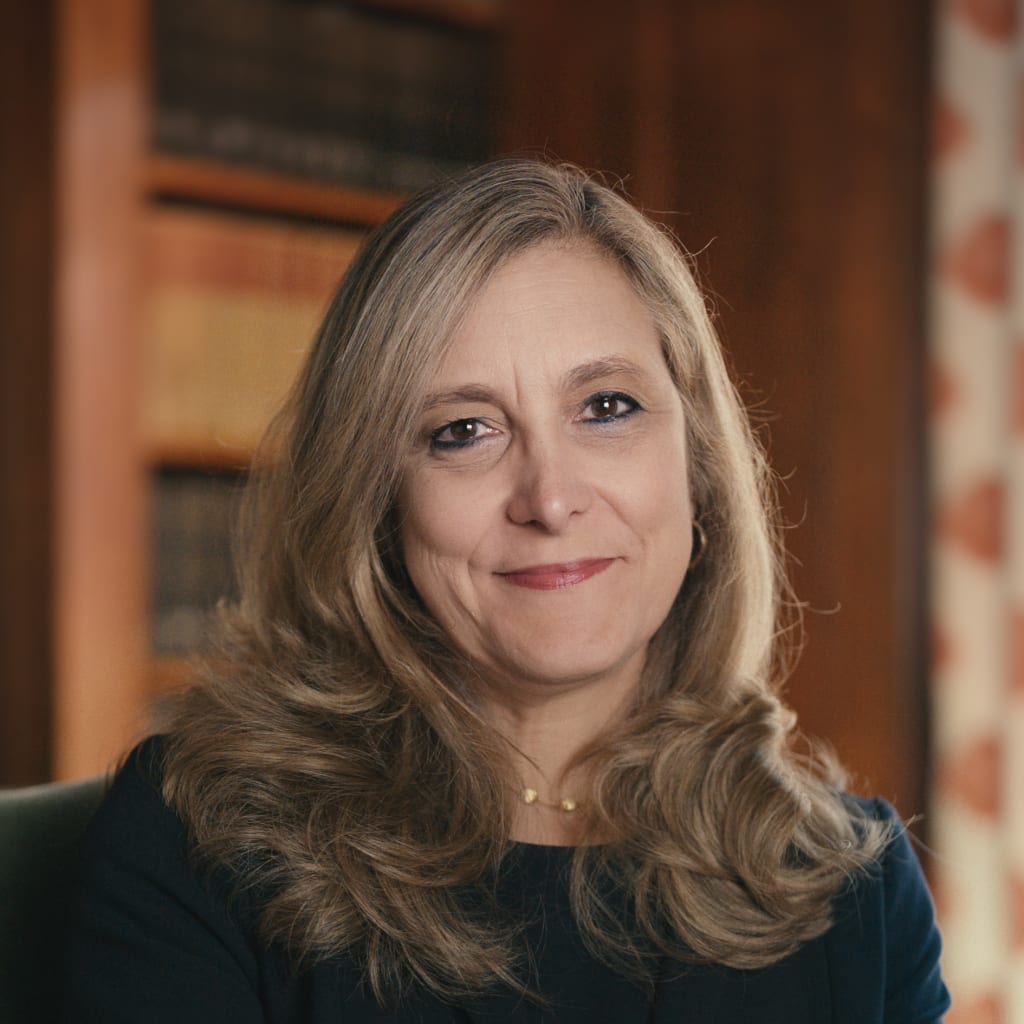 Vice President for National Program and Outreach, Council on Foreign Relations
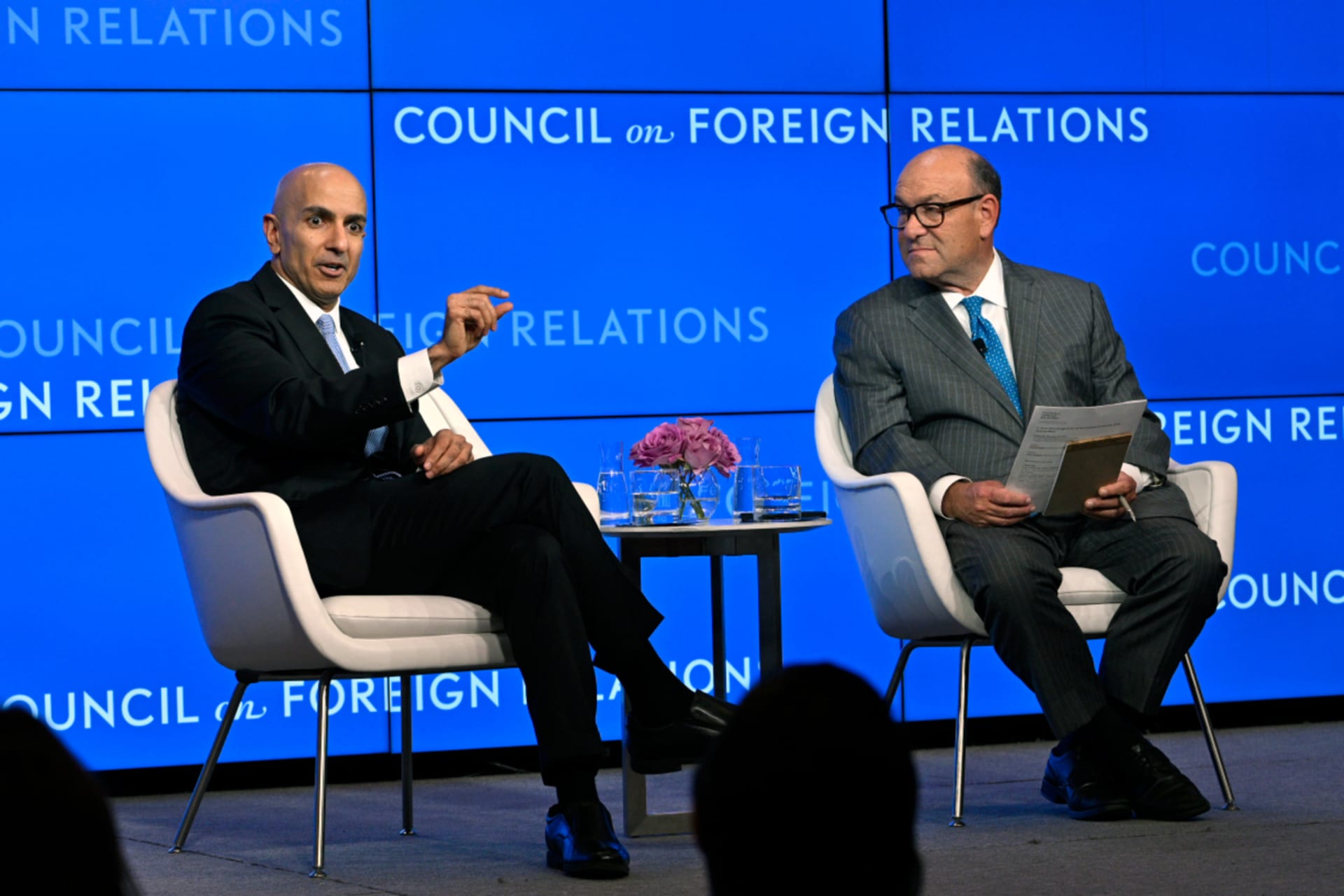
Heidi Crebo-Rediker, senior fellow at the Council on Foreign Relations, discusses the findings from her recent report, Leapfrogging China’s Critical Minerals Dominance. She highlights the national security implications of supply chains for critical minerals and the levers available to spur innovation, attract investment, and strengthen domestic processing and manufacturing capacity. Tom Burns, executive director of the Nevada Governor’s Office of Economic Development, outlines Nevada’s strategic investments in infrastructure for critical minerals and its role in shaping U.S. economic and defense priorities.
TRANSCRIPT
FASKIANOS: Thank you. Welcome to the Council on Foreign Relations State and Local Officials Webinar. I’m Irina Faskianos, vice president for the National Program and Outreach here at CFR.
CFR is an independent, nonpartisan, national membership organization, think tank, educator, and publisher focused on U.S. foreign policy. CFR generates policy-relevant ideas and analysis, convenes experts and policymakers, and is also the publisher of Foreign Affairs magazine. As always, CFR takes no institutional positions on matters of policy.
Through our State and Local Officials Initiative, CFR serves as a resource on international issues affecting the priorities and agendas of state and local governments by providing government and analysis on a wide range of policy topics. We’re delighted to have you all take the time from your busy schedules to join today’s discussion. We have more than 378 participants confirmed from forty-nine U.S. states and territories. So, again, this webinar is on the record. The video and transcript will be posted so you can circulate it with your constituencies and your colleagues. And it will be on the website at CFR.org.
We’re delighted to have Heidi Crebo-Rediker and Tom Burns with us today to discuss critical minerals and their role in U.S. economic competitiveness and national Security.
Heidi Crebo-Rediker is a senior fellow in the Greenberg Center for Geoeconomic Studies at the Council on Foreign Relations, where she focuses on international political economy, economic security, and U.S. competitiveness. She previously served in the Obama administration as the U.S. State Department’s first chief economist, and before that she was chief of international finance and economics for the Senate Committee on Foreign Relations, advising on global financial and economic policy issues. She is the author of the recently published CFR special report Leapfrogging China’s Critical Minerals Dominance. And we shared that report with all of you in advance of this discussion. I commend it to you to read after the fact.
Tom Burns was appointed by Governor Joe Lombardo in 2023 as executive director of the Nevada Governor’s Office of Economic Development, GOED. He leads Nevada’s economic development strategy, including efforts to attract investment, support business expansion, and strengthen key industries across the state. He’s played a key role in advancing Nevada’s critical minerals strategy, highlighting the state’s resources and supporting initiatives such as the proposed strategic minerals reserve to strengthen U.S. supply chains and national security. And prior to leading Nevada GOED he spent more than three decades in the private sector and has served on numerous civic and business boards, including the Las Vegas Chamber of Commerce where he served as chair.
So thank you both for being with us. Heidi, I think we’ll begin with you by focusing on why have critical minerals become central to discussions of economic competitiveness and national security, and what the United States can do, or is doing, to respond to the success of China’s mining industry.
CREBO-REDIKER: So, first of all, thank you so much, Irina, for having me join today. And thanks to everybody who’s joined this CFR call.
So, I mean, critical minerals and rare earths, and taken together, you know, they really come to the fore of national policy and actually international policy conversations. In 2025 largely, you know, the global economy, the global advanced economy, is paying attention to them because they are vital and serve as inputs to everything from electric cars and batteries to semiconductors, but also to the defense industry. And in 2025, we had a shock to the system in October, where as a response to an escalation from the Trump administration China actually unrolled the full breadth of its new export licensing regime, and really cut off supplies to, in particular, heavy rare earths that were fundamental to the creation of magnets.
And magnets, sort of—you know, China has developed over decades, through much strategic investment, really they’ve captured the entire supply chain from extraction to processing to the manufacturing, and have created the demand side as well for the entire industry that is that supports critical minerals and rare earths. So what the U.S. and many other advanced economies did not do is make those same investments. We’ve had—you know, the investments that we’ve made over the years have been very minimal.
It’s been very—you know, it was much more cost effective, environmentally effective, and labor effective to outsource all of this to China. And so it’s not just the United States that found itself at the other end of the weaponization of this chokehold. It’s really that the—that the rest of the world was really ready to hand this over to China because they did not pay attention to the environmental concerns, the labor concerns, and the—and were able to subsidize a lot. So they were providing this very—you know, they were providing on a very cost effective basis to the global economy an industry that we didn’t want to have in our backyard.
So, I mean, the downside is that we are—you know, we’ve got the sword of Damocles hanging over us. And China’s—basically, its near total control and willing to weaponize that dominance has put us on notice. We are making incredible strides right now to make those investments in traditional mining. The bigger chokehold, obviously, is the processing. So we have, you know, a lot of mining resources in the U.S. We were—you know, we were a large mining power. And, you know, for a variety of reasons—and we talk about permitting a lot as being a challenge—but permitting is because you have those environmental concerns about, you know, how you—how we go about traditional mining, which is actually—it can be quite toxic. And especially when you get to the rare earth side, both the extraction and the processing can be quite toxic, and in some cases radioactive. So that is why the permitting has been such a challenge.
What the report that we did tried to put forward is that, in addition to all of the warp speed investments that the U.S. and allies are making right now in the full supply chain, in the extraction, in the processing, and in the manufacturing, particularly of magnets, we are—we have a big time mismatch. Because those investments take time. And with all of the permitting reform in the world, it’s going to be almost impossible to out-mine, out-process, and out-fund China, when you are talking about near 100 percent complete dependence on China for these—for these critical materials.
And so the premise of the report was that we can actually use innovation, which is our best foot forward, to actually leapfrog some of these challenges in a parallel strategy. We have over the decades, at this point, developed sort of a nice—a comprehensive menu of R&D that has come from material engineering, so engineering magnets that don’t require rare earths, so basically cutting off the need for rare earths entirely, to all sorts of biotech inventions. And whether it’s using microbes to open up spent mines in Arizona. For example, Rio Tinto is doing this with microbes, and able to quickly, environmentally efficiently, and cost effectively reopen a copper mine that was otherwise—you know, it was closed. It was a spent mine.
Other, you know, technologies are able to, you know, manipulate proteins so that they go into pools of waste—and waste I’ll talk about in just a second—but go into pools of waste and actually target specific rare earth elements that we need, and extract them, and do that on a cost-effective basis. And so that is something where I think if we make the policy changes that we need to, to support some of the innovation that’s coming, you know, very fast up the curve, commercializing, scaling up quickly, then that is a parallel strategy that we need to be—we need to be elevating and promoting.
The last thing I’ll say is that while we have rich mining resources in the U.S. already, we also have an—we have an even richer pool of waste. And our concept of waste, that—you know, dirty, toxic, get it out of here—is the wrong way to approach it these days because waste is America’s next mine, whether you’re talking about waste—tailings from mining of particular metals or minerals, and sort of the remaining—the remaining tailings are, you know, are sitting in piles unused. Whether you’re talking about coal ash, sort of, a whole panoply of different types of waste that are out there in the United States.
And then a very rich source of waste is actually e-waste. So if you think about all of your—if you think about your cellphones and your laptops, your—you know, your computers that are sitting in the attic that you can’t—you know, the software long, you know, failed to upload and be useful anymore, those are—those are very rich in both magnets and heavy rare earths. So exactly the types of elements and products that that China’s cut off. So we export a lot of that waste right now back into supply chains that feed into Asia, and likely feed back to China again.
So the policy that we choose when it comes to determining what waste we have in the United States has value, and how to prioritize the recycling of that waste. That is going to put us on a much more secure and resilient path to moving forward. And, again, this is a parallel strategy with traditional—with traditional mining. But with the time mismatch and the scale mismatch, traditional mining and processing just takes a much, much longer time. Leapfrogging with a lot of these technologies is happening right now. So BMW is rolling out cars right now in 2026 that are rare earth free. They had—they did a massive re-engineering of their motors and a re-engineering of their magnets, and actually are putting this—you know, putting cars on the road in 2026.
Likewise, we have, you know, a company that came—that was spun out of a lab in University of Minnesota that was able to over the years develop iron nitride magnets, which are rare earth free and are very—you know, they are ramping up and building a huge facility just outside of Minneapolis right now to start manufacturing these rare earth free magnets. So I think the opportunity on the innovation side is just massive. But it is a parallel strategy that we need to elevate because we are facing, you know, even with the—even with industrial policy, and our working with allies and partners, which we’re doing a whole lot of in this space, it’s going to be very challenging to actually patch up and create the kind of resilience that we need in critical minerals and rare earths in the near to medium term. I’ll leave it—I’ll leave it there.
FASKIANOS: Thank you, Heidi. Appreciate that. Tom, turning to you now about what you’re doing in Nevada, the policies or investments that you have found are the most important in positioning Nevada as a hub for critical minerals development, and any other best practices you want to share.
BURNS: Sure. So, first of all, I’m going to apologize. There’s a—it’s a—we had spring really early. And it came with a vengeance here in Las Vegas. And so I’ve got a little—a little allergy thing going on here. So I apologize for my voice. And I learned a ton from Heidi. I got a lot of homework to do already.
So thanks for having me here. As was mentioned, I’m the director of the Governor’s Office of Economic Development. In my prior life I ran, among other things, a sales organization. And one of the things we always tried to do was take advantage of our unfair advantages. So that’s one of the things that we’ve tried to promote here as I stepped into the role of director of economic development for the state, is what are Nevada’s unfair advantages? What do we have that set us apart and make us different, right?
Probably a lot of you already know this, but Nevada is the largest mining state in the country. It produces 70 percent of the nation’s gold. If Nevada was a country unto itself, it would be the fifth-largest producer of gold in the world. The Department of Interior recently identified sixty critical minerals for supply chain and defense, that are necessary for those things to operate. Thirty-six of those are mined in Nevada. And that’s more than any other state. Alaska actually has more of those minerals, but because of the remoteness of some of those mines they’re not being mined at this point in time.
So I was sharing with Irina earlier before we got started that a big part of my job—I’m an accountant by background. And so I know more about rocks today than I knew three years ago, but there are a lot of really smart people that know a lot more than I do. And so pulling those people together, so our Department of Minerals has been a key player in all of the things that we’ve done, as well as the Nevada Mining Association, which is a pretty strong, robust association in the state of Nevada. And we’ve leaned heavily on their expertise in in all of our conversations.
One of the things that Heidi brought up, and we are on board, is the need for recycling. And Nevada has been an earlier leader in that. We actually have an incentive that is directly aimed at recycling. That includes tailings. You know, we have some challenges there. I’ll speak to those in a minute. But Redwood Materials was one of the first innovators of recycling lithium batteries. They have a large presence just outside of Sparks, Nevada, about sixty miles east. They also have a large presence in South Carolina, and working. And so their ability to take everything out, from what you have on your phone here, or your computer, or anything else that carries a lithium battery, on EV batteries, and mine the critical minerals that are in there.
So some of the mining that we’re talking about, to Heidi’s point, is really things that are already out there. And I don’t think anybody wants to not show mercy to the environment, right? So if there’s a way to get out there and get it more efficiently and do it without disturbing the earth, then I think we’re all on board with that. And especially since they have a lot of useful life left in them, even though the battery itself may not be functioning so well. We’re also looking at tailings of our mine sites. As Heidi said, oftentimes when—if you were mining 100 years ago and you went into a spot and you knew there was gold in that spot, you pretty much just looked for gold. You didn’t look for the any of the secondary minerals that are there.
And we found that there are some significant findings of secondary minerals in the tailings. So antimony, for instance, is one that we found an awful lot in gold tailings. One of the challenges we have is that, under current federal law, if you touch those tailings at that site you have inherited the liability of that site going back to its beginnings. So if you think about what that means, if they were—if they were mining in the 1880s, I’m going to venture to say that our standards and our techniques are not as sophisticated and strict as they are right now. And so when you go back and touch those tailings and you’re held liable back for practices that were done 140 years ago, it scares a lot of people away.
So clearly there’s a need for some—I don’t know if forums is the right word—but certainly conversation around that because, again, I’ll go back to the fact that those tailings are already mined. And so we don’t have to dig more earth up to go analyze those tailings and to get—and to get processing out of those. So—but there’s an awful lot of opportunity in that space.
We’ve also been, given our current situation geopolitically, you know, as Heidi said. right now, what we do is we mine a lot of stuff in Nevada, and then we send it off to China and hope it comes back. And, candidly, that’s not a great strategy. Hoping it comes back is not the spot that I think we want to be in as a country. And regardless of where you sit in the political conversation, it just makes sense from a stability and security standpoint that we be able to support ourselves as best we can. And so we have been working with our folks in Washington, D.C. to accelerate funding of processing domestically. Some in the state of Nevada.
The last time we had this robust of a conversation around minerals in the state of Nevada was probably in the 1860s, when the Comstock Lode was founded. And you may or may not know this, but Nevada was actually let into the into the nation, because it had a bunch of silver, and the north wanted that silver to help fund the war. And that’s actually what did fund the end of the war. All that wealth, the mining that happened there, went over the hill and built San Francisco. And so we were a territory when that first began, and then a fledgling state.
And so I’m going to give us a pass on the first time. But the second time we would like to keep some of that mining success and it’s results here in Nevada. We recognize that we don’t need to keep it all here. And we’re here to support our nation first. But bringing good jobs to our people, I think, is an important part of that, and being able to bring the processing. And then some of the subsequent manufacturing that accompanies that would benefit the people of Nevada. And that’s first and foremost what we’re—what we’re looking into.
FASKIANOS: Wonderful. Thank you both. Now we’re going to go to all of you for your questions and comments. And you can share your best practices that—what you’re doing in your state.
(Gives queuing instructions.)
All right. So let’s see if we have—we have our first question, raised hand, from J.R. Riggins.
Q: Thank you. J.R. Riggins, House district representative here in Wyoming.
I wanted to briefly talk what Heidi mentioned, about recycling of electronics. Now, that used to be a pretty common thing here, even in my hometown, at a couple of locations. But it seems to me that that kind of fell apart, or felt—they quit doing that a few years ago. Was that something that happened around the country? Is that unique to my hometown? Because that was kind of your go-to place to get rid of your electronics. So is there some program or some thought of resurrecting that, if that’s the case?
CREBO-REDIKER: So, you know, a lot of the recycling efforts that we’ve had over—you know, in our country’s history have been with—included incentives. So especially for companies to, you know, want to get their, you know, electronics return to them and then feed into a recycling chain. So companies like Redwood that Tom was talking about actually have a steady stream and access to those pools of e-waste. I think, you know, in the report I pointed out, when we all came together as a country before entering World War II, we had a massive recycling drive for rubber because the Japanese cut off 90 percent of our rubber going into World War II. And rubber just went in everything. It went in trucks. It went in tanks. It went in planes. It went in—it was really—it was fundamental to us actually ramping up and helping win the war for World War II.
We can do something like that with national will, but it works a whole lot more—a whole lot better with incentives. So, you know, even with the—with certain government agencies, the Department of Defense generates a huge amount of, you know, military weaponry, night vision goggles, things that that are very rare earth and mineral rich, that they’ve started doing their own recycling, but really doubling down on that so that they can—so that we can actually, you know, use what we have, is fundamental to us breaking our complete demand on China right now.
So do we need programs? Probably. I mean, you know, with those—you know, I remember, you know, growing up you would collect aluminum cans, five cents can, and, you know, kids would do that. And it’s like a—you know, so those things—those types of incentives work. And we do have a history of that working in the United States in the past. So I fundamentally believe that that is something we should be doing full speed ahead right now with the kind of e-waste that we’re talking about.
Second point is that if we have all these great technology companies that are able to do all these advanced types of extraction using biotech, using different chemistries that can actually process from e-waste, they actually—if they can’t get a—like, if they can’t get a well-determined, confirmed source of the waste coming in, it’s actually harder for them to fund their companies because you have investors that say, well, what’s your supply chain of getting this waste, when we’re shipping it off to—you know, to Asia right now? And nobody—kind of, no one has the data or is tracking where it’s going, you know, what’s happening to it. But, you know, that kind of thing is all—that’s all solvable with policy, whether it’s, you know, by state or, ideally, like, by the federal government, because you want this to be a whole-of-country approach.
I don’t know, Tom, if you want to add anything to that.
BURNS: No. We agree. It is going to have to be a whole-of-country approach. And having significant feedstock to come in is the lifeblood of any recycling organization going forward.
FASKIANOS: Thank you.
I’m going to go next to Brandt Siegel of the Michigan Department of Agriculture and Rural Development.
Q: Thanks very much. Yeah, can you compare the potential yield of the critical minerals that we could expect through recycling and through, you know, those tailings that you’ve discussed, versus the actual need, the demand that we currently have? And could you also comment on the processes required for recycling and accessing those minerals from the tailings? Are there environmental impacts to that that have to be mitigated? Thanks.
BURNS: You bet. So there’s certainly—potentially, there are certainly environmental hazards. But those can be dealt with upfront. We think that as you move forward there are ways to mitigate the actions that we take today. Where it becomes challenging is that you can’t—you don’t know what you’re going to uncover that happened 100 years ago, right? And so what happened there, and taking on that. You know, the antimony, for instance, that was found is pretty significant. I mean, it’s, it’s significant enough that somebody is willing to make a nine-figure investment in that space, as far as processing and putting up equipment and bringing in people. So those spots—and keep in mind that they’re already there, right? They are things that are already dug out of the earth. It’s already—it’s already taken out. So we’re not creating, for lack of a better term, a new mess. We’re kind of cleaning up the old one, to be honest with you.
CREBO-REDIKER: I completely agree with Tom on, you know, part of it is a mindset. What is waste? And you do have—you know, you do have investors who are looking at this as a real commercial opportunity because of the fragility of the supply chain coming out of China right now. There are good ideas about liability insurance that, you know, if you had some kind of a federal—or state, but I think one or the other—some kind of a liability insurance for companies that want to go into mine tailings, the gold tailings for antimony. Because you—it’s really—you know, you can’t ask companies to take on unlimited liability if they—you know, if they make the investment and they’re halfway into their project. And then they discover, oops, you know, we’re liable for a whole lot more than we than we thought, and it’s not economic anymore. So I think that’s really important.
On the on the estimates of replacement from recycling, the figures that I’ve seen have been—have come out of Europe, because they’re actually looking at restricting their export of waste, of tailings and e-waste right now. And they are estimating that somewhere between 30 to 40 percent of their total—their total rare earths, in particular, supply chain can come over the next decade from recycling. So I think, you know, if you get it right, and you have—and you have a policy that’s in place that actually ensures that you’re going to use that waste—and, you know, again, I think the financing, to Tom’s point, you have investors that are ready to go in. But it needs to be commercially viable. And you need to have the policy around restricting, you know, the export of that waste, and a whole-of-government approach to ensure that, you know, you’re keeping the most valuable waste to be—you know, to be used in, like, a circular supply chain, rather than ship it back out to China again. So I think that’s—you know, if we could get to 30 to 40 percent through recycling in the United States, that would be a massive win. It’s not a complete derisking. It’s a massive—it’s a massive derisking. It’s not a complete derisking.
FASKIANOS: So I’m going to go next to Emerita Torres, who’s a New York State Assembly member.
Q: Hi. Thank you for the discussion.
Heidi, I appreciated your comment on the plastic recycling and the five cents, because there are constituents of mine that still do that today. And my question is related to that. So how do you—how do you envision cities, in particular, kind of developing and managing and coming up with the capital investments to do sort of an e-waste recycling program? Do you envision sort of sanitation trucks picking up e-waste? Or is this more of a commercial type of program? I’d love to hear your thoughts on that. Thank you.
CREBO-REDIKER: So, first of all, I mean, e-waste is often referred to as urban recycling. So, I mean, I think from a collection standpoint it’s probably—it’s easier from, you know, a city, especially New York City, to actually, you know, take advantage of all of the old computers and cellphones and batteries, what have you, than it is, you know, in rural America. So that is a—that should be looked at as an advantage. to Tom’s point about what are your advantages. There are many ways to incentivize. If you’re—you know, as a city, you can provide some kind—you can you can provide tax credits to companies that are looking to pursue the—you know, pursue the collection of that type of waste as an incentive. I mean, people in the U.S. work, like, with incentives.
So tax structure, credits, something that actually gets the ball rolling that makes, you know, companies and entrepreneurs say, hey, that’s a really—that’s a good business for me to jump into. The other approaches, if you—if you are aiming to do it from a—you know, from a city government perspective, then, you know, it’s either a carrot or a stick. (Laughs.) And so I’m more of a carrot person than a stick person, you know, but that’s always an alternative as well. You know, you sort of mandatory, you know, recycling. But, again, I think—I think that there are plenty of incentives, and entrepreneurs out there that would love to take advantage of a program that would say, you know, you collect a hundred cellphones and, you know, you win a prize. (Laughs.) Or, you know, whatever it is, incentives tend to work.
FASKIANOS: Tom, do you have any—are there any incentives that you put into place in Nevada?
BURNS: We actually do have tax incentives as it relates to establishing recycling operations. So they actually came in after Redwood. They were able to get something else. But there’s a new company in Nevada that is recycling solar panels. Solar panels were built to have a life of between eighteen and twenty-five years. Kind of big variants, but anyway, eighteen to twenty-five years. And most of them were put in operations in California about twenty years ago. And currently the only place there is for them to go is landfill. And so there’s a company in Nevada that is establishing operations in both northern and southern Nevada, as the ability to go back. There’s a lot of silver in solar panels, as well as nickel. And so they’re going back and re-mining that waste. And they’re sending nothing to the landfill at this point in time. So they’re able to recycle the plastics, and the glass, and—sorry about that—recycle the plastics, the glass, and the metal that’s going around it, and put it to good use.
FASKIANOS: Fantastic.
We have a written question from Matt Herridge, who is the West Virginia secretary of commerce: In the context of recovering critical minerals from the mentioned nontraditional sources, such as coal ash and mine tailings, could you elaborate on the current commercially viable or near-commercial recovery processes? Also, how do these processes compare in terms of costs, feasibility relative to primary extraction?
BURNS: Sure. I’ll be honest with you, this goes back to the fact that I’m an accountant, I don’t know some of those technical things as it relates to the actual procedures. I do know that I’ve talked to people that are pretty smart in that area and they seem to be pretty enthusiastic about that. We have environmental concerns in Nevada too, so we don’t want people scarring up our land and damaging our environment. So they’re held to some standards as well. I can get more information. I’m happy to—Irina, I can get you some information and maybe distribute it to the group.
FASKIANOS: Great.
CREBO-REDIKER: So the Department of Energy is putting a lot of investment right now, in particular, to figuring out the best, most commercially viable ways to extract critical minerals and rare earths from coal ash. And, you know, it does go back to that, you know, liability question. You know, if somebody is going to come in with a new technology to try and extract from the coal waste, then there are a lot of liabilities attached to that that we need to solve for. But on the other hand, it’s a massive opportunity because it will create entirely new industries for processing those extracted critical minerals and rare earths on the other side of this.
So, you know, the ability to use what we have—and I think West Virginia is a very, very, you know, wealthy state when it comes to coal mines and coal ash. So I think that is—again, it’s absolutely an opportunity. We also have a secretary of the interior who is also—who also comes from a coal mining state, and is dead focused on this particular issue as an opportunity. But, again, you’ve got the—you’ve got the big legacy issues that these are toxic—you know, toxic pools.
FASKIANOS: I’m going to take the next written question from Natalie Schulte, who’s with North Carolina Department of Commerce, STEM policy fellow.
Do you all have any insight on how we close the gap between larger companies using these minerals and small companies, startups, working on processing and recycling? For example, we need a middleman when a larger company doesn’t want to work with a local, small company because they don’t have large enough quantity of product.
CREBO-REDIKER: So, I mean, there has to be—small companies need to be commercially viable. I would say, you know, a lot of the innovation—a lot of the innovators that are in both the extraction and the processing side are connecting into, or came from originally, our national labs. So there’s a—one of the national labs, Ames National Lab, has the Critical Minerals Innovation Hub. And they plug into to, you know, the scientists themselves and the research universities and labs around the country. They are supportive of new commercializing of innovation, even for—you know, a lot of these companies are really small when they get started. And they need capital.
We have these valleys of death for funding frontier technology companies. It’s not a new issue. We’ve seen it in many different spheres. You know, the past decade, we’ve been talking about it as part of a big constraint for defense innovation. And it’s the exact same constraint for mining innovation. So it’s not—you know, the companies are not unique. They all start small. They have small pools, and they need to—they need to plug into these larger ecosystems, because this is a big national challenge we have right now. And the Trump administration is sort of full speed ahead on this. Department of Energy is full speed ahead on this. And so they will be very supportive.
FASKIANOS: Wonderful.
I’m going to take the next question from Representative Judy Aron, who’s New Hampshire House of Representatives.
Q: Yes. Hi. Thank you. Good afternoon. And thank you for this opportunity. I chair environment and agriculture in the New Hampshire House.
And we’ve been—we have legislation pending right now regarding recycling programs for batteries. I’m interested to know, lithium-ion batteries—and we banned lithium-ion batteries from being put into our landfills two years ago. So now we have a situation where our transfer stations and our businesses are trying to figure out, well, we can’t throw these in the trash. What do we do with them? And so my question is, I know you mentioned Redwood as a company that does recycling. Do you have a sense of how many other companies there are nationwide, maybe even particularly in the Northeast, that do recycling collection, recycling of these materials?
BURNS: You know, I don’t. I know that is a very burgeoning versioning industry, right? So it’s fairly new. Redwood Materials is six years old. And it was actually a spinoff from folks from Tesla that went over and started this. And, again, going back to Heidi’s point, they were a small company that had some technology and kind of grew into themselves, and were fortunate enough to get funded. But I don’t know the answer that for the Northwest—or, Northeast. I’m sorry. But I can certainly—I’m happy to look into that for you.
CREBO-REDIKER: So there are—there are recycling companies that are building and growing quickly. And, you know, one of them just teamed up with a magnet manufacturer, a very new tech company, that between the two of them, ReElement sources the e-waste and tailings, but primarily e-waste, and processes them. And then Vulcan Materials actually produces now in North Carolina, is ramping up like crazy. And this is a company, just in terms of, like, going from very small to very big very quickly, that the did it Series A funding in August of 2025, and by December of 2025, pairing up with ReElement, they are—they got a 1.4 billion (dollars) of total support package from the Department of Defense and Department of Commerce to basically scale up fast the magnet manufacturing, with contracts with each branch of the U.S. government. So there are, like, ways to do this very, very quickly.
To your point about where in the Northeast, you have a great company called Phoenix Tailings that was—it was started in Massachusetts, but they’re just opening up a big facility in New Hampshire. And they are one of these, you know, bright lights on the new tech to leapfrog the China chokehold. They rely on sourcing of e-waste. So I would give them a call. They’re just outside of Exeter, New Hampshire. And they would be very willing to have that conversation with you and put you in all the right directions. They are you—literally, you’ve got one of these great gems of a company right there in New Hampshire, which I give them a lot of credit. They’re sort of—they did it from scratch out of out of—like, they they’ve just engineered their way through coming up with a great way to, in a clean and efficient way, process rare earths and critical minerals out of waste outside of Exeter.
FASKIANOS: Fantastic.
We have a written question from Patrick Michaels, who’s the budget and policy advisor in Texas Governor Greg Abbott’s office: Is there a necessary sequencing of attracting certain nodes of the critical mineral supply chain workforce to industrial capabilities in order to boost and maintain a robust industry?
CREBO-REDIKER: So, yes. We have massive, massive needs to get a workforce that is—that is geology fluent, that has the skills for each part of the supply chain. And that’s through the innovation side. So getting—I’ve been focused a lot more on the support for R&D and financing to scale up, and having, you know, the tech community go crazy about all these great opportunities that they can use with their biotech and other technologies to have, like, you know, the next unicorn to solve a national security crisis that we’re having right now. So that’s kind of—that’s where I’ve spent a lot more time on.
But, you know, Department of Energy is rolling out a lot of workforce programs right now in mining. We only—we have Colorado School of Mines. We don’t—it’s not a sexy job. People don’t like grow up saying, gee, when I grow up I want to be a miner or work in a processing facility. But because there is—you know, there’s just—there’s so much happening in that space. And I think with the industrial policy drives that we have right now to support the mining sector, it’s actually—it’s not—it’s not people going down with, just, like, gold miners with the picks going out. And then people have that vision in their head, and it’s just not what it is anymore. It’s very—it’s very technology-driven, even in traditional mining.
BURNS: Our conversation last week with the Department of Energy really focused on workforce development. And you mentioned the Colorado School of Mines. University of Nevada, Reno also has a school of mines, Mackay School of Mines, that’s been around for over a hundred years and producing mining engineers. We’ve had an awful lot of success in working with our community college partners in training around the actual job of being a miner, as it relates to both the technology that’s used in the mine, that Heidi referenced, as well as safety. Safety is a critical part of working in that industry. And we’ve had a lot of success pushing out curriculum through those branches.
CREBO-REDIKER: It’s a good question, though. Workforce is everything.
BURNS: Yes, and you’re right. It’s not a sexy job. They’re great paying jobs, by the way.
FASKIANOS: Yeah. There’s a follow up from representative Aron. And I’m maybe you know this, Heidi. Do you know if Phoenix Tailings charges to collect materials for recycling? She said that’s been the issue here. We have a company we worked with, Call2Recycle, which had begun charging our municipalities and businesses to collect materials. Is that your—yeah.
CREBO-REDIKER: So they actually—I don’t know where they source their tailings, or their recycled materials, or where they’re sourcing their materials. Since “tailings” is in their name, I’m assuming that a good chunk of it is coming from tailings. But, you know, I would encourage, you know, anyone to just reach out to the company themselves. They’re very user friendly and, I think, are mission driven beyond just their own company bottom line in terms of actually getting the U.S. in a better—in a better place.
FASKIANOS: OK.
And John Viertel from Shackelford County in Texas, county judge, asks if the link for Vulcan just mentioned, is that the same company—parent company that manages rock quarries in the South?
CREBO-REDIKER: No. Vulcan Materials is a three-year-old company that was built while a guy was in business school and had worked for the Defense Department and realized there was a huge need, and put a business plan together. It’s a new company. That I just want to actually say, and this is important because the Council on Foreign Relations, we don’t endorse companies. So I’m showing—I’m, like, talking about these companies. And I want to make sure that everyone understands, this is not any kind of an endorsement. There are companies that we pointed out in the report because they have such really breakthrough technology that it’s worth paying attention to.
FASKIANOS: Yes. That is an important point to make, because we do not want that to be.
Christine Peterson from the L.A. Mayor’s Office has asked—where are we? There we go. Can you share more information or examples of e-waste recycling as a revenue stream at the municipal level? What kind of return can municipalities, companies, or other institutions expect if they invest in a robust e-waste recycling program?
Tom, I don’t know if you want to take a crack at that.
BURNS: Yeah, no, I’ll take a stab at that. My experience in this space is that the benefit to the recyclers is the ability to dispose of things they don’t want—that they can’t throw in the landfill. And the economic model of the—you know, of the of the company, candidly, counts on the fact that they don’t pay for their—they don’t pay for their feedstock. So the fact that they pick it up for free, oftentimes, is the bonus. I’m not—unless you were going to get in the recycling business and purchase that purchase that technology and ramp up that, I’m not aware of anybody that’s making money off that in our region. Heidi might have a different view on that.
CREBO-REDIKER: No, I think—I think that’s—I mean, I’ll defer to Tom on this.
FASKIANOS: Great.
So I just want to point out there’s some—in the Q&A box, Wyoming State Representative J.R. Riggins pointed out that there’s a critical minerals processing facility near completion and hiring the operation staff in Upton, Wyoming. This is a cooperative arrangement with DOE. And when it goes into operation we should gather a significant amount of processing data in a short amount of time. Are you familiar with this project? And does Nevada already have similar operations?
BURNS: I’m not familiar with that project, but I did just write it down. So I’ll—
FASKIANOS: And you probably should be in touch. (Laughs.)
BURNS: I’ll know more this afternoon. And we are in the process of putting together similar operations, yes.
CREBO-REDIKER: So I would say one of the benefits of Irina’s gatherings is—and this has been my experience over years of doing these with her—is that often the best ideas are the connections that come out of the conversations that you all have, not that we have. (Laughs.) So hopefully, you know, there can be some idea sharing as well.
FASKIANOS: Wonderful. Thank you.
I’m looking for more raised hands. I do have a couple more written. Nothing. No raised hands. So I will ask, so we have another question on recycling question from Kimberly Rosencrans, constituent service advisor in the Office of Pennsylvania Representative Eddie Pashinski: We have looked into offering public electronic recycling events for constituents in our district. Upon interviewing a few companies that offer these services it would cost us several thousand dollars to hire them to dispose of those electronics. Is there currently a more cost-efficient way to dispose of these items? Or can this be something added to your agenda at a low/free cost so we can offer this to the public? And I think I’ll add onto that, does that speak to, Heidi, that there really needs to be, like, a federal approach and tax incentives to help?
CREBO-REDIKER: I do think that having a federal approach works. It is—you know, consultants and, you know, entrepreneurs are looking to make money and to provide their services. And won’t hold that against them. But I do think that this is one of those times where we have a national—a very national interest in ensuring that, you know, we get the ball rolling across the country. And I do think that the Department of Energy is pretty laser-focused on this right now. They’re, you know, putting out huge contracts for, you know, innovation in all of these different areas. They have a lot of different parts of the Department of Energy that focus on recycling from all different types of waste.
So, you know, plugging in to a very large, federal agency is often daunting, even sitting here in Washington. So I would imagine if you’re—you know, if you’re anywhere else, it is, you know, X times daunting. But that is something that I—you know, I know is in the works. And to figure out the right model that works for state and local government is key, because you’re the—you’re the ones that are collecting the waste right now. (Laughs.)
FASKIANOS: Tom.
BURNS: So I was going down the same road as Heidi. We were fortunate enough to get some meetings with the DOE, but it’s—cracking the code to get into the federal government is a daunting task.
FASKIANOS: All right.
I’m going next to Karen Ebel, who’s from my state, New Hampshire state representative.
Q: Yeah. Hi.
I don’t mean to make this the Granite State show here, but Judy Aron and I are working very closely together. And we’re facing a daunting House vote on a recycling of batteries bill here. I just wondered if you could speak generally to your sense of how important EPR our programs are, particularly with respect to battery recycling, to sort of lifting up our ability to compete with China. And if you could also speak a little bit about, you know, how we have to change our mindset a little bit about waste, and using it to build our strategic stockpile of critical and rare earth minerals?
BURNS: Sure. So I can speak to at least some experience that we have here in Nevada, and what it takes to get a mine going forward. So I think one of the points that we made earlier is that when you’re—when you’re mining existing assets, when you’re mining batteries, they already have those. And that all that hard work—a lot of the hard work has been done. In the U.S. right now, it takes anywhere from ten to twenty years to get a mine permitted. And so that also becomes very challenging. And that’s the federal side. In Nevada, we actually—and this is my colleagues that pulled this off, not me—but Nevada was just noted as the best mining environment in the world. They supplanted Finland for that. So we get it permitted pretty quickly, but it doesn’t matter if it’s not permitted by the federal government, right?
So if you think about the obstacles you have to overcome with a ten to twenty-year lifecycle of getting any money back, so you have to go ahead and get investors to give you money, knowing that you’re going to wink at them and say, I’ll try to get you a return in eleven years if things go well, but it might be twenty-one. And that’s when it gets permitted, because you haven’t constructed the mine yet. You haven’t dug a hole yet. You haven’t done any of—built any of the infrastructure out at the mine site. So when we have minerals that are on this side of the earth and we can reuse them, it becomes critical to—even if you’re all for mining, and you can have different opinions on that. I get that. Even if you’re all for that, under the current environment, you know, you’re eleven years away from getting useful minerals out of the earth and into the public.
CREBO-REDIKER: So on the—I mean, the flipside is that China is more than willing to take all those lithium-ion battery batteries back. They actually a couple of years ago stood up a massive state-owned recycling company. They are—you know, they have put their objectives at taking back for recycling about 80 percent of global batteries, that they put many of those in circulation in the first place, because they have—and to do it on a way that is subsidized. So they will—you know, they’re going to be competitive in this space as well, particularly for recycling batteries. And I just think we can’t let that happen. (Laughs.) So, you know, that would just be one of the biggest own-goals that we could—that we could, you know, go on that path.
But putting that—putting that into practical policy implementation, you know, especially in New Hampshire—which I love New Hampshire. I have a house there, spent most of my childhood growing up there. It is—again, I think there are ways to actually approach it together with companies that are willing to work with you on the recycling. that’s the only way to make it work, because someone has to take the waste and use the waste. And that is a recycling company.
FASKIANOS: Great. I think if there are any other questions, people want to raise their last hand. Otherwise, I’ll go to Tom and Heidi for some final remarks.
BURNS: You bet. I’ll—
CREBO-REDIKER: Tom, you first.
FASKIANOS: Tom, you want to go first?
BURNS: Yeah. I’ll kick it off so you got all the real wisdom at the far end.
So, first of all, thank you for having me here. It’s been an honor to be a part of this group and this panel. I do think it is really a call to arms. You know, I stepped into this because it’s an unfair advantage that my state has. But beyond that, it really awakened to me to the spot we’re in, in not only—both as our economy and national defense, that we need to be mindful of being self-sufficient in this space. And so I—there are lots of—there’s some hurdles to climb. They’re environmental. There’s some other things. I get that. So I’m not asking you to cast those aside, but we need to deal with them and move forward.
FASKIANOS: So, Heidi.
CREBO-REDIKER: So, Irina and Tom, thank you very much. I thought this was a really good conversation and a lot of good questions that were brought up. I wish I had all the answers to all the questions, but I do think that that this is—you know, to the extent that we can make this a whole-of-country opportunity instead of a challenge, and think of waste as our next mine, and realize that technology can work with existing mines and existing tailings and waste in a way that is feasible and commercially viable, that is the key to unlocking the time and the scale mismatch in this competition that we have with China right now. Because the China chokehold is not going away.
We have a one-year truce right now with the Chinese on the restrictions that they placed on the export of not only heavy rare earths and magnets but also the technology and the know-how. And they had—you know, they imposed restrictions on every company in the world to trace their supply chains. If you use one little smidge of Chinese rare earth in your supply chain anywhere, you know, they’re demanding that that companies around the world provide the Chinese government with the entire map of their internal operations in order to verify that there are no China—there’s no China touching anything without their knowing. And that is, for companies, a pretty daunting place to be.
So this is—this is not just a call to arms. It’s really, like, we have—we have a basket of opportunities that we should look to, and take advantage of an all-of-the-above strategy right now. And I think that really, with a—you know, it’s going to take all state and local governments, but a big federal push is going to push everybody in the right direction because there’s—you know, that that’s the opportunity.
FASKIANOS: Well, this has been a great hour. Thank you both, Heidi Crebo-Rediker and Tom Burns. We really appreciate your taking the time. And all of you for your questions, your comments, and the work that you’re doing. As Heidi said, the work at the subnational level is so important. I commend, again, Heidi’s report to you that we circulated. We will send out the link to the video and transcript, again, to Heidi’s report. And, Tom, anything you want us to include, that would be great, so that we can continue the conversation. Heidi is continuing to work on critical minerals. She’s going to be continuing to work. So we look forward to seeing what else you do in this space, Heidi. And, Tom, what you’re doing at Nevada, which is a good model for others to think about following.
And as always, we encourage you to visit CFR.org, ForeignAffairs.com, ThinkGlobalHealth.org for the latest analysis on international trends and how they’re affecting the United States. And we welcome your suggestions for future webinars. You can email [email protected]. And if there are any ways that we can be helpful to your governors, your mayors, at any level, for briefings or requests or those kinds of things, resources that we can bring to bear on the work that you’re doing. So, again, thank you all for being with us, and we look forward to our next convening.
BURNS: Take care. Thank you.
FASKIANOS: Thank you.
(END)