Virtual Roundtable: A Year Without USAID and What Comes Next
Event date
Speakers
- Mark DybulSenior Advisor, Georgetown Center for Global Health Practice and Impact; Former Executive Director, the Global Fund to Fight AIDS, Tuberculosis and Malaria
- Andrew S. NatsiosExecutive Professor, George H.W. Bush School of Government at Texas A&M University; Former Administrator, U.S. Agency for International Development
Presider
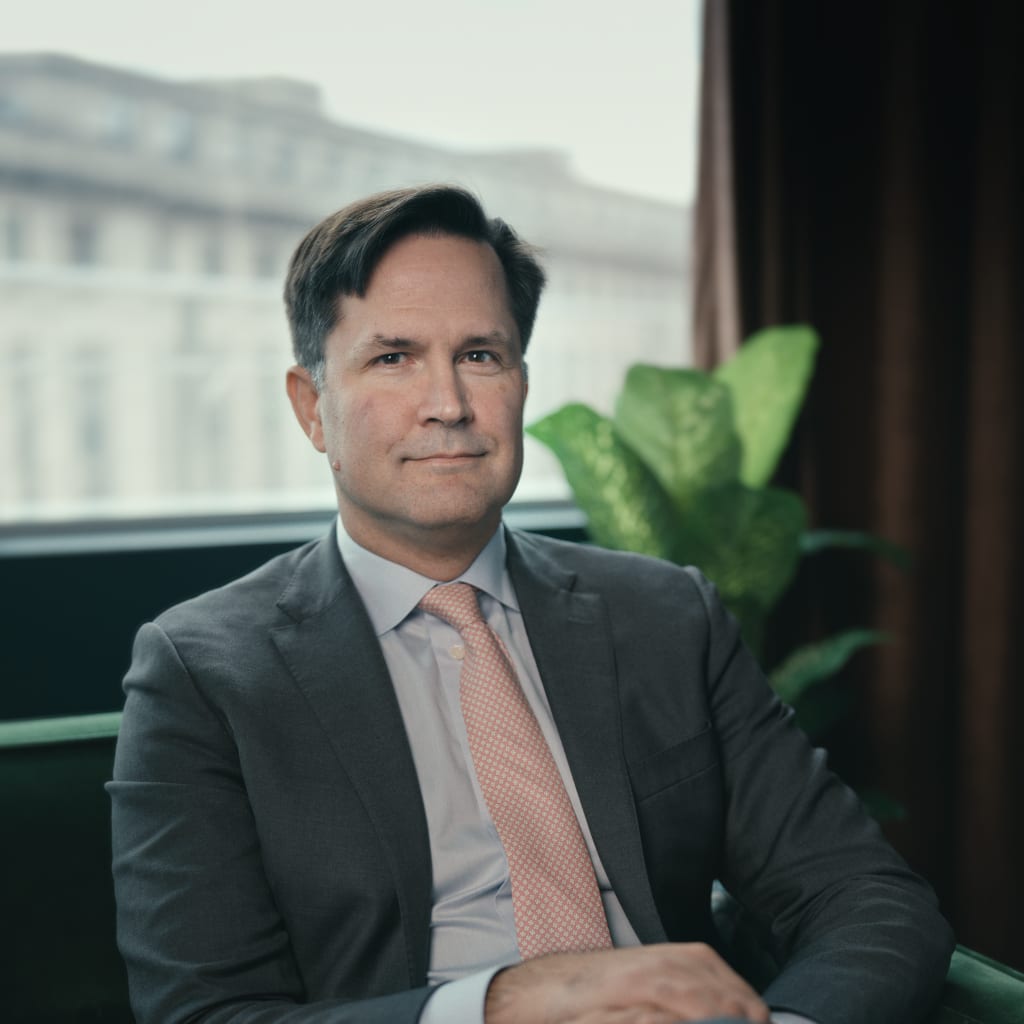 Thomas J. BollykyCFR ExpertBloomberg Chair in Global Health, Council on Foreign Relations
It has been nearly a year since the Trump Administration informed Congress of its intent to fold some functions of the U.S. Agency of International Development (USAID) into the U.S. State Department, and to discontinue the rest.
Please join our speakers, Andrew Natsios, executive professor at George H.W. Bush School of Government at Texas A&M University and former administrator at USAID, and Mark Dybul, senior advisor at Georgetown Center for Global Health Practice and Impact and former executive director at the Global Fund to Fight AIDS, Tuberculosis and Malaria for a discussion of the year without USAID, and what might come next on U.S. engagement on global health and international development.
Thomas Bollyky (00:04)
Good morning and welcome to today’s Council on Foreign Relations meeting on “A Year Without USAID and What Comes Next.” My name is Tom Bollyky, the Bloomberg Chair in Global Health and the Director of the Global Health Program here at the Council on Foreign Relations, and I will be presiding over today’s discussion.
We are hosting today’s meeting from a somewhat snowy Washington, DC, and I apologize to all those who had planned on attending in person. Washingtonians are not a hearty bunch — like groundhogs, we emerge from our holes today to see an inch of snow and declare that there would be hours of office and school closures as a result. Consequently, there is a significant likelihood that my own children may make an appearance in this conversation, but let’s hope not.
On to today’s topic for discussion. It has been nearly a year since the Trump administration informed Congress of its intent to fold some functions of the US Agency for International Development — USAID — into the State Department and discontinue the rest. That has led to changes at home and abroad: the dismissal of most of USAID’s 5,200 staff and 4,000 contractors. The U.S. is merging aid agencies into foreign ministries, embedding global health objectives and development objectives into broader diplomatic, national security, and economic strategies.
This has led to aid cuts and shifted priorities both in the development and global health space. According to our friends at the Institute for Health Metrics and Evaluation, development assistance for health declined 21% over the last year, driven by a 67% drop in US financing — more than $9 billion. That has also been accompanied by steep cuts in foreign aid spending by Belgium, Germany, France, the UK, and others.
The US has released a new strategy that shifted priorities in this post-USAID space, reaffirming some traditional health priorities and goals around HIV/AIDS, malaria, polio, TB, outbreak surveillance and response, but moving away — or at least being silent — on our long-standing commitments to routine childhood immunizations, nutrition, maternal and child health, and family planning. And then, of course, in the development space, a move away from our investments in governance, democracy, and to some extent, humanitarian assistance.
These changes have reverberated through the global health and development ecosystem. We’ve seen this in UN agencies — most notably the World Health Organization — but also in global health financing institutions and disease- and product-specific development partnerships. There has been a real human cost, although how large is a matter of debate. According to Secretary Rubio, no lives have been lost as a result of the closure of USAID. But academic assessments disagree, with the largest of those estimating that by 2030 there will be 14 million deaths as a result of these changes.
Our task today is to take stock of what a year without USAID has meant for the US and internationally, what risks and opportunities are emerging, and the strategies that would allow us to minimize those risks and better exploit those opportunities in whatever comes next.
We have the perfect speakers today to help us think through these questions. Andrew Natsios is the executive professor at the George H.W. Bush School of Government at Texas A&M. He is also, of course, the former administrator of USAID from 2001 to 2006. He has a book coming out this year on USAID called Guns Are Not Enough: Foreign Aid in the National Interest that I think is going to be worth reading.
Mark Dybul is a senior adviser for the Georgetown Center for Global Health Practice and Impact. He is the former executive director of the Global Fund to Fight AIDS, Tuberculosis and Malaria. He was also a principal architect and ultimately led — with the rank of Ambassador — the US President’s Emergency Plan for AIDS Relief, or PEPFAR.
To start us off, I’m going to ask Professor Natsios to go first with an open-ended question: to recount from a US perspective what we have lost over the last year as a result of the closure of USAID, what the US has gained, if anything, and whether anything has surprised him over the last year about this shift and what it has resulted in for the US. Then I’m going to ask Mark to do the same from an international perspective. Let’s start with Andrew.
Andrew Natsios (05:34)
Well, the first thing that has happened is that the missions were closed — 60 missions which had been around since the 1960s when USAID was first created by President Kennedy. I thought the missions were critically important in terms of our understanding of what’s happening in the developing world, broadly speaking in the development space, but specifically with respect to humanitarian assistance and health, which were about 55% of the aid budget prior to its dismantling. And all of the local staff — because half of USAID’s staff are not Americans. They’re Kenyans, Brazilians, Peruvians, Cambodians, or from wherever we had a mission. And these people are not clerks. They tend to be professional people. Twenty-five percent of the USAID staff were health professionals with advanced degrees, usually in public health or epidemiology. We don’t have that many doctors per se. So that was one thing.
The second is obviously the funding cuts. For example, Catholic Relief Services laid off half of their staff. World Vision in Africa laid off 3,000 people in very poor countries that have weak economies with high unemployment rates. That means you’re taking employees almost immediately to the street, because there aren’t a lot of jobs for them to take. So they go from the middle class to basically poverty. There’s a human cost in that, but the cost to the US in expertise is enormous.
The third thing that happened is the systems. I emphasize this because it’s the most invisible of all the things that have been damaged, and it’s something that is not well understood, even by people from State or CDC. First: the Global Health Supply Chain, which we started when I was the administrator — just for antiretrovirals for the PEPFAR program and the malaria program. It has expanded since then. I did not realize, in the time after I left USAID, that because USAID got much lower prices due to mass purchases, UN agencies and the Global Fund were buying off of this system. When I looked at the data on how much was being bought, I said, “We don’t have that much money — where is it coming from?” I realized other institutions were buying through that system because it was more efficient. Ministries of Health were buying through that supply chain system as well — general drugs, vaccines for things like measles, for example. And that system has been disrupted.
The second system that was disrupted — which I think is one of the most important and least focused on — is one that Mark would understand well. Since 1983, USAID has run, with the Ministries of Health and the NGOs and UN agencies, a global health statistical collection and analysis system. When you see data from the World Bank, UNICEF, or WHO on health, that’s USAID data from this system. The Gates Foundation said he would aggregate the data and publish it for this year, but said he can’t do it permanently — he doesn’t have the money, doesn’t have the staff, and most importantly, the missions are shut down. The Ministries of Health worked with us; they had to put some skin in the game themselves to make the system work. But that system was an early warning system for novel and new diseases, and it has now shut down.
I think this is extremely dangerous. We don’t really know what’s going on, because 10 different international organizations were using that system to monitor what was happening. Having it shut down like this is, in my view, irresponsible, dangerous, and puts all of us at risk — not just people in the developing world. The last human cost is that disruption of all these systems means that many people who are dependent on the larger system are now vulnerable because they’re not getting the services they had before.
Thomas Bollyky
That’s a helpful accounting and well organized. Let me push you on whether or not the US has gained anything as a result of this. Has this revitalized some partnerships? You’ve seen a prioritization coming out of the administration. Just today, I saw a report in The Atlantic talking about how the US has pulled humanitarian aid from seven African countries because there is no strong nexus between humanitarian response and US national interests in those countries. You’ve seen a move away from assistance from some countries in South Asia — in particular, a 97% decline in US global health assistance in Bangladesh. Is this leading to greater prioritization, a revitalized partnership around self-reliance and local ownership? Or is it all disruption?
Andrew Natsios
I think — and I argue in my book — that for non-health and non-humanitarian assistance in emergencies, we should look at the national interest. But health programs, because they affect people’s survival, and humanitarian programs in the middle of famines — Alex de Waal reports in his book Mass Starvation that we’ve almost eliminated famines, largely because of USAID and the State Department’s PRM program. Now those programs are being shut down.
I think the notion of distributing aid in a famine based on national security interests is the biggest pile of garbage I have ever heard. It’s morally bankrupt and it’s outrageous. It is indefensible. Using the ESF — the Economic Support Fund — at State during the Cold War and since for financial purposes is a good idea; I don’t object to that. But I do object to applying that logic to health and famine response. Most famines are political. They take place because the governments of the country are trying to kill off parts of the population, usually in association with a civil war. We’re basically saying we’re going to assist, or ignore, the governments that are killing their own populations. I have a big problem with that ethically.
There is this whole thing going around that empathy is a bad thing. I’ve even heard some Christian pastors say it — it is the most ridiculous thing I have ever heard. You read the New Testament and you know very well that no one can deny that empathy has been part of Christian teaching for 2,000 years. Yet these people are trying to rewrite Christianity — and Judaism, I might add, and also Islam. Who said empathy is a bad thing? Musk said it on Joe Rogan’s show. It’s shocking to me that he didn’t get called on it.
Thomas Bollyky
Thank you for that. I do think there is that quote from Bill Gates about the role that Elon Musk has played in this — something tragic, I’m paraphrasing, forgive me for not knowing it by heart, about the world’s richest man imposing these kinds of consequences on the world’s poorest people.
Andrew Natsios
He said “killing the poorest children.” That’s what he said.
Thomas Bollyky
Yes. Let me do two things here. First, I want to mention — as we are calling out people by name — that today’s conversation is on the record and for attribution. I should have said so from the outset. I don’t think that would change the remarks we’ve had so far, but I do want to make the audience aware of that. And then I want to turn it over to Mark to talk about what this has meant for everyone else. Andrew has focused on what this has meant from a US perspective. In terms of partner countries, global health financing institutions, and international multilateral institutions, it would be great to hear from Mark about how the US changes have affected others in this space.
Mark Dybul (14:41)
Thanks, Tom. I also want to go back to the introduction and clarify a few things on the history. According to the OECD, ODA — and I despise the terms “assistance” and “aid,” I think they’re awful words we should have stopped using a long time ago, but I’ll use them because we have to — according to the OECD, ODA dropped by 50% over the last five years before anything happened in the United States. Most countries in the world were cutting dramatically.
And what happened with USAID did not begin the process of folding development organizations into foreign ministries. The UK had done it. Canada had done it. Sweden had done it. Pretty much every major country in the world had done it long before the United States. We were one of the few holdovers.
To be honest: we have done tremendous good over the last 25 years, but we have failed to deliver on the promises that we made during those 25 years. Instead of delivering on them, we just kept meeting and reiterating them. The Monterrey Consensus was very clear: we will shift from paternalism to country ownership; we will shift from measuring how much money we spend to results-based measurement; we will shift to good governance — and that’s not just corruption, it also has to do with the best use of funds in an organized, coherent way, with all sectors engaged, including the private sector (which almost caused the Europeans to walk away). And most importantly, that equitable economic growth will drive development, and development will drive equitable economic growth. Instead of implementing that, we’ve spent the last 25 years meeting again in Paris and Busan, most recently, just to reiterate the same principles.
Meanwhile, while tremendous good has been done, we have encumbered countries by creating so many parallel systems that drag their ability to deliver coherent healthcare and coherent development. And because of the way we’ve been doing it, we’re also losing tremendous opportunity to massive competitors in the world. One in four people on the planet will be African by 2050 — one in three aged 15 to 34. We have nothing but so-called “aid” in those countries.
What governments in those countries are clearly saying is that they hate aid. They have been telling us for 25 years they hate aid and the systems we created. They want something fundamentally different. I was privileged, as Andrew was, to sit in meetings with African heads of state with President Bush — because he cared so much about PEPFAR and AIDS. Thirty seconds of the meeting would be about that, but most of the meeting was about how the US wasn’t providing the countries with what they wanted and needed — which is why they were turning to China and other countries, because those countries could sign $50 billion checks and support development instead of funding all these different fragmented pieces, which just loaded the system down.
Look at the data system: PEPFAR alone was spending nearly a billion dollars a year on data collection. The Global Fund had massive systems, all parallel. GAVI had separate systems. The procurement systems — yes, countries sometimes used some of the USAID systems, but that system is so flawed, and the countries hate it. It’s not built for purpose. And whose data are those, anyway? They’re the countries’ data. The countries had no idea, until it got shut off, that it wasn’t their data. They had no access to their own data because we collected it through our implementing partners.
So I can tell you: the countries are relieved. They’re very worried about the short term, and it has to be done well, but they’re relieved that they finally get what they want — which is control over their own systems in a far more efficient way.
Let me give you a couple of examples. When I was at the Global Fund, Rwanda took a 50% cut to its HIV, TB, and malaria funding because US government and Global Fund resources were declining. I went down there, and we signed — I know a lot of people don’t like this phrase — basically a block grant: here are eight indicators, here’s the amount of money, if you achieve the indicators you get all the money, if you don’t, we’ll work it out. They not only achieved them, they over-achieved them — with 50% less money, they got better outcomes.
I was just in Kenya meeting with the faith-based community there. The faith community — both Christian and Muslim — provides about 40% of healthcare. In the last six months, because they’ve been able to rationalize management and a whole range of other things, they’ve reduced costs and reduced their budgets by 30%. They think they can get to a 50–60% reduction if they’re allowed to manage their system in a coherent way.
What really fascinated me is that I assumed the 20% end of the range — those with the smallest savings — were the ones that didn’t know what they were doing, and that the 40% end were the aggressive high-performers. It was actually the other way around. The 20% had already fully integrated services, despite all the siloed programs and funding, so they had less room left to achieve savings — they’d already done it. But they still got 20% and thought they could get another 20–40% on top of that if they had full control over their system. There were clinics where there were five managers but only 30 patients because of all the parallel systems. And those facilities that had fully integrated had 20–30–40% better outcomes in HIV, TB, malaria, child mortality, maternal mortality, hypertension, and diabetes — because they actually monitored those things in a holistic, coordinated way.
So what have we gained from this? I’m not going to look back at what happened and how it happened — I’m going to look forward. We have an opportunity, a massive opportunity, to actually deliver on those Monterrey Consensus principles. And if there’s one more meeting on what the future principles of development will be, I am literally going to lose my mind. The principles were set. We don’t need to change them, modify them, or massage them. If we actually work with the countries and support them, they can achieve what has been put forward. Not only can they achieve it, they want to, and they are working aggressively to do it.
I also want to be clear: I’m talking about the 12 to 16 countries that have the economic and management capacity. And one of the worst things we have done — and Africans are very direct on this — is that while we supported them to build service delivery (and Andrew is absolutely right: most of the people delivering services, most of the people in our missions, were local people — we were not doing it, they were), what we took away was their management capacity. Because we were managing through international organizations, we weren’t supporting them to build the structures they needed. But they pretty much know what to do now.
Those 12 to 16 countries don’t need more epidemiologists or more technical experts from a health perspective — they have plenty. They’ve already found money: Ghana found $350 million, Kenya found $200 million. They never looked for it before because they didn’t have to. Now they do, and they’re rationalizing expenditures. They think they can save a lot of money through rationalization, because 60% of the money never got to them anyway.
If those countries can move and show progress, I think there’ll be breathing room — and so does the administration — for the countries that are going to take longer, because you can show what sustainability looks like. We’ve been talking about sustainability, we’ve been talking about the journey to self-reliance for a very long time, but we’ve done precious little to achieve it.
There’s no reason to have all these different agencies anymore. We have an opportunity to actually deliver for the countries in a way that is necessary, and to have a 21st-century approach to development, rather than what we’ve had — an older approach that did amazing things, but wasn’t built for now.
Thomas Bollyky
Great. So let me connect that to Andrew’s comments. Mark has put forward a powerful vision — that the system did an enormous amount of good but had some significant deficiencies, and we can see it from the fact that African leaders have not mourned its demise. There has been a palpable lack of testimony in that regard. But he has also pointed out that for this to work, we need to account for short-term needs as well as for the countries that may take a little longer to make this transition.
Andrew, what’s your sense of that assessment, and whether we have the systems in place to address those short-term needs and support the countries that might take a little bit longer? What would we need to mobilize to address those concerns?
Andrew Natsios (25:07)
African governments have said they would get to 15% of their budgets for health. They are nowhere near that — and that was long before any of the big cuts last year. Was there a decline in many donors? Certainly not in the United States. During the Biden administration, there was an enormous — I think too large — increase in development assistance. Not just development assistance but also humanitarian assistance, up to $38 billion, which shocked me. It was $14 billion when I left office for what USAID was spending, with State spending a lot on top of that.
Now, Mark is talking about 12 functional countries. There are 22 failed states in Africa. There is no national government in Sudan. The DRC has control of the capital city and a few areas — it is not a functional national government. There has been no national government in Somalia since Siad Barre fell from power. There’s a civil war going on in Ethiopia right now — one of the most dynamic and growing African economies under Meles Zenawi, but that is collapsing now. There is no functioning government in Chad, the Central African Republic is a wreck. Are there exceptions? Of course — Tanzania, Kenya. Botswana is a middle-class democracy, but has only 2 million people. Ghana is one of the best-performing governments. But a large number of countries in Africa are either failed states or fragile states without functioning ministries of anything.
Pointing to Rwanda: Rwanda is completely unlike the rest of Africa. It’s a dictatorship with one of the worst human rights records. Kagame runs around assassinating people. Does he run an efficient bureaucracy? Yes. But that is not indicative of the rest of Africa or of the developing world generally.
In terms of the data: the data does live in the Ministries of Health, and if they tell you otherwise, they’re not telling you the truth. That data was available to the Ministries of Health because we don’t run those data collection systems ourselves except in failed states where there is no functioning ministry. We have always insisted that they put some money into it and work with us on it.
In terms of silos: silos have existed in every aid institution. They exist in the US government for domestic policy — that’s just one of the problems of centralized bureaucracies in all countries, including highly developed ones. Why does USAID have so many? Because of congressional earmarking. There were more earmarks in the USAID budget than there were appropriations. The budget was 120% earmarked. I used to ask, “How can we spend when there’s a 120% earmark?” Congress would tell me, “That’s your problem to deal with.” That is because different advocacy groups go in and demand certain things — but that’s a disease in all donor agencies, not just the US government. It’s a function of parliamentary or congressional democracy. The interest groups influence appropriation levels not just in foreign aid but in all areas of government.
The notion that all of this progress is being made — I’ve examined the data. There’s a book by a Danish-Swedish economist named Morten Jerven called Poor Numbers. The data used across Africa on progress toward the MDGs is, in his assessment, unreliable. I’ve asked people, “How did you know the unemployment rate or the agricultural production rate was such-and-such?” And they’ve said, “We don’t know, Andrew — we don’t have a way of collecting that data. Half the country is in civil war, or the government doesn’t have a functioning bureaucracy. So we estimate.” They’ve actually told me they’ve estimated the data. So when people run around saying Africa has made all this progress, I’m skeptical. We’re making up data to show that they need the money.
Now let’s get into the problem of corruption. There was an audit of a program in Kenya that showed antiretrovirals were being sold — in violation of US law — by local health clinics, and the money wasn’t going to the central government for more services; it was going into the pockets of healthcare workers. They found in an audit in Ethiopia that Ethiopian aid workers from the Ethiopian government were distributing aid and charging poor people for aid that was supposed to be free, with the money going into people’s pockets. They had to shut the program down. Four senior health officials in Uganda were indicted and put on trial for corruption — and Uganda used to have one of the most advanced healthcare systems.
So when you say “the Africans” love the fact that USAID shut down, you mean African leaders. You’re not talking to people at the village level. That’s not what they’re saying. There are two different worlds here: one of countries that are highly functional, like Botswana or Ghana; some that are marginally functional; and some that are completely dysfunctional. That’s frequently what USAID dealt with — the countries that can’t function at all — and it’s not a function of aid, it’s a function of weak institutions, which is one of the central principles of the way we ran our programs: to do training, to build institutions and build systems.
When people say “aid doesn’t work” — South Korea was the poorest country in the world in the late 1950s. It is now the 11th largest economy. We spent $6 billion there, and there is no institution of South Korean national life that we did not touch or actually help create. The same is true of Taiwan, Indonesia, and Thailand. Asia did very well. Latin America has been doing better, but not as well. Africa is lagging behind, and that’s where our health programs were concentrated.
Thomas Bollyky
Okay, great. I actually think there is more agreement between the two of you than has emerged. I heard Mark saying pretty clearly that the system did work to develop good outcomes, but that there are some deficiencies. I want to start to shift our conversation to where we’re heading next. To Andrew’s point about outside assessments: our friends at IHME had pointed out that health spending in Africa, prior to the cuts, had been expected not to keep up with population growth in Sub-Saharan Africa — that you would see government health spending decline on a per-capita basis.
Mark, what signs are you seeing that we are tackling the short-term problems of this transition and addressing the needs of the countries that are going to need a little more and a little longer support?
Mark Dybul (33:41)
And I think that’s where we should be focusing our attention. The 15 or 12 to 16 countries that are moving the fastest are where we have 80 to 90% of our development spending on health anyway. I want to be clear that the humanitarian situation is a completely different area, and countries can slide back — we’ve seen that. So we have to have an ongoing support system. It’s more about: how do we support the countries that can achieve that sustainable trajectory, which they are on?
Of course, countries were simply not spending a lot of money on health before. I’ve talked to so many ministers of finance, including in the last year, and they say, “Well, why would I have spent money on health before? It was all coming in externally. I have lots of other priorities. Show me when the money starts going down, and I’ll find it” — which is exactly what they’ve been doing. The Minister of Health in Nigeria is over the moon, because they finally have health budgeted for the next five years in the President’s budget forecast, with plans to increase health spending to make up for what they believe will be cut. There’s a reduction in the first year, but it’s manageable, and the second year isn’t so bad. It’s the third, fourth, and fifth years that things start getting harder. But that’s all negotiable, and I think we’re seeing some strong negotiation.
What’s happening right now is intense planning. The ministries of finance and economic planning are deeply involved, which has been a big problem with how we’ve done development. We focused on health and agriculture, but ministers of finance were off to the side because we were bringing the money in. Now the ministries of finance are deeply engaged. They have very talented people. In the countries that had already made progress, there are now parts of ministries of health dedicated to health financing, with Treasury people seconded in to help.
I’ve also spent a lot of time outside of government, and this is one of the exciting things to me. With the exception of Namibia, Botswana, and Rwanda, most governments have focused only on the public-sector piece, not on the non-public-sector piece, because that’s mostly been funded elsewhere. Most countries in Africa do not have laws that allow them to transfer public money to non-governmental institutions. Some have allowed secondment of people into faith-based hospitals or community-based centers, but they haven’t been able to directly fund them. That’s going to need to change.
One of the constructive things the administration did — and they asked the Global Fund to do it as well — was provide the countries with information not just on who was being funded, but where they were doing the work and what they were doing, with budget breakdowns on how organizations were spending the money. The countries are now using that to understand what the future looks like and to make sure those services aren’t interrupted. In some cases, governments will just try to absorb services into the public sector, which could be a problem. In other places, they’re looking at how to change their laws, and they’re talking with each other about how to manage it.
I also don’t just talk to government leaders. I spend a lot of time in communities, and I can tell you the people at the community level are exhausted. They will tell you, when you’ve been around long enough, that they have the same performance for everyone who comes through: “Is it agriculture today? Is it health? Is it HIV? Is it TB? Is it malaria?” They do the same show for everyone — because it’s all driven by the visitor’s priorities, not the community’s priorities. So there’s excitement at that level, along with worry that the money won’t reach them because the systems aren’t there yet. And that’s exactly where we have the opportunity to support these countries.
Of the 15 to 16 countries, my guess is at least half can do a spectacular job; about half of the rest can do an okay job; the other quarter are going to need a lot of support and probably won’t make it in five to seven years — they’ll need a bit longer. Then there’s a whole group of countries that will need seven to twelve years. And then there are countries that will face humanitarian crises requiring a totally different approach.
At the same time, we can work toward what countries have always said they want from us: an economic partnership, an investment partnership to create jobs and opportunity. But that requires them to change their investment ecosystem so that our companies can invest. The reason we’ve done so poorly and are losing ground is that it currently takes an autocratic state — where there’s no separation between the private and public sector — to engage effectively in a lot of these settings, because the ecosystem hasn’t been built. We need to be investing in that. That should be a key part of our development priorities, not just humanitarian assistance.
That’s why South Korea and those other countries did so well: they had that type of investment, they focused on health and education first, and then they went from there. Most of the countries I visit actually travel to South Korea and Singapore because they don’t want our old model. They want to learn from those countries, and they are learning from them and adapting their systems.
So we have an opportunity to expand our notion of development — getting back to those Monterrey principles, that equitable economic growth will drive development and development will drive equitable economic growth — and bring the full power of the United States, and Europe and the UK, because they’re in the same position financially and from an investment perspective. That’s where real development is going to happen. This reminds me of 2000–2001: the opportunity to do something radically different that will make a huge difference in the lives of people where a third of those aged 15 to 34 are going to be living. If we focus on that, we have an opportunity to bring all the strengths of the United States and the American people to bear in a partnership with Africa that goes way beyond aid — to what they’ve always wanted from us.
Thomas Bollyky
Great. We have 18 minutes left. I’m going to turn it to you, Andrew, and push you forward-looking as well — to speak from the US perspective on what the role of the US is in supporting these kinds of transitions, supporting governments in achieving their health and development objectives as they take greater ownership. I’ll ask you just to spend a few minutes on that, and then I’m going to turn it over to the audience. I can already see three people in the queue, and I’ll try to preserve as much time as possible. Andrew, over to you.
Andrew Natsios (41:42)
What the administration is doing now is moving away from everything that USAID did — the business systems, the approaches. The same thing happened, by the way, when the MCC was set up, and eventually they had to make a change because many of the staff they hired at the MCC were former USAID officers. The division heads were USAID people, because they had initially hired investment bankers from New York who didn’t know anything about development. They thought it was a bank. It’s not a bank.
Everybody talks about the Chinese beating us. The Chinese changed their aid program four years ago, and Americans, for some reason, don’t listen carefully to what Xi Jinping says. He gave a speech saying “small is beautiful, green is better, technology is best.” That’s the new Chinese aid program. They created an independent Chinese aid agency like USAID. They created their own logo. They have a massive scholarship program. We had 20,000 scholarships a year when I was there; it had fallen to 900 a year. We stopped doing that because OMB demanded immediate results. The Chinese offer 42,000 scholarships a year from the developing world. We did this on a massive scale during the Cold War, and a lot of the elites in non-communist Asia got their PhDs in the United States on USAID scholarships — it was one of our most successful programs. I could not convince Congress to re-establish it. We should be doing it with Africa and with African universities. We did a great deal to build up universities in Asia; we could be doing the same in Africa.
In terms of budget support — which is what Mark is talking about — Britain kept pressing us to do budget support in Afghanistan. I said, “Don’t do it. The money will disappear. You will not be able to track it, and nothing will come out of it.” That’s exactly what happened. Two years after they started transferring money into the Afghan budget, it disappeared. Their inspectors general couldn’t find where the money went. The same thing has happened in Africa where money was moved into budget support and they could not track where it went, and it did not produce results. So I think there’s a huge gap between what is promised at international conferences and what comes to fruition. My experience over 35 years is that there’s a lot of rhetoric and not a lot of production when it comes to actually getting things done.
There is a lot of political science work done on African governance. It’s a clientalist, patrimonial system — which the United States had in the 19th century at the state and local level. Patronage-based. Frank Fukuyama points out in one of his books that there are 70,000 employees in the Office of the Presidency of Kenya — 70,000, all patronage. So when you say you’re transferring money to some of these governments, all you’re doing is funding the patronage system. If you read Paul Collier’s The Bottom Billion — a very famous book by a respected development economist — he says budget support frequently turns into what oil and gas revenues become: they feed the patronage machines in these countries because they don’t have the institutions. That’s the problem.
One last thing: the Belt and Road Initiative has essentially collapsed. They’re not funding it anymore because the countries couldn’t repay the debts, and it’s not generating economic growth as the Chinese said it would. If you look at the data on loans for new projects, it’s down 90%. We are competing against something that barely exists anymore.
Thomas Bollyky
Thank you. Let me turn it over to the audience. We have 13 minutes left and seven questions, so I’m going to start by taking them in groups of two. Please just ask one question, state your name and affiliation, make your question sound like a question, and we can get through as many as possible. Let’s start with Tom, and then Prashant.
Tom Conn, American University (46:47)
Good morning, can you hear me? Fantastic. Tom Conn with American University. Could you talk about the role of the Millennium Challenge Corporation, which DOGE tried to shut down? Do you think it’s playing a positive role? Should it be maintained or expanded? And what are your thoughts on the discussion about possibly merging it with the DFC?
Prashant Yadav (47:15)
Mark, you highlighted country-level systems and where we haven’t done enough in the past. I presume there are still areas like procurement where we ought to think about the efficiencies that come from doing things at the supranational level. If so, what would country ownership in a global procurement system look like? Would they be part of it? Would they be on the governing council? How do you imagine that?
Thomas Bollyky
Andrew, do you want to take the MCC question quickly and the question of whether it’s suitable for merger into the DFC? And then I’ll ask Mark to comment on Prashant’s question.
Andrew Natsios (47:51)
The premise behind the MCC was that good-performing poor countries could apply and be eligible. The administration is now saying they’re going to dump that principle and do MCC projects in countries of strategic interest to the United States, regardless of how they perform. That is not what the MCC was about. They’ve fundamentally altered its mission without rewriting the legislation.
The notion that a development project can be done in five years — sometimes you can. You can build a road in five years. The Chinese can do it faster because their workers operate 24/7; that’s actually abusive, in my view, and they don’t do environmental assessments before they build.
If you look at what countries are asking for, it’s infrastructure. Without roads, especially in rural areas — and 55% of Africa is still rural — you need roads. That’s what they’re asking for. We built an infrastructure office at USAID because that’s what we were doing in Afghanistan and Iraq. But we shut down our infrastructure projects in the 1990s because Congress said, “We’re not going to fund them anymore — the World Bank can do it.” The environmental groups opposed infrastructure. Some of the human services groups said, “No, we don’t want roads.” Well, how do you deliver human services without roads? You can’t run an HIV/AIDS program unless you can get to the people.
So I do think the MCC is a good model, but they’ve altered it, and they’re also just sending money to countries that have resources we want. It’s very transactional, which is not what the MCC was originally supposed to do. So I don’t support the changes.
Thomas Bollyky
Thank you, Andrew. Mark, on local ownership and global procurement?
Mark Dybul (50:17)
Just quickly on Tom’s question: they are functionally moving toward what you described, combining MCC, DFC, and one other small development financing entity. I’m genuinely quite excited — there are quite a few young, very capable appointees, with more coming, who are really working toward building a new model rather than just dismantling the old one. So we’ll see what happens with that effort.
Prashant, on your question: this is actually not that complicated to do. We tried to do it when I was at the Global Fund with WAMBO, but the problem — and this isn’t about the people in development agencies — is that a sociology of self-preservation always takes over in any bureaucratic system, and we end up starting with something good and ending up with something totally centralized.
With modern technology, it is quite feasible for countries to own their procurement processes while having a platform that functionally serves as a pooled mechanism. The great thing about that is you can pool with whomever makes sense. Countries like Botswana or Eswatini, which struggle even in the current systems to get decent pricing, could pool with Thailand or Brazil on diabetes drugs or whatever else they need. It can genuinely be a platform.
My guess is what will happen is a coalition of the willing, because the politics of putting together a pooled procurement system at a continental or sub-continental level are going to be very challenging. But a coalition of willing countries of sufficient size is very possible, and the technology is far more advanced than when we built WAMBO.
I think it’s very possible and very exciting to have a pooled procurement mechanism that actually works and delivers for the countries — and it’ll be better for the companies too. I’ve talked with the companies, and they really struggle with the current system’s lack of accurate forecasting. A good pooled procurement system enables that. It will also stimulate investment and innovation in countries to discover and produce — and that’s going to be an engine of economic growth and a health economy, which countries are very excited about. If you have automatic access to a market — which is the biggest question for any investor — a pooled procurement mechanism can help provide that. So I think it’s very possible and could be very exciting.
Thomas Bollyky
Thank you, Mark. We have five questions and six minutes left, so I’m going to take three more. Please keep them quite short, and then I’ll ask our speakers to be brief. Whitney, then Liz, then Evelyn.
Whitney Schneidman (53:26)
Thanks so much for this great conversation. Whitney Schneidman at Brookings and Schneidman Associates. Mark, it’s clear that we’re at an inflection point. I don’t think USAID is coming back, certainly not in the form it was. The jobs aren’t coming back, and I think we’re at an era of investment-led growth and economic development, as you alluded to. I know we have very little time, but I’m interested in some initial thoughts about further unlocking the private sector to address some of these challenges — not just the US and international private sector, but the African private sector and the innovation taking place on the continent. Thanks.
Liz Leibowitz (54:14)
I’m a former Nita Lowey and USAID staffer, so obviously I’m biased. As Democrats are looking towards the future, I think there is an inherent gut instinct to say we’re going to try to return to USAID. As the first question suggested, that seems unlikely. So, if you were advising Democrats on how to think about the future — what should the goal be, should there be a change in administration? What would foreign assistance look like in that situation?
Evelyn Leopold (54:39)
I’m based at the United Nations and I also run an NGO there. Can you tell me about the impact of the lack of aid on the United Nations?
Thomas Bollyky
Thank you all — and thank you for the brevity of those questions. Let’s do private sector, the UN impact, and what comes next from a Democratic perspective. Let’s start with Mark.
Mark Dybul (55:25)
I’ll go as quickly as I can on Whitney’s question. A couple of things are happening that I think will stimulate private-sector engagement. One is that President Kagame and a few others are leading something called the Open Corridor Initiative, which aims to create a free trade zone across countries in Africa. African countries historically don’t buy from other African countries, and these open corridors can help stimulate some of that investment. But what’s really necessary is investment in the ecosystem so that companies from all over the world feel they can safely invest — and we have not done that. The World Bank should be doing it, and I hope they step up.
On the UN impact: I hope it leads to a more effective UN. The Secretary-General has released a report with some very good elements, and we’ll have to see where it goes.
On what it should look like for Democrats or anyone else: it should look like what I’ve been trying to describe — supporting countries for full development. You can do that in a variety of ways. I’m talking with both Democrats and Republicans about it, and there will be a lot coming out on this. But this is not rocket science. The key is not to go back to the way we’ve always done things — which is a real risk — because it won’t get us any better results than before.
Andrew Natsios (57:01)
We did get very good results, Mark — it’s just that you ignore them. A lot of what happened in Asia was a function of USAID. The Green Revolution was principally implemented by USAID. Fifty percent of our budget was spent on it. It saved a billion people’s lives and stimulated industrialization. All countries that have gone from least-developed to middle-income to high-income have had agricultural revolutions first. We did that when we had money. The environmental movement in the 1980s shut it down — there were massive cuts in agriculture because they didn’t like modern farming. President Obama tried to revive it, and I think he did, but that’s been shut down again.
I think there should be a new cabinet-level department. All the development programs should be taken out of State — MCC, DFC, the international division of CDC, because there has been constant rivalry between USAID and CDC. Fifty-five percent of PEPFAR money was being spent by USAID. I would merge all of that into one department. I would try to reduce earmarks. We didn’t have these earmarks during the Cold War, which is why the program was more successful then. And we had highly decentralized control — the mission directors had a lot of authority to respond to local needs. We can’t do that with all these earmarks.
In terms of the UN: they just laid off 10% of their staff — 6,500 employees. I think things are going to get worse. Keir Starmer, the UK’s Labour Prime Minister, said he was going to fund a massive increase in defense spending because of the Russian threat in Europe by cutting their aid program by 35%. This is the United Kingdom — one of the leading development funders in Europe.
Should we have a bigger private-sector role? Of course. But when you talk about free trade zones, Mark — we’ve been doing that for 20 years. We’ve had extensive programs negotiating to get these governments to back down on their trade barriers, and we were unsuccessful. That’s not because we were at fault; I tried to get people to move these trade barriers down. African leaders won’t do it for local political reasons — which I understand, but that’s the problem. A lot of people in the developing world blame the north and blame aid for problems they haven’t resolved themselves. I get tired of listening to it, because I do think a lot of this could be resolved, but it hasn’t been.
The last thing I would say: you keep talking about the 12 countries that are functional. There are 58 countries in Sub-Saharan Africa. What about the rest? It looks to me like we’re abandoning them — we’ve shut down ambassador-level representation in 20 or 30 African countries, closed embassies, and it’s not just USAID. Our sphere of influence, the administration has said, is going to be Latin America. I think it’s a disaster.
Thomas Bollyky (1:00:56)
Thank you. Let me thank both of our speakers. As you can see from their remarks, these are two people who have devoted their careers to development and global health and feel quite passionate about it — and we’re going to need them, and people like them, to help us navigate whatever comes next. I’m really grateful for this conversation today. Thank you for joining. Thank you to Anya Hirschfeld for organizing today’s event, and we’ll look forward to continuing these debates moving forward.
This is an uncorrected transcript.