Trump Achieves Breakthrough Gaza Ceasefire, but a Tough Road Lies Ahead
The first phase in a deal to end the two-year Hamas-Israel war is a major achievement. But a sustainable truce remains a challenge and a lasting solution to Palestinian governance appears remote.
By experts and staff
- Published
 Steven A. CookCFR ExpertEni Enrico Mattei Senior Fellow for Middle East and Africa Studies
Steven A. Cook is Eni Enrico Mattei senior fellow for Middle East and Africa studies at CFR.
Israel and Hamas have accepted the first part of a peace agreement that calls for the return of all living Israeli hostages in exchange for Palestinian prisoners and Israel’s military to begin to withdraw from most of Gaza. The deal also calls for the surging of humanitarian aid to Gaza’s population of nearly two million Palestinians.
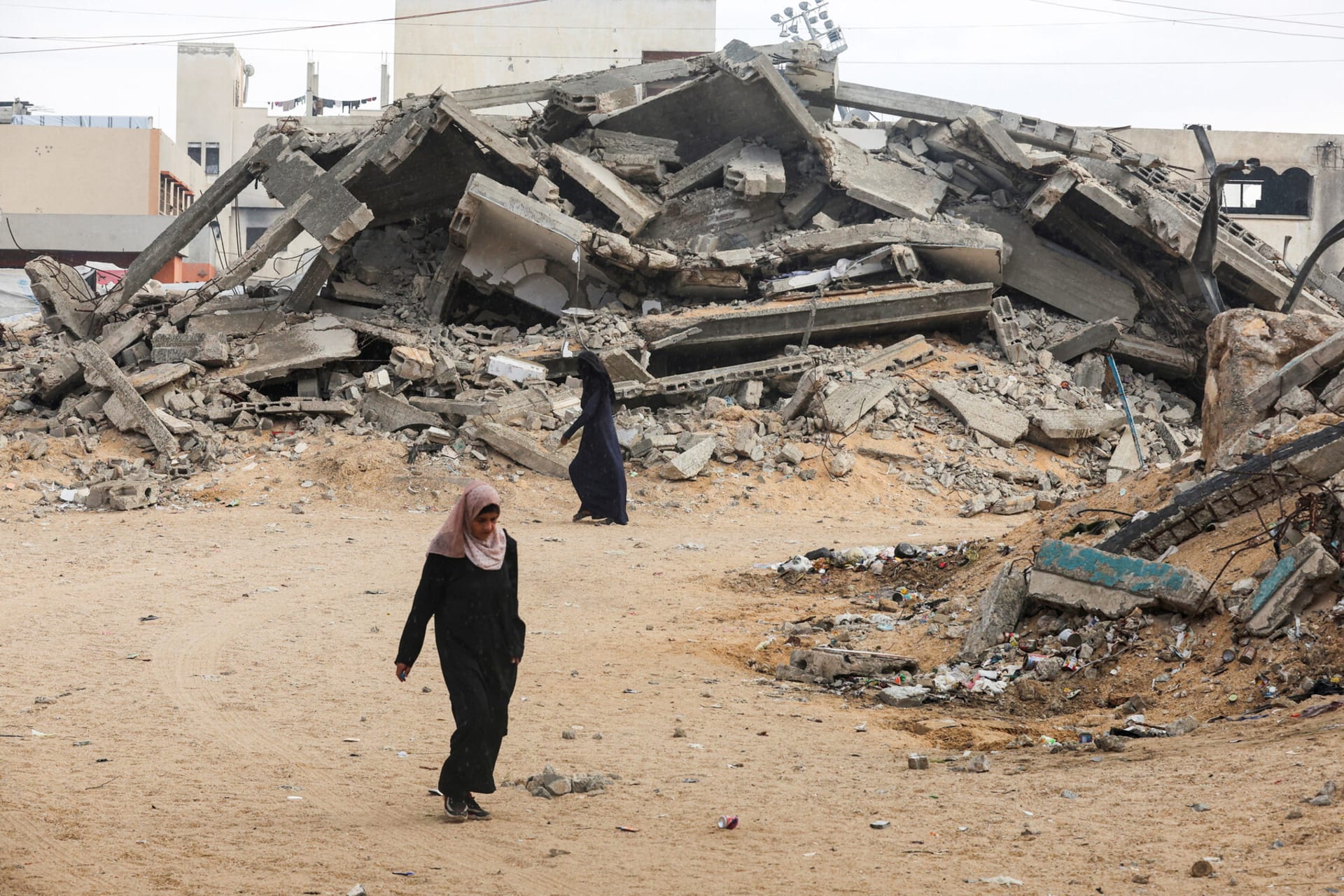
Yet, other crucial steps remain to be finalized, including the disarmament of Hamas fighters, the insertion of an international stabilizing force to Gaza, and the establishment of new structures for a Palestinian state not including Hamas. The trauma of the Hamas attack on October 7, 2023, remains deep in Israeli society. The Israeli military response has greatly weakened Hamas, devastated much of the inhabited areas of Gaza, and killed over sixty-seven thousand Palestinians, according to Hamas and UN officials. Below are the main aspects and implications of the deal.
How significant is this first phase peace agreement between Israel and Hamas?
It is significant. All the remaining Israeli hostages are slated to come home. The twenty that are believed to be alive could be returned over the coming weekend and the remaining twenty-eight deceased hostages early next week. Israel is, in turn, obligated to release nearly two thousand Palestinians held in Israeli jails. Israel will also release about four hundred bodies of Hamas and other militants it has recovered on the battlefield. These exchanges require Israel to withdraw to agreed-upon lines within Gaza.
Whether this leads to an end to the war remains an open question. Certainly, Israelis and Palestinians hope that is the case, and U.S. President Donald Trump has made clear that he sees the hostage deal as the end. The challenge is now the implementation of the president’s Twenty-Point Plan, which, among a range of measures, requires Hamas to disarm, the establishment of an international security force, and new governance structures in Gaza that do not include Hamas. It also envisions a Palestinian state. These are tough conditions for Hamas and Israel.
Thus far, the international security force that Trump hopes will provide stability so that reconstruction of Gaza can begin is notional. The press and analysts have speculated that this force could include Egyptians, Jordanians, Saudis, Emiratis, and Indonesians, but no country has volunteered to have their soldiers patrol the Gaza Strip. Once it is stood up, there will then be questions of command and control as well as coordination with the Israel Defense Forces.
How will it affect humanitarian aid deliveries and the movement of the Palestinian population in Gaza?
The agreement calls for the flow of four hundred aid trucks per day for the first five days after the ceasefire and then for that number to increase. This process would be overseen by UN agencies previously involved in distributing relief aid in Gaza. Hundreds of thousands of displaced Palestinians can also return to their homes, though with the scale of destruction in Gaza, many no longer have homes.
Why are the sides ready to move forward now?
It seems clear that President Trump saw an opportunity to move forward after Israel’s failed strike on the Hamas leadership in Qatar’s capital Doha on September 9. The international criticism of the strike—especially among Israel’s Arab partners—and Trump’s professed “unhappiness” about it put Israeli Prime Minister Benjamin Netanyahu on the defensive. Even though the strike failed, it scared the Qataris, who demanded a guarantee from the United States that it would not happen again.
The U.S. president on September 29 issued an executive order that guarantees Qatar’s security, but in exchange he expected the Qataris to put pressure on Hamas to release the hostages. (There is also speculation that the president has forced a change in the tone of Qatari-funded Al Jazeera’s coverage of Gaza and that Hamas’s leaders will have to leave Doha.) The president then aligned himself with the 65 percent of Israelis who wanted to prioritize the return of hostages over the defeat of Hamas. This put further pressure on Netanyahu. The White House then elicited the support of major Arab and Muslim states to pressure Hamas to accept the deal.
Will this spark a sustainable new peace process between Israelis and Palestinians?
This seems unlikely. There is no appetite for a two-state solution among Israelis who have concluded after October 7 that Palestinians do not want to live side-by-side in peace with them. Palestinians have no political leadership. The Palestinian Authority is corrupt, illegitimate, and weak. Hamas has been smashed. It will take time for Palestinians to work out their politics while Gazans dig out from a devastating war.
This work represents the views and opinions solely of the author. The Council on Foreign Relations is an independent, nonpartisan membership organization, think tank, and publisher, and takes no institutional positions on matters of policy.