Autonomous Ukraine: One Woman’s Path From a U.S. College Campus to the Ukrainian Battlefield
This episode traces one young woman’s journey home to a new kind of war—and Ukraine’s fight for survival.

Published
Host
 Director, Podcasting
Guest
- Catarina BuchatskiyCo-founder and Director of Analytics, Snake Island Institute
Transcript
Cat BUCHATSKIY: It’s really, really hard to imagine any version of victory that includes giving away Ukrainian territory. To me personally retaining or retaining a claim on or getting those back, it’s a huge measure. That’s my white whale in a way. That’s what I’m chasing. The overarching definition of victory is that the Ukrainian nation is whole, that the state is legitimate, that we have control over the state, that we have our democracy, and that we’re at peace and can live freely, and so we’re trying to work towards that.
This season we’ve been looking at the war in Ukraine - how it has reshaped the idea of modern conflict and launched the world into a new era of warfare. But from 30,000 feet, war can start to feel abstract. After four years, the numbers of dead and wounded, the cities destroyed, the countless drones and missile barrages can almost lose their meaning.
So today as part of our special Ukraine mini-series, we’re bringing you an on the ground perspective through one person’s story.
Her name is Cat Buchatskiy, she’s a 25 year old from Kyiv who, when the war began, was attending college in California, lifetimes away from the frontline. But within days of Russia’s invasion, she went home.
Since then, she co-founded the Snake Island Institute. It’s an independent Ukrainian group that studies defense and develops new ideas to strengthen long-term ties between Ukraine and its Western allies.
I’m Gabrielle Sierra and this is Why It Matters.
Gabrielle SIERRA: All right, well welcome Cat. Thank you so much for joining us.
BUCHATSKIY: Thank you for having me.
SIERRA: So we like to start out easy, can you please tell me your name and what you do?
BUCHATSKIY: My name is Cat Buchatskiy and I’m the director of analytics at the Snake Island Institute.
SIERRA: So I’m going to ask a million questions about that because I’ve never heard an institute with a cooler name, but can you just tell me, where are you right now?
BUCHATSKIY: I am in our HQ, although I don’t know if you can call it an HQ if we only have one office, but I will call it that, sounds cooler, in Kyiv, Ukraine where we’ve been located for about a year now.
The war hit its four year anniversary in February, and repeated attacks on energy systems have left millions of Ukrainians without electricity or heat to fight off the cold.
The United Nations reports that Russia is currently launching more than 5,000 drone strikes each month, along with frequent missile barrages that target civilian infrastructure, keeping much of the country in a constant cycle of outages, repairs, and air raids.
BUCHATSKIY: It has been a really tough winter, I’m not going to lie. The toughest winter that we’ve had, actually just the coldest winter we’ve had on record, which has been amplified by the fact that Russia’s energy strikes on Ukraine have been terrible this winter, which means that for most of January, my apartment didn’t have any heating or electricity or sometimes even water. And I don’t know the Fahrenheit conversion, but it would be in the negative Celsius in my apartment. And so it’s been a tough winter for morale, it’s definitely been felt, but spring is coming. It was like zero degrees today, so I’m feeling good.
SIERRA: Can you take me back to 2022, the moment Russia first invaded Ukraine, you know, where were you? What were you thinking? What do you remember?
BUCHATSKIY: Yeah, I mean that’s a very emotional day, so it’s quite difficult to think about. For me, actually, the full-scale invasion happened on February 23rd because of the time difference. I was in California. I was in university at the time, and I remember that Putin had an address on February 21st. And I remember pretty immediately the first few words that he said-
[In Russian]
BUCHATSKIY: “We’re going to conduct a special operation to demilitarize and denazify Ukraine,” and I just knew exactly what that meant. And we got the first alerts that there were bombings in Kyiv and I had to call my family and I called my mom who was already in tears and my dad, he didn’t know and he was cooking dinner and I called him and he was in the best mood ever and he was like, “Hey, what’s up? How are you? Good to see you.” And I was just like, “Dad, you have to turn on the TV, you have to see it.” And he turns on the TV and we’re just, like, there in silence. I left my studies. I was in the middle of a semester and I emailed my professors. I was like, I’m gone, I’m sorry and I left.
SIERRA: That is pretty incredible, I just, I don’t know if everyone would have that level of commitment. I mean, do you remember your thought process? Did it feel automatic to you that you would go back home?
BUCHATSKIY: Actually a lot of us went back, like a lot. Which is incredibly inspiring. And most importantly, a lot of us actually went back to fight. And that’s the more important and most important decision that a lot of my peers made. But it was automatic because I think the full-scale invasion was an awakening for a lot of Ukrainians. For me, my awakening happened a smidgen earlier and I was already working on Ukraine issues leading up to it and had already kind of mentally understood that I was going to dedicate my life to fighting Russia off and reclaiming the Ukrainian territories that had been occupied since 2014, since I was in middle school. And so I already knew that that was my charter in life, I already knew that that was my calling, and so the impetus of February 24th, 2022 just shortened my timeline a lot. I was planning on graduating and coming right back, but the timelines got abridged.
When Russia launched its full-scale invasion in February 2022, the response was immediate, and massive. In just the first month, more than 60,000 Ukrainians returned from abroad to fight.
This isn’t the line to leave Ukraine, it’s the queue to get in.
I can’t just stay in Poland and let Russians destroy our independence, destroy our cities, kill our citizens.
It’s our country.
This was part of a broader surge that saw hundreds of thousands volunteer, overwhelming recruitment centers in the war’s early days.
While the invasion marked a turning point for a generation of young Ukrainians who had grown up in the shadow of Crimea’s 2014 annexation, Ukraine has largely resisted sending its youngest citizens to the front. Instead, much of the burden has actually fallen on people in their 40s and 50s, a reality that sets this conflict apart. But in those first weeks, people like Cat and her peers still dropped everything to return home. And rather than redefining the frontlines, their return reinforced the resolve of those already fighting, proving how deeply the country and its diaspora community was committed to Ukraine’s survival.
SIERRA: That must make you feel very proud that, you know, proud to be Ukrainian, that so many people you know went back.
BUCHATSKIY: Yeah, I remember in those early days when you just really, really do not know what’s going to happen at all and you’re preparing for the worst. And just hearing the stories and getting the snippets and getting the low quality, filmed on a microwave videos of people in those territories with the Russian soldiers coming in and them flipping them off or throwing Molotovs at them. And getting that footage in the early days of the war was one of the moments where I realized that this was not going to go the way everyone thought that it was going to go and that we really, really had a fighting chance. And actually one of the most impactful moments for me was the story from Snake Island and is a big part why the Snake Island Institute is named what it is.
Named after the small, strategic outpost in the Black Sea off Ukraine’s southern coast, Snake Island became an early symbol of defiance when Ukrainian border guards refused a Russian demand to surrender.
BUCHATSKIY: The story of the soldiers defending the island, calling into the Russian radio and telling them-
[In Ukrainian]
BUCHATSKIY: Russian warship, go F yourself. And having them just take that last stand knowing that it was just a matter of minutes before they were going to descend on the island and they were all going to be captured, but they still had that last stand. And that story came out and I kind of had a feeling that we were really going to have a fighting chance.
In fact it meant so much to Cat and her co-founders that when they created their center, they named it the Snake Island Institute. An apt name for a company committed to connecting the Ukrainian military with U.S. defense companies, since the campaign at Snake Island used a combination of real-time U.S. intelligence and Ukrainian tactical strategy to identify the Russian position. That moment reverberated across the country and its diaspora, galvanizing Ukrainians.
SIERRA: Tell me a little bit more about the center you founded and what you guys are hoping to accomplish with the institute.
BUCHATSKIY: The Snake Island Institute - we started with a very simple goal, which was to have Ukraine’s military represented in the conversations on the international stage. Actually a kind of huge catalyst was November and the elections in the United States. There was a shift in power in the U.S. and the Trump administration came in or got elected at the end of November. Trump’s foreign policy coming into office was, he’s going to find peace in Ukraine, he’s going to find the deal. And we felt like Ukraine’s actual armed forces, which are the most important part of this conversation, just did not have that place in it. So I wanted to contribute, I wanted to be in the military, I wanted to be in the fight. I had trained as an FPV drone pilot the year before and got really, really in love with FPV drones and flying and emerging technologies in general, and I wanted to contribute to the fight. And so I was trying to figure out what that would be, but I knew that I wanted to contribute to our defense and security sector. And so we basically wanted to create a platform for the military to engage in these conversations and be like, hey, this is what we think. Here’s how we see things on the ground, and here’s how we think that Ukraine’s defense and foreign policy should look based on the people that are actually fighting for it and are actually shaping it. Which seems very simple, but is relatively counterintuitive to what the military is, because that’s not their job. Their job is to fight, and their job is to hold the line, and they don’t actually have a lot of these organizations that are working on their behalf. The concept of having this neutral third party that represents the military and works for them on their behalf is novel in a way and was definitely not intuitive to a lot of our military partners when we first started talking to them about it. But pretty quickly, we were like, okay, let’s find the top military units that are really, really the best of the best and the best that we have and sign them on. We’ll kind of act as their institute.
This role gives Cat a front row seat to the transformation of her country’s defense capabilities.
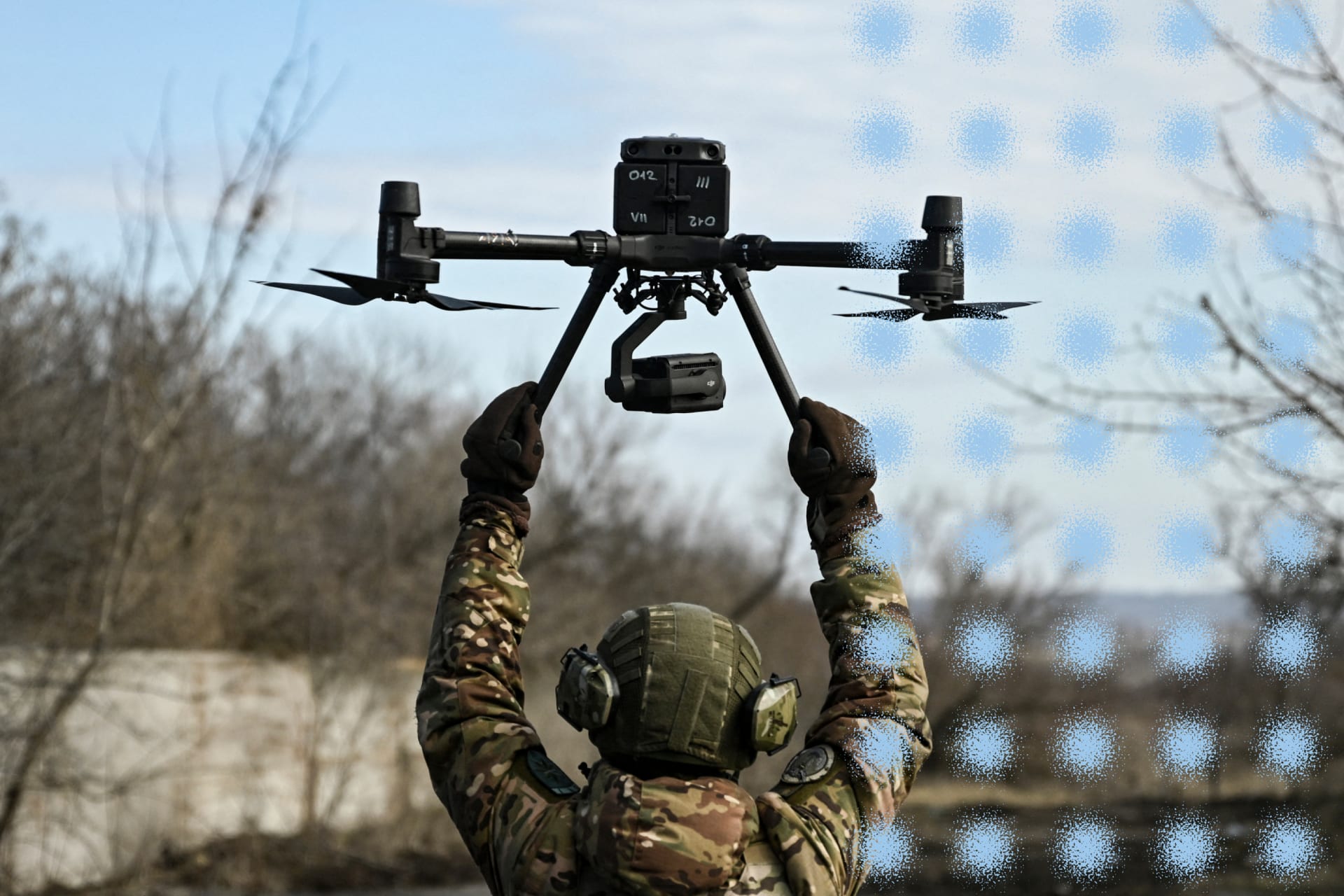
In overseeing the analytics department of the Snake Island Institute, she spends a great deal of time focused on modern warfare and strategy, unmanned systems and drones, and expanding the military industrial complex of Ukraine alongside its allies. Every day she has direct conversations with Ukrainian fighters on the front lines, who reach out to her and her team for research, insight, and guidance. That constant feedback loop has given her a rare, behind the curtain view of how this war is actually being fought.
SIERRA: People keep saying this war is different - that it’s unlike any other we’ve experienced in the past. Was there a moment when it clicked for you that what’s happening in Ukraine isn’t just about new technology, but about a new kind of warfare taking shape in real time?
BUCHATSKIY: I think in early 2022 when we sank the Moskva with a Neptune missile and we were able to sink the Russian flagship, which was completely unimaginable.
It was leading Russia’s naval assault against Ukraine and now, now it’s at the bottom of the Black Sea.
BUCHATSKIY: And although that was not a drone, it was a homegrown, asymmetrical capability. And then it kind of led to the rise also of our Magura program, our Sea Baby program, where we eventually were able to dominate the Black Sea with our little automated jet skis.
Ukraine sends its sea drones out hunting, plowing through the waves. If spotted, the Russian ships frantically open fire.
BUCHATSKIY: And that was a very big moment because it challenged a lot of the assumptions of actually we don’t just have to take this. We actually can completely use all the tools in our arsenal to resist this and break out of the box of what conventional warfare thinking is. And the fact that honestly, also the rise of commercial off the shelf technology and the fact that people started realizing that you can really basically fight with anything if you strap an explosive onto it. And that’s what we were doing. I mean, you’ve had similar efforts. But you’ve never seen it so democratized where you actually don’t have to go ask Henry Ford to redo the assembly line, you can actually just buy a bunch of stuff on Alibaba and you can figure it out yourself. And so it was a very interesting moment, but also very empowering in a way, because we realize that it is a war of scale, but it is also a war of human ingenuity and human resources. Reconnaissance is really, really hard - we can’t see what they’re doing, we can’t fly our planes over there. We don’t have satellites. We can’t understand where the enemy is and we need vision. And for them to understand that, oh, this all happened out of necessity, but oh, hey, my, whoever, cousin, someone has this hobby drone that has a camera on it, let’s go fly and check it out and see what’s happening over there. And then they were like, wait, we can go fly and see what’s happening, that’s crazy.
SIERRA: That’s wild.
BUCHATSKIY: Yeah. And then the transition from that to be like, not only can we fly over and see what’s happening, but we can actually attach something to this and we can get there. We can get there in a way that we couldn’t before, because we don’t have a conventional arsenal, we’re running out of artillery, all of this and that. And then it empowered the average person, the average soldier, to be able to reach the targets that they needed to reach, more in their control at a way more cost effective rate. And then pretty much by the time that was discovered in mid-2022, it was game over in a way because we understood that you can never go back. Once you have a capability that’s so convenient and completes these tasks so well at a scale, at a cost, and a barrier to entry that’s pretty low, you would never want to go back to using your limited resources of whatever howitzers you have, the limited artillery you have, and so it was just all kind of upwards from there.
SIERRA: Okay so, if this war has made drones and autonomous weapons more accessible, more constant, I’m curious what does that feel like day to day?
BUCHATSKIY: It can be like wake up at 6:30, go to Pilates, but then there’s an air raid alert, and then there’s kind of drones going off, but the Pilates class still goes, so I still do my Pilates. And then there’s sometimes an interruption where the instructor will be like, “Hey, just so you guys know, this is a ballistic. If you want to get out, you can get out.” And then most people don’t get out and then we continue. And then usually overnight is when most of the attacks happens. So then usually go home in the evening, go to bed, and then roughly at around midnight or 1 AM, you might get woken up by, or not, I sleep through a lot of it now, but you might get woken up. And then you kind of just do it all over again the next day.
SIERRA: Wow. Do you hear drones on the regular?
BUCHATSKIY: Yes.
SIERRA: And can you tell the difference between the -
BUCHATSKIY: Yes.
SIERRA: Really?
BUCHATSKIY: Yes.
SIERRA: Wow. So even the types, whose drones they are, exactly-
BUCHATSKIY: We know whose drones they are. We know if we’re shooting them down with a Patriot or not. We know if the drone exploded or if it’s just the impact of it getting shot down. Yeah, we know everything.
SIERRA: Wow, that’s pretty wild. What is the big difference between them? How do you know?
BUCHATSKIY: I mean, a Shahed sounds like a lawnmower. So it’s kind of like this really aggressive, it’s like a burrrrr, and you hear this lawnmower sound and that it’s a Shahed. The ballistics sound a little scarier like those are what you would think of, and then you hear the flying. If you hear a muffled kind of boom, it means that our air defense was shot up at it. If you hear a very loud boom, it means that there was an impact and that it made an impact. An FPV drone is kind of more like a buzzing, it’s like a bee, but different from the lawnmower, because the lawnmower is more, it’s more lawnmowery - if you know, if you know. And then obviously the guns sound like machine guns. So you just have a differentiator of everything.
SIERRA: What is something you wish people knew about the reality of being on the ground in Ukraine?
BUCHATSKIY: Yeah, I want to kind of debunk the myth that Ukraine’s drone industry exists in garage shops. That might have been the case in 2022 and 2023, but we are not talking garage shops anymore. We have an incredibly advanced industry, genuinely incredible. And I think that walking the assembly lines of some of the biggest drone manufacturers that we have here would genuinely shock some of the - and has genuinely shocked some of the technologists of the world, the policy makers of the world, the defense planners of the world have come here to see it. And we do absolutely have a lot of garage shop innovation, it’s critical to what keeps the country running, because it’s where the feedback loop is best, when you have very small teams, they’re getting direct feedback, they’re iterating, they’re not bogged down in long production timelines. So that’s absolutely important.
At the same time, much of the global drone supply chain, including critical components like motors, cameras, and chips, has been dominated by manufacturers in China, creating a major strategic vulnerability.
But now, reports say Ukraine is striving to make ‘China-free’ drones by 2026. And that milestone is slowly coming within reach - China now supplies 38 percent of the parts to manufacture drones, down from 100 percent at the start of war. It’s a stark shift - from makeshift garage shops to a technological innovative society with a massive homegrown defense industry.
BUCHATSKIY: I also really want to dispel the myth, also, that it’s kind of like cheap Chinese junk, because that’s also not the case anymore. So we have our own IP, we have our own software, we have our own kind of designs. Even a lot of our manufacturers are actually localizing down to the level of having Ukrainian motors, because they realize that actually the scale of orders that we’re getting and the revenue that we’re making, it’s actually just easier for us to literally build our own motor plant. So this is a very mature industry, very mature industry, and I think it should not be underestimated. And I also think that the revenue numbers of some of these companies would also shock people that think that it’s cute little garage shops, but this is not true. We have our drone primes that are heavyweights in the drone industry, and people should keep an eye on that.
But despite these home grown advances, China isn’t completely out of the picture. While Beijing claims neutrality in the war, its dominance over drone supply chains means both Russia and Ukraine have had to rely on Chinese components, though evidence suggests Russia often benefits more.
BUCHATSKIY: We would not be in this war if China didn’t want us to be in this war. China plays an incredibly big role in supplying our manufacturers. But the truth is that we still find a way to supply extremely high chunk of our industry with Chinese components that are critical to keeping the war effort going, because simply no one other than China can really make the critical components that we need at the scale, speed and cost-effectiveness that we need. And so yeah, while globally they have not been publicly our friend, I also think that if they ever truly wanted this to end, they could put a pin in it pretty quickly. And our drone industry would certainly feel the effects if China were to cut off the supply.
SIERRA: Can you talk to me about the Ukraine you might imagine going back to when this is all said and done? Aside from the things you will do outside of Ukraine, what do you see it being like?
BUCHATSKIY: I see it being incredibly technologically advanced. And this is not just in the defense industry, but I see that there is a genuine interest in society on emerging technologies, on critical industries. And the focus on preserving our critical infrastructure and critical industries also means that I do think there’ll be a genuine renaissance in, kind of, industry and business. And looking at steel to mining, to critical minerals, to all of this infrastructure that makes a country self-sufficient. I think there’s going to be a huge focus on manufacturing at home, whether it’s your drones or it’s your T-shirts or whatever it may be. There’s already a huge push on that. Ukrainians wear a lot of Ukrainian made clothing. There’s a renaissance of all made in Ukraine, everything. I also think that it’s going to become super international and super cosmopolitan. I mean, there’s already, despite the war, a lot of foreigners coming to Ukraine taking a genuine interest because they realize that it’s actually a hugely important area in global security, and so I think that Kyiv will become a huge hub. It’ll be very cosmopolitan. It’ll attract a lot of talent of people interested in studying geopolitics and studying the war in particular. And I really hope that Ukraine can set up all the conditions to harness that talent and be a true leader in scholarship, and that our universities can retain a lot of top talent and bring on professors to teach conflict studies and to teach peace and to teach nation building. And that we can become, if you’re thinking of getting a degree in war studies, you come to Kyiv and not Kings.
SIERRA: It sounds like cultural preservation is also just very important to you and important to winning this war. Can you speak a little bit more to just the role cultural identity plays in Ukraine’s resistance?
BUCHATSKIY: Yeah, it’s important to me personally because of my personal story, growing up as a Russian speaking Ukrainian and growing up with a family from southern Ukraine that was historically more Russified than other parts of Ukraine and places like Central and Western Ukraine. And I did not have a very clear understanding of my Ukrainian identity. Having grown up speaking Russian, I had a lot more access to Russian language literature and news and novels and things like that. And when I turned 18 and I realized that actually I couldn’t really speak Ukrainian, I didn’t know Ukrainian, and I couldn’t read the Ukrainian literature and thus I was also locked out of a lot of Ukrainian history that was only recorded in the Ukrainian language, I was kind of like, well, how am I supposed to know who I am, where I came from, what even matters to us? And so it was very weird. So I started learning Ukrainian when I turned 18, and then as soon as I started learning Ukrainian, I was like, the floodgates opened. I understood that I was genuinely a worse off citizen for the fact that I was not participating in this side of our cultural heritage. Because I understood that, hey, if Russia had come knocking on our door a bit earlier in my life, I don’t know if I would have picked up arms. I don’t know if I would have understood everything that I understood now. I don’t know if I would have really felt the weight of that history. And so I realized that actually, it’s critical to national survival that people understand who they are and what they’re fighting for, because one of the super underrated aspects of the war is the asymmetry that our will to fight imposed, just as much as drones, like the asymmetry of the patriotism and the just sheer determination.
SIERRA: So I’m curious how you measure success in this war? There’s so much at risk, how do you personally or Snake Island Institute at large, how do you guys measure success in this point?
BUCHATSKIY: It’s a really, really tough question, because, well, those are two different questions in reality. I think it’s tough to say that the measure of success is anything but square kilometers liberated. And so it’s really, really hard to imagine any version of victory that includes giving away Ukrainian territory. To me personally, I won’t speak for all of Ukraine, but to me personally retaining or retaining a claim on or getting those back, it’s a huge measure. That’s my white whale in a way. That’s what I’m chasing. For Snake Island, it’s tough because we’re an institution and we’re thinking long-term, and we’re balancing the tightrope between we need immediate gains and we need immediate results for our military to be stronger, as in the military’s working on this new drone, it’s doing really well, we need to do everything in our power immediately to ensure that that drone performs, that they get more of them, and that they are holding more territory. That is an immediate impact lens. As an institute, we also have to think about the impact we have in three years, five years, 10 years, and kind of what victory looks like for Ukraine there. If in 10 years a lot more Americans have spent time in Ukraine and there’s more Americans that have been Ukraine scholars than Russia scholars, that’s a victory. If we can have more people graduating from university programs learning the Ukrainian language than the Russian language, that’s a victory. If we can have more American defense companies and businesses here doing business in Ukraine, setting up shops so that our economy gets paid off in 10 years, that’s a victory. And those are all things that are also in the Snake Island strategic calculus. The overarching definition of victory is that the Ukrainian nation is whole, that the state is legitimate, that we have control over the state, that we have our democracy, and that we’re at peace and can live freely. That’s most important, and so we’re trying to work towards that.
Want to keep up with Why It Matters? Sign up to receive an email alert when new episodes are available at cfr.org/newsletters or click the link in our show notes. If you ever have any questions or suggestions or just want to chat with us, email at [email protected] or you can hit us up on X at @CFR_org.
This episode was produced by Molly McAnany, and me, Gabrielle Sierra. Our audio producer and sound designer is Markus Zakaria. Our intern this semester is Isabel McDermott. Robert McMahon is our Managing Editor. Our theme music is composed by Ceiri Torjussen.
You can subscribe to the show on Apple Podcasts, Spotify, YouTube or wherever you get your audio. And be sure to check out video clips from this episode on Youtube and CFR’s social platforms.
For Why It Matters, this is Gabrielle Sierra signing off. See you soon!
We discuss:
- The story of a young Ukrainian woman who left college in the U.S. to join the fight at home within days of the invasion.
- How Ukraine transformed its drone manufacturing from garage shops to a sophisticated, rapidly scaling defense industry.
- Ukraine’s surprising dependence on China in its drone supply chain, and its push to make ‘China-free’ drones by 2026.
- Stories of Ukrainian resilience and resolve.
- How the Snake Island Institute bridges the gap between the battlefield and Western policymaking by connecting Ukrainian military insights to the allies who are shaping defense strategy.
- As Buchatskiy puts it: “The overarching definition of victory is that the Ukrainian nation is whole, that the state is legitimate, that we have control over the state, that we have our democracy, and that we’re at peace and can live freely.”
Why It Matters is a production of the Council on Foreign Relations. The opinions expressed on the show are solely those of the host and guests, not of the Council, which takes no institutional positions on matters of policy.
Producer
- Producer, Podcasts
Audio Producer and Sound Designer
- Audio Producer & Sound Designer
More Episodes
 26:04Podcast
 38:36Podcast
 37:32Podcast
 32:26Podcast
 32:47Podcast
 37:41Podcast