Assessing the Value of the NATO Alliance

By experts and staff
- Published
 Richard HaassCFR ExpertPresident Emeritus, Council on Foreign Relations
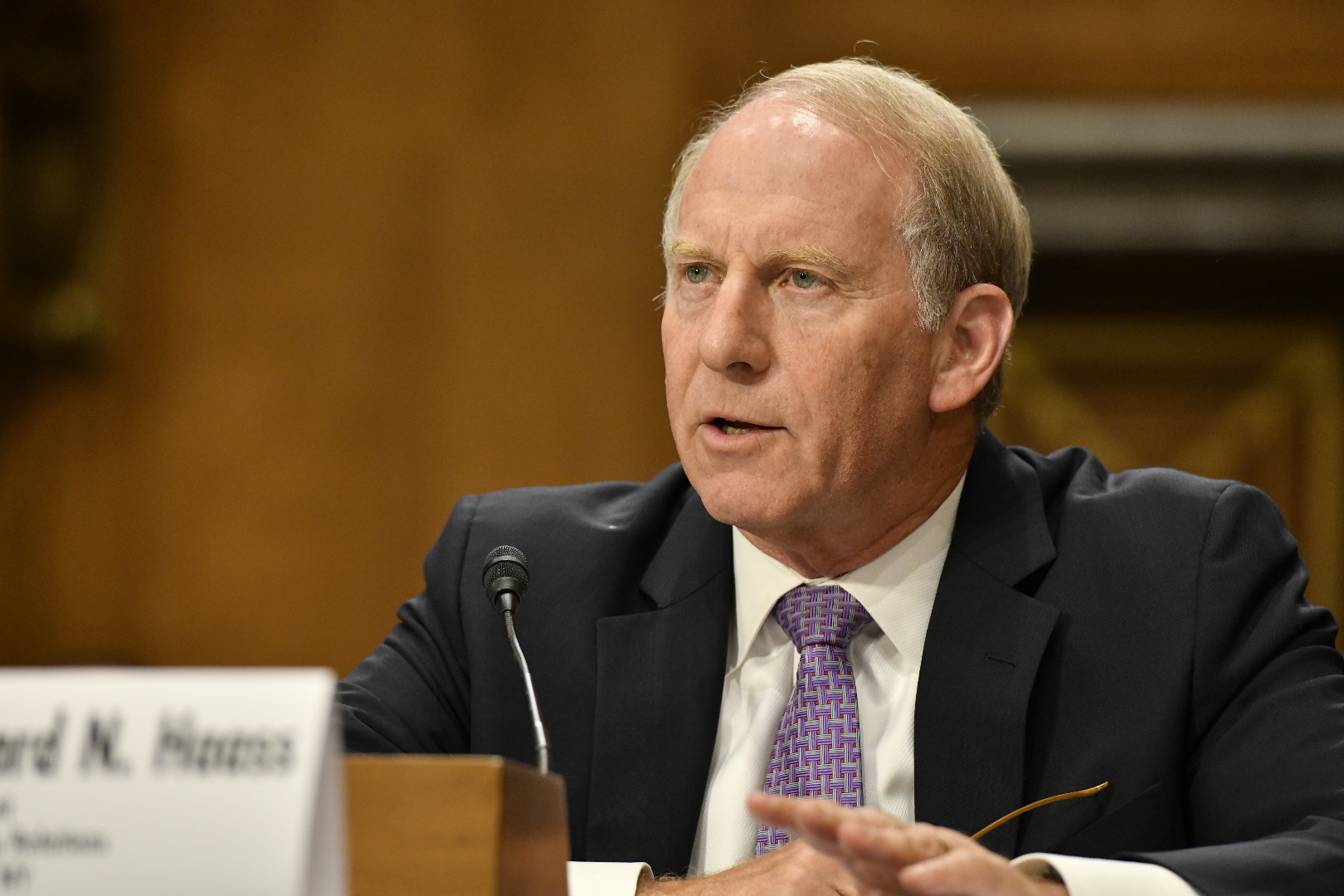
In his testimony before the Senate Committee on Foreign Relations, CFR President Richard N. Haass argued that the North Atlantic Treaty Organization (NATO) continues to have substantial value to the United States.
Takeaways:
- NATO continues to have substantial value. “The United States stays in and supports NATO as a favor not to Europeans but to itself. NATO membership is an act of strategic self-interest, not philanthropy.“
- The United States cannot introduce uncertainty as to its commitment to NATO. “Any doubt as to U.S. reliability will only encourage aggression and increase the inclination of countries to accommodate themselves to a stronger neighbor.” “A failure to respond to clear aggression against any NATO member would effectively spell the end of NATO.”
- The United States needs to be prepared as well for the sort of “gray zone” aggression Russia has employed in eastern Ukraine. What is required is training along with arms and intelligence support so that those NATO members near Russia can cope with “Article 4 ½” challenges should they materialize.
- NATO membership for Ukraine or Georgia should be placed on hold. The United States and NATO should focus on meeting existing obligations before taking on new ones.
- NATO is part and parcel of the larger U.S.-European relationship. The overuse of tariffs and sanctions against the EU will set back U.S. economic and strategic interests alike.
- No one should assume European stability is permanent. To the contrary, the last seventy years are more an exception than the rule. It should be the objective of the United States to extend this exception until it becomes the rule. A strong NATO in the context of a robust U.S.-European relationship is the best way to do just that.