The Next Taiwan Crisis Won’t Be Like the Last
How to Prepare for New Dangers
Overview
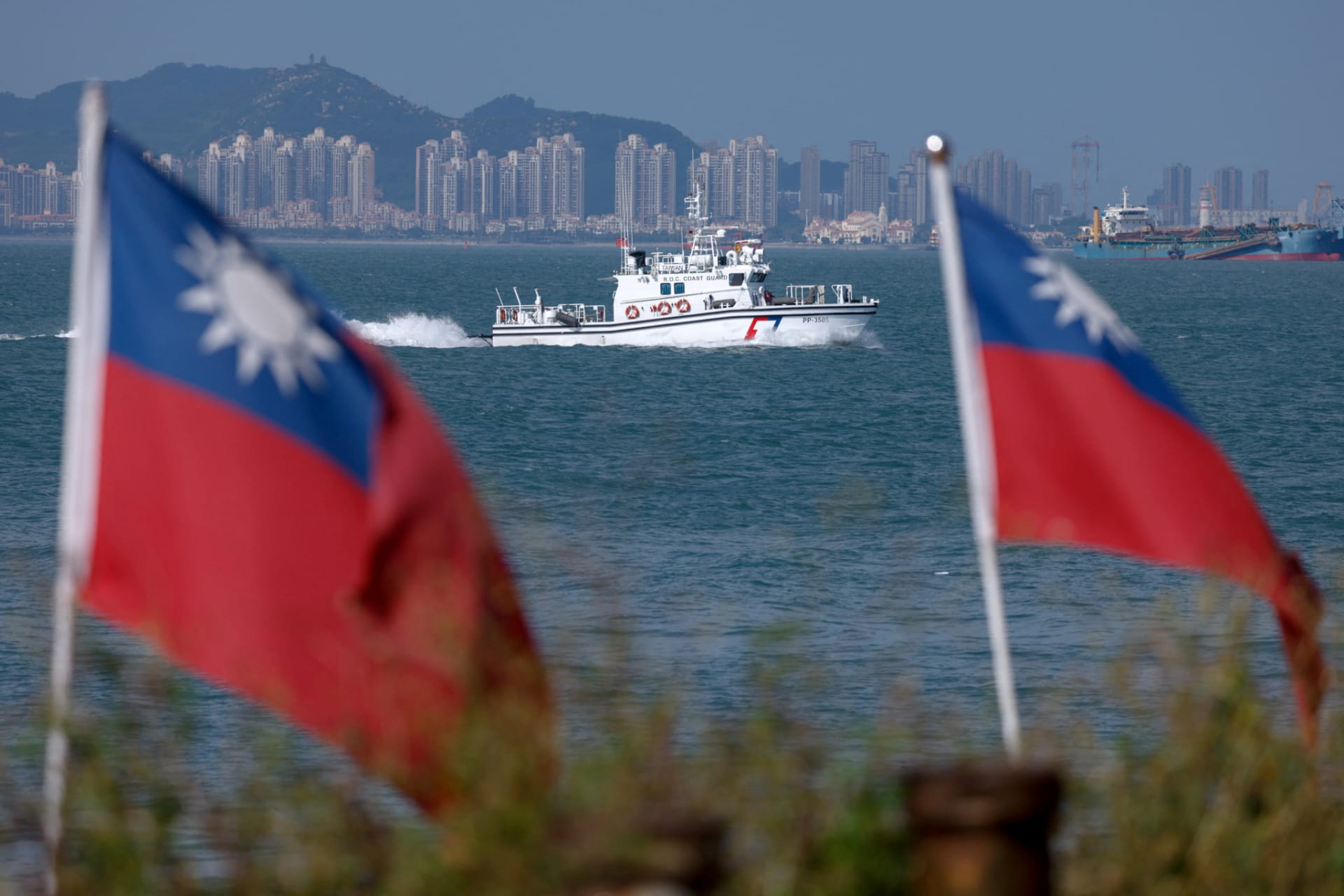
Assumptions about how a potential conflict between the United States and China over Taiwan would unfold should urgently be revisited. Such a war, far from being insulated, would likely draw in additional powers, expand geographically, and escalate vertically.
 Paul B. StaresCFR ExpertGeneral John W. Vessey Senior Fellow for Conflict Prevention and Director of the Wachenheim Center for Peace and Security
 David SacksCFR ExpertFellow for Asia Studies
Executive Summary
Current thinking about a conflict over Taiwan relies on outdated assumptions. A future conflict, far from being contained and easily definable, would almost certainly ensnare multiple regional actors, spill into other theaters, and could even be triggered by external events. To adjust to this new reality, U.S. policymakers should accelerate joint military planning and establish a pre-crisis consultative mechanism with allies, conduct simulations that take into account political dynamics in allied capitals, and evaluate how crises elsewhere could expand to encompass Taiwan.
Introduction
Taiwan is the most dangerous flashpoint in the world today. No other plausible source of great power war comes close to manifesting the same combination of risk factors as Taiwan. The likelihood of a clash between Chinese and Taiwanese forces that could draw in the United States and other powers has sharply risen in recent years thanks to China’s intensifying coercive campaign against the island, expanding military arsenal, and, perhaps most significantly, growing impatience with the trajectory of cross-strait relations. China’s leader, Xi Jinping, stated at the beginning of his tenure that the Taiwan question cannot continue to be passed on to future generations and has called unification of the island with the mainland a prerequisite to the “great rejuvenation of the Chinese nation,” a project that he has said must be accomplished by 2049.1 Xi has also tasked China’s military with developing the capability to take Taiwan by force by 2027.2 This is not to say that Xi has already decided to use force at some point to compel unification. Indeed, like his immediate predecessors, he has maintained a preference for “peaceful reunification.”3 At the same time, intentions can change overnight, and China’s rapid military modernization is providing Xi with more coercive options.
Cross-strait political dynamics have also made a peaceful resolution of core differences less likely and, by extension, increased the risk of outright war. The consolidation of Taiwan’s democracy, paired with China’s heightened authoritarianism, has diminished the appeal of unification in Taiwan.4 China’s crackdown on democracy in Hong Kong has reinforced the belief in Taiwan that any guarantees Beijing makes to Taipei about post-unification governance cannot be trusted. In large part due to those developments, Taiwanese identity has solidified, while support for unification has fallen.5
Taiwan’s growing separateness and China’s increasing ability to contest it is happening against the backdrop of a fraying world order. Longstanding normative constraints on the use of force and the sanctity of international borders are now regularly defied. Russia has invaded Ukraine twice in a little over a decade, seizing territory by force and attempting to unilaterally redraw borders. U.S. President Donald Trump has spoken of annexing Greenland, Canada, and the Panama Canal, although it is unclear how serious he is about obtaining those objectives. Authoritarian leaders around the world have become more emboldened, more aligned in their goal of undermining the postwar order, and mutually supportive of actions to do so. Finally, ongoing conflicts or tenuous ceasefires in Gaza, South Asia, Sudan, and Ukraine, to name a few, mean that great powers have less bandwidth and capacity to defuse a crisis over Taiwan. In short, the risk of a cross-strait conflict that triggers a larger U.S.-China confrontation is higher today than at any time since the Eisenhower administration, when Chinese leader Mao Zedong’s probing of the American commitment to Taiwan prompted the United States to draw up plans to strike China with nuclear weapons.6
There is perhaps no more important task for policymakers than managing the risks of such a dangerous conflagration—preventing a clash from arising and, if that fails, containing and de-escalating hostilities. A war with China would pit two nuclear-armed powers and the world’s two largest economies against each other.7 It could also quickly escalate into a war fought not only over the fate of Taiwan but also the future of Asia and, conceivably, leadership of the entire international system. War over Taiwan, furthermore, would trigger a deep global economic recession, by one estimate shaving up to $10 trillion, or 10 percent, off global output.8
Maintaining peace across the Taiwan Strait is growing more challenging, however, and in ways that are not fully appreciated. Despite heightened attention to the risk of war, current analysis and prescriptions continue to be shaped by outdated assumptions about how a conflict could unfold. U.S. and allied policymakers need to prepare for a much more demanding set of challenges than ever before.
Rethinking Crisis and Conflict Over Taiwan
There are multiple reasons to rethink how a Taiwan crisis could arise and potentially escalate. First, assessments of the risk of a cross-strait conflict often derive from the possibility that Taiwan’s leaders could openly declare independence or, alternatively, embark on a series of incremental steps intended to achieve the same goal, and that China would respond immediately and violently. The most commonly anticipated Chinese actions include China’s People’s Liberation Army (PLA) seizing one or more of Taiwan’s offshore islands, disrupting its commercial sea lanes, conducting massive cyberattacks on its critical infrastructure, and striking its ports or cities with missiles—all designed to coerce Taiwan to reverse course. More recently, planners have added the possibility that Beijing could decide to subjugate Taipei through a total blockade or a full-scale military invasion to the list of plausible scenarios.9 But other scenarios also need to be contemplated. In particular, one should no longer assume that a cross-strait conflict will be triggered by the actions of either of its two principal antagonists (China and Taiwan). Disputes in the vicinity of Taiwan, notably in the South and East China Seas as well as on the Korean Peninsula, could set in motion a chain of events that lead to hostilities in the Taiwan Strait.
Second, growing instability and conflict around the world are increasing the likelihood that a Taiwan contingency could arise at the same time the United States is grappling with another crisis. Yet most crisis simulations fail to account for simultaneous contingencies. Indeed, discussions of Taiwan contingencies often assume that U.S. and allied decision-makers would be focused almost exclusively on Taiwan. In reality, attention and resources could plausibly be stretched thin. China could well choose a moment of international upheaval to change the status quo in Taiwan or even deliberately act in collusion with another power to create such an opportunity.
Third, previous cross-strait crises were almost exclusively three-sided contests among China, Taiwan, and the United States. This precedent continues to condition how most experts think about the next one. A future Taiwan crisis, however, will almost certainly involve more actors: most obviously Japan and the Philippines, which are increasingly factored into planning for Taiwan contingencies, as well as conceivably other allied countries, such as Australia and South Korea.10 North Korea, Russia, Singapore, Vietnam, and even some NATO members could also be drawn in. New dynamics will complicate crisis management beyond the “three body problem” that continues to shape planning.
Fourth, the course of a conflict over Taiwan could also unfold in unanticipated ways. Most analyses reasonably presume that the principal actors involved would threaten and use force in a carefully calibrated way, with the objective of minimizing the risk of unnecessary and costly escalation and achieving their aims with minimum effort and cost. These are rational inferences, but the reality could be quite different. The desire to achieve a quick and decisive advantage when hostilities are considered either inevitable or are already underway could encourage a party to resort early to aggressive actions—massive cyberattacks, preemptive strikes beyond the immediate area of operations, counterspace attacks, and even the threat of employing nuclear weapons.11 To the extent that additional parties to a Taiwan conflict now also possess the ability to independently conduct long-range offensive military operations, this only increases the risk of escalation.
Finally, it cannot be assumed that a cross-strait conflict will be decided one way or another quickly, potentially in a matter of weeks.12 Although recent conflicts between India and Pakistan and Thailand and Cambodia ended (or, more accurately, were suspended) after a few days, others have dragged on. The war in Ukraine, for example, is now about to enter its fourth year, contrary to all expectations at its outset. Neither China nor the United States possess a decisive advantage that they could translate into a quick victory. U.S. policymakers, therefore, need to prepare for the possibility of both a “short and sharp” conflict over Taiwan and a protracted, regional war.
Potential External Triggers
Taiwan’s proximity to other potential flashpoints that could pit the United States against China, paired with the complex geopolitical factors underlying such tensions, means that a conflict that begins elsewhere could end up drawing in Taiwan.
The ongoing dispute between China and the Philippines—a U.S. treaty ally—over territorial claims to parts of the South China Sea is probably the most plausible source of conflict beyond the Taiwan Strait that could nonetheless spill over into it. For several decades, Chinese and Philippine naval and coast guard forces have been in a standoff over their competing claims, notably Scarborough Shoal and Second Thomas Shoal. In response, both the Biden and Trump administrations have underscored that the U.S.-Philippines Mutual Defense Treaty covers attacks on the Philippines’ armed forces and coast guard assets in the South China Sea and have increased defense cooperation with the Philippines to deter further Chinese aggression.13 Beijing appears confident it can consolidate control over the waterway with minimal escalation risk, particularly by employing gray zone tactics, such as relying on coast guard forces rather than overt military power. Beijing could calculate that the United States would be reluctant to provide military assistance to the Philippines and risk war with China for anything other than a direct attack on the main islands of the Philippine archipelago. Indeed, it seems likely that China will continue to test the strength of the U.S. security commitment by applying more pressure in those disputed areas.14
China could also conceivably launch a much bolder campaign to seize and control numerous islands and atolls that it covets in the South China Sea. While this would appear to guarantee the very outcome that Beijing wants to avoid—namely, a major U.S. military response—it could calculate that the asymmetry of interests in the South China Sea is still very much in its favor and that the United States is more likely to back down than risk a wider war over uninhabited shoals and atolls with little inherent value.15
If China miscalculates and the United States intervenes, a clash in the South China Sea could embroil Taiwan in several ways. During a conflict with the Philippines, China could well decide that the time had come to cement its control over the South China Sea and deal with all of the competing claimants at once. In such a scenario, it would likely view the Taiwanese-administered Taiping Island (Itu Aba), which is the largest natural feature in the Spratly Islands and which has a sizeable airstrip, as a prime objective. It could choose to attack Itu Aba or the Taiwanese-administered Pratas Island much further north, both of which are sparsely defended. Separately, Taiwan could provide logistical support to U.S. and Philippine forces out of solidarity, which would likely elicit an armed reaction from China. Any of those actions could trigger retaliatory responses from Taiwan.
In the East China Sea, China and Japan both claim sovereignty over the Senkaku Islands (Diaoyu Islands), which are only around one hundred miles from Taiwan. Taipei also asserts that the islands are part of its territory, namely Yilan County. As with the territorial disputes in the South China Sea, the United States takes no formal position on the competing claims, although it does recognize Japanese administrative control over the Senkaku Islands. Beginning with President Barack Obama and continuing with Presidents Donald Trump and Joe Biden, the United States has reaffirmed that the islands are covered by Article V of the U.S.-Japan Treaty of Mutual Cooperation and Security.16 Thus, the United States would defend Japan against a Chinese attack on the Senkaku Islands.
It is hard to imagine that China would challenge the status quo in the East China Sea and risk conflict with Japan and the United States. The stakes are simply not vital enough for China, certainly in comparison to Taiwan and arguably the South China Sea, too. Yet as with the various South China Sea disputes, the possibility of an unintended military clash cannot be dismissed entirely given that Chinese and Japanese military units now routinely operate in close proximity to one another and Chinese incursions into the waters surrounding the Senkakus have grown significantly.17 The propensity of any such incident or confrontation to escalate would likely hinge on the larger circumstances. Were Beijing to seize one or more of the islands, escalation would become more plausible. Decision-makers in Tokyo would come under immediate pressure to respond, perhaps with a maritime blockade or with a military assault to recapture the seized island or islands. Japan, it bears reiterating, has in recent years acquired greater military capabilities to respond to China’s growing military assertiveness. Tokyo could also be emboldened to respond knowing that Washington would feel compelled to support Japan. Indeed, the United States would find it hard to reject Japanese appeals for military assistance. Further escalation could ensue.18
Further afield, renewed conflict on the Korean Peninsula could spread to the Taiwan Strait. This scenario would not be without precedent. Just days after the Korean War broke out in June 1950, President Harry S. Truman dispatched the U.S. Seventh Fleet to the Taiwan Strait both to prevent Chinese Communist Party leader Mao Zedong from attempting to invade Taiwan and to deter Chinese Nationalist Party leader Chiang Kai-shek from launching a counterattack to retake the mainland. Driving that decision was a fear that either side could attempt to capitalize on perceived U.S. distraction to achieve their geopolitical objectives. If hostilities were to resume between North and South Korea, the United States would be immediately engaged in defending South Korea given its treaty obligation to the country. China could conceivably seek to take advantage of this situation to increase pressure on Taiwan, believing the United States would not have the military force necessary to simultaneously defend South Korea and Taiwan. Should North Korea be on the verge of defeat, Beijing could also attempt to open another front to relieve pressure on Pyongyang.
The Changing Crisis Management Landscape
Crises always require leaders to make consequential decisions in little time and with an unclear understanding of rapidly unfolding events and other parties’ intentions. The next Taiwan crisis will be no different. While grappling with these generic challenges, the United States will seek to respond prudently and deliberately—not too timidly that it signals weakness or indecisiveness but also not so vigorously that it exacerbates the crisis, inadvertently undermines the support of critical partners, and potentially forecloses options for de-escalation.
Striking the right balance between resolve and caution is hard under even the best circumstances. Many factors—the personal beliefs and biases of leaders, the nature of their decision-making processes, the influence of certain advisors and interest groups, and domestic politics and public opinion, to name the most prominent—can make a profound difference in crisis management, as history makes clear.19 Less appreciated by experts, however, are several challenges unique to Taiwan scenarios that will likely complicate U.S. crisis management.
First, events on and around Taiwan will unfold twelve or thirteen hours ahead of Washington, which places U.S. policymakers at a significant disadvantage compared to countries in the immediate region—above all, China. With the possibility that they could have to simultaneously grapple with another serious crisis in an entirely different time zone, they could well face especially acute physical and psychological challenges.20
Second, although U.S. intelligence collection and analysis capabilities have generally improved since the last serious confrontation over Taiwan, which occurred in 1995–96, so too has China’s ability to deceive or deny such efforts to gather information. The PLA has already prepositioned many of the capabilities it would call on during a blockade or invasion of Taiwan—short- and medium-range ballistic missiles, air defenses, and fighter jets, to name a few—and has increased the readiness of relevant units, thus dulling or even nullifying important early-warning indicators. In addition, the PLA now routinely violates Taiwan’s air defense identification zone, flies across the median line in the Taiwan Strait, and encircles Taiwan with naval and coast guard vessels. As a result, Admiral Samuel Paparo, commander of the United States Indo-Pacific Command, has warned that “We’re very close to that [point] where on a daily basis the fig leaf of an exercise could very well hide operational warning.”21 A senior Taiwanese military official has also assessed that Beijing could “switch from peacetime to war operations any time.”22 Those developments complicate the task that U.S. analysts face in accurately discerning China’s intentions and in turn providing timely warning to policymakers. The U.S. intelligence community observed Russia amassing troops and supplies months before its invasion of Ukraine and was able to quickly warn policymakers, who in turn presented that information to allies and brought together an international coalition. But it could prove unable to do so in a crisis over Taiwan.
Third, the deterrent advantages that the United States once enjoyed to credibly threaten costly reprisals (whether implicitly or openly) for Chinese aggression have eroded. China is now able to hold at risk U.S. forces and bases in the region that would be vital to the defense of Taiwan. As a result, the United States has a strong incentive to take immediate operational precautions to enhance the survivability of its forces at the first signs of danger, steps that would be taken even before the U.S. political leadership or leaders in allied capitals had decided whether to intervene on Taiwan’s behalf. To Chinese military planners, though, such actions would almost surely be perceived as a prelude to U.S. intervention. This scenario raises the specter of China opting for preemptive strikes on U.S. bases and forces in the region even before the United States decides to directly intervene.
Fourth, with more actors involved, the risk of unintended escalation due to miscalculation or accidents increases. As rules of engagement are loosened, maintaining operational control and discipline becomes harder. Again, history provides numerous examples of near misses or, worse, events being propelled in an unintended and destabilizing direction.
And fifth, due to China’s massive military buildup and its development of capabilities intended to prevent the United States from intervening on Taiwan’s behalf, the United States is now much more reliant on regional allies for both deterrence and warfighting. But ensuring that the actions of U.S. allies and partners, Taiwan included, are aligned with U.S. objectives in a crisis will not be easy. Each partner, after all, has its own interests to protect. Significant differences could arise over how each perceives the unfolding events. Such disparities, in turn, will influence their support for certain U.S. measures, not least efforts to ready U.S. forces in the region to deter aggressive Chinese actions and prepare for war.
This fifth and final point merits unpacking. Japanese bases would play a critical role in the defense of Taiwan and thus by extension for signaling U.S. and allied resolve in a crisis. Japan’s westernmost point is only about seventy miles from Taiwan. Kadena Air Base, the United States’ largest military installation in the Indo-Pacific not located in U.S. territory, is one of only two U.S. air bases (both in Okinawa) from which fighter jets can conduct unrefueled operations over Taiwan. By contrast, the main U.S. base in Guam in the Western Pacific is approximately 1,700 miles from Taiwan. In addition, Japan hosts fifty-four thousand U.S. troops, as well as the largest overseas-based U.S. Naval fleet and only forward-deployed carrier strike group. In short, the United States would find it nearly impossible to respond promptly and effectively to Chinese aggression against Taiwan without being able to call on its assets in Japan.
Under the terms of the U.S.-Japan Mutual Cooperation and Security Treaty, however, the United States must seek Japanese approval for the use of such bases for anything other than the defense of Japan. Notwithstanding Japanese Prime Minister Takaichi Senae’s recent statement that a Chinese blockade or attack on Taiwan could be considered a “survival-threatening situation,” which would enable Japan to exercise collective self-defense, securing rapid approval from Japan’s government for basing access cannot be assumed. China can be expected to exert pressure on Japan and to influence Japanese public opinion to stay out of any conflict over Taiwan and withhold such access.23 China could, for instance, signal that it will not guarantee the safety of the approximately 100,000 Japanese citizens or of Japanese enterprises in China if it were to support the United States. In addition to the logistical challenge of repatriating its citizens, Japanese efforts to do so for precautionary reasons could well be interpreted by China, much like enhancements to military readiness, as preparation for war. Such concerns could delay Japan’s approval for the United States to use its bases in the country for operations in and around Taiwan.
Similar dilemmas will confront political leaders in the Philippines. Its northernmost inhabited island is less than a hundred miles from Taiwan. The United States recently gained access to four additional Enhanced Defense Cooperation Agreement (EDCA) sites in the Philippines, three of which are in northern Luzon, only 160 miles from Taiwan. The United States has invested in command-and-control infrastructure, fuel storage, ammunition warehouses, runways, and other features at all nine EDCA sites, which could prove important to supporting a U.S.-led defense of Taiwan. The United States has also deployed the Typhon intermediate-range missile system to the Philippines, within range of Taiwan, thus signaling U.S. interest in operating from the Philippines during a Taiwan contingency.
The United States will have to carefully weigh what it asks of the Philippines during a Taiwan crisis. One option would be to use the EDCA sites for noncombatant evacuation operations, which would likely receive political support in Manila given that 150,000 Filipinos live in Taiwan and that the government will not be able to evacuate them on its own during a conflict. Another option would be to seek approval to use the EDCA sites to support whatever military posturing the United States decides to do to deter Chinese aggression. Gaining support for such operations in a crisis will not be straightforward, especially because the Philippines is far weaker militarily than Japan and does not have the same ability to defend EDCA sites as Japan has to defend its bases that the United States would be using.
Wartime Vertical and Horizontal Escalation Concerns
Assuming U.S. forces commit to the defense of Taiwan should a crisis turn into a conflict, there is every reason to expect near instantaneous escalation of the war to include Japan and, most likely, the Philippines. This is probable even if either or both allies distance themselves from U.S. support for Taiwan. The United States could insist on using its bases in the region even if the host nation delays granting approval, especially if U.S. decision-makers were to conclude that operating from such bases would prove decisive in determining the outcome of the conflict. At the same time, China could conclude that U.S. intervention is inevitable and that the United States would surely make use of such bases, even before Washington had made such a decision, and that its clearest path to victory would be to preemptively strike these bases and render them inoperable.24 Strikes on the territory of U.S. treaty allies would, of course, trigger U.S. intervention, but again China could assume that such intervention was inevitable regardless of its actions and that preemptive strikes would severely degrade U.S. and allied capabilities.
While the odds of Chinese preemption are difficult to discern, it is far easier to anticipate that China would attack Japan or the Philippines if either ally were to fully and openly commit to assist the United States in defending Taiwan. This is certainly the direction that current allied planning and preparation is heading. Tokyo and Washington have begun conducting bilateral military exercises in Japan’s southwestern islands, while the United States has started to rotate forces through those islands and the Japan Self-Defense Forces (JSDF) has been improving infrastructure and prepositioning supplies there.25 In 2025, U.S. Forces Japan (USFJ) also began to transition into a joint force headquarters to streamline operational coordination with Japan’s newly launched Joint Operations Command.26 The United States, beyond seeking unrestricted use of Japanese military bases and civilian airfields and ports for combat operations in wartime, would likely also ask Japan to provide rear area support, ranging from assistance with search-and-rescue operations to logistical support and information and intelligence sharing. It could also request that the JSDF provide missile defense over Japanese bases, escort U.S. forces on combat missions, defend sea lines of communication, and conduct sea control and minesweeping operations. While the Philippines does not have comparable military capabilities to those of Japan, similar requests would be made. Thus, it is not surprising that Philippine President Bongbong Marcos has openly acknowledged that his country would almost certainly be drawn into a war over Taiwan.27
Besides the high likelihood of conflict over Taiwan spreading to Japan and the Philippines, other U.S. allies in the Indo-Pacific, notably Australia and South Korea, could plausibly become involved despite their distance from the island. As part of the “pivot” or “rebalance” to Asia, the United States began rotating U.S. Marines through an Australian base in Darwin, which has expanded to 2,500 marines. Through the trilateral security agreement known as AUKUS, the United States and United Kingdom are supporting Australia’s acquisition of a conventionally armed, nuclear-powered submarine capability. If successful, AUKUS could enable the United States and its allies to bring to bear more submarines during a Taiwan contingency, which could prove vital given China’s continued limitations in anti-submarine warfare. U.S. submarines could also dock at Australian ports and rearm during a conflict over Taiwan.28
South Korea also offers important capabilities for a U.S.-led defense of Taiwan. The United States, which has 28,500 troops in South Korea, would likely request rear-area support from Seoul, which could range from refueling and rearming at South Korean bases, performing maintenance on military platforms in South Korea, and even evacuating noncombatants and wounded personnel to South Korea. South Korea’s level of support would likely be constrained both by its distance from Taiwan and the need to keep its forces focused on deterring North Korea from opening a second front during a conflict. Depending on how the conflict unfolded, however, South Korea could become a more direct and active belligerent against China, by, for example, deploying air and naval forces to the main combat zone and even conceivably engaging in interdiction operations in the Yellow Sea. Indeed, the United States has begun to emphasize that the U.S.-ROK alliance needs to play a larger regional role rather than focusing almost entirely on the Korean Peninsula. During his November 2025 visit to South Korea, for instance, Secretary of Defense Pete Hegseth emphasized the need for “flexibility” that would allow U.S. troops to operate against threats elsewhere in the region.29
Other U.S. allies could likewise become drawn into the fighting. European and Canadian naval units, which occasionally patrol the Taiwan Strait, could find themselves targeted by China or be asked by the United States to provide assistance. Singapore, too, could become a target, especially if a concerted effort is made to interdict Chinese commercial shipping in the South China Sea and through the Malacca Strait, or if the United States uses military bases in Singapore to refuel and conduct maintenance.
By similar logic, the involvement of Russia and North Korea on China’s behalf cannot be dismissed. China and Russia have moved progressively closer as strategic partners. Given the support that China has provided Russia to prosecute its war in Ukraine, China could pressure Russia to return the favor, either by harassing Japanese vessels in the Sea of Japan or holding at risk certain Japanese assets, or by threatening NATO members. At the very least, China will need Russia to supply a range of weapons that it cannot build domestically, from jet engines to air defense interceptors and specialized munitions. China could also ask North Korea to contribute by undertaking provocative actions and incursions in South Korea if Seoul were to assist the U.S.-led defense of Taiwan. In both cases, the aim would be to distract, interfere with, and otherwise pin down U.S. and allied forces.
The United States could also choose to widen the conflict. The tyranny of distance could prompt U.S. strategists to conclude that, rather than fighting a war over Taiwan on China’s “home turf” roughly one hundred miles from its shores, it should leverage its power projection capabilities and global footprint to threaten China’s interests around the world. U.S. attacks on China’s military base in Djibouti, or Chinese-owned dual-use ports, would force China to divert resources from the Taiwan Strait or sacrifice those interests. Similarly, the United States could ask the Indian Navy to patrol the Indian Ocean and harass Chinese vessels.
A conflict over Taiwan could escalate vertically in intensity as it expands horizontally in geography. The combatants will surely seek to seize the initiative and gain a potentially decisive advantage in the early stages of a conflict. To gain the upper hand, military commanders will be inclined to strike command-and-control facilities; intelligence, surveillance, and reconnaissance (ISR) assets; and vital bases and logistical hubs regardless of where they are located.30 The notion that escalation could be contained through mutual respect for certain informal “firebreaks” and “agreed sanctuaries” will likely prove illusory, given the stakes involved. As a result, conflict would likely spread immediately to low earth orbit to deny the use of space-based assets.31 Cyberattacks would target critical infrastructure, from electrical grids to water treatment plants, that not only facilitate military operations but also enable modern life.32 China’s coastal provinces and U.S. bases beyond the immediate periphery of Taiwan would also likely become targets. As some experts have already observed, early U.S. attacks on Chinese command-and-control networks, ballistic missile submarines, missile bases, and air defense networks could be misinterpreted in Beijing as an attempt to undermine the credibility of its nuclear deterrent, which could create pressures to escalate to nuclear use.33
That Taiwan has the means to independently strike China, and that Japan is developing them, will only complicate whatever restraints the United States and China observe to limit escalation between themselves. Taiwan, for instance, has developed and fields the Hsiung Feng IIE land-attack cruise missile, which can range the Taiwan Strait and strike targets deep in China. Taiwan also presumably has offensive cyber capabilities that it could employ against China. As Taiwan seeks to learn lessons from the war in Ukraine, one takeaway is that it cannot let China define the battlespace—it needs to instead hit Chinese targets critical to its economy and military, as Ukraine has degraded Russian energy infrastructure. Japan, for its part, is developing an array of counterstrike capabilities that could target Chinese airfields, missile launchers, and command centers, among other targets. Most notably, the JSDF is procuring four hundred Tomahawk land-attack cruise missiles and is developing hypersonic glide vehicles.
Finally, it cannot be assumed that China would use nuclear weapons only in an act of desperation or as a last resort. Rather, China could view the threat or use of tactical nuclear weapons to intimidate Japan—the only country in the world that nuclear weapons have been used against—to remain on the sidelines and refrain from supporting U.S. operations. It could also believe that the threat of nuclear use can deter U.S. intervention entirely.
Recommendations
For many decades, U.S. policymakers have viewed the task of keeping peace in the Taiwan Strait as a relatively well-defined and self-contained challenge, albeit hardly a straightforward one. Success essentially depended on simultaneously dissuading Taiwan from seeking formal independence and deterring China from using nonpeaceful means to achieve unification. That task naturally divided into two lines of effort: one focused principally on political and diplomatic measures to maintain the status quo and the other on defensive military efforts to demonstrate to China that any effort to change the status quo by nonpeaceful means would fail. Those initiatives, moreover, were largely pursued as a three-party affair. There was little need to involve other actors, and at any rate, those countries that could contribute to deterrence had little interest in doing so. Put differently, managing the risk of war over Taiwan was more or less hermetically sealed from other considerations.
This triangular conception of crisis management no longer reflects the realities. Instead, given China’s military modernization and its preparations for conflict over Taiwan, preventing a war has become a much more demanding undertaking. The United States would need significant support from its allies if it were to mount a defense of Taiwan. The good news is that these allies now have a far better appreciation that their security is linked to Taiwan’s fate, and they seem willing to help the United States defend Taiwan. At the same time, this raises the possibility that more actors would be involved in any future crisis, adding to its complexity.
Whether policymakers in the United States now appreciate this new reality and, more important, have begun to plan accordingly, remains an open question. The likely answer is only partially. While the scope and tempo of military preparations for various contingencies have clearly increased in recent years, these efforts are understandably premised on clear transitions from peacetime to war and on developing war-winning strategies. Stated parochially, they are mostly about what the United States and its allies would or could do after China had already made a clear political decision to go to war over Taiwan and authorized military action. Greater attention needs to be paid, however, to what happens before the fighting starts, with the goal of understanding how the actions of the United States and its allies during a crisis will shape Chinese behavior.
Not surprisingly, most tabletop exercises focus on warfighting as a way of informing present military acquisitions, force posture, and preparations. By contrast, they generally do not study those actions that would need to be taken before wartime operations commence to improve the likelihood of a U.S. and allied victory. Whether civilian policymakers appreciate what military planners do in anticipation of war—and how those preparations can complicate political and diplomatic efforts to defuse a crisis—is doubtful. Such discussions between military and civilian leadership are rare, if they happen at all. Defense Department planning tends to be insular, and for good reason, given the need to maintain operational security. The State Department, for its part, is chronically resistant to planning ahead, in large part because thinking about those operational questions presumes that diplomacy has failed. As a result, interagency crisis contingency planning typically only happens after it is judged to be absolutely necessary—in effect, only when the indications of an impending crisis are incontrovertible, as was the case in the weeks leading up to Russia’s invasion of Ukraine in February 2022.34 Such forewarning of a Taiwan crisis cannot be assumed.
Similarly, pre-crisis dialogues among the United States and multiple allies regarding a Taiwan contingency are inherently limited due to political sensitivities on all sides and the absence of formal security commitments to Taiwan. The regular diplomatic consultations and detailed military coordination that exist in NATO, for example, simply cannot take place among the United States and its putative partners for a Taiwan crisis.
Several steps can be taken to lessen the growing risk of conflict. First, efforts should not be limited to developing a better playbook for managing a future Taiwan crisis. It is clearly far preferable to lessen the likelihood of a dangerous crisis occurring in the first place than to focus on minimizing the attendant risks if one does break out. This criticism can be leveled at many otherwise well-intentioned proposals to establish U.S.-China “guardrails” or to improve crisis communications at the political or operational levels. Rather, the United States should seek to develop a set of understandings with China about permissible activities around Taiwan.35 The core proposal would be for China to again respect the median line in the Taiwan Strait, pull back its naval and coast guard vessels that are currently stationed around Taiwan, pare back its activities in Taiwan’s air defense identification zone, and move some of its prepositioned ballistic missiles away from its coastal provinces. In exchange, the United States could offer to pull back some of its long-range capabilities that have been placed in the first island chain, which stretches from Japan to Taiwan and the Philippines down to Borneo, and to reorient its exercises in the region to focus on homeland defense rather than those that could be construed as practice for hitting targets deep in China’s interior. Such a proposal would reduce the chances of dangerous incidents, help restore operational warning, and allow both the United States and China to more clearly send political signals regarding Taiwan. China could well reject such a proposal, determining that its interests are better served by continuing to increase the military pressure on Taiwan. But such a response would provide useful information, clarifying Chinese strategy.
Second, the U.S. intelligence community should undertake a detailed assessment of the full range of plausible precipitants of a Taiwan crisis, and include how China could collaborate with other powers, notably Russia, North Korea, and even Iran, to pursue its objectives vis-à-vis Taiwan. It should similarly seek to understand what strategies or measures China could employ in a crisis to manipulate U.S. opinion toward Taiwan and to undermine allied support.
Third, the U.S. national security advisor should initiate detailed interagency planning with all major departments and agencies to assess how to manage and coordinate potential U.S. and allied preparations to defend Taiwan. Such a process could also include an ongoing, discreet dialogue among the United States and its allies to develop a shared set of early-warning indicators that would signal potential Chinese aggression and prompt the allies to shift their diplomatic, economic, financial, legal, and military posture. The United States should also evaluate potential political, logistical, and diplomatic actions that could be taken in concert with its allies across a range of plausible crisis contingencies, such as when and how to conduct noncombatant evacuation operations.
Fourth, and relatedly, the United States should accelerate the transformation of USFJ into a joint force headquarters capable of taking on warfighting and operational responsibilities. All U.S. elements in the region, primarily USFK and USFJ, should be linked more tightly, with the goal of improving the ability to coordinate operations and manage crises.
Fifth, both inside and outside the U.S. government, more tabletop exercises and other simulations should focus on managing discrete crisis scenarios. In particular, simulations should include experts playing the role of political leaders in Tokyo, Manila, Canberra, and Seoul and should seek to understand alliance dynamics during a crisis in which China is employing hybrid tactics but has yet to cross the threshold into open conflict.
Sixth and finally, the U.S. government should encourage unofficial track 2-style (and where possible track 1.5-style that includes both government and nongovernment participants) discussions on various Taiwan contingencies with Taiwan and its allies. It should also explore forming a pre-crisis consultative committee with its Indo-Pacific allies, a standing group that would regularly convene to share analysis of cross-strait, South China Sea, Korean Peninsula, and East China Sea dynamics and better understand mutual expectations. Such a committee could also write a playbook for addressing Chinese gray zone coercion.
Conclusion
The next Taiwan crisis will likely be very different from—and far more dangerous than—any previous one. While the United States should take steps to lessen the likelihood of another cross-strait crisis, it will also need to prepare for a new set of challenges in the event that one materializes. This preparation should include, above all, closer pre-crisis coordination with allies that recognizes the new dynamics in the Taiwan Strait. Given the growing risk of war, such discussions cannot happen soon enough.
 Report
 Report
 Report
 Report
 Report
 Report