Task Force Report No. #1
Nuclear Proliferation
Confronting the New Challenges
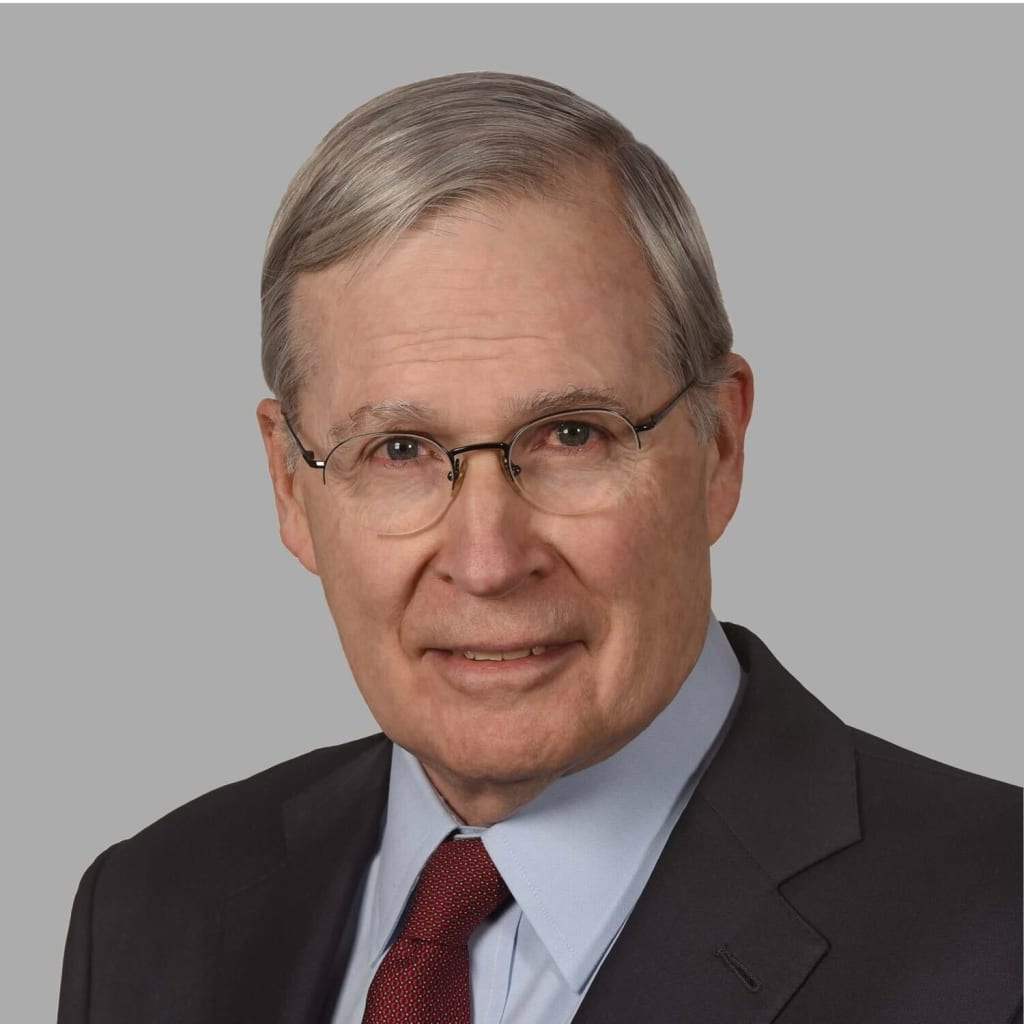 Cochair
- Mitchell B. ReissDirector
What are Task Force Reports?
CFR sponsors Task Forces to assess issues of critical importance to U.S. foreign policy to reach bipartisan consensus on policy recommendations.
Who makes them?
Task Force members aim to reach a meaningful consensus on policy and are solely responsible for the content of their report.
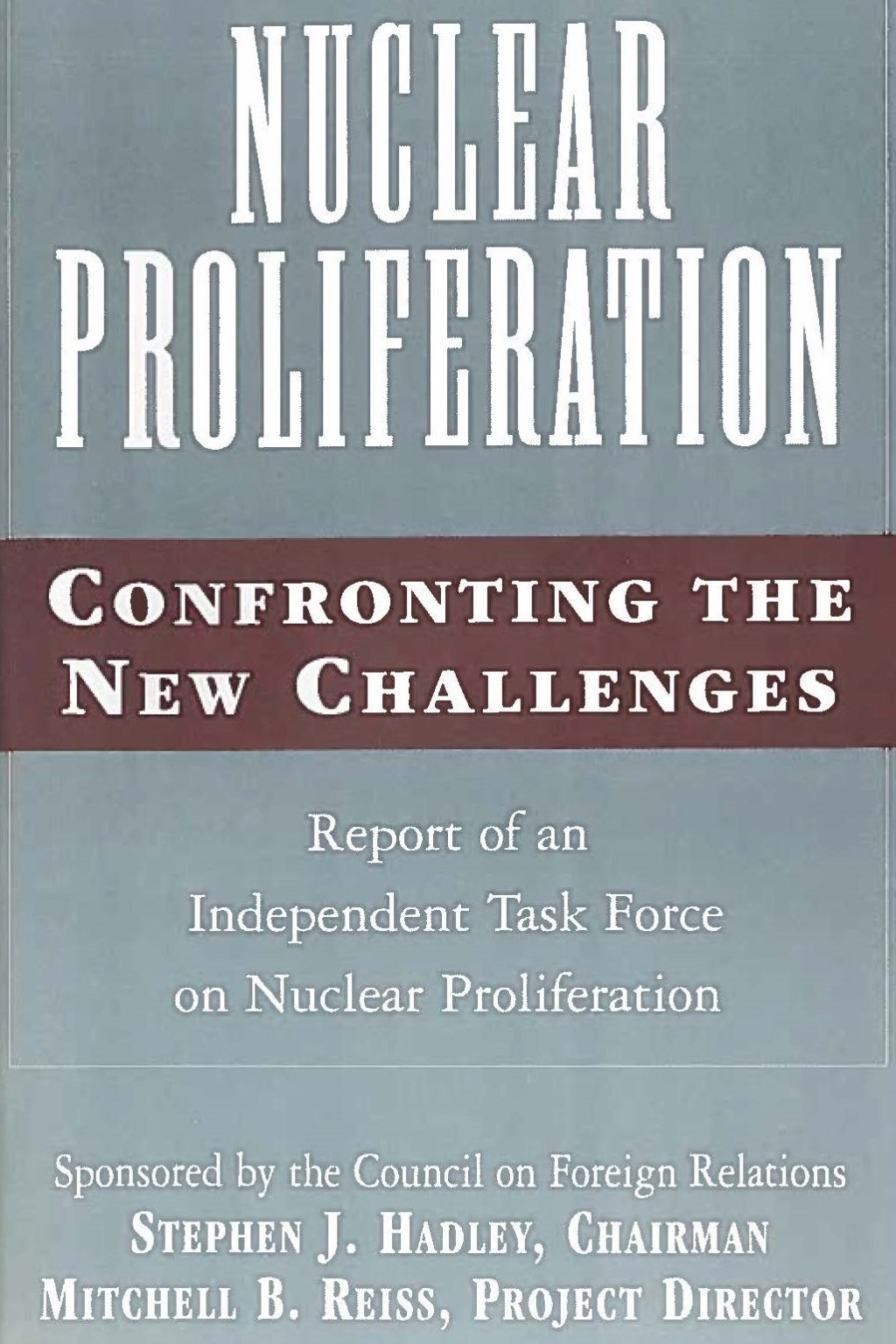
The international community stands at a historic crossroads. In less than three months, delegations from around the world will convene in New York City to decide whether to renew the nuclear Nonproliferation Treaty (NPT). With 168 members, the NPT is the most broadly supported agreement of its kind in history. Yet despite this broad support, the outcome of the vote to extend the Treaty is very much in doubt. That outcome matters enormously.
Halting the spread of nuclear weapons must be a top priority not just for the United States but for the entire international community. But succeeding in this effort will be even harder in the future than it was in the past. Indeed, the risk of the spread of nuclear weapons—and perhaps even the risk of nuclear use—is probably greater now than it was during the dark days of the Cold War.
Task Force Members
Task Force Members
Susan Lesley Clark, Institute for Defense Analysis
Tyrus W. Cobb, Business Executives for National Security
Zachary S. Davis, Congressional Research Service
Lewis A. Dunn, Science Applications International Corporation
Virginia I. Foran, Carnegie Endowment for International Peace
Alton Frye, Council on Foreign Relations
Sumit Ganguly, Hunter College
Robert M. Gates
Natalie J. Goldring, British American Security Information Council
Richard N. Haass, Council on Foreign Relations
Stephen J. Hadley, Shea and Gardner
David Jeremiah, Technology Strategies and Alliances
Arnold Kanter, RAND Corporation
Geoffrey Kemp, Carnegie Endowment for International Peace
Andrew F. Krepinevich, Defense Budget Project
Micheal Krepon, The Henry L. Stimson Center
Robert A. Manning, Progressive Policy Institute
Jessica T. Mathews, Council on Foreign Relations
Charles William Maynes, Foreign Policy
Patricia Ann McFate, The Center for National Security Negotiations
Robert S. McNamara
Roger C. Molander, RAND Corporation
Julia A. Moore, Physicians for Social Responsibility
Janne E. Nolan, The Brookings Institution
Douglas H. Paal, Asia-Pacific Center
Christopher E. Paine, Natural Resources Defense Council
George Perkovich, W. Alton Jones Foundation
Joseph F. Pilat, Los Alamost National Laboratory
Mitchell B. Reiss, Woodrow Wilson International Center for Scholars
John B. Rhinelander, Shawn, Pittman, Potts, & Trowbridge
Charles O. Rossotti, American Management Systems, Inc.
Stephen J. Solarz, Solarz & Associates
Richard H. Solomon, U.S. Institute for Peace
Helmut Sonnenfeldt, The Brookings Institution
Leonard S. Spector, Carnegie Endowment for International Peace
Jeremy J. Stone, Federation of American Scientists
Victor A. Utgoff, Institute for Defense Analyses
Debra A. Valentine, O’Melveny & Myers
Paul D. Wolfowitz, The Johns Hopkins University
 Task Force Report
 Task Force Report
 Task Force Report
 Task Force Report
 Task Force Report
 Task Force Report