North Korean Nuclear Negotiations
1985 – 2024
Negotiations between the United States and North Korea have proceeded in fits and starts for decades. But they have failed to halt the advance of North Korea’s nuclear and missile programs.
By experts and staff
- Updated
- Eleanor AlbertOnline Writer/Editor
- Lindsay MaizlandSenior Writer/Editor, Asia
- Writer/Editor, Asia
1985
December 1985
North Korea Joins Nonproliferation Regime
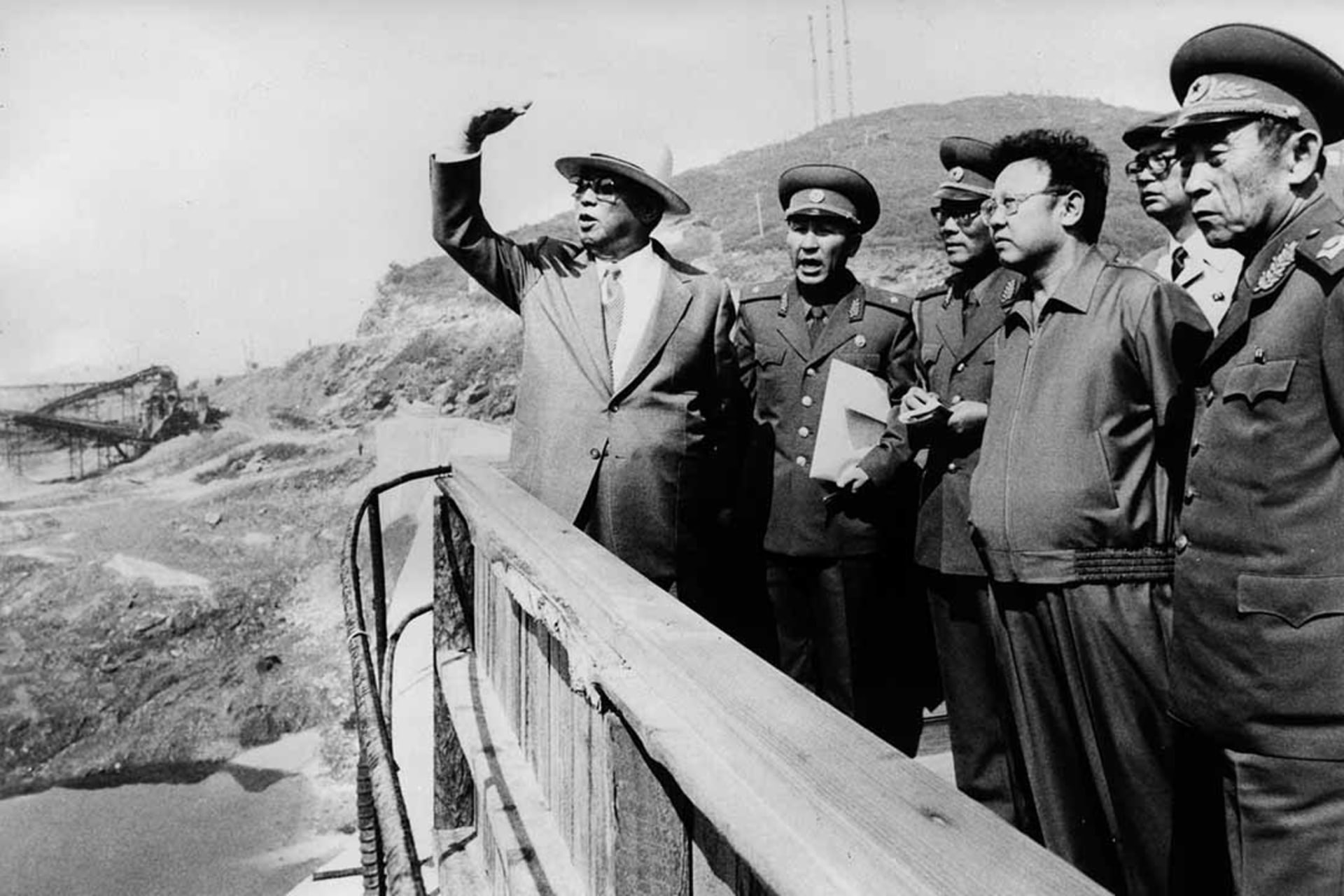
North Korea ratifies the Nuclear Nonproliferation Treaty (NPT), a multilateral agreement whose dozens of signatories have committed to halting the spread of nuclear weapons and technology and promoting peaceful cooperation on nuclear energy. North Korea built its first nuclear facilities in the early 1980s.
1991
September 1991
United States Removes Nukes From South Korea
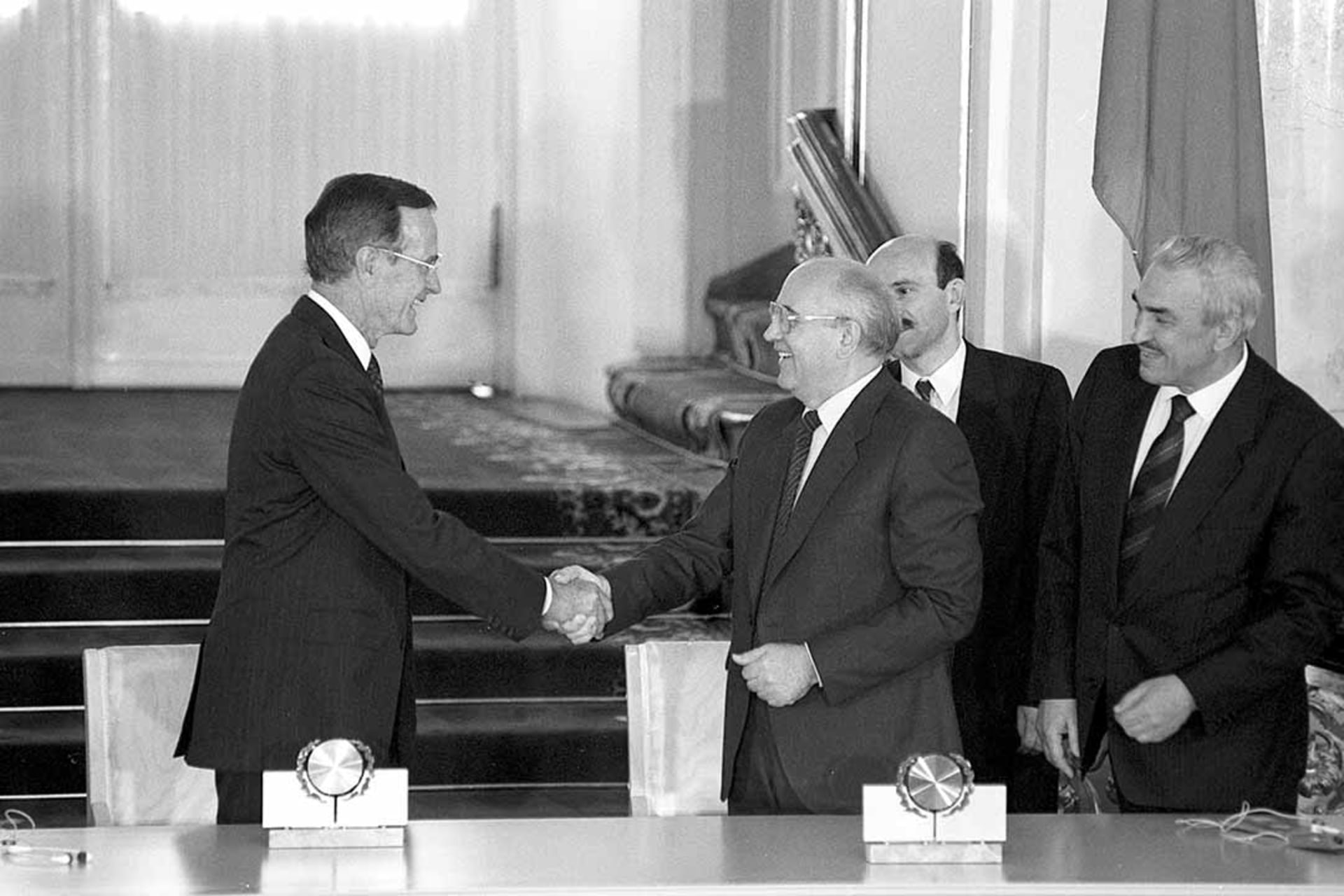
The United States announces it will withdraw roughly one hundred nuclear weapons from South Korea as part of the original Strategic Arms Reduction Treaty. The agreement between President George H.W. Bush and Soviet leader Mikhail Gorbachev, known as the START treaty, limits the deployment of offensive nuclear weapons abroad.
1992
January 1992
Koreas Agree to Denuclearize Peninsula

The governments of North and South Korea agree to “not test, manufacture, produce, receive, possess, store, deploy, or use nuclear weapons,” as well as ban nuclear reprocessing and uranium enrichment facilities. The treaty also commits the two Koreas to use nuclear energy only for peaceful purposes.
1993
March 1993 – June 1993
North Korea Threatens NPT Withdrawal
Pyongyang rejects inspections by the International Atomic Energy Agency (IAEA) and announces its intent to leave the NPT. However, the country suspends its withdrawal following talks with U.S. diplomats in New York. Pyongyang agrees to comply with IAEA safeguards, including inspections at seven declared nuclear sites. The first inspections take place in March 1994.
1994
June 1994
Carter Visits North Korea
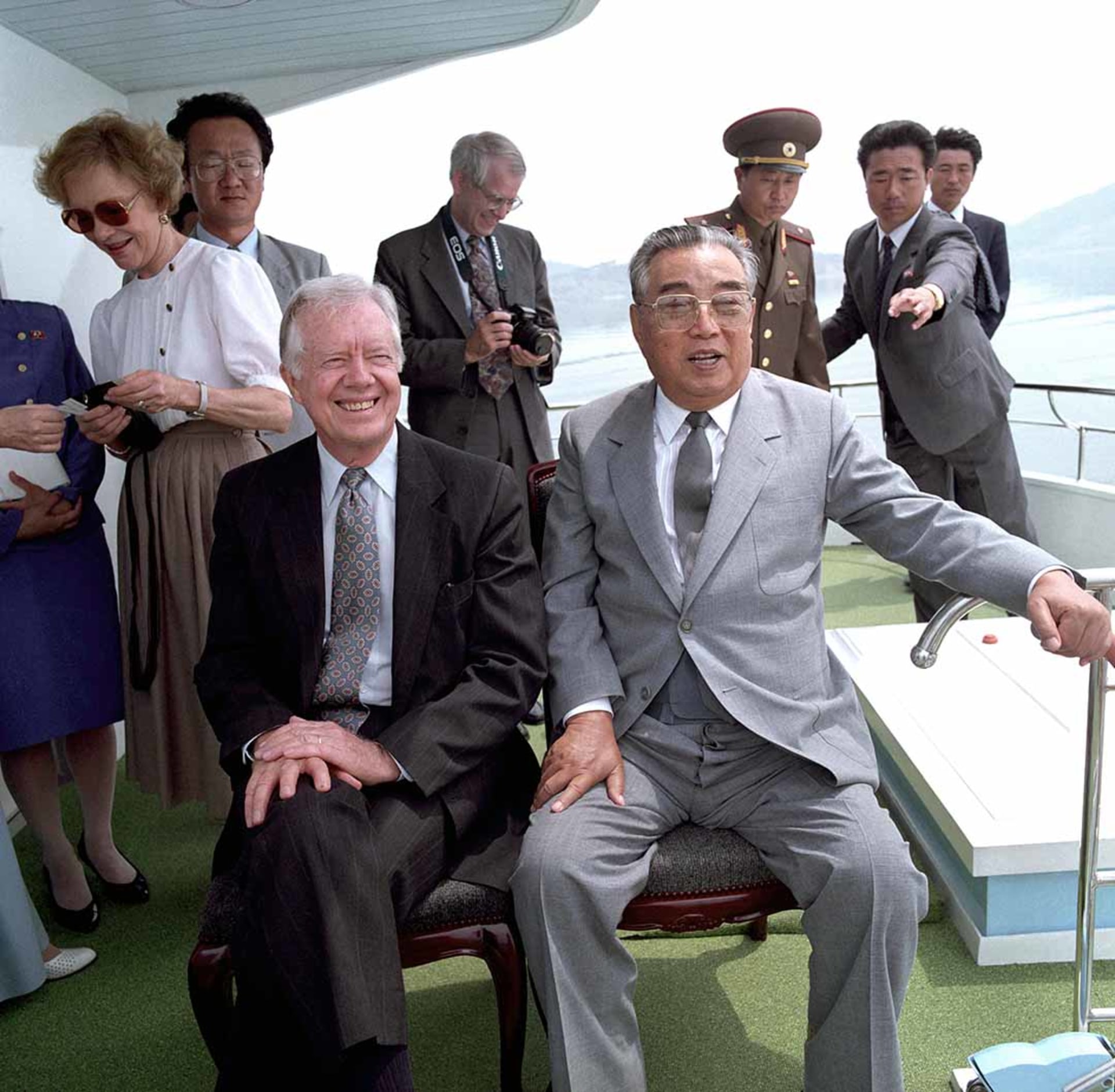
Amid escalating tensions on the peninsula, Jimmy Carter becomes the first former U.S. president to visit North Korea, where he meets with Kim Il-sung, the country’s founder. Carter’s trip paves the way for a bilateral deal between the United States and North Korea. Kim dies weeks later and is succeeded by his son, Kim Jong-il.
October 21, 1994
Deal Freezes Pyongyang’s Nuclear Program
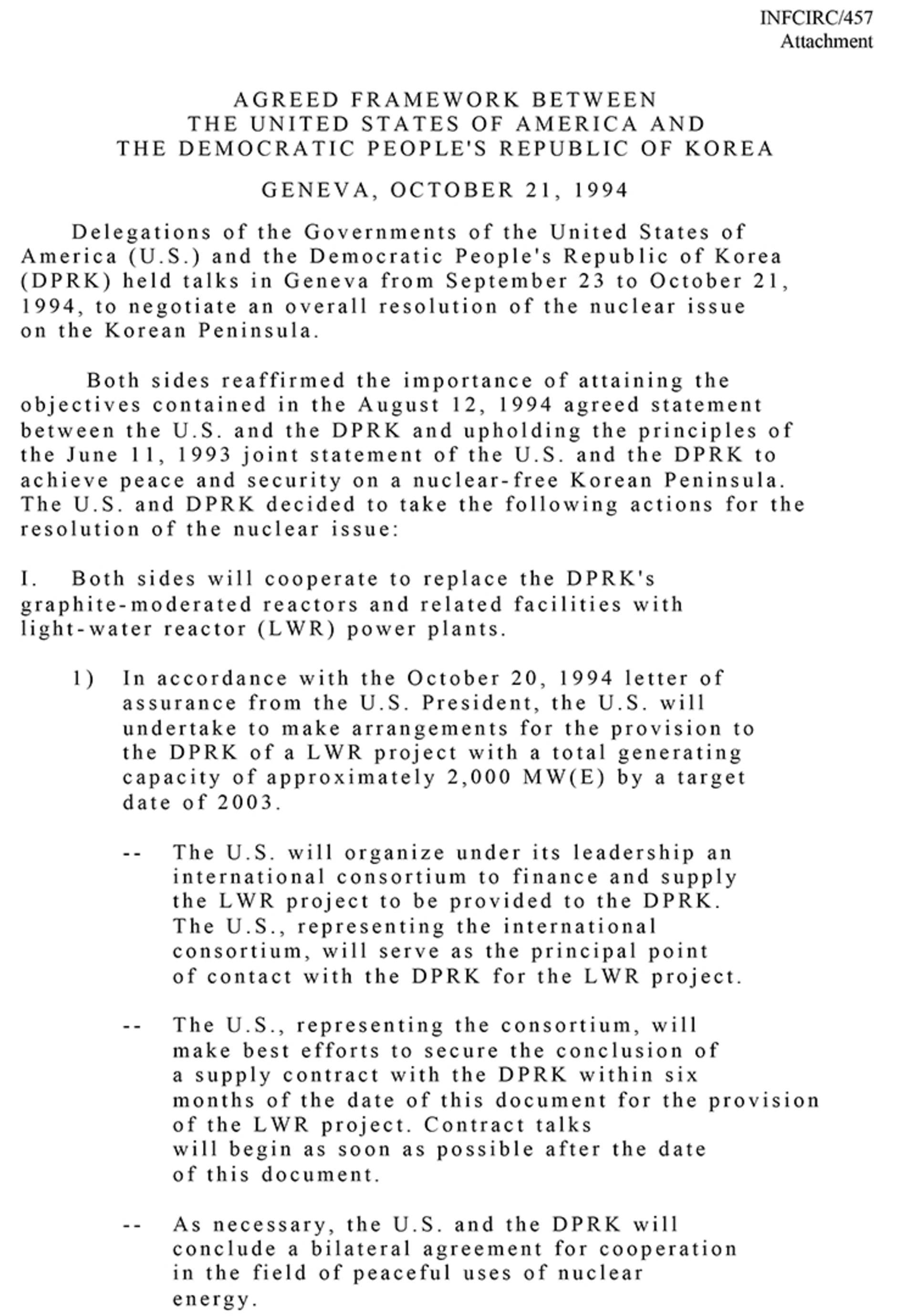
The United States and North Korea sign the Agreed Framework [PDF], in which North Korea commits to freezing its illicit plutonium weapons program and halting construction on nuclear reactors, in Geneva. In exchange, the United States pledges to provide sanctions relief, aid, oil, and two light-water reactors for civilian use. Earlier in the year, the CIA assessed that North Korea had produced one or two nuclear weapons.
1995
March 1995
Allies Found KEDO
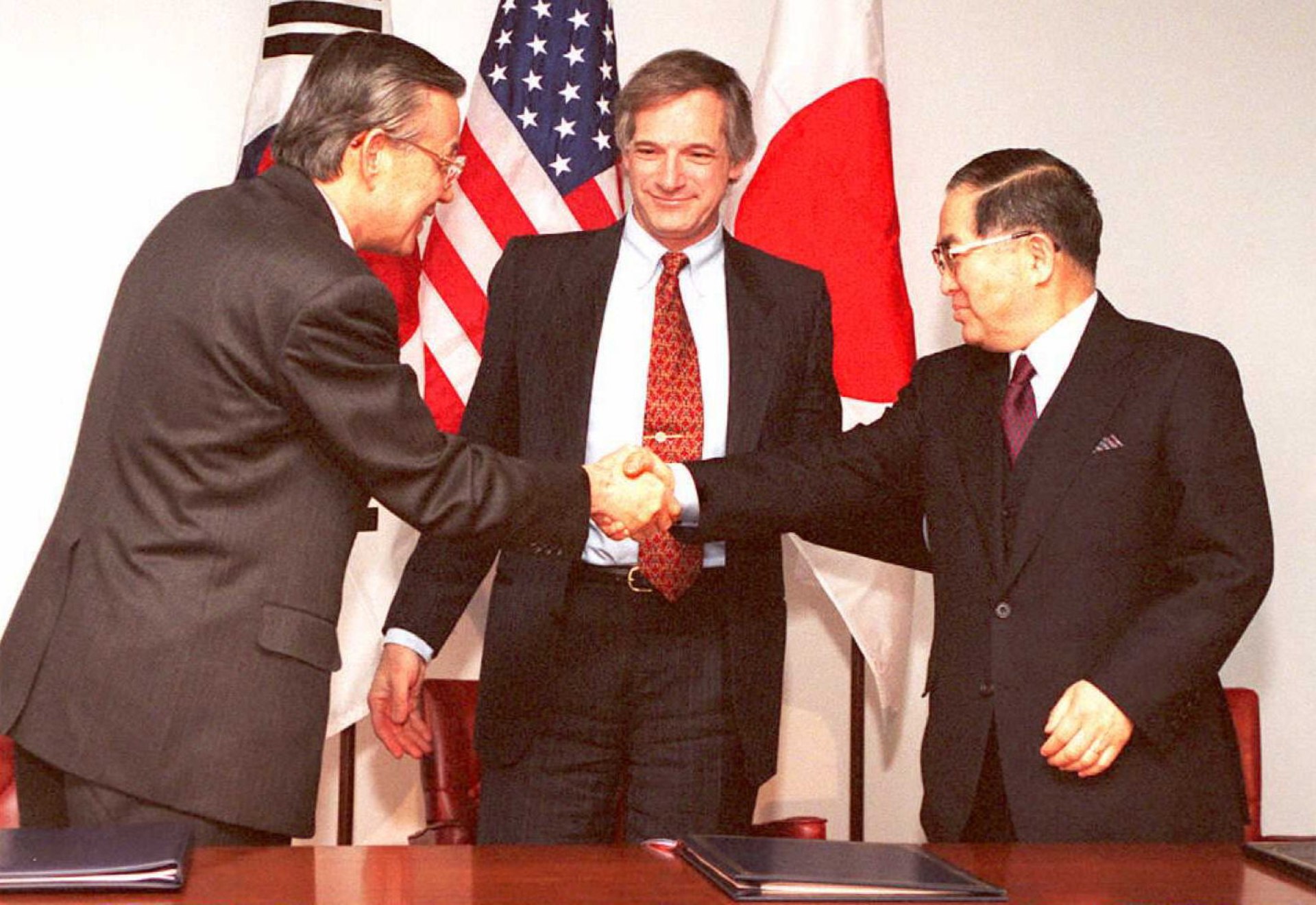
The United States, Japan, and South Korea establish the Korean Peninsula Energy Development Organization (KEDO) to implement the 1994 Agreed Framework and oversee the financing and construction of the two light-water reactors. KEDO breaks ground in August 1997.
1999
September 13, 1999
North Korea Imposes Missile Moratorium
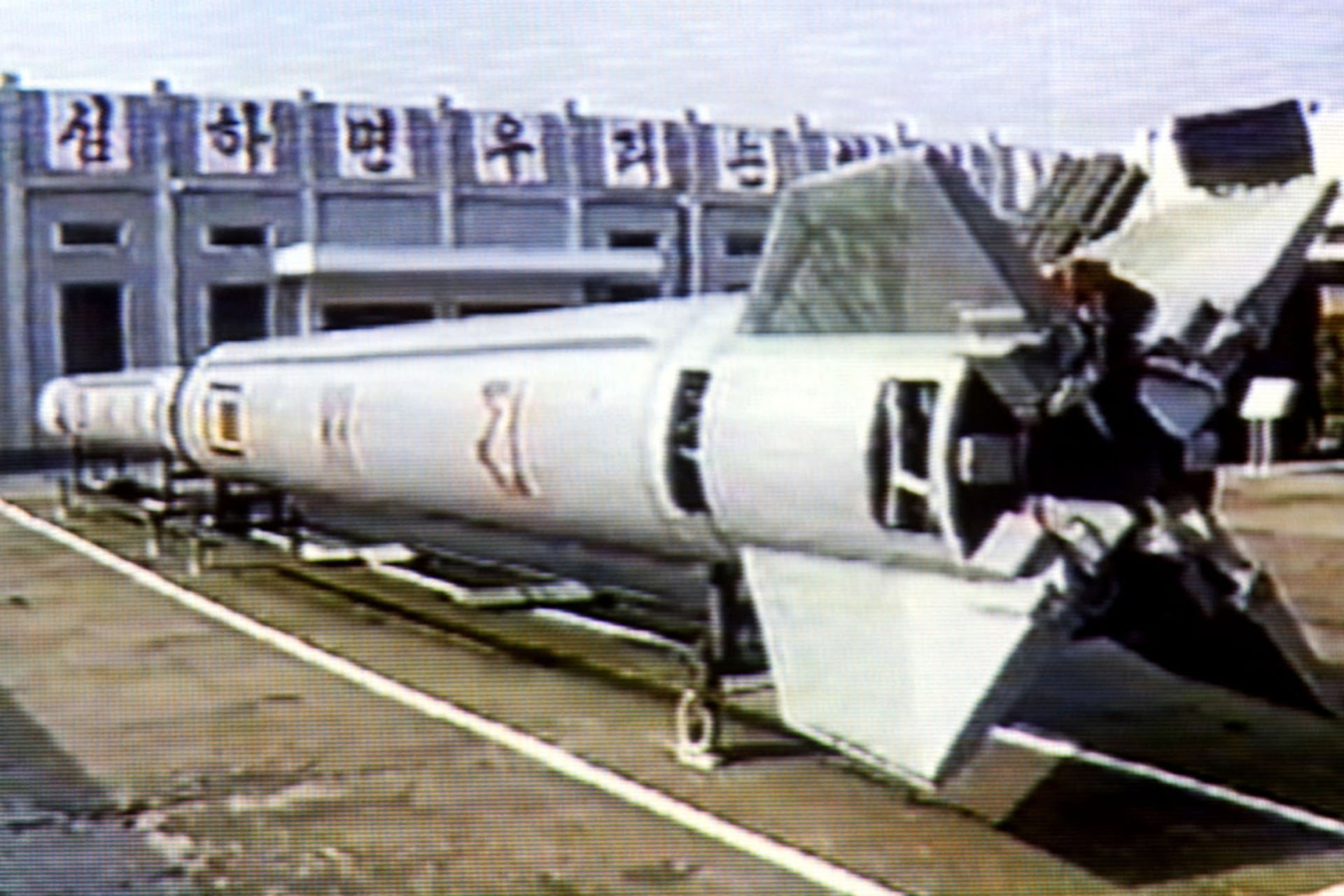
North Korea agrees to suspend testing of long-range missiles following talks with the United States; in exchange, the United States eases economic sanctions for the first time since the beginning of the Korean War in 1950.
2000
June 2000
First Inter-Korean Summit
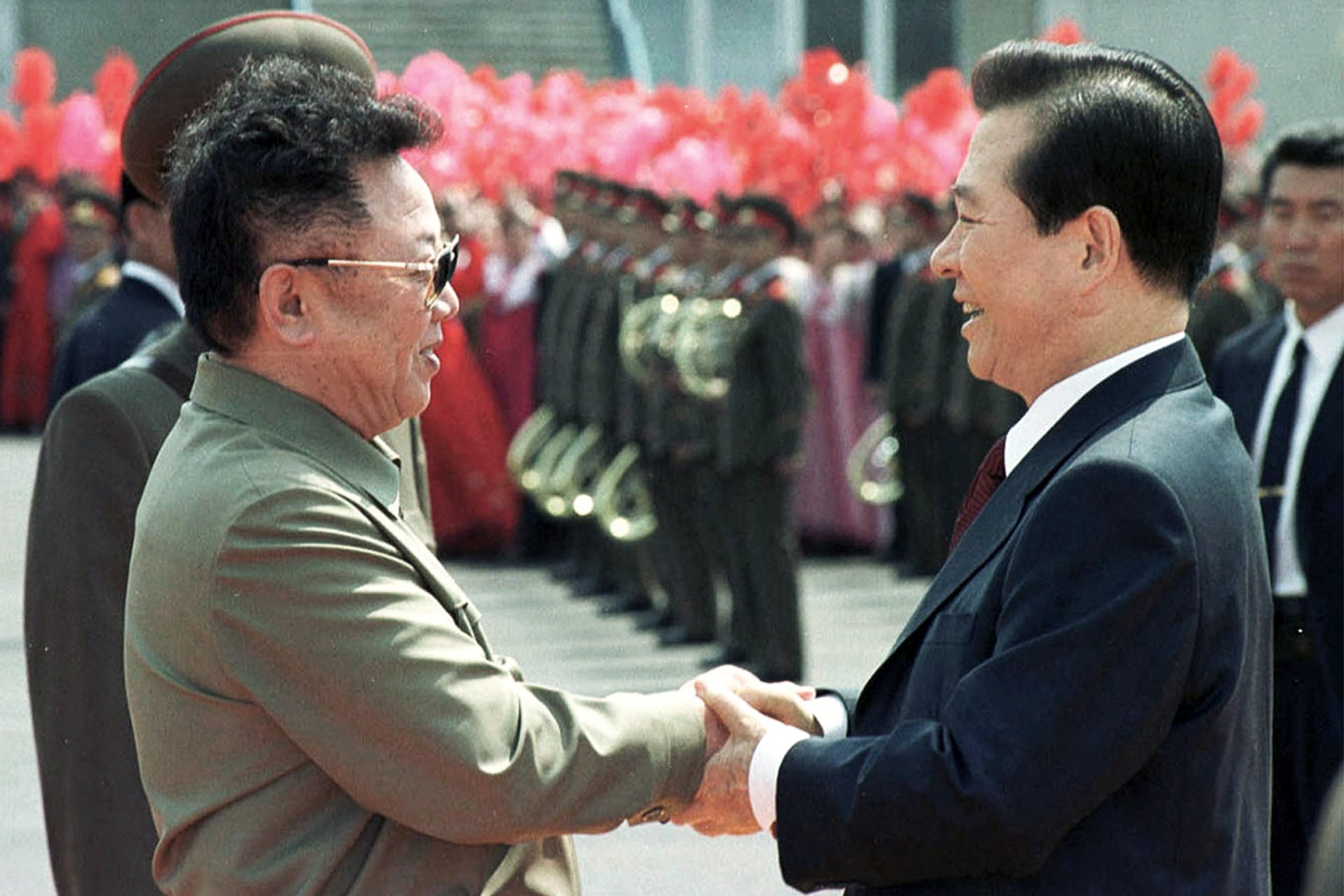
South Korean President Kim Dae-jung meets with Kim Jong-il in Pyongyang for the first summit between Korean leaders since the peninsula’s division five decades prior. The rapprochement results in a number of joint commercial and cultural projects, including construction of an industrial complex and the reunification of families separated during the war. Following the summit, the United States eases sanctions further, allowing some trade and investment.
October 2000
Washington and Pyongyang Host Goodwill Trips
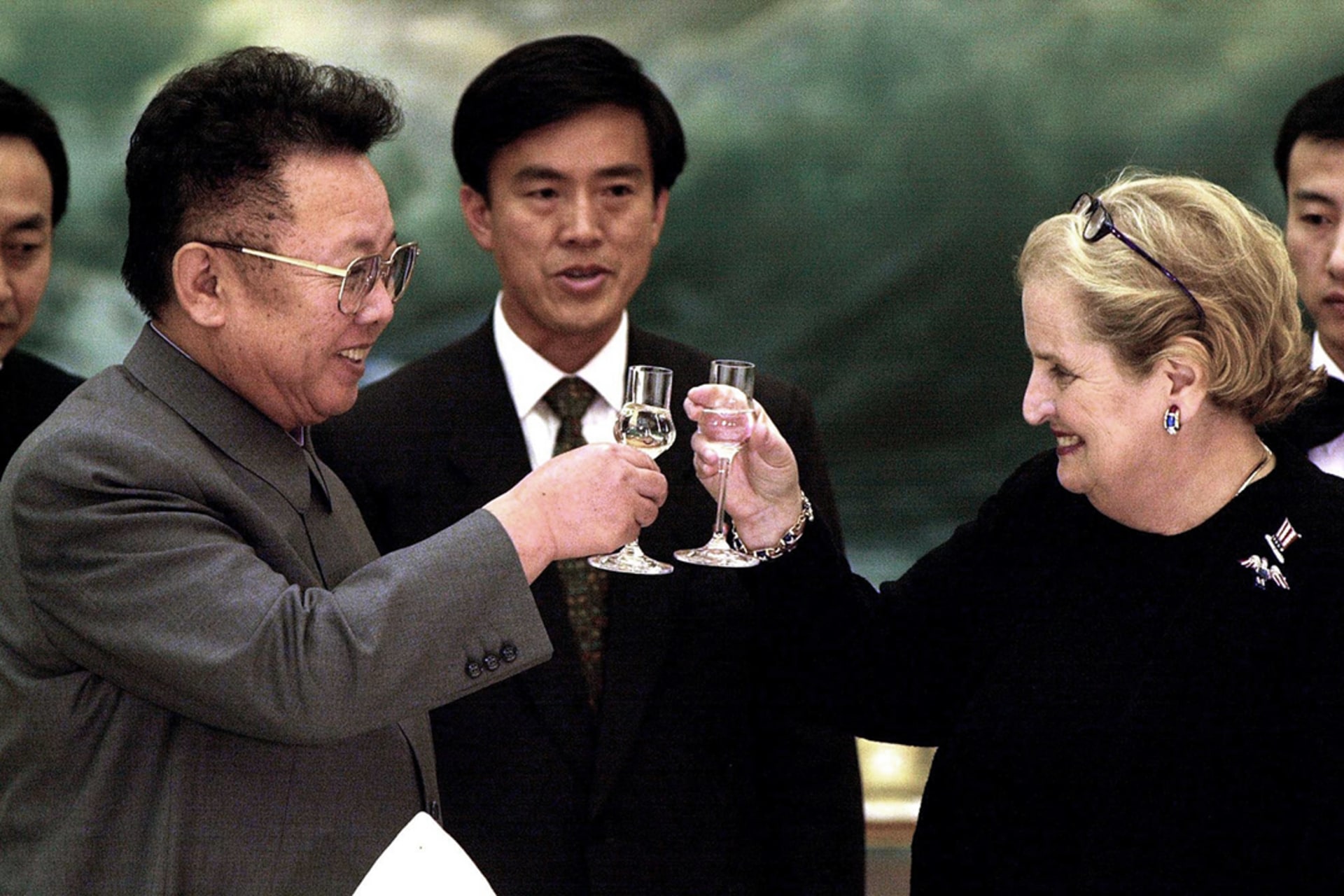
North Korean General Jo Myong-rok meets with U.S. President Bill Clinton in Washington, making Jo the highest-ranking North Korean official to visit the United States. A few weeks later, U.S. Secretary of State Madeleine Albright travels to North Korea to discuss the country’s ballistic missile program and missile technology exports. The diplomatic overtures lead to missile talks in November, but Clinton’s presidency ends without making additional nuclear or missile deals.
2001–2002
January 2001 – April 2002
Bush Challenges North’s Commitment to Deal

President George W. Bush takes office in 2001 and pursues a harder line toward Pyongyang, characterizing North Korea, along with Iraq and Iran, as part of an “axis of evil” and imposing new sanctions. In April 2002, Bush states in a memorandum that the United States will not certify North Korea’s compliance with the 1994 Agreed Framework, due to a rocket test and missile-related transfers to Iran.
2002–2003
October 2002 – January 2003
Pyongyang Exits the NPT
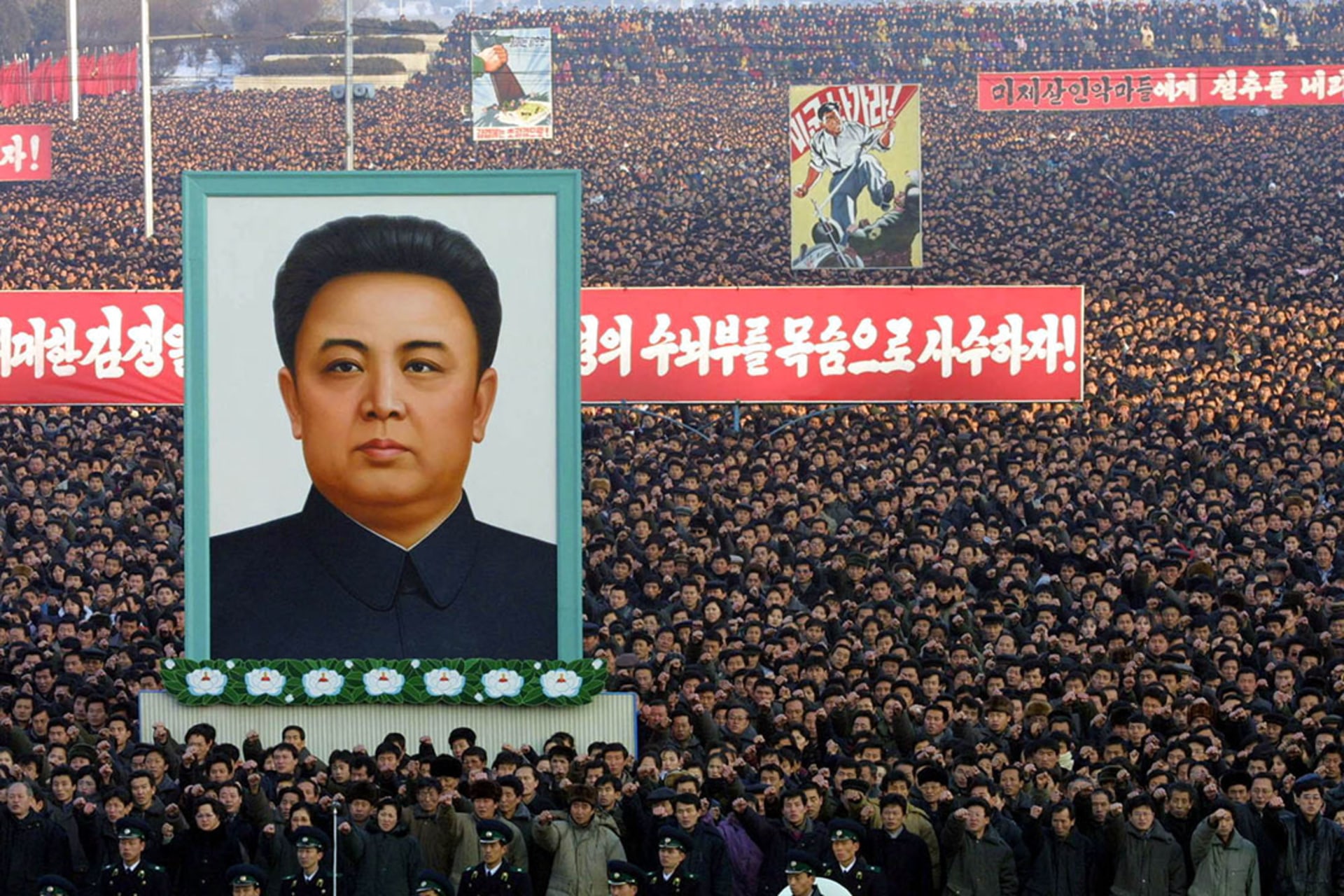
Pyongyang admits to running a secret uranium-enrichment program to power nuclear weapons, a violation of the Agreed Framework, the NPT, and agreements between North and South Korea. By December, the country says it will reactivate its nuclear plant in Yongbyon. The following month, North Korea withdraws from the NPT after disrupting IAEA monitoring equipment and expelling inspectors.
2003
August 9, 2003
Six Party Talks Open
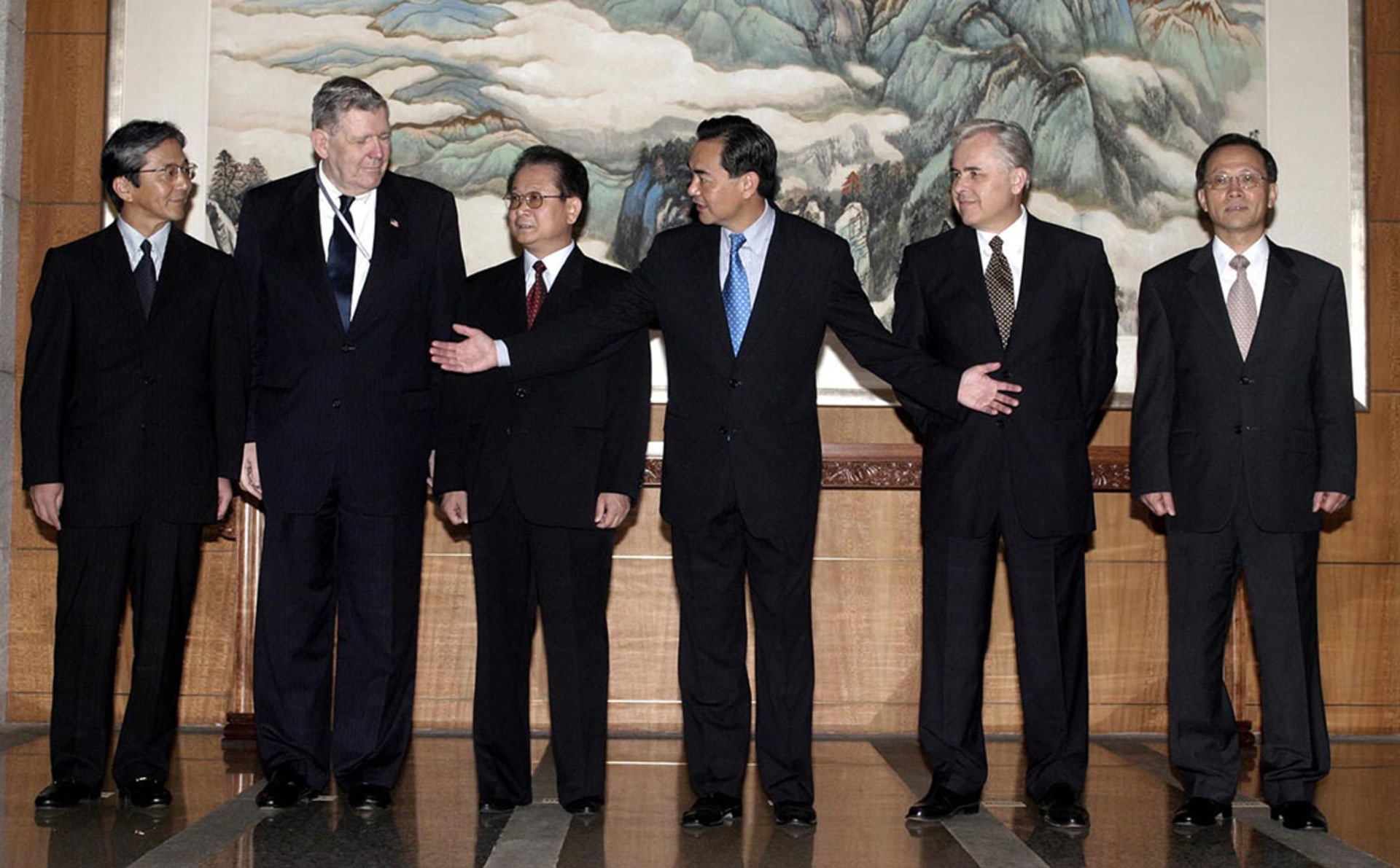
Amid an increasingly tense climate, South and North Korea, China, Japan, Russia, and the United States launch a diplomatic initiative known as the Six Party Talks. There are no breakthroughs during the first round of talks, in Beijing, where North Korea denies having a uranium-enrichment program.
2005
September 12, 2005
U.S. Freezes North Korean Funds
The U.S. Treasury Department designates the Macau-based Banco Delta Asia a primary money laundering concern and freezes $25 million North Korea holds there. These funds will prove to be a sticking point in negotiations between the United States and North Korea.
September 19, 2005
Disarmament Principles Emerge From Talks

Despite stalemates at previous rounds of the Six Party Talks, its members agree to a joint declaration in which North Korea commits to abandon its pursuit of nuclear weapons and to implement IAEA safeguards and the terms of the NPT. As part of the agreement, the United States asserts that it has no intention of attacking North Korea.
2006
October 9, 2006
North Korea Shocks With First Nuclear Test
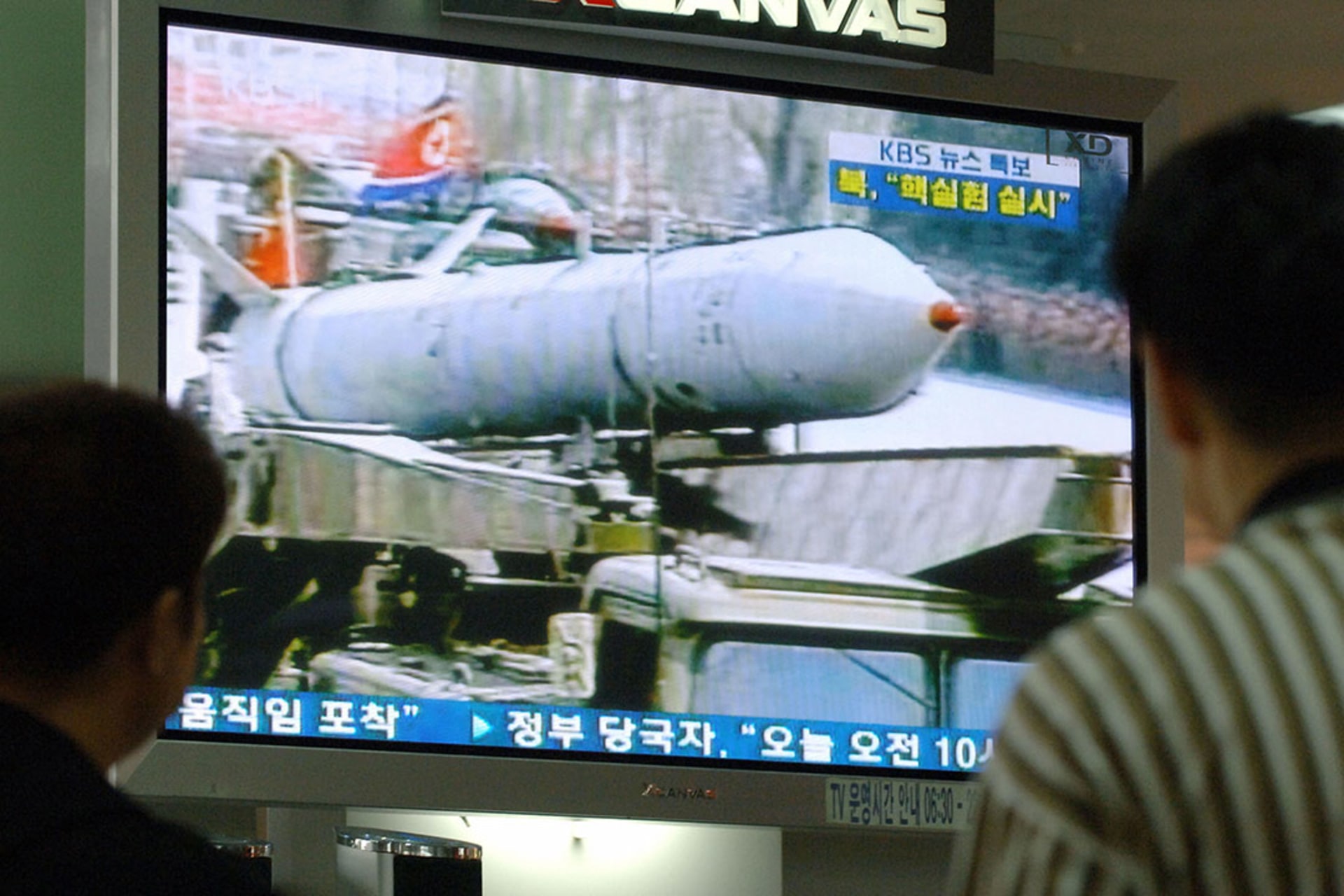
North Korea carries out an underground nuclear test with an explosion yield estimated around one to two kilotons. In July, North Korea tested seven short-, medium-, and long-range ballistic missiles. These tests prompt the UN Security Council to issue unanimous condemnations and trade sanctions.
2007
February 13, 2007
Six Party Members Agree to Action Plan
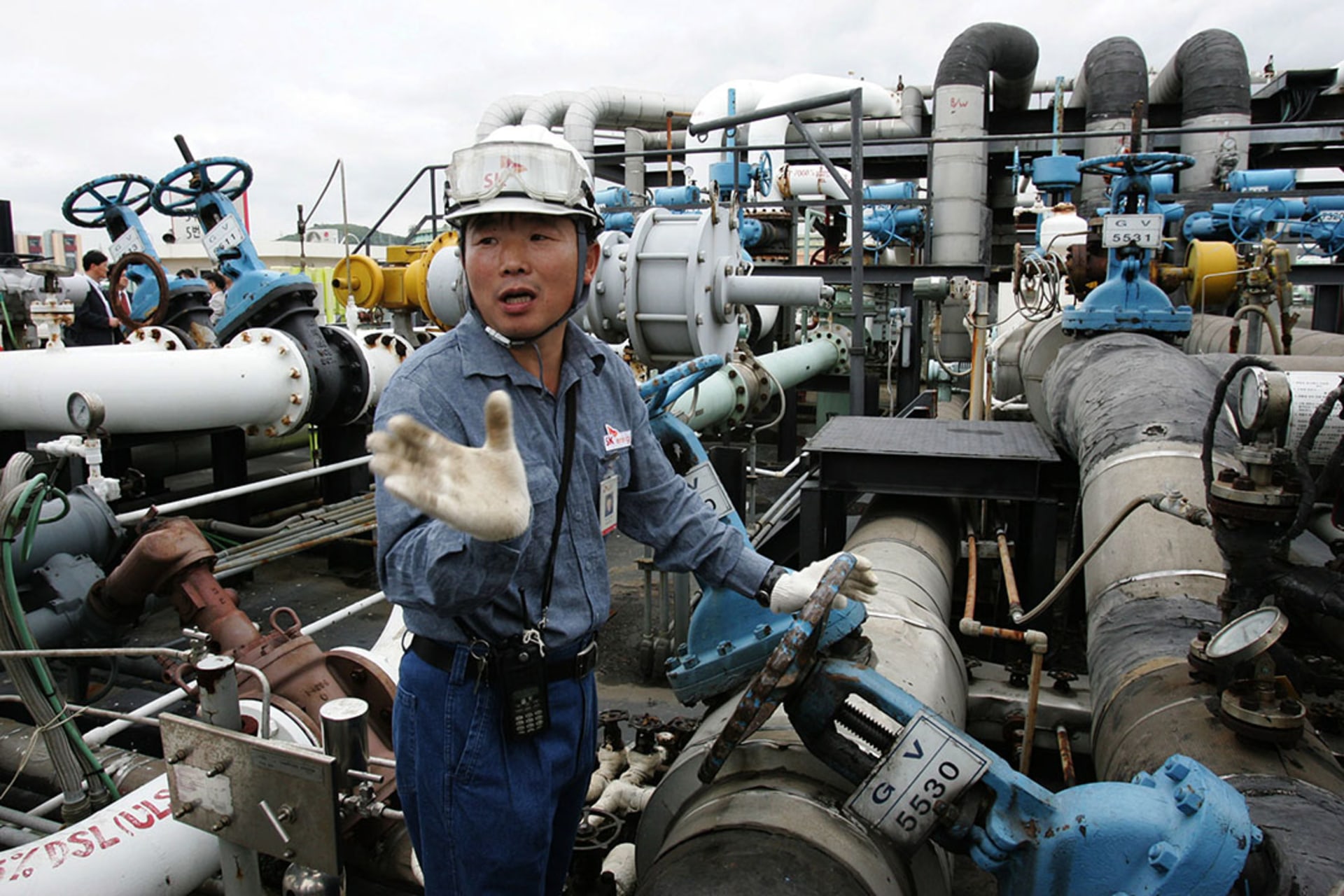
North Korea commits to halting operations at its Yongbyon nuclear facilities in exchange for fifty thousand tons of oil. The deal is part of an action plan agreed to by the Six Party members to implement the September 2005 statement.
October 2007
Nuclear Diplomacy Inches Forward
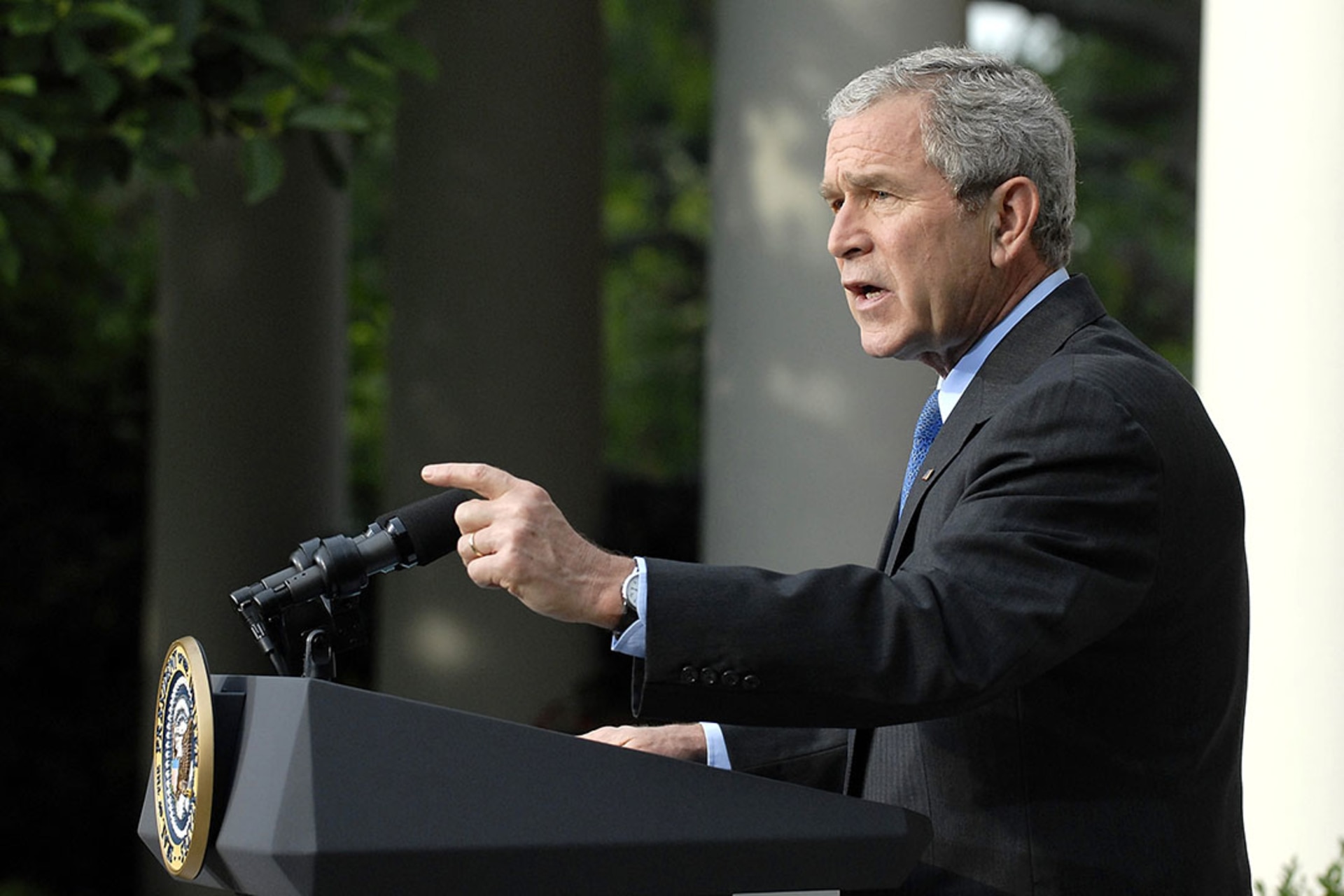
After the United States releases the $25 million in frozen North Korean funds in June, the Six Party Talks resume. Its participants issue a joint statement outlining the North’s commitment to declare all of its nuclear programs, disable its facilities, and stop the export of nuclear material and technology. In exchange, the North is to receive nine hundred thousand tons of oil and the United States pledges to remove the country from its list of state sponsors of terrorism.
2008
February 2008
South Korea’s New Leader Takes Harder Line
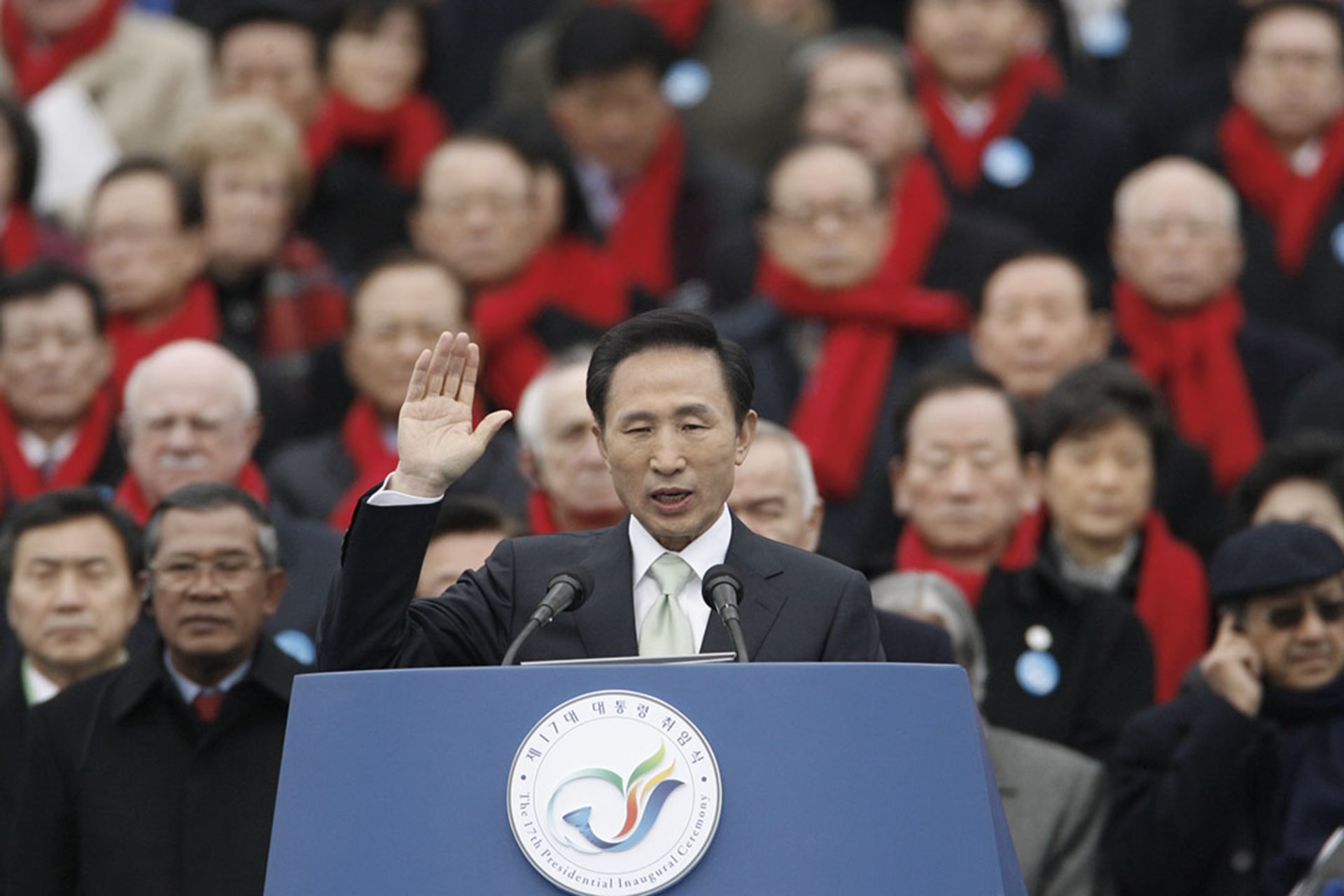
Lee Myung-bak is elected president of South Korea. As the leader of a conservative government, Lee shifts from his predecessors’ push for reconciliation to exert more pressure on North Korea to denuclearize. He takes office a few months after the second inter-Korean summit, held between the North’s Kim Jong-il and South Korean President Roh Moo-hyun.
June 2008
North Korea Declares Nuclear Sites
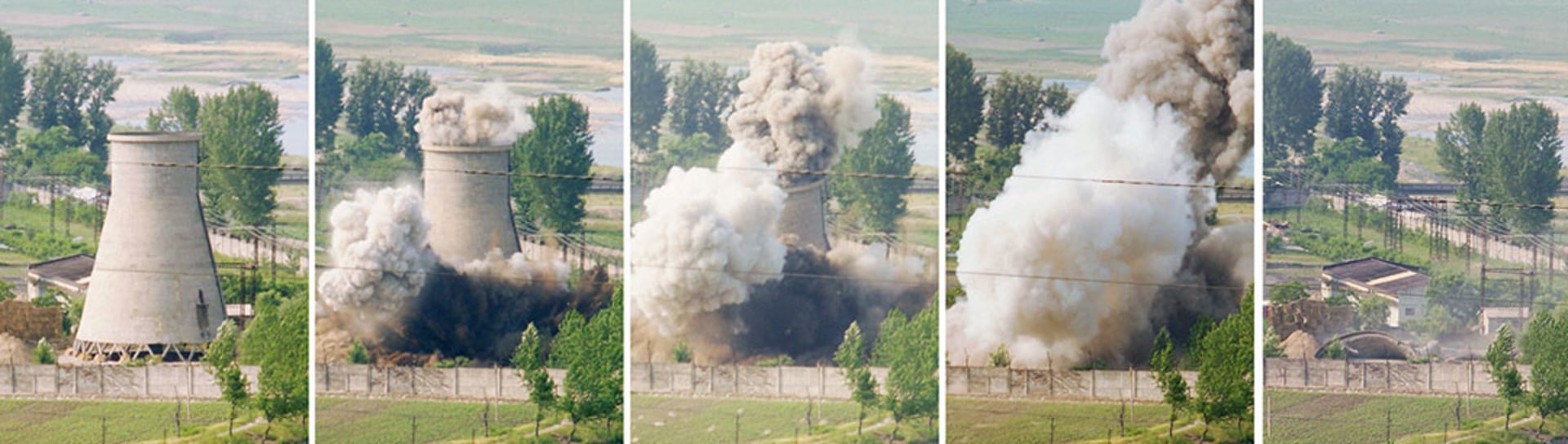
Pyongyang declares its fifteen nuclear sites to Beijing, the chair of the Six Party Talks, stating that it had thirty kilograms of plutonium and used two kilograms in its 2006 nuclear test. In turn, Bush rescinds some restrictions on trade with North Korea, announces plans to take the country off the list of state sponsors of terrorism, and waives some sanctions. In October, the U.S. State Department announces a preliminary agreement with North Korea on verifications. However, by December, discussions break down because of disagreements on verification procedures.
2009
January 2009 – December 2009
Obama Attempts Diplomatic Restart
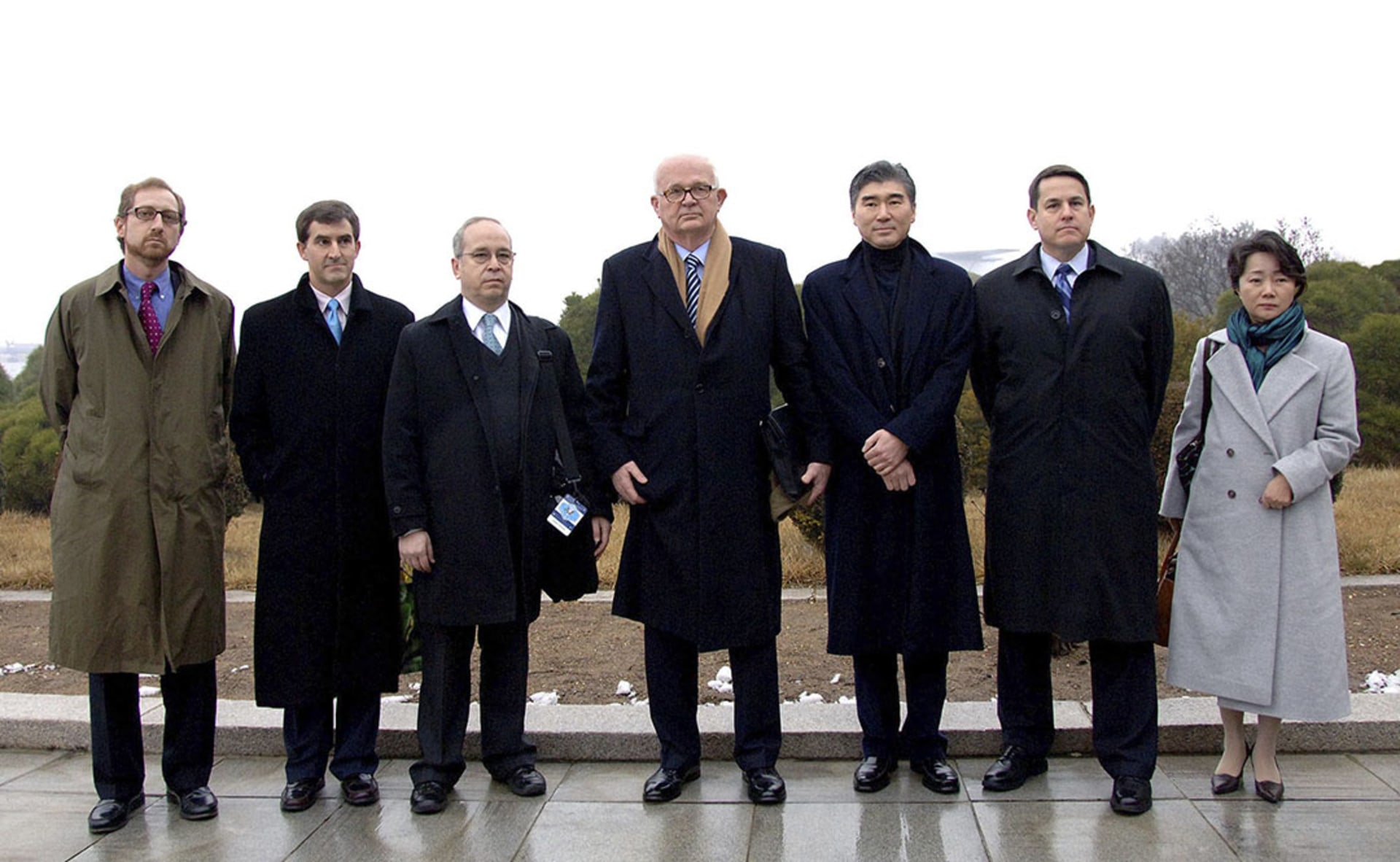
President Barack Obama takes office signaling a willingness to revive the Six Party Talks, but these efforts are initially rebuffed by North Korea, which launches a rocket believed to be a modified version of its long-range ballistic missile. It also ejects international monitors from its nuclear facilities in April and the following month tests a second nuclear device, which carries a yield of two to eight kilotons. In December, Obama administration officials hold their first bilateral meetings with their North Korean counterparts.
2010
November 2010
North Korea Reveals Uranium Plant
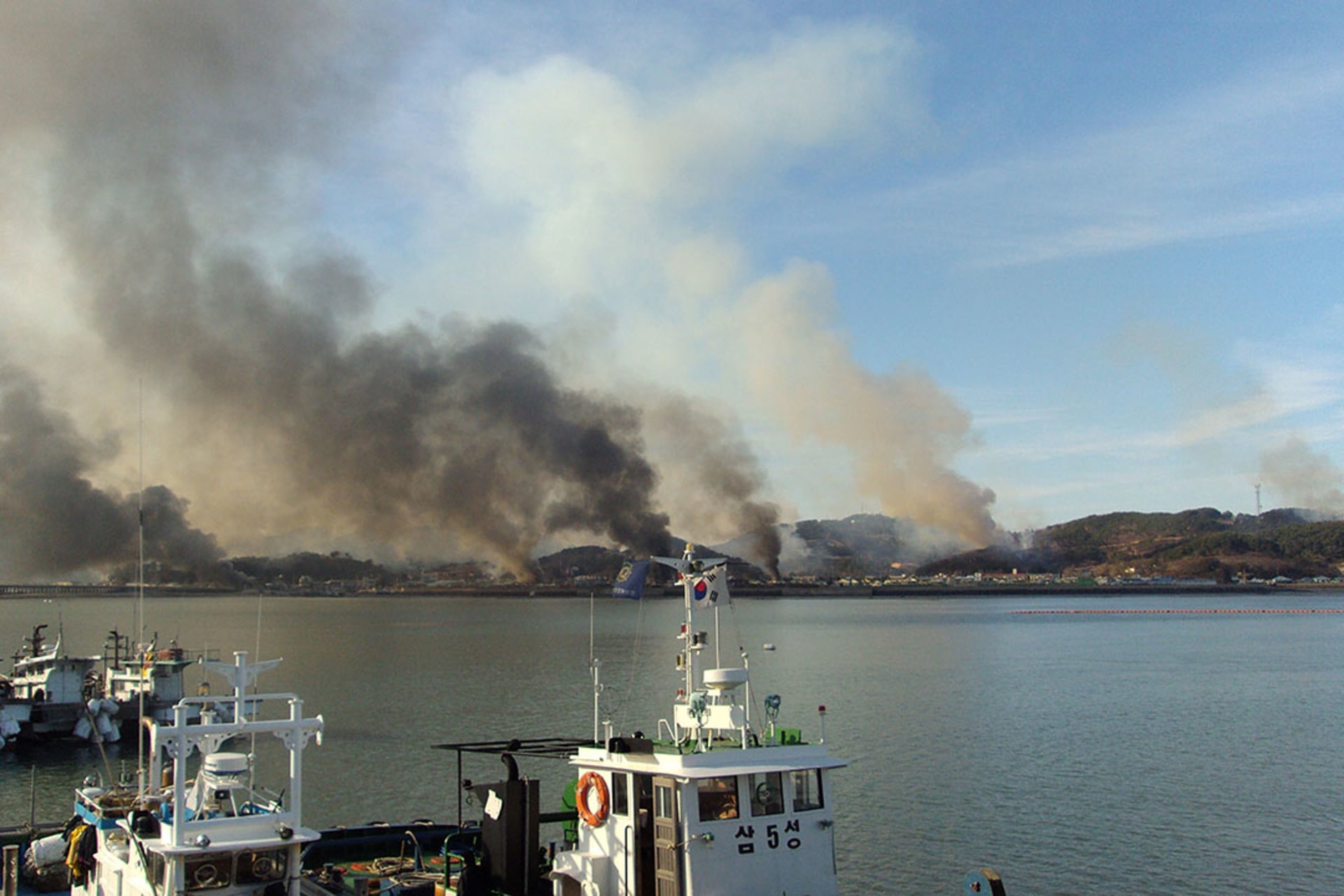
Pyongyang reveals its new centrifuge for uranium enrichment, which was built secretively and swiftly, as well as a light-water reactor under construction, suggesting that despite sanctions, the regime is committed to advancing its weapons program. The news comes amid escalating tensions on the Korean Peninsula after forty-six South Koreans were killed when a patrol ship, the Cheonan, was torpedoed and then sank in March. The South blames North Korea for the attack and cuts economic ties. The North denies its involvement and later fires artillery at the South Korean island of Yeonpyeong.
2011
December 2011
North Korea Heralds New Leader
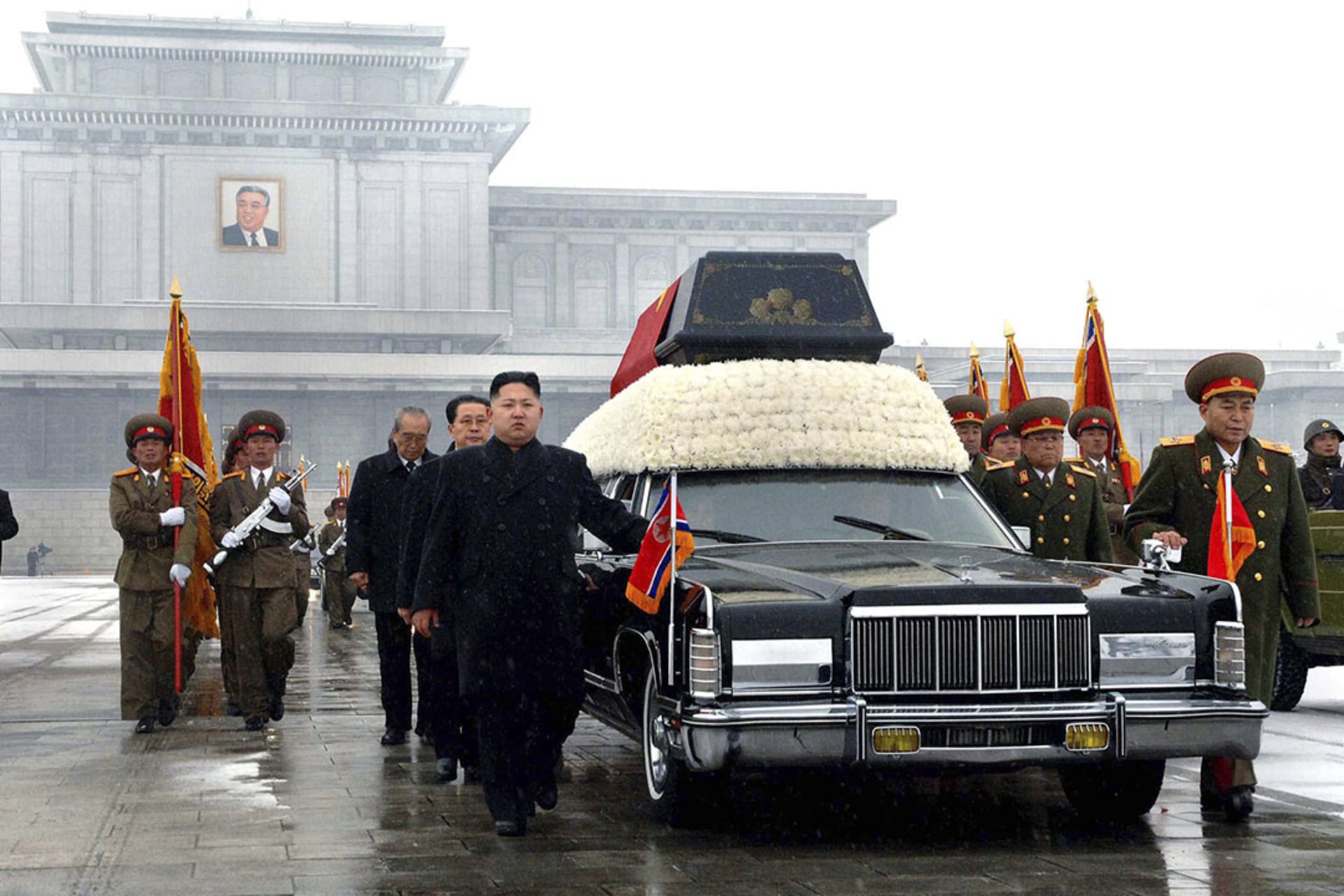
Kim Jong-il dies after seventeen years in power and is succeeded by his son Kim Jong-un. The not-yet-thirty-year-old Kim is relatively unknown, and foreign observers anticipate a political struggle until he begins to assert power.
2012
February 29, 2012
Nuclear Operations Briefly Suspended
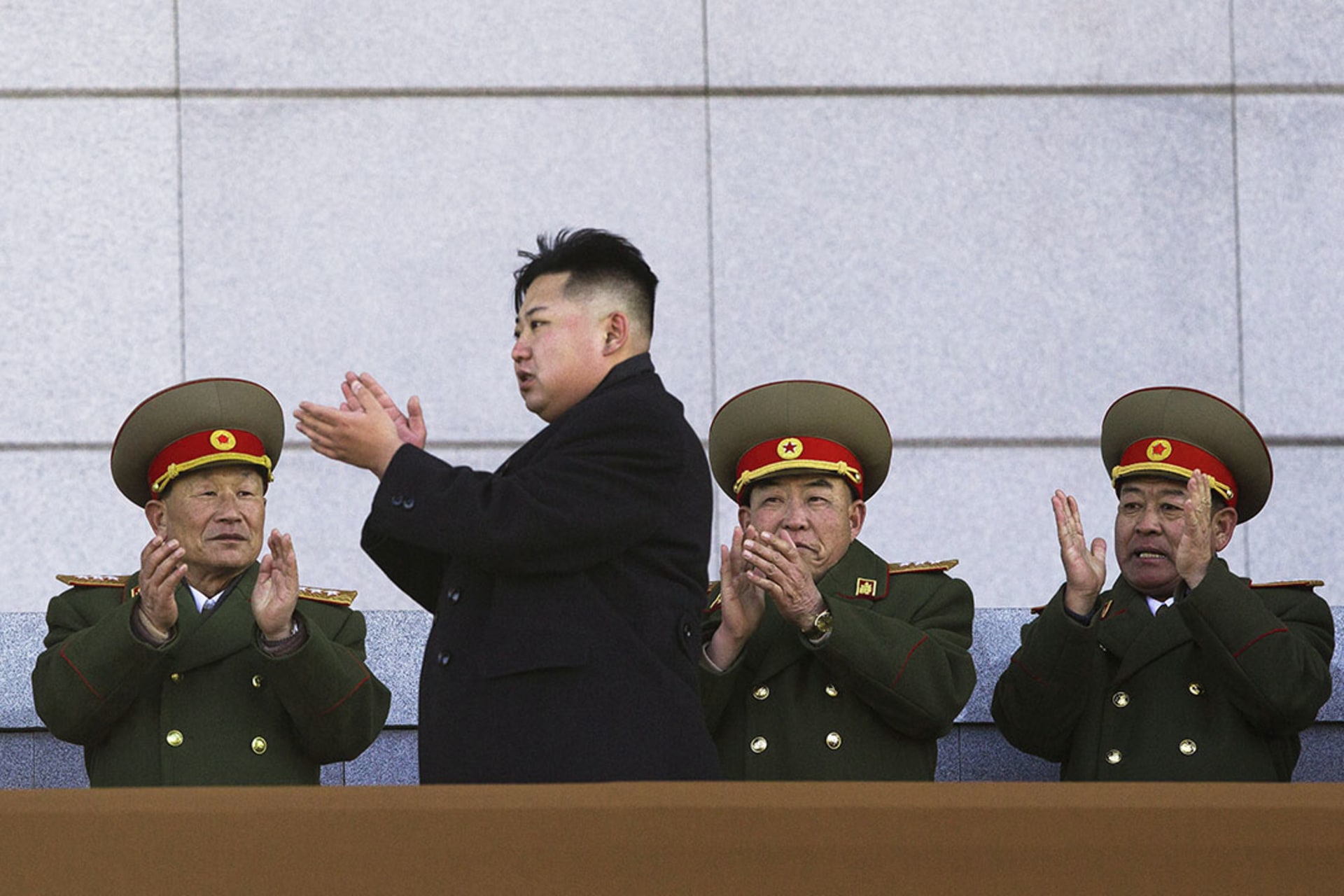
Following a meeting between the United States and North Korea in Beijing, North Korea commits to suspend its uranium enrichment operations in Yongbyon, invite IAEA monitors, and carry out a moratorium on long-range missile and nuclear testing. In exchange, the United States is to provide tons of food aid. The deal falls apart after North Korea launches a rocket and displays road-mobile intercontinental ballistic missiles at a military parade.
2013–2016
February 2013 – December 2016
North’s Nuclear Program Advances Despite Isolation
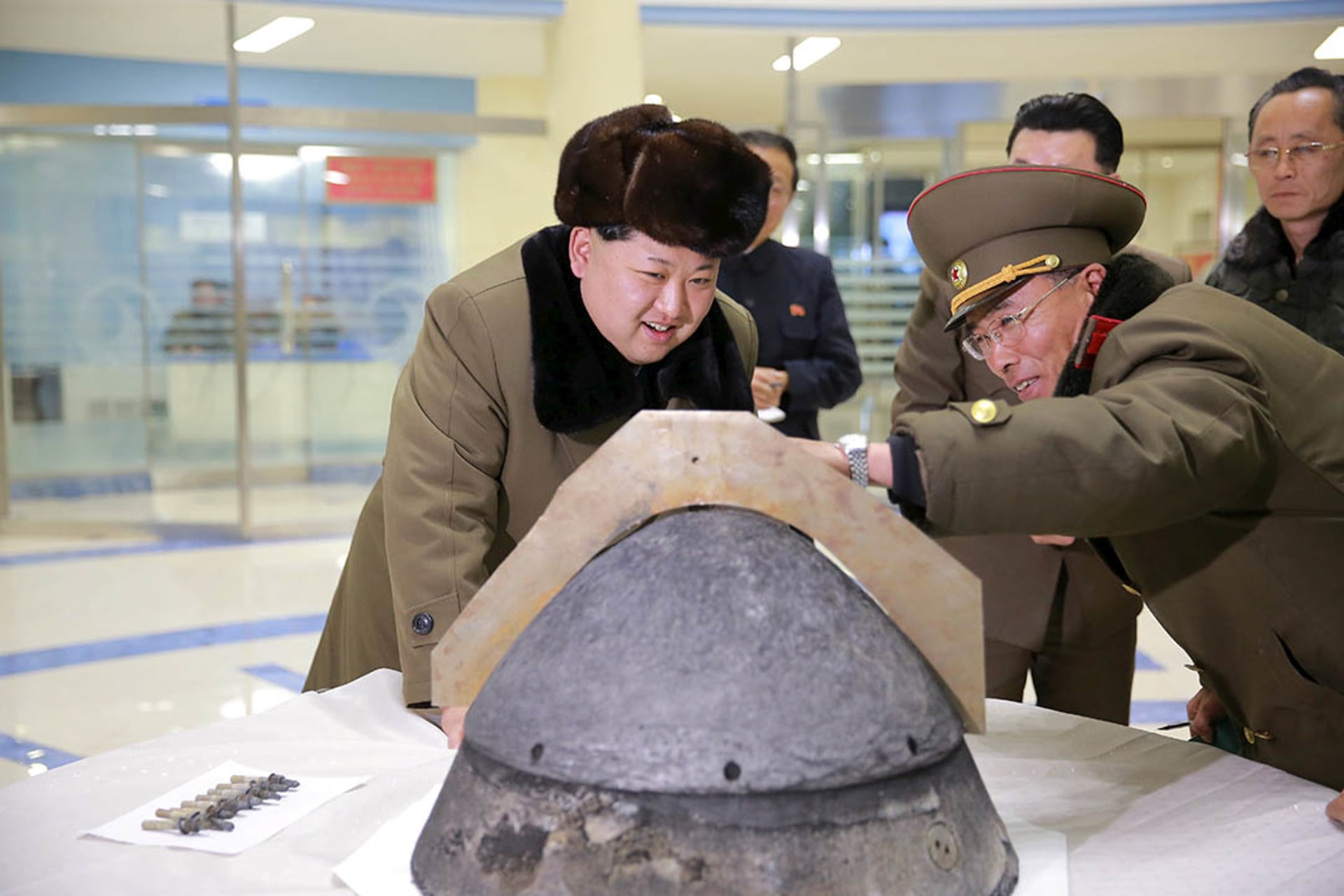
Diplomacy stalls for several years as the Obama administration opts for “strategic patience,” in which the United States and its partners ratchet up sanctions in hopes that the regime will return to the negotiating table. Meanwhile, North Korea carries out nuclear tests in February 2013 and again in January and September 2016. Its ballistic missile capabilities improve, with more tests of short-, medium-, and long-range missiles carried out under Kim Jong-un than under his father and grandfather combined.
2017
January 2017 – November 2017
Trump Ratchets up Rhetoric
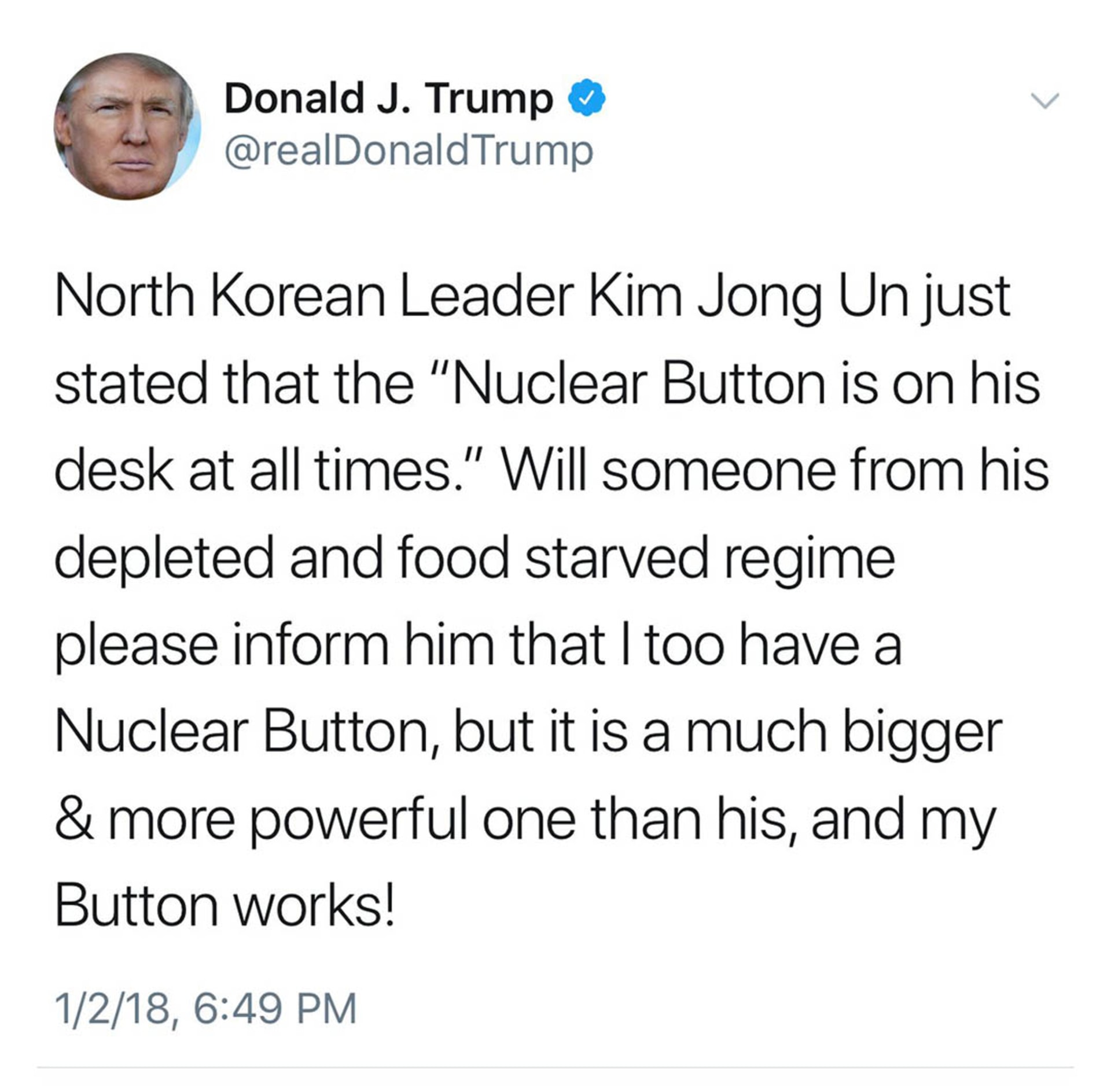
President Donald Trump is inaugurated in January 2017 and shifts course in U.S. policy toward North Korea. In September, Pyongyang conducts its sixth nuclear test, which it claims is a hydrogen bomb and raises international alarm due to the yield of its explosion. Trump redesignates North Korea a state sponsor of terrorism in November. U.S.-North Korean relations during Trump’s first year are volatile as Pyongyang boasts it can reach U.S. soil with nuclear-tipped intercontinental ballistic missiles and the Trump administration threatens a military strike.
2018
March 2018
Trump Agrees to First U.S.-North Korea Summit
South Korea’s national security advisor announces in Washington that Trump has accepted an invitation to meet with Kim in Pyongyang by May. The news comes on the heels of diplomatic overtures between the North and South spurred by the Winter Olympic Games, hosted by South Korea in Pyeongchang.
April 27, 2018
Kim Makes Historic Visit South
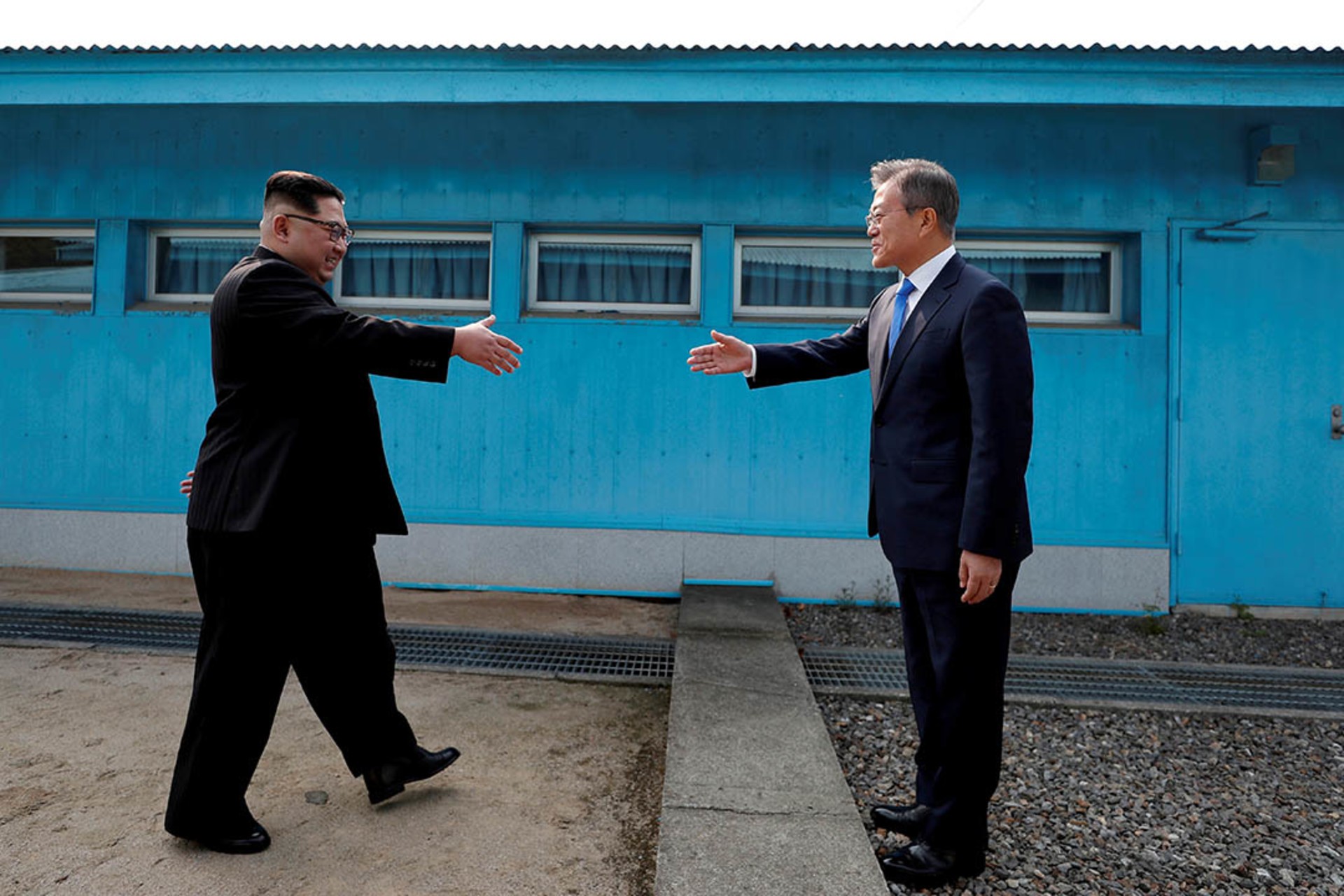
Kim becomes the first North Korean leader to cross the border south for a summit with South Korea’s Moon Jae-in at the truce village of Panmunjom. The summit marks the first meeting between the heads of the Koreas in eleven years. The two pledge to convert the armistice that ended the hostilities of the Korean War into a formal peace treaty. They also confirmed the shared goal of achieving a nuclear-free Korean Peninsula.
May 24, 2018
Trump Calls Off Singapore Summit
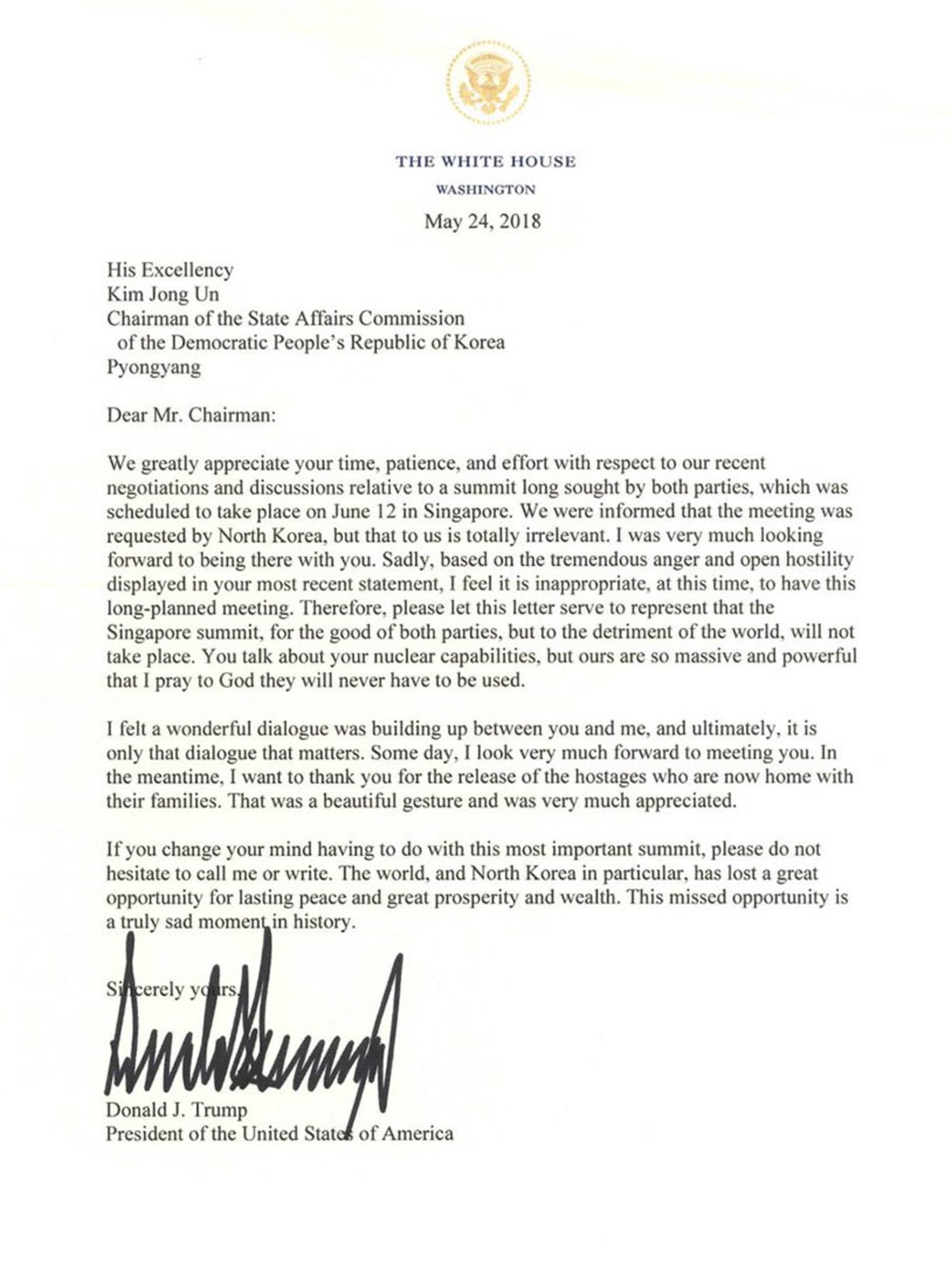
Trump pulls out of the meeting with Kim, citing “anger and hostility” in North Korea’s latest statements. Threats out of Pyongyang had raised doubts about whether the summit would go forward. Still, North Korea had taken some action in recent weeks to demonstrate good faith by releasing three U.S. prisoners and demolishing the nuclear test site at Punggye-ri, where foreign journalists were invited to witness the event.
June 12, 2018
Kim, Trump Pledge New Era of Relations
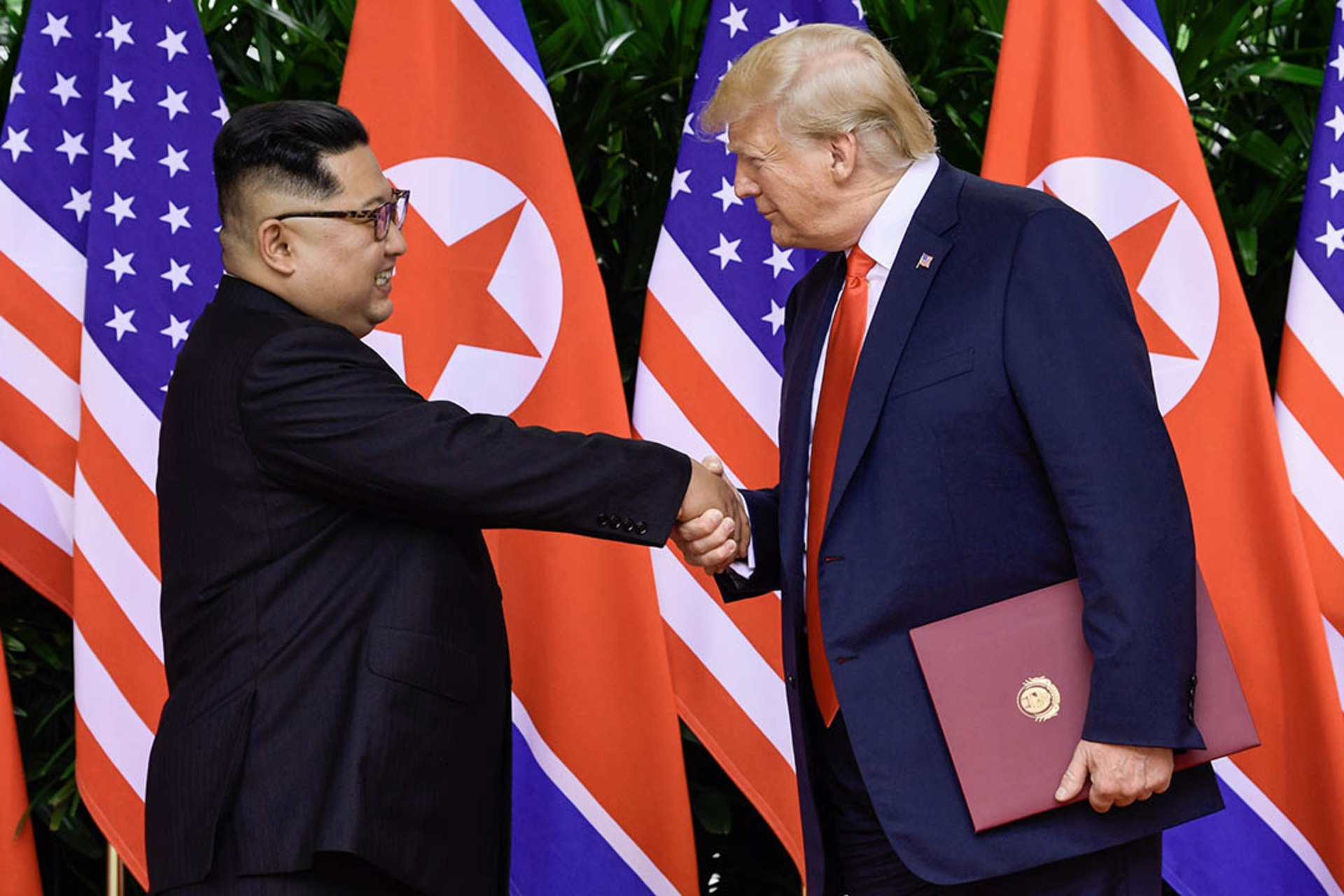
In an about-face, Kim and Trump hold a historic meeting in Singapore, where they signal a desire to change the U.S.-North Korea relationship. The two leaders sign a joint statement pledging to pursue lasting peace and complete denuclearization of the Korean Peninsula, although the declaration provides few details. They also commit to recovering the remains of U.S. soldiers who fought in the Korean War. Separately, Trump says he would suspend U.S.-South Korea military exercises and Kim agrees to destroy a missile-engine test site.
September 18 – 20, 2018
Moon, Kim Hail Progress Toward Nuclear-Free Korea
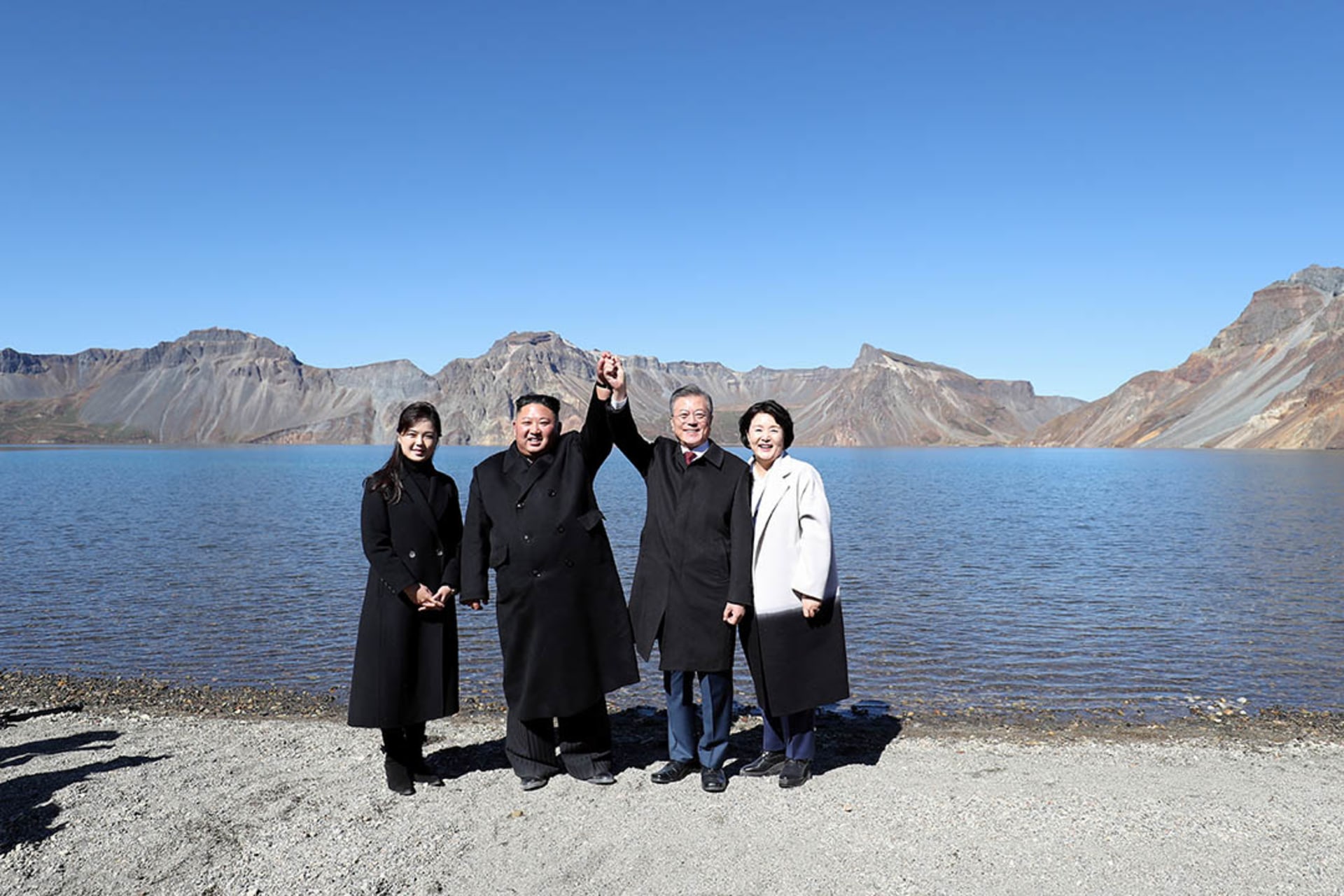
In the third summit between Kim and Moon, this time in Pyongyang, the leaders sign a joint declaration outlining steps toward reducing tensions, expanding inter-Korean exchanges and cooperation, and achieving denuclearization. It states that the North will permanently shut down the Dongchang-ri missile test site, allow international inspectors into North Korea, and dismantle its nuclear site pending “corresponding measures” by the United States. An accompanying military declaration outlines steps to curtail ground exercises, establish no-fly and no-sail zones under the jurisdiction of inter-Korean bodies, and transform the demilitarized zone into a peace zone. The two sides also pledge to strengthen economic cooperation.
2019
February 27 – 28, 2019
Second Trump-Kim Summit Ends Early, Without Deal
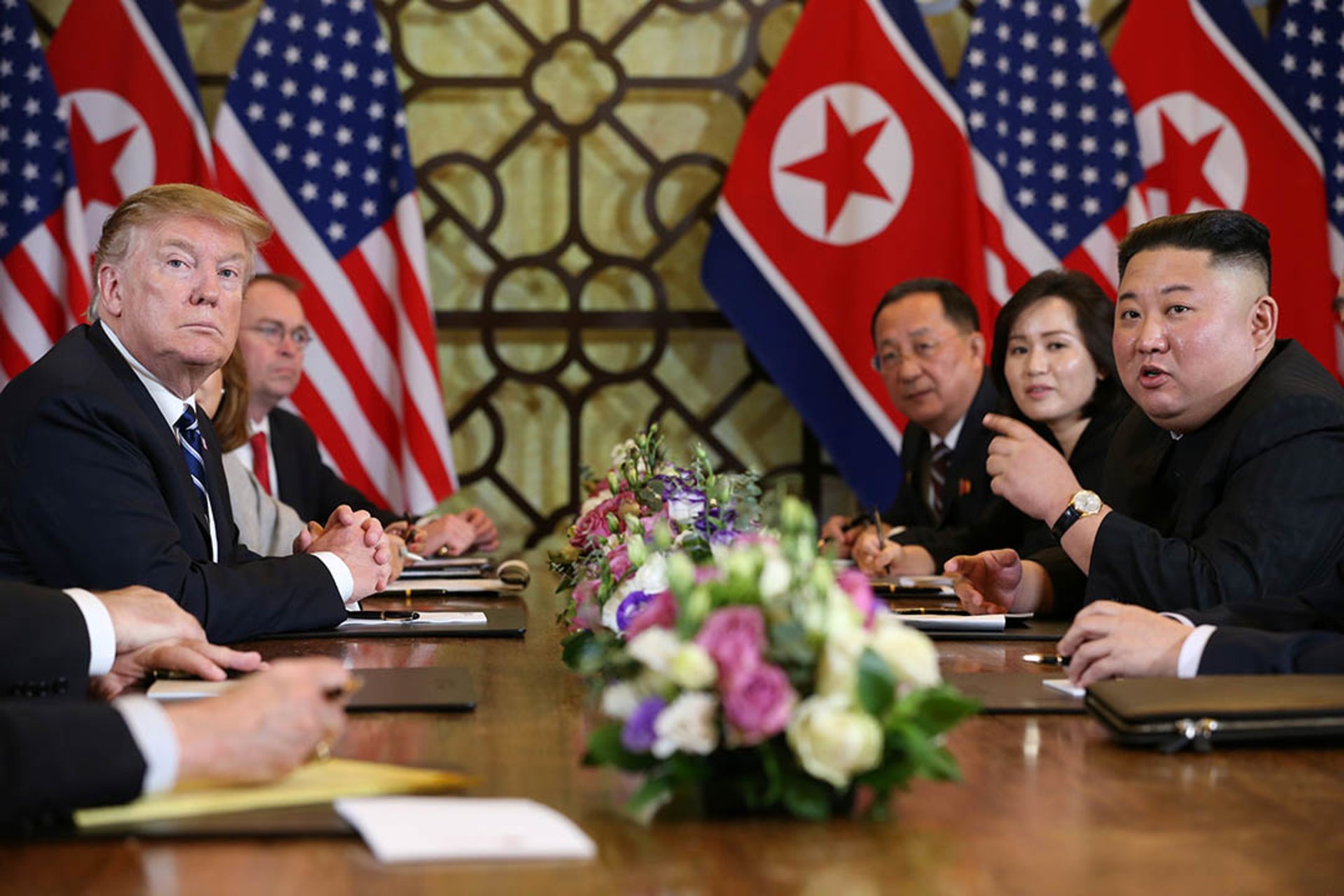
Trump and Kim’s second summit, held in Vietnam, collapses after the leaders disagree over sanctions relief and denuclearization. Trump says Kim agreed to dismantle the nuclear and fissile material production facilities at Yongbyon in exchange for complete sanctions relief, but the U.S. president wanted more substantial steps on denuclearization and verification. North Korean officials dispute Trump’s account, saying Kim demanded only partial sanctions relief. Both leaders leave Vietnam early, without signing a planned joint statement, but indicate talks will continue. Trump says they parted on “friendly” terms, while North Korea’s foreign ministry warns it will not change its position.
June 30, 2019
Trump Steps Into North Korea, Vows to Revive Talks
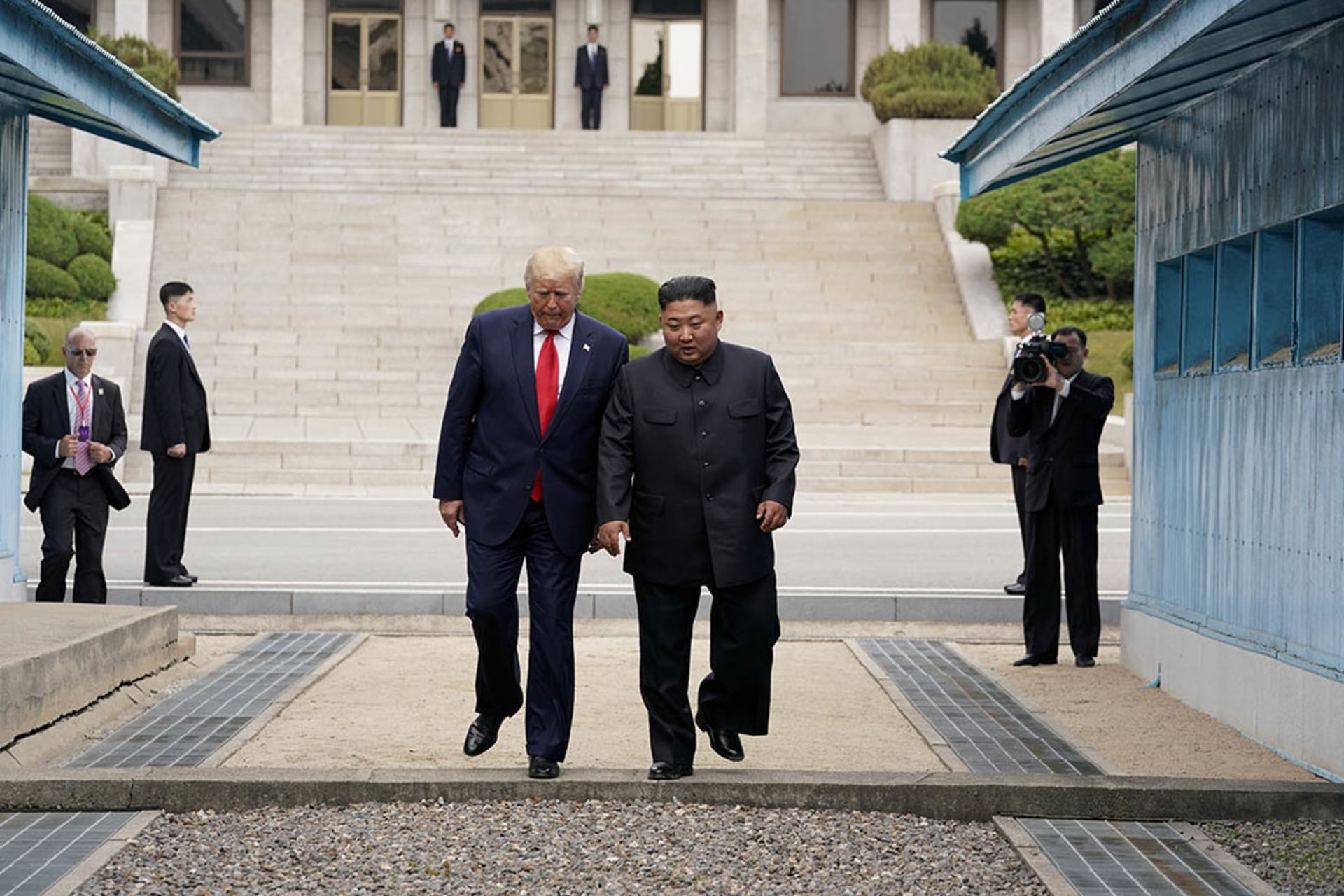
Trump and Kim agree to restart stalled nuclear negotiations after meeting in the demilitarized zone that separates North and South Korea. Stepping across the border, Trump becomes the first sitting U.S. president to set foot in North Korea. In statements to the press, both leaders highlight their “great relationship.” But in the following months, Pyongyang rebuffs U.S. efforts to resume negotiations and continues to test-launch missiles, while Washington maintains its sanctions.
October 6, 2019
North Korea Ends Negotiations With U.S.
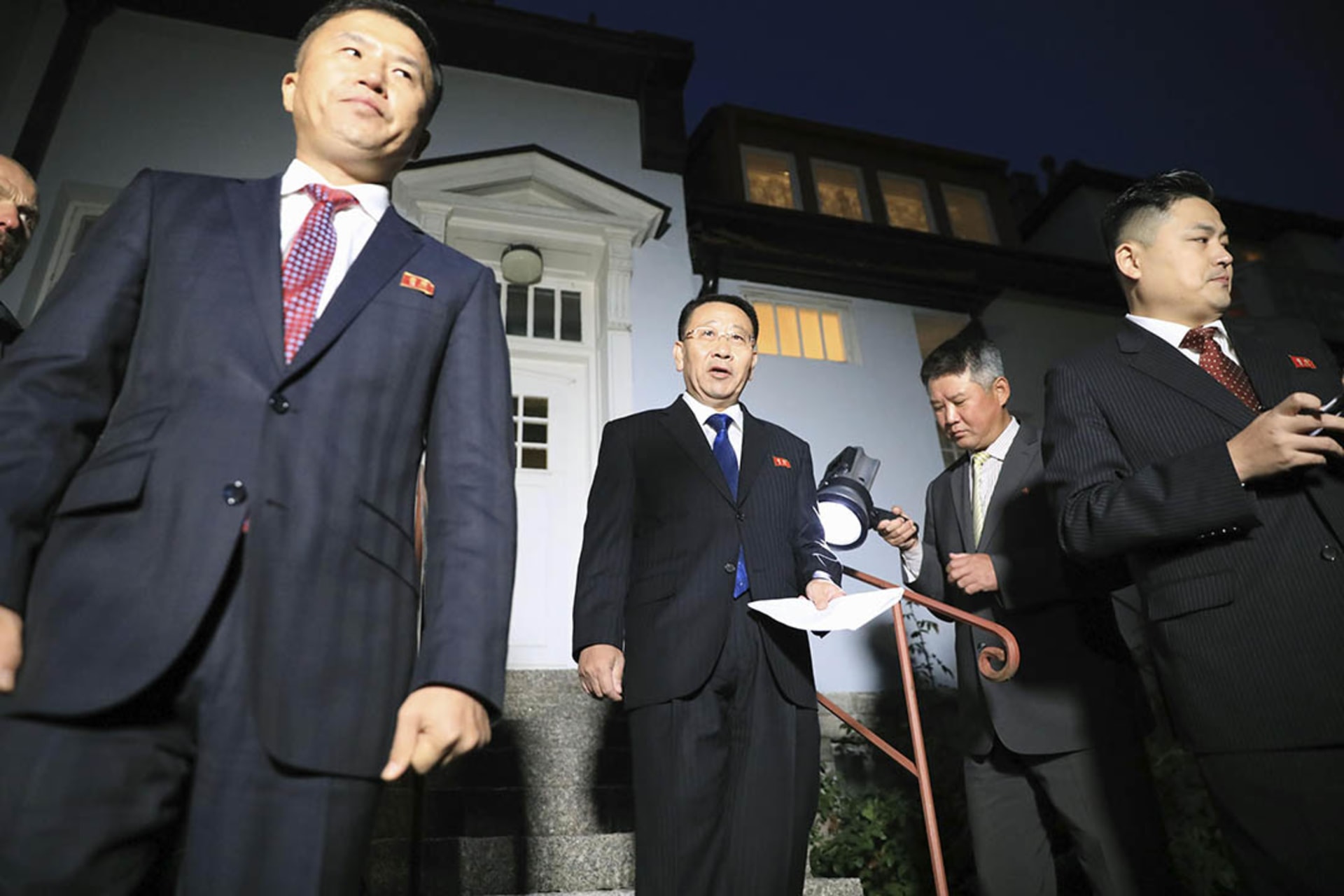
During their first working-level talks since February, in Stockholm, Sweden, U.S. and North Korean officials fail to reach an agreement. A spokesperson for North Korea’s Foreign Ministry says Pyongyang will not resume negotiations until Washington takes a “substantial step” to end what it calls “hostile” policies such as strict sanctions and military exercises with South Korea. This marks the start of a period with nearly zero communication between U.S. and North Korean officials.
2020
June 9, 2020
Inter-Korean Dialogue Disrupted
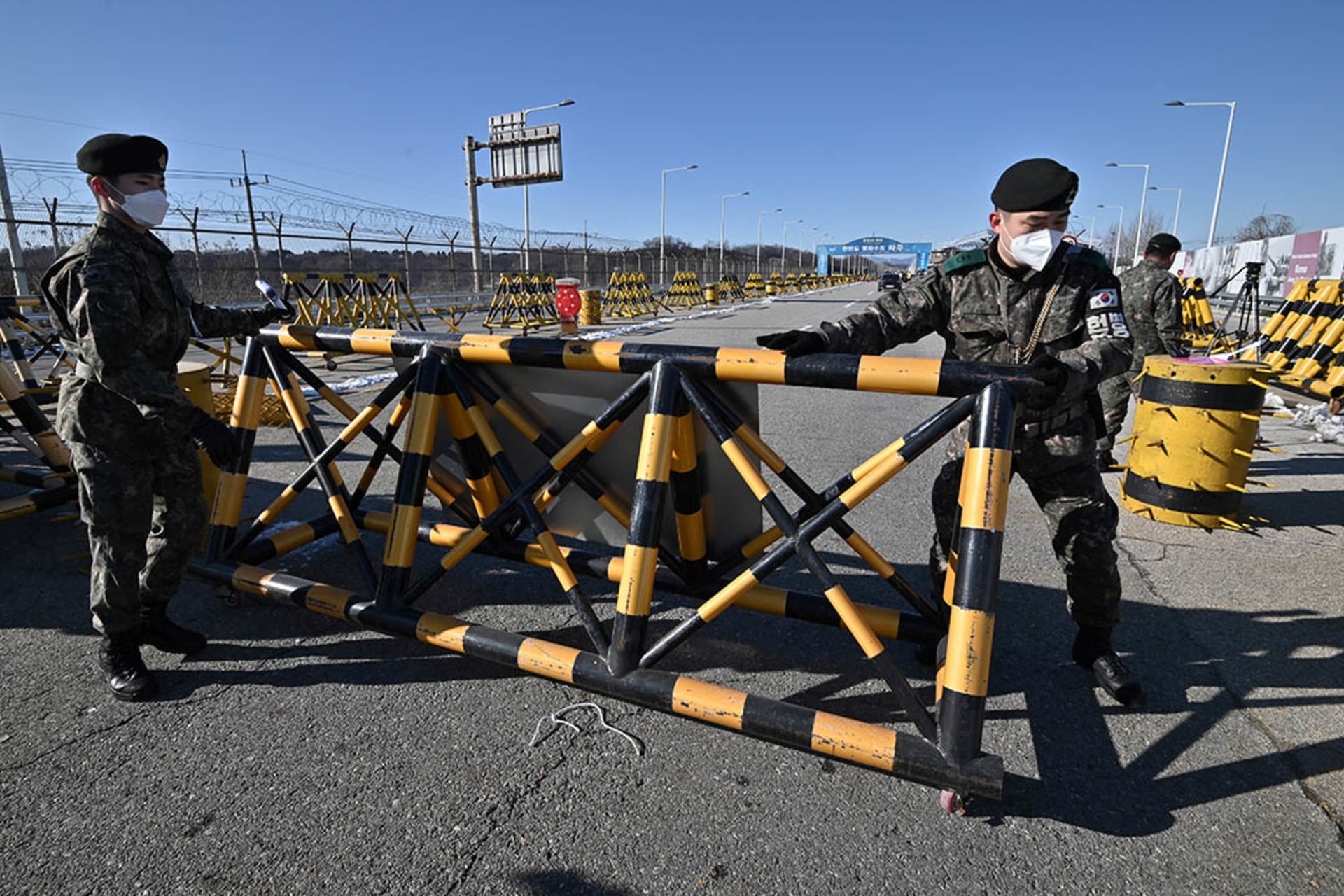
North Korean state media announces that the country will “shut down all contact” with South Korea after it called on Seoul to prevent activists from sending anti-Pyongyang leaflets across the border. Days later, North Korea destroys a joint liaison office set up in 2018 to improve inter-Korean ties. North Korea briefly restores communication lines in August 2021 but shuts them down again after South Korea participates in military exercises with the United States. Communication lines are restored again that October.
2021
April 2021
Biden Looks to Restart Talks
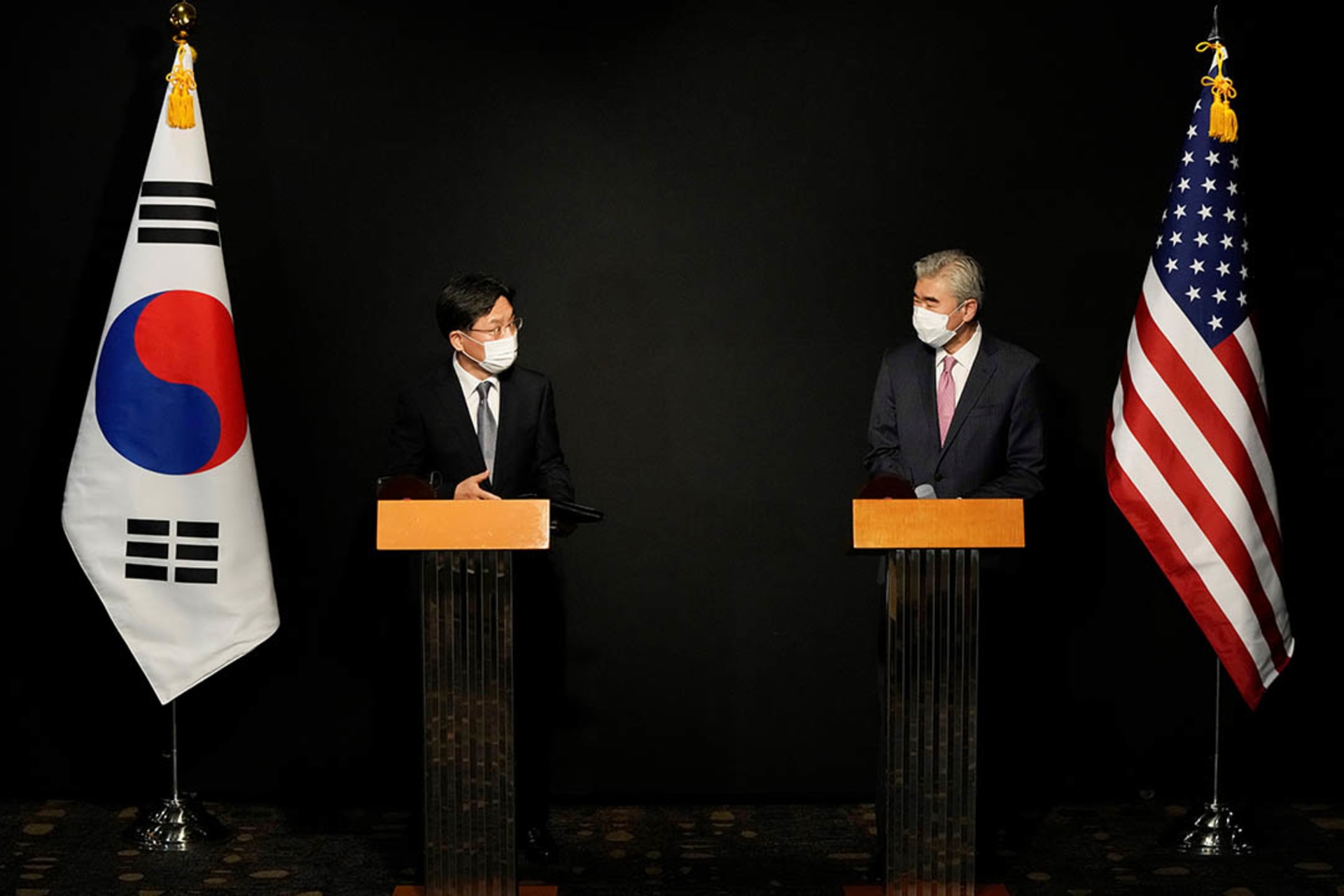
Several months after U.S. President Joe Biden takes office, his administration completes a review of policy toward North Korea. The White House adopts a middle-ground approach between Obama’s “strategic patience” and Trump’s “grand bargain,” which promised full sanctions relief in exchange for complete denuclearization. U.S. officials say they are ready to restart talks without preconditions, but Pyongyang doesn’t express interest.
2022
January 2022
North Korea Ramps Up Missile Tests
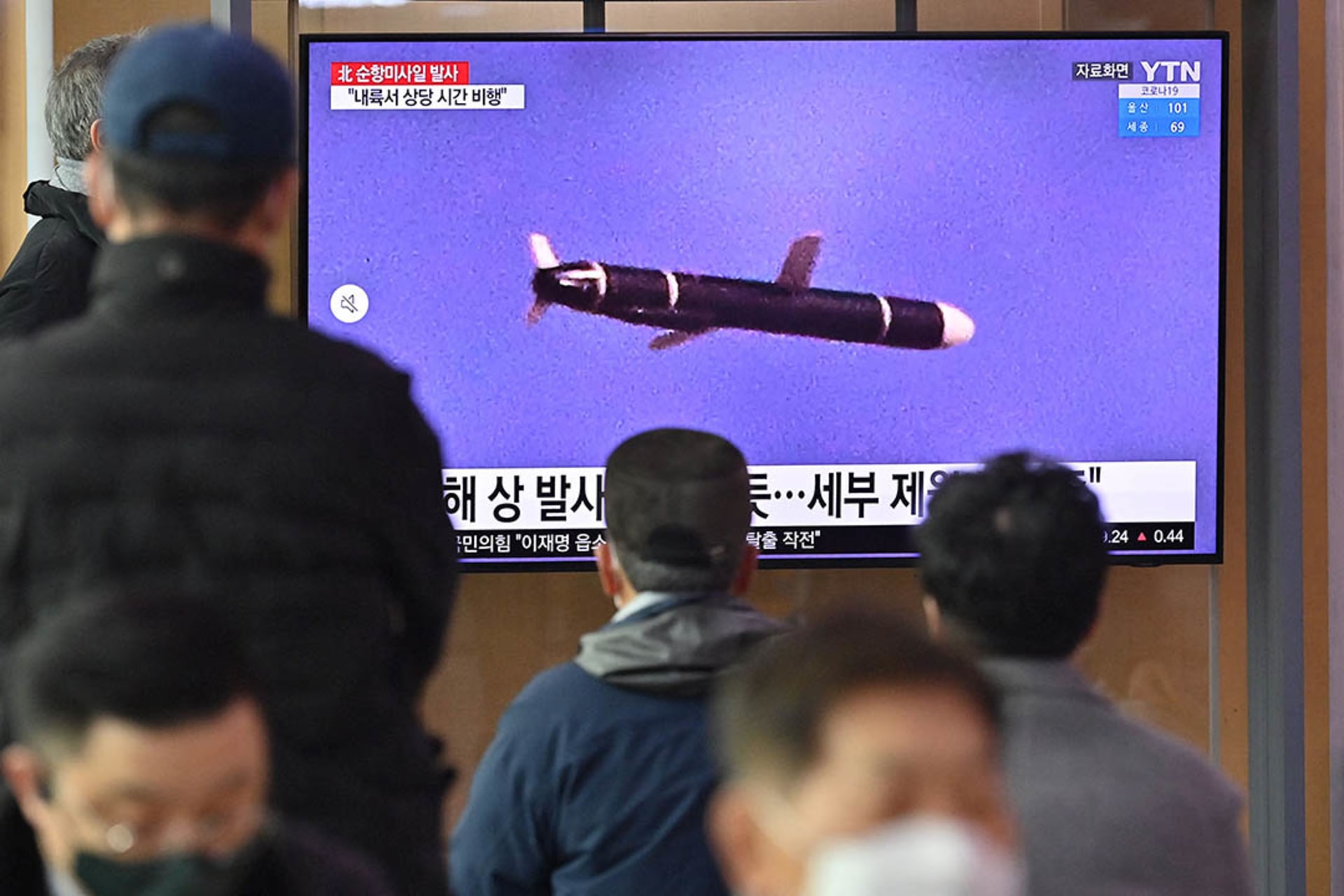
North Korea test-fires an intermediate-range ballistic missile in what is believed to be the country’s most powerful launch since late 2017. UN Secretary-General Antonio Guterres says the test is a violation of the moratorium. Washington urges the UN Security Council to impose more sanctions on Pyongyang, but Beijing and Moscow block the proposal. North Korea performs more than seventy ballistic and cruise missile tests by the end of 2022, the most tests conducted in any
2023
April 2023
Pyongyang Reveals First Solid-fuel ICBM
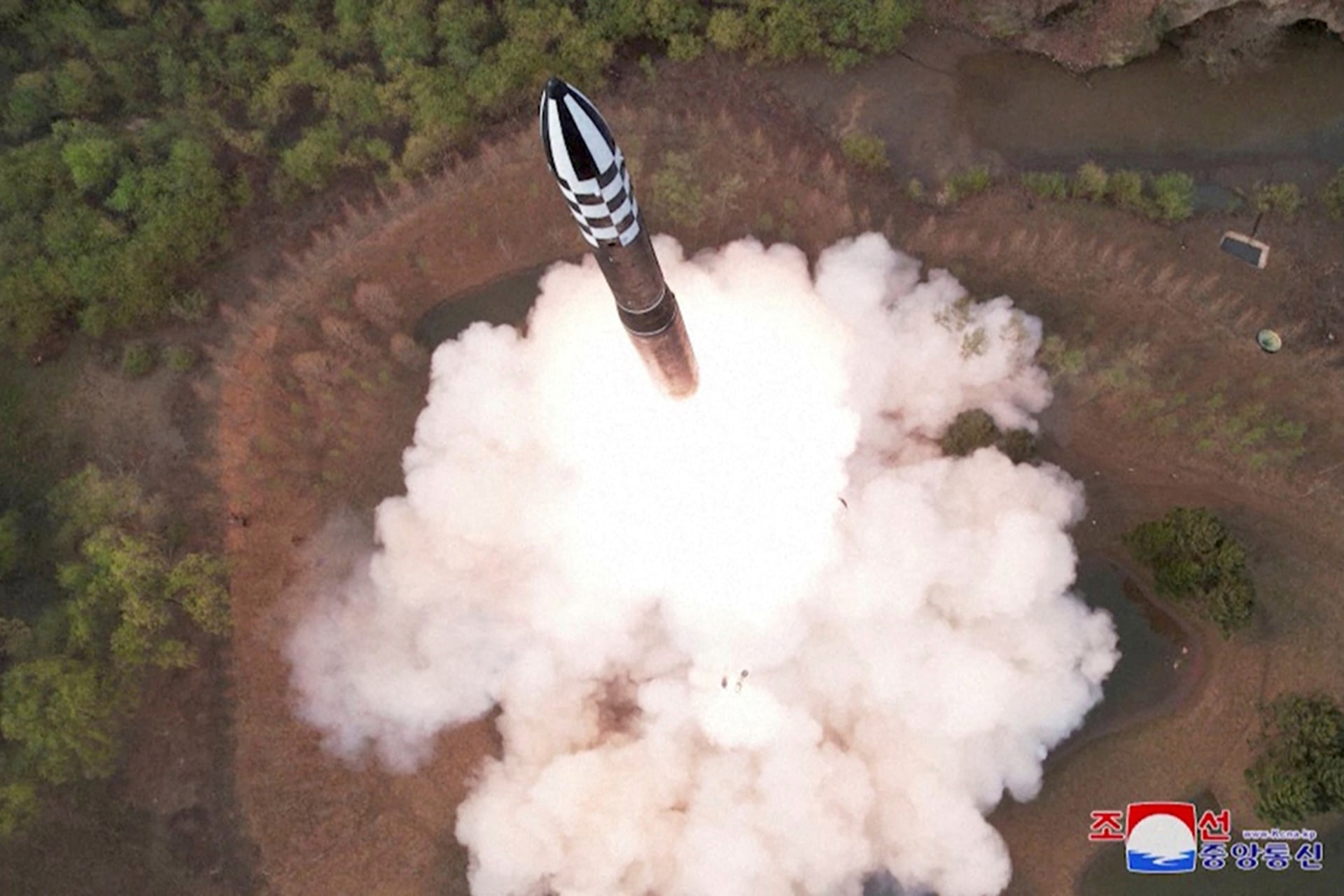
Known as the Hwasong-18, the intercontinental ballistic missile (ICBM) has a potential maximum range of 15,000 km (9,320 miles), which could allow it to reach anywhere on the U.S. mainland. Its use of solid fuel allows the ICBM to be stored for extended periods without degrading. North Korea successfully launches a third consecutive test of the Hwasong-18 in December 2023 in response to what it labels as mounting hostility by the United States. The test triggers condemnation from the United States, Japan, and South Korea, while China shows little urgency, calling for increased dialogue with North Korea.
September 13, 2023
Kim Meets With Putin in Russian Spaceport
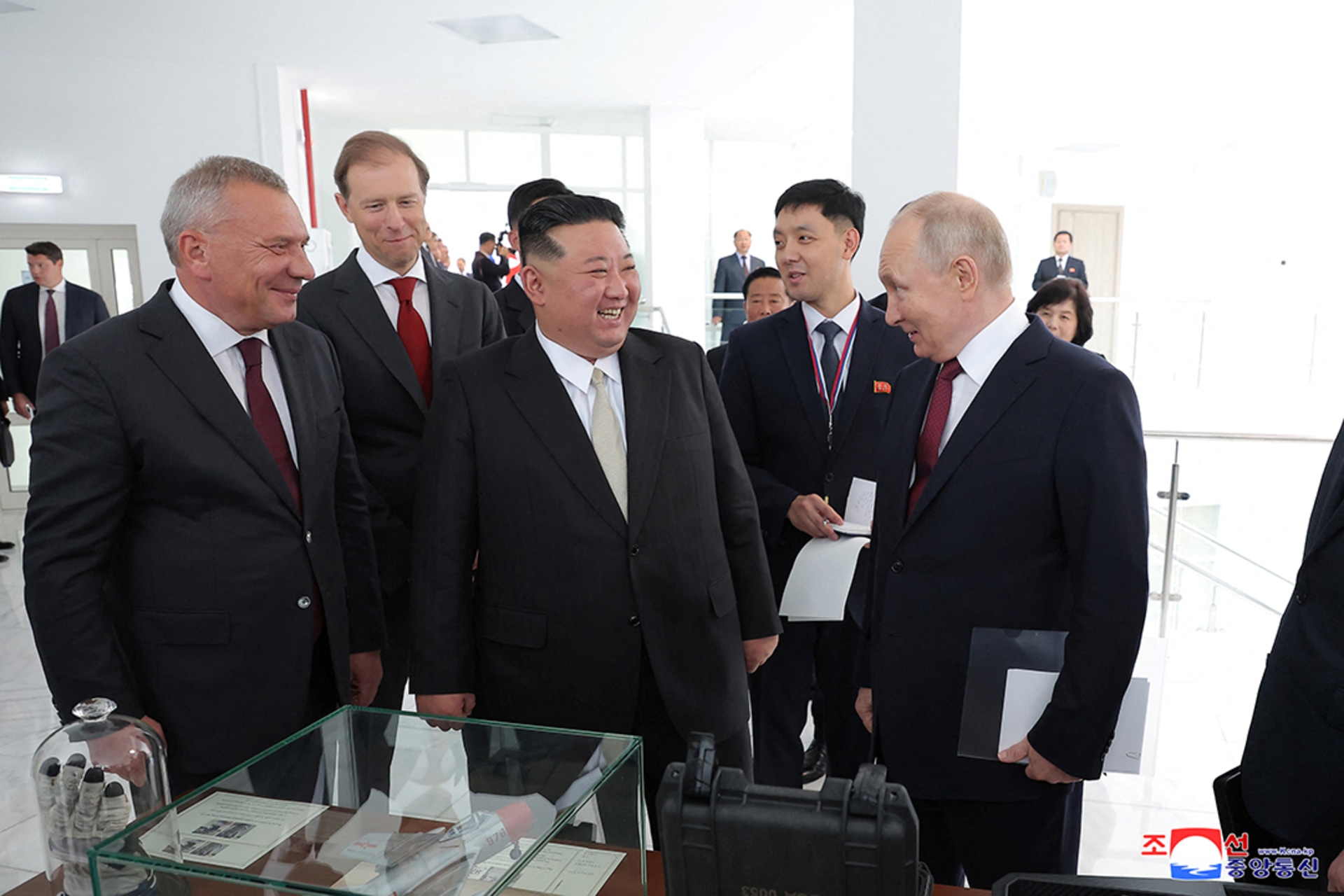
The summit at the Vostochny Cosmodrome is Kim’s first foreign visit since the outbreak of the COVID-19 pandemic three years earlier. Russian President Vladimir Putin signals a willingness to help develop North Korea’s space technology and aid in Pyongyang’s quest to launch a satellite even though it would violate UN Security Council restrictions. Meanwhile, Kim shows support for Russia’s invasion of Ukraine. Two months after the meeting, North Korea successfully launches a military reconnaissance satellite following two failed attempts, leading experts to suspect Russian assistance.
November 23, 2023
Inter-Korean Military Agreement Collapses
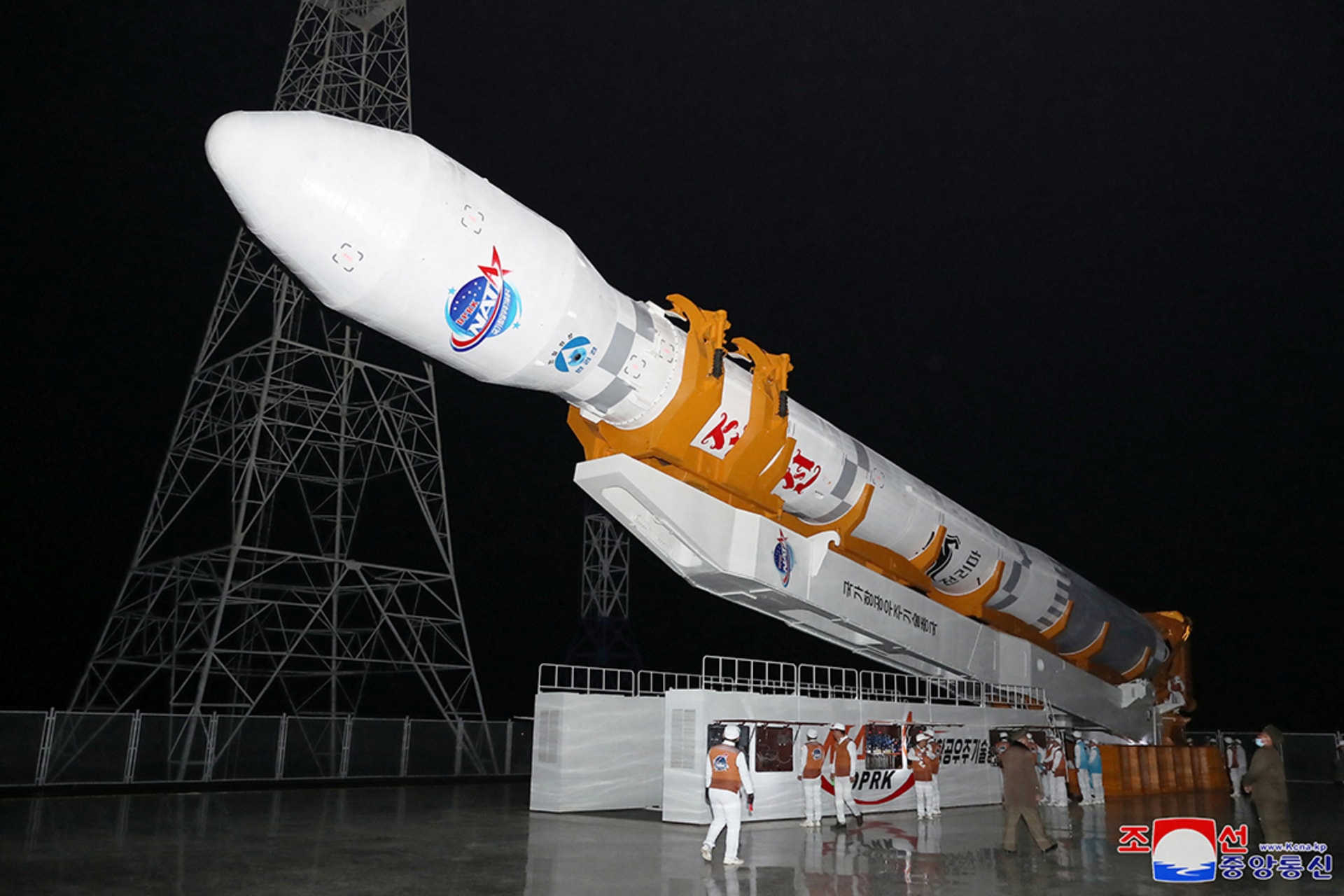
Days after North Korea successfully launches a spy satellite into orbit, South Korea suspends part of the inter-Korean Comprehensive Military Agreement (CMA), a 2018 deal that laid out measures to deescalate border tensions and reduce the risk of accidental clashes. The CMA was perhaps the most concrete outcome of North and South Korean negotiations from 2018 to 2019. After South Korea resumes aerial surveillance along its shared border with North Korea, Pyongyang terminates the entire CMA. North Korea accuses South Korea of scrapping the deal and holds Seoul accountable in case an “irretrievable clash breaks out.”
December 31, 2023
Kim Calls for Abandoning Efforts for Reunification of Two Koreas
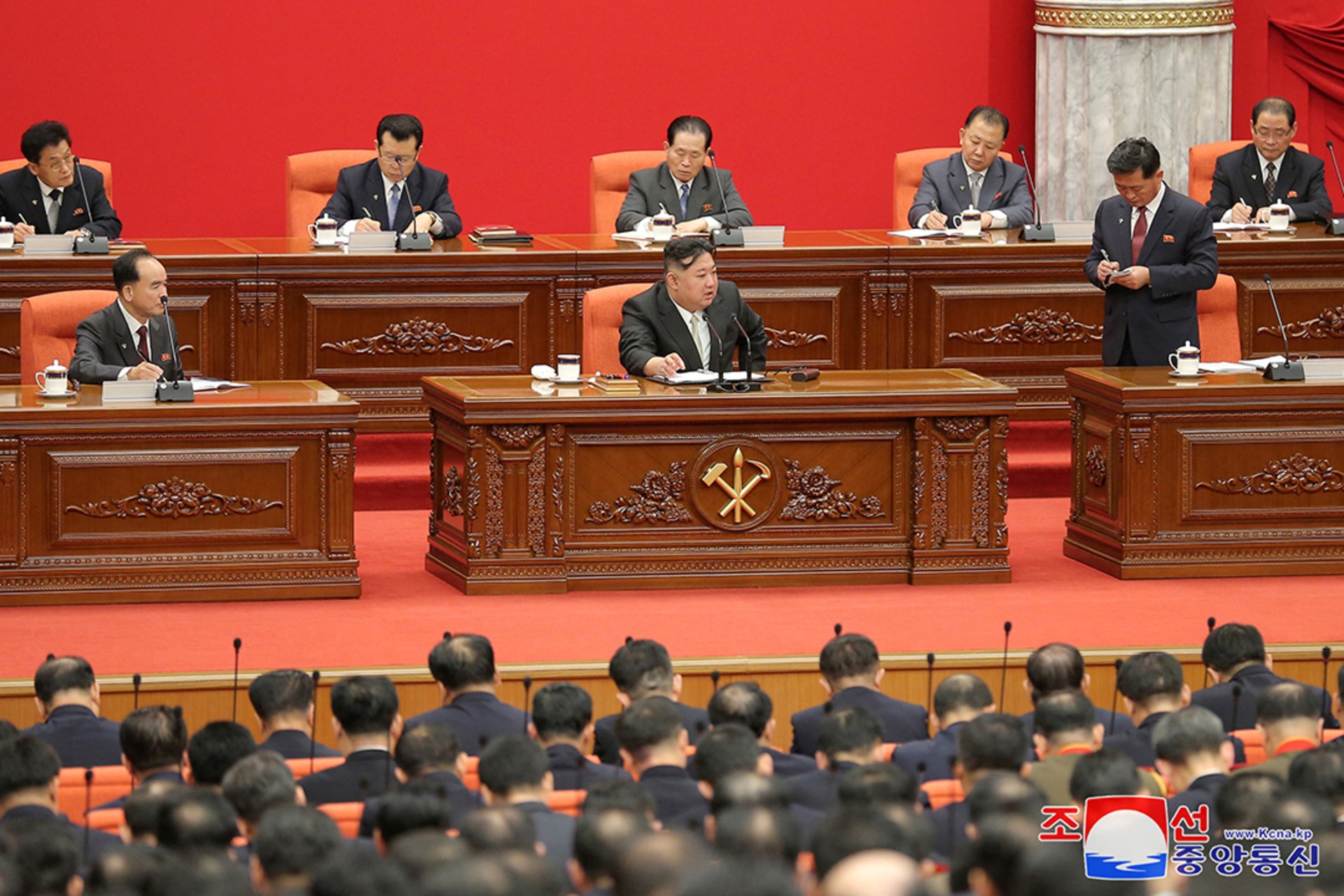
During a year-end party plenary meeting, Kim announces the government’s plans to abandon reunification efforts with South Korea, calling the idea “impossible” and labeling South Korea an “enemy.” The speech marks a stark departure from the views of his father, Kim Jong Il, and grandfather, Kim Il Sung, whose founding principles pushed for the reunification philosophy.
2024
June 3, 2024
South Korea Suspends Comprehensive Military Agreement With North Korea

Seoul attributes the decision to suspend the CMA to a series of provocations by Pyongyang, which included the failed launch of a military spy satellite and the release of more than seven hundred balloons carrying trash and feces across the border. The lifting of restrictions allows South Korea to resume all military operations along the Military Demarcation Line, including deploying propaganda broadcasts on loud speakers near the inter-Korean border.