China in Russia and Ukraine: October 2025
In October, China deepened its support for Russia’s war effort through intelligence sharing, expanded drone supplies, and closer military cooperation, while strengthening diplomatic and economic ties with Russia. China’s moves drew criticism from Ukraine and its Western allies, even as China sought to manage sanctions risks and defend its diplomatic posture on the conflict.
By experts and staff
- Published
- Khaled Robert MaaloufIntern, Conflict Prevention, Fall 2025, Council on Foreign Relations
China’s Intelligence Sharing With Russia: On October 5, an official from the Ukrainian Foreign Intelligence Agency suggested that China could be providing Russia with satellite intelligence on strategic targets in Ukraine, including sites owned by foreign investors. A day earlier, Ukrainian media reported that Chinese reconnaissance flights had been observed over positions that were struck by Russian forces in western Ukraine, suggesting a possible Chinese surveillance mission in support of Russian operations. Moscow implicitly denied that form of bilateral coordination, claiming that its own capabilities are sufficient for its war effort. Some analysts have stated that Russia’s outdated satellite models and lack of access to critical Western parts due to U.S. sanctions render Chinese support especially valuable in that domain, although the exact degree of aid remains unknown.
Chinese Drone Support for Russia: A report from the Washington Post suggested that Chinese exports of drone parts to Russia, including fiber-optic cables and lithium-ion batteries, have surged since the summer. That trade has more than offset the recent decline in exports of ready-made drones, helping Moscow accelerate its drone attacks. Moreover, many of the exported component parts are less vulnerable to interception, allowing Russian drones to penetrate Ukrainian air defenses with greater ease. China has also accelerated its support for domestic Russian drone production, while sharply reducing sales to Ukraine. Analysts have suggested that without such Chinese drone supplies, Russia’s ability to hit Ukrainian targets would be severely limited. Meanwhile, Ukraine’s reliance on Chinese drone components, including semiconductors and batteries, creates vulnerability for Ukraine’s drone supply. Ukrainian manufacturers have increased domestic production and sought Western substitutes in response, though high costs and lengthy production timelines have undercut efforts to shift supply chains.
U.S. and European sanctions have attempted to disrupt Chinese drone supplies to Russia by targeting Chinese dual-use suppliers, and U.S. Treasury Secretary Scott Bessent publicly denounced China’s growing support for Russia at an October 15 press conference. Although Chinese drone-related exports continue despite those measures, China has sharply reduced shipments of precision machine tools used in Russian missile production. Some experts suggest that the restrictions reflect Chinese concerns with U.S. secondary sanctions.
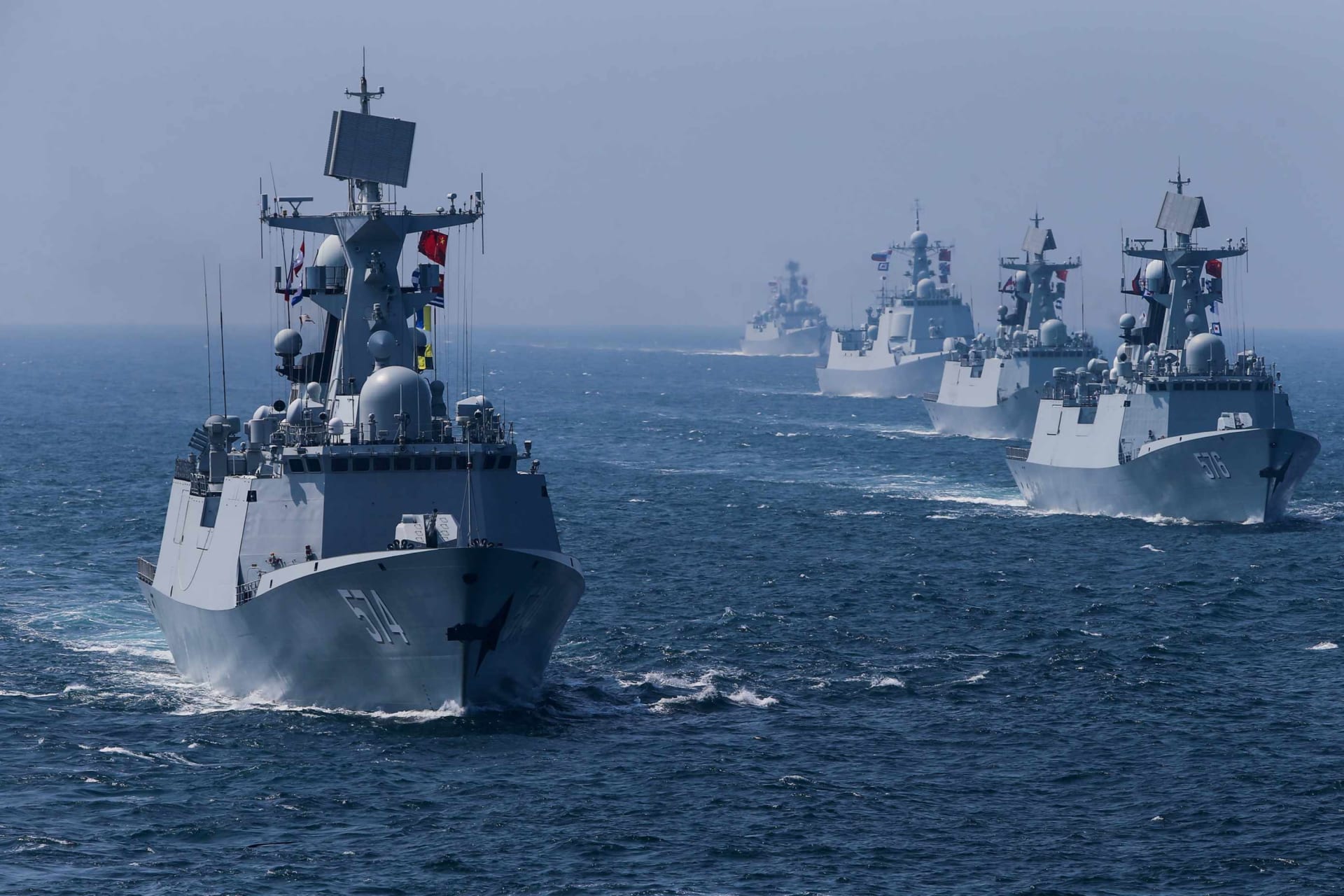
Russian Military Cooperation With China: In mid-October, a Russian naval fleet deployed to the South China Sea, landing at the port of Da Nang in Vietnam for a “friendly visit.” In addition to bolstering its regional partnerships, the visit is also, in part, a signal of continued Russian support for China in the contested maritime region, as China and U.S. allies conduct competing naval drills.
Russia has also been backing Chinese efforts in Taiwan, based on leaked Russian documents analyzed by the Royal United Services Institute. The documents show Moscow has been supplying Beijing with anti-tank guns, parachute systems, and airborne training that could enhance Beijing’s ability to invade Taipei within a decade. Researchers suggested that Russia could encourage an invasion to drag the United States into a long-term global power struggle, while using revenues from military sales to fund its war in Ukraine. Later in October, a separate leakage of documents added that China is seeking to buy several IL-78 Russian tanker aircraft, a refueler that could help maintain more intensive operations.
New Details on Chinese-Russian Submarine Exercise: Chinese reporting indicated that the joint Chinese-Russian naval exercises held in early August included submarine transits through the Tsushima Strait between Japan and South Korea. The drills, which marked the first recorded instance of joint submarine operations, involved sharing sonar data and tracking simulated adversary submarines. The exercises aimed to signal to the United States that it can no longer assume uncontested dominance in the Indo-Pacific’s underwater domain.
Zelenskyy’s Criticism of China: Ahead of a planned summit between U.S. President Donald Trump and Chinese President Xi Jinping in Busan, South Korea, Ukrainian President Volodymyr Zelenskyy condemned China in a rare public criticism, suggesting that the country was aiming for a Ukrainian defeat in the war. He later reiterated that China was supplying Russia with weapons parts and helping it circumvent Western sanctions, despite Xi’s earlier promises to Ukraine that China would not provide weapons to Russia. Zelenskyy also criticized Chinese nationals fighting as mercenaries on Russia’s behalf. In response to those claims, a Chinese spokesperson suggested that China has consistently supported negotiations aimed at a peaceful political settlement.
Trump’s Pressure on Beijing: On October 23, Trump suggested that Xi could push Russia to end the war. Later, Zelenskyy asked Trump to continue pushing Xi to cease Chinese support for Russia. In response to Trump’s suggestion, a Chinese spokesperson reiterated China’s refusal to pressure Russia. China also condemned Trump as a bully for his suggestion that China is funding the Russian war effort through its acquisition of Russian oil. The Trump administration had suggested that the United States would be willing to place tariffs of up to 500 percent if China continued buying Russian oil, though it conditioned that placement on Europe’s adoption of similar measures. During the U.S.-China summit in Busan, Trump urged Xi to support efforts at ending the war in Ukraine, drawing praise from Ukrainian leaders. Still, days earlier on October 28, EU foreign policy chief Kaja Kallas stated in an interview that China privately seeks to continue the war in Ukraine to ensure U.S. attention remains on Europe rather than on conflicts in Taiwan and the South China Sea.
China’s Reaction to New Sanctions on Russia: On October 23, China condemned the EU for instituting its nineteenth sanctions package on Russia, insisting that dialogue alone would resolve the war in Ukraine. China likewise condemned U.S. sanctions on Russian oil companies Rosneft and Lukoil. In response to those sanctions, Chinese state-owned companies suspended several purchases of Russian oil, turning to other regions for supplies. Earlier in October, Unipec, a major Chinese oil trader, likewise paused shipments of Russian oil following similar UK sanctions on Rosneft and Lukoil. Those pauses marked a reversal from Chinese import activity in September, when crude oil shipments from Russia increased by 4.3 percent compared to August. Still, most Chinese firms attempted to circumvent separate UK sanctions instituted on Russian gas.
Chinese-Russian Gas Pipeline: Industry experts suggested that the construction of the Siberia 2 pipeline, which Chinese and Russian officials agreed to build in September, would take at least five years, with several deal terms also remaining unfinalized. Many experts have thus concluded that the pipeline would not reach half capacity until at least 2034, even as Russia pushes its efforts to redirect its gas supply away from Europe. Industry experts separately suggested that China has been increasing its oil reserve stocks as Western sanctions continue to raise uncertainties over Russian oil supplies, on which China has heavily depended in the past.
China-Russia Trade: Chinese customs data revealed that yuan-denominated exports to Russia in September dropped by 21 percent, marking the sixth consecutive monthly decline and the largest drop since February, though Chinese imports to Russia increased by nearly 4 percent after a steep decline in September. Russian Energy Minister Sergei Tsivilev suggested that Russia plans to accelerate gas sales to China, implying an effort to compensate for the broader export drop.
China and Russia at the United Nations: On October 21, a human rights organization published a report suggesting that China and Russia have been undercutting UN investigations into human rights violations, especially in allied countries such as North Korea and Venezuela, by delaying budget negotiations for the UN Human Rights Office and, in turn, blocking its funding.
Meanwhile, on October 20, China, Iran, and Russia drafted a letter to the UN Security Council claiming that European efforts to instate the United Nations’ sanctions snapback mechanism on Iran for its failure to comply with the nuclear deal are illegal and insisting that responsibility for the deal’s violations lies with the European powers themselves. The letter also voiced support for reaching a diplomatic agreement on the Iranian nuclear issue rather than using military force.
In a separate effort at the Security Council, China and Russia also condemned the U.S. campaign in the Caribbean. A Russian official called for an end to U.S. strikes and rejected U.S. allegations that the Cartel de los Soles is a drug trafficking organization backed by the Venezuelan government. Chinese UN envoy Fu Cong likewise condemned the strikes and called for their end.
Lauding Beijing and Moscow’s close ties on the international stage, Russian President Vladimir Putin sent Xi a message on China’s seventy-sixth National Day claiming that bilateral relations have reached an “unprecedented level.”
Chinese Volunteer Fighters in Ukraine: A report from the Guardian described how a small number of Chinese citizens have traveled to Ukraine to volunteer in its fight against Russian forces. The volunteers, estimated at a few dozen, have assumed a range of responsibilities, including frontline roles and support tasks such as aid delivery and logistics. Many are driven by sympathy for Ukraine and frustration with China’s political and economic climate. Although China does not prohibit foreign military service, volunteers in Ukraine still face potential scrutiny or retaliation from security authorities.