Greenland Officials Visit Washington
By experts and staff
- Published
- CFR Editors
Welcome to the Daily News Brief, CFR’s flagship morning newsletter summarizing the top global news and analysis of the day.
Subscribe to the Daily News Brief to receive it every weekday morning
Top of the Agenda
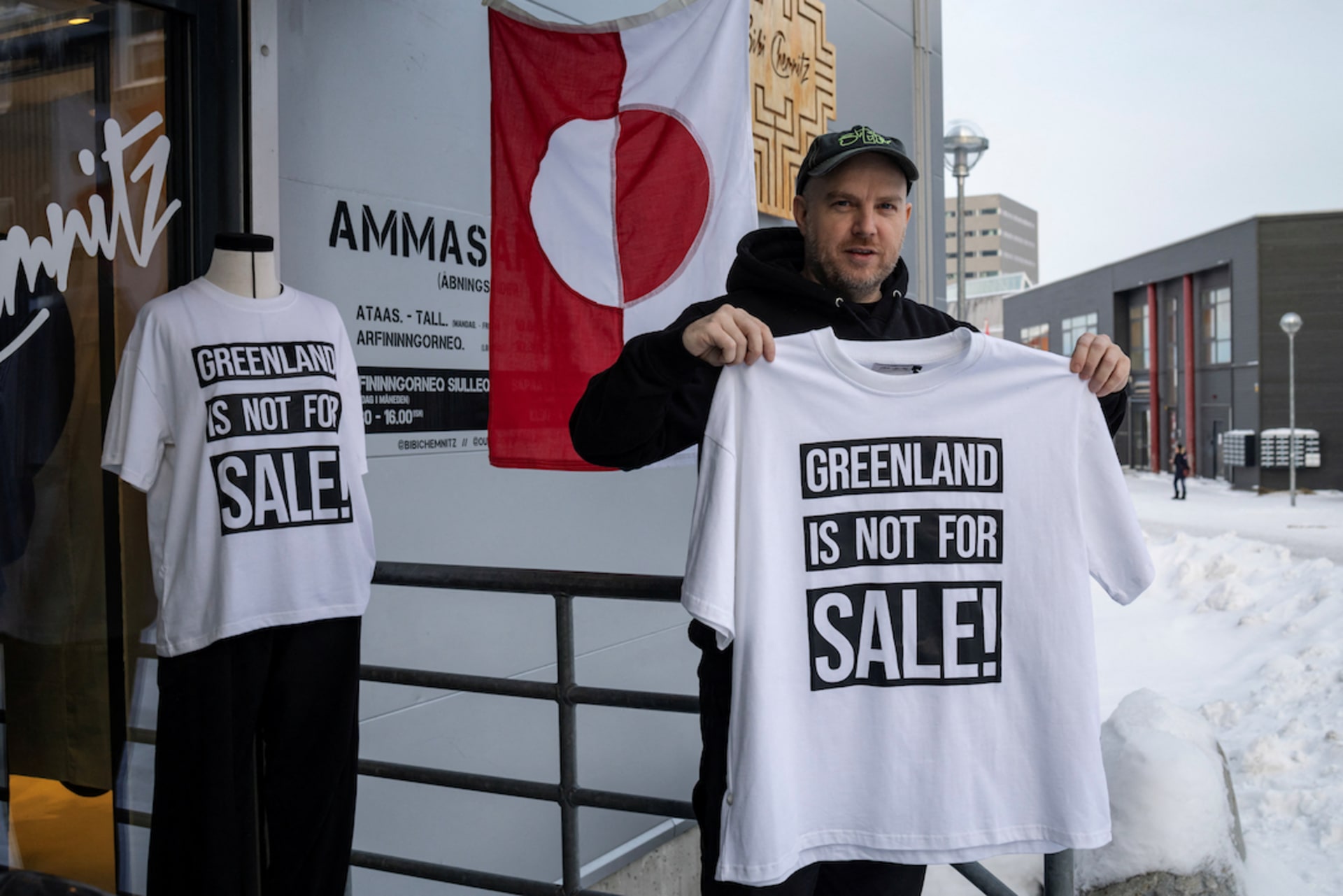
The foreign ministers of Greenland and Denmark are due to attend a high-stakes White House meeting today regarding Trump’s desire to acquire the Arctic island. They will meet with U.S. Vice President JD Vance and Secretary of State Marco Rubio. Leaders from both Greenland and the United States reiterated their diverging positions on a U.S. takeover of the Danish autonomous territory ahead of the meeting. Greenland’s Prime Minister Jens-Frederik Nielsen said at a press conference yesterday that it “will not be owned” by the United States. Trump wrote on social media this morning that anything short of Greenland “in the hands of” the United States would be “unacceptable,” arguing the United States needs the territory as part of its Golden Dome missile shield and to prevent Russia or China from obtaining it.
The latest. European leaders have dialed up their public criticism of Trump’s desire to acquire Greenland—potentially through military force—in recent days. In a bid to strike a deal on Greenland’s future that could avoid military confrontation, European leaders have floated proposals like using NATO to step up Arctic security and giving Washington new permissions for mining, Politico reported. Stateside, a bipartisan group of U.S. senators yesterday proposed legislation that would block the use of State Department or Defense Department funds to assert control over a NATO ally without alliance approval.
The context. The United States already has broad authority to carry out military operations in Greenland through a 1951 cooperation agreement. Yet Washington has reduced the number of troops it has stationed in Greenland in recent years. An opinion poll from last January found that 85 percent of Greenlanders did not want to be part of the United States, while a separate poll this month found that only 17 percent of Americans approved of U.S. efforts to acquire the territory.
“Trump’s enthusiasm for ‘owning’ Greenland might be somewhat tempered when he learns that, in real estate terms, it’s akin to a money pit. Of course, above all else, the greatest cost of invading or coercing Greenland could be the splintering of the NATO alliance itself.”
—CFR President Michael Froman, The World This Week
Across the Globe
Trump’s message for Iranians. Trump encouraged Iranian demonstrators to stay on the streets and take over state institutions in a social media post yesterday. He said that help was on the way—without providing details—and vowed to not meet with Iranian officials until the killing of demonstrators ends. Tehran has warned neighboring countries it could strike their U.S. bases if Washington intervenes militarily, an unnamed Iranian official told Reuters today.
Japan’s snap election. Prime Minister Takaichi Sanae plans to dissolve the country’s lower house of parliament later this month and call a snap election soon thereafter, she told allies today. Takaichi’s party currently lacks a majority in both houses of parliament, but an election could change that if Takaichi’s popularity drives turnout. The exact date of the vote has not yet been set.
Uganda’s internet blackout. Authorities ordered an internet blackout yesterday ahead of presidential and parliamentary elections on Thursday. The Uganda Communications Commission said the measure was meant to prevent online misinformation and election fraud, but critics of President Yoweri Museveni—who is seeking a seventh term—said it was meant to suppress potential protests.
Muslim Brotherhood designations. The Trump administration designated the group’s chapters in Egypt, Jordan, and Lebanon as terrorist organizations yesterday. The moves were “the opening actions” in efforts to counter the group’s “violence and destabilization,” Rubio said in a statement. Muslim Brotherhood leaders claim to renounce violence, though Trump wrote last year that the Lebanese chapter launched rockets against Israel.
China’s trade surplus. China today reported a record trade surplus of roughly $1.2 trillion in 2025. The data showed that while Chinese exports to the United States were hit with heavy tariffs, the country compensated by exporting more to the rest of the world. China’s exports rose year-on-year by 26.5 percent in Africa, 14 percent in Southeast Asia, 9 percent in the European Union, and 8 percent in Latin America.
South Korea’s Lee in Japan. South Korean President Lee Jae-myung and Japan’s Takaichi discussed joint efforts to ensure secure supply chains during Lee’s visit to Tokyo this week, a senior South Korean security advisor told reporters. The visit—Lee’s second to Japan in less than three months—came as Japan contends with Chinese export controls. Lee has aimed to improve relations with both China and Japan while pursuing trilateral Seoul-Tokyo-Washington collaboration.
Pushback to data centers. Trump has voiced concerns to Microsoft about the costs of data centers to local communities, the firm’s president said yesterday. His remarks coincided with a Microsoft announcement that it would work to ensure data centers do not impact local water supply and electricity costs. Trump posted on social media earlier this week that he would “never want” Americans to pay higher utility bills because of data centers. Data centers are a necessity for U.S. ambitions in artificial intelligence (AI), but local opposition derailed an increasing number of projects last year.
U.S.-Nigeria partnership. The United States provided military supplies to Nigerian partners in the country’s capital of Abuja, U.S. Africa Command said yesterday. Last month, U.S. and Nigerian forces conducted joint strikes against self-declared Islamic State targets in the country’s northwest. Trump said at the time the actions were meant to protect the country’s Christian population.
What’s Next
- Today, Turkey’s foreign minister visits the United Arab Emirates.
Today, the UN Security Council meets regarding the situation in the Middle East.
Tomorrow, Italian Prime Minister Giorgia Meloni begins a visit to Japan.