How I Got My Career in Foreign Policy: Ebenezer Obadare
Ebenezer Obadare has explored the intricacies of African politics over the course of a career in journalism and academia. He sat down with CFR to talk about how he continues to challenge himself and what young people intent on studying the continent should focus on.
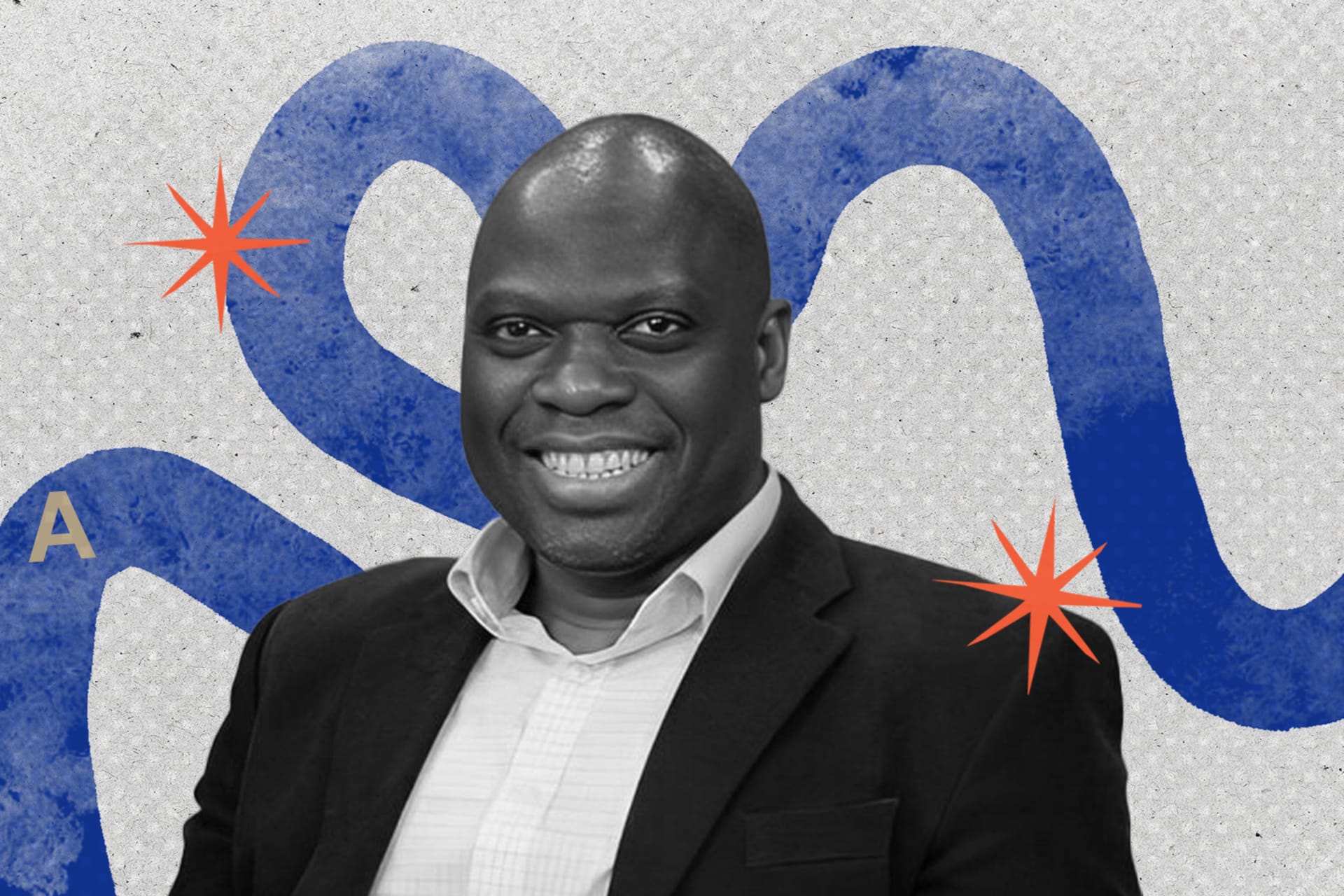
Ebenezer Obadare’s love of reading was his entryway into a career in journalism and academia. His time as a political reporter taught him that there’s “no such thing as local politics,” while academia allowed him to explore deeper intellectual questions. He has held academic posts in England, Nigeria, South Africa, and the United States. Below, he discusses the benefits of teaching abroad, the importance of understanding African spiritualities for aspiring Africanists, and why he loves visiting the U.S. Capitol.
Here’s how Ebenezer Obadare got his career in foreign policy.
What did you want to be when you were little?
I wanted to be near books. I’ve always loved books. I remember that the first thing I used to buy with my pocket money from my parents was newspapers.
So I’ve always loved books, and I’ve always loved to be in the vicinity of books. So anything that had something to do with reading, writing—that has always appealed to me.
I saw that you were also a political reporter.
I was a journalist, yes.
How did you get into journalism? Why that instead of going into government or working at think tanks?
I’ve always loved words. Remember I told you about the reading—I used to buy newspapers, and then as soon as I could, I started building my own library, even as a young person.
And then as an undergraduate, I started writing for Nigerian newspapers—Sketch, Nigerian Tribune—and my name started getting out there. So even as I was doing my master’s, the only thing I knew deep in my mind [that] I was going to do was journalism.
So when the advertisement for this news magazine, The News, came out, I knew I had to apply. So that’s how I ended up in journalism.
I understand that in the ‘90s in Nigeria there was a military coup—it was a sort of turbulent time. How did covering politics during a volatile era shape your understanding of governance and international relations?
That’s a great question. That was a formative period in my intellectual development. So this was after I finished my master’s—I became a journalist. I was going to be a regular, everyday journalist for a boring news magazine. Little did I know!
So six months after I became a journalist—it was a new magazine that had been established by people who had been fired from other magazines because they weren’t complying with whatever was going on—so I should have known that there would be trouble, right? But after six months, the news magazine—it was called The News—was shut down. And then what did we do? We established an underground magazine called TEMPO to take on the military regime, as it were.
So that was my introduction to what you might call not just national politics, but high-stakes politics, because it wasn’t just Nigerians who were interested in the cause that the newspaper was devoted to—which was to have the military de-annul an election that it had annulled—but the rest of the international community. The United States was involved because it was the leading promoter of democracy in the world, and the European Union was involved.
And the advantage I had in the process, in my capacity as the political editor of TEMPO, was that I was also able to read what was going on through the lens of my own understanding of international politics. Remember, I studied international relations for my master’s, so I couldn’t have had better preparation for what was going on at that time.
The most important thing I think I took away was that there’s no such thing as local politics. All politics is international politics, especially a struggle over the presidency of a country, over the location of resources—especially in a country like Nigeria, an oil-producing country that tends to attract attention anyway. So that’s the most important takeaway for me from that period.
Why did you transition to academia?
After three years, I think there were changes going on within the news magazine, and I just felt I needed to go in a different direction. And that different direction was to go into academia.
But if you look at the world of journalism and the world of academia, they’re not all that different, right? It’s true that in academia, you go deeper and things are more sustained, but if there are no journalists, there can’t be academics. And I think that fundamentally, there is a conceptual corridor that connects academia and journalism.
So it was an easy transition for me to make, to go from working as a journalist to teaching as a university lecturer in the department where I got my master’s degree in Nigeria.
You’ve had several different appointments and fellowships and professorships, in Africa but also in the United States and in Europe. How does teaching American or European kids about Africa change your perspective on African politics or Africa’s place in global affairs?
I like the question. Each time I have to do that—in my writings as a senior fellow at CFR, as a professor at the University of Kansas, in my writings for journals, for books—it’s always self-clarifying for me. Because in asking myself, “What is it that the world needs to know, for instance, about democracy and civil society, about religion and politics?”—the two main poles of interest that I have—I also have to ask myself, “What do I really understand about it?”
So educating the world about Africa is a process of self-education for me, and it imposes this very interesting challenge. Because especially if you come to the Council on Foreign Relations, people hang on to your every word. People take you very seriously. It imposes this demand for me to be not just clear in my thinking, but to take my work seriously and to know what I’m doing, so that if people read me, they may disagree with me, but they have to know or recognize that I’ve done my own work.
So that’s the way I see it. I find myself—it’s not just that I’m trying to explain Africa to the United States or the United States to Africa. I’m also constantly trying to learn about both as a student of Africa and as a student of the world’s leading democracy, the United States.
I like that, self-clarifying. I understand you cover security developments, politics in sub-Saharan Africa. For young professionals who are entering the field and are interested in working on Africa, what’s your take on the benefits of specializing versus being a generalist?
I think it’s got to be both, right? If I were to advise someone else, I would say study history first. History is the queen of the social sciences, or the humanities. Studying history as an undergraduate has been one of the best decisions I took in my life.
When you study history, it’s almost like cheating, because you have this entry into psychology, into philosophy, into sociology, into religion. You know where the bodies are buried, in terms of the dominant arguments in all of those disciplines. And what that does is it helps you to specialize. So without a good foundation, you can’t specialize. It is when you have a foundation that you are able to specialize.
So my word to that notional person out there is: study history. Even if you’re not a student of history, if you’re not taking history as a discipline. Machiavelli said, “In order to know what will happen, we must know what has happened.” Machiavelli was basically endorsing history as a discipline without realizing it.
So that’s what I’m going to say: yes, you should—and ultimately you will—specialize, but initially you have to lay a very strong intellectual foundation. And one discipline that helps you do that is history.
That makes sense. I’m curious—you’ve studied these problems for years but never joined an NGO, government, or international organization. What does academia give you that those other foreign policy paths wouldn’t? Or what’s the lack of appeal there?
It’s not that those things lack appeal. After all, there are people who finish their PhDs and then they go into those areas. It’s just that I’ve always, as I said, wanted to be close to words. I love reading. I love writing. I have this special affection for language, right?
And being an academic just gives you the advantage to do that in an environment where you are allowed to concentrate. I was an assistant professor, I became an associate professor, then full professor with tenure. I was able to take advantage of that structure to educate myself.
But somebody else could have ended up in an NGO or in government. So long as the concerns are similar, I don’t think there’s anything fundamentally wrong with that.
Makes sense. Another one for the young people: when you look at how rapidly the U.S.-Africa relationship is changing under the Trump administration, for those who want to focus on Africa as they enter the field, what are some areas you think that they should focus on?
This is going to vary—each person will always have what suits them temperamentally. But this is what I’m going to say. And here I’m going to be very biased—I’m going to play to my own strengths because of what I do.
I’m going to suggest that if you really want to understand the way Africa sees the world—not just the United States, but the world—if you want to understand U.S.-Africa relations, you have to understand African spiritualities. People take religion very seriously. So there is a reason why religion and politics are some of the areas I’ve written books about and continue to pay attention to.
I would say, whether you’re an anthropologist or a sociologist or a historian or you do international politics, pay attention to spirituality. There’s a lot that you can understand, not just about Africa, but about the world, period, if you pay attention to the spiritual activities—not just of everyday people, but people who work at the highest levels of politics. What is the structure of their beliefs? What do they consider to be sacred? What are those things that they deem to be invaluable? Where do they draw a moral red line?
If you understand those things—and paying attention to religion helps you do that—if you understand those things, you’ve already taken the first giant step towards understanding how they look at the world. And once you understand how people look at the world, you’re on your way to understanding the very foundations of their international politics and diplomacy.
Going off of that, is there a particular misconception about Africa that you encounter abroad a lot that you find the most frustrating?
I’m going to surprise you with my answer. I am not so much concerned about misunderstanding as I am about condescension. I think it’s okay for people to misunderstand you or not understand, insofar as they are open to being corrected. I think that’s fine.
If somebody thinks the worst of you, honestly, I think there are evils that are worse than misunderstanding, and one of them is condescension. Condescension is much more subtle, but it’s more pernicious and injurious because it doesn’t even seek to understand. You could argue that the person who is misunderstanding is at least trying to understand. The person who is condescending is not interested in understanding.
And I think that’s it for me. So I worry less if some data comes out and says, “Oh, this is the view people have of people in Ghana,” and it’s so wrong. That’s okay—it can be corrected. But if they are condescending, even when they seem to be doing things that are in your favor, that’s what gets my goat. It’s harder to fix. And I think that’s what you encounter, because you can always constantly react to misunderstanding or mischaracterization.
Yeah. Well, we always like to end on something fun. I’m sure as part of your research, you’ve done a lot of work trips. Is there a particular memory—whether a trip or a meal—that you found most meaningful or most fun that you’d share with us?
Each time I go to Capitol Hill for an event, what I always find amazing—this is going to make me sound like people are going to say, “Oh, he’s so easily impressed by the grandeur of Capitol Hill”—but the last outing I had was with—what’s the name of the distinguished senator from Georgia?
Warnock or Ossoff?
Raphael Warnock, thank you, you bailed me out.
Whew!
We were in this room [where] they have these etchings of aspects of American history. And I remember sitting down—we were waiting for the senator. We had coffee and croissants and all of that. Not a five-star meal, right? But it was the context for me, looking at all those etchings, and a reminder that whenever I’m there—not just in that room, anywhere on Capitol Hill—I’m reminded of the idea that democracy is supposed to be permanent.
Even the building itself is so set in its foundations. Everything is built to last. And you know there’s a sense of your own evanescence—that you’re here temporarily—and that there’s a deep and profound legacy that you’re supposed to pass on.
And that’s what occurs to me each time I’m in the Capitol, in any of these rooms filled with history and grandeur. That’s always the first thing that crosses my mind.
That’s lovely.
It’s supposed to be there now and there in five hundred years from now, and one thousand years from now. An architectural codification of the idea of people power. That in a democracy, the people choose their rulers, and not the other way around.
This interview has been edited for length and clarity. It represents the views and opinions solely of the interviewee. The Council on Foreign Relations is an independent, nonpartisan membership organization, think tank, and publisher, and takes no institutional positions on matters of policy.