How I Got My Career in Foreign Policy: Jessica Brandt
Jessica Brandt’s career has fused think tank and government experience. Below, she talked to CFR about the role of technology in foreign policy and how her early experiences shaped her career path.
By experts and staff
- Published
- Editor
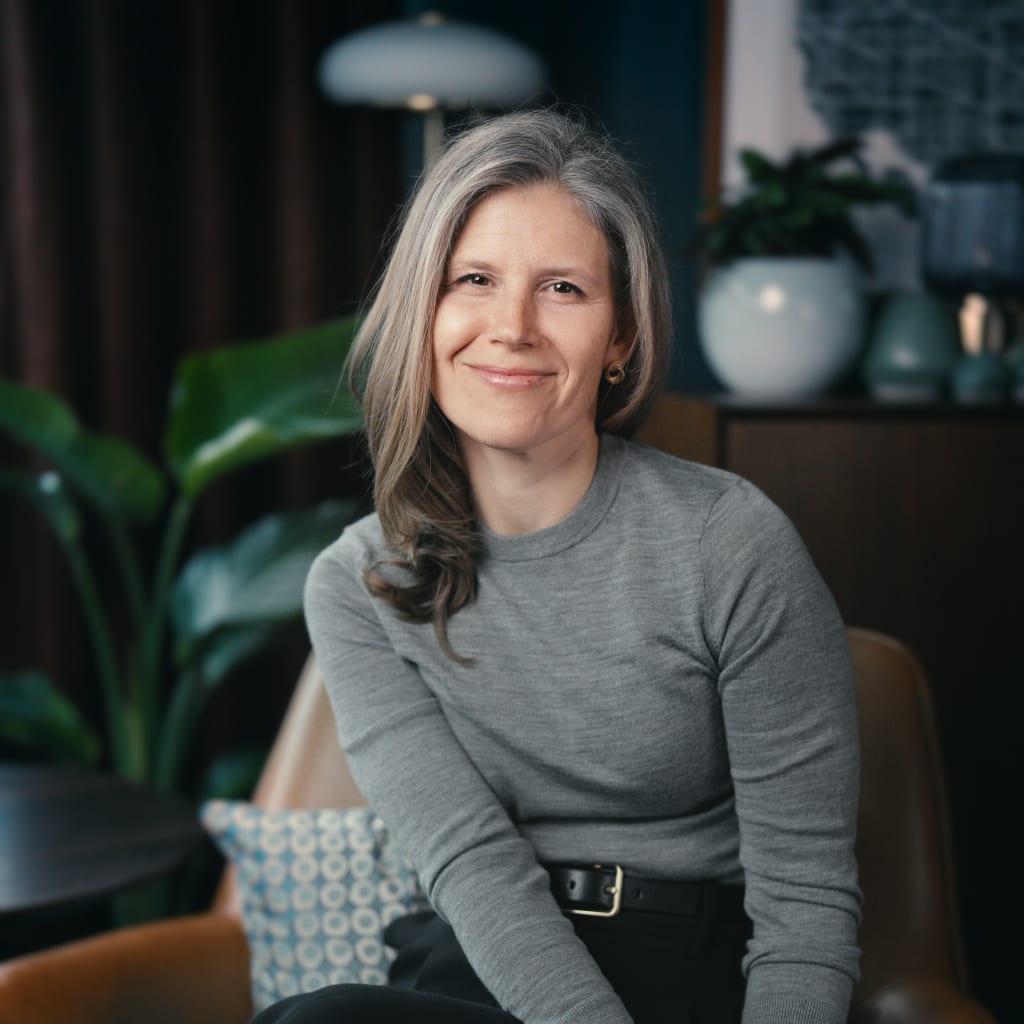 Jessica BrandtCFR ExpertSenior Fellow for Technology and National Security
Jessica Brandt’s career has come full circle. Her first job after college was at the Council on Foreign Relations, and she is currently the senior fellow for technology and national security. In between, she held positions at the Brookings Institution and the German Marshall Fund, before becoming the first director of the Foreign Malign Influence Center within the Office of the Director of National Intelligence (ODNI). Read more about Brandt’s interest in technology and national security, the important work of civil society groups, and why young people shouldn’t be afraid to tout both their academic credentials and office skills.
Here’s how Jessica Brandt got her career in foreign policy.
What did you want to be when you were little?
I don’t think I had a clear idea early on, but I knew I wanted to do something that combined my interest in government, history, politics, and travel.
When do you feel like your interest in foreign policy really developed?
As a young person, I dragged my family around to history museums and historical sites. So that was an interest very early on. Over time, I developed an interest in politics, and then the broader world.
I definitely had a chapter as a young person where I wanted to be a marine biologist or a voiceover artist in an animated film. But what felt like a handful of different interests in politics and government and travel eventually came together in a career in foreign policy.
I was surprised, and delightfully so, that you actually started your career at CFR when you finished college. You joined CFR’s National Program and Outreach team. How did that happen? Were you drawn to the organization, or was it just sort of luck of the draw as you were applying?
Even earlier than that, I had an internship at an advocacy organization at the United Nations. I loved that work, but I came away feeling that the role of an advocacy organization is to argue for, in some cases, a maximalist position. That’s an important role in the ecosystem because it creates space for other actors to play. It’s very important work and somebody should be doing it, but I left feeling like maybe not me. I was more interested in examining trade-offs, figuring out how to thread a needle, seeing multiple sides of an issue, balancing tensions, and finding a way through.
I left that experience looking to find my way to a role that was more policy-oriented. When I had a chance to come to the Council, I jumped on it. I worked on the National Program and Outreach team when we were launching a spate of programs doing outreach to non-traditional foreign policy constituencies. I got to talk to religious leaders, state and local officials—which continues to be a constituency I care a great deal about—academics, and others. I loved that work, connecting non-traditional audiences with the foreign policy research that the Council does.
That’s so cool. After a few years, you went to get your master’s in public policy from Harvard, and then after that, you joined Brookings. What drew you to the think tank world, rather than maybe going straight into government or private sector?
It’s a good question. I think the kind of policy work that researchers at a think tank do is the careful work of examining trade-offs, proposing options and ideas, and finding ways to balance competing equities for the greater good. I was drawn to that opportunity.
Before grad school, I had the opportunity to live and work abroad. In my twenties, I worked for a joint Israeli-Palestinian organization. Though I now work on a very different set of issues, the experience I had there left me with an appreciation for what civil society organizations can accomplish, and also with the conviction that there are some things that only governments can do—difficult decisions that only governments can take. That’s what led me to the master’s program and left me very interested in eventually working for the government.
I noticed that in that first stint at Brookings, you were also special advisor to their president.
Yes, I had an opportunity to work for Strobe Talbott, who I greatly admired. I learned so much working for him as he led Brookings. Strobe was a journalist for twenty-one years, the editor of Time magazine, and got his start as a journalist. I think he always had a journalist’s fascination with people and with stories and connected with human beings in that way. I learned a great deal from the way he brought a journalist’s mind and a journalist’s approach to foreign policy problems. I also learned a lot about how organizations work. I’m so grateful to have had that opportunity.
Between 2019 and 2021, you do two big, interesting pivots that I was curious about. First you go to the German Marshall Fund, where you’re focusing on foreign influence. Then you return to Brookings to be the Policy Director of the Artificial Intelligence and Emerging Technology Initiative. Was that a natural evolution of the most prescient technological threat, or were you really consciously deciding, “Oh, I want to pivot to this.”
I don’t think they were pivots at all, actually. I was working with Strobe, who was a Russia hand, and watching Russia’s use of hybrid and gray zone tactics through the 2014, ‘15, ‘16 era. Then I had an opportunity to be the research director for a small team that was looking at that problem pretty directly in the lead-up to the 2020 election. It was a transatlantic, bipartisan team. I loved that work, and it was really focused on what I would describe as a persistent asymmetric competition between democracies and their authoritarian challengers in the information domain and the technology domain.
When I went back to Brookings, it was to continue to work on those issues—geopolitical competition in the tech and information domains. That’s the work I did in the emerging technology program at Brookings. I would also say it was an opportunity to combine what I learned working with Strobe about leading an organization and my time leading a team at GMF, and to bring those to bear on this problem.
What specifically drew you to the technology side of foreign policy, rather than other subsets of issues, like peacemaking or peacebuilding? What made the tech side of it fascinating?
I have long been interested in the persistent competition between the United States and its geopolitical competitors, and technology is an inescapable strand of that competition. It’s a domain of competition in its own right, but it also impacts the information competition and the political and economic competitions as well.
And social media platforms were really exploding in that era.
For sure. This is why I would also say to younger folks who are thinking about what kind of career they should have in foreign policy—the issues I work on today didn’t exist when I was doing internships in college or studying abroad or living abroad. The first time I worked at CFR, I didn’t yet have an iPhone. It was a different time.
For me, the takeaway is that you can’t always predict how your career will unfold or how your interests will evolve. So it’s okay to just trust the path.
That’s a good note. In 2023, you joined government. You’re the first director of ODNI’s Foreign Malign Influence Center. How did that opportunity come about, and why was this the right time to enter government?
While I was at Brookings, I was one of several people arguing that government needed to build that capability. I was thrilled when Congress authorized it and appropriated the funds. And I was honored when the Director of National Intelligence called me and asked if I wanted to lead it. It was an opportunity I couldn’t say no to. I had just had a baby a few weeks before. I was home on leave. Nevertheless, I couldn’t say no. I had to ask for a little bit of time, but I was grateful to be asked.
Of course! I’m curious, because your work outside government had dealt with questions of intelligence and classified information, was there something that surprised you about finally joining the intelligence community experiencing it from the inside?
I wasn’t surprised, but what I saw up close was a group of very dedicated career professionals working very hard every day to do the right thing. And I am grateful that they let me spend some time among them.
Lovely. Okay, so you joined CFR again last year and you’re now a senior fellow for technology and national security. What’s it like coming full circle? Why come back to CFR?
I think there’s no better place to be able to step back, consolidate lessons learned, put ideas on paper, and share them with the audiences that can make a difference—whether that’s briefing members of Congress or talking to state and local officials or other communities. I saw while I was in government how valuable the independent research that folks on the outside do is. So I’m grateful to be able to contribute to that on the other side.
This series is really for young people who are starting out today who want to carve out their own path in foreign policy. Do you have any advice for them, or advice you wish you had gotten?
Just follow your own interests and trust the path. If an opportunity crosses your path and it sparks your interest, do it. It’ll lead to other things that will interest you, or it will teach you something about yourself or about the kind of work you want to do that will lead you to make an adjustment. So just say yes. Don’t overthink it.
Another thing I often see from young people when they’re applying to jobs is an emphasis on their academic credentials, and those are so important—you should never hide them. But there are lots of signals of how smart you are that will shine through. There are far fewer signals of your skills in an office environment. So I would just say, don’t be afraid to talk about the times you’ve booked travel, edited spreadsheets, coordinated RSVPs, reserved a room for a meeting, or ordered catering. Those are essential office skills. Without diminishing your academic credentials, which are incredibly important, I think a willingness to talk about those things also just shows you’re a team player who understands what work gets done in an office.
There’s a lot of talk about an AI jobs wipeout. What do you make of it?
I think we’re at sort of a critical moment, potentially an inflection point, and the path forward is uncertain. So I feel for young people who are making decisions in a time of uncertainty. I think the best thing you can do is double down on following your interests and then learn to be an effective user of these tools.
Yeah, it’s not going away. However, we like to end on a lighter note. I’m sure over the years you’ve had many fascinating work trips or dinners. Do you have a most memorable or most fun work trip or dinner you could share with us?
One that’s top of mind, just because it was so recent, took place just last week. I was at the Munich Security Conference, and CFR organized a dinner called “A Fork in the Road” that was focused on food security and its humanitarian and strategic implications. The meal featured two menus—one with sustainable and another with unsustainable food choices. I just thought it was a very clever way of driving home the consequences of what we choose to eat.
This interview has been edited for length and clarity. It represents the views and opinions solely of the interviewee. The Council on Foreign Relations is an independent, nonpartisan membership organization, think tank, and publisher, and takes no institutional positions on matters of policy.