How I Got My Career in Foreign Policy: Alan Cullison
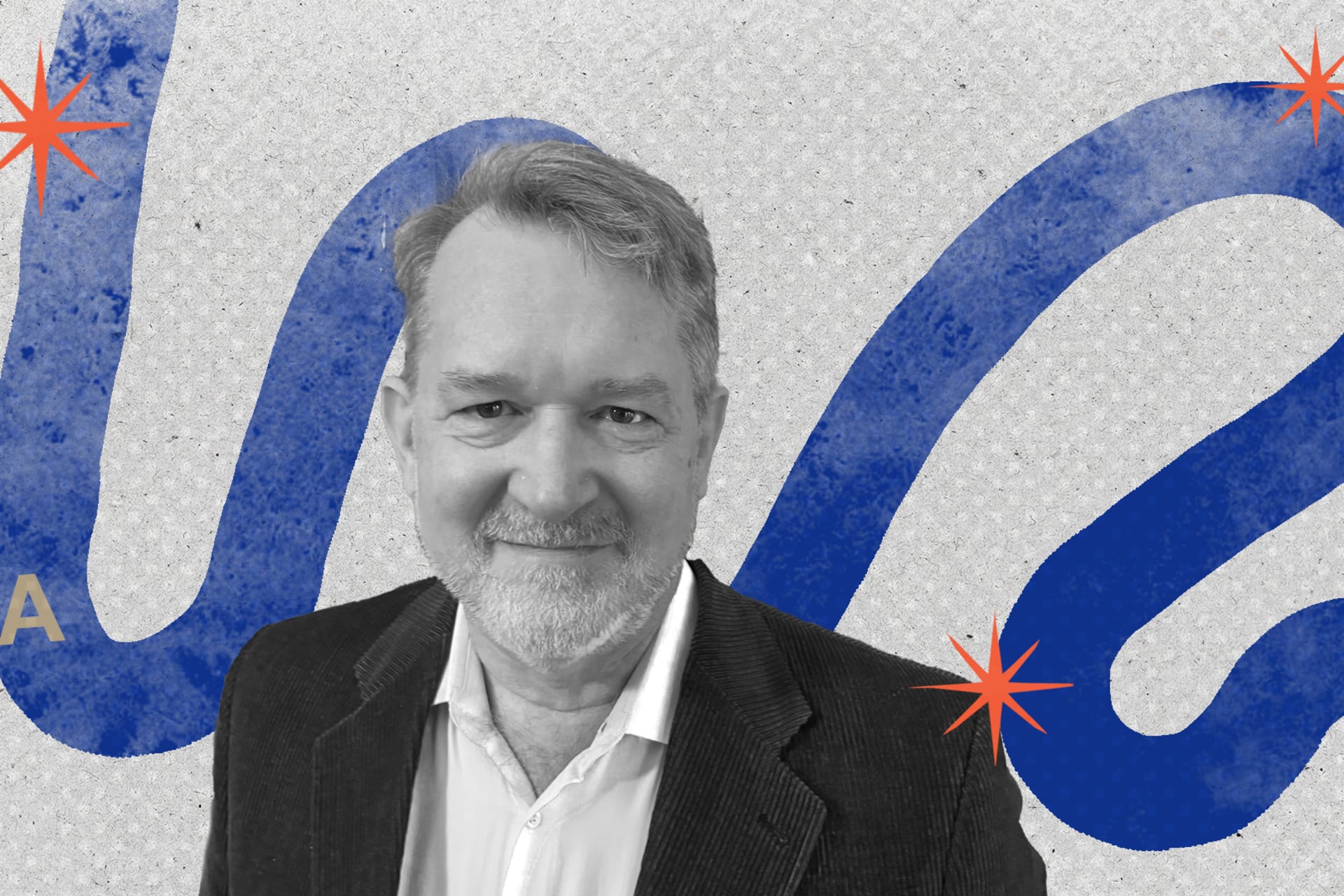
Alan Cullison has broken major international stories over his three decades of reporting for the Wall Street Journal. He sat down with CFR to discuss his work as a foreign correspondent and what lies ahead in the world of journalism.
By experts and staff
- Published
- Writer/Editor
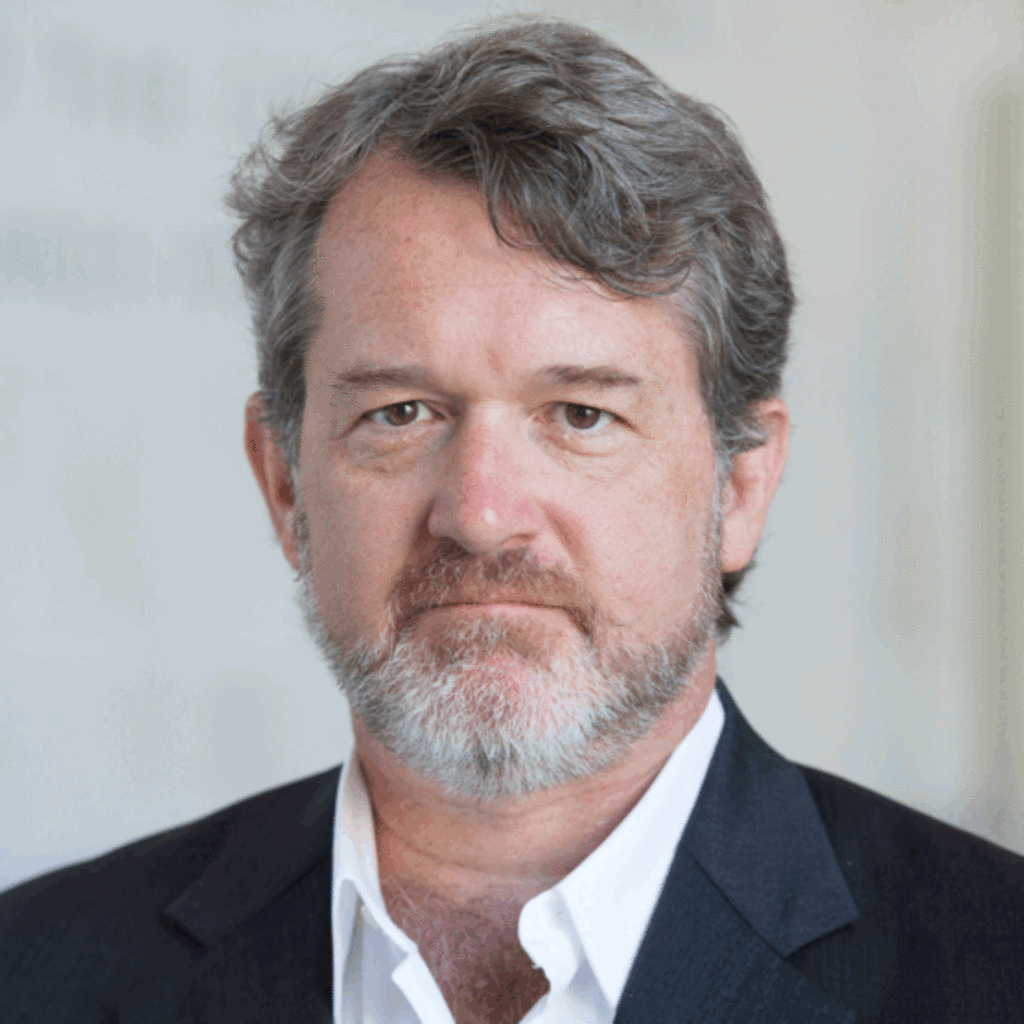 Alan CullisonEdward R. Murrow Press Fellow
Alan Cullison’s career as a foreign correspondent began in Russia during the Second Chechen War. He went on to break major stories over his three decades at the Wall Street Journal, from being the first to find a trove of al-Qaeda documents that exposed the group’s inner workings, to reporting on the front lines of wars in Afghanistan and Russia. Read more about how his admiration of great novelists and poets, as well as his first newspaper job writing obituaries, shaped his ethos for covering wartime communities around the world.
Here’s how Alan Cullison got his career in foreign policy.
Check out past editions of CFR’s “How I got My Career in Foreign Policy” series.
What did you want to be when you were growing up?
An astronaut, of course. That gradually evolved as I started reading books.
So that’s when it transformed into journalism for you?
Well, journalism was never an intention, frankly. I admired writers who had been journalists, but then had the courage and the foreknowledge to quit and go into other forms of writing. There were quite a few people like that. [Ernest] Hemingway, who wasn’t a journalist for very long. [George] Orwell is a very good example, as well.
Edgar Allan Poe, too, I just loved his lyricism and some of his literary criticism. In American literature at the time, there was kind of a separation of thought, where some would say that poetry is beautiful when it’s rational. Poe didn’t think that at all. He thought it was poetry that would bring you to see things that are not expressible just for a moment. Those were my early heroes.
I could talk about good lyricism and great writers all day, but I can see the beginnings of the throughline that made you a writer. You developed this interest in reading and writing, and eventually got into it yourself. As a fellow journalist, I know these roles are highly coveted. How did you land your first job?
I was actually interested in another coveted path, I wanted to go into academia and be a history professor who wrote books. I thought that maybe some good practice would be to get a job at a newspaper.
I did a little bit of stringing for Reuters while at the University of Chicago, and I got an internship at a daily newspaper in suburban Connecticut, where I was given menial tasks like answering the telephone, rewriting press releases, and doing obituaries.
I really hated it at first because I thought that pressure was crushing—the idea of writing something and then going out to 13,000 people, which of course is laughably small now.
I had a really cynical kind of guttural editor who relied on me for obituaries. I remember he had a chair in the center of the newsroom, and he’d lean back and say, “you got time for a cold one?” And that was his way of saying, “I have an obituary for you.”
Oh, boy.
So I would have to call the funeral home and get the basic biography of people I was writing about. Then I would also talk to the family members, and these people were always very appreciative of me taking an interest in the lives of people that they had just lost. This was the first time a lot of these people ever got their names in the paper. So it seemed like a very important task; they were little stories about life, and I really began to love it and saw a sort of poetry in that at times.
They soon put me on to other things like covering cops, going to crime scenes, and getting to know police departments. I worked my way up to the Hartford Courant, which then evolved into covering the prison system. But, recognizing that I never had much of an opportunity of going very far in Connecticut, I quit eventually.
When someone offered me the opportunity to do some research in Russia for a book on Whittaker Chambers—an anti-communist guy who gave evidence against Alger Hiss, a very high level State Department official and head of the Carnegie Endowment—I went to Russia for the first time looking for evidence in the newly opened KGB archives to prove Hiss’s guilt or innocence. After that, I just became fascinated with Russia and hung around the Associated Press (AP) until they gave me a job doing some mind-numbingly boring financial reporting. That was just sort of the quick avenue to going overseas with the AP, but on the side, I would do enterprise and some investigative work. And the Journal took notice and then hired me in ‘99.
An unexpected opportunity that grew into a passion, it sounds like. What solidified your desire to be a foreign correspondent?
In those ages, I think that a lot of people went into journalism because they watched All The President’s Men or The Year of Living Dangerously, with Mel Gibson and Sigourney Weaver. I think that might have had an influence, but going overseas was part of my effort to escape competition.
I spoke a little Russian. The AP didn’t know how little Russian I spoke, so they sent me over in their ignorance, and I learned it a lot better when I was there for a while and immersed.
Lucky for you both that they did, the way I see it. What was it like to be in Moscow right after the fall of the Soviet Union?
It was an absolutely fascinating environment. It was an empire that collapsed, essentially. It wasn’t a minor society that had collapsed. It was a society that had old and fascinating literature and music, so there were all kinds of geniuses running around in chaos and social experimentation.
Russia in the ‘90s was so unpredictable. If you were invited to a light opera, you would arrive and find early death metal. Or if it was a black-tie cocktail party, it was held in a condemned building with broken windows.
It was a bit eerie because when you’re in a place experiencing that kind of collapse, it’s almost like the walls of the world fall down around you, and there are no limits to your behavior. I saw some people kind of lose it, but I really had my head down, and I was working so much that I think that kept me grounded. All in all, it was a fascinating experience.
To say the least. During your time at the Wall Street Journal, you covered some of the biggest foreign policy stories of your day, including the war in Afghanistan, the return of the Taliban, Moscow’s post-Soviet days, and now the Russia-Ukraine war. Did having that long view change the stories that you wanted to tell, or how you approached the work over time?
I think my feelings of how to cover those things certainly evolved over the years. The first conflicts I covered were in Russia, during the Chechen War, which was brutal and presaged a lot of other things. I suppose the biggest impact of covering that was that the Journal relied on me later to cover other conflicts, simply because there just weren’t many journal reporters who covered wars. Frankly, there weren’t many reporters anywhere who covered wars because there weren’t that many going on.
Having bullets whiz past you might be exciting, but it’s not good copy. Writing about the fragments of it all often becomes the most interesting stuff that provokes what we have to think about going forward.
The initial excitement of covering a war is, of course, enormous. Your senses become more acute, I would say. I think you smell better, you hear better. Ironically, you sleep better, because you’re exhausted at the end of the day. But I don’t think that the focus or the most rewarding things were covering what we’d call “Bang Bang.” Having bullets whiz past you might be exciting, but it’s not good copy.
The main impact of a war is that there are certain things that come loose in the breakage. Writing about the fragments of it all often becomes the most interesting stuff that provokes what we have to think about going forward. That was certainly true in Afghanistan.
I can’t help but think back to your start writing obituaries and that being such an impactful way of finding the beauty of telling real peoples’ stories. It seems like you carried that abroad, telling community and civilian stories when there were the big picture stories that others might gravitate toward.
Well, I think the obituaries were an early lesson in the importance of people. You have to care about people deeply and have some empathy. That ultimately I think is really what people want to read about. They’re more interested in human tragedy, human frailty, human fallibility, and the capacity of even world leaders to make mistakes—awe-inspiring mistakes that have implications for their countries.
We’ve talked before about how intense some of these reporting environments you have been in were. What kept you going despite the dangerous conditions? How did that shape how you thought about foreign affairs and the role of journalism?
If I may say something a little dangerous, the whole notion of foreign policy, frankly, didn’t interest me much. I never took much political science. I took economics, I took history, but I wasn’t interested in the theory behind it. I was always interested in the people and the Journal suited me as a place to work because their way of getting at important things—money, policy, and whatnot—was usually through profiling people.
Most of the stories they wrote, even the big page-one items, even if it was about major companies like Xerox, Kodak, or GE [General Electric], were about people. It was about a person who was leading a company the wrong way or the right way or trying to save it. So that was my brass ring in covering situations, finding the right person to profile.
I guess it brought me to foreign affairs as it happened that I was in a foreign environment.
The whole subject of foreign affairs—I think it’s dreadfully important and I would consider myself a foreign affairs reporter to the extent that I covered foreign clients—I always sought to cover it through personalities.
I couldn’t agree more on human-focused stories being the most salient ways to capture a narrative. Which brings me back to your story: You eventually left Russia and became national security correspondent in Washington. What prompted that return stateside? Did you miss field reporting?
Yes, I missed it. But I’d been in Russia for such a long time, and I didn’t particularly want to live in Afghanistan, which was sort of another area of specialty. I felt like in order to write for the Journal’s audience, I really had to be in touch with it again.
After a while, I was beginning to misunderstand certain currents in American society. Your brain becomes addled living in a place like Russia, when you’re subjected constantly to Russian media. Even if you’re a free thinker, it begins to seep in in various ways, and there’s a danger that you become part of their world. I was a little concerned about that. I think close friends were sometimes telling me that things that I was saying to them didn’t make sense.
Generally speaking, I do think it’s very important if you’re going to cover a foreign country to speak the language and really, really get into their culture. But you have to be able to do it as an outsider in order to relate to your readers. You would see in places like China, where the government would occasionally expel journalists, that there were journalists who would make compromises in order to stay. The same thing was happening in Russia. There were certain reporters who were tempted to toe the government line so that they could stay in a secure job. I didn’t want to fall into that rut.
What did your work look like when you came back?
When I got back to the United States, I was more or less a fireman—they sent me back to Ukraine and Russia a lot, because everyone thought that [President Donald] Trump was a Manchurian candidate. I had to chase the Steele dossier down until it could be proven that it was pretty much made up.
Toward the end of my time in the Journal, I did cover the State Department, and we used to fly around with [Secretary of State Antony] Blinken. I didn’t really take to it that much because it was pretty remote from the things that I was most interested in doing.
Now you’re here at CFR as a press fellow. I know you’re writing a book while you’re here. What can we expect to be reading about when it’s published?
I’m working on a book about the financial transactions around the Trump administration. It’s a very rich topic, with a lot of excellent journalism being done about it. Fascinatingly, a lot of that excellent journalism is just landing without much effect. It’s not clear why, but I’m hoping that maybe a longer treatment of it will be more substantial.
I suspect it will be! As someone who’s been in this space for a while and is familiar with the journalism field, what do you think are some of the most important things to watch as it continues to undergo so many transitions?
The disruptions are enormous. I think that there might be, as a consequence, a lot fewer journalists around and fewer really good jobs in journalism. But I do not think that journalism—the need for honest interpreters of events—is going to disappear. I’m optimistic about that.
The recent upheaval that we’ve seen not just at the Washington Post, but also at the Journal and other places, I think it’s a pivot towards often shorter time frames and journalism for the minute. That might get some readers in the short run, but I think there’s always going to be a hunger for more interpretive and more informative analysis than that.
Because it’s competitive, everyone’s going to be trying to do different things to surprise readers. I’ve said before that I think a lot of news outlets are chasing the same thing, and I don’t think that can continue because chasing the same thing is, just simply from a business standpoint, not always the wisest thing to do.
What do you think is most important to think about for young people who maybe want to get into the field?
The journalism business has always been difficult. It’s been shrinking constantly for decades. It’s certainly been shrinking ever since I joined it, and for almost that entire time managers were talking about how “these are terrible times and we look forward to them improving,” and it’s never really happened.
So it’s necessary to find a niche that you enjoy and which is not always that conventional. Doing what everyone else does is not a promising way forward. It’s hard to advise people in this environment, but I still think it’s an exciting time.
Great advice for writers, and all people, really. As we’ve been talking all about all the different stories you’ve done, reporting trips, what’s one story from your reporting trips that stands out as a really memorable experience?
There have been a couple things that I’ve done in covering terror that ended up leading people to say, “well, you’re sort of like the Forrest Gump of terrorism,” which is kind of an unpleasant thing to hear because it makes me sound like I kind of stumbled into things.
That’s certainly not a comparison I ever expected to hear about you or anyone else, I can safely say.
Yeah. There are two specific incidents that I uncovered that caused that. The first was getting the al-Qaeda hard drives when I was in Kabul, and the second was the fact that I knew the Boston Marathon bombers before they went and bombed the Marathon. But the facts here are that those things really happened because I was deeply invested in covering a topic.
You’ve got to tell me the backstory about one of these.
So, when I got to Kabul in 2001, I was essentially behind the New York Times in a race to find al-Qaeda documents newly liberated after the city had just fallen, and the Taliban had just fled. There were still corpses in the streets. The U.S. forces hadn’t arrived, so we started chasing down leads, going to al-Qaeda houses and finding documents. I was behind in the race and knew that I was going to be beaten in it, so what I ended up doing was looking for computers.
That was a pivot, because it was also a country where very few people had computers. Any computer that you got ought to be owned by somebody interesting. This was kind of one of my early realizations about war: The fragments are where there are tremendous opportunities. This is not an opportunity you would ever get by sitting in Washington, even if you were covering the White House in a very prestigious job where you’re pouncing on the same facts that everyone else is. I suppose that was kind of an “oh wow” moment about the opportunities of war and the opportunities of chaos.
Certainly exemplifies the cleverness it takes, and the storied career you’ve had.
Okay, and now the quid pro quo here is, what about you? What did you want to be when you were little?
Oh, now you’re interviewing me? Once a journalist, always a journalist. Though, I suppose that’s only fair. When I was growing up, all kinds of things. I had a veterinarian phase. I had a singer phase. I had no idea I’d be a writer.
Oh, so empathy and entertainment, that’s good.
Thank you. I guess those both translate well to wanting to write impactful stories today.
Yeah, empathetic, but egotistical about it.
Yeah, that sounds about right [laughs]. We’ll see.
This interview has been edited for length and clarity. It represents the views and opinions solely of the interviewee. The Council on Foreign Relations is an independent, nonpartisan membership organization, think tank, and publisher, and takes no institutional positions on matters of policy.