How I Got My Career in Foreign Policy: Heidi Crebo-Rediker
Heidi Crebo-Rediker spent nearly two decades in investment banking overseas before pivoting to government work. She sat down with CFR to chat about how her early fascination with Russia influenced her career path and the benefits of starting her career in finance.
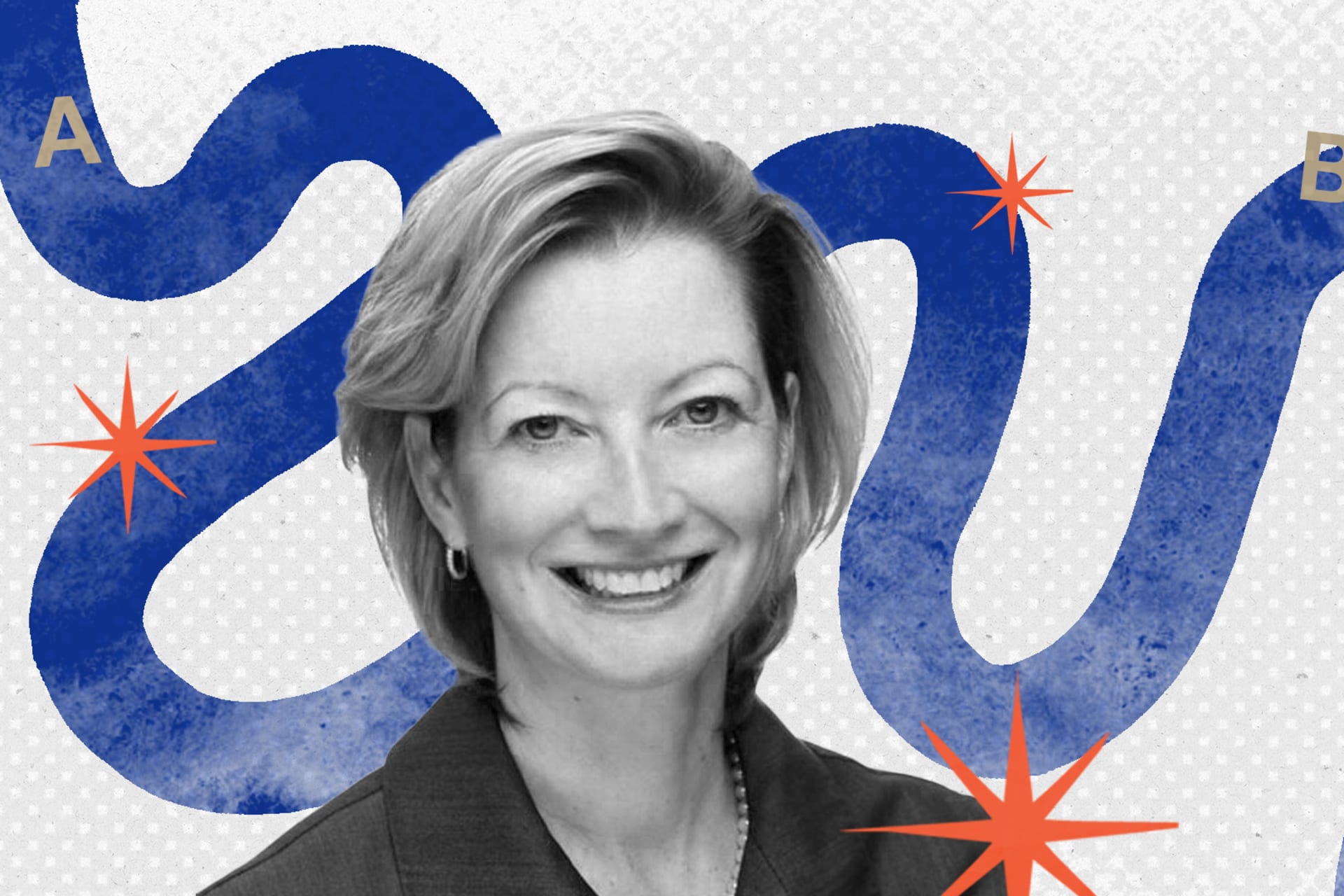
Heidi Crebo-Rediker’s desire to be a part of historic change spurred her to take a job with one of the first U.S.-Soviet joint ventures, and then an investment banking job in Russia following the collapse of the Soviet Union. She worked in finance advising governments and multilateral institutions based in Europe for almost twenty years before returning to the United States. She went on to work for the Senate Foreign Relations Committee before becoming the State Department’s first Chief Economist. Read more about her advice to young women breaking into male-dominated fields, how economics can shape foreign policy, and the importance of taking big risks in your career.
Here’s how Heidi Crebo-Rediker got her career in foreign policy.
What did you want to be when you were little?
When I was very little, I would have said violinist. I came from a family of classical musicians and grew up in the Boston music community. It was my whole world when I was little. Neighbors from my old neighborhood probably still think I became a violinist. But my mother wanted to get me out of that neighborhood, so I actually used it to get a music scholarship to Phillips Academy in Andover and another to Dartmouth and never looked back.
When I was a teenager, I wanted to be the first female ambassador to the Soviet Union. I know it’s very specific. Going to Andover changed my life and opened all sorts of doors, but I think the most meaningful one was that I studied Russian there for all four years and sort of immersed myself in Russian literature and Soviet politics and history.
I was so amazed when I was in high school that a country that was, from what I saw, so rich in art and music and science, could be our arch enemy or our main existential threat, because that was the era that I grew up in. And as ambassador, I thought I could fix it.
But it was during that same time that the Soviets shot down a Korean airliner near Sakhalin Island. It was really a massive, horrific, unprovoked act and killed everybody on the plane. Hundreds died, and it was a pretty deep shock to me at the time. That was sort of a significant moment in my coming to terms with the fact that this cultural, literary, and musical powerhouse of a country was very capable of very evil acts.
One of the ironies is that, my first real job out of college, I was actually based on Sakhalin Island, where the Korean airliner was shot down. When I moved there, I was the first Westerner to live there, as it became the Soviet Union’s first free economic zone.
How did you end up going to Sakhalin?
When I graduated from college, I knew I wanted to do something different. History was on the precipice of a very major turning point—the end of the Cold War—and I wanted to be part of it. I didn’t want to just write about it. I wanted to be part of bringing about the change.
After I graduated, I did take a sort of an unconventional job. A lot of my friends were going to investment banking or McKinsey or somewhere else, and I wanted to work for one of the first U.S.-Soviet joint ventures, to move the needle towards capitalism, away from communism. It was one of the things I wanted to do—be there on the ground for it. That joint venture needed someone to open their office in Sakhalin, and I raised my hand.
After you were on Sakhalin Island, you spent roughly the next 15 years of your career in investment banking. You had, obviously, this great interest in foreign policy. What drew you to investment banking?
I spent two years on Sakhalin, and I learned a lot about the oil and gas industry there—but I had no interest at all in traditional investment banking. It just didn’t coincide with the person I thought I was. It was like other people did that, but that was not me.
I had considered going to work for the State Department right out of college. It was something I was toying with, but I saw when I was in Moscow as an exchange student the immense changes that were happening, and I knew that you couldn’t actually live it or be fully part of it if you were at the State Department at that time. I also had an internship just before I took the job with the joint venture—in the embassy in Moscow during the summer of 1990—so I understood what the capacity of the U.S. government was and was not to move the needle at the time. They were looking out from inside the embassy to all the businesspeople who were starting to show up, the journalists who were starting to show up. I felt that you really had to be outside the confines of the government to actually take part in the monumental change underway and know what’s going on.
So I went to Sakhalin, and after two years, I got an offer to work for an investment bank that no one’s heard of anymore, called Bankers Trust. They had the mandate for the privatization of the whole Russian oil and gas industry. I understood the Russian oil and gas industry from the inside out from Sakhalin and spoke Russian. So way back when, pre-privatization, I was hired for almost more like a consulting job than a banking job. I got to help come up with a plan for how to divide up all of the state assets—the oil and gas assets still within the state economy—into vertically integrated companies, and then after, how to finance these newly formed companies in a country where the rules on how to do this were yet to be written.
So that was my first investment banking job, and it took me to every podunk oil and gas town in Russia, up to the arctic circle, and down to all the refineries to evaluate the downstream oil and gas assets. I went to a lot of towns that were so obscure a lot of my Russian friends hadn’t even heard of them before.
Where were you primarily based when you were living in Europe? Did you move around?
Once I moved to Bankers Trust, I was based in London, but I was on the road almost constantly. I was working 100-hour weeks. I was doing very interesting, atypical investment banking business, because it was all in crazy markets and doing crazy deals, and it brought me to all sorts of places in Central Asia, in the Caucasus. So I got to work on a lot of unusual transactions. I helped actually establish new markets and I did a lot of the first-ever deals, especially in frontier debt markets.
But it was a lot of hard work and long hours—especially as I was starting off in an industry that at that time in the United Kingdom (UK) really was not very welcoming to women—there were not a lot of us. It was a different time. So you had to—and I think this is probably still the case today to a certain extent—work twice as hard and do twice as well to even be considered equal. And so that is the work environment I came up in.
That actually is a good transition, because you could have worked in investment banking stateside, in New York—
I couldn’t have. A lot of the things that people were working on there held no interest whatsoever to me. The stuff that I was working on was as much a foreign policy job as you could possibly get in the world of banking. It was working in rapidly changing, crazy frontier parts of the world, helping governments transition their economies to market-based economies. And then when I later moved to a different side of the investment banking business, it was working with the public sector on how to use markets to achieve policy goals, often advising governments, central banks, treasuries and finance ministries. I also worked with some of the development institutions that were within countries, or multilaterals like the World Bank and the various regional development banks.
The banking industry in the United States, what they did and how they did it, was just a fundamentally different business.
Oh, interesting. Well, in 2007, you came back stateside and became a senior fellow at the New America Foundation. I’m curious what spurred your pivot from investment banking, and about the decision to leave that life in Europe.
It had been almost seventeen years abroad, and it was a joint decision between me and my husband. We had a daughter about to turn three, and there were a number of different drivers of that decision. Broadly, the stars and the moons aligned for both of us to pick up and move to DC. And we did it with no plan whatsoever.
Throughout my career and throughout his career, we’d been planners, so this was a bit of a risk. We worked incredibly hard as bankers. Early on, I had a lot of student loans I had to pay back, so I was very glad that the investment banking job came along, because it was sort of a two-fer—I could do things that I was deeply passionate about, but also get paid enough so I could pay back my student loans.
We had reached a point where we wanted to do something in policy and could afford to make that change. We had been at the speech that [former President Barack] Obama gave at the 2004 Democratic Convention and decided that at some point, we wanted to move back and have our daughter grow up in the United States, and not in the UK. Not that there’s anything wrong with the UK—but we decided that the America that Obama described was the one we wanted our daughter to grow up in.
We moved back and joined Obama’s team, both on the policy side and the fundraising side, and worked hard to get him elected. We also joined the New America Foundation and began to write together.
So while you were at the New America Foundation, you were campaigning for him or volunteering for his campaign?
Yes. I did a lot of work with Austan Goolsbee [senior economic adviser to Obama’s 2008 presidential campaign] early on. He was very close to Obama from Chicago and was working on his economic agenda. I had done a lot of writing on domestic investment in infrastructure and competitiveness at New America, and I helped shape what ultimately became Obama’s proposed National Infrastructure Bank. I also authored a number of pieces together with my husband on lessons that we learned from finance and capital markets that were important for what policymakers needed to think about in the United States—about how to use markets to achieve policy goals and the increased role of the state in markets and capital and investments. And for the campaign, how to plan for the brewing financial crisis.
In 2009, you became Chief of International Finance and Economics for the Senate Foreign Relations Committee under John Kerry. How did you make the jump from the think tank world to Capitol Hill? And what was it like working for the committee?
The biggest shock to the system was going from a trading floor to a think tank. That was like hitting a brick wall in terms of the pace things moved. The switch to working for Kerry—I had no idea that I would ever in my life be working on Capitol Hill and didn’t know what to expect. And this was sort of a unique moment and a unique position. Kerry was very good to me, and basically said, “Create your own position and tell me what I need to do. There’s a lot that we need you to weigh in on here and you know how to connect the dots.” I ended up crafting legislation for him to add new economic tools to the tool kit, like sovereign loan guarantees and enterprise funds.
It was a time when Kerry, and many others in the foreign policy community, were coming to terms with the fact that economics and finance were playing a larger role in foreign policy. So the timing was just right. This is what I had been writing about since I moved back to the United States.
You mentioned your connection to Obama, but of course, in 2012 you became the State Department’s first Chief Economist. How did that come about and what did that honor mean to you?
It was a progression, from what I had been doing, to that job. It wasn’t an out of the blue outreach saying, “We would like to offer you this job.” It was more that I had been working with the State Department along the way, with policy planning, brainstorming on what an Office of the Chief Economist should look like, what their new economic statecraft agenda should look like. That was when economic statecraft wasn’t just a common buzzword—it was new.
So I worked pretty closely with them and then was deeply honored to have been offered that Chief Economist job and especially the opportunity to work with Secretary [Hillary] Clinton. I kind of pushed back against the title a little bit. I’m not a PhD economist. My background is finance. And when I was offered the job, I said exactly that—I’m not a PhD economist—and was told, “If you were, we wouldn’t have hired you or offered you this position. We need somebody who can stand up a new office, come up with a strategy, advise the Secretary, and be a key spokesperson for what we want to achieve through economic tools—both the carrots and the sticks—and how economics, particularly crisis, can drive foreign policy decisions.” It was like being given a new business to design and build within the State Department, and I loved every minute of it.
There was a period just leading into the Eurozone crisis, where we had already seen what happened when Iceland had a major crisis—one of the first countries to see its banking sector collapse and economy on the brink early in the financial crisis. When the international community did not initially step up to provide support in a timely way, Russia showed up with a checkbook and said, “We’ll help you.” And the leader of Iceland at the time said, “Well, if your friends won’t help you, it’s time to find new friends,” and started working with the Russians. Russia made a national security play with a NATO ally in crisis. And I was like, “Look, if you need a bigger aha moment, you couldn’t find one.” This is what we need to make sure we’re prepared for—that if a country goes into crisis, that can have serious spillover effects into national security and foreign policy.
I’m curious how your experience in the private sector influenced your approach to government work. If you had gone from college into the State Department and gone up the more traditional route, versus having come in from the investment banking side—do you think there’s a benefit to having that background?
Certainly, because my background was primarily sovereign debt markets—whether you’re looking at developing markets in crisis or the Eurozone crisis unfolding. You had a lot of issues that were very specifically market-related, sovereign debt-related. It’s almost impossible for people outside of markets to actually understand what drives investors, what drives governments to support other governments, what drives central bank decisions, how they all interact, and what the political and national security ramifications can be. So being able to put all those pieces together is very hard to do if you’re missing one big leg of that stool, which is markets.
It was also valuable knowing how to structure transactions, especially complex public-private transactions. More broadly, it’s not a secret that understanding how the private sector works is sorely missing in government. There is deep suspicion of all things private from many who only spent time in government, often for good reason, but you can’t expect to effectively navigate the many ways government and finance intersect if you’re not well-versed in the commercial and markets side of things.
That makes sense. Zooming out—you’ve worked in finance, you’ve been on Capitol Hill, you’ve been in government. What’s your advice to young women who are interested in breaking in, or advancing in, these still very male-dominated fields?
I think the good news is that it’s getting much better, and will continue to get much better, than when I was coming up through the ranks. But I would say to leap when you see an opening—for me, that was the fall of the Berlin Wall, the clear coming collapse of the Soviet Union, and wanting to just jump in and be part of it. Taking that risk I gained a lot of on-the-ground knowledge, connections, survival skills, that I could never have learned anywhere else, and it made me actually a lot more valuable. It also made me more comfortable taking other risks in my career. The perception is that men are bigger risk takers. Be a better, smarter risk taker. But take the risk.
Especially early on in your career. If you want to break into the foreign policy world, pick up and move somewhere other than Washington, DC. You can always end up here later in life.
Of course, this series is for young people more broadly who are starting out today. Are there particular issues or skills that you think are valuable to cultivate?
In terms of the skill set—adaptability, and getting ahead of the tidal wave coming for many traditional professions. Create your own artificial intelligence (AI) agents right now. Play with AI tools, have fun with AI tools, become fluent in navigating all those new tools. It’s so very different from when I was growing up. I came from a small neighborhood just south of Boston, and what was on my mind back then was just getting a scholarship somewhere, and paying back loans. I wasn’t really worried about getting a job when I was in college—I was pretty sure I would be fine. But coming into the workforce right now, with AI as either your competition or your ticket to a great career, I think there are so many opportunities to be on the cutting edge without having to have spent your entire life coding. You have to approach it that way.
And particularly for women—the whole rise of Girls Who Code was great, but for a lot of young women, coding 24/7 wasn’t their thing. The skill set you actually need right now isn’t necessarily that. You’re seeing a lot of coders as the first to face creative destruction in our economy, which isn’t great. You need to be able to work with AI, communicate fluently with it, and use the new functionality that’s changing so fast. Stay ahead of it, not behind it. You don’t need to code for a lot of the jobs of the future.
Well, I’m a bit of an AI doomer, but we want to end on a fun note! Over the years, you’ve probably had many interesting work trips and meals. Is there a particular most memorable one you could share with us?
As you probably imagine, I have endless stories of work trips and meals. The most meaningful trip I think might have been taking my mom to Europe for the first time when I was living in London. I had opportunities when I was in high school—because I played the violin, Andover paid for me to travel around the world to give concerts. My parents could never even dream of having anything like that. So as soon as I could afford to, I took my mom on a trip to Europe.
I was living in Europe, so part of it was coming to visit me, but most of it was to take her to Italy, to France, and a number of different countries she had never been to before. That probably meant the most to me.
This interview has been edited for length and clarity. It represents the views and opinions solely of the interviewee. The Council on Foreign Relations is an independent, nonpartisan membership organization, think tank, and publisher, and takes no institutional positions on matters of policy.