How I Got My Career in Foreign Policy: Alyssa Ayres
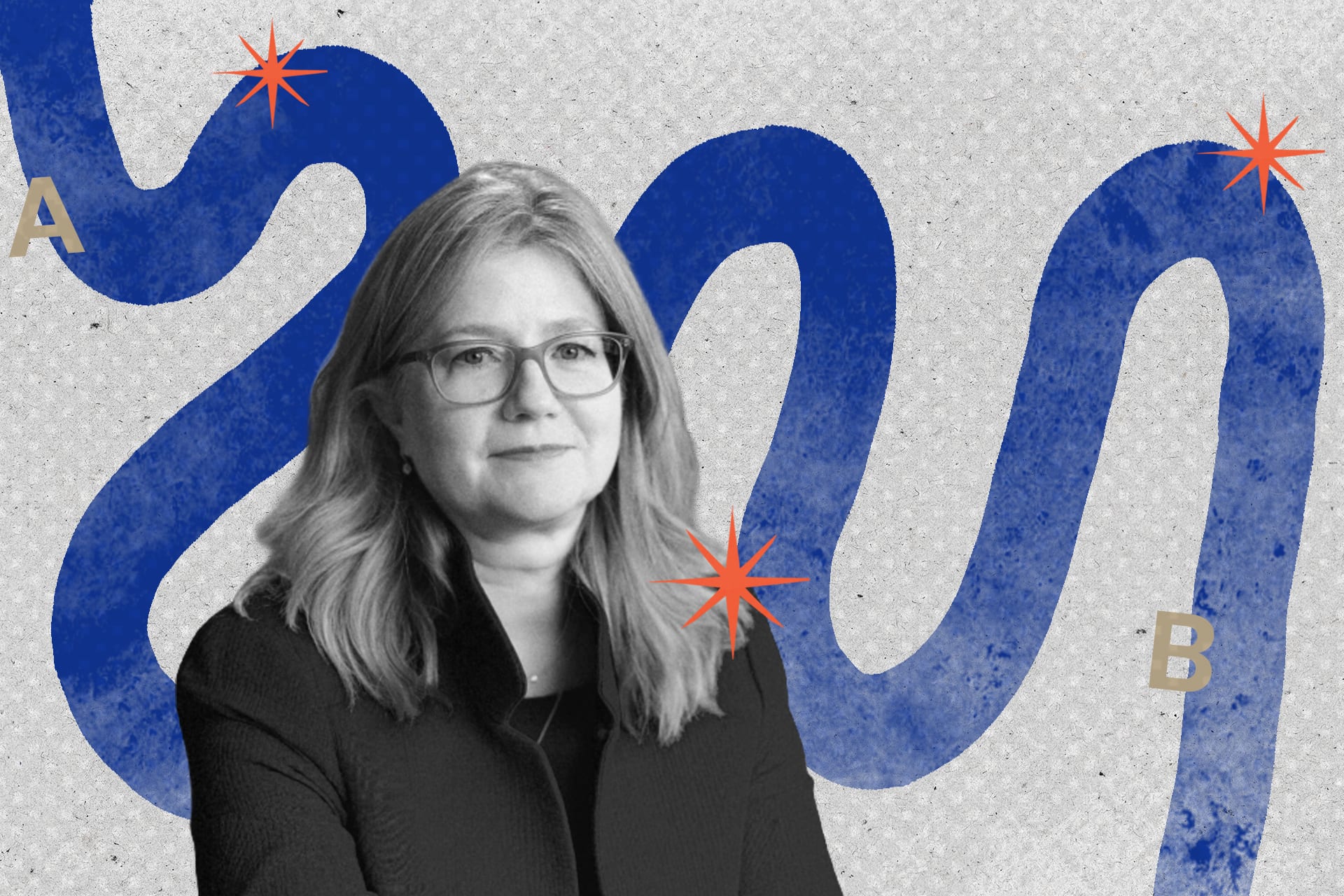
Alyssa Ayres has spent decades as a foreign policy practitioner on U.S.-India relations across government, think tanks, and the private sector. Her path was one of exploration, driven by a deep curiosity about her area of expertise.
By experts and staff
- Published
- Writer/Editor, Asia
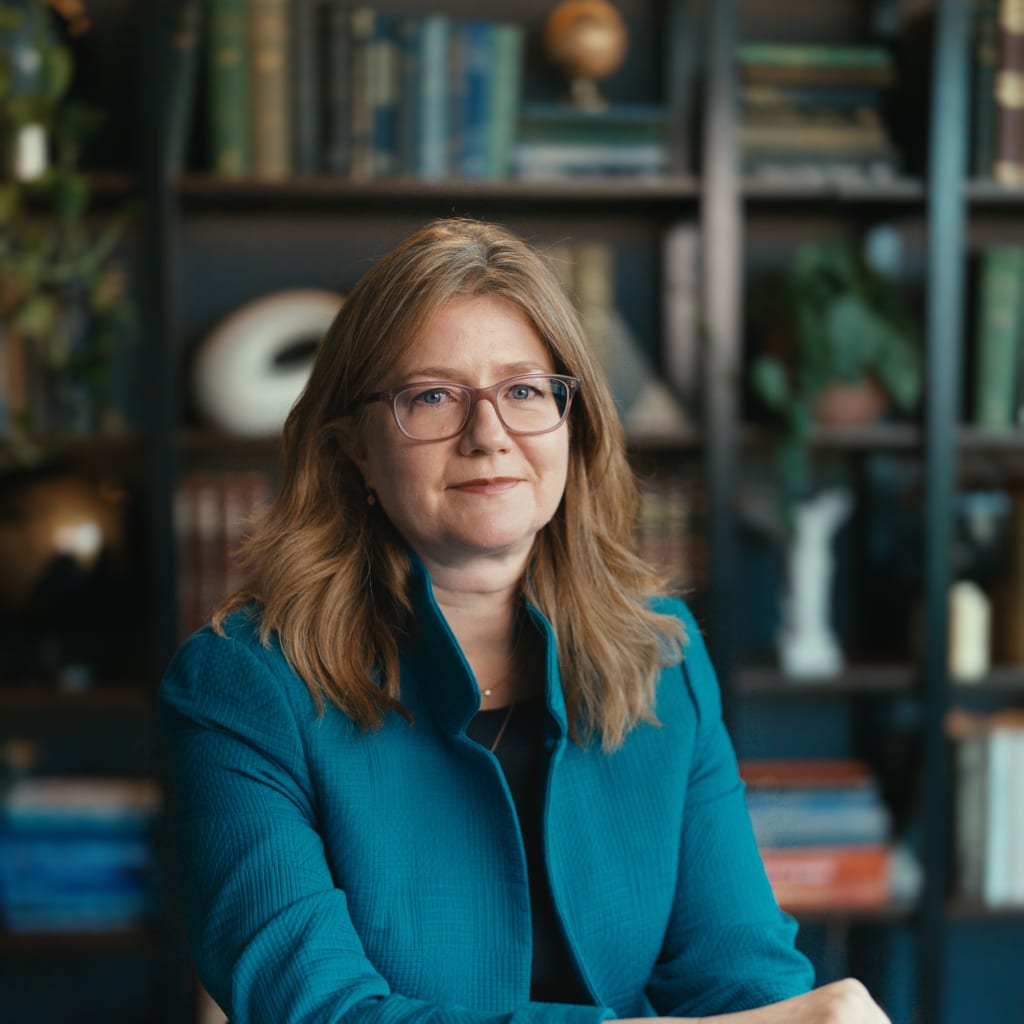 Alyssa AyresCFR ExpertAdjunct Senior Fellow for India, Pakistan, and South Asia
Alyssa Ayres’s career in foreign policy was in many ways circuitous. A few years after starting her PhD at the University of Chicago, she found herself questioning whether a traditional academic pathway was the right one for her. This led to experiences in the nonprofit, government, and private sectors, including at the Council on Foreign Relations (CFR), where she is an adjunct senior fellow for India, Pakistan, and South Asia. She is also the dean of the Elliott School of International Affairs at George Washington University—the first woman to serve in the position. Read more about how Ayres transitioned between various sectors, her views on the value of interdisciplinary expertise, and her experience visiting an elephant sanctuary in Malaysia.
Here’s how Alyssa Ayres got her career in foreign policy. If you’re interested in this series, check out more editions here.
What did you want to be when you grew up?
I grew up in a General Motors family outside Detroit. For a long time, I thought that I would follow a pathway of being an engineer into a nice, stable job environment, like my father had. Things ended up a little differently, for a variety of reasons.
I’m curious, then, what got you interested in foreign policy?
I may have one of the most circuitous pathways of the people you are interviewing for this series. I didn’t start out focused on foreign policy. I started out planning to major in engineering. In college, I did a semester abroad program in India, and that really was an important moment for me, because it shook me out of thinking that there are a limited set of careers to pursue. It opened my eyes to a whole universe I actually didn’t know that much about and wanted to keep learning more.
Directly from my undergraduate program, I ended up applying to doctoral programs and decided to attend the University of Chicago for an area studies degree. (I am a card-carrying area studies specialist, and Chicago has a long history of unique multidisciplinary excellence on South Asia.) As you know, it is a wonderful place, but also intense. I will say that I did struggle a lot with being there and finding purpose—is this what I wanted to do with my life? There’s so much that I was interested in. I love reading. When I was little, I would go to the public library and bring back twenty books and read those twenty books in two weeks. So, I loved studying, and I loved that aspect of being at a research university. But I was less sure about where I was headed.
Yes, I am definitely familiar with the “life of the mind” experience having spent my undergraduate years at UChicago. You also spent some time studying Hindi in India and Urdu in Pakistan. How did that come about?
I did an intensive Hindi program through the American Institute of Indian Studies in the summer before I started graduate school, right after college. At the time, the intensive program was based in Varanasi, and it was a fascinating experience.
Then, a year into my doctoral program, I applied for and received a language fellowship to attend an intensive Urdu language program through the Berkeley Urdu Language Program in Pakistan. So, I lived with a family, actually an elderly widow who taught me so much, and was a wonderful person. I got to learn a lot of Urdu, and learn in-depth about Pakistan.
After that I returned to complete my second year of grad school. I still was really uncertain about what to do with my life. At the University of Chicago, almost everybody’s got one career track, and that’s academia. That’s where you go!
I thought maybe that’s what I wanted to do, and what a great university to prepare for that, but just really wasn’t sure. So I ended up taking a leave. Because I had some language skills, I got recruited to serve as an interpreter with the International Committee of the Red Cross on a mission in Jammu and Kashmir. That was another experience, a humanitarian experience, that opened my eyes to a completely different kind of opportunity.
After that I thought I’d come back and complete my exams towards my PhD, but I ended up actually withdrawing from the program.
Wow, that sounds like it must have been a tough decision. What made you want to pivot?
At the time, I just didn’t think this was where I wanted to head. But then I later came back to it and eventually completed the degree. This is actually a very long story.
I felt somehow more personally fulfilled doing something that felt like it had an impact, but I wasn’t sure what the impact was in a very research-focused environment. You can have research that’s very impact-focused, but I hadn’t made my way to that space yet.
I ended up moving to New York, and I did a lot of informational interviews and very diligently used my alumni networks to find out about different career opportunities. I was interested in the nonprofit sector, and I got a great consulting opportunity to help the Asia Society with a conference they were planning on development in South Asia. I worked on that and then ended up getting hired on a full-time basis to manage the Society’s policy programs focused on South and Central Asia.
That entry-level job ended up shaping the rest of my life and so much of what I’ve done. The people that I worked with during those years I remained in touch with, even years later, people like the late Frank Wisner, who passed away last year; Marshall Bouton; Nick Platt; and Vishakha Desai. It just was a really formative almost four years and I continue to be grateful for such an exceptional early-career experience.
That’s wonderful. As many of our readers might be interested in think tank organizations, what were some of your more memorable experiences at the Asia Society?
We were convening, in collaboration with CFR, a U.S.-India roundtable. I was the staffer for that, and the initiative also included a roundtable trip to India and to Pakistan.
We had this superb trip, and met with senior officials, business leaders, and experts on national security, foreign policy, and social issues in both countries. This was prior to President Clinton’s visit to India, and the roundtable focused on making recommendations to the U.S. administration to chart a new kind of relationship for India and the United States. These were really early days in the opening between India and the United States. Looking back, we were doing some significant things at that time as a convening body. For example, India’s then-prime minister, Atal Bihari Vajpayee, delivered his important “natural allies” speech at the Asia Society in 1998 that in many ways changed the direction of U.S.-India relations.
Speaking of impact, you have this trifecta of experiences in the nonprofit and private sectors, as well as academia. How do you see these fields interacting, and what are some of the major differences in the impact of the work?
In government, people don’t have any time, so it is often hard to develop new ideas while you are spending all your time reacting to breaking events. One of the great things about the nonprofit and private sectors—whether it’s in academia or the think tank policy space or policy-focused private sector—is their innovation capacity on policy issues. People have time to think innovatively and build momentum around ideas. I do think that the role of scholars in a think tank like CFR or others is important for the policy ecosystem—you really can develop creative ideas about what could be possible. It’s another question of whether there’s political space for that idea or not, but at least you’ve got the luxury of time to construct and propose new initiatives.
I’d love to hear more about your experiences in the private sector. After being at nonprofits, what made you want to make that shift?
I need to link back to the earlier long story to connect the dots here. I eventually went back to the University of Chicago to finish my PhD after my time at the Asia Society, and I did that partly because I was worried about glass ceiling issues, and had already invested many years in the program. So, I went back and finished the degree, and right after I graduated became the deputy director of a research center on India at the University of Pennsylvania. That was a wonderful three years in Philly, right between New York and Washington, and I was a new CFR term member at the time so did as much as I could to attend CFR meetings in either city. Actually, this is the real through line for the “how I got my career” story—the role that CFR has had in shaping my life, in opening up different foreign policy opportunities for someone who is admittedly not so conventional for this field. CFR has been an absolutely formative part of my life.
Haha, we love to hear that!
I know, a great story here. I had been doing work focused on policy issues but obviously from within the nonprofit and academic sector, and wanted to have some exposure to those issues inside government, so I applied for and received an International Affairs Fellowship (IAF). And then had the unbelievably great fortune to land a placement with Ambassador Nick Burns, who at the time was the undersecretary of political affairs. That was the best possible firsthand exposure to diplomacy, because he is not only a much-admired diplomat, but at that time he was also the lead negotiator for the U.S.-India Civil Nuclear Agreement. I got to staff him in the last phase of that negotiation, including as it also ran into some political problems in India—and that’s what diplomacy is about, when things get tested.
As my year as an IAF wound up, I wanted to stay in Washington. McLarty Associates was starting a full-fledged India and South Asia practice, and the opportunity to provide insights on India and South Asia in the private sector was really exciting to me, because I’d never done anything like that. So I joined them and became the founding director of that practice. I learned so much in that role, especially about the kinds of problems that U.S. and other companies faced in doing business in India.
That was a really good experience. Then, a few years later there was an opportunity to join the Obama administration as the deputy assistant secretary of state for South Asia, working with the assistant secretary at the time, Bob Blake. I was able to go into that role having had this direct exposure to the kinds of economic challenges that companies face. So, I knew a little bit about the private sector space, I had years of work on the broader foreign policy history from the nonprofit space, and knew about the higher-ed space, which was growing in importance as more people were interested in India. That combination gave me a solid knowledge base to step into that portfolio, and I’d spent a year at State through the IAF, so knew how the department functioned already.
It sounds like you gained a lot of different experiences working in the same region from different angles, and that it positively influenced your career as a policy practitioner.
The reason I was able to switch sectors was because there was content continuity. There was a throughline, so I could adjust and learn the kinds of questions and the kinds of operational needs that you face in different sectors. But you still need a baseline of background context to know what anybody was actually talking about.
I’m curious if your academic background influences your approach to the region as well. What motivated you to study cultural history, compared to more traditional routes of political science, when looking at the South Asia region?
I gravitate more towards wanting to know what the background is, how we got to whatever the issue is that we’re thinking about. My dissertation was on nationalism and language policy in Pakistan, with comparative chapters on India and on Indonesia. What I really valued about the scholars that I studied with at the University of Chicago was that they had incredible depth on what it is about culture and cultural processes that give people a sense of—in the case of my focus, I was writing about nationalism—belonging and ideas of community. I’m always interested in thinking about the backdrop to the present. That’s what my India book does too, it helps frame the backdrop to some of the current questions.
Tell me more about your experience in leaving government to work at CFR and now at the Elliott School. How did that chapter unfold?
I knew I wanted to write a book about India, and was lucky enough to land full-time at CFR to write a book about India’s rise, Indian foreign policy, and U.S.-India relations. CFR has a strong book culture and it was a perfect home for that project.
CFR is really rigorous in terms of the way people are asked to think, and think again, and think a third time about their scholarship. There’s a lot of back-and-forth and internal peer review of your own work. So by the time your publications come out, you’ve really tested these ideas out. It’s a great place to explore in detail and with nuance the different dimensions of foreign policy and U.S. foreign policy.
I was also teaching a class on U.S. foreign policy toward South Asia at the Elliott School as an adjunct. And in the summer of 2020, a search opened for the next dean of the Elliott School. The former dean, our former colleague at CFR, Ambassador Reuben Brigety, had gone on to become the president of the University of the South. So, I decided to put my hat in the ring, not knowing what would happen, and it ended up working out. That is the long road to how I came here.
The Elliott School—like CFR—is really focused on connecting thought to impact. So, it bridges everything else that I’ve done throughout all the other parts of my life. That’s why I felt like the Elliott School would be a really great place to be.
You are also the first woman to serve in this position full time. What does that honor mean to you, and what guidance would you offer women looking to pursue careers in this space?
It is an honor, and I am aware that it is a meaningful thing and a reflection of a long and still incomplete evolution in higher ed and many other sectors. I would say that some of the most important advice I’ve received and would underscore is to feel confident speaking up and asking questions. Don’t shy away, and feel comfortable raising your hand first. But also make sure you know your field. Know your space, and don’t be afraid to step in and say, “well, here’s what I think.” It helps to feel confident doing that when you know your issues well.
That makes a lot of sense. This career series is geared largely toward young professionals looking to start their careers in foreign policy. What advice would you give young people now, considering the current geopolitical environment and opportunities available?
I think the world of international affairs has really opened up. Forty years ago, a young person was probably thinking about the foreign service, or a path through a multinational corporation if they wanted to pursue an international career. Those are all still there, and really great options for people. But now there are international NGOs that are so active. It’s possible today to carve a career path in a humanitarian organization, a research or think tank organization, an advocacy or another kind of organization in the nonprofit sector, and be directly connected to the same kinds of international affairs, foreign policy, or international economic policy questions.
The other space that has really opened up a lot, and we’re trying to expand our work on this at the Elliott School, is the role that state and city leaders are playing with their international counterparts. What has really changed now is the connectivity of state and city leaders with each other and with international organizations through global networks. It’s opened up a whole lot of opportunities for people in this field too. A lot of these activities have a strong economic development lens, trade promotion, FDI [foreign direct investment] promotion, and that’s really important for state and city-level leaders. They want to be able to go back to their constituents and say, “We’ve got this great new opportunity coming in.” New York City and Los Angeles are very active internationally, as you might imagine. But you could also have an international affairs role in the Illinois Economic Development Corporation, or for the City of Chicago, or Houston, or Seattle.
Today, there are organizations like the C40 Cities Climate Leadership Group that convene mayors and cities around the world to talk about climate and combating climate change. These didn’t exist even twenty-five years ago, so that’s a huge new space for young people. Global business is deeply engaged with these and other leaders. There are also different chambers of commerce around the world, ancillary chambers, bilateral chambers that have important roles on commercial engagement and market access and trade policy questions, so this is another space of opportunity for young professionals. There are a lot of ways that a young professional can get a toehold, learn a lot, and then find what the next step might be, whether in that same lane or trying a new one.
These are great areas for folks to be thinking about. So, we like to end on a fun note. I’m sure throughout your career, you’ve had the chance to have very interesting work events and trips. What was one of the more memorable experiences that you can share with us?
One time when I was a graduate student—being a graduate student, you have no money, but you’ve got a lot of time.
I was going to Jakarta, and had read about this elephant sanctuary in Malaysia called Kuala Gandah, and I thought not only would it be interesting to visit there, but I actually could figure out a way to do it. So, on the way to Jakarta I stopped over in Kuala Lumpur and rented a car, and drove out to the elephant sanctuary. It was just such a beautiful experience. I took a bath in the river with a baby elephant, and brushed him in the river. That was definitely a memorable experience and I was amazed at the way these giant creatures (even baby elephants are large) were so gentle.
That’s just one example, but it remains memorable all these years later!
This interview has been edited for length and clarity. It represents the views and opinions solely of the interviewee. The Council on Foreign Relations is an independent, nonpartisan membership organization, think tank, and publisher, and takes no institutional positions on matters of policy.