How I Got My Career in Foreign Policy: Keren Yarhi-Milo
Keren Yarhi-Milo has had a lifelong fascination with the world of international diplomacy that translated into a prolific academic career. Below, she sat down with CFR to talk about mentorship, what draws her to academia, and her work with Hillary Clinton.
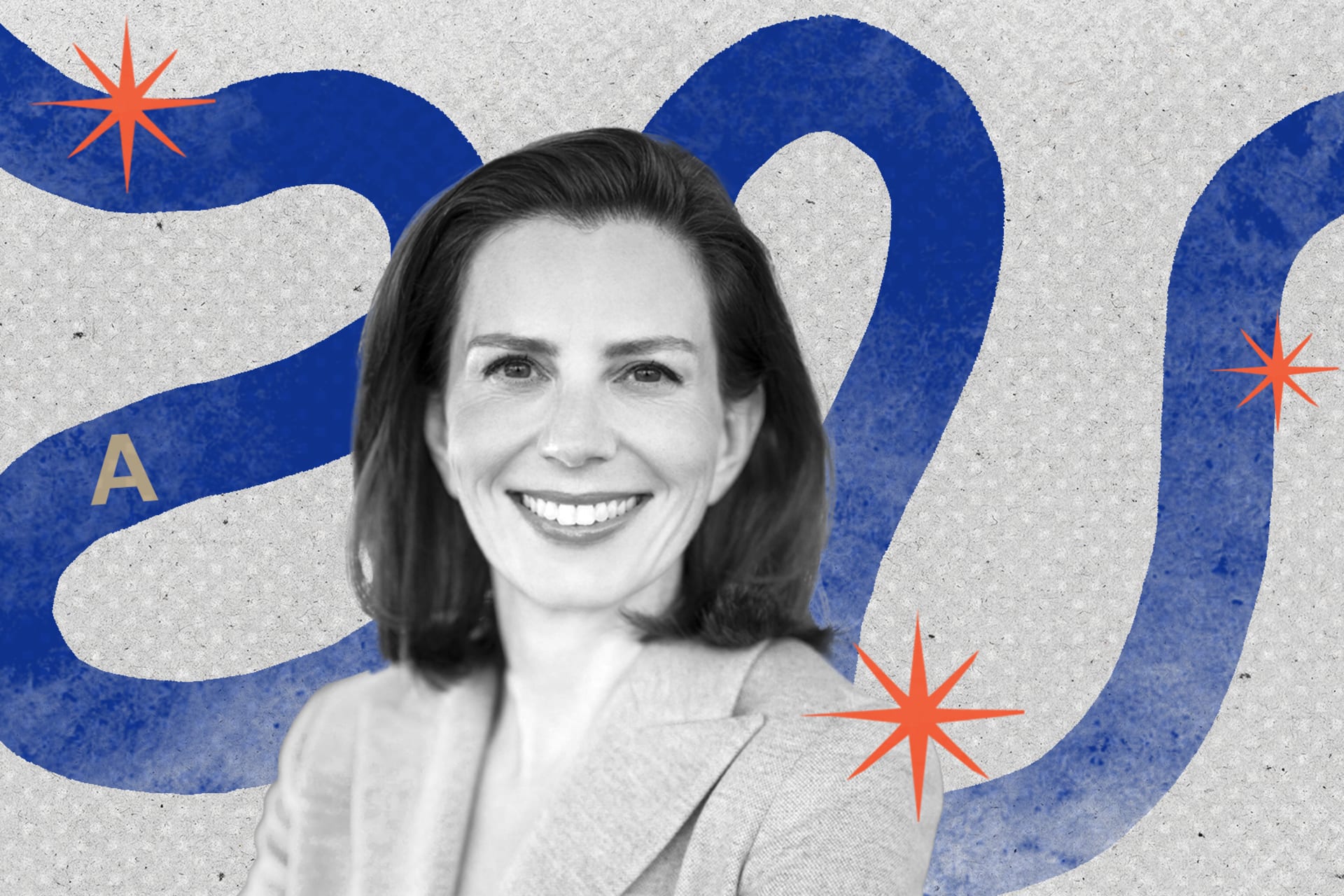
Keren Yarhi-Milo’s childhood dream of becoming a UN ambassador shaped her early fascination with foreign policy. After leaving her native Israel to attend college at Columbia University in New York, Yarhi-Milo embarked on an academic career that took her to the University of Pennsylvania, Princeton, and back to Columbia. In 2022, she became dean of Columbia’s School of International and Public Affairs (SIPA)—the youngest dean in SIPA’s history. She is also a member of the Council on Foreign Relations. Read more about her fascination with foreign policy “puzzles,” her efforts to take academia beyond the ivory tower, and how she ended up teaching a class with Hillary Clinton.
Here’s how Keren Yarhi-Milo got her career in foreign policy.
We always start with the same question: What did you want to be when you were little?
I wanted to be an ambassador to the United Nations. I grew up in Israel and was always interested in international relations—what was happening in the region, the peace process when I was a teenager, the role of diplomacy in ending conflicts.
When Madeleine Albright became the first woman ambassador to the United Nations, I was fascinated by her and her life story. Because she went to school at Columbia University, it became my dream to go to Columbia one day and work at the United Nations. I started reading diaries of former ambassadors to the United Nations and was very much taken by the idea of an organization trying to solve conflicts, work on peace, and end wars.
So how did you end up deciding on academia? I was wondering if you had ever considered something like the United Nations.
By accident. In Israel, you have to do mandatory military service, and because I was fluent in Arabic, I was drafted into intelligence and worked on the peace process—
Here you mean the Oslo Accords?
Yes, the Oslo Accords, when Bill Clinton was president [of the United States] and Benjamin Netanyahu became prime minister [of Israel]. I learned so much about the peace process, diplomacy, intelligence, and foreign policy, and became even more passionate about this line of work.
I came to New York and enrolled at Columbia. I chose political science as my major, and my first class was with the legendary Bob Jervis. He was a dream professor, mentor, later on friend and almost like a second father figure. I fell in love with the way he analyzed international politics through the lens of individuals, psychology, and the human element in decision-making—how that shaped big decisions about war and peace. Taking classes with Bob Jervis made me want to be a political scientist.
I was on full financial aid as an undergrad, but I couldn’t get financial aid for a master’s at Columbia’s SIPA. I couldn’t afford it. Jervis said, “Why don’t you do the PhD? The master’s is free if you stay for the doctorate.” I said, “Sure, why not?”
I started my PhD at the University of Pennsylvania and realized this was a track for people who want to go into academia. I wasn’t sure about that, but it grew on me. During the PhD I kept going back and forth—do I really want this? I thought, “it doesn’t matter, I’m never going to get a job anyway.” But I was lucky and found a project I was passionate about that became my dissertation and first book.
Then Princeton called when I was literally in the delivery room getting an epidural, asking if I could come for an interview. I was like, “Well, it’s not the best time!”
You spent about a decade at Princeton. Was there anything that surprised you about building a career in academia?
I was lucky to do this at Princeton. They took a bet on me. I came out of the PhD program without publications, writing about a topic that involved psychology, primary documents, and qualitative methods. It wasn’t clear it would land me a job at a prestigious university, but it did. I had a dual appointment with the public policy school and the politics department.
I fell in love with academia. What motivates me as a scholar is finding puzzles and patterns—puzzles I really don’t know the answers to, deviations from what theory would expect or from conventional wisdom or rational choice. That stays with me and energizes me. But then I want to find the pattern—what’s driving the forces that produce that pattern and behavior?
I was always drawn to: Okay, you find the answer to the puzzle, you figure out the pattern—what then are the policy recommendations? How do we take this knowledge beyond fellow scholars and academics? How do we take this into the world and really make it a better place? The scholarship can drive better, more creative, smarter solutions.
As someone trying to get tenure, you’re always told the priority is scholarly work—books and articles that will be read by fellow academics and establish your name in the field. After tenure is when you have more freedom. That’s when I discovered my voice more as somebody writing about foreign policy, at the intersection between academia and the world of practitioners and think tanks. I loved that. That’s what I do now—I do both, but as dean of a public policy school, I’m branching out.
When you came back to Columbia and SIPA, you helped launch the Emerging Voices in National Security program. Why was that important to you?
I personally saw this, not just in Israel but also here—the people around the table at important convenings or the key decision-makers don’t have enough variety of viewpoints, backgrounds, identities, lived experiences, and political views. The idea was to create a pipeline of people who bring all of that, mentor them early on, and give them opportunities so that we have qualified, good people taking leadership roles.
For me as a woman in the very male-dominated field of international security, I saw and lived through this. There’s a lot of chauvinism in Israeli intelligence—we saw this even before October 7 in the post-mortems on the intelligence failure. But it’s not just about gender or race. You really need people with different perspectives and lived experiences to have the kinds of conversations that produce the best policy solutions and creative ideas. We’re not seeing enough of it. As director of SIPA’s Saltzman Institute of War and Peace Studies, I thought this was something intentional I could do starting from the undergraduate level.
I have another question about your time at SIPA. You became the youngest dean in SIPA’s history in 2022. What did that mean to you?
The greatest honor. As a first-generation student, Columbia changed my life. Coming back to be dean of the leading, largest and most global, policy school in the world was tremendous.
I took this job at a pivotal time—the Russian invasion of Ukraine, the return of great power competition, technology disrupting how we live, democracies backsliding, inequality, climate issues. It was a moment of disruption and uncertainty when public policy schools needed to be the connector between academia and policymakers, translating research into creative, evidence-based solutions.
Being the dean of SIPA at that moment, I thought public policy schools should really step up and meet this moment. I had the opportunity to create the Institute of Global Politics (IGP) and reorganize SIPA not around disciplines but around the global policy challenges we want to solve—creating a pipeline of people working on those challenges, providing policy-relevant scholarship, and engaging with the community beyond Columbia’s gates.
Then October 7 came, revealing even more challenges. We’re not very good at talking with people we disagree with in a civil way. I observed this before October 7, which is partly why we created IGP, but after, it became very clear. From there came a commitment not just to academic pluralism, but to teaching how to engage in civil discourse and create forums for debates—all in service of sharpening our understanding and problem-solving.
It’s an incredible honor to be dean of SIPA. I love the school and have amazing students and faculty.
That makes sense. I’m curious—you founded the Emerging Voices program, you founded IGP. I was really struck by your seeming desire to launch these new initiatives and innovate beyond the ivory tower. How much of that is part of your thinking?
I’m very much an academic and a product of American academia in terms of pedigree. I believe in American universities—they’re the envy of the world, where a lot of the best work is done, and they play such a big role in society. But I’m also passionate about the long-term health and survival of these institutions, especially in the Ivy League. We should always stay connected to society and the world outside our gates because it’s very easy to be in an ivory tower. An ivory tower protects you from political pressures, but it also leads people to question: Are you relevant? What are you doing? How are you helping society?
We need to be intentional about how we engage. The idea of bringing academics and practitioners together, having academics interact with policymakers, the business sector, nongovernmental organizations—it’s very important. We need to be out there explaining what we’re doing and why in a compelling way, so people understand why universities like ours exist and why they’re important. But through these interactions, we as scholars learn so much—what questions we might not be asking, where else we can bring value. There are lots of opportunities to enrich our scholarship and academic community by engaging.
I have this skill of creating opportunities within academia that allow for partnerships and thinking differently about how we can offer more for students and faculty through these initiatives. IGP is a great case, and I’m very proud of what we’ve created in such a short period of time.
Speaking of IGP, you co-founded it with Hillary Clinton as chair of the advisory board, and you also teach a class, “Inside the Situation Room,” with her. How did that partnership develop?
That’s actually a great story. I’d been dean for only a few months when Lee Bollinger, who was Columbia’s president at the time, called me. He said, “I’ve been trying to recruit Hillary Clinton since 2016. Every time she comes, she meets people, but nothing happens. I want her to meet you. I have a sense you two will hit it off, but don’t get your hopes up. She’s coming to the president’s house to meet many deans. You’ll be one of them. Let’s see what happens.”
I hung up and was super excited. She’d been a hero of mine since I can remember. I started thinking—if she comes to Columbia and SIPA, that aligns with what I want to create: an institute like a think tank within the university that takes scholarship into the world, has a convening forum bringing people together to work on policy issues seriously, with fellows and students. I could totally see her doing this with me as a partner, but all I had was a piece of paper with some ideas.
When I met her, we were supposed to meet for half an hour but ended up meeting much longer. It was like we’d known each other forever—just the chemistry. We talked about everything—foreign policy, the IGP. She knew my work, was very excited about it, what we could teach together. It felt so natural, such a great partnership that evolved into great friendship.
She was all in on how we built IGP together—recruiting people, fundraising, teaching the class with four hundred students, creating the syllabus. We’ve been doing a lot of things now—a book we edited together that builds on the class was published last fall. I feel so lucky to have had this opportunity for three and a half years working together.
That’s amazing. For young people starting out today who are seeing the foreign policy landscape change rapidly, do you have any advice for them or advice you wish someone had given you?
It’s going to be a journey with ups and downs. Throughout your career, you’ll have opportunities to continue what you’re doing, build on it, or try something slightly different. Never be scared to put yourself outside your comfort zone.
I had to do this multiple times. I didn’t initially feel like a true academic in the way some colleagues were, so I carved out a path true to who I was. The transition from scholarship to administration, or from scholar to practitioner—all of these require learning new skills or discovering things about yourself. Don’t be deterred.
Have a really good support system. You want good people surrounding you in difficult moments. But don’t forget them when good things happen—share that with them and be there for them too.
Choose something you’re passionate about, where you feel you have a comparative advantage—where you see the world in a particular way or things come easier to you than to most people.
Don’t underestimate the role of mentors. They come at different stages, in different ways. I could never be where I am without great mentors—Bob Jervis was the most important one. But to have a mentor play a meaningful role, you really have to work at it. These people won’t just show up and present themselves. Focus on building that relationship. If you’re lucky enough to find great mentors like I was, that’s critical.
We also like to cap off with the same question. I’m sure over the years you’ve had many fascinating work or research trips. Is there a most memorable one that you could share with us?
It wasn’t that serious, but I love the show The Diplomat and I was very lucky to be asked to go to the set and advise the show’s writers and producers. Then I brought them to Columbia and introduced them to a lot of people to talk about The Diplomat and how we analyze different foreign policy issues. Who knew that as a dean of a school you could be hanging out with Keri Russell?
That’s so cool!
If that’s your thing, maybe you want to go into academia! You never know.
This interview has been edited for length and clarity. It represents the views and opinions solely of the interviewee. The Council on Foreign Relations is an independent, nonpartisan membership organization, think tank, and publisher, and takes no institutional positions on matters of policy.