Inflation Comes Home to Roost With the Help of Trump’s Tariffs
Wednesday’s consumer inflation report showed a four-month high of 2.7 percent. A deeper dive into the data suggests that stagflation is an increasingly likely probability as tariff costs are passed onto consumers.

Rebecca Patterson is a CFR senior fellow and globally recognized investor and macro-economic researcher.
The latest U.S. consumer inflation (CPI) report was striking, not least because the headline figure rose to a four-month high of 2.7 percent from June a year ago.
What worries Wall Street are the details (which were quickly downplayed by the White House). Specifically, the report shows notable price increases across a broad swath of goods that are affected by tariffs—at a time when much higher tariff rates remain on the horizon.
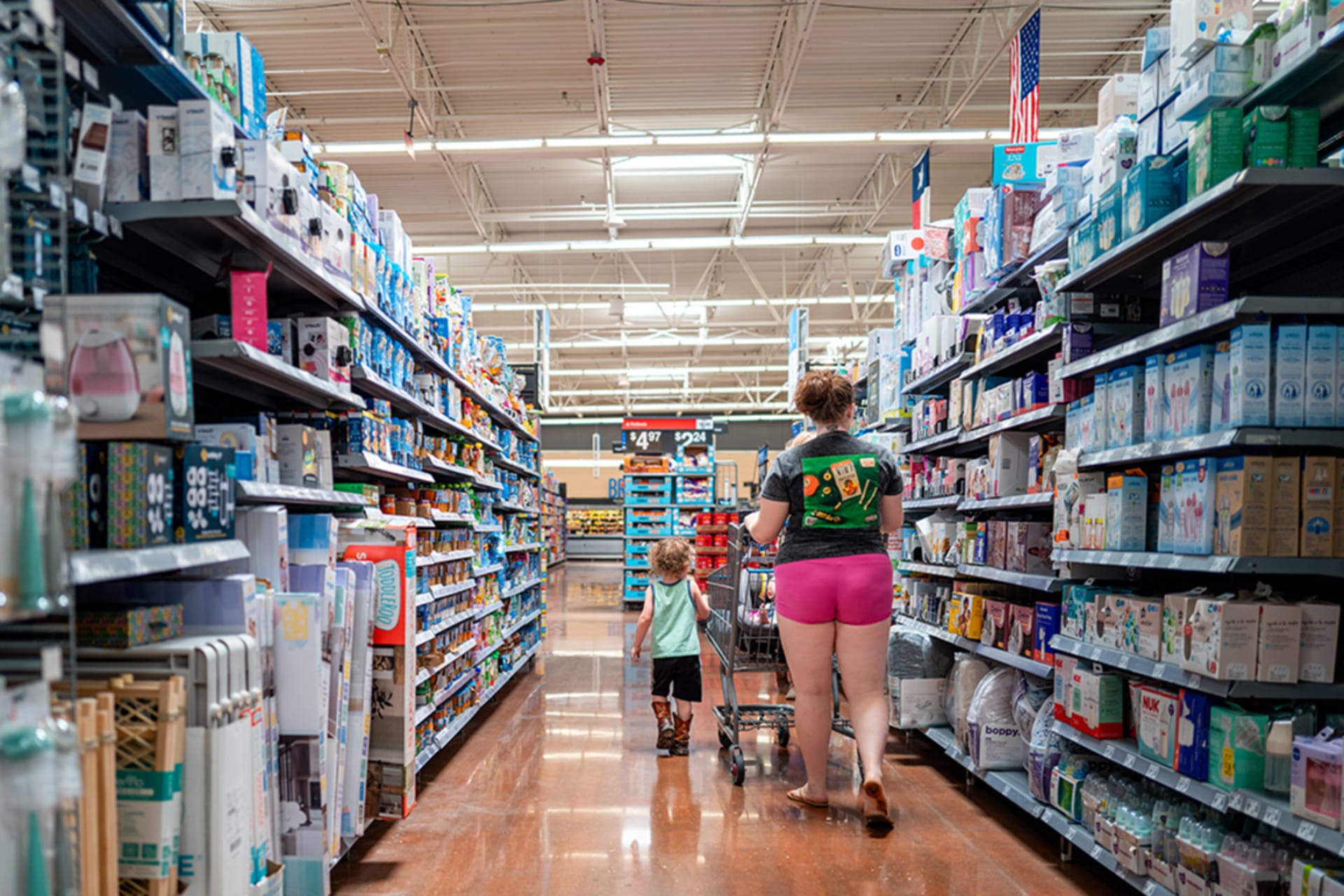
Items that American consumers often buy at a local Walmart or Target—imported goods like clothes and shoes, foodstuffs, toys, and audio and video equipment—saw notable price increases in June. Indeed, the overall CPI increase would have been markedly higher if not for offsetting price declines in items including new and used vehicles, airline fares, and lodging away from home (effectively, hotels).
The decline in car prices is at least partly a reflection of spiking demand in anticipation of President Donald Trump’s proposed tariffs. But after surging in March and April, vehicle sales have steadily slowed, likely leading dealers to offer more price incentives.
More worrying are airline fares and hotel prices, which have declined a cumulative 10.6% and 6.5%, respectively (not annualized) over the past four months. These declines raise questions about the financial health and spending capacity of American consumers.
The combination of rising goods prices and hints that the consumer is pulling back on vacations and travel suggests a need to consider a macroeconomic scenario that the U.S. rarely faces—stagflation. This concerning combination of weak economic growth and rising inflation would put the Federal Reserve in a particularly difficult spot at a time when the president is demanding interest rate cuts. Will Chairman Jerome Powell and the Federal Open Market Committee vote for a rate cut to support growth or lean towards steady or higher rates to prevent further inflation pressures?
Wednesday’s financial market reaction to the CPI report signaled a bias for fewer, not more, policy rate cuts. The futures market modestly reduced expectations for the Fed to ease rates this year (to less than two 25-basis point cuts by year-end). Meanwhile, Treasury yields rose across the board, including the thirty-year bond yield, which breached 5 percent for the first time since mid-May. Higher yields lifted the dollar and weighed on equity markets.
It is impossible to know exactly where and when tariff rates will settle, with the administration’s specific plans often evolving on a daily basis. Just on Wednesday, for instance, Trump said he was likely to impose tariffs on pharmaceuticals by the end of the month—despite his previous claim that he would give firms “a year or so to build, and then … make it a very high tariff.” He suggested that semiconductor tariffs would be “similar” and underscored that these tariffs would be in addition to so-called reciprocal tariffs due to be implemented on August 1, although various trade deals remain in the works.
What seems clearer is that the ultimate tariff level will likely be significantly higher than what existed before Trump took office, in part to help finance growing budget deficits and in part to try to bring more manufacturing jobs back onshore.
The non-partisan Yale Budget Lab estimates that all tariffs announced as of July 13 would raise the effective tariff rate to 20.6 percent and 19.7 percent after shifts in consumption—the highest average rate since 1933. Even including substitution effects, the organization estimates that these tariffs would increase prices by 1.8 percent over the short term.
Some of those higher tariffs could be absorbed by producers, and some may continue to be evaded through transshipments via lower-tariff countries, as has been seen in China and Southeast Asia in recent months. Further, some of the tariffs may be absorbed by U.S. companies who accept lower profit margins. In addition, the administration anticipates that deregulation, particularly in financial and energy sectors, will support growth while reducing price pressures. Though possible, this remains to be seen—deregulation is a process that takes quarters, while tariff impacts can take mere weeks.
What is evident in the June CPI report, however, is that a portion of the growing tariff rate is finally being passed to U.S. consumers in the form of higher prices, or put simply, a consumer tax. Despite the administration’s hopes, this first signal of a worrying stagflation trend seems likely to continue in the months to come and has an increasingly high probability of affecting Americans into the end of 2025.
This work represents the views and opinions solely of the author. The Council on Foreign Relations is an independent, nonpartisan membership organization, think tank, and publisher, and takes no institutional positions on matters of policy.