Iran is Not a Monolith: The Case for Exploiting the Country’s Internal Fractures
Military pressure has reached its limits. Empowering Iran’s ethnic minorities toward a federated future offers the West a more durable, long-term strategy.

Ed Husain is a senior Middle East fellow at the Council on Foreign Relations.
Since 1979, Islamist clerics have imposed on Iran a revolutionary Shiite creed of “Guardianship of the Jurist” (Wilayat al Faqih) that seeks to use clerical power to form an “axis of resistance” against Arabs, Sunni Muslims, Americans, and Israelis. This ruling theology has since isolated the country from its neighbors and the world.
It has also led many, like Henry Kissinger, to ask whether Iran is a country or a cause. It is clearly a cause, but the United States is striking a country and failing to tackle its ideology and identity. Therefore, the current conflict’s bombs and blockades have not provided a long-term answer that is much needed. By attacking its Arab neighbors with almost ten thousand drones and missiles in recent weeks, Iran has crossed a red line. The old order no longer holds.
This calls for a new approach. Iran has thrived for years by dividing Sunnis and Shiites in Bahrain, Iraq, Lebanon, Saudi Arabia’s Eastern Province, Syria, and Yemen. The United States and its allies should use this strategy against them by amplifying Iran’s own domestic divisions.
Military pressure alone won’t neutralize the Wilayat al Faqih ideology. The smarter play is to exploit internal ethnic and political fractures to push Iran toward a federated, post-Ayatollah future.
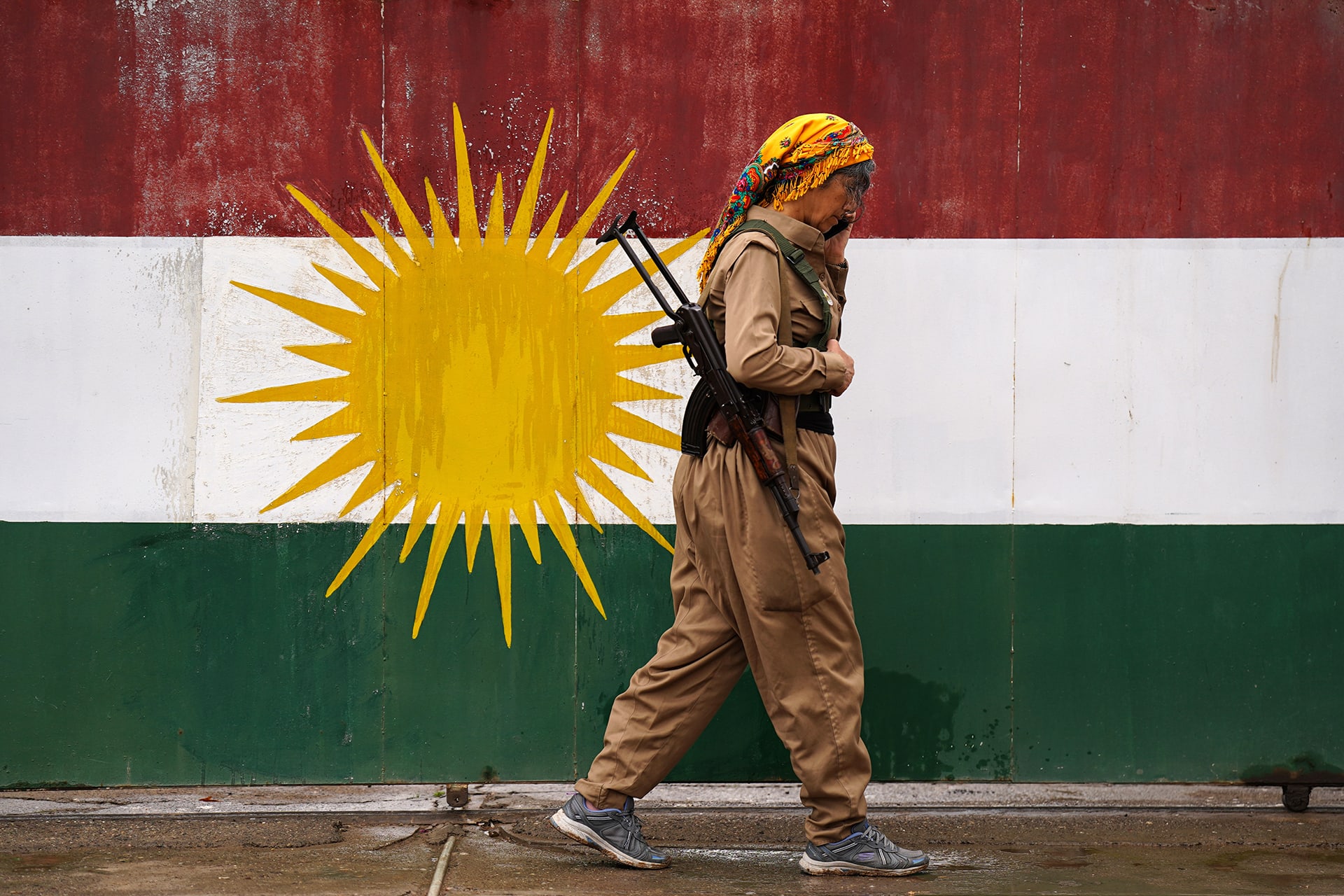
Iran is an incredibly diverse country ethnically and culturally. Exact demographic data is difficult to obtain, but some estimates suggest that fewer than 50 percent of Iran is Persian, or Farsi. Fars is a specific region in the southwest, but that is not all of Iran. The West can contain the mullahs by engaging ethnicities that command millions of peoples—Azerbaijani, Ahwazi Arab, Balochi, Kurdish, Lurs, Tajik, and Turkmen—who demand separatism or greater say in their regional affairs. (Several maintain armed factions.)
And there are clear weak points. For example, 80 percent of Iran’s oil and 60 percent of its gas lies beneath Khuzestan, home to Iran’s largest Arab minority—the Ahwazi Arabs. Reza Shah Pahlavi, who seized control of Iran in 1921, dissolved the Ahwazi Arabs’ autonomous emirate in 1924. The resentment that followed has never truly dissipated. Despite it being home to much of Iran’s wealth, regime mismanagement of Khuzestan has driven unemployment there to Iran’s highest levels. The protests that began in Khuzestan in 2017 would go on to spread across the nation driven, in part, by water shortages.
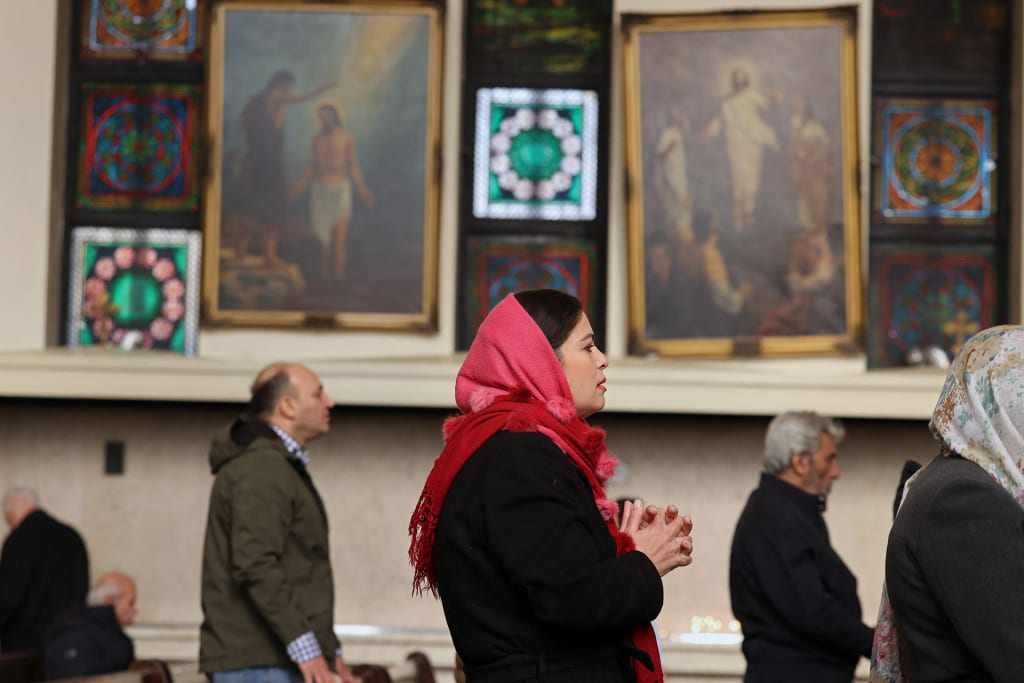
And there are further tension points. Iran bans mainstream Sunni Muslims from building mosques in Tehran. The largest non-Muslim minority, Bahais in Iran, are routinely arrested, detained, and imprisoned. Armenian and Assyrian Christians are forbidden from using Farsi for prayers. Combined with the war, the list of grievances against the clerics who are attempting to hold the country together is growing.
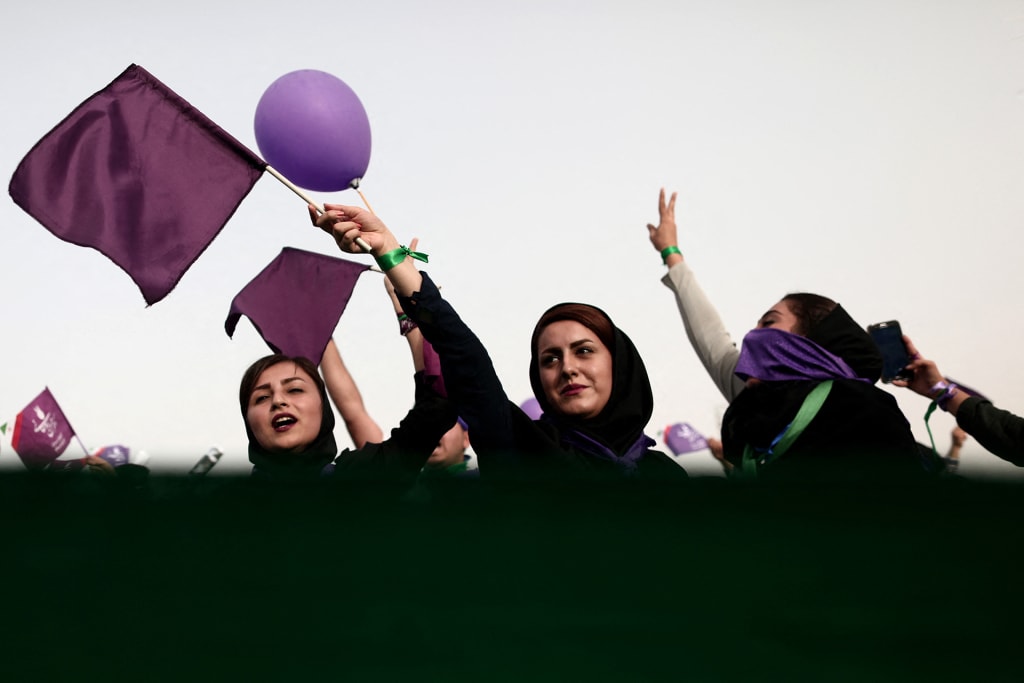
The peoples of Iran have been telling the world since 2009 through their protests and bravery that they want freedom from the mullahs. There were five major nationwide anti-regime uprisings over the ensuing years. Spread widely across the country, they incorporated both smaller, conservative towns and those with large ethnic minority populations. This includes Arab-heavy Khuzestan again in 2019 as well as Kurdish areas in 2022. Bakhtiyari Iranians, another critical ethnic minority, remain so sensitive to identity that even a 2014 film produced protests. More protests will follow.
Washington has been seeking a cohesive unified opposition. But the Iranian opposition is not united because the nation of Iran is not a monolith. It is a multi-ethnic composition with competing visions of the future.
The United States can start down this path by funding media and civil society organizations that amplify minority voices inside Iran, the diaspora, and across the region. Diplomatic recognition of minority grievances—in international forums, in bilateral negotiations with Tehran, meetings with Iran’s neighbors, and in public statements—costs little and signals much. Rather than blanket economic pressure applied to the whole country, more targeted sanctions relief could signal that Washington distinguishes between the regime and the peoples it suppresses. Regional partners have skin in the game as well. Coordinating their leverage points toward a common strategic purpose shouldn’t be difficult—it is what great powers do.
Admittedly, the White House had offered weapons to Kurdish groups in Iran and was surprised there was no uprising. But the Kurds had long felt abandoned by the United States in Iraq and Syria and demanded greater security guarantees. President Donald Trump and administration officials should consider visiting Ankara, Baku, New Delhi, and the Gulf region with a mission to amplify support and concern for the plight of these and other ethnic groups. This could be the beginning of a longer bite-hard strategy in the battle of ideologies and identities.
By doing this, Iran’s focus would be turned inward as the effort to build a great and cooperative nation moves forward by empowering the aggrieved peoples into a confederation of Azerbaijanis, Ahwazi Arabs, Baloch, Kurds, Lurs, Persians, Tajiks, and Turkmen. The future of Iran is not in the Islamic Republic, but in an Iranian Federation. And in time, if parts wish to be independent from Tehran, they should be allowed to do so. Local plebiscites can decide if Azerbaijanis want to join their brethren in Azerbaijan and Balochis wish to break away. Pakistan’s hosting of peace talks is, in part, to prevent Balochi separatism on the 560-mile Iran-Pakistan border. But tension between Iran and Pakistan, as flared up in 2024, is exactly what would force Iran to deal with its domestic divisions, not meddle in Lebanon, Saudi Arabia, Syria, or Yemen against U.S. allies and interests.
Federations where half the nation has more power and there are checks and balances based on local interests, especially when the oil wealth is derived from Arab areas, do not allow for a government in Tehran to be at war with Arab nations or the West.
Critics of this effort will point to Iraq as a cautionary tale, but this is an imprecise comparison. Those issues stemmed from a sudden power vacuum, fall of a Sunni leader in a Shiite majority nation, when the occupying force did not have a plan for sectarian communities and their overlapping claims to the same territory. With Iran’s ethnic minorities largely concentrated in distinct geographic regions, neighboring other ethnically different non-Persian nations, a federation built on these geographic realities could operate as a true political framework. Whether it ultimately leads to a unified federated Iran or a collection of sovereign states is a question for localized Iranians to answer—not Washington, and not Tehran.
Alternatively, if the United States stays its current course, it allows the Iranian regime to wait out the West in an intractable conflict, which is a route that does not scare them. Persians were one of the first to play chess: They are masters of the long external game—and students of the past. Anyone who has sat in a meeting with the current government knows the lectures on history, theology, and philosophy they deliver. They will tell you how the Romans fought the Persians for nearly seven hundred years without seizing control of the nation. One of the longest wars in history only ended when Arabs from the Peninsula removed the Sassanian regime and empowered local peoples to govern.
The West does not win by becoming another Roman legion. It does so by empowering the local people. At best, this could win the world a new Iran where decentralized power diffuses the threat from the ideological mullahs in Tehran. At worst, the United States and its allies take the war where it hurts the regime most: ethnic and separatist politics. It is, after all, where they feel most threatened. When Cairo merely organized a conference to support Ahwazi Arabs, Iran attacked even the Islamist government in Egypt. The alliance between the Shiite mullahs and the Egyptian Muslim Brotherhood became strained. More such rifts are important.
Turkey understands the power of this inside-out approach. A significant segment of Iran’s population is Azerbaijani, with their own nation-state of Azerbaijan to the north of today’s Iran. Not only does Azerbaijan enjoy diplomatic and security relations with Israel, but it is also a secular Shiite country that is close to Turkey via its culture and language. During a 2020 visit, the Turkish President Recep Tayyip Erdoğan recited a few lines of poetry that laments how the Aras River has separated Azeri-speaking people in Azerbaijan and Iran. In reaction to Erdoğan, the Iranian foreign minister took to social media attacks. State media in Iran attacked Erdoğan as “Sultan of Illusion” to undermine his effect. They knew that millions of Azeri-descent Iranians could feel closer to Baku than to Tehran, similar to other ethnic groups and their ancestral lands.
But this gives a glimpse into how to deal with Iran. A disunited country cannot produce a government in waiting; it is more effective to summon regional intra-Iranian diaspora groupings. Naturally, Persian nationalists will oppose this fragmentation of their claimed country, but the United States and its allies have every strategic reason to be on the side of the Ahwazi Arabs, Azeris, Baluchis, Kurds, and others. And this strategy will yield more results at future negotiating tables than bombing a clerical regime with a martyrdom complex.
The United States and its allies do not have to become victims of history by engaging in a long conflict with Iran. Iran’s many peoples deserve liberation from the mullahs’ “axis of resistance” and the Wilayat al Faqih. By empowering the Iranian people, the West could move off Tehran’s regional chess board and Iran can truly plan for life after Khamenei.
This work represents the views and opinions solely of the author. The Council on Foreign Relations is an independent, nonpartisan membership organization, think tank, and publisher, and takes no institutional positions on matters of policy.