Israel Weighs Truce vs. Gaza City Invasion
By experts and staff
- Published
- CFR Editors
Welcome to the Daily News Brief, CFR’s flagship morning newsletter summarizing the top global news and analysis of the day.
Subscribe to the Daily News Brief to receive it every weekday morning.
Top of the Agenda
Israel is reviewing a Hamas-approved plan for a Gaza ceasefire while it simultaneously moves forward with plans for a major offensive. The draft deal was put forward by Egyptian and Qatari mediators; it would see a phased release of Israeli hostages and Palestinian prisoners while increasing aid to the enclave. Israel’s defense minister today approved the call-up of about sixty thousand Israeli reservists to invade Gaza City, the territory’s largest population center.
The potential truce. Qatar said this truce was almost identical to a version that the United States previously suggested—and Israel backed. Unnamed senior Hamas and Egyptian officials outlined the plan to Reuters:
- Over a sixty-day period, ten living Israeli hostages would be returned, as well as the bodies of eighteen others. Israel would release 150 detained Palestinians.
- Israel would allow the United Nations and the International Committee of the Red Cross to distribute aid in Gaza.
- The Israeli army would partially withdraw to a zone slightly more than half a mile wide on the territory’s northern and eastern borders.
- Parties would begin talks on a permanent truce once this partial stage begins.
On the ground.
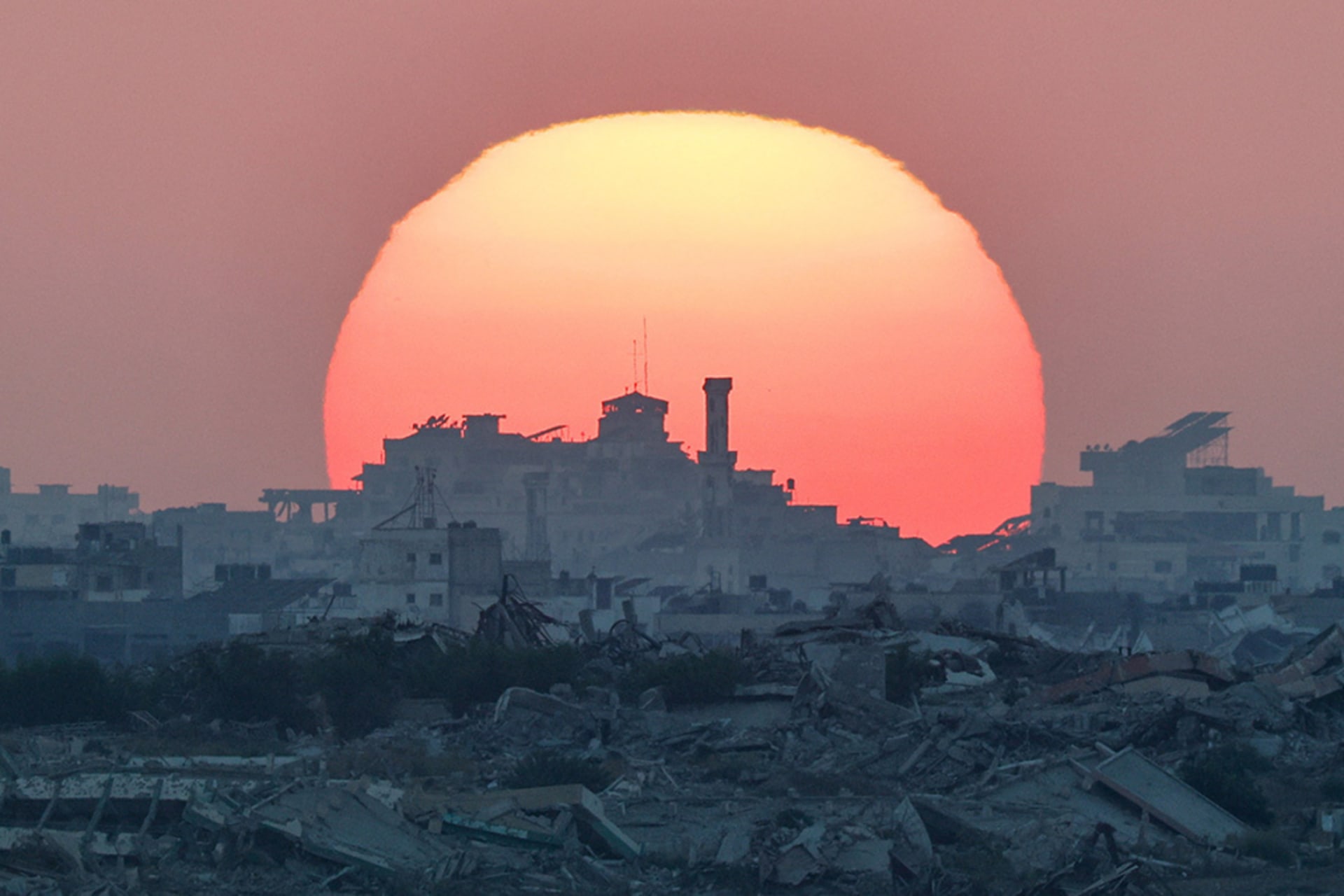
- Israel’s military offensive is expected to displace an estimated one million Palestinians in Gaza to the enclave’s south. The announcement of the offensive earlier this month sparked international criticism, especially due to humanitarian concerns and potential violations of international law.
- Gaza’s health ministry said yesterday that 266 people had died of famine and malnutrition in the territory.
- Meanwhile, Israeli attacks killed forty-eight people across Gaza yesterday, the civil defense agency said.
“The Israeli government is seeking victory while both [President Joe] Biden and [President Donald] Trump have pushed ceasefire deals. Israel’s belief that it can rely on its military power alone to improve the country’s security and, in turn, transform the Middle East is mistaken, however. There is a real risk of Israeli overreach that will undermine, or at least diminish, the gains that the Israel Defense Force has made in almost two years of war.”
—CFR Senior Fellow Steven A. Cook in this Expert Brief
Across the Globe
Ukraine talks. The United States is willing to provide air support to bolster Ukraine’s postwar security, Trump said yesterday. The White House press secretary said that U.S. troops on the ground were ruled out. U.S. Secretary of State Marco Rubio is heading a commission on draft proposals for security guarantees with European countries, multiple news outlets reported.
China-India thaw. The countries announced a series of trade and travel agreements after a New Delhi meeting yesterday between Indian Prime Minister Narendra Modi and Chinese Foreign Minister Wang Yi. They will resume direct flights; facilitate border trade; and ease visas for businesses, tourists, and the media.
Aid worker deaths. A record 383 aid workers were killed in 2024, the United Nations said. The 31 percent increase in deaths from the previous year was driven by the war in Gaza, where 181 aid workers were killed. UN Emergency Relief Coordinator Tom Fletcher said that the lack of accountability for their deaths is “a shameful indictment of international inaction.”
U.S. interest in Intel. The U.S. government is considering taking a 10 percent stake in Intel, the White House said yesterday. Commerce Secretary Howard Lutnick said the government might swap grants for shares of the chip giant. Media reports last week about the deal said that it would involve Intel’s plans to create a manufacturing hub in Ohio.
Kabul summit. The foreign ministers of China and Pakistan are in Afghanistan today for a trilateral meeting on political, economic, and regional cooperation. It is the first meeting among such senior officials since the Taliban took power in Afghanistan in 2021. Russia has been the only country to officially recognize the Taliban government since then, though several countries have held high-level meetings with Taliban representatives.
U.S. scrutiny of Chinese goods. Washington yesterday expanded the list of Chinese products that it could ban if it deems them to be made with forced labor. The new items added to a pre-existing list include steel, copper, and lithium, among other materials. The U.S. policy focuses mostly on China’s Xinjiang region, where manufacturing is assumed to include forced labor.
Delayed climate targets. Brazil issued a letter to governments yesterday urging them to publish their updated targets for reducing greenhouse gas emissions ahead of a September deadline. Top emitters including China and the European Union have yet to submit their plans. The United Nations requires submissions by next month in order to project how much the world is diverging from an internationally agreed-upon goal for limiting global warming.
Armenia-Iran ties. The two countries pledged to deepen economic relations during Iranian President Masoud Pezeshkian’s visit to Yerevan yesterday. It followed a U.S.-brokered peace deal between Armenia and Azerbaijan earlier this month. An aide to Iran’s top leader criticized the prospect of exclusive U.S. development rights in a new trade corridor as part of that deal, but Armenia’s prime minister said yesterday that Yerevan would control the route.
What’s Next
- Today, an international conference on African development begins in Tokyo.
- Today, the Taiwan Automation Intelligence and Robot Show begins in Taipei.
- Tomorrow, a three-day conference featuring central bankers and finance ministers begins in Jackson Hole, Wyoming.