Not So Strait-Forward: Hormuz, Iran, and the Future of Gulf Oil and Gas Flows
Restoring Gulf oil and gas flows to prewar levels requires navigating a complex web of technical, commercial, and geopolitical obstacles—many of which remain unresolved.

Clara Gillispie is a leading expert on Asian energy security strategies and their implications for U.S. national interests.
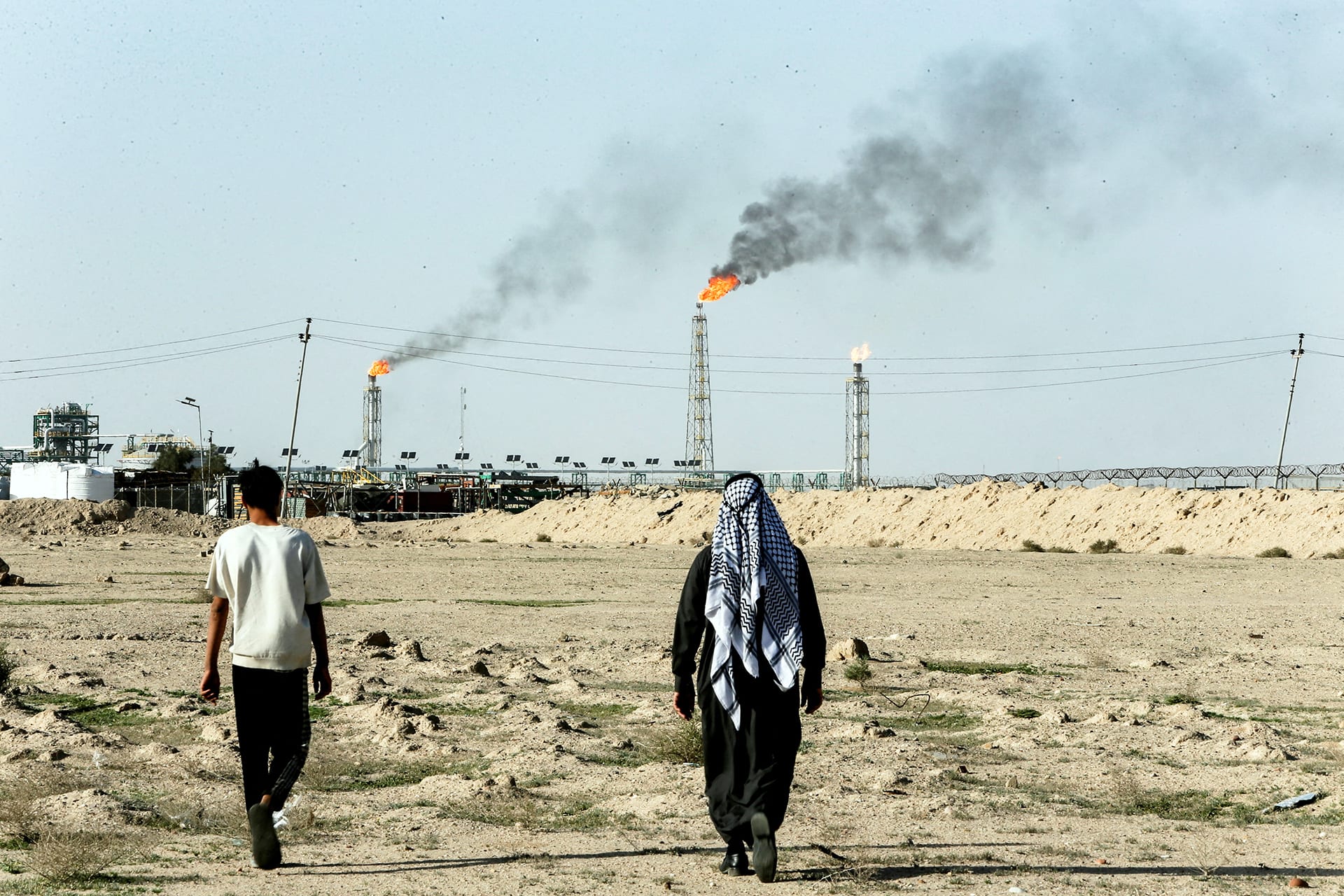
The interim U.S.-Iran peace agreement paved the way for oil and gas flows through the Strait of Hormuz to restart. However, the answer to when—or if—these flows will return to their pre-closure levels and patterns is anything but straightforward. The fragility of the current peace notwithstanding, there is simply no precedent for unwinding a market disruption of this magnitude; that is, a shut-in equivalent to more than 10 million barrels per day of oil supply and roughly 300 million cubic meters per day of liquefied natural gas (LNG) for over 100 days.
Optimistic assessments envision that the majority (but not all) of this supply could return to global markets within a few months, even if the U.S.-Iran war itself may be far from over. The more pessimistic assessments envision that it will be nearly impossible to avoid an uneven regional recovery marred by periodic setbacks, contributing to a weak market case for a full recovery on any timeline.
The outcome will depend on the various technical, commercial, operational, and geopolitical factors that could constrain the pace and nature of the strait’s reopening. But both optimistic and pessimistic assessments generally agree that returning the Persian Gulf’s seaborne energy flows will require careful sequencing of at least the following four critical, interdependent tasks.
- Clearing Trapped Vessels. As of mid-June, several hundred ships remained stuck inside the Gulf. Limited, viable routes for exiting the strait will require close coordination on how (and in what order) these ships depart, where not every ship that needs to exit the strait is an oil or gas tanker and not every oil and gas tanker is assumed to be currently seaworthy. To be sure, a slow but steady clearing of this backlog is expected to produce a meaningful burst of returning oil and gas supply early in the process. However, the timeline for thirsty markets could prove relative. For example, it usually takes about a month for ships to transit from the Gulf to the major destination markets of China, Japan, and South Korea.
- Increasing Inbound Tankers. As trapped vessels depart, new, inbound tankers can be brought into the Gulf. While some vessels have remained anchored just outside the strait or are already headed back toward the region, others have spent months servicing alternate trade routes, particularly numerous routes between the Americas and Asia. In turn, the pace of repositioning these vessels won’t only be shaped by sailing times, but also the incentives for making such a pivot. Among other commercial considerations, insurance premiums for transiting the strait (when such insurance is even available) remain elevated relative to pre-closure levels. At the same time, for several economies—including Bahrain, Iraq, Kuwait, Qatar, and the United Arab Emirates (UAE)—increasing the number of inbound tankers is also necessary to clear storage sites; a prerequisite for a full, more meaningful restart of halted production.
- Restarting Production. Restarting oil and gas production is itself a phased engineering process, rather than an on-off switch. The pressure at oil wells needs to be adjusted gradually to avoid damage. Older fields, such as those in Iraq and Kuwait, will need to proceed even more slowly and could, in some cases, struggle to come back online at all. Meanwhile, the export of LNG also requires turning the natural gas into a super-chilled, liquid fuel before it can be loaded onto tankers. This full process typically takes about two weeks. The trains that handle this process also need to be restarted sequentially, further curtailing the pace of even a rapid restart in LNG exports out of Qatar and others in the region.
- Repairing Damage. Elements of the preceding tasks can be managed concurrently, compressing their aggregate timeline. Even so, some of the damage to date from the war with Iran will shape regional energy export levels for years. The damage to QatarEnergy’s LNG production facilities at Ras Laffan is expected to take up to five years to repair. Gas facilities in Iran, Saudi Arabia, and the UAE have also experienced damage, as have ports in multiple countries and oil refineries in Bahrain, Iraq, Kuwait, Saudi Arabia, and the UAE. Repairing all of this damage is expected to be incredibly costly—to say nothing of the revenue loss that this damage represents. How and when to address specific repairs is a matter of not only their technical viability and the available financial resources, but also their likely return on investment relative to other potential developmental paths.
Where consensus about expectations for the restart process breaks down is not on the tasks themselves. Instead, disagreement arises around how to account for the ongoing and uncertain risks that cut across these tasks—including who might be willing to assume these risks, and for how long.
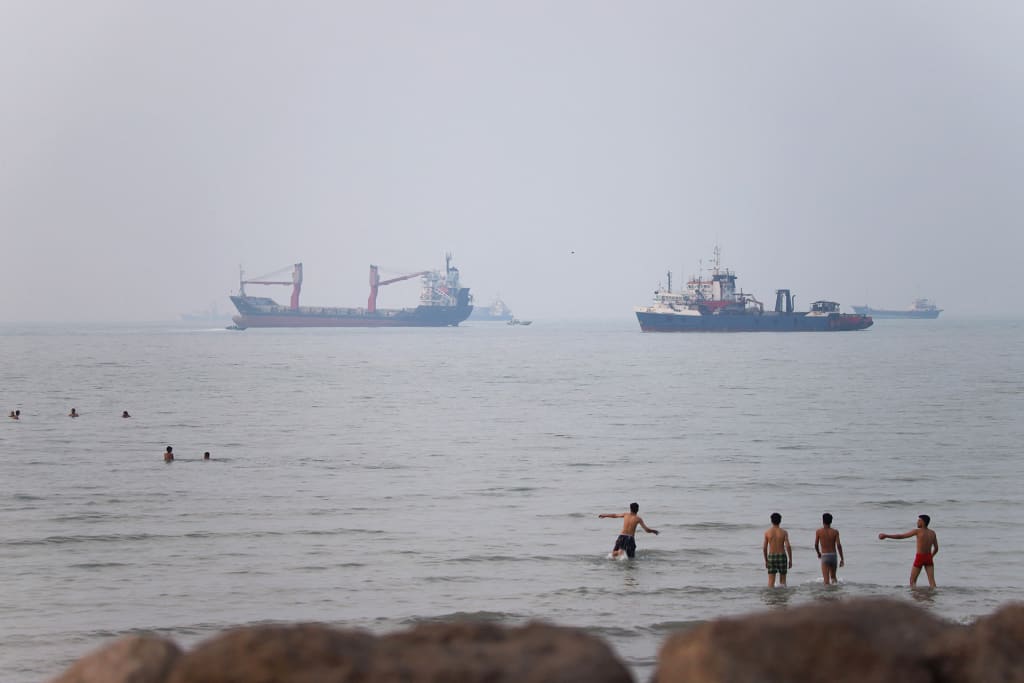
Even if the strait’s gradual reopening continues, safe routes for navigating the waterway remain extremely limited, with an estimated eighty mines still in the strait’s main navigation areas. The interim peace deal commits Iran to clearing these mines, but the timeline and process involved remain unsettled. In turn, this ongoing situation means seaborne exports will (at least for the near-term) rely more heavily on alternate routes out of the Gulf that are notably closer to either Iran or Oman. This will, at least theoretically, amplify the influence that these two economies can exert over seaborne trade flows.
This further complicates the ongoing and already fraught political negotiations. More precisely, while Washington has insisted that the interim peace deal requires that any reopening of the strait be “toll-free,” both Iran and Oman have signaled that they are moving forward with a plan to collect payments in return for a guarantee of safe passage out of the Strait of Hormuz. Iran has already demonstrated a willingness to use force to discourage ships from transiting outside of its preferred sea-lanes—while the United States, in turn, has responded with its own strikes and other countermeasures. Altogether, this raises the question of whether the terms of a fragile peace can be sustained or if they are already broken.
Even if the interim peace deal holds, what comes after its expiration is still an open question. Until these and similar strategic questions are resolved, insurers, shipowners, and buyers will have to continue to price notable risk into their operations on top of their already heightened costs of doing business. But saying that these stakeholders will need to price in risk is not the same as saying that they will avoid it. Indeed, multiple aspects of the tasks noted above are already well underway.
Tracking data produced by Kpler, for example, suggests that seventy tankers sailed through the strait on June 25 alone, while QatarEnergy has begun a phased restart of its natural gas production. The company said it expects to be able to restore roughly 80 percent of its export capacity within two months. Equally telling is that even though renewed strikes over the June 28 weekend led to a brief halt in shipping traffic through the Gulf, some ships had already begun to reenter the strait as of June 29. The United States and Iran exchanged a new round of strikes on Tuesday, but It is too soon to say what trade flows and active work on infrastructure repairs might look like after the initial dust settles. Even so, some invested stakeholders have already demonstrated that they are willing to brave quite a bit of risk to translate the potential benefits of a reopened strait into tangible gains—or, to borrow Trump’s words, to “let the oil [and natural gas] flow.”
Perhaps that is why the case for a relatively rapid recovery in Gulf oil and gas export volumes is not wholly unfounded. Oil production out of the region could well begin to restabilize by the end of 2026, and in doing so, contribute to putting global markets back on track to see a glut of oil supply sometime in 2027, as the International Energy Agency, among others, have suggested. The outlook for the recovery of gas is less bullish, but a sustained reopening of the strait could nonetheless still support a notable, partial recovery in 2026 and an overall wave of new supply that is delayed, but not inherently deferred. Even so, there are already signs that such a recovery in production levels is unlikely to be the same as a return to business-as-usual.
To that end, even as buyers and producers do appear to be accepting some aspects of this new risk profile—paying higher insurance and shipping costs—many are also accelerating their efforts to bypass the Strait of Hormuz. The UAE, for example, has already announced that it will bring forward the competition date of a planned, overland pipeline. When it comes to reorienting trade flows between several of the other Gulf producer economies and their key destination markets, though, the alternatives are less clear—short of these buyers pursuing alternative suppliers altogether.
Middle Eastern suppliers will now have to make a multipronged case. First, they have to establish that a rebound in exports is technically possible and, second, show that relying on them is attractive in an environment where other producers—including those in the United States—have been accelerating their efforts to sign multi-year agreements with major buyers in Asia and more broadly to pick up global market share. Indeed, an open-ended risk is that even once export levels return to pre-closure levels, there is no guarantee they can stay there in a scenario where these exports remain heavily reliant on seaborne trade, and Iran can close the strait at any time. Early evidence shows that some traditional importers of Gulf energy supplies—like in China—have moved quickly to snatch up new, returning oil supply from the region, buoying the demand signals needed to sustain a restart. But others, including those in India, appear to still be hedging their bets.
The roadmap for restarting Gulf oil and gas flows is, thus, relatively straightforward. The outlook for a true recovery is not.
This work represents the views and opinions solely of the author. The Council on Foreign Relations is an independent, nonpartisan membership organization, think tank, and publisher, and takes no institutional positions on matters of policy.