Poland Responds to Russian Drones
By experts and staff
- Published
- CFR Editors
Welcome to the Daily News Brief, CFR’s flagship morning newsletter summarizing the top global news and analysis of the day.
Subscribe to the Daily News Brief to receive it every weekday morning.
Top of the Agenda
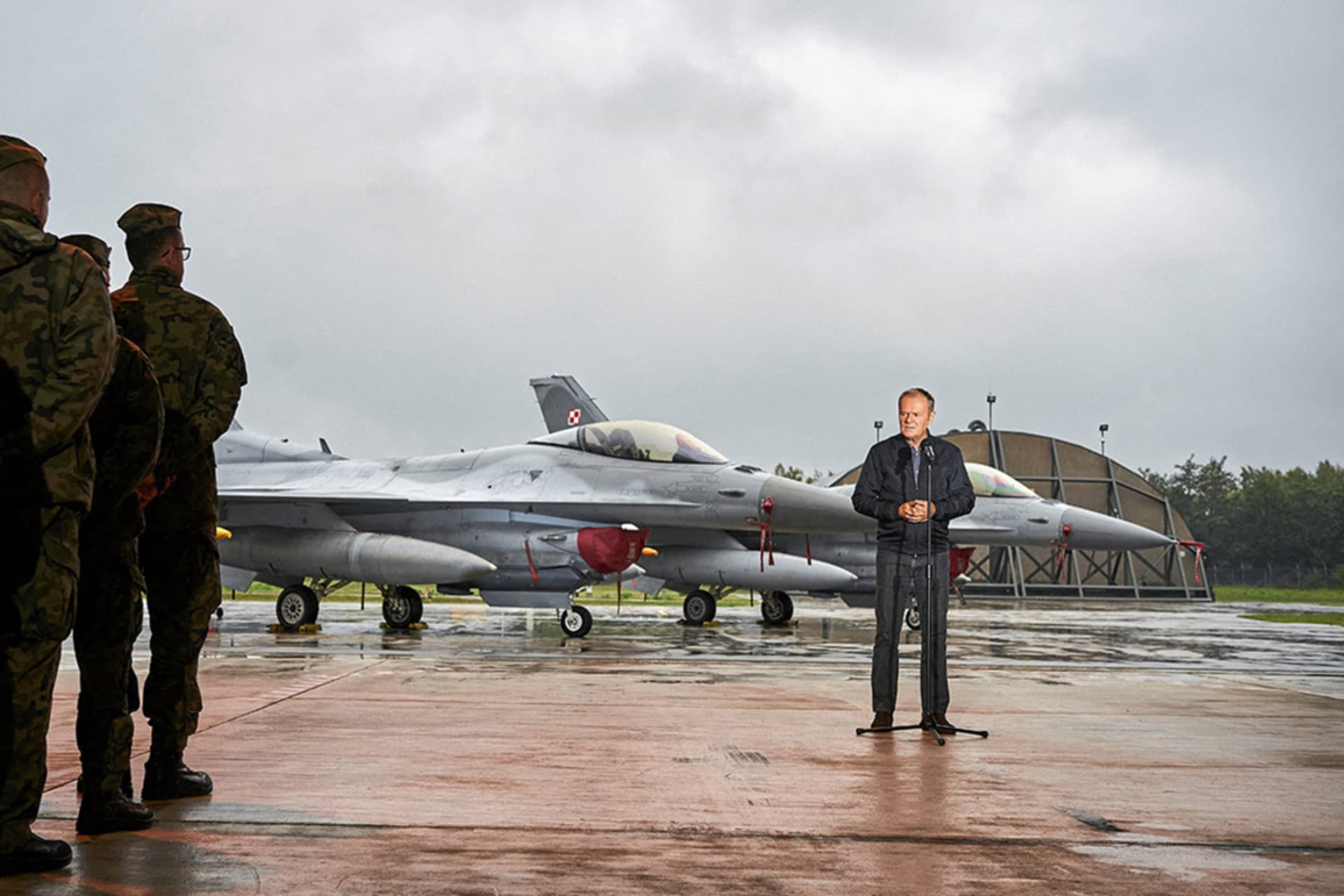
The UN Security Council will hold an emergency meeting after Poland downed Russian drones that crossed into its airspace early yesterday morning, Warsaw said. Poland is seeking reinforcements for its air defenses from NATO allies, who are debating their joint response to the incident. Polish Prime Minister Donald Tusk said that while the country did not appear on the brink of war, it was nevertheless at its closest to open conflict since World War II.
Unpacking the incident.
- Poland, along with Lithuania and Ukraine, issued a joint statement condemning the drones as a “deliberate and coordinated attack.” NATO Supreme Allied Commander Europe Alexus Grynkewich said at a press conference today that the alliance did not yet know whether the act was intentional. He recommended reserving “low confidence” in the number of drones that were reported.
- U.S. President Donald Trump held a call with Poland’s president and wrote on social media, “What’s with Russia violating Poland’s airspace with drones?”
- Grynkewich called NATO allies’ response to the incident—which mobilized Polish, Dutch, Italian, and German forces—well executed, but said there were lessons to be learned. Not all of the drones were shot down.
- Russia issued ambiguous statements. The Kremlin said it would not comment but the defense ministry said the drones had not planned to hit targets in Poland.
What comes next.
- Poland is banning drone flights and restricting some small air traffic along its eastern borders until December 9.
- France, Germany, and Italy were among the countries that made concrete proposals for strengthening Poland’s air defense, Tusk said.
- The Netherlands and Spain summoned their top Russian diplomats to protest the incursion. The Dutch foreign minister said that regardless of whether the incident was “reckless” or “malicious,” it merited summoning Russia’s ambassador.
“If it is proven that this was a deliberate Russian incursion, NATO leaders have to respond diplomatically and militarily in a way that deters Russia from a similar incursion. Consultations under Article 4 are an important first step. A strong U.S. condemnation is particularly important, as Russian President Vladimir Putin is watching to see if the U.S. commitment to NATO’s defense still stands.” —CFR experts Liana Fix and Erin Dumbacher
Across the Globe
U.S.-China calls. The Trump administration announced details of recent calls with top Chinese officials yesterday. In his first call with his Chinese counterpart, Defense Secretary Pete Hegseth said Washington does not seek conflict with Beijing but rather seeks to protect its vital interests; Secretary of State Marco Rubio emphasized the need for open and constructive communication. On Tuesday, U.S. lawmakers announced plans for their first bipartisan trip to China since 2019.
Israel strikes Yemen. Israel said it attacked Houthi targets across Yemen yesterday in strikes that Yemen’s Houthi-run health ministry said killed thirty-five people. The attack followed a Houthi missile launch that damaged an airport in southern Israel on Sunday. Yesterday, in response to questions about killing Hamas officials in Qatar, Israel’s defense minister said it would target its enemies “anywhere.”
Meeting on Nepal crisis. Student leaders of demonstrations that recently ousted Nepal’s prime minister met with military officials yesterday to discuss a path forward for the country. One student leader said the demonstrators recommend a former top judge lead an interim government. More than thirty people died in recent youth-led protests, which were sparked by anger over government corruption, lack of economic opportunity, and a social media ban.
Ebola in the DRC. Officials in towns affected by an Ebola outbreak in the Democratic Republic of Congo (DRC) have restricted travel in an effort to stop the virus’s spread. The outbreak, declared last week, is the country’s first in three years. Local authorities have reported at least eighteen people dead, while aid workers have expressed concern that the response is underfunded.
U.S. emissions path. Changes to climate and energy policy under the Trump administration could cut the pace of U.S. emissions reductions by half over the next fifteen years, according to consultancy group Rhodium. It projected that annual emissions would fall by 26–35 percent by 2035 in the wake of the new policies, as opposed to its projection last year of a 38–56 percent decline. A White House spokesperson called climate goals “bogus” and said Trump’s energy policies aim to lower costs for U.S. families and businesses.
U.S. conservative activist shot. A shooting at a Utah university yesterday killed conservative activist Charlie Kirk, founder of the influential youth group Turning Point USA. Kirk has been a vocal supporter of Trump. No suspect was immediately named after the shooting. It is the latest in a string of attacks on prominent political figures in the United States that include the targeting of Minnesota lawmakers, Pennsylvania’s governor, and Trump himself.
U.S. shift on Hyundai workers. U.S. officials said South Korean workers detained in a recent immigration raid at a Hyundai factory would not be required to leave the United States after all, South Korea’s president Lee Jae-myung said today. Out of more than three hundred South Korean detainees, only one opted to stay after the raid. Seoul dispatched its foreign minister to Washington for talks after the incident, which chilled the sentiment of South Korean firms investing in the United States.
Crackdown on French protests. Authorities detained almost three hundred people in countrywide demonstrations yesterday against government austerity policies. The protests coincided with Prime Minister Sébastien Lecornu’s first day in office. President Emmanuel Macron has tasked Lecornu with passing budget cuts after the former prime minister was ousted in a no-confidence vote on Monday.
What’s Next
- Today, Russia and Gulf Cooperation Council countries hold a meeting in Sochi.
- Today, a Japan-Philippines military cooperation agreement enters into force.
- Tomorrow, China’s foreign minister begins a visit to Austria, Slovenia, and Poland.