The RSF Militia Captures Key Sudanese City
By experts and staff
- Published
- CFR Editors
Welcome to the Daily News Brief, CFR’s flagship morning newsletter summarizing the top global news and analysis of the day.
Subscribe to the Daily News Brief to receive it every weekday morning.
Top of the Agenda
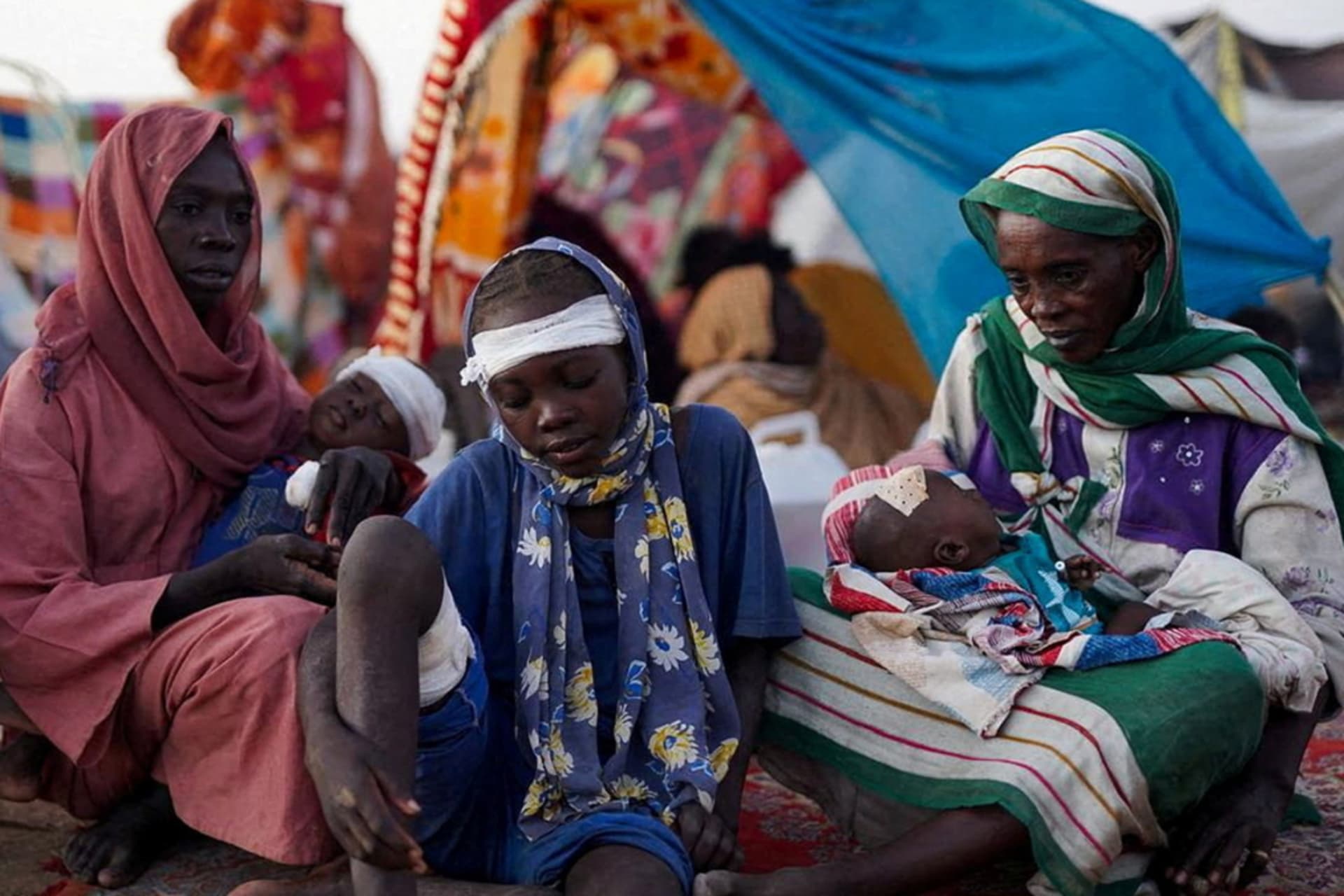
Sudan’s RSF militia took over the last major government-held city in Darfur this week in a battle that humanitarian groups said involved widespread killing of civilians. Sudan’s army said it withdrew from the city of El Fasher by late Monday. The RSF victory in El Fasher marks an end to an eighteen-month siege but raises the risk of a de facto partition of the country, as the RSF already controls much of the western Darfur region.
Where the war stands. Sudan’s civil war broke out in April 2023 and has killed tens of thousands of people and displaced millions. While the army retook the capital of Khartoum from the RSF earlier this year, the RSF solidified its control of Darfur. Multiple efforts at mediating peace have failed, including U.S.-hosted talks last Friday. Sudan’s government has accused the United Arab Emirates (UAE) of arming RSF rebels, which Abu Dhabi denies. Yet U.S. intelligence agencies assess the UAE increased its arms deliveries to the RSF in recent months, the Wall Street Journal reported yesterday. UN and Western officials have publicly accused both sides of abuses against civilians, and Washington said in January the RSF had committed genocide.
The battle for El Fasher. Sudanese army chief Abdel Fattah al-Burhan accused the RSF of killing civilians in a Monday address, while both the United Nations and the Yale Humanitarian Research Lab said they received reports of executions in the city. The UN Human Rights Office said those included reported killings of fleeing civilians. The reports raised fears of a repeat of RSF conduct in another Darfur city, where the RSF carried out ethnically motivated killings when it took control in 2023, according to a UN panel of experts.
“Powerful countries respond to Sudan’s emergency by issuing statements. Some, like the United States, impose targeted sanctions on belligerents but still refrain from applying any effective pressure on the countries that arm and finance them. At this point, hope hinges on the latest efforts by the United States, Saudi Arabia, Egypt, and the UAE—the Quad—to find common ground on what needs to happen in Sudan, but after two and a half years of war, atrocities, and total disregard for civilian protection, talk is cheap.” —CFR expert Michelle Gavin, Africa in Transition
Across the Globe
Trump in South Korea. The United States reached a trade deal with South Korea during Trump’s visit to the country today, both sides said. South Korean President Lee Jae-myung’s chief of staff said the deal would reduce U.S. tariffs on South Korean goods from 25 percent to 15 percent. The countries also announced they would cooperate on regulating and developing technologies including artificial intelligence, biotechnology, and quantum computing.
Israel’s strikes in Gaza. Israel launched strikes in Gaza overnight that killed over one hundred people, local health officials said. The strikes came after Israel said Hamas handed over the partial remains of a body that was partly transferred earlier in the war and fired on Israeli troops in southern Gaza. Each side blamed the other for violating the current ceasefire, while U.S. Vice President JD Vance said that despite occasional “skirmishes,” the truce “is holding.“ Israel said today it resumed the ceasefire.
More U.S. boat strikes. U.S. military strikes on four more boats allegedly carrying drugs killed fourteen people, U.S. Defense Secretary Pete Hegseth said yesterday. He did not provide details about which group the alleged “narco-terrorists” belonged to or drugs they were allegedly carrying. Mexico searched for a survivor, Hegseth said. Yesterday, Mexican President Claudia Sheinbaum said that Mexico does “not agree” with the boat attacks.
Crunching the climate numbers. If countries comply with their newly announced climate targets, annual global emissions will fall by an estimated 10 percent from 2019 levels by 2035, UN climate chief Simon Stiell said yesterday. Although it’s the first time the UN has forecast a steady decline in new emissions, meeting the international goal of limiting global warming to 1.5℃ (2.7℉) would require a 60 percent emissions cut by 2035.
China-ASEAN trade deal. China and the Association of Southeast Asian Nations (ASEAN) expanded their free trade pact yesterday to remove trade barriers for green and digital products. The two sides are already each other’s top trading partners and have been negotiating this expansion since 2022. Despite the intensified trade partnership, ASEAN member the Philippines also criticized Chinese maritime actions in the South China Sea at the ASEAN summit.
Failed Afghanistan-Pakistan talks. Negotiations between the countries on shoring up a truce ended without a breakthrough, Pakistan’s information minister said today. Turkey was the host of the four-day talks, which sought to resolve tensions following border clashes earlier this month. No fighting was immediately reported following the collapse of talks, but Pakistan’s defense minister warned Afghanistan’s Taliban government that Islamabad would retaliate against any attacks inside Pakistan.
Hurricane arrival in Cuba. Hurricane Melissa made landfall in Cuba early this morning as a Category 3 storm with winds near 115 miles per hour, the National Hurricane Center said. Even after the storm passed over Jamaica, ongoing rains made the damage difficult to assess. Jamaica’s airports were closed yesterday and much of the country was cut off from the internet.
Ethiopia’s Red Sea ambitions. Prime Minister Abiy Ahmed yesterday called for international mediation to secure Red Sea access for landlocked Ethiopia, calling it “inevitable.” Eritrea, which borders Ethiopia and the Red Sea, called the statements “reckless.” Tensions between the countries, which fought a war between 1998 and 2000, have been rising in recent weeks.
What’s Next
Today, the Netherlands holds parliamentary elections.
Today, Tanzania holds general elections.
Tomorrow, Trump meets with Chinese President Xi Jinping in South Korea.