The State of Global Governance: Middle Powers and the Search for Stability
The rise of middle powers in recent decades has offered a counterweight to the strain created by the United States, China, and Russia in international affairs. But although middle powers challenge great power leadership within multilateral institutions, they also create stability within those institutions and have a vested interested in maintaining it.
By experts and staff
- Published
 Esther BrimmerCFR ExpertJames H. Binger Senior Fellow in Global Governance
As great power competition reemerges, leaders are searching for ways to maintain some degree of cross-border cooperation. The current great powers, the United States, China, and Russia, have strained international relations in the first quarter of the twenty-first century, while middle powers and regional leaders have sought to maintain a level of partnership amid the growing tensions and craft mechanisms to preserve stability. The rise of middle powers signifies an important shift to the core dynamics of global governance and introduces a particular paradox—on one hand, middle powers challenge the great power leadership within multilateral institutions, and on the other, they work as stabilizing forces because of their vested interests in maintaining stability and the influence they have painstakingly cultivated in these forums. Astute middle powers use international organizations to amplify their diplomatic tools. Furthermore, the urgency of global issues that require actions by all states makes the support of middle powers even more relevant.
A Contested System
Stability and leadership are needed to address the strains among states. Particularly problematic are the active challenges to the international system by three great powers whose leaders—Xi Jinping, Vladimir Putin, and Donald Trump—each see the benefit in disrupting international order. The Russian Federation, in direct violation of the laws and principles of the UN Charter, invaded Ukraine in 2022, deepening the assault on Ukrainian sovereignty it began in 2014. China ignores maritime rules and judgments as it conducts aggressive operations in the South China Sea. Moreover, China’s state-supported, export-led growth created overcapacity that has strained international trade.
The United States, which shaped the post–World War II world order and the post–Cold War period in the 1990s, is also challenging the international order. Under the second Trump administration, the United States upended the global trading system by rejecting the long-held principle of the most-favored-nation status to impose differentiated and often changing tariff rates. For decades, the United States had been the leading advocate of free trade and saw commerce as a way to bind the world together through shared prosperity. In contrast, the current administration is using tariffs as punishment via policy. In addition, the United States withdrew from the Paris Agreement and the World Health Organization, of which it was the leading funder, and abruptly shuttered the U.S. Agency for International Development, causing major disturbances. Those changes and challenges have altered the calculations of other states and put further strain on an already taxed system of international cooperation.
Searching for Alternatives
Many middle power countries benefit from and contribute to international stability. They exert influence based on factors such as economic specialization, geographical location, or diplomatic prowess. Although their reach is narrower than that of the great powers, it is still significant. These states gain from international stability and the observance of the rule of law and long-established norms, and see great power overreach as disruptive and threatening to an orderly system in which they can plan and thrive.
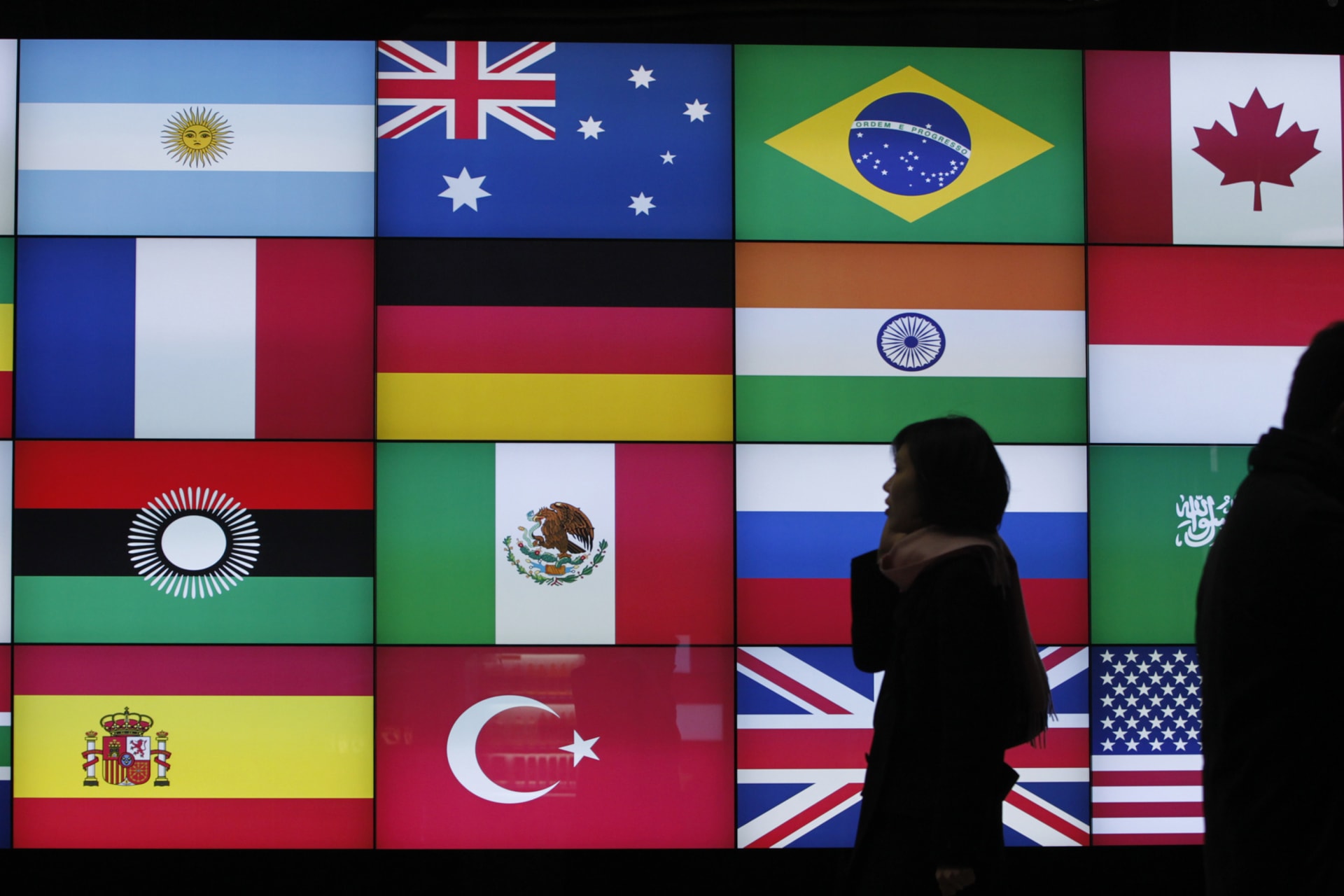
This disruption has opened the door to the creation and bolstering of alternative and regional groups. Cooperative groups of states outside of the UN system are not new. Formal regional organizations, such as the Organization of American States (OAS), have been established for decades. The OAS exemplifies a traditional regional organization with a charter, permanent members, dues, and a formal secretariat. In contrast, the BRICS (the bloc of nations including Brazil, Russia, India, China, and South Africa) is a newer configuration of states convened by a rotating chairperson. Financial resources help make the BRICS formation attractive, and with China’s support, the BRICS have founded and funded the New Development Bank.
For some observers, such formations are alternatives to current international organizations that are paralyzed by great power rivalry. For others, the organizations are temporary solutions that could lead to stronger multilateral institutions in the future—or at least maintain a degree of cooperation during a difficult period of international disturbance.
Thus, the immediate future could be shaped by minilateral groupings focused on organizing targeted cooperation on issues of global governance. The shape and substance of such groups may vary. Some of these minilateral configurations are only temporary conveniences that preserve some degree of international cooperation, while others, such as the Group of Seven, have become long-standing institutions.
A subset of countries in an organization may opt for plurilateral approaches, choosing to work together to maintain certain international standards and rules on issues such as trade. Others may adopt a “multiplex” model as set out in Amitav Acharya’s book The Once and Future World Order. In this model, there are several layers of multilateral activity with more actors, both state and nonstate, involved. Acharya offers the analogy of the “multiplex”, where states can choose to move in and out of different alignments the way moviegoers can move in and out of different theaters showing different films.
Another form of flexibility is “differentiated integration,” in which countries are part of the same system but can choose to be involved in only certain aspects of that international structure. For example, within the European Union, only a subset of member states has adopted the euro as their currency. Differentiated integration provides a degree of independence and autonomy, while also allowing states to pursue steps toward greater degrees of integration. The European Union’s enlargement process includes a multiyear stage-by-stage accession plan. Incoming member states start by accepting core values and then adding degrees of economic integration over time.
Minilateralism is not altruism. Competition could arise among middle powers and indeed among regional anchor states. Regional cooperation can be an effort to build economic or military strength with states in a similar situation; it is not necessarily an effort at multilateralism. Instead, regionalism can be thought of as a search for stability. Indeed, many regional leaders do not want to side with the disruptors, whether they are politicians who want to dismantle alliances and reconfigure political relationships or tech companies that see disruption as a form of innovation. Leaders seeking regional cooperation could want inclusion rather than dismantlement of international commitments.
The leaders of most states want to bring benefits to their people, not to disrupt the international system as a whole; they want to be part of it, not destroy it. For example, many states in Southeast Asia are interested in supporting the UN 2030 Agenda for Sustainable Development and regional activities such as the Regional Comprehensive Economic Partnership and the ASEAN Strategy for Carbon Neutrality. Some analysts assert that for those approaches to succeed, policymakers need to reject binary friend-or-enemy categorizations. Instead, officials should work with different countries on different issues at different times.
Cooperation Needs a Foundation
For all of the consternation around the efficacy of the United Nations, the institution has been successful in preventing a new global war or nuclear attack for eighty years. Diplomatic settings like the United Nations provide venues where states can disagree without violence—that is their purpose.
While minilateral groups can be useful and are necessary in this moment, they rely on a degree of agreement on basic norms for international activity. These agile ad hoc groups rest on the foundation of long-established global institutions, in particular the UN Charter, the International Monetary Fund, and the World Bank. Underpinning these bespoke configurations are basic notions that have infused global politics since the end of the Second World War, the most fundamental of which is the rejection of acquisition of territory by force. That principle explains why the invasion of Ukraine is such a direct assault on the norms of international affairs.
All of these formations need a foundation. Traditional regional organizations are connected to the United Nations system through the UN Charter Chapter VIII, “Regional Arrangements.” New and different configurations have developed over the decades outside the UN system including the Group of Seven and the Group of Twenty. Nevertheless, such new groups benefit from existing diplomatic and legal structures. Formal or informal, international intergovernmental organizations need their member states to take seriously the functioning of these organizations if they are to contribute to international stability.