What Are Iran’s Nuclear and Missile Capabilities?
Iran’s nuclear program and missile arsenal have garnered increased international scrutiny. A joint U.S.-Israeli military campaign launched in early 2026 seeks to destroy Iran’s nuclear and missile infrastructure.
By experts and staff
- Updated
- Writer/Editor
- Jonathan MastersDeputy Managing Editor
- Senior Editor, Data Visualization
Many foreign policy experts warn that a nuclear-armed Iran would destabilize the Middle East and nearby regions. A first-order concern is that Iran’s possession of nuclear weapons would pose a major, perhaps existential, threat to Israel—a worry that drove Israel to launch a full-scale attack on Iran’s nuclear and military facilities in June 2025 and another larger, joint attack with the United States in February 2026.
Other experts say Iran would be assuring its own demise if it were to launch a nuclear strike on Israel, a close U.S. defense partner and possessor of its own nuclear weapons arsenal, which is undeclared. Either way, there would be a dangerous potential for miscalculation that could result in a nuclear exchange, analysts say. An added concern is that Iran’s possession of a nuclear weapon could spur other regional rivals, including Saudi Arabia, to pursue their own program.
International scrutiny of Iran’s nuclear and missile programs intensified in 2018 after the United States withdrew from the Iran nuclear deal—known as the Joint Comprehensive Plan of Action (JCPOA)—and again in late 2024, following direct military strikes between Iran and Israel, as well as the reelection of Donald Trump. In Trump’s second term, Washington resumed talks with Tehran for the first time since pulling out of the JCPOA. However, in June 2025, after the UN nuclear watchdog declared Iran in violation of its nuclear nonproliferation agreements, the United States bombed Iran’s major nuclear facilities.
Despite ongoing negotiations in early 2026, the United States and Israel launched a large-scale offensive against Iran in February with a stated aim of destroying its nuclear and missile capabilities. Although there has reportedly been some damage to one Iranian nuclear site, there is no confirmed evidence of major damage to the country’s overall nuclear facilities. Joint U.S.-Israeli strikes also killed Iranian Supreme Leader Ayatollah Ali Khamenei. Iran has retaliated by targeting Israel and U.S. military sites across the region, as well as several other Gulf countries, adding to concerns about nuclear proliferation in the Middle East.
Does Iran have a nuclear weapon?
Iran does not yet have a nuclear weapon, but it has a long history of engaging in secret nuclear weapons research in violation of its international commitments. Western analysts say the country has the knowledge and infrastructure to produce a nuclear weapon in fairly short order should its leaders decide to do so.
The United States, Israel, and other Middle Eastern partners regard Iran as a primary threat to their interests in the region, and view its potential acquisition of nuclear weapons as a game-changing scenario to be steadfastly prevented—by force if necessary.
Iran has had a civilian nuclear energy program for more than fifty years, long maintaining its strictly nonmilitary aims. “Iran has repeatedly said its nuclear program only serves peaceful purposes. Nuclear weapons have no place in our nuclear doctrine,” a government spokesperson said in April 2024. Yet Iranian officials have also talked publicly since then about the possible need for nuclear weapons, which some experts have said is a concerning shift.
Revelations in the early 2000s about the country’s secret nuclear sites and research raised alarms in world capitals about Iran’s clandestine pursuit of a nuclear weapon. Iran’s nuclear program has since been the subject of intense international debate and diplomacy, which culminated in the 2015 JCPOA. The United States unilaterally withdrew from that agreement in 2018. Since then, international monitors say that Iran has greatly expanded its nuclear activities, again heightening concerns about its “breaking out” to develop a nuclear weapon.
Why have Iran’s nuclear capabilities come under scrutiny again recently?
Renewed alarm over Iran’s program began to grow in October 2024, when Tehran unleashed a massive ballistic missile attack on Israel, prompting retaliation. Israel conducted its largest-ever direct attack on Iran, targeting its air defenses and missile production facilities. Some U.S. and Israeli media reports indicated that Israel also destroyed a building at the Parchin military complex outside of Tehran, where scientists could have been conducting clandestine nuclear weapons-related research.
Then, in June 2025, Israel launched Operation Rising Lion, targeting critical nuclear and military infrastructure across Iran, including Natanz, the country’s main nuclear enrichment site. However, analysts said Israel lacked the bunker-busting capability needed to effectively damage and destroy some of the facilities given their location deep underground. Shortly after, the United States struck several Iranian nuclear sites in a surprise attack it dubbed Operation Midnight Hammer. Ahead of the strikes, Trump and Iranian Foreign Minister Abbas Araghchi had announced in March that the two sides would hold bilateral talks about Iran’s nuclear program in Oman, but the negotiations failed to produce any concrete results.
Until the March talks, Tehran had largely refused nuclear discussions with Washington since Trump withdrew from the existing Iranian nuclear deal. But in May 2025, the International Atomic Energy Agency (IAEA) reported that Iran’s cache of near-weapons grade enriched uranium had surged by about 50 percent over the prior three months. The surge put Iran just a step away from having enough enriched uranium for ten nuclear weapons, the IAEA found—prompting the United States to launch Operation Midnight Hammer. After the June strikes, the White House declared Iranian nuclear sites “obliterated.” However, satellite imagery suggests that while Iran quickly repaired several ballistic missile facilities, it made slower progress on fixing its nuclear sites.
Dormant U.S.-Iran talks were revived in early 2026 amid major turmoil inside Iran. Nationwide antigovernment protests had erupted in December 2025, prompting the regime to respond by brutally cracking down and leading the United States to again consider military action. Trump deployed U.S. forces to the area and warned that Iran’s Khamenei “should be very worried” about an attack unless Iran curbed its nuclear program and stopped killing protesters. Khamenei, in turn, said that any U.S. attack would spark a “regional war.”
The February 2026 talks in Oman were focused on securing commitments from Iran to limit its uranium enrichment, ballistic missile use, and arming of regional proxies. U.S. Secretary of State Marco Rubio had previously said that for the talks to be successful, they must include topics beyond Iran’s nuclear ambitions, including the “treatment of [its] own people.” Ahead of the talks, Araghchi said he agreed with Trump’s demand that Iran develop no nuclear weapons, but expected U.S. sanctions be lifted in return. Khamenei, however, scorned the talks, calling them “nonsense” and saying Iran isn’t “waiting for others’ permission” for uranium enrichment. In late February, Araghchi said that “good progress” was made on the nuclear issue in the talks but that no deal was reached.
As talks proved unsuccessful, Natanz was again the target of strikes, with Trump announcing shortly after the joint U.S.-Israeli attack began on February 28 that Iran posed an imminent threat. The IAEA later confirmed that there had been “some recent damage” to entrance buildings of Natanz. Meanwhile, around half of Iran’s missile launchers used in the conflict have been destroyed, according to the Institute for the Study of War.
How long would it take Iran to develop a nuclear weapon?
Experts have previously said that Iran could produce a nuclear weapon in as quickly as several months—possibly a year.
One of the goals of the now-defunct 2015 nuclear agreement was to place limits on Iran’s nuclear activity so that it would take the country at least a year to produce a weapon, giving world governments a fair amount of warning to respond.
However, following the U.S. withdrawal from the deal in 2018, Iran has expanded its nuclear enrichment activities and limited international inspections of its nuclear facilities, the last of which occurred in 2021.
In December 2024, IAEA Director General Rafael Grossi told Reuters that Tehran was “dramatically” ramping up uranium enrichment to up to 60 percent, close to the roughly 90 percent weapons-grade threshold. By February 2025, U.S. intelligence indicated that a covert team of scientists in Iran was orchestrating a faster, though cruder, approach to creating an atomic weapon. Then in January 2026, Grossi said Iran was “less than satisfactory” in “a number of respects” regarding its nuclear cooperation, and that countries don’t have an “à la carte” option to choose what part of the Nuclear Non-Proliferation Treaty they wish to comply with. He added that the IAEA struggled to carry out its inspections in some areas of Iran amid civil unrest.
What are Iran’s nuclear and military capabilities?
Iran is engaged in nuclear-related activities at more than a dozen locations across the country. Its largest enrichment facility is at Natanz—which was a target in both the 2025 and 2026 strikes—while its sole nuclear power plant is at Bushehr, on the Persian Gulf coast.
Another IAEA report released in May 2025 concluded that Iran had also carried out undeclared nuclear activities at three previously unknown bases: Lavisan-Shian, Turquzabad, and Varamin.
As demonstrated in its air strikes against Israel in 2024, Iran has varied air power capabilities, including deep and diverse arsenals of cruise and ballistic missiles, as well as drones. U.S. intelligence analysts say that Iran has the largest ballistic missile inventory in the Middle East. (Ballistic missiles take a parabolic path through the atmosphere, traveling much faster than drones and cruise missiles, and are generally harder to intercept.)
Iran’s longest-range missiles are reportedly capable of striking targets of up to 2,000 kilometers (roughly 1,240 miles) away, perhaps further, covering all of the Middle East and parts of Europe. Larger conventional warheads could kill or injure hundreds of people in a dense urban environment, weapons experts say. For instance, Israel and Russia have used bombs with similar payloads in the Gaza Strip and Ukraine, respectively, which have reportedly left craters more than twelve meters (forty feet) in diameter.
Iran’s two strikes on Israel in 2024 were its first attempts to hit Israeli targets with weapons fired from Iran. Tehran reportedly telegraphed its intentions days ahead of the first strike in April, which consisted of drones, cruise missiles, and ballistic missiles. Israel and its partners also had hours to track and respond to the slower-moving attack drones and missiles. However, the second strike that October was launched without warning and consisted mostly of ballistic missiles, which can reach their intended targets in minutes.
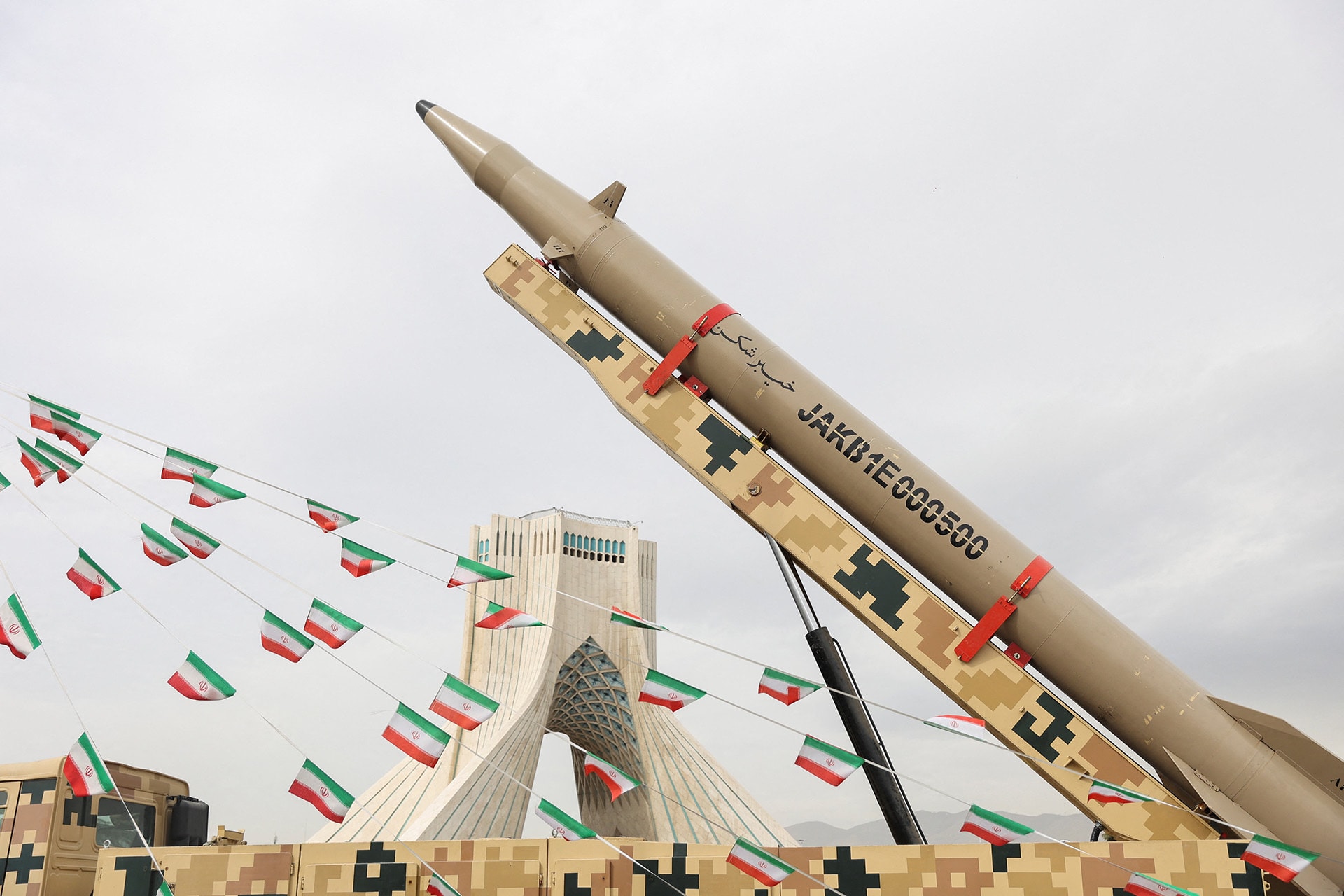
U.S. and Israeli officials have said that both of Iran’s air strikes were largely neutralized by defensive systems or otherwise failed to do much damage, but some projectiles did get through. One satellite imagery analysis of the October 2024 strike indicated that more than thirty Iranian missiles hit an air base in southern Israel, suggesting that Israel either decided not to defend these particular strikes, or that the defenses failed. Analysts warn that future strikes could be larger and more difficult to intercept, particularly if Iran uses more of its most advanced weapons, such as the Fattah-1 and Kheybar Shekan missiles.
What if Iran acquires a nuclear weapon?
Many foreign policy experts warn that a nuclear-armed Iran would be an acute threat to Israel and pose a major challenge to the interests of the United States and its partners in the Middle East. Some regional analysts fear that a nuclear-armed Iran would likely be emboldened to pursue a more aggressive foreign policy, not only in the region but via its growing military and economic partnerships with U.S. rivals China and Russia. Iran has recently provided Russia with various weapon systems, including drones and shorter-range ballistic missiles, to help supplement its forces battling against Ukraine.
There is also concern that Iran’s acquisition of these weapons will incentivize other countries in the region, particularly Saudi Arabia, to pursue them as well, which could catalyze a dangerous nuclear arms race.
While the Oman negotiations raised the prospect of a diplomatic off-ramp, talks collapsed after the United States and Israel began their joint military campaign in late February 2026. “It is time to say farewell to arms control,” said CFR Iran expert Ray Takeyh shortly after the campaign began. “Perhaps more could have been extracted from Iran if diplomacy had more time.”
Trump said last year he wanted to dismantle Iran’s entire nuclear program, but later softened his call to “NO NUCLEAR WEAPONS” ahead of the February talks—while also threatening military action against Iran by drawing comparisons to recent U.S. military action in Venezuela. He even told Politico in January that “it’s time to look for new leadership” in Tehran.
Many nuclear experts have said Iran would staunchly oppose a full dismantling of its nuclear sites, especially as its nuclear program is one of its last points of geopolitical leverage now that many of its proxies have been weakened. According to CFR President Michael Froman, achieving a more equal U.S.-Iranian compromise will heavily depend on the Trump administration’s willingness to grant Iran some degree of economic relief. “The question remains whether such a deal prohibits or simply limits Iran’s enrichment program and if the latter, how much different or better it would be than the JCPOA,” Froman said.
Colophon
Data Visualization
Additional Reporting
Kaleah Haddock and Esther Sun contributed to this article.