India, the United States, and Diverging Climate and Energy Norms
Today, in comparison with the United States, India seems positively forward-facing, making an astonishing pivot on previous climate and energy policies while at the same time emphasizing its national and security interests.

The Trump administration has just announced it will revoke a policy from the Obama era that declared carbon dioxide and other greenhouse gases a threat to public health and welfare. That declaration of endangerment had served as the legal foundation for almost all climate regulations put in place since 1970 by the Clear Air Act, which regulates many sources of pollution such as power plants and motor vehicles.
The revocation aligns with the administration’s skeptical approach to climate and energy norms. President Donald Trump has himself called climate change a “hoax” and green energy a “scam.” Since he took office in January 2025, the U.S. government has centered its climate and energy policy on expanding fossil fuel production while rolling back climate regulations and renewable energy support. The Heritage Foundation’s Project 2025, following the principle that Biden-era climate regulations “[impoverished] Americans and [made] China rich,” provided the Trump administration with a blueprint for such policies: nearly two-thirds of Trump’s early executive actions mirrored proposals from Project 2025.
The U.S. volte-face on climate and energy norms and global leadership has implications not just for the liberal international order but for countries such as India that have, in the past, been themselves recalcitrant on such norms. Today, particularly in comparison with the United States, India seems positively forward-facing, making an astonishing pivot on previous climate and energy policies while at the same time emphasizing its national and security interests. This turnaround has also led to tension with the Trump administration—particularly on oil energy and India’s reliance on Russian oil.
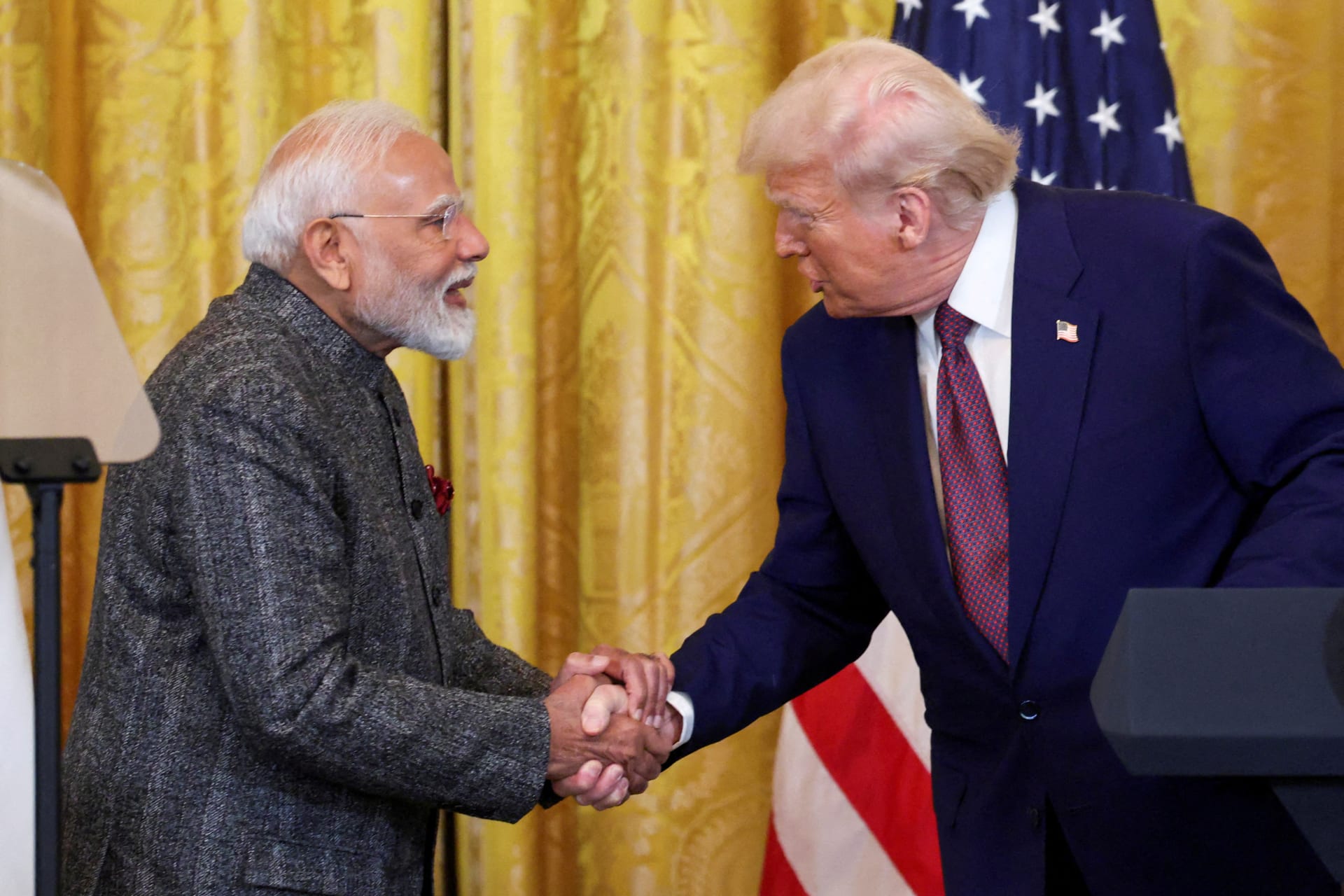
On February 6, the United States announced a trade deal with India. The Trump administration declared that it would lower tariffs on Indian goods down to 18 percent from the original 50 percent and, in turn, India would commit to stop oil imports from Russia. Yet no such commitment was forthcoming from the Modi government. In past years, climate cooperation with India received bipartisan support in the United States. Even under the first Trump administration, the United States and India had cooperated on energy security, which included cooperation on renewables as a source of clean energy. The future of such cooperation is now increasingly uncertain as the two countries diverge on the path forward.
The following Council on Foreign Relations (CFR) memos by experts from three countries are part of a larger CFR project assessing India’s approach to the international order in different areas. The papers consider India’s position on important issues in the climate and energy order: climate diplomacy, oil energy, and carbon emissions.
Karthik Nachiappan (Singapore) argues that India’s climate diplomacy—selectively engaging with UN Framework Convention on Climate Change processes while separately mobilizing finance, technology, and market access for decarbonization without constraining its economic growth or energy access—stands in sharp contrast to the United States’. Their differing stances raise broader questions about the future of multilateral climate institutions, the relevance of equity as a climate norm, and the need for global leadership in an increasingly geoeconomic climate order.
Ashwini Swain (India) argues that India’s energy policy and transition are driven by its domestic energy security needs. Due to limited domestic reserves, India has to import nearly 87 percent of its crude oil. While it is pursuing alternative fuels, it is also diversifying its oil imports to hedge its geopolitical bets. Today, Russia, a negligible source prior to the Russia-Ukraine war that began in 2022, has become its largest crude oil supplier. Despite the tensions this has created with the United States, India is unlikely to rapidly diverge from this path.
Clara Gillispie (United States) contends that India is in the middle of a revolutionary energy transition, attempting to pull off what other countries such as the United States have done over decades in a very short time frame. Its approach is that of climate realism—moving aggressively on climate action while recognizing both its economic and geopolitical interests and structural constraints. Thus, although it continues to rely on coal, India is also setting—and exceeding, in cases—aggressive targets for deploying renewable energy technologies.