Marco Rubio Goes to India in Repair Mode
U.S. Secretary of State Marco Rubio’s four-day visit to India comes after a year of nosediving relations. He will attempt to revive ties that appear rudderless after decades of progress.
By experts and staff
- Published
 Sadanand DhumeCFR ExpertSenior Fellow for India, Pakistan, and South Asia
Sadanand Dhume is senior fellow for India, Pakistan, and South Asia at the Council on Foreign Relations.
What a difference a year can make. In April 2025, U.S.-India relations appeared as solid as they had ever been. India had rolled out the red carpet for Vice President JD Vance and his family, a visit that highlighted not just the strength of the bilateral relationship, but also a degree of personal warmth that characterized early interactions between Prime Minister Narendra Modi and the second Trump administration.
Before Vance’s trip to India, Modi had visited President Donald Trump in the White House in February, only the second Asian leader to do so in the president’s second term after Japan’s former Prime Minister Ishiba Shigeru. With his characteristic love of slogans, Modi declared that MAGA (Make America Great Again) and MIGA (Make India Great Again) would together result in a “mega partnership for prosperity.”
At the time, Indian optimism about ties with the United States appeared justified. Since the turn of the century, Washington and New Delhi had drawn closer to each other both rhetorically and substantively.
In India, unlike in several traditional U.S. allies, government officials and pundits alike had welcomed Trump’s election in 2024. They looked forward to an administration staffed by China hawks such as U.S. Secretary of State Marco Rubio and former U.S. National Security Advisor Mike Waltz, now U.S. ambassador to the United Nations. They recalled Trump’s skepticism toward Pakistan during his first term, when he publicly blasted the Islamic Republic for having given the United States “nothing but lies & deceit.” They believed a potential U.S. thaw with Russia would ease pressure on India’s traditionally close ties with Moscow. They were confident that the new administration would care much less than its predecessor about human rights, press freedom, and democratic backsliding. (They were right about the last one.)
Fast forward to this week. When Rubio visits May 23–26, he will find an Indian foreign policy establishment and commentariat more wary of the United States than at any other time this century.
In an interview with the website The Wire in October, former Indian Foreign Secretary Shyam Saran declared that “the twenty-five-year upward trajectory of India–U.S. relations has certainly plateaued, if not started declining.” In March, Nirupama Rao, another former Indian foreign secretary, and a former Indian ambassador to the United States and China, wrote about a new U.S. approach to India that “has become noticeably harder, more transactional, and less insulated by the rhetoric of partnership that characterised earlier phases of the relationship.” A poll in January by the magazine India Today found that 54 percent of Indians felt that India’s relations with the United States had worsened under Trump. Only 21 percent of respondents said they had improved.
What explains the dramatic change of mood?
First, Trump publicly embarrassed Modi by repeatedly taking credit for ending a four-day conflict between India and Pakistan in May 2025. India refused to acknowledge the Trump administration’s role in the ceasefire for fear that it would undermine New Delhi’s official position of dealing with Pakistan in strictly bilateral terms. (Pakistan cleverly thanked Trump publicly and nominated him for the Nobel Peace Prize.)
Second, Trump has drawn publicly close to, and lavished praise on, Pakistan’s de facto military ruler, Field Marshal Asim Munir. Munir is widely reviled in India, which blames Pakistan for a terrorist attack in April 2025 that saw the murder of two dozen Indian tourists and triggered the most recent India-Pakistan conflict.
Third, last summer Trump imposed a 50 percent import tariff on India, among the highest in the world, which included a 25 percent tariff as punishment for India’s purchase of Russian oil—then under heavy U.S. sanctions. No such punitive tariff on Russian oil purchases was applied to China, another large Russian customer. The tariff rate was to be brought down to 18 percent under a tentative trade deal announced in February before the U.S. Supreme Court scrapped the tariffs that had been authorized under the International Emergency Economic Powers Act.
Fourth, and most consequently, Indians are no longer certain that U.S. authorities view the world through the prism of great power competition with China. Rubio’s first meeting as secretary of state was with the foreign minister of the other Quad countries—Australia, India, and Japan—and the Quad foreign ministers will reportedly reconvene in New Delhi during Rubio’s visit. But a planned Quad summit in India last year did not take place and the grouping barely merited a mention in the new U.S. National Security Strategy. If the president is no longer interested in the Quad it will struggle to remain relevant.
And finally, the ongoing war in Iran has the potential to severely damage India’s energy-import dependent economy.
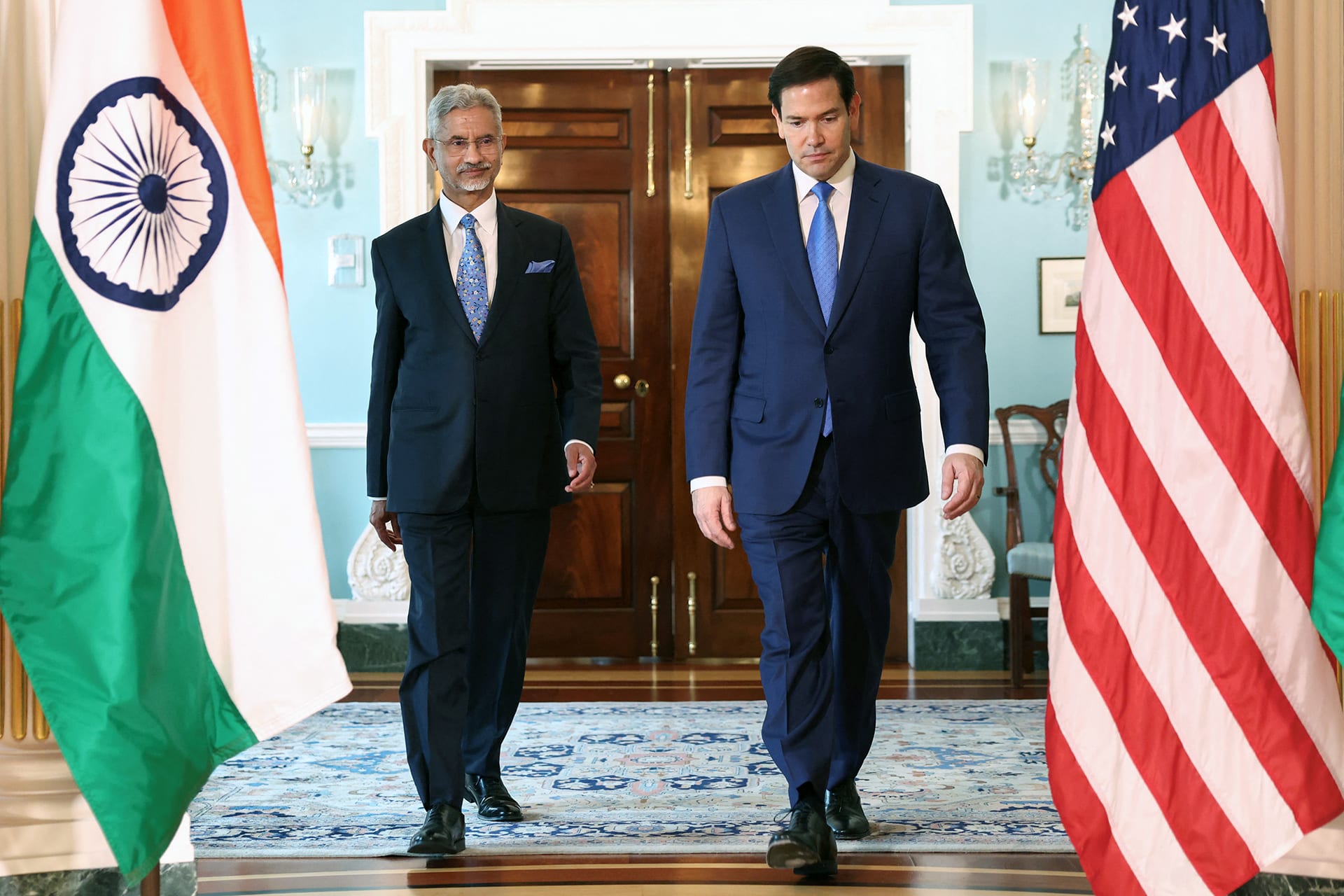
All this means that Rubio has his work cut out for him in India. In addition to attending the Quad gathering, the secretary of state is scheduled to meet with Modi, Foreign Minister Subrahmanyam Jaishankar, and National Security Advisor Ajit Doval, as well as visit Agra, Jaipur, and Kolkata. The bilateral agenda will span defense, economics, and technology, among other issues.
Over the past twenty-five years, successive U.S. administrations, Republican and Democrat alike, have wooed India as a potential democratic counterweight to China in Asia. But today the relationship appears rudderless. It will take sustained effort by both sides to put it back on track.
This work represents the views and opinions solely of the author. The Council on Foreign Relations is an independent, nonpartisan membership organization, think tank, and publisher, and takes no institutional positions on matters of policy.