Border Czar Announces an Immigration Drawdown in Minnesota
By experts and staff
- Published
Welcome to the Daily News Brief, CFR’s flagship morning newsletter summarizing the top global news and analysis of the day.
Top of the Agenda
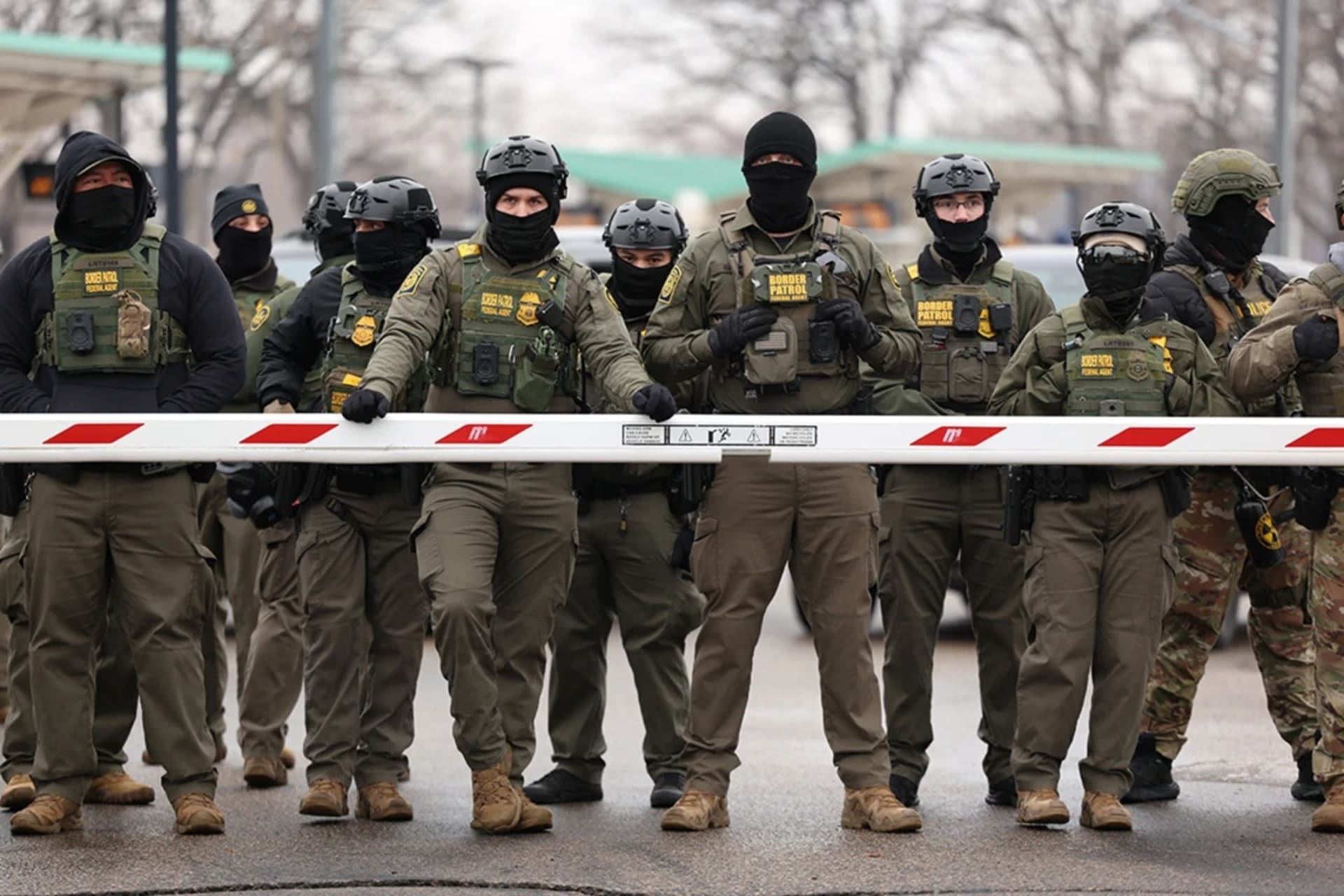
An immigration enforcement mission that deployed thousands of U.S. federal agents to Minnesota will conclude, White House border czar Tom Homan announced yesterday. Alleged due process violations and aggressive enforcement by agents, including fatal shootings of two U.S. citizens, sparked broad public outcry. The Department of Homeland Security (DHS) said it had arrested thousands of people during the mission. Homan took credit for proposing ending the enforcement surge to President Donald Trump, who then agreed.
A closer look. The operation sent some three thousand immigration officers into the Minneapolis and St. Paul area at its peak, but was reduced earlier this month under Homan. Trump brought Homan on to oversee the operation last month, replacing then-Border Patrol commander Greg Bovino, after U.S. Customs and Border Protection agents fatally shot nurse Alex Pretti. Homan said yesterday many of the remaining federal agents in Minnesota would be reassigned, but did not give an exact timeline.
What comes next. Trump remains committed to mass deportations, Homan said. Still, opposition to the actions of federal immigration agents has fueled a showdown over a DHS funding bill in Congress. Some Democratic lawmakers have called for Immigration and Customs Enforcement (ICE) reforms, including requiring agents stop wearing masks and end warrantless searches, in order to support the bill. Minnesota state officials testified in the Senate yesterday that they are still seeking a full accounting of people detained by ICE.
“It’s not just ICE conducting immigration enforcement—you also have Customs and Border Protection working in the interior of the United States…They have widened the net of enforcement.”
—the Migration Policy Institute’s Kathleen Bush-Joseph tells CFR editors
Across the Globe
Bangladesh’s post-protest election. The Bangladesh Nationalist Party (BNP) and its allies swept to victory in the first parliamentary elections since mass youth-led protests in 2024 toppled the previous government. A coalition of mostly Islamist parties will form the main opposition, with a combined 77 seats in the legislature to the BNP coalition’s 212, according to official results. Bangladeshis also approved constitutional changes in a referendum, including term limits for prime ministers and measures to boost women’s political participation.
Report on Starlink in Iran. The United States reportedly sent around six thousand of the company’s satellite internet kits to the country in recent weeks, in a secret effort to help dissidents withstand government restrictions on internet access, unnamed U.S. officials told the Wall Street Journal. The White House did not comment on the report, but had publicly said in January that Trump spoke to Starlink owner Elon Musk about ensuring connectivity in Iran.
Weighing the cost of tariffs. The Trump administration is considering reducing its duties on steel and aluminum against the backdrop of rising domestic prices, the Financial Times reported today. Yesterday, economists from the Federal Reserve Bank of New York and Columbia University published research that found that U.S. firms and consumers bore nearly 90 percent of the cost of tariffs that the Trump administration has imposed since early last year.
Taiwan-U.S. trade details. The U.S. Trade Representative’s office published details yesterday of a U.S.-Taiwan trade agreement reached last month. The deal lowers Taiwan’s base U.S. tariff rate to 15 percent—less than rates for many of its neighbors in Asia—while committing Taiwan to removing or lowering 99 percent of its tariffs on U.S. goods. Taiwan pledged to buy some $85 billion of U.S. goods, including liquefied natural gas and crude oil, aircraft, and power-generation equipment by 2029. It also won tariff exemptions for more than two thousand products, President Lai Ching-te wrote on social media. The deal requires Taiwanese congressional approval.
A two-speed Europe. At a conference yesterday on improving European Union integration, leaders including European Commission President Ursula von der Leyen and French President Emmanuel Macron proposed allowing some members to deepen market integration without waiting for full consensus across the bloc. The practical details of the proposal are being drawn up ahead of a European Council meeting next month.
Kenya-Somalia border reopening. The countries will reopen their border in April, almost fifteen years after it was closed due to regional attacks by militant group al-Shabaab, Kenyan President William Ruto announced. He said the measure would increase bilateral trade. Ruto said his country would deploy troops alongside the border opening for extra security, as Somalia-based al-Shabaab remains active in Kenya.
Israel’s Polymarket scandal. Israeli authorities said yesterday they had arrested and charged an army reservist and a civilian for allegedly using classified information to inform bets on Israeli strikes on Polymarket. Authorities did not provide further details about the bets, but Israeli public broadcaster Kan reported authorities were investigating a bet placed on the opening strikes of Israel’s war with Iran last year. “No operational harm” was caused, the Israeli Defense Forces said.
What’s Next
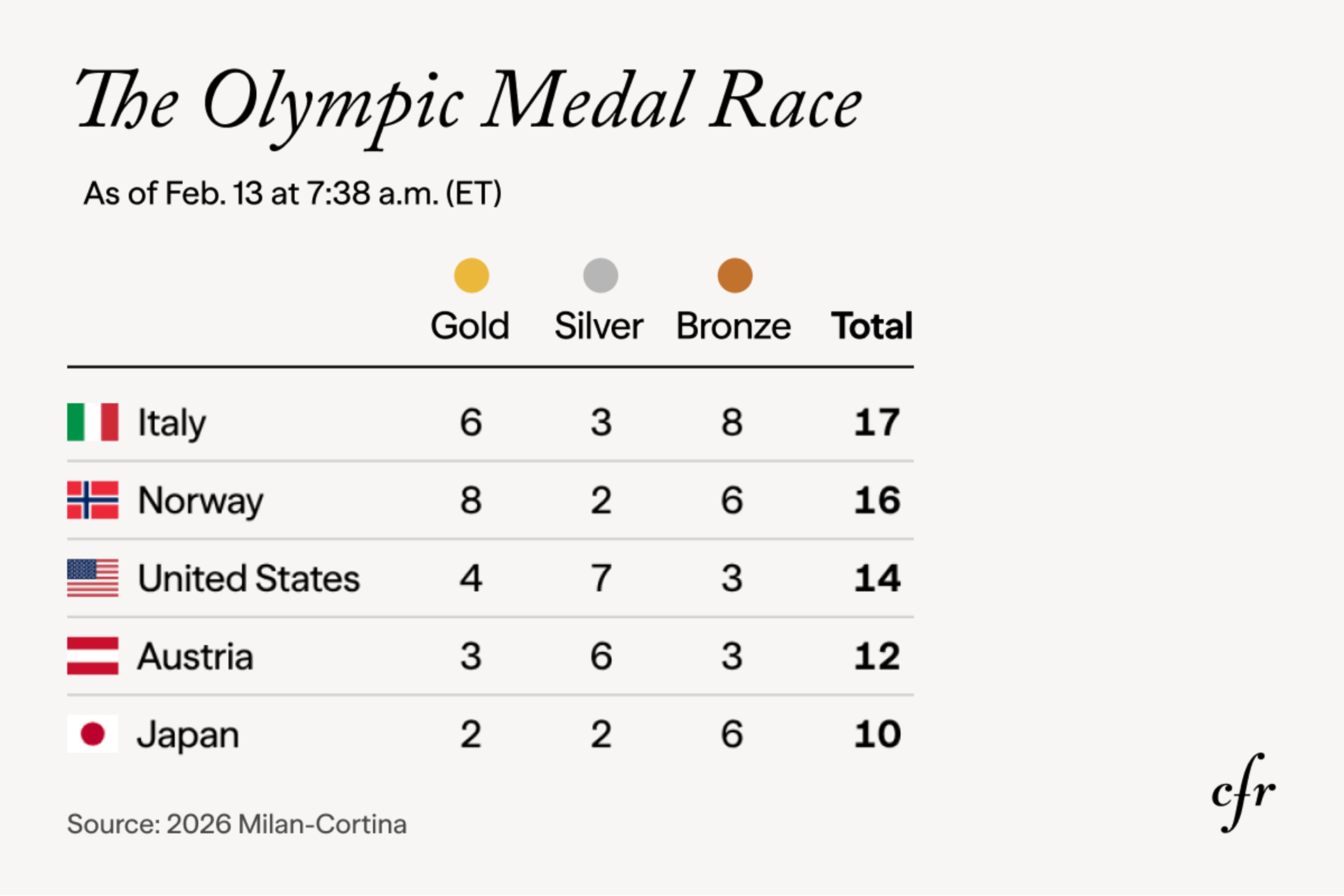
What You Missed: 2026 Milan-Cortina
Ukraine’s helmet controversy… The International Olympic Committee (IOC) disqualified Ukrainian skeleton racer Vladyslav Heraskevych yesterday over his plans to wear a helmet honoring his country’s war dead. Heraskevych had rejected an IOC compromise that he wear a black arm-band instead. Ukrainian President Volodymyr Zelenskyy yesterday praised Heraskevych and criticized the IOC, thanking Heraskevych for his conviction and adding that “courage is worth more than any medal.” He later awarded Heraskevych Ukraine’s Order of Freedom. His office said that 660 Ukrainian athletes and coaches have been killed since the war began.
…and the question of sports neutrality. “[If] we have no rules, we have no sport,” an IOC spokesperson said regarding the decision to disqualify Heraskevych. Another athlete was disqualified for violating the ban on political messages as recently as the 2024 Paris Olympics: an Afghan breakdancer who revealed a cape that said “Free Afghan Women.” The IOC has, however, deemed political matters including the Russia-Ukraine war significant enough to override the tournament’s neutrality commitment. Russian athletes have been banned from competing under their national flag since 2022 due to Russia’s invasion of Ukraine, though the IOC president has signaled that the country may return as soon as 2028.
Mentorship across borders. American snowboarding phenomenon Chloe Kim hoped to win her third gold medal in the half-pipe at this Olympics—and wowed audiences with feats such as entering backwards into a two-flip trick at yesterday’s final. She earned silver and was edged out from gold by South Korea’s Gaon Choi, who both took off and landed backwards for a trick on her final run. Kim has mentored Choi for years, and expressed pride in her win. Seeing Choi compete was a “full-circle moment,” Kim said earlier at the tournament, and “a mirror reflection of myself and my family.” Choi is now the first female Korean athlete to win a medal in snow sports.