Trump to Revoke Legal Basis for Key Climate Regulations
By experts and staff
- Published
Welcome to the Daily News Brief, CFR’s flagship morning newsletter summarizing the top global news and analysis of the day.
Top of the Agenda
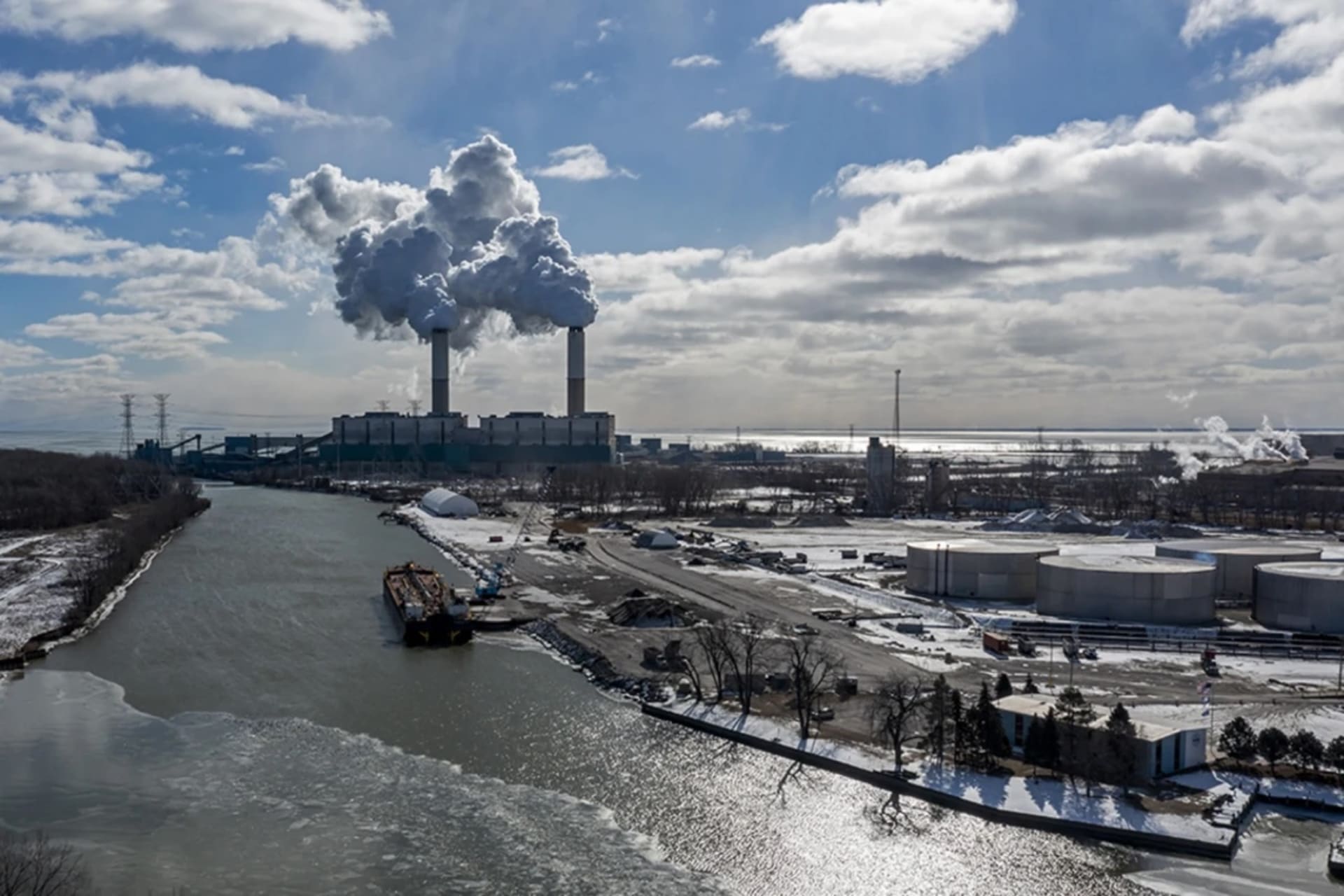
The Trump administration will revoke an environmental finding today that underpins many U.S. climate regulations. The Endangerment Finding is the 2009 scientific conclusion that six greenhouse gases qualify as air pollution and harm public health—and can thus be regulated under the 1970 Clean Air Act. The White House press secretary formally announced the plan Tuesday, saying it would amount to the “largest deregulatory action in American history.”
The legal context. The repeal carries significant heft: the Endangerment Finding is the basis for government rules capping greenhouse gas emissions from cars, power plants, and industrial sites. Permanently eliminating the rule removes the legal foundation for those regulations. The administration has argued the finding drives up energy costs for Americans and hampers U.S. energy dominance.
Environmental groups have pledged to challenge the rollback, setting up a legal battle that could be decided in the Supreme Court. Multiple court rulings about the Endangerment Finding have upheld it, including a Supreme Court ruling. The Trump administration previously delayed its plans for revocation over concerns the move would not hold up in court, the Washington Post reported last month. An Environmental Protection Agency spokesperson did not reply to the newspaper’s question about internal disagreements over the repeal.
The global context. The Trump administration has challenged dozens of environmental rules and the president has dismissed climate change as a “hoax.” Though several countries have lagged in submitting new emissions targets as required in the Paris Agreement—and failed to meet their previous commitments—no country has followed the United States in withdrawing from the global climate pact. Meanwhile, an analysis published today in Carbon Brief found that emissions from China, the world’s largest current greenhouse gas emitter, have been flat or falling for almost two years.
“While China drives an electric revolution in the global auto industry, the United States has retreated, doubling down on old technologies and shunning competition in new ones that are quickly conquering the rest of the world…A smarter strategy would be to take on the challenge, rather than cede the future of the world’s largest manufacturing sector to China.”
—CFR Senior Fellow David M. Hart in an Expert Take
Across the Globe
House vote against tariffs. The House of Representatives passed a resolution to overturn Trump’s tariffs on Canada yesterday, with six Republicans joining almost all Democrats in supporting it. While the measure does not have enough support to withstand a potential presidential veto, it nevertheless stands as a symbolic rejection of the tariffs, which Trump argued on social media yesterday have given the United States “Economic and National Security.”
Iran’s nuclear stance. Iran’s president said yesterday that the country is willing to open its nuclear sites for inspections to verify it is not building a nuclear weapon. The concession came the same day that Trump discussed Iran policy with Israeli Prime Minister Benjamin Netanyahu at the White House. Trump wrote on social media that he told Netanyahu he will continue to seek a deal with Iran if possible, though he provided no further details.
Incumbent victory in Barbados. The Caribbean country overwhelmingly delivered a third term to Prime Minister Mia Mottley in parliamentary elections yesterday. Mottley’s Barbados Labour Party won every seat up for grabs, state television reported. Her campaign focused on the cost of living and reducing inequality in the country. Internationally, Mottley has pushed for global climate cooperation to address the concerns of small island countries.
U.S. energy chief in Venezuela. Energy Secretary Chris Wright yesterday became the highest-ranking U.S. official to visit Venezuela since the United States captured former President Nicolás Maduro last month. He praised a law proposed by Venezuela’s interim government that would open the country’s oil sector to private investment, but said it should go farther to encourage “large capital flows.” He is expected to visit oil fields in the country today.
Zelenskyy’s stance on elections. Ukrainian President Volodymyr Zelenskyy said yesterday that the country would only hold elections after a ceasefire with Russia and security guarantees were in place. His comments followed a Financial Times report that Washington had urged Kyiv to hold a presidential election and a referendum on a peace deal with Russia by May 15 or risk losing proposed U.S. security guarantees.
Russia blocks WhatsApp. Russian authorities suspended access to WhatsApp in the country, a Kremlin spokesperson said today, saying that the company had not complied with local laws. He encouraged Russians to instead use a state-backed alternative messaging app critics argue could be used for surveillance. Russia has been gradually restricting access to WhatsApp for months, with the company saying yesterday that the latest move “is a backwards step and can only lead to less safety for people in Russia.”
Controversy over airspace closure. Conflicting accounts emerged yesterday of why commercial airspace was temporarily closed Tuesday over El Paso, Texas, near the U.S.-Mexico border. Transportation Secretary Sean Duffy said the closure was due to Mexican drug cartels sending drones over the border, but multiple news outlets reported—citing unnamed sources—it was actually closed because aviation officials were concerned that Customs and Border Protection’s testing of an anti-drone laser posed risks to local aircraft.
What’s Next
- Today, Bangladesh holds a general election.
- Today, NATO officials are holding a meeting regarding support for Ukraine in Brussels.
- Tomorrow, the Munich Security Conference begins in Germany.
What You Missed: 2026 Milan-Cortina
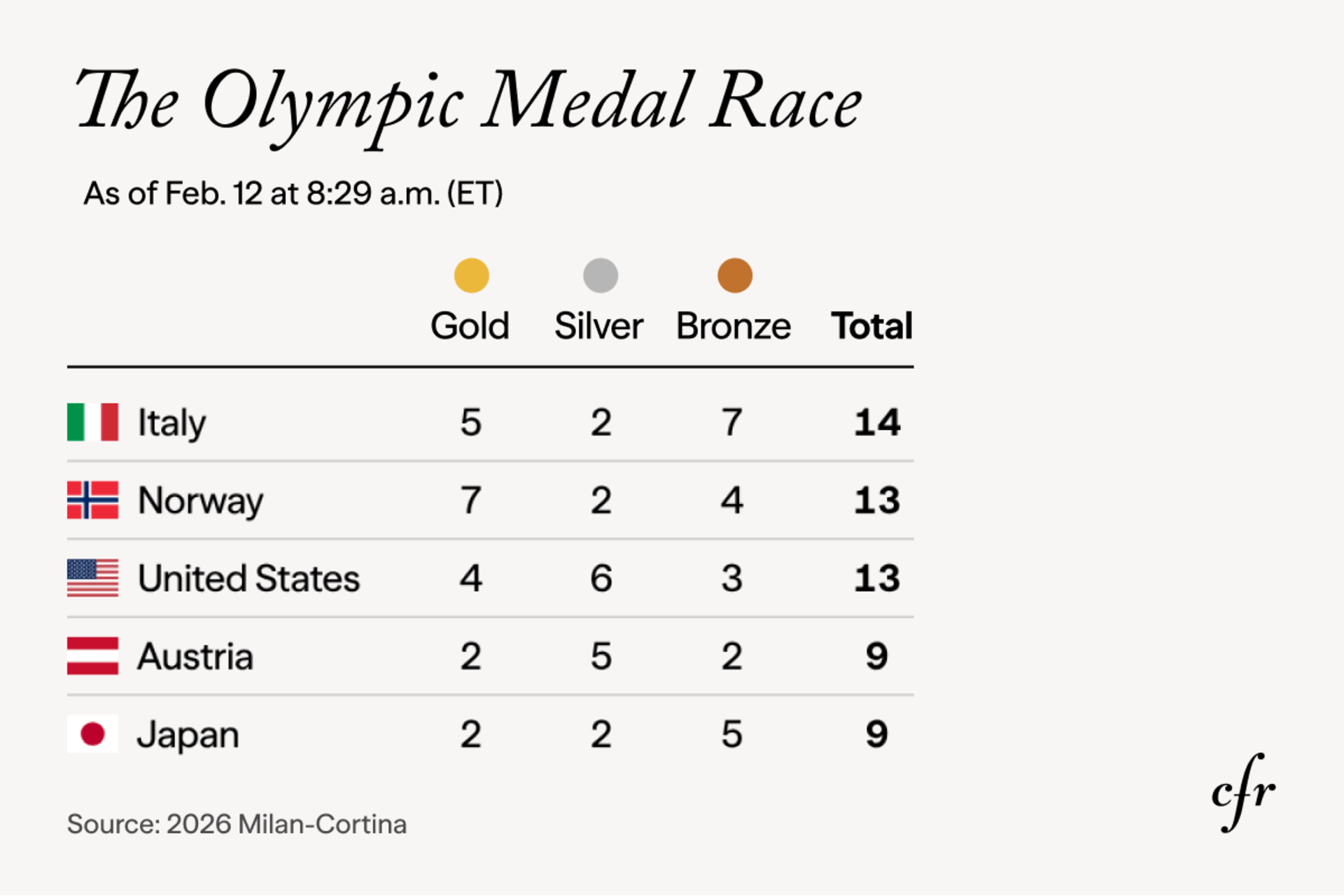
Breaking records. U.S. speedskater Jordan Stolz—who is aiming for four gold medals at this Games—won his first yesterday with an Olympic record-setting time of 1:06.28 in the 1,000 meter race. The women’s speedskating event also boasted a new Olympic record, set by the Netherlands’ Jutta Leerdam with a time of 1:12.31. World records are rarer than Olympic records at the Games partly because some of the routes vary in length in certain events, as in sled sports and downhill and cross-country skiing.
The last event without women. The International Olympic Committee (IOC) says it aims for gender equality, but some athletes protested its failure to open the last remaining men-only sport to women in 2026. That’s the Nordic combined event, which includes a ski jumping competition followed by a cross-country ski race. The IOC is considering scrapping the event entirely due to low audience numbers and the small number of countries that usually medal, but many of its male and female athletes say opening it to women would attract more viewers. Norway’s Jens Lurås Oftebro won yesterday’s men’s normal hill/10km race.
Where culture meets calories. The Italian staple of pasta is already a favorite food of many athletes seeking to carbo-load. An estimated 1,300 pounds of it are served each day in the athletes’ villages. Italy’s foreign ministry said the tournament is an opportunity to showcase its culture, and event organizers are leaning into Italy’s pasta fame, with one poster for the Games featuring a biathlete competing atop a melty block of lasagna. Even so, some of the Olympics chefs have had to adjust their recipes due to many athletes’ preferences to go light on the sauce before competition, the New York Times reported.