Can a Royal Visit Salvage the Unraveling U.S.-UK Alliance?
King Charles III’s state visit to Washington, DC, can provide some reassurance of long-standing ties between the United States and the United Kingdom at a time of geopolitical tension. But it cannot resolve the structural forces that are gradually pulling the two countries further apart.

Matthias Matthijs is a senior fellow for Europe at the Council on Foreign Relations.
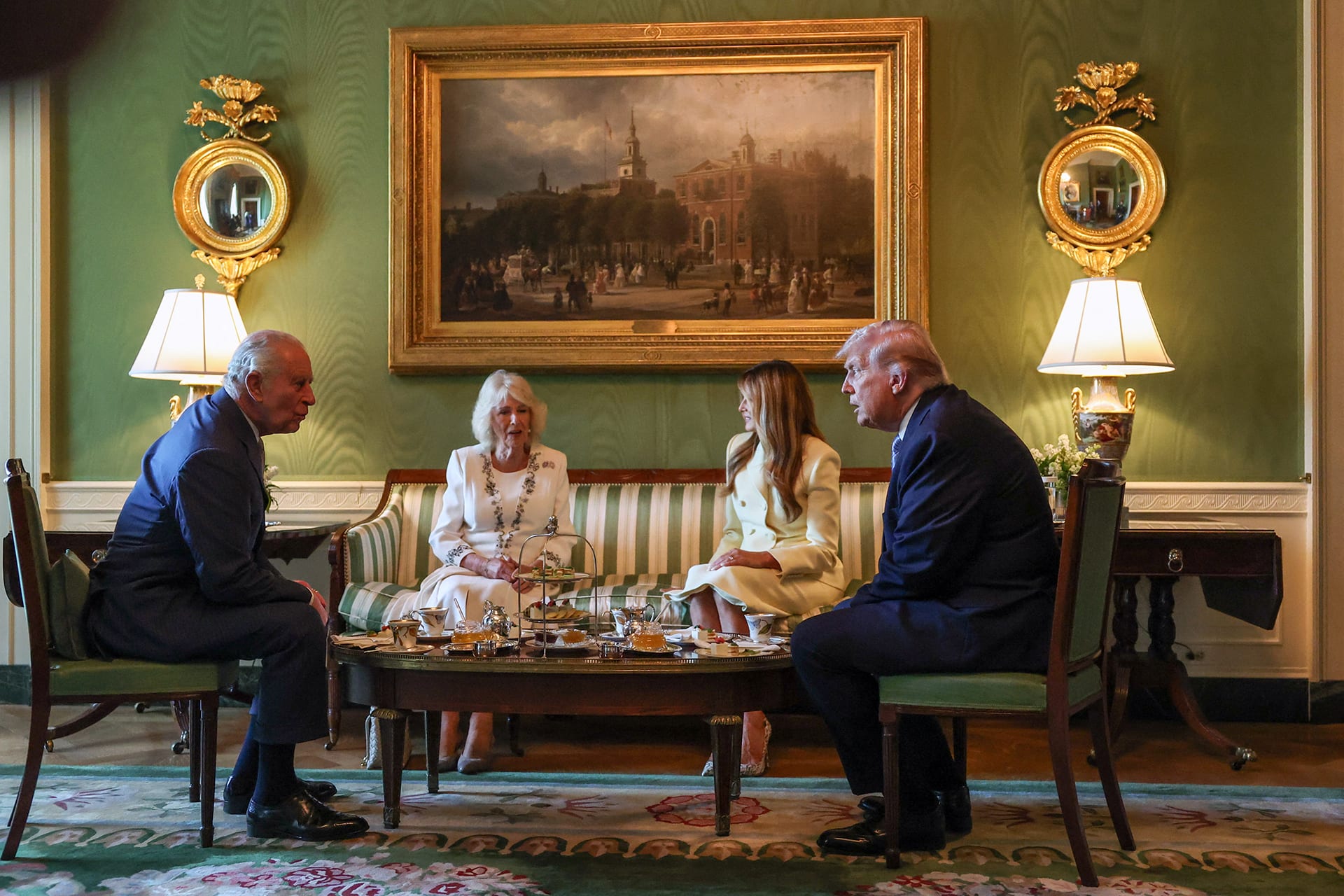
King Charles III’s state visit to the United States from April 27–30 arrives at a particularly fraught moment. The four-day trip, his first as monarch, will feature all the expected rituals: a state dinner at the White House, an address to a joint session of Congress, and symbolic gestures designed to showcase shared history and enduring ties. But the political context threatens to overshadow the spectacle. The visit coincides with the 250th anniversary of U.S. independence—an anniversary that underscores both the depth and tension of the Anglo-American relationship. More importantly, it comes amid one of the most strained periods in transatlantic ties in decades.
The relationship between Washington and London has deteriorated in the fifteen months since U.S. President Donald Trump returned to the White House. He has publicly criticized Keir Starmer’s Labour government on multiple fronts: accusing it of weakness on immigration, deriding its use of windmills to generate energy, faulting its lack of support in the U.S.-Israeli war against Iran, and threatening economic retaliation over the UK’s supposedly “unfair” digital services tax. Trump has even suggested that U.S. security guarantees might not extend as readily as before, which is a striking departure from decades of alliance orthodoxy.
These tensions reflect deeper divergences over core strategic questions. On Iran, London has been much more cautious than Washington. It has questioned the wisdom of the war and limited its military assistance, including initial reluctance to allow the U.S. military to use its Diego Garcia naval base in the Chagos Archipelago in the Indian Ocean. On trade, Britain remains committed to lower tariffs and existing regulatory frameworks, including on digital policy, that clash with U.S. preferences. On climate, the UK is a leading proponent of the transition from fossil fuels to renewables at a time when the Trump administration has repudiated its predecessor’s green energy agenda and gutted its signature Inflation Reduction Act. And on NATO, disputes over burden-sharing and operational support—such as the supply of war ships for missions to help secure safe passage in the Strait of Hormuz—have further strained transatlantic cooperation.
King Charles’s soft power play
King Charles’s visit is therefore, in part, an attempt to smooth over these differences through the soft power of the monarchy. The British crown has long served as a diplomatic asset, able to engage foreign leaders in ways that elected politicians sometimes cannot. But even Buckingham Palace recognizes the risks. UK officials have described this trip as one of the most delicate diplomatic missions of Charles’s more than three-year reign.
His itinerary reflects both ambition and caution. In Washington, Charles will meet privately with Trump, attend a state banquet, and deliver a speech to Congress—the first by a British monarch in over three decades. Ceremonial highlights include a large-scale military review at the White House and various cultural events designed to emphasize shared heritage. Beyond the capital, the king will travel to New York and Virginia, visiting the 9/11 memorial in downtown Manhattan and participating in a series of community and cultural engagements. These stops are meant to broaden the visit beyond politics, reinforcing the people-to-people ties that have historically underpinned the transatlantic alliance.
Yet even the best choreography cannot conceal the underlying reality that the UK is drifting away from the United States. Ironically, this shift comes as Britain approaches the tenth anniversary of the Brexit referendum. On June 23, 2016, 52 percent of British voters opted to leave the European Union (EU), a controversial decision many proponents justified by the creation of a more “global Britain,” freed from Brussels regulation and able to deepen ties with Washington. But nearly a decade later, the opposite dynamic is taking hold. It is now widely accepted that leaving the EU was a mistake: it has cost the British economy dearly—estimates vary between 6 and 8 percent of gross domestic product—and that households are worse off as a result.
A fraying ‘special relationship’
On security, the transatlantic divide over Ukraine and the Middle East has exposed the limits of U.S.-UK alignment. On trade, disagreements over tariffs, digital taxation, industrial policy, and regulatory standards have widened. And on political values—once the bedrock of the special relationship—differences are becoming more pronounced, particularly on issues such as rule of law, freedom of speech, and democratic norms. Even Nigel Farage of the Reform Party, a close ally of Trump and the MAGA movement, has felt the need in recent months to distance himself from the United States to win over more moderate voters who disapprove of U.S. policies.
As a result, London is veering away from the Atlantic and edging back across the Channel toward Europe. The Starmer government has sought closer cooperation with Berlin, Brussels, and Paris, particularly on defense and economic policy. The logic is straightforward: in a world of renewed great-power competition and waning or uncertain U.S. leadership, the UK cannot afford strategic isolation.
This reorientation is by no means a wholesale reversal of Brexit. Britain is unlikely to rejoin the EU anytime soon. But it does signal a recalibration that places greater emphasis on partnerships with EU member states and less on the assumption of an unbreakable transatlantic bond. King Charles’s visit, then, is as much about managing decline as it is about celebrating continuity. The monarchy can project stability, tradition, and shared history; it can even provide some reassurance at a time of geopolitical tension. But it cannot resolve the structural forces that are gradually pulling the two countries further apart.
Indeed, King Charles’s state visit may highlight these tensions rather than obscure them. Trump’s unpredictability looms large: his personal warmth toward the king and fascination with the royal family contrasts sharply with his staunch criticism of the British government, complicating the visit’s diplomatic purpose. A single offhand remark or policy announcement by the U.S. president could overshadow days of carefully orchestrated symbolism.
The shadow of scandal
Domestic controversies add another layer of awkwardness. In Britain, Starmer’s government faces electoral threats from both the left and right, with Zack Polanski’s Greens and Nigel Farage’s Reform expected to perform well in regional and local elections on May 7, and Labour bracing for a shellacking. Starmer is under tremendous pressure over economic performance and political missteps, including the fallout from the short-lived appointment of Peter Mandelson as ambassador to Washington. The episode, linked to scrutiny over Lord Mandelson’s past associations with the disgraced U.S. financier and convicted sex offender Jeffrey Epstein, has reinforced perceptions of political fragility at a time when steady leadership is desperately needed.
The Epstein scandal also casts a shadow over the royal family itself, given the long-running controversy surrounding Prince Andrew. While the issue is unlikely to feature prominently during the visit—Trump has his own reasons to steer clear—it underscores the broader challenges facing the monarchy’s international image.
In the end, what is at stake in King Charles’s state visit is not the survival of the special relationship but its recalibration. For decades, that relationship rested on shared interests, common values, and deep institutional ties. It was reinforced by habit and the absence of viable alternatives. Today, all three pillars are under strain: interests are diverging, values are contested, and alternatives—particularly in Europe—are becoming more attractive for the UK. The monarchy can help manage this transition, but it cannot reverse it. King Charles’s role is to emphasize continuity and remind both countries of their shared past, even as their strategic futures are diverging.
That is a delicate balancing act. And it explains why, despite the grandeur and ceremony, this visit is likely to leave British diplomats breathing a sigh of relief when it is over. Because beneath the pageantry lies an uncomfortable truth: the special relationship is no longer what it once was, and no amount of royal symbolism can fully restore it.
This work represents the views and opinions solely of the author. The Council on Foreign Relations is an independent, nonpartisan membership organization, think tank, and publisher, and takes no institutional positions on matters of policy.