Ceasefire in Syria Takes Effect After Israel Strikes Damascus
By experts and staff
- Published
- CFR Editors
Welcome to the Daily News Brief, CFR’s flagship morning newsletter summarizing the top global news and analysis of the day.
Subscribe to the Daily News Brief to receive it every weekday morning.
Top of the Agenda
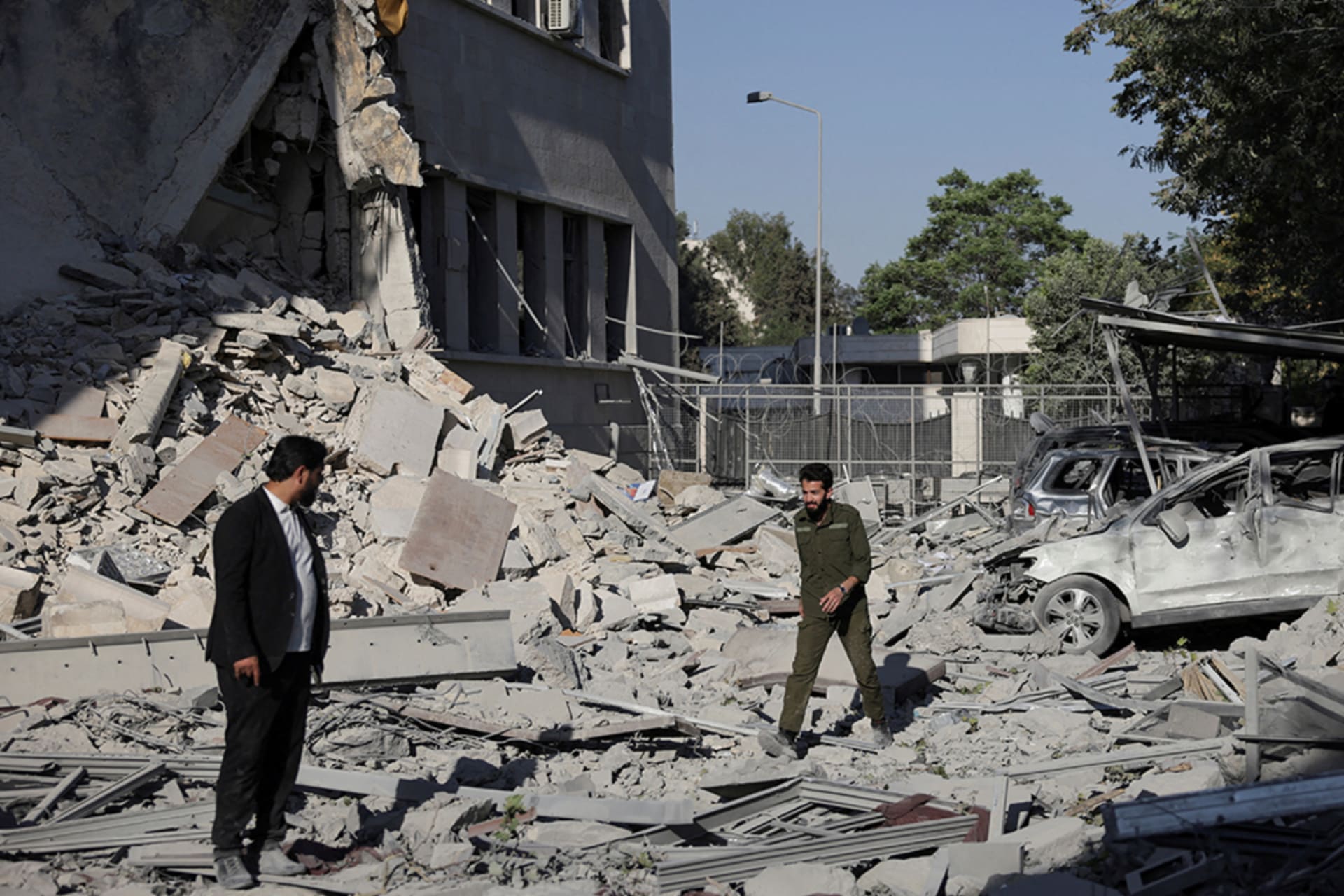
Syrian forces withdrew from the southern city of Sweida this morning as a new ceasefire with Druze militias took effect, after days of clashes had threatened the country’s fragile political transition. American, Arab, and Turkish mediators helped negotiate the agreement. In spite of the diplomacy, Israel struck the Syrian capital of Damascus multiple times yesterday, claiming it was acting on behalf of Syria’s Druze religious minority, which is concentrated near Sweida. Violence had broken out in southern Syria over the weekend between Bedouin tribes and Druze militias, with Syrian and Israeli forces later entering the fray. More than 350 deaths from all sides were reported by a war monitor.
Damascus strikes.
- Israel’s military struck Syria’s defense ministry headquarters and an area near the presidential palace in Damascus on Wednesday, prompting U.S. calls to “stand down.”
- Israeli Prime Minister Benjamin Netanyahu had also ordered Israel’s military to strike Syrian forces or weapons entering Sweida earlier in the week, with Defense Minister Israel Katz saying that the country would “not allow a massacre of Druze in Syria.”
- The strikes in Damascus have killed at least three people and wounded more than thirty, according to Syria’s health ministry.
The ceasefire.
- The Syrian government said in a statement that it would stop all military operations and form a committee with the Druze community to monitor security in the area.
- In a televised address today Syria’s interim president, Ahmed al-Sharaa, condemned Israel for striking government and civilian targets. Sharaa said Israel’s actions had risked “large-scale escalation.” He also pledged to protect the Druze community.
- A spiritual leader for a Druze group confirmed the agreement, including a “de-escalation” from all sides; however, another leading Druze figure said he rejected the truce and called for continued fighting. An earlier Tuesday ceasefire crumbled because of disagreement between Druze leaders.
- U.S. Secretary of State Marco Rubio framed the clashes as “an unfortunate situation and a misunderstanding,” and called on “parties to deliver on the commitments they have made” without elaborating.
“When [U.S. President Donald] Trump announced that he was ending U.S. sanctions, he said that the move gave Syrians ‘a chance at greatness.’ To keep that chance alive, his administration must build on the current momentum and ensure that the U.S. government follows through on his promise—and that actors in Syria and across the region do not spoil the process.”
—Center for Strategic and International Studies’ Natasha Hall and Ninar Fawal in Foreign Affairs
Across the Globe
Trump denies Powell rumors. The president said yesterday that he does not intend to fire Federal Reserve chair Jerome Powell, saying “I think it’s highly unlikely, unless he has to leave for fraud.” Reports emerged that Trump had been close to doing so in a meeting of Republican lawmakers. He has expressed irritation about Powell’s resistance to lowering interest rates and criticized a $2.5 billion Fed building renovation, saying “it’s possible there’s fraud involved.” Powell has said such suggestions are inaccurate and maintains that the president has no authority to remove Fed leaders.
Netanyahu coalition fractures. The ultra-Orthodox party Shas has said it will quit Prime Minister Benjamin Netanyahu’s coalition, leaving him with a minority in parliament. It is the second party to defect this week over objections to a proposed law that would change religious exemptions for serving in the country’s military. However, Shas said it could still vote with Netanyahu on other issues. Their departure comes as the Knesset heads into a three-month recess on July 27.
El Salvador rights group flees. A humanitarian rights organization has sent twenty members into exile amid President Nayib Bukele’s ongoing crackdown on critics, reports Reuters. The group, Cristobal, is known for investigations into Bukele’s government and says it is unsafe for its staff to continue their work. The only member left in the country is the group’s anticorruption director, who was jailed in May.
EU asylum shift. Spain has overtaken Germany as the destination for the highest number of asylum seekers in the European Union (EU) in a “significant shift,” according to an unpublished EU report seen by the Financial Times—though overall applications are down. It follows an “abrupt” drop in Syrian applicants after the fall of Bashar al-Assad last year; Germany was a popular destination for that group. The report also said the shift could relate to the Trump administration’s immigration policies, as Spain saw a boost in Venezuelan asylum requests.
Ukraine’s new PM. The country’s parliament voted in a new prime minister, Yuliia Svyrydenko, earlier today. Svyrydenko, a former deputy prime minister and economy minister, was tapped by Ukrainian President Volodymyr Zelenskyy to replace Denys Shmyhal in a major reshuffling motivated by relations with Washington. Svyrydenko pledged to audit public finances, expand weapons production, and keep the military supplied.
Iraq oil field attacks. Drone attacks have hit two oil fields in Iraq’s semi-autonomous Kurdish region this week. The first, at the Sarsang oil field on Tuesday, came only hours before the U.S. operator of the field signed an agreement for further development of another site. The second strike, at a field operated by a Norwegian company, temporarily shut down production. No group has claimed responsibility.
Underwater cable ban. The United States is moving to ban Chinese technology from being connected to underwater U.S. cables, the Federal Communications Commission (FCC) said yesterday. It would apply to Chinese businesses on an existing FCC list of potential natural security threats. The measure comes amid growing fear about espionage; an underwater network of more than 400 cables handles 99 percent of internet traffic.
What’s Next
- Today, Africa’s environment ministers will gather over dwindling climate finance in Nairobi.
- Today, France will hand over a military base to Senegal, marking the end of its presence in West Africa.
- Tomorrow, Taiwan wraps up its largest-ever annual military drill.
- Tomorrow, Treasury Secretary Scott Bessent will visit Tokyo to meet with Prime Minister Ishiba Shigeru.