Dean Acheson and the Birth of the Liberal International Order
A lawyer-diplomat with strong convictions helped lead America’s transition after World War II from isolationism to internationalism.
By experts and staff
- Published
 James M. LindsayCFR ExpertMary and David Boies Distinguished Senior Fellow in U.S. Foreign Policy
Many secretaries of state over the years have written memoirs. You have George Shultz’sTurmoil and Triumph: My Years as Secretary of State, James Baker’s The Politics of Diplomacy: Revolution, War and Peace, 1989–1992, Condoleezza Rice’s No Higher Honor: A Memoir of My Years in Washington, and Hillary Clinton’s Hard Choices among others. The gold standard, however, remains Present at the Creation: My Years in the State Department by Dean Acheson. It won the Pulitzer Prize in 1970.
Acheson was born in Middletown, Connecticut, on April 11, 1893. His father was the state’s Episcopal Bishop; his mother hailed from a wealthy Canadian family. Serving under President Harry Truman, Acheson had two advantages in writing a memoir: He was a terrific writer, and he was one of the chief architects of what we today call the liberal international order.
Impeccable Credentials
Acheson was a quintessential product of the Eastern Establishment. He attended prep school at Groton and spent his undergraduate years at Yale. After Harvard Law School, he clerked for Supreme Court Justice Louis Brandeis and eventually became a partner at the white-shoe law firm Covington and Burling.
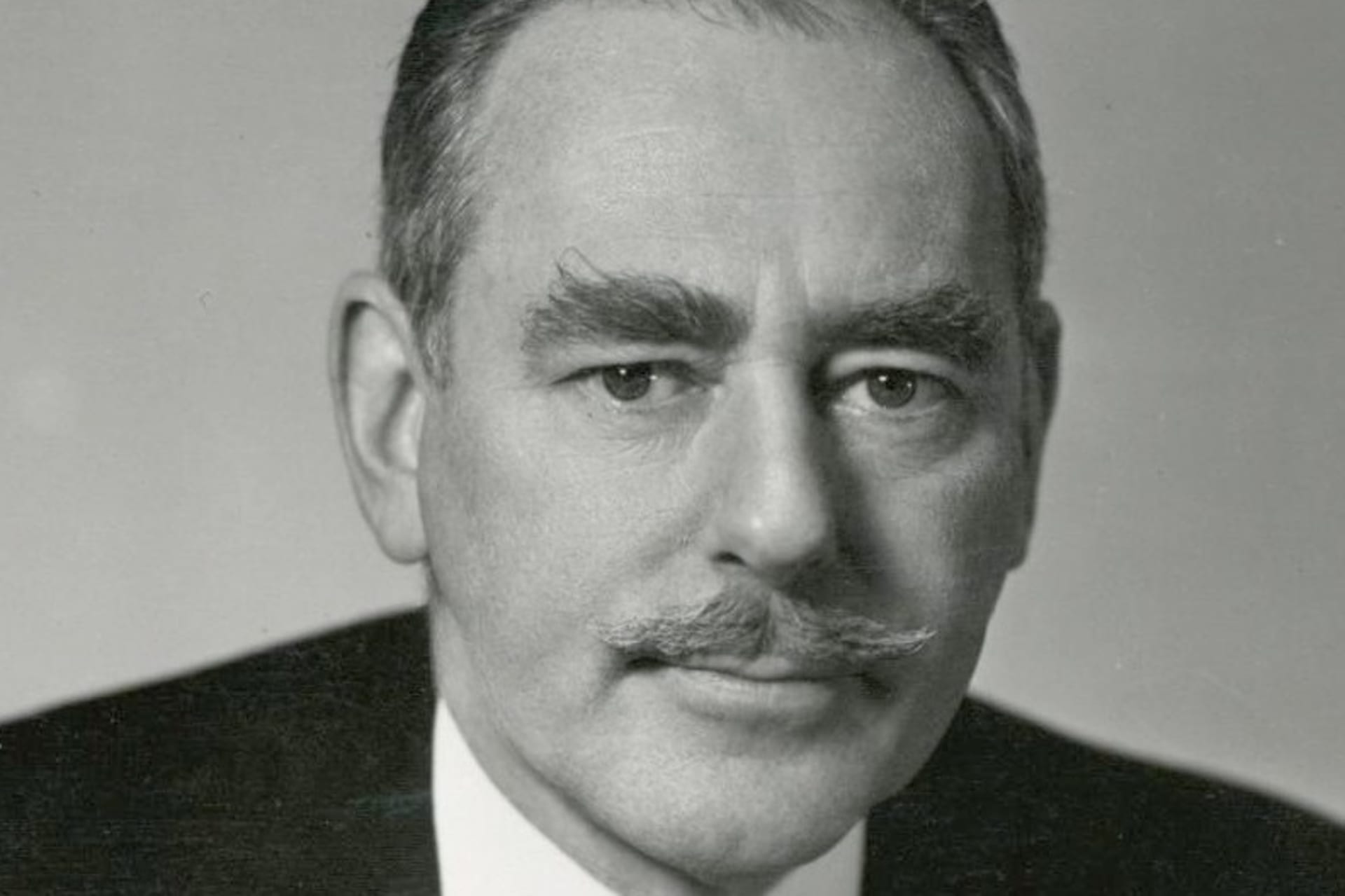
Acheson had intelligence and wit in abundance. He had a demeanor and confidence to match. Adjectives frequently used to describe him include “brilliant,” “urbane,” “elegant,” “arrogant,” and “haughty.” Even his attire stood out. The famed New York Times columnist James Reston wrote:
Mr. Acheson looks remarkably like a British diplomat—and a stage British diplomat at that. He has an outrageous bushy mustache, carefully trained to look careless. His clothes look the way the clothes of British diplomats used to look before the British ran out of coupons and put leather patches on their elbows.
Acheson’s mustache was so distinctive that Walter Isasacson and Evan Thomas’s classic treatment of mid-twentieth century U.S. foreign policy, The Wise Men, has an index entry for it.
Early Government Work
Acheson was a man of strong convictions. His first executive branch job came in 1933. President Franklin Roosevelt, a fellow Groton graduate, made him undersecretary of the Treasury. He lasted just six months. He and the president did not see eye to eye on economic matters. As Reston put it, Acheson was fired due “to Mr. Acheson’s illusion that an undersecretary could have strong views about fiscal policy and owing to Mr. Roosevelt’s desire to have somebody in the job who approved his policies.”
Despite his unhappy stint at Treasury, Acheson remained an FDR supporter. As the president struggled to find ways to help Britain withstand the Nazi onslaught during the summer of 1940, Acheson wrote an influential New York Times op-ed with several other prominent lawyers arguing that FDR had the authority to provide old U.S. naval destroyers to Britain. The article encouraged Roosevelt to move forward with what became known as the destroyers-for-bases deal.
Present at the Creation
Acheson’s biggest contributions were yet to come. He spent ten of the next twelve years in the State Department. As assistant secretary of state for economic affairs (1941-1944), undersecretary of state (1945-1947), and finally as secretary of state (1949-1953), he served during some of the most critical years in U.S. history. Most notably, he helped usher in America’s transition from isolationism to internationalism. He backed the ideas behind the Truman Doctrine in 1947. He pushed for the Marshall Plan in 1947. And he helped shape the North Atlantic Treaty in 1949.
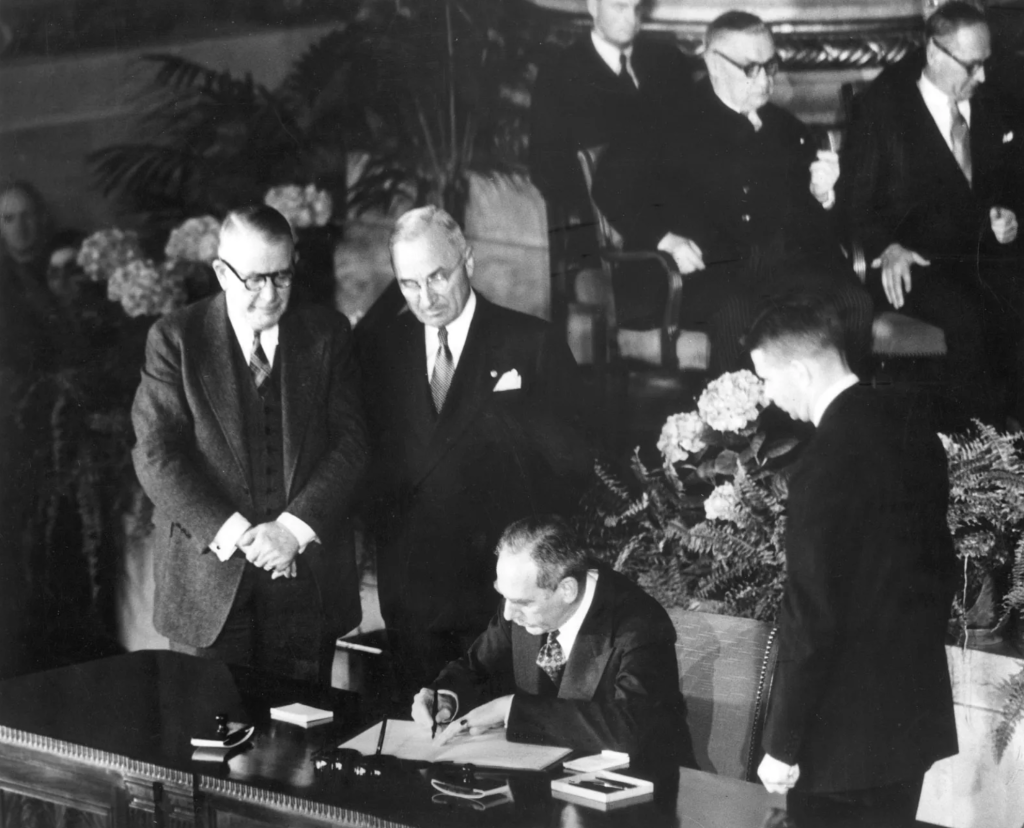
That’s just for starters. Even Acheson’s lesser accomplishments are impressive. He had a hand in the formation of a government in West Germany, the signing of a peace treaty with Japan, the non-recognition of Mao’s China, and the development of the hydrogen bomb. In short, Acheson was arguably the most influential foreign policy voice in an administration that established the foundations for U.S. policy during the Cold War.
The Imperial Presidency
Acheson’s arguments on the destroyer-for-bases deal marked him as a fan of presidential authority. It was his legal arguments in the aftermath of North Korea’s attack on South Korea in June 1950, however, that greatly expanded presidential power. He urged Truman not to ask Congress to authorize a U.S. intervention. Rather, he should act based solely on his constitutional authority as Commander in Chief of the armed forces. Truman accepted the recommendation. Acheson subsequently told Congress:
Not only has the President the authority to use the armed forces in carrying out the broad foreign policy of the United States implementing treaties, but it is equally clear that this authority may not be interfered with by the Congress in the exercise of powers which it has under the Constitution.
Acheson’s expansive claims for presidential authority misrepresented both the history and the law on war powers. He would later lament his advice to Truman, calling it “the greatest mistake of a lifetime.” That change of heart did not reflect a shift in his legal views. Instead, he concluded that asking Congress to authorize hostilities in Korean would have protected the Truman administration against criticism once the fighting went poorly. Whatever the merits of Acheson’s political analysis, subsequent administrations would use his legal arguments to justify their own expansive claims to presidential authority.
Theory and Practice
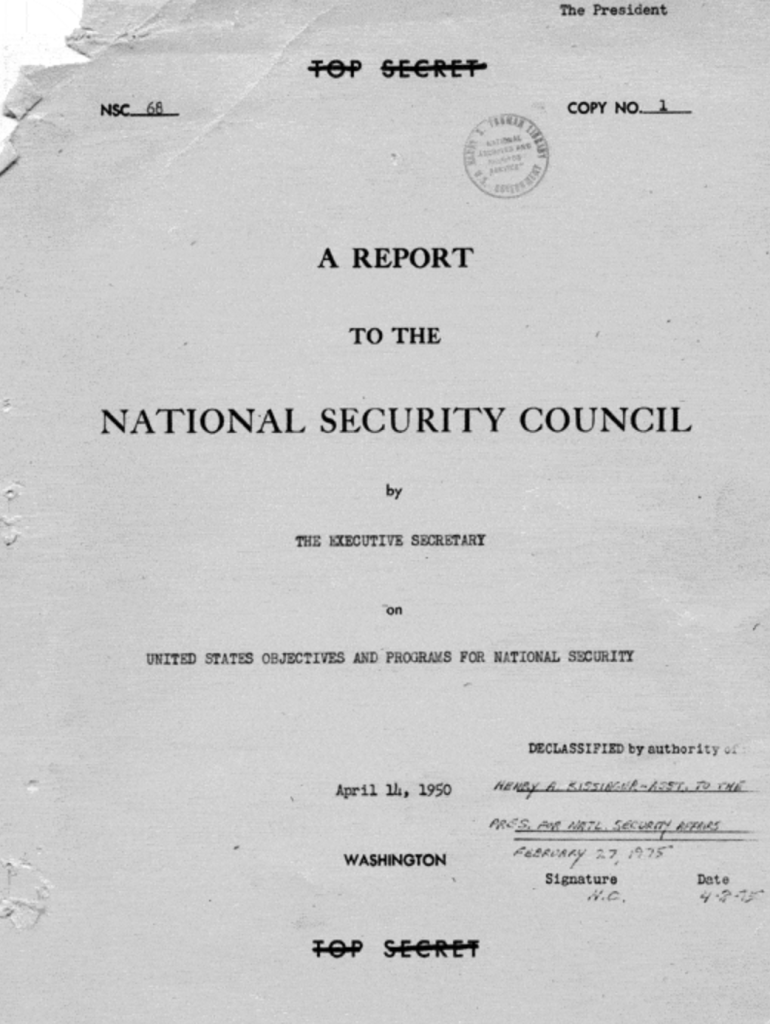
Acheson understood his job. He was a policymaker, not a professor. His job required doing more than just generating ideas. He also had to put them into practice. In Present at the Creation, he discussed the drafting of NSC 68, one of the formative Cold War policy documents. It is often criticized for being hyperbolic and alarmist about the Soviet threat. Acheson dismissed such claims:
The task of a public officer seeking to explain and gain support for a major policy is not that of the writer of a doctoral thesis. Qualification must give way to simplicity of statement, nicety and nuance to bluntness, almost brutality, in carrying home a point. It is better to carry the hearer or reader into the quadrant of one’s thought than merely to make a noise or to mislead him utterly. In the State Department we used to discuss how much time that mythical “average American citizen” put in each day listening, reading, and arguing about the world outside his own country. Assuming a man or woman with a fair education, a family, and a job in or out of the house, it seemed to us that ten minutes a day would be a high average. If this were anywhere near right, points to be understandable had to be clear. If we made our points clearer than truth, we did not differ from most other educators and could hardly do otherwise.
Here and elsewhere in his career, Acheson focused intently on what he was trying to accomplish and on moving others to yield to his point of view.
At the Water’s Edge
Acheson viewed foreign policy as inherently political. He certainly found himself on the receiving end of biting criticism from Republicans. Then Senator Richard Nixon denounced Acheson as the “Red Dean,” the man with “a form of colorblindness—a form of pink eye—toward the Communist threat in the United States.” Nixon did not stop there. He famously skewered Adlai Stevenson, the 1952 Democratic presidential nominee, for holding a “Ph.D. from Dean Acheson’s College of Cowardly Communist Containment.”
But Acheson was happy to use the idea that politics should stop at the water’s edge to his advantage. Two decades after he stepped down as secretary of state, an interviewer asked him about bipartisanship. His answer was blunt: “Bipartisanship was a magnificent fraud.” Why? Because:
Bipartisan foreign policy is ideal for the Executive because you cannot run this damn country under the Constitution any other way. Now, the way to do that is to say, politics stops at the seaboard, and anybody who denies that postulate is “a son of a bitch and a crook and not a true patriot.” Now, if people will swallow that, then you’re off to the races.
So, Acheson concluded:
No, I wouldn’t be too serious about bipartisanship. It’s a great myth that ought to be fostered. And don’t bring too damn much scholarship to bear on it. You’ll prove it out of existence if you’re not careful.
It’s an insight that remains true today.
The United States celebrates its 250th anniversary in 2026. To mark that milestone, I am resurfacing essays I have written over the years about major events in U.S. foreign policy. A version of this essay was published on April 11, 2012.
Oscar Berry assisted in the preparation of this post.