Everything, Everywhere, All at Once: The Future of U.S. Strategy
CFR President Michael Froman surveys a week of global developments in the context of the Council’s new Future of American Strategy Initiative.

Well, this job is never boring, that’s for sure.
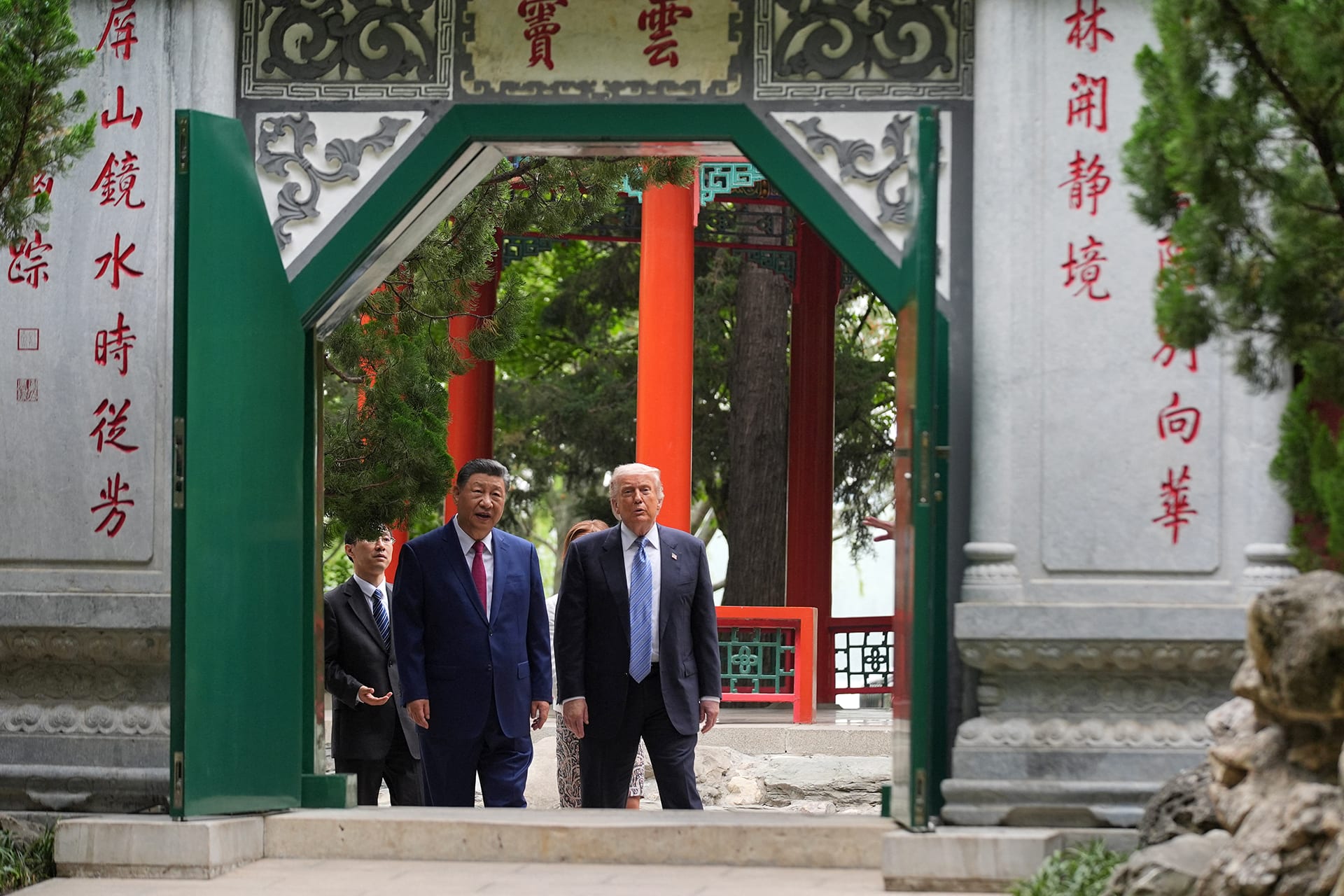
Just take a look at some of the major world events of the past week: Russian President Vladimir Putin traveled to Beijing for a two-day summit on the heels of U.S. President Donald Trump’s trip to China, raising questions about where the United States stands in the context of the “friendship without limits” between China and Russia. U.S.-Cuba relations hit a new level of tension with the United States’ indictment of former Cuban leader Raúl Castro, a new wave of sanctions on Cuban political and military leaders, and the arrival of the U.S.S. Nimitz aircraft carrier in the Caribbean. NATO issued a fresh warning to Putin about using a nuclear weapon in Ukraine as war rages on for the fifth year. The Strait of Hormuz remained blocked, with Iran and Oman now in talks to set up a toll system. Privately developed artificial intelligence (AI) models have become so powerful that the National Security Agency is considering pre-screening them for safety and security risks prior to public release. And, a new outbreak of Ebola has killed dozens in Uganda and the Democratic Republic of the Congo, reigniting fears of the epidemic that claimed the lives of more than ten thousand people in Western Africa more than a decade ago.
How was your week?
Any one of these events would constitute a major development in global affairs on their own: the emergence of great power competition between the United States and China, major and unresolved conflicts in Europe and the Middle East, a new global health crisis, and the looming AI singularity. But taken together, they point to fundamental questions about the future of U.S. strategy, regional relations, geoeconomics, great power rivalry, and war—to say nothing of the remaking of the national security agencies to be fit for purpose in an ever-changing world.
Fortunately, the United States is coming at these challenges from a place of relative strength across the economic, technological, and military domains, but our ability to tackle these challenges alone has declined from the peak of the unipolar moment. And bubbling beneath all of this is an American electorate with changing and deeply divided views on the future of U.S. international leadership.
There are areas of foreign policy where there are points of agreement, if not outright consensus, across party lines. Just this week, Senator Elissa Slotkin (D-MI) and Senator Tim Sheehy (R-MT) came together at CFR to have a civil discourse over a number of these issues. They were followed by former deputy national security advisors Victoria Coates from the Trump administration (now at the Heritage Foundation) and Jon Finer from the Biden administration (now at the Center for American Progress), who found meaningful areas of common ground. In an era of great polarization, there are building blocks of a consensus to flesh out.
For example, improvements to the U.S. defense industrial base are widely supported. China is broadly recognized as a serious strategic challenge. The development of AI and its implications for national security and domestic stability are widely acknowledged. And while sharp disagreements remain over specific policies in each of these domains, there is striking bipartisan agreement that the status quo cannot hold.
That shared conviction that the current moment demands blue-sky thinking about where the international system is going, and the role of the United States in that system, is precisely the impetus behind the CFR’s new Future of American Strategy Initiative: a multi-year, whole-of-CFR effort to help shape the debate about the next era of U.S. international leadership.
This project reflects our enduring commitment to deal with the world as it is and will be, not as it was. A core part of this initiative will be engaging deeply with differing views from across the country on what this moment means and how to deal with it.
Led by Senior Fellow Rebecca Lissner, the initiative has already released more than two dozen analyses authored by our fellows with differing views on approaches to relations with Africa, Asia, Europe, Latin America, and the Middle East; trade and international economics; the development of AI; nuclear proliferation and defense strategy; and other issues. I encourage you to read this compendium of essays, view the series of short videos, and watch the enlightening conversations we hosted this week at CFR to commemorate the launch of the initiative. And if you haven’t already watched the launch video, take a gander here:
[Video: https://www.youtube.com/watch?v=B9dC58sYOAk]
Let me know what you think about the Future of American Strategy Initiative and what this column should cover next by replying to [email protected].