Five Questions After Colombia’s Surprising Vote Against Peace
By experts and staff
- Published
- Matthew M. TaylorAdjunct Senior Fellow for Latin America Studies
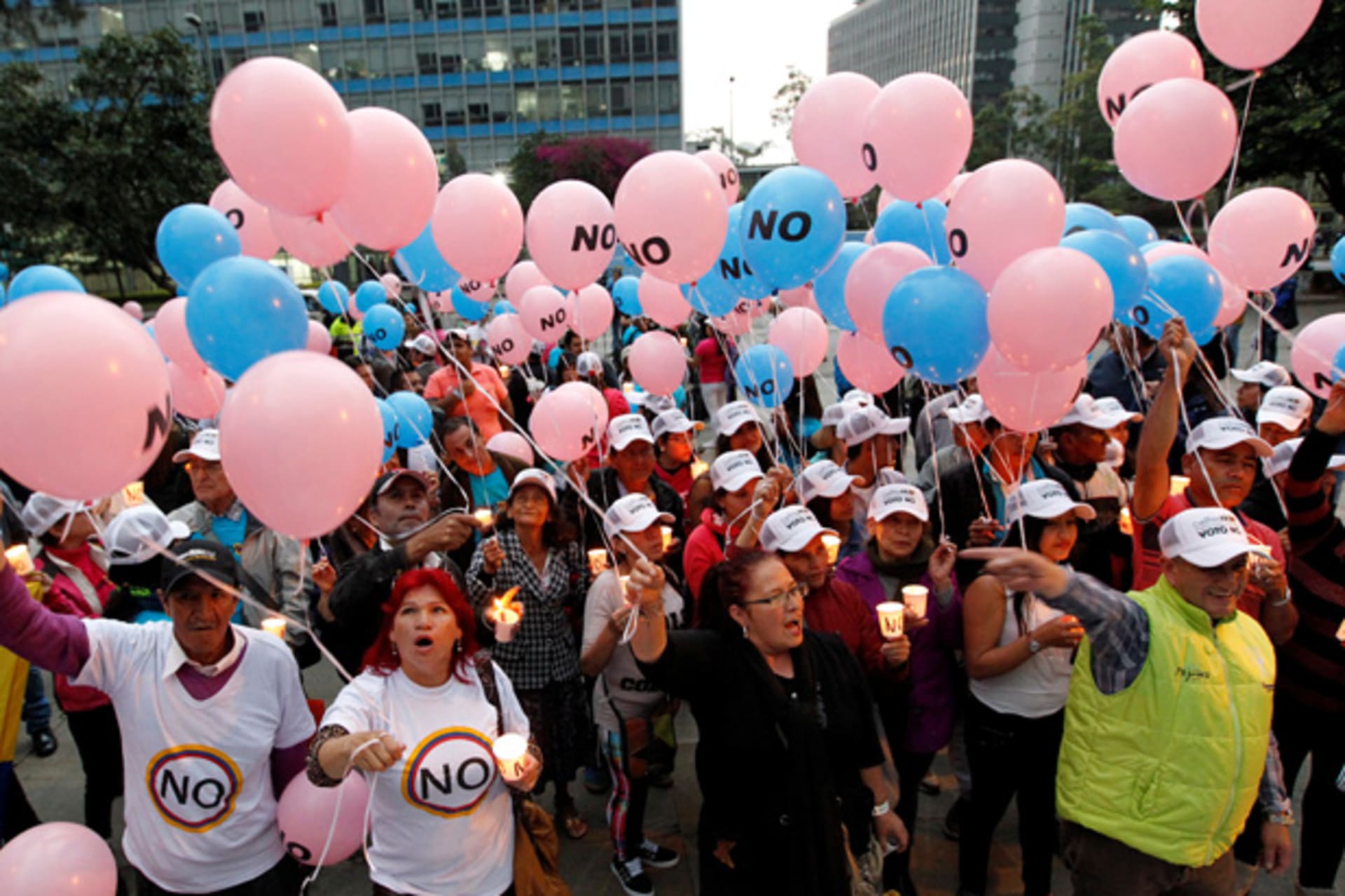
Pollsters’ best bets were radically overturned in Colombia Sunday, as widespread apathy and torrential rains dampened turnout in the referendum on the peace deal. Opponents of the deal appeared as surprised as anyone at their own victory, triumphing by fewer than 55,000 votes in a country of 33 million voters. Abstention topped 60 percent, and the “No” side won with the support of less than one-fifth of total voters, by a margin of 0.16 percent of those eligible to vote.
As the Washington Post’s Nick Miroff noted in a fast reaction piece, the Revolutionary Armed Forces of Colombia (FARC) are probably the biggest losers of this surprising upset: voters did not buy the guerillas’ makeover into legitimate political actors or feel the need to offer them concessions, such as limited jail time or guaranteed legislative representation.
President Juan Manuel Santos and his exhausted negotiators come a close second in the losing column. Although holding the plebiscite may now look like a mistake, it should be noted that there were good reasons to go down this path: the possibility of the plebiscite gave negotiators leverage to extract concessions in Havana, promised greater legitimacy, and was procedurally far preferable to the constitutional convention that the FARC had initially demanded. But now four years of very intense negotiations have landed in the dustbin, the opposition led by former President Álvaro Uribe will be emboldened, and any new deal seems likely to face an even steeper uphill battle.
Several unanswered questions will guide developments in the aftermath of this cataclysmic vote:
Correction: October 5, 2016
An earlier version of this blog post included the following sentence. “Rural areas, which have been the primary victims of the violence, voted strongly against the agreement.” This was based on an early report from the Miami Herald. More recent data suggests that rural areas nationwide may not have lined up quite so solidly against the deal. Therefore, we have removed this assertion and thank our readers for their eye to detail.