The Political Education of Peter Obi
The former two-time governor may have drawn the right lessons from the 2023 election, but it is not entirely clear that he controls his destiny.
By experts and staff
- Published
 Ebenezer ObadareCFR ExpertDouglas Dillon Senior Fellow for Africa Studies
This is the third installment in the series on the 2027 Nigerian general election. The previous installment can be found here.
Caught in a rare moment of camaraderie with President Bola Tinubu and former Ekiti state Governor Kayode Fayemi at the installation mass for Pope Leo XIV in Rome last May, former Anambra state Governor Peter Obi suddenly found himself in hot water with his teeming followers. While many expressed disappointment that Mr. Obi apparently saw nothing wrong in trading banter with a man whom he once accused of “stealing” the 2023 presidential election from him, others alleged that Obi had held a secret meeting with Tinubu in the Eternal City over a N225 billion debt that they claimed he, Obi, was owing Fidelity Bank, a Lagos commercial bank whose Board of Directors he had chaired between 1994 and 2002.
As it happens, proving that he was not indebted to Fidelity Bank (Obi described the allegations as “baseless, malicious, and entirely false”) was the least of Obi’s problems. Of greater concern from the standpoint of his fanbase was the impression that, when push comes to shove, Obi and Tinubu, as members of the same political establishment, see eye to eye on the most important things. Obi’s explanation to his distraught supporters that he was only at the event as a devout Catholic (like Fayemi, he is a Papal Knight of the Order of St. Sylvester), and that he had “never sought an audience with, nor met, President Tinubu since he assumed office” shows that he understood what was at stake, and that the only potential loser from being seen carousing with Tinubu was Obi.
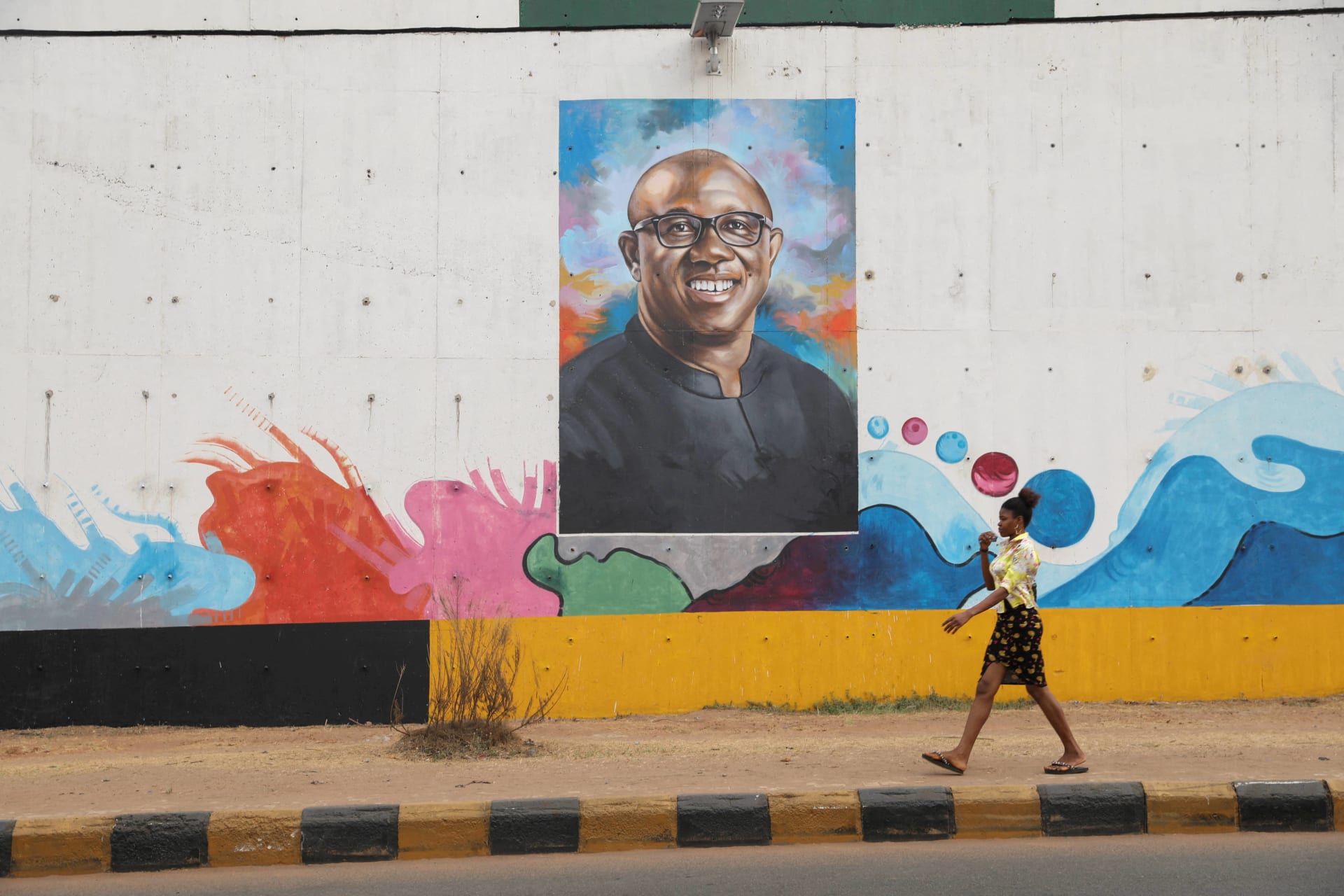
For Peter Obi, there is a real cost to being perceived as no different from those he has stridently accused of perpetrating “institutionalized corruption on a massive scale,” and from whom, understandably, he has sought to distance himself. As a matter of fact, if any single factor can be said to explain Peter Obi’s rise to political prominence in the past few years, it is the belief among his followers that he is an “outsider,” a rare breed who has somehow managed not to fall prey to the usual temptations of public office in Nigeria. This is a pillar of faith among the “Obidient” (the nationwide protest movement on whose back Obi rode to an impressive victory in eleven states and the Federal Capital Territory, Abuja, in 2023): conviction in the relative incorruptibility of a man many continue to see as offering the best hope of breaking the stranglehold of the country’s political establishment.
Given his experience in the 2023 election, Obi should know by now how entrenched and tenacious that establishment is. There was hardly any political lever available that he did not pull at the time. For a start, Obi had enjoyed the backing of a cross section of southwestern dignitaries, including former President Olusegun Obasanjo and Ayo Adebanjo, the late co-founder of Yoruba sociocultural group Afenifere, many of whom seemed to have been sick enough of the sight of Tinubu and, as they saw it, his vaulting ambition, that they readily set aside their doubts about Obi’s candidacy and rallied around him.
Obi did not have to do as much heavy lifting in the southeast, a region where, understandably, he could take the sympathy of his Igbo co-ethnics for granted. He also played the religious card correctly (“It is a religious war,” he pleaded with Bishop David Oyedepo’s Ogun state-based Living Faith Church Worldwide in a leaked telephone conversation), calculating—rightly as it turns out—that the angst of Christians in the so-called “worrisome places” in the Middle Belt region (he carried both Plateau and Nasarawa states and did very well in Benue) would be sufficient to make beleaguered voters there pull the lever for him.
The northern region, where he secured a measly 14.2 percent of the total votes cast, was always going to be Obi’s Achilles’ heel. Having defected to the Labor Party at the last minute, he had sought to make up for lost ground by selecting Yusuf Datti Baba-Ahmed, a former Kaduna State senator, as his running mate.
Given his woeful performance, it seems understandable that Obi would do everything possible to overcome a handicap that could yet again undercut his presidential ambition. This imperative—to make significant inroads into the north—explains the moves he is currently making under the umbrella of the opposition African Democratic Congress (ADC). To that extent, he seems to have recognized the first lesson in Nigerian politics: the road to political power leads through the northern region. His supporters may object—and they would have a point—that President Goodluck Jonathan managed to win the presidency in 2011 without significant northern support, but that is to forget that Jonathan was an incumbent with all the appurtenances of the office, and that he could take for granted massive support in the Middle Belt and southern states.
Not only does Obi not enjoy such luxury, but it is instructive that violence broke out across several northern states as soon as early results showed Mr. Jonathan taking an unassailable lead. According to Human Rights Watch estimates, more than eight hundred people were killed following three days of rioting by supporters of the opposition Congress for Progressive Change candidate, Muhammadu Buhari. Like it or not, the northern electorate will have a say, and experience suggests that religion is aways a determinative factor in its decision-making.
Which leaves Obi in a pickle. A ticket of Obi with a northern Muslim running mate (there are indications of a budding alliance with former Kano state Governor Rabiu Musa Kwankwaso) will present challenges not all that different from those that hobbled him in the last election, meaning that he will face a formidable obstacle in an electorate for whom, as indicated, (Muslim) religious identity is primary. It is not impossible, but it seems highly unlikely that the northern electorate will vote en masse for a southeastern Christian. It is true that the same northern electorate did vote in the right numbers for Obasanjo in 1999 (who actually carried all the other regions with the instructive exception of his own Yoruba ethno-regional base), but that was because the northern elite had signed off on Obasanjo, and the political establishment had a pact in place to “cede” power to the southwest as compensation for the June 12 debacle and the tragic death of millionaire businessman M.K.O. Abiola.
At the same time, Obi can scarcely afford to run for vice president, not only because he has done it unsuccessfully before (with Atiku Abubakar in the 2019 election on the ticket of the People’s Democratic Party), but also because doing so now would most certainly stoke the ire of his Obidient base, to whom he would have to explain why a social reformer would agree to play second fiddle to a member of the establishment. To be fair to Obi, he has been consistent in his messaging that he is only interested in the presidency, and the idea recently mooted by his aides of running for a single term and handing over to his (presumably northern Muslim) vice president seems designed to assuage northern fears. Being a political outsider can be a double-edged sword. Overtures from other political parties (the one from the Nigeria Democratic Congress being the latest example) to Obi and Kwankwaso to team up under their banner may be a recognition of the potential viability of their partnership; but it may also be an indication that Mr. Abubakar already has the ADC ticket locked down.
Nor is it certain that Obidiency today is the same force that it was last time out when it caught the political establishment by surprise and played a decisive role in handing Tinubu the first defeat of his political career in Lagos state. (Lagos will be a different kettle of fish this time; more on which later in the series.) Not only is the element of spontaneity gone, but there are also indications that all is not well within the Obidient movement. In November last year, the group’s Director of Mobilization Morris Monye resigned, complaining: “Almost a year down the line, most of our short, medium, and long-term plans have not been met. I won’t be part of optics and no work.” More worrying for Obi is Mr. Monye’s suggestion at the time that, while reveling in the “goodwill” of the movement, Obi had been reluctant to give it the necessary financial backing. Obi will have to put (more of) his money where his mouth is, while being mindful of critics’ accusations that he never stays long enough in any political movement to help grow it. What will he do if, as is probable, he does not emerge as the ADC standard-bearer?
The former two-time governor is showing that he has learned the right lessons from the 2023 election, but there is a nagging feeling that, due to no fault of his own, he does not control his political destiny.