A Full Greek IMF-Debt Default Would Be Four Times All Previous Defaults Combined
By experts and staff
- Published
 Benn SteilCFR ExpertSenior Fellow and Director of International Economics
- Dinah WalkerAnalyst, Geoeconomics
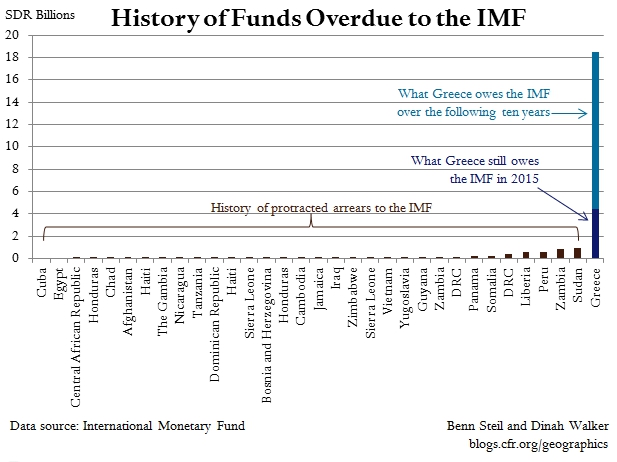
Since the IMF’s launch in 1946, 27 countries have had overdue financial obligations of 6 months or more.* But the amounts involved have always been small, never exceeding SDR 1bn ($1.4bn).
This could all change dramatically with Greece, which will default on the SDR 1.2bn ($1.7bn) it owes the Fund next week unless its troika creditors agree to extend further financial assistance before then. Greece owes the IMF SDR 4.4bn ($6.2bn) through the end of this year and SDR 18.5bn ($26bn) over the coming ten years. As shown in the graphic above, this is nearly four times the cumulative total of overdue funds in the IMF’s history.
Although Greek prime minister Alexis Tsipras has blasted the Fund for “pillaging” Greece, the conditions it has imposed on the country have been mild by historical standards – particularly considering the size of the loans involved. Non-payment by a European state will surely undermine the IMF’s credibility in the eyes of developing countries, and likely accelerate efforts to build alternative institutions.
Next up: Ukraine . . .
* “Defaults” in the post title are defined as financial obligations overdue by six months of more, or what the IMF refers to as “protracted arrears.”
Read about Benn’s latest award-winning book, The Battle of Bretton Woods: John Maynard Keynes, Harry Dexter White, and the Making of a New World Order, which the Financial Times has called “a triumph of economic and diplomatic history.”