Gen Z Got Fair Elections in Bangladesh—but Got Crushed at the Ballot Box
Student protesters succeeded in toppling the Bangladeshi government in 2024, but a landslide victory for the establishment BNP party shows that Gen Z is still struggling to turn demonstrations into success at the ballot box.
By experts and staff
- Published
 Joshua KurlantzickCFR ExpertSenior Fellow for Southeast Asia and South Asia
In June and July 2024, massive protests broke out in Bangladesh, led mostly by students demanding an end to the increasingly authoritarian regime of then-prime minister Sheikh Hasina and the Awami League, and to the corruption that led to job quotas in many government agencies. The protests swelled and, while Hasina’s government had crushed previous dissent, these demonstrations eventually succeeded in forcing Hasina to flee (as the army refused to back her), leading to an interim government, advised by many of the students and led by Nobel laureate Mohammad Yunus.
That interim government, following the celebrations in Dhaka and other places after Hasina fled, was supposed to usher in an era of reform in Bangladesh, creating a path to reduce violent political polarization, rebuild the state, reduce corruption, and end the two-party duopoly that had dominated politics for decades. That duopoly, consisting of the Awami League and the Bangladesh Nationalist Party, had in recent years been dominated by the Awami League, but in the past, the BNP, when in power, also had acted in corrupt, nepotistic, and authoritarian ways.
From early in the post-revolution period, I was dubious that just getting rid of Hasina was going to change much. Bangladesh has massive obstacles to overcome, parts of the state had collapsed, and the interim government had little time. Three months after the protests and Hasina’s flight, I wrote: “While security has improved somewhat, as have some public services since the total (almost failed-state level) breakdown of services in August and early September, they are still in poor shape. The police force basically collapsed in August and is struggling to right itself; Yunus himself recently has admitted that mob violence and killings, including inter-ethnic and inter-religious killings, remain a major problem, and one with no clear end. Indeed, law and order and other public services remain huge problems, and if they continue, it will reflect poorly on the caretaker government and possibly undermine its authority. Additionally, the sizable reforms to the country’s institutions that Yunus may roll out, while necessary, will face huge obstacles from entrenched patronage networks and the two powerful major parties, one of which could still win the next election. If one of the two major parties does win, it is hard to imagine even the most ambitious reforms lasting a long time.”
And indeed, the interim government, which had originally wanted to have major reforms to Bangladesh’s political system, government, and other institutions before elections, could not overcome a range of resistance to push all its changes through, while the populace (and the army) grew anxious for new elections.
It did get all the major parties to sign a charter last year, which contains provisions that are designed to protect against a return to Hasina-like authoritarianism. This was its greatest achievement. It failed to really change how the economy was managed, have any real accountability for the security services, or make the reforms it wanted to better protect the media, women, and other groups. In addition, despite signing the charter, the BNP “issued ‘notes of dissent’ on some points in the Charter, sowing doubt as to whether they would proceed with the reforms in question if elected,” according to the International Crisis Group.
In the end, the interim government held elections this past week anyway, as it was losing popularity and had no electoral mandate.
The Bangladesh protests that ousted Hasina also were one of the first big Gen Z protest successes in Asia, and inspired other, similar efforts in Nepal (where demonstrations toppled a prime minister), Indonesia (where protests stalled), and other places. Their impact reached as far as Madagascar, other parts of Africa, and the Caribbean, supposedly part of a worldwide trend of Gen Z political uprisings, demonstrating that Gen Z was going to make its impact felt on politics everywhere.
But while Gen Z protests have proliferated, they have failed to turn demonstrations into political success at the ballot box, or in policymaking. Last week, the People’s Party, the party with the most support among Gen Z in Thailand, was crushed in national elections, badly underperforming its polling, while an establishment, pro-military party, Bhumjaithai, dominated the voting. The People’s Party, at this point, is unlikely to be included in the Thai ruling coalition, and its leaders are trading recriminations amongst themselves. Last week, also, the Liberal Democratic Party in Japan, the ultimate establishment party, saw off challenges from a range of Gen Z-oriented new parties, and won a massive victory.
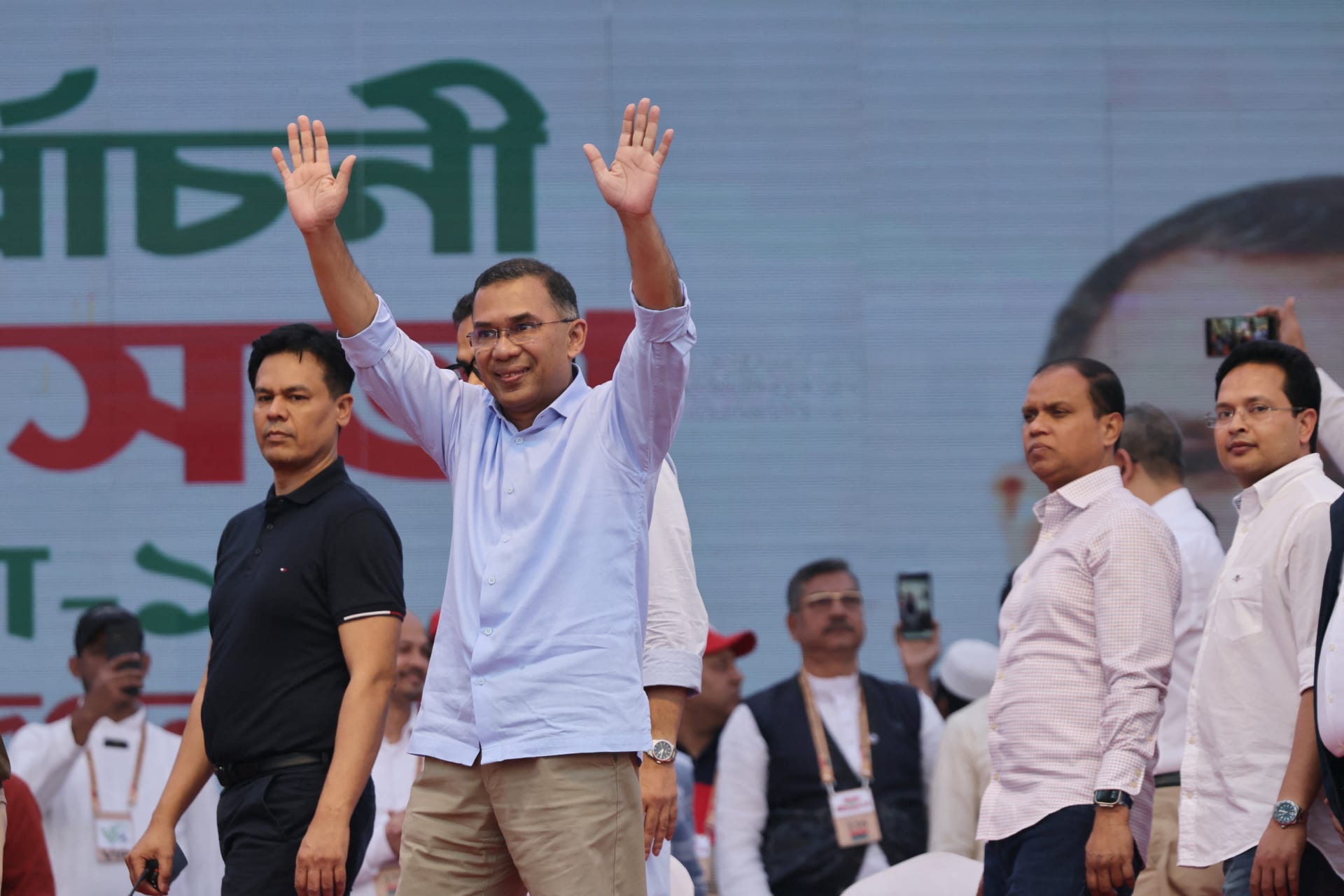
So, too, in Bangladesh, Sheikh Hasina is gone but the massive winner of the election was not the party started by young leaders of the protests, or any other reform-minded party, but the BNP, the other half of the long-ruling duopoly. The BNP, which won by a landslide, has said all the right things, but many Bangladeshis do not trust it. As the BBC noted, “Although the BNP are promising to lead change in the country, the party was criticized for corruption and accused of human rights violations when it was last in government in the early 2000s.” Coming in second was the Islamist party Jamaat-e-Islami, which attempted an image makeover for the election but has in the past been linked to deadly political violence, and is expressly misogynist. And even though this election was, on Election Day, free and fair, there was a spate of seemingly political killings and other violence leading up to the vote, as has happened too many times before in Bangladesh. The National Citizen Party (NCP), founded by the student leaders of the 2024 protests, won only six of the 30 seats it contested in parliament, a very weak showing.
However, at the same time as putting the BNP back in power, Bangladeshis did vote overwhelmingly for major changes to the country’s constitution, most of which are designed to better safeguard democracy, broaden economic and political opportunities, and reduce corruption. Will the BNP, which now will dominate parliament, let these changes through? Whether it does or not will show whether the BNP itself has changed at all, and if it cannot change, at least for now Bangladeshi politics will remain stuck with the same problems that existed before Hasina fled.