How I Got My Career in Foreign Policy: Alice Hill
After spending years as a lawyer and judge, Alice Hill pivoted to a policy career focused on climate change. She sat down with CFR to chat about switching careers later in life and why it’s critical to consider climate change from the angle of national security.
By experts and staff
- Published
- Editor
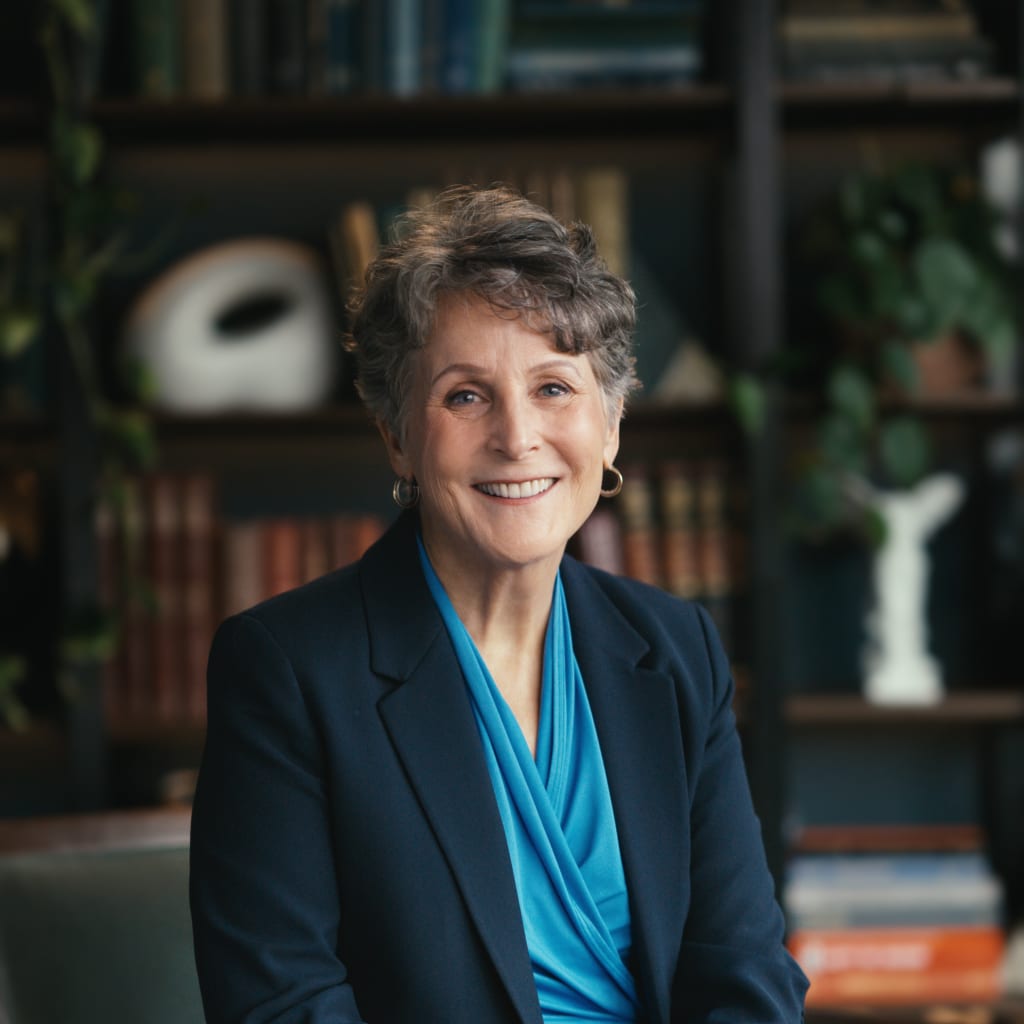 Alice C. HillCFR ExpertDavid M. Rubenstein Senior Fellow for Energy and the Environment
Alice Hill came to foreign policy work the long way around, following a more than decade-long career as a prosecutor and judge in California. During the Obama administration, Hill followed her old law school classmate Janet Napolitano to the Department of Homeland Security (DHS), where she led the development of DHS’s first-ever climate adaptation plan. She is now a senior fellow for energy and the environment for the Council on Foreign Relations. Read about how her parents bribed her to go to law school, how her experience as a judge helped her navigate a career in foreign policy, and how climate change is linked to national security.
Here’s how Alice Hill got her career in foreign policy.
What did you want to be when you were little?
I think I wanted adventure. I don’t think I had a profession in mind, but I wanted to do a wide variety of things.
How did you get into law? And why did you choose to get out of law?
I got into law because my parents wanted a lawyer. I am one of three daughters, the youngest. My two older sisters said “no way” they were going to become lawyers. My dad was a lawyer, and my parents, I think, were afraid after I graduated from college that I would wander and not have a profession. So they were very encouraging. In fact, they bribed me to go to law school.
How did they bribe you?
They offered me an old car that they had, to loan me. I was living, actually, in Japan at the time I was about to enroll, and my mother went and found me an apartment and a roommate, so I would actually show up in law school. And I did.
So you have this yearslong career in the law, as both a prosecutor and a judge. How did you, or why did you, decide to make such a big career shift?
Well, I’d been a judge for thirteen years, and I knew that I was feeling restless. I wanted to get out of dispute resolution. There’s a saying that our Chief Justice of the California Supreme Court would say, that for every case, you make a friend for the day and an enemy for life. Meaning the lawyers are always kind of not-so-happy with you, as well as the parties in the courtroom. So I decided that was a draining way of life for me, and I knew I wanted to change jobs.
My biggest career advice for anyone is: be nice to those you sit next to in school. I sat next to Janet Napolitano in law school. But when she was asked by President [Barack] Obama to become the Secretary of Homeland Security, she asked me to come to Washington with her. She knew that I was looking for another position, and I said yes. That’s how I got to Washington and started working on international issues while I was at the Department of Homeland Security.
So you didn’t have climate in mind initially?
No. I didn’t know much about climate at all. I lived in Los Angeles. Frankly, I heard “two degrees” and I thought, “two degrees Fahrenheit.” So I had some vague notions that it was a serious problem, but I did not understand it.
Then, when I went to DHS as Secretary Napolitano’s senior counselor, I was given an assignment that nobody else wanted. At that time, it was also considered politically complicated to work on climate change. President Obama had just signed an executive order requiring all agencies to prepare for climate change, and that landed with me as the new person at the department. So I approached it like I approached decisions in the law or being a judge—gather the facts. We assembled a task force and talked to many scientists across the federal government to learn more about climate change.
What was the biggest challenge of that transition, of moving into government work and national security work?
I think it was a little easier for me than for some, because both as a federal prosecutor and as a judge, I was used to learning about topics that I was not the expert in. If you’re investigating a case of white collar fraud, I wasn’t an accountant but I had to learn accounting principles to understand how fraud works. Or if you’re a judge, I’m not a medical doctor, but if I have a medical malpractice case, I need to understand the facts and then make a decision based on those facts.
So coming into the policy world, I think I had an advantage. I was used to examining what are the facts, and then what is a good decision based on those facts. I was told in hindsight that people were a bit surprised by me because I was more decisive than other policymakers they’d encounter. I had gotten very used to making decisions.
And decisiveness seems like an ideal quality in someone charged with making decisions.
You cannot be a good judge if you’re not decisive. And it turns out, I think for policymakers, it helps if you are willing to make a decision, because you will find some people just are stalled out because there’s so many choices. But if you want to drive change, you will have to eventually decide which fork in the road you’re going to take and then be comfortable with that. Reverse course, if you need to, but be comfortable that you’re making the best decision you can at the time.
What’s it like being in the room when major national security decisions are being made?
Well, it’s daunting and it’s awe-inspiring, because you know that what is decided matters deeply. Lives might be lost, certainly, relationships could be harmed, and the consequences are very large. It, to me, was a humbling experience to work on the National Security Council of the United States. We are a very powerful nation and the choices we make affect the globe.
You created DHS’s first-ever climate adaptation plan. What was it like trying to link climate science and national security at a time when that hadn’t really been done before?
When I was looking at the climate issue, we assembled a task force with the components that handled these issues. That would be the Coast Guard with our coasts, FEMA [Federal Emergency Management Agency] for emergency management, we also had our immigration personnel there from ICE [Immigration and Customs Enforcement], CBP [U.S. Customs and Border Protection] for the borders. As we started this process to respond to President Obama’s executive order, I asked, as the chair of this task force: does DHS need to care about climate change in 2009? Were these impacts sufficient for us to be worried about it?
So we had about fifty people in this task force, and I think everyone was somewhat skeptical about whether this was needed at that time. But we heard from scientists who had worked on this, from the Navy, for example … we also heard from scientists from NASA, from NOAA [National Oceanic and Atmospheric Administration]. As we learned more, collectively, the group moved through what I call an “aha moment” where they realized, “wow, climate change will affect virtually every mission that the Department of Homeland Security has.”
And I remember a captain coming up to me after the task force, who was with the Coast Guard, and saying, “you know, when we started this, I was really skeptical about whether this mattered, but it has opened my eyes.” Climate change matters deeply to the Coast Guard—it operates on our coast! Sea-level rise, storms—they need to understand what’s ahead and how to prepare.
When I headed up the completion of a report that was very forward leaning at that time on the security risks, it caught the attention of the White House, because here’s this huge, sprawling security agency saying climate change really matters to what we’re trying to accomplish.
What do you think that taught you about what it means to carve out a career in foreign policy?
I think it’s key—and this is probably true for any kind of career—to be open to opportunities. To not be afraid if you are asked to do something that feels like it’s a little bit out of your field, but to commit to learning as much as you can, being thoughtful, listening and calling on others to help educate you, but moving forward nonetheless.
As one makes choices between different opportunities, to make sure that the opportunity you choose is a door opener, not a door closer. At least, that was important for me, because if you take a choice that continues to narrow you into just a very finite set, you won’t have that opportunity.
When you look back now on your career and how diverse it’s been, do you wish you had specialized earlier in climate security and national security, or are you happy that it went this way?
I am very happy. I have had remarkable experiences at every different career stage. I have worked with people that have inspired me on issues that I really care about.
When I was a prosecutor, I was chasing people who robbed banks with briefcases. When I was a judge, I was deciding cases that were very important for the parties that were before me—this could be the most important event in their life that was playing out in the courtroom. When I was at DHS, I got deeply involved in human trafficking, and then I learned about climate change. So for me, it has been a wonderful journey. I don’t have any regrets that I didn’t specialize because each of those chapters has informed my work today.
Through those experiences, I have been able to become more sophisticated in my understanding of how foreign policy plays out, and what the different influences and factors are that could affect foreign policy.
For young people starting out today who want to work in national security or climate risk, what would be your advice?
My advice for anyone is: network. It’s about relationships. That’s the bottom line.
For the national security and climate change area, it was, for me, very helpful to reach out early on to groups that were working on national security and climate change. There were two in particular. There was the Center for Naval Analysis, which was looking at the issue of climate change and national security. So I got to know them, and I got to know others who were working in this space. And then there was a little, tiny NGO that was just starting up, called the Center for Climate and Security. I got to know their founders and tried to help them as they grew this nonprofit, by talking to funders for them to verify that their work was really excellent. And now that little NGO is probably the dominant engine NGO in this space.
So it’s a matter of getting over one’s shyness and reaching out and really trying to build that network. You don’t want to build a network in a transactional way. It’s just, “I’m curious. I’d like to learn more about your work. Do you have time for coffee? Do you have time for lunch?” Not in the hopes of anything other than learning about somebody else’s work.
In all your years in the government, you’ve had some cool trips, and you’ve gotten to experience some memorable meals. What would be the most memorable meal you’ve had while on a work trip?
I think it was in Barrow, Alaska, which is now Utqiagvik. That’s the northernmost place in Alaska, and we were hosted by an elder from a tribe there. He was so eloquent in describing the changes to Alaska and how they had occurred over his lifetime. Alaska is warming twice as fast as the rest of the world, and I was just entranced. The contrast was, as I recall, a pizza Italian restaurant in the northernmost part of Alaska. This eloquent, dignified man describing how the grasses were moving north, and how there wasn’t as much ice along the coast, just taught me how important it is to talk about climate change. Tell the stories and then find the policies to move forward.
I would like to share one other trip I took, which was in the same place. I went with the Coast Guard on that trip, and I was with the vice commandant of the Coast Guard. They were doing a training mission. She asked me to join her on a [flight] that took off from the most northern part of Alaska and flew north. You look down, and it’s all white below you. It’s frozen at that time of year.
Somebody helped me put this, essentially, a seat belt or a tether around me, and then the back of the plane opened up. We begin circling, we’re exposed, and down below us is a Coast Guard cutter doing research in the Arctic Ocean. We established communication with them, and they said, “Well, this is a big day for us. We’ve seen a polar bear today, and you’ve shown up with the plane.”
So it was quite something for me to see. It also made me appreciate the scientists who devote their lives to understand what are the changes occurring that could be meaningful to how humans live.
This interview has been edited for length and clarity. It represents the views and opinions solely of the interviewee. The Council on Foreign Relations is an independent, nonpartisan membership organization, think tank, and publisher, and takes no institutional positions on matters of policy.