How I Got My Career in Foreign Policy: Rebecca Patterson
Rebecca Patterson pivoted from a career in journalism covering the financial sector to working in it. She sat down with CFR to discuss how her days as a reporter helped her be a better financial analyst and the advice she has for young people interested in foreign policy and financial markets.
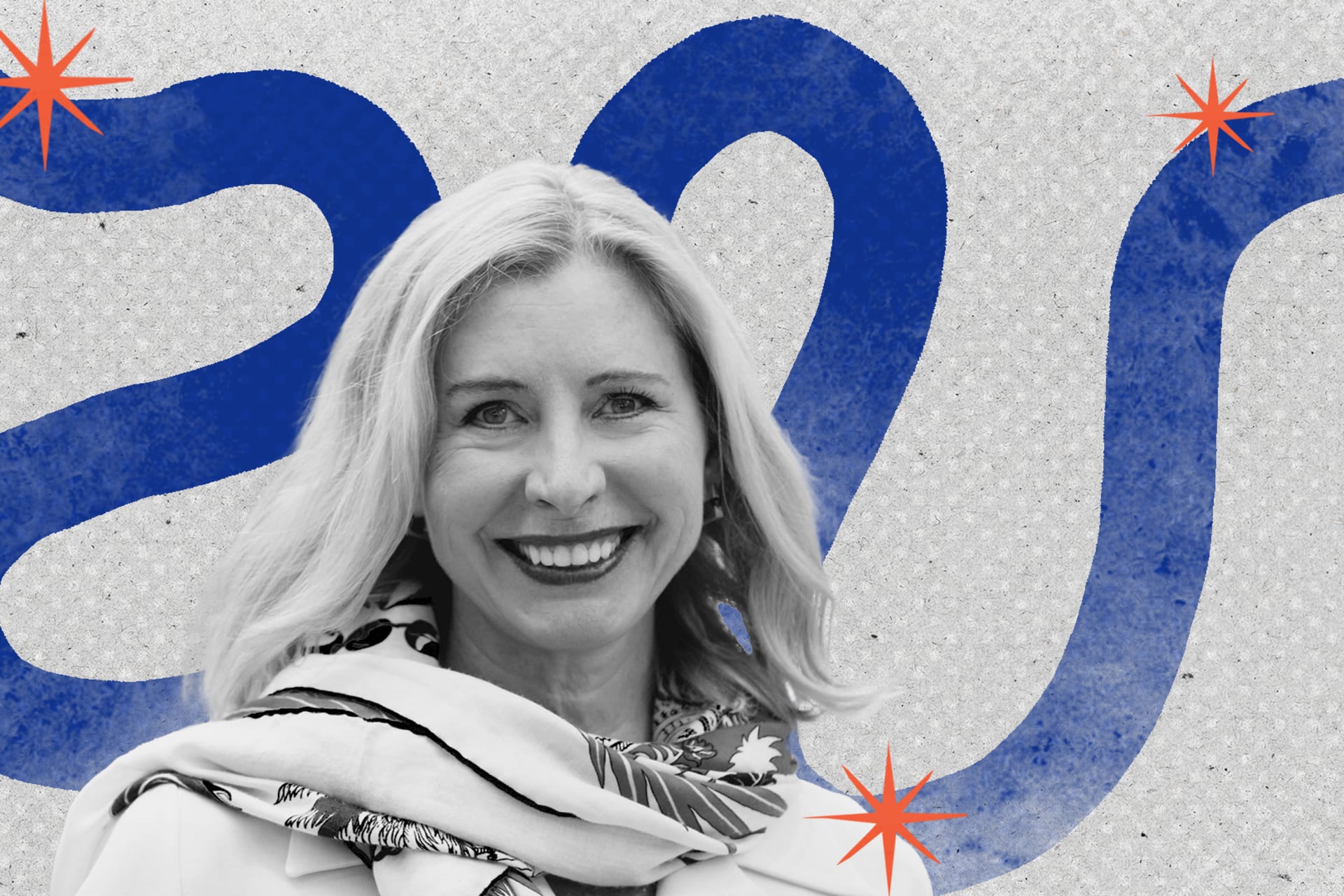
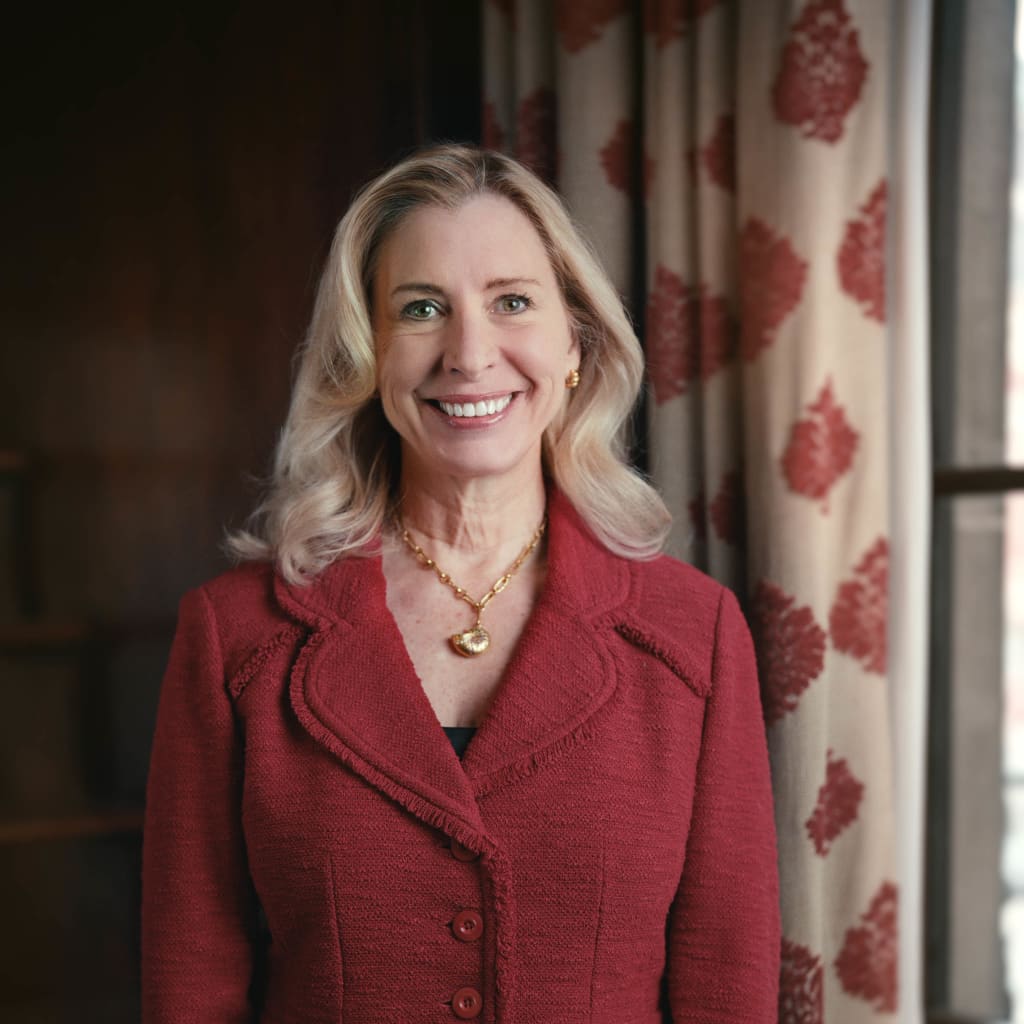
Rebecca Patterson began her career as a reporter, covering U.S. politics in Washington, DC, before shifting to cover the financial sector from London. Her work caught the attention of executives at JPMorgan, who offered her a job and kickstarted her career in finance. After more than two decades in the sector, she became a senior fellow at the Council on Foreign Relations in 2025. Starting February 12, she’ll be hosting a new weekly podcast called The Spillover with CFR Senior Fellow Sebastian Mallaby. Read more about how her time as a journalist served her well, why she advises all young people to work or study abroad, and how her favorite work trip involved a visit to a Legoland park.
Check out past editions of CFR’s “How I got My Career in Foreign Policy” series.
Here’s how Rebecca Patterson got her career in foreign policy.
What did you want to be when you were little?
An astronaut. I grew up in Florida and used to watch the rockets and space shuttles take off as I was driving home from high school, because they would literally cross the state. So when I started college, I was planning on majoring in aeronautical engineering.
But you actually ended up studying journalism in college.
I switched, right. I started with aeronautical engineering, and then my junior year I took a journalism class kind of on a whim. It was a light bulb moment. I just realized it came very naturally to me, and I really loved it. So I switched.
What drew you to try that?
Both my parents had, at different points in their lives, been journalists or around journalism. My mother had been a journalist. She grew up in Minnesota, moved to Hawaii right after she finished school because she wanted to be warm, and was a journalist there. My father was a photojournalist, but originally he worked as a spy for the U.S. Army, and he was also based in Hawaii. He was meant to take photographs of individuals the U.S. government was interested in.
That’s incredible. So you studied journalism, and then after college you worked as a reporter in Florida?
Not in Florida—for a Florida paper called the St. Petersburg Times, but I was in Washington, DC. That’s how I got my first exposure to U.S. politics. The very first story I wrote for my hometown paper was about [Supreme Court Justice] Clarence Thomas and Anita Hill.
Do you know when you became interested in foreign affairs or politics? Was it in college before you took that journalism class?
Both my parents, when they were younger, traveled a lot and explored. My grandfather was an explorer—literally had been to dozens and dozens of countries before he died and had some amazing adventures. It was always a conversation around our table. Even though I grew up in a simple family in Florida, we would talk about world events and different countries and places my parents had been at different points in time. So having a global mindset was always part of me.
When I finished college, before I went to work in Washington, I had a Rotary Club scholarship. The only catch was you had to study in a country where you didn’t speak the native language. I hadn’t been overseas—we didn’t have the money when I was little—so I didn’t even know where to go. The only language I spoke aside from English was French. So I went to the University of Strasbourg. I went there because I thought if I went to Paris, everyone would speak English. If I got out of the capital, it would be more likely that people would speak French.
I ended up loving it. If there was something that pushed me into a more global career path, it was my year in Strasbourg. While I was studying—it was a year of graduate studies at the University of Strasbourg—I also had an internship at the Council of Europe and got to travel quite a bit that year, both with the Council of Europe and on my own. It was another light bulb moment where I realized I want to have a global life. I loved understanding how the world connects and how something that happens over here affects something somewhere completely on the other side of the world. When I finished that year in Strasbourg, that set me on the path of wanting to do something where I would be involved in foreign affairs in some way.
You got another master’s later too, right?
Yes, I have two master’s degrees. I have this graduate degree from University of Strasbourg and I later got a master’s from Johns Hopkins University School of Advanced International Studies (SAIS) and an MBA from New York University.
Ok, that’s what I’d found in my research! After working as a reporter for several years, you then decided to go get the master’s from SAIS. What prompted you to go back to graduate school?
After Strasbourg, I went to Washington covering the Hill, and I enjoyed it, but I wanted to get back into something international. I thought having the SAIS degree would give me more of an academic foundation to pursue that. Plus with SAIS, you can specialize in different parts of the world. So I went to their Bologna, Italy, campus. While I was in Bologna studying, I also worked for the Associated Press and the BBC. At the Associated Press job, I covered [former Italian Prime Minister Silvio] Berlusconi’s first campaign for office, which gave me an interesting perspective on Italian politics.
Well, as a former reporter, this is very exciting. So then what made you want to do the MBA? Because that’s a real pivot.
After Johns Hopkins, I got a job with Dow Jones and the Wall Street Journal, and I was writing about foreign exchange markets, initially in New York. Then they moved me to London, still writing about foreign exchange, but now I was also writing about policy. I would go to Brussels every month for the ECOFIN meeting—the finance ministry and central banker meeting. They were talking about the start of the euro and European policy, so I was writing about that. I was writing about the Bank of England becoming independent—all these different topics where financial markets and policy come together.
In 1997, JPMorgan reached out to me and said, “We read your stuff in the newspaper, and we want to hire you to be an analyst.” I hadn’t really ever thought about a finance career. It wasn’t something I pursued, but I thought it was such an interesting opportunity, and if I didn’t like it, I could always go back to journalism.
When did you decide to do the MBA?
I had a boss at JPMorgan who said he thought it would benefit me to do more econometrics and statistics and suggested a few different ways to get that under my belt, but an MBA would be one of them. So I said, “Fine, I will get my MBA and you can pay for it.”
Okay, so you’d already pivoted. That’s interesting.
I was already at JPMorgan for quite a few years. I’d joined in ‘97, so I’d already been there in Singapore, then back to New York and London. I worked at JPMorgan in all those places.
What’s the biggest challenge of changing sectors so dramatically, going from journalism to finance?
At the time I changed, I had no idea if I would like it or if I would be good at it, so there’s a huge amount of uncertainty. I also don’t think I appreciated how much my previous experience would help me. In hindsight, having that journalism experience was incredibly helpful. It teaches you how to ask questions and be a skeptical listener. It teaches you how to filter noise from signals, and hopefully it teaches you how to communicate clearly and quickly. Those are skills I’ve definitely used in finance ever since.
When I’m trying to understand what a policy decision means for the financial markets or economy, I have to ask questions. I have to figure out what’s noise and what’s signal. So it’s all the same skills. I’d say the difference in finance is that there’s just a lot more math. Your analysis isn’t only qualitative, it’s also quantitative. Fortunately, I’m good at math.
After about fifteen years at JPMorgan, you moved to Bessemer Trust, and there you launched their diversity and inclusion committee. I’m curious—especially in this moment now when there’s such resistance to DEI—what made you want to tackle that? What did it teach you?
JPMorgan, at the time I was there, always had initiatives to increase diversity and make sure different types of people all had opportunities to grow and advance in their careers. JPMorgan is a huge company. Bessemer Trust, when I was there, was maybe 1,200 to 1,300 people—a smaller, private company. Partly because they were smaller, they probably didn’t think they necessarily needed a formal effort. But getting to know the firm, I thought they could benefit from a little more strategic focus on diversity and inclusion, and that’s what made me decide to launch it. They just hadn’t done it before. I don’t think they thought it was a priority—not that they were against it by any means. It just hadn’t gotten to the top of the priority list. Maybe partly because I was a woman and had come from a big bank that did emphasize that, that also influenced my decision.
But I’m happy to say that I think we were able to raise a lot of awareness across the firm. We were able to improve the diversity of the leadership of the firm. I think we were able to give more people opportunities to show what they could do—stretch assignments. That doesn’t mean everyone who gets a stretch assignment necessarily gets promoted, but they have the opportunity.
At the end of the day, having different perspectives around the table gets you to better decisions. I think that’s true whether you’re an investor or someone running a business. You don’t want to have everyone thinking the exact same way.
To condense the timeline a little, in 2020 you joined the hedge fund Bridgewater, and then last year you joined CFR. What prompted the pivot out of finance and into the think tank world?
Bridgewater is a macro hedge fund, and so you spend your time similar to what I did at JPMorgan and Bessemer, thinking about how the dots connect. How a geopolitical event or a policy decision affects the economy and financial markets, and how financial markets affect policy. They’re all linked together, and that was true everywhere I’ve worked.
When I left Bridgewater, I wanted to take a step back and say, “What do I want to do next? What do I love? What is going to help me continue to grow professionally?” Given the world we’re in today, having my professional home be a place surrounded by foreign policy experts and geopolitical experts—I couldn’t imagine a better set of colleagues at this moment in time to make me smarter. And hopefully it would be a place where I could also use my experiences to help them see things from a different perspective.
And I’ve always been a huge CFR fan. I’ve been a life member for a dozen or so years, coming to CFR events, and always had so much respect for their research, their insights, their programming. So it seemed like a perfect fit for me to continue my professional journey and hopefully contribute to what I think is a great organization.
This series is geared towards young people who are starting out and trying to forge their careers. For those interested in the nexus of finance and foreign policy and markets, do you have advice about what skills they should cultivate or how to navigate threading that needle?
Understanding the influence of geopolitics on different industries has become increasingly important, so I think there are a lot of career opportunities for people who are interested in geopolitics and foreign policy but want to take that across different parts of the economy—whether it’s finance or a specific sector, it could really be anything these days. There are a lot of very unique and interesting job opportunities right now, which is cool.
Then the question is, how do you make sure you have the skill set? How do you show would-be employers how you apply it? I find one of the most important things I can do is read and stay on top of current events, which is not an easy thing anymore—it’s literally 24/7. So I’ll read as much as I can during the week, but when I see something, whether it’s a speech or an interesting research report, I’ll put it into a file folder. On the weekend, I make a big pot of coffee and just sit down for a couple hours and read it.
I think everyone today, regardless of your career, needs to be fluent with artificial intelligence (AI). AI is an amazing research tool and is going to save you hours and hours. I use it every single day, and it continues to get better. No matter where you’re going with your career, you need to know how to use this to get to better decisions and different types of insights—not having it do the work for you, but as an assistant to augment what you’re doing.
And you need to get out there and network. I am so grateful that I had a chance to live in so many different countries. If you’re a young person and you aren’t tied down to a certain place and you have a chance to go work or study overseas, even if it’s for a little while—do it. Just do it. Because it’s going to help you understand wherever you’re from with a different lens. It’s going to help you understand at a much deeper level how these dots connect, how these spillovers occur. Even if we’re talking about fragmentation and reshoring, the world is still deeply interconnected. That’s not going away. How it’s interconnected might change, but it’s going to stay interconnected. What happens in China matters for America, what happens in America matters for Greenland, what happens in Venezuela matters for Iran. The more you understand those linkages, the better. If you have the opportunity to go overseas, it will help you do that.
Don’t be afraid to take the road less traveled. Going from journalism to banking, from New York to London to Singapore—I had a lot of pivots in my career, but I think every single one of them ended up making me a better researcher and investor because it helped me see things more holistically and differently from other people.
I’m curious if you have advice about work-life balance, because you’ve had this big career in finance—famously not a nine-to-five job—but you also raised two kids.
You can’t do everything, so you have to pick and choose what you’re going to prioritize. I picked my job and my family. When I was at work, I was working my butt off, and when I was at home, I was focused on my family. So I didn’t have as much time for myself for quite some years, and I didn’t have as much time for my friends as I would have liked. Fortunately, I really liked the people I worked with, so I had work friends. That’s part of it—you can’t do it all.
Secondly, you need to have a partner in life who is going to help share the load. I have a very modern husband, and we divide and conquer. I would take care of school stuff and doctors, and he would take care of dry cleaning and grocery shopping. However you do it, you can’t do it alone. When they say it takes a village, that’s actually true.
And then you have to pick and choose—what years are you going to lean forward and what years are you going to say, “Okay, this is a year where maybe I don’t push quite as hard on the profession?” I still push, but I’m leaning a little bit more towards X or Y for my kids or myself for some reason. It could be a health thing, it could be a critical year for your kids with college applications or something. That’s okay. Not every year has to be 110 percent—some years can just be 102 percent, and that’s all right.
But when they’re very little and you’re a new mom, it’s scary and there’s a lot of guilt. You feel like if you’re not there for them 100 percent, you’re a bad mother, and if you feel like you’re not at work 110 percent, you’re a bad employee. I think most parents deal with that to some degree. At a certain point, you just have to give yourself grace and say you’re doing the best you can.
Well said. On that note, we always end on the same fun question. I assume, over the years, you’ve had many fascinating work trips and dinners. Is there a favorite or most memorable one that you could share?
Oh my god, there’s so many amazing ones. When I was at JPMorgan, one of our clients was Lego. We had to go over to their headquarters in Billund, Denmark, to have a meeting with their corporate finance team, and I was there to advise them on foreign exchange and fixed income issues. Our meeting ended a little early before we were set to fly directly out of the airport next to their office.
The meeting was cool because they had bowls of Legos in the middle of the table. But after the meeting, we had a few hours to kill before we flew back to London—I was based in London at the time—and the Lego employees said, “Well, why don’t we take you to the park?” They had a Legoland amusement park there. So you have a bunch of bankers in suits and ties and high heels, and we’re all going on the roller coasters and the ferris wheels and having the best time ever. That has to be one of my favorite work trips of my career. One of the most unusual and one of the most fun.
This interview has been edited for length and clarity. It represents the views and opinions solely of the interviewee. The Council on Foreign Relations is an independent, nonpartisan membership organization, think tank, and publisher, and takes no institutional positions on matters of policy.