How I Got My Career in Foreign Policy: Thomas J. Bollyky
Thomas J. Bollyky took his childhood fascination with science and diplomacy and crafted a wide-ranging career in law and global public health. He sat down with CFR to talk about how unexpected opportunities shaped his career path and the hard skills needed to make a difference in global health.
By experts and staff
- Published
- Editor
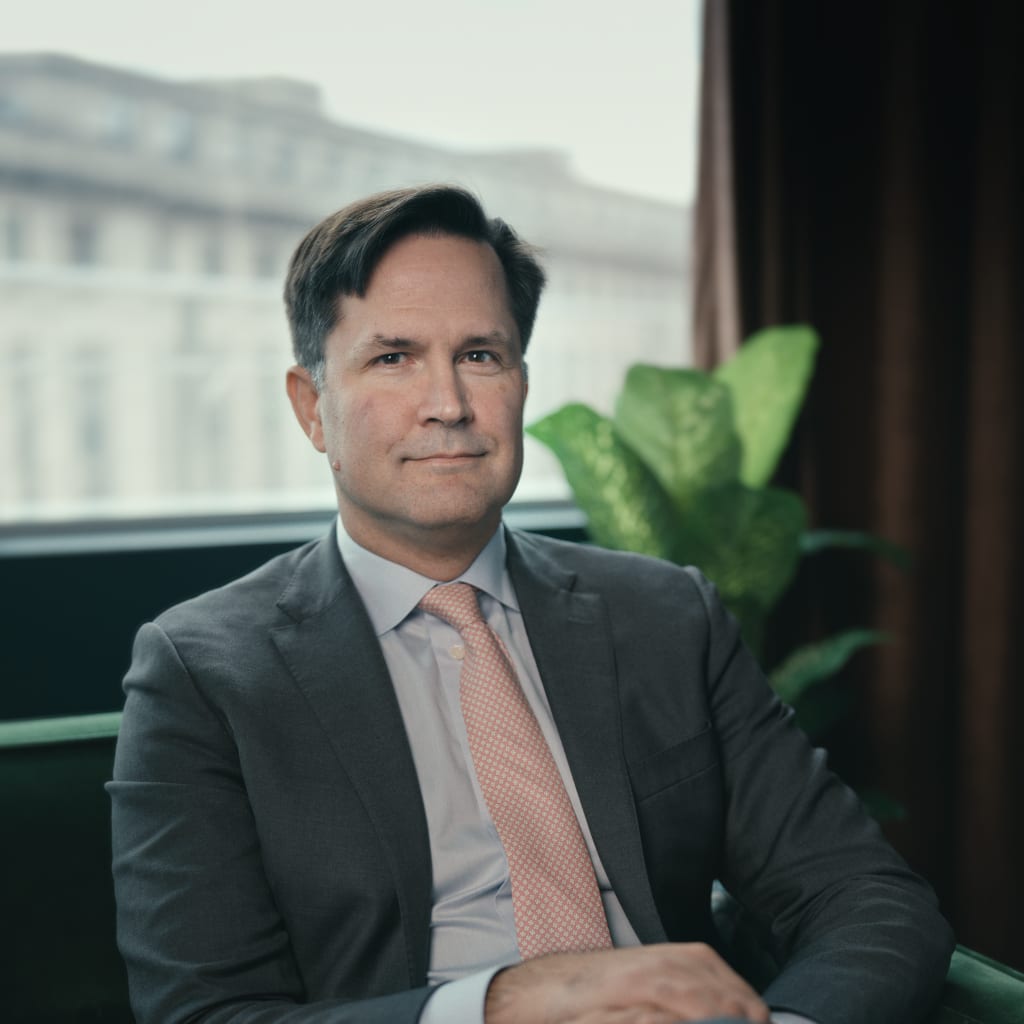 Thomas J. BollykyCFR ExpertBloomberg Chair in Global Health; Senior Fellow for International Economics, Law, and Development; and Director of the Global Health Program
Thomas J. Bollyky credits his background as an immigrant and refugee with his deep-seated desire to help solve the world’s problems. Having been interested in science and foreign policy since childhood, he has spent his career pursuing those twin interests. His career has taken him from private law firms to the Office of the U.S. Trade Representative (USTR) and beyond. He is currently the Bloomberg Chair in Global Health at the Council on Foreign Relations. Read more about how a newspaper article led him to trade a federal clerkship for an opportunity in South Africa, the importance of mentorship, and how influential early career internships can be.
Check out past editions of CFR’s “How I got My Career in Foreign Policy” series.
Here’s how Thomas J. Bollyky got his career in foreign policy.
What did you want to be when you were little?
I had two things in mind—I wanted to be a science diplomat. Not really a diplomat for science, as much as a scientist and a diplomat. The reason was that my parents were both refugees to the United States, and because of that, I grew up really wanting to serve in some capacity. We were very grateful to this country—for the opportunities it gave us, for taking them in.
I was very much a product of the Cold War. My parents were both refugees from Hungary, my father fought in the revolution. At the same time, like a lot of immigrant families, my father was a scientist, a chemical engineer and chemist. My mother was a social worker. So naturally, I wanted to be a combination of the two of them, to use science to help people, but do it somehow in this Cold War context.
This dual interest seemed to follow you through school. You studied biology and history in college, then you went to law school and clerked for a federal judge. I wonder how much you had pre-planned or whether you were figuring it out as you went along?
I think for me, it was a series of steps. I went to college wanting to do biomedical engineering, and then did a series of internships that slowly shifted me in a different direction.
The first was an internship at the Ryan White HIV/AIDS Program when it just started up at the New York City Department of Health at the height of the HIV crisis. Like a lot of people in global health, my interest was shaped by HIV. Seeing in real time the consequences of that epidemic—it was prior to widespread availability of antiretroviral treatments—made me realize that maybe science wasn’t the best way of approaching this kind of problem. It was more about policy and legal frameworks.
The next summer, I did an internship in Estonia. This was 1994, not that long after the collapse of the Soviet Union. I was supposed to be in a lab but ended up getting placed in the Department of Culture and Education after somebody got sick and I was the only other English speaker. I ended up doing research around a problem they had with accrediting higher education institutions. To make a long story slightly shorter, I ended up getting the opportunity to write a piece of legislation. It got passed into law and then got a sizable grant from the European Union to implement. I was nineteen, and it really shifted what I wanted to do. So I ended up picking up the dual degree with history and deciding to combine this interest in science with law school.
That’s so fascinating. And it’s great for young people reading this to hear that internships can really change your trajectory.
Absolutely. I think sometimes it’s important—so many people go into college with a very fixed idea. You’ve spent your whole childhood saying, “I want to be something in particular.” This is particularly true for people who want to be doctors, and you’ve gotten that reaffirmation for wanting to be whatever it is you wanted to be as a child. Sometimes you have to listen to what the world is telling you and how you’re experiencing things and what you actually gravitate toward. I am very much a product of that experience.
Early in your career, after clerking, you do a Fulbright scholarship in South Africa and work as a staff attorney at the AIDS Law Project. What was that experience like, and how do you think it further shaped your career moving forward?
Well, if the other two internships I described were little steps, this was a leap. I was in law school. It’s typical for law students to apply for clerkships in advance, and I had wanted to be back in New York at the district court level, so I had already lined that up. Then I had another internship where I got to do appellate work, and I thought, “Oh, maybe I want to do that.” So I had also lined up a Ninth Circuit clerkship. My two years after law school were meant to be set doing these things.
Then late one night I was reading the newspaper and saw this article about the HIV treatment crisis in South Africa, and it just felt solvable. Only 10,000 people out of 3.5 million had access to treatment. Nobody was making significant money in South Africa on these drugs. They were being priced at the same price as in Switzerland but sold in South Africa, where it was largely the poorer population that was affected or living with HIV. I just felt, “This is why I went to law school.”
So I dropped out of my second clerkship and found somebody who would take me to work on this problem. I used the Fulbright to pay for it. That led me to help work on the constitutional court litigation around prevention and access to HIV medications. I spent my whole time—a little over a year down there—working on that.
After you come back from South Africa, you go into private practice for a few years. Then you join the USTR, where you lead negotiations on medical tech regulation and food and drug imports. What prompted the pivot to government?
There are a lot of people like me who don’t want to work at law firms because they have something else in mind when they go to law school, but it ended up being very good training for me. I was always an ideas person, but it really changed how I approached work and was very helpful.
I was very lucky. I worked on one case for most of my time there involving fifty-two Mexican nationals on death row. We went to the Supreme Court twice and to the International Court of Justice. But I worked every day for over a year, including weekends, and the hours were really long. I thought they would never give me a case like this again at a private law firm.
So—this is where CFR comes into the story—I saw an announcement of the International Affairs Fellowship the day it was due and applied. They were very generous to give me the opportunity to advance in that process, and I got it. I ended up getting placed at USTR and having the opportunity to negotiate portions of trade agreements, and ended up staying for three years.
After USTR, you go through a couple different research or advocacy posts—the Center for Global Development, the Bill and Melinda Gates Foundation. I wonder what was appealing about those sorts of places that the government or private practice couldn’t provide?
I had been offered a job at the National Security Council, but I needed to delay it. My mother became ill and ultimately passed away, and I needed to delay taking it. By the time I was able, the job was gone. There had been a political transition, and while I wasn’t a political appointee, the people I would have worked for were gone.
I had an idea of what I wanted to work on in the global health context and managed to get a grant from the Gates Foundation to do so. The Center for Global Development kindly hosted me. I ended up in that environment working on that, and then was ultimately poached by Jim Lindsay, who called me up and said, “Hey, we have this opportunity here at the Council. Would you like to come?” And that’s how I ended up coming to CFR.
You founded Think Global Health here at CFR, and you’re now CFR’s inaugural Bloomberg Chair in Global Health. How has your work at CFR let you further your interests?
The themes I would draw out—given the audience for this interview series may be people earlier in their career—what’s really important early in your career is two things: building skills and mentorships. My career is all about that.
Ultimately, the skill set I use around law, regulation, and science, I’ve applied to every stop I’ve been at. The ability to write and communicate clearly—something I developed particularly being at a law firm—has been really helpful. Those hard skills, together with people who know your work and know you and like you and want to give you opportunities and pull you along, are really the hallmarks of what led me to where I am today.
Coming from an immigrant family, I was raised to be useful, and I try to apply that skill set to solving practical problems that I think can be addressed. That’s really the work we’ve tried to do here at the Council—whether it’s around tobacco, drug shortages, or why the United States and some other countries particularly struggled in the COVID-19 pandemic. We’ve really tried to use rigorous research, using the lens we bring to problem solving, to develop policy research and policy proposals that hopefully people can use to make the world a little bit better.
The Global Health program has grown substantially since I’ve been here. We now have this online magazine, Think Global Health, looking at how health shapes the world—instead of health being just a target for humanitarian aid, but a form of investment. We’ve really grown the staff and the fellows, and it’s been an exciting venue to do that. We’ve been very fortunate.
Speaking of young people—your career spans so many different areas. You’ve done law, you’ve done policy, you’ve obviously focused on global health. For young people starting out who may have a variety of interests, what’s your advice to them?
In global health, it’s really about solving problems. In fields where there’s a profit motive, the market self-organizes. You don’t need to tell people how to solve problems because there are a million entrepreneurs trying to figure out how to make money from solving those problems. In global health, you’re really making small tweaks to make markets work or looking at ways of providing organization that a profit motive won’t otherwise provide. So it’s looking for ways to be useful and to solve those problems.
The people that succeed most in global health and my area of foreign policy are people who are economists, lawyers, physicians, or people with hard skills that they can use to solve the practical problems that are keeping people from being able to access health care in an affordable, sustainable way.
You touched on mentorship. I wonder if there’s a most influential mentor you had? What’s your relationship with mentorship?
I would point to a few. I was very fortunate with this Estonia fellowship when I was just nineteen to work with an alumnus of Columbia University who had set it up and had really good contacts in Estonia and other Eastern and Central European states. There weren’t many opportunities at that point to actually go work abroad on an internship during college, instead of just living somewhere abroad and taking classes. As I said, for me, it really changed what I wanted to do. He had been very influential, particularly early in my career. He was also a lawyer with a science background and helped me think through that.
There have been other colleagues—at the Gates Foundation or academics I’ve met. As you build a career, you become a bit of a magpie. You take aspects of other people’s careers or what they’re doing that seem appealing to you, and you try to emulate that. I’ve been fortunate enough to have a few of those.
We always wrap on the same question, which is a fun question. Over the years, I assume you’ve had many fascinating work trips or dinners. Is there a most memorable one that you could share with us?
It’s such a great question, and you’re right—with a lot of international travel, you do end up eating with the people you work with, so you get exposed to a lot. But I will highlight again that Estonia trip because it just opened up the world to me. This was right after the collapse of the Soviet Union. It was such a small place you could bump into people on the street, and they were so interested in interacting with you because it was so rare to have Americans over there.
We had dinner with the prime minister of Estonia, Mart Laar, whom we just bumped into, at what was the best restaurant in town at the time in Tallinn—which was, bizarrely, an Indian restaurant. So we ate at the Maharaja with Mart Laar. That same summer, we were at a concert where The Pogues were playing, and they told the audience, “We’re going to go to this pub to watch the World Cup.” They said this in English. We were the only people there that spoke English. We ended up having drinks with Spider Stacy and The Pogues and spending a fun evening with them.
It was just a summer—the days are really long in Estonia, it’s a really small place, and there were a lot of opportunities. It just really felt like the world was opening up to you. So in terms of shaping what I wanted to do, it was really the series of dinners that summer, meeting people like that.
This interview has been edited for length and clarity. It represents the views and opinions solely of the interviewee. The Council on Foreign Relations is an independent, nonpartisan membership organization, think tank, and publisher, and takes no institutional positions on matters of policy.