How I Got My Career in Foreign Policy: Mike Froman
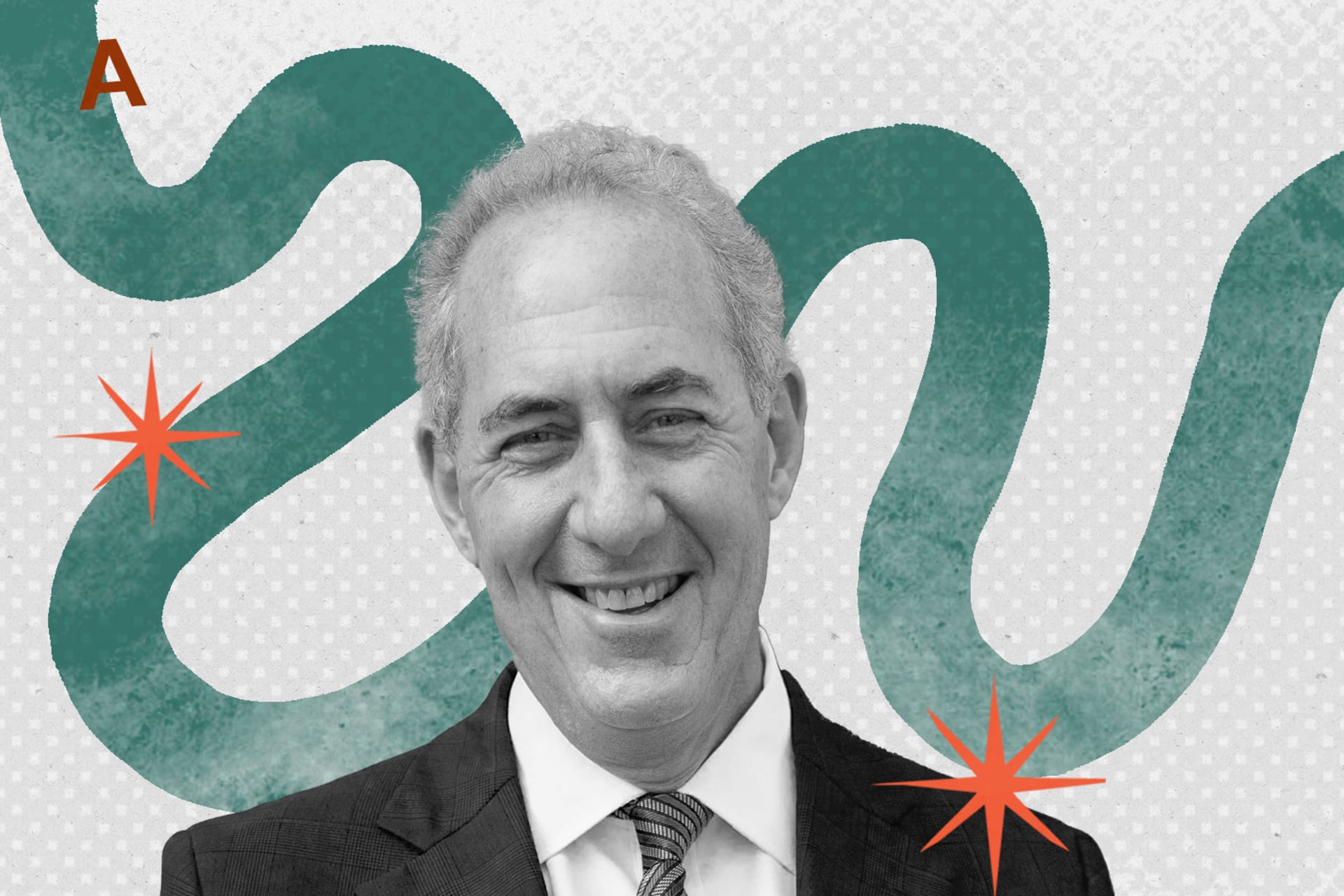
CFR President Mike Froman is perhaps best known for his time as U.S. trade representative during the Obama administration. He sat down with CFR to discuss how he got his start, reconnecting with former President Obama after their law school days, and his travels through the Balkans.
By experts and staff
- Published
[Video: https://www.youtube.com/watch?v=6tCgWjq-HTU]
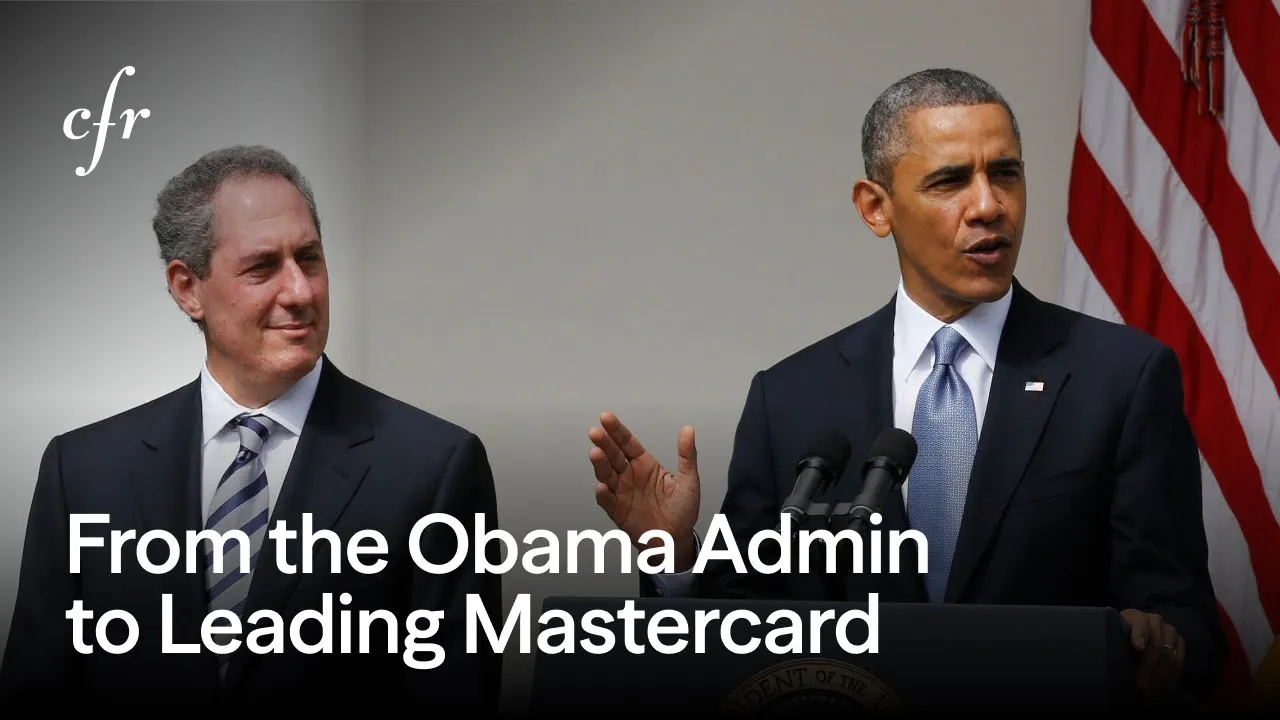
While Mike Froman’s childhood dream of becoming an astronaut didn’t come to fruition, he developed a passion for foreign policy as a teenager that gave way to a wide-ranging career. After kickstarting his career in the Clinton administration, he spent years in the private sector before reconnecting with former Harvard Law School classmate Barack Obama during his run for Senate. Their reunion ultimately led Froman to serve in both Obama administrations. In 2023, he became the president of the Council on Foreign Relations. Read more about how his private sector experience influenced his policy work and his most meaningful experiences from working in government.
Check out past editions of CFR’s “How I got My Career in Foreign Policy” series.
Here’s how Mike Froman got his career in foreign policy.
Welcome. Mike Froman, president of the council. We’ve been doing this series for a while and you’re our first video guest. So let’s dive right in.
Great. Thanks for having me.
What did you want to be when you were little?
An astronaut. I grew up in the ‘60s, with Apollo 11 and all the various Apollo missions. And we would go home from school and watch them on our big TVs, and I always wanted to be an astronaut.
So when did you feel you developed a real interest in foreign policy? And did you always know that it was econ-focused as well?
Not at all. So it came much later. In fact, when I left high school, I was ready to go to the University of California, Berkeley, and be pre-med.
Well, go bears!
Go bears. Much of my family went to Berkeley, and I took a year off. I did a gap year. And during that gap year, I traveled a lot. It was the 1980–1981 presidential election time. I was working for an organization that gave me a chance to meet the presidential candidates—[Ronald] Reagan, [Jimmy] Carter, and John Anderson.
And I sort of got bitten by the bug and decided, “I don’t want to be a doctor. I want to go into government and public policy.” So I reapplied to colleges. I ended up going to Princeton, in part because of the program there on public and international affairs. And that’s what gave me a real interest.
So after college, you go on and get a PhD in international affairs and then a law degree. So a lot of school.
Lots of school.
But then after that, you joined the Clinton administration, and there you do a couple of different roles over several years. And you’re at the Treasury Department, you’re on the National Security Council, the National Economic Council. I wonder if there’s one of those roles that’s either the most meaningful to you or that you learned the most from.
So first of all, in college and in my doctorate, I was really focused on U.S.-Soviet relations. I was focused on arms control negotiations broadly. And then the end of the Cold War came, and I ended up going into government, actually, at the end of the Bush administration as a White House Fellow. So I was there the last few months of the Bush administration, and the person I was working for, Roger Porter, was a professor at Harvard. He sort of looked at me and said, “You’re a Democrat working in a Republican administration during an election. I think the only thing I can trust you with is trade policy.” And so that’s what really turned me on to trade. I had not really focused on trade before, although I had focused on negotiations. It was sort of a natural outgrowth to go from arms control to trade.
I had a series of great jobs at the White House, working for the National Security Council and then the National Economic Council, which was newly formed during the Clinton administration. And then I went over to the Treasury Department, where I spent a year as a deputy assistant secretary focused on the former Soviet Union, Eastern Europe, and the Middle East, with a real focus on the Balkans. It was a year after the Dayton Peace Accords had been signed, and I spent a good part of that year traveling around the Balkans and helping on the implementation of the Dayton Peace Accord.
And then Secretary [Robert] Rubin asked me to be his chief of staff for the last two-and-a-half years that he was there as secretary. And that’s probably the job I learned the most from.
Oh, interesting. Well, as a Bosnian, I could ask you so many interesting questions about that time. But we’ve got to keep going! So after the Clinton administration, you’re briefly here at CFR, actually, and then you go to Citigroup. And I’m curious—you have a couple of different senior roles there. But I wonder, did working at such a large financial institution in the private sector change your approach to policy work when you eventually returned to government?
I think it gave me an appreciation for how the private sector makes decisions. While you’re in government, you spend a lot of time thinking about how to create jobs, how to promote growth, and then going into the private sector and seeing actually how companies create jobs and what they do to grow their businesses—it gives you a different kind of feel for it.
And I’ve always been attracted by this nexus of the public and the private sector. So trade policy was very much learning about, “Well, okay, what do farmers care about? What does the technology community care about? How do we think about manufacturing in the United States?” And when I was in the private sector, many of the issues I worked on also dealt with the public sector, like infrastructure. How do we think about building and expanding infrastructure?
Okay. That’s interesting. Speaking of your return to government, you’ve known President Obama since law school. You guys edited the Harvard Law Review?
Yeah. He was the president of the Harvard Law Review, I was just a mere editor. But yes, we worked on the law review together.
How did you guys end up reconnecting on the campaign trail?
So after law school, he went back to Chicago, became a community organizer, and ran for political office. He ran for Congress the first time—he lost. But he was teaching at the University of Chicago and working as a community organizer. I went off to Europe for a year and then to Washington, to the Clinton administration.
And we connected when he was running for the Senate in the early 2000s. I ran into him, I think it was at a fundraiser, and just reacquainted myself and said, “Look, I know you’ve got a ton of people who went to Washington, have Washington experience. But if I can be of any help to you, let me know.” And somewhat to my surprise, he took me up on it, and I ended up being part of a small group of people, many from law school, who helped him navigate his way initially around Washington and introduced him to people.
And then ultimately, of course, he won for Senate, and I worked on his campaign and transition. And then when he became president, I joined the administration.
Interesting. So you joined the first Obama administration as deputy national security advisor for international economic affairs. That’s a mouthful. But I’m curious what it was like joining the government during the Great Recession and what that taught you about managing crises.
Well, during the ‘90s, when I was at the Treasury Department, it was the Asian financial crisis and the Mexican financial crisis, the Russian and Brazilian financial crises. So I had seen financial crises. People like Secretary Rubin and Deputy Secretary [Larry] Summers managed the country through a number of crises. I took the lessons from that very much to heart.
And when I joined the administration, one of my responsibilities was to work on the [Group of Twenty], which the Bush administration had first convened as a crisis management forum at the end of 2008. And then we had two summits during 2009, and my job was to help manage the president’s role in those summits. And those summits were very much focused on what the G20 should do to respond to the financial crisis—how to mobilize hundreds of billions of dollars of potential support for the [International Monetary Fund] as necessary to stem a financial crisis from becoming a Great Depression.
And it was quite successful. I think it was actually international cooperation at its best.
Yeah, absolutely. In his second term, President Obama nominated you to become the U.S. trade representative. How did that come about? Were there ongoing conversations?
Come the end of the first term, the president called in a lot of his senior staff—White House staff, cabinet—just to have conversations with them about, did they intend on sticking around for the second term, or would they like to stick around? If so, what is it that they would want to do? I think in his own mind, he was beginning to reformulate what a second-term team would look like.
And we debated a couple positions back and forth, and then he decided that I should be U.S. trade representative. And I was honored and delighted to be so.
Is there any achievement you’re most proud of from your time as U.S. trade representative?
I’d have to say it’s the negotiation of the Trans-Pacific Partnership, which was the most complex trade agreement, at that time, to be negotiated. I learned a ton from the team at the Office of the U.S. Trade Representative and from elsewhere around the government. We engaged with a dozen other countries to negotiate it. And ultimately, we got it done.
Now, unfortunately, it never came into being because President Trump withdrew from the agreement and it never got passed by Congress. But it continues to exist today, just not with the United States. And in fact, it’s grown larger with the United Kingdom having joined it and now a long list of other countries that have expressed interest in joining it as well.
Interesting. Bringing us a little closer to the present, in 2017, you come here to CFR. What’s the benefit of pivoting to the think tank world when you could have gone back to the private sector or done something else?
Well, I was very grateful to the Council for letting me come here in 1999 when I left government, and again in 2017, when I left government, because it gave me an opportunity to be introspective about my experience in government and to think through some of the lessons learned and to figure out what I wanted to do next.
In 1999, I helped direct a task force on Balkan economic development. And in 2017, I did a number of things and worked on a number of projects while I was figuring out what I wanted to do. I ultimately did decide to go back into the private sector, and I joined Mastercard. But that was a really great period of time—about fifteen months—to really recharge and rethink and have colleagues around here who were good sounding boards, good colleagues for sitting down and doing an analysis of what had gone well, where things had gone less well during the administration. And I learned a lot from them.
Absolutely. So the series is very much geared towards young people. I’m curious if you have any advice for young people who are starting out now who are seeing the foreign policy landscape change pretty quickly, pretty radically.
So a couple of things. First of all, I think if you’re interested in foreign policy, interested in international relations, I think there are a lot of different ways of pursuing those interests. Government is obviously one—those opportunities may or may not be open at the moment. Nonprofit organizations, development organizations—that’s another great way of going. Again, some of those are under strain.
But having spent time at Citigroup and at Mastercard, I really believe that there is a role for the private sector on many of the issues that we care about in international relations. When I was at Mastercard, we spent a lot of time focusing on financial inclusion—how to bring a billion people into the financial system as a key development tool for alleviating poverty and creating opportunity. I think that’s just one example, but lots and lots of companies and firms create opportunities to take the skills and the momentum of the private sector and apply them to issues that are not only good for the company or the firm, but also good for the world as a whole. So I would say don’t exclude the private sector when thinking about possible opportunities for pursuing your interests there.
And the other thing I would say is I benefited enormously over the years from having mentors—professors in college and law school, and professional mentors when I joined the workforce. I learned a tremendous amount from them. I always felt that it was more important who you worked with and who you could learn from than the actual subject matter of what it is you were working on that day or that week. So my encouragement is to not be so focused on maybe one particular job or one particular sector you want to work on, or one particular issue, but really who could you learn from the most and who can help you navigate your career over time.
Absolutely. Well, we always end on the same question. It’s always a fun question. I’m sure over the years you’ve had many fascinating work trips and work dinners. Is there a most memorable one that you could share with us?
You know, for a period of time, we’re talking about the Balkans—I would go to the Balkans about every six weeks and would shuttle between Sarajevo, Zagreb, and Belgrade, and would meet with the leaders of those countries as part of a U.S. delegation. I was one of several U.S. officials there.
Needless to say, you know, sitting down with some of these people—[President Slobodan] Miloševic in Serbia—I always felt like I sort of got out of there with the skin of my teeth at times, having to argue with him about implementing elements of the Dayton Peace Accords. But I learned a tremendous amount from those sorts of experiences. When you sit down, in this case with somebody who later was found to be a war criminal, those impressions stay with you for a long time.
Well, we could go down a rabbit hole on this one, but we won’t—we’ll spare everyone else! Mike, thank you so much for doing this. It was a pleasure, it was so interesting.
Thanks for having me.
This interview has been edited for length and clarity. It represents the views and opinions solely of the interviewee. The Council on Foreign Relations is an independent, nonpartisan membership organization, think tank, and publisher, and takes no institutional positions on matters of policy.