How I Got My Career in Foreign Policy: Corey L. Trusty
Corey L. Trusty’s childhood love of space has transformed into a career focused on space operation and strategy in the Air Force and Space Force. He sat down with CFR to talk about the intersection of space operations and diplomacy and what it’s like to establish a new military service.
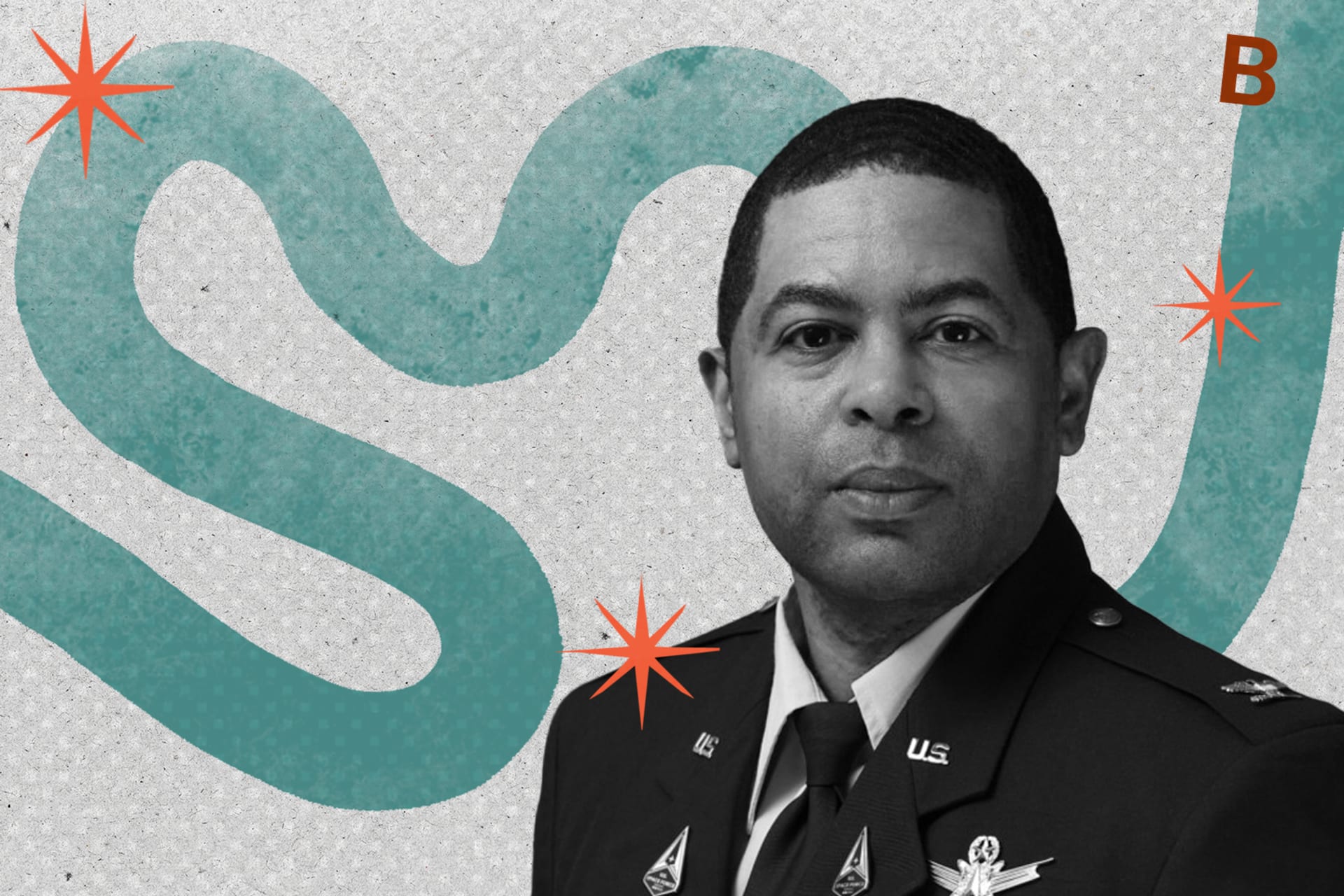
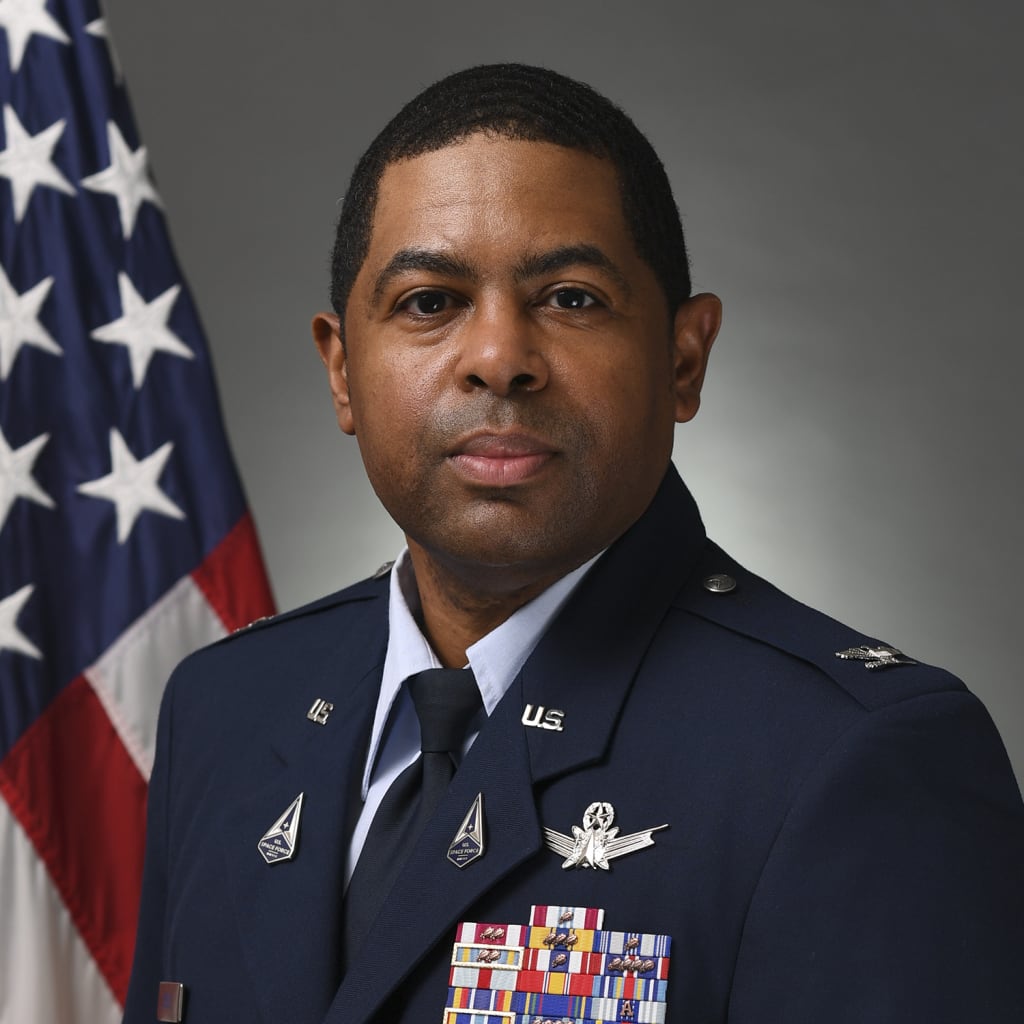
Corey L. Trusty was fascinated with space as a kid. After studying biology and bioethics at Tuskegee University, and with some encouragement from his college ROTC, he joined the Air Force to work on space operations. He went on to serve in missile warning and satellite launches, to strategic planning and international coordination, while taking up posts from Germany to Greenland. In 2020, he transferred to the Space Force, helping stand up the new service. He is currently a Military Fellow at the Council on Foreign Relations. Read more about how his research background continues to inform his work, his family connection to military service, and why he advises young people to “embrace your curiosity.”
Check out past editions of CFR’s “How I got My Career in Foreign Policy” series.
Here’s how Corey L. Trusty got his career in foreign policy.
What did you want to be when you were little?
It varied. It jumped between wanting to be an astronaut or an animal trainer, kind of all over the place. As a kid, I loved space. I was fascinated with it. I used to watch all the old-school shows from space, whether it was “Star Trek,” “Star Wars,” “Lost in Space.” I was completely infatuated.
But then I also loved animals—things in the sea like sharks, dolphins, orcas, and big cats and birds of prey. Those were my things. But then all of a sudden, I gravitated towards this field. I thought I was going to do some type of research job in the biomedical field when I was coming out of college.
I was shark-obsessive too, but I’m glad there’s a space connection. I think that’s cool. You mentioned your bio background—I saw you studied biology and bioethics in college, then you did a master’s in public health. Did you deviate from the space interest and then get back into it?
In college, I began to fall in love with research. I loved what research could offer because I had an inquisitive mind. It gave me a chance to explore and hopefully do something that could benefit society. So I began down the track of biology and bioethics because I loved it and it came easy.
Once I got my master’s in public health, I thought, ”Okay, now I’m going to look at getting a doctorate in epidemiology.” I thought maybe one day I’ll work for the Centers for Disease Control and Prevention or the World Health Organization. But during my time in ROTC in college, they were like, “Hey, we know you’re a biology major and want to do research, but you’re going to go do space. We like the way you think as a science major, because you can still follow a checklist to do things the appropriate way, but you’re not bound by it. You’re willing to think outside the box.” That’s what they were looking for in space operators.
Oh, interesting. That was like a career advisor or something?
No, it was just the Air Force telling me that was what I was going to do.
I was curious why you joined the military after graduating. What made the military a good way to pursue space versus trying to work at NASA or something like that?
I got an ROTC scholarship to go to school, so I owed the military time coming out of ROTC. It was a great way to know you’re going to have employment coming out of college and gain a skill set. Having them pay for college and getting a stipend wasn’t bad either—I wasn’t a completely broke college student, just maybe a somewhat-broke college student.
I think having those opportunities, being able to get structure and have a potential career, was really appealing to me. Plus, my family has a history of service. My father served. I’ve had uncles and cousins who served, grandfathers who served. So it was definitely a way to honor them and what they’ve done.
That’s so lovely. I’m intrigued, given the current news cycle—I saw one of your early posts in the military was in Greenland. How did being posted abroad, especially there, shape your understanding of space operations or space diplomacy?
It’s funny. I look back at my space career, and I spent the first fifteen-plus years in the Air Force building credibility as a space operator—not as a theorist. I was doing operations. Starting off in Greenland, I was doing missile warning and space tracking, operating systems at the intersection of strategic deterrence, global security, and nuclear command and control implications. When you look at those things, you’re really at the heart of what we do when we’re trying to defend the homeland and the strategic implications of that.
The missions I was doing in Greenland were inherently policy-sensitive because mistakes at the tactical level could lead to certain decisions at the strategic and diplomatic level with serious consequences. That was my first real introduction to policy that I didn’t really know about.
After that, I did space launch—access to space—at Cape Canaveral and then later at Vandenberg [Space Force base] on the West Coast. On the West Coast, I was doing launches for the National Reconnaissance Office and doing intel launches. From the East Coast, I did defense launches, military launches, weather, launches for the Navy and for NASA. When you look at those things and the national-level decision-making it takes to say, “This is the type of capability we want to put on orbit,” and the interagency coordination we had to do between the Defense Department, the intelligence community, the Federal Aviation Administration, NASA—those things are important. Certain classification authorities and risk acceptance you have to take when doing launch—this is where I first cut my teeth and started seeing that policy determines what is allowed, not just what’s possible.
Jumping from there, after spending the first sequence of your career in operations roles, you get this post in Germany coordinating air and space operations across Europe and Africa in support of NATO.
My assignment to Germany really led from my previous assignment doing electronic warfare. That’s the tip-of-the-spear capability we have for the Space Force. When you talk about non-kinetic effects—anything that doesn’t go boom—rules of engagement matter, escalation management matters, legal authorities matter. Because what we can do as far as non-kinetic effects are global effects that can have global implications. Electronic warfare really forces operators to think about those policy constraints and not just their technical performance.
Having that background and then going to do space planning—planning those space effects for your geographic combatant commanders—forces you to translate national policy into theater-level execution. You have to align space capabilities with allied sensitivities and balance your access posture and signaling. This is operational policy in practice.
Was there a big challenge, or even a best part, of transitioning from the operations side to a more strategy and theater planning side?
Your days are a little bit more predictable. Most people don’t want to leave operations, but if you’re not working shift work and you’re working a day job, that’s one of the key benefits.
But I think just the access to the people. You’re starting to think at such a different level and put pieces together of the puzzle that you didn’t really have access to before. Yeah, you had documentation in front of you, and that’s great. But being in the room with people who are actually writing policy or who were in the room when policy decisions were being made—that changes your outlook on things.
I saw that especially when I was over at United States Strategic Command (STRATCOM). I got a little bit more exposure to it because I was in J5 Plans—the strategic planning division—and we were writing policy for that combatant command. I was no longer just doing space at this time. I was integrating space with our nuclear, cyber, undersea, and information domains, operating under presidential and SECDEF-level authorities. We were planning for escalation control and strategic stability. You go from seeing these things at the tactical and operational level to now seeing the decisions really based on that policy at a certain level.
I was gonna ask you about STRATCOM. You joined as a branch chief in 2019. What was it like joining the Pentagon?
While I was at STRATCOM, I actually transferred from the Air Force into the Space Force. When the Space Force became an entity in 2019, I was very fortunate in 2020 to be given a choice to either stay in the Air Force or transfer to the Space Force. But the missions of space were no longer going to be done in the Air Force, so it was an easy transition for me. How often do you get a chance to be part of a new service—essentially a government startup—to go out there and try to create culture, create change, and be part of something really important to our everyday life?
When I transitioned from STRATCOM to the Pentagon, I actually went there to be part of setting up the Colonel’s Group for the Space Force. Every service has a Colonel’s Group—it’s that first layer of leadership right before your general officers, and it’s critically important. With the Space Force being only about 16,000 people—8,000 civilians, 8,000 active duty, only about 29 general officers—it’s super important to make sure that leadership level is trained and equipped to do what we need them to do.
I was very fortunate to help stand up the Colonel’s Group for the Space Force because it helped shape our service and our institutional voice. This will help integrate the operational experience these colonels have over their careers. It’s going to help shape the Space Force. It really matters to the governance we have, the coordination and representation we have to have as such a small service. It’s important to get these things right.
Speaking of Space Force, was there anything that surprised you about trying to stand up a whole new military service?
I mean, there’s so many things I’ve learned about standing up a new service. We went from advocacy in years one and two—trying to inform and let everyone know who we are—to now asking, “How can we be a ready force that can respond at need to whatever the situation brings, in protection of national security?”
Seeing that develop, seeing us come up with our own doctrine, our own identity and culture—it takes time. It takes flexibility and people willing to fail forward. We’ve tried a lot of different things in the Space Force. We’ve taken some things that have been good from other services and left behind some things that may not be as beneficial for the Space Force as they are for the Air Force. Coming up with our own identity and way forward has been really helpful for us.
The experience has really opened my eyes because we’re our own little startup, except we’re a government startup, so it looks different than a commercial startup. They may be a little less boundless, but we have folks we have to answer to, whether it’s the American people or people on Capitol Hill.
This series is geared towards young people who are just starting out. For those finishing college or grad school right now, do you have advice for those interested in the defense or the space and security side of foreign policy?
First, I would say embrace your curiosity. It’s super important because we can’t always do things the way we’ve always done them. If we do, we’ll fall behind. We need people to come in with fresh ideas and fresh ways to do things because the pace of innovation now is so fast. It’s going to take young people who are ready to break glass and not be susceptible to just doing things the old way.
I would also tell them to continue to feed your mind. Read as much as you can about anything and everything, whether it’s directly related to your work or adjacently related. We need people who are going to come in and be educated about not just the services and threats, but all these different things that can help come up with great, fresh ideas. Innovation is really the key.
Right now, as we continue to figure out all these different things—whether it’s policy, public-private partnerships, how we’re going to work on the world stage—we need people who are ready to come in and not be afraid to voice their opinions and be willing to make meaningful change. Continue to feed your mind and come in humble, hungry, and ready to go.
You maybe alluded to this with the research and process bit, but because your education background is so different from space, I wonder if you find in your day-to-day that it still comes in handy—this biology, bioethics, and public health background?
Yeah, I think it really does. The nature of doing research, being able to come up with theories and test hypotheses, I use every single day. Being engaged with our allies, partners, and other international counterparts, I used that research mind, that inquisitive mind, that procedure and process mind to make sure we could go out and engage them the right way. Making sure we have the right coordination, that we can address norms of behavior or responsible use of space or multinational coordination. Some of that is space-specific, but the things that go behind it are very research-based.
You have to make sure you’re going into this with the best interest of the United States at heart and that national security and protecting the homeland is at the forefront of your mind. Those experiences I had, looking at things from a science and health side, really help inform me on this side as well.
So we usually end with the same fun question, and we’ll do that one, but I have an extra fun question first. Favorite space movie?
Oh man, there’s so many, but I’m gonna have to go with an oldie but goodie—”Spaceballs.” It’s a cult classic. Amazing.
Our classic question is, over the years I’m sure you’ve had many fascinating work trips or work dinners. Is there a favorite or most memorable one you could share with us?
I always loved—I was actually at Maxwell at the time. I had just left Germany and went to Maxwell Air Force Base [in Alabama] to do doctrine, which was really good because you get a chance to learn how we do doctrine and lessons learned and incorporate them into the process by working with the services. We had a side that did service doctrine and a side that did joint doctrine. I got a chance to go out with our joint doctrine folks and go back to Germany.
There was an exercise I’d participated in before that kicked my butt when I was out there. But then I got to go back as an observer and actually watch people getting their butts kicked a little bit. Getting back out to Germany was always great. I loved being in Europe—the culture, the food, working with our partners and allies. Especially trying to figure out how we can work better together, whether it’s burden sharing or coming up with innovation together.
This interview has been edited for length and clarity. It represents the views and opinions solely of the interviewee. The Council on Foreign Relations is an independent, nonpartisan membership organization, think tank, and publisher, and takes no institutional positions on matters of policy.