How Pakistan Became the Iran War’s Unlikely Peace Negotiator
Despite its long alienation from the world, Pakistan has emerged as an essential mediator in negotiation efforts between the United States and Iran—suddenly a major international player.
By experts and staff
- Published
 Joshua KurlantzickCFR ExpertSenior Fellow for Southeast Asia and South Asia
Joshua Kurlantzick is senior fellow for Southeast Asia and South Asia at the Council on Foreign Relations.
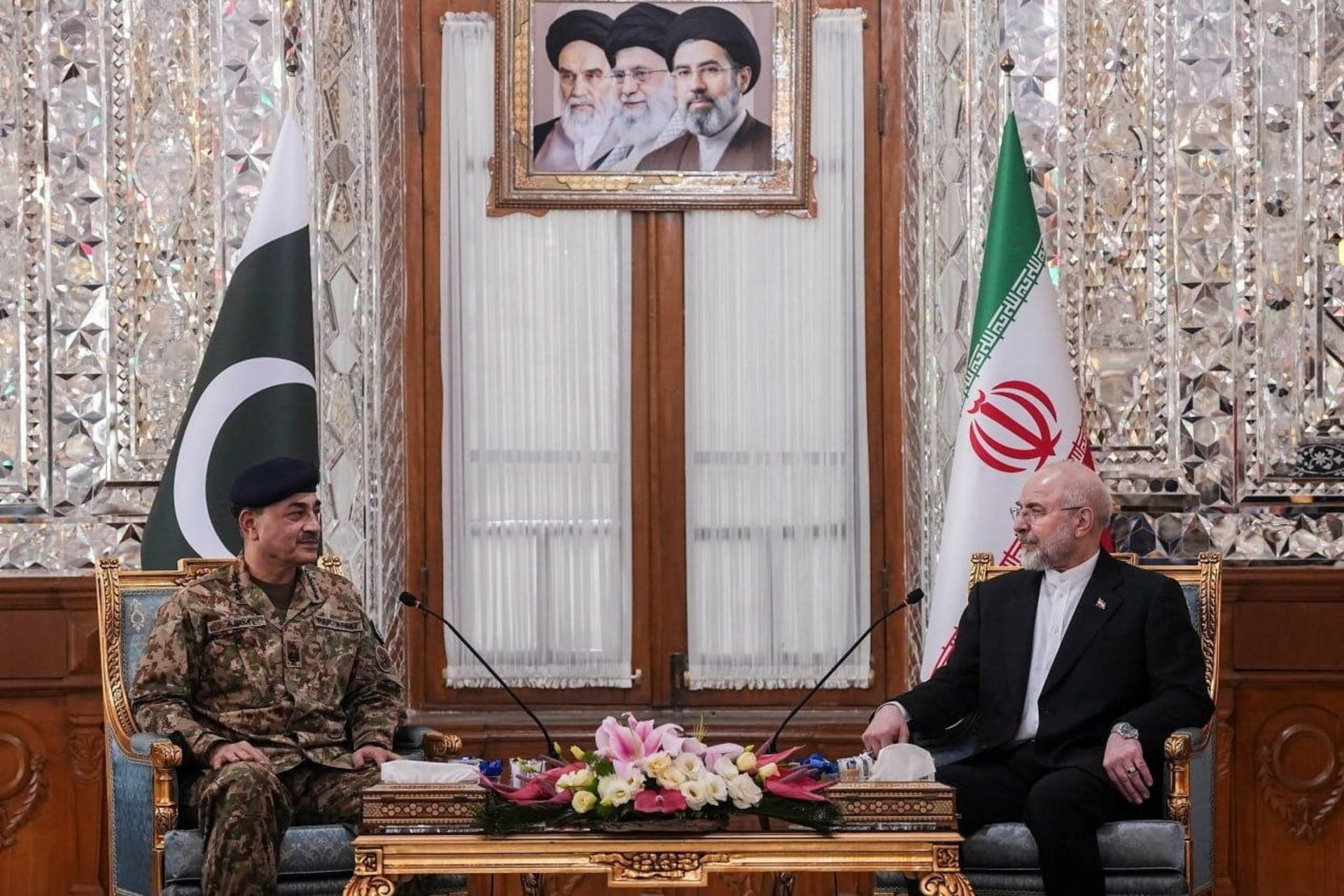
As the United States and Iran inch toward a peace deal, Pakistan has emerged as an unlikely but indispensable mediator in the negotiations. It has hosted high-level talks in Islamabad and shuttled proposals between the two sides as they work toward a lasting ceasefire.
It’s a remarkable role change for Pakistan. For years, the country has been viewed as a pariah state. Just saying its name brought to mind political instability, military rule and harsh crackdowns on freedoms [PDF], support for terrorist groups, domestic insurgencies in Balochistan province, and the constant threat of war with neighboring India. The country had few real partners other than China, to whom it owed nearly $70 billion, and it has had a massive list of International Monetary Fund debt bailouts dating back decades.
Indeed, experts have been labeling Pakistan a failed state for decades. While it has nuclear weapons, its lack of nuclear security long has raised fears that terrorist groups could gain control of at least some of its weapons. Showing the lack of clear leadership, the country’s leaders have been so fearful that its nuclear weapons might be attacked by India that, at one point, it was reportedly driving the nukes around the country in unguarded delivery vans. It also backed the return of the Taliban to lead Afghanistan, but it then fell out with the Islamist government in Kabul and went to war with its former ally earlier this year.
However, the tide seems to be shifting for Pakistan. Islamabad has begun to exert sizable regional and global influence and is being courted by states across the world. It has found some success as the primary negotiator between the United States and Iran in their conflict. Pakistan actually achieved something many diplomats from wealthy democracies and leading global organizations had failed at for nearly five decades: producing direct talks between Washington and Tehran. Islamabad also has played a role in the recent Lebanon ceasefire.
Regionally, too, Pakistan has positioned itself as an important partner. It has worked to engage landlocked Central Asian states, which can export their products through Pakistan’s seaports; Southeast Asian states, which have seen increased two-way trade; and countries in the Middle East, signing a major bilateral defense pact with Saudi Arabia in 2025 and deepening ties with Turkey and Egypt. There have even been discussions of a kind of quadrilateral security alignment with Egypt, Pakistan, Saudi Arabia, and Turkey.
Even Washington appears to want a closer relationship with Islamabad despite the two governments’ complicated history. Pakistan’s relations with the United States, which were relatively strong in the immediate aftermath of the 9/11 attacks, had quickly turned sour in the subsequent decade. The Atlantic in 2011 memorably called it the U.S. “ally from hell,” noting the country’s sheltering of al-Qaeda leader Osama bin Laden (knowingly or not) and the alleged role that Pakistan’s intelligence service played in sponsoring terrorists. U.S. President Donald Trump himself denied Pakistan military aid during his first term, saying that it was not effectively combating terrorism.
And yet, the second Trump White House—unlike past presidential administrations of both parties—does not seem to care that Pakistan is a highly authoritarian state, any more than it allows El Salvador’s repressiveness to get in the way of bilateral links. Without any interest in human rights in Pakistan, it becomes much easier to build ties with Islamabad. The White House has begun to view Islamabad as a state that can bring together South Asian and Middle Eastern countries, along with developed democracies. Pakistan also contains critical rare earths, which it has begun shipping to the United States.
The Trump administration also seems to be warming to Pakistan because U.S. ties with India—which had grown tighter for over two decades—have effectively collapsed, so the White House has turned to Islamabad instead. Relations between New Delhi and Washington are at new low due to the Trump administration’s high tariffs on India, new barriers to H1-B visas, and anger over Indian purchases of Russian oil. In addition, relations have worsened because Trump’s claims that the United States acted as a critical mediator in the conflict between India and Pakistan last year—claims that have been disputed—infuriated New Delhi, which has always refused outside mediation in its disputes with Pakistan. As defense expert Happymon Jacob noted in Foreign Affairs, “American officials have been careful not to offend Indian sensitivities in this area [referring to Washington’s claim to mediate between Delhi and Islamabad]—but Trump doubled down.”
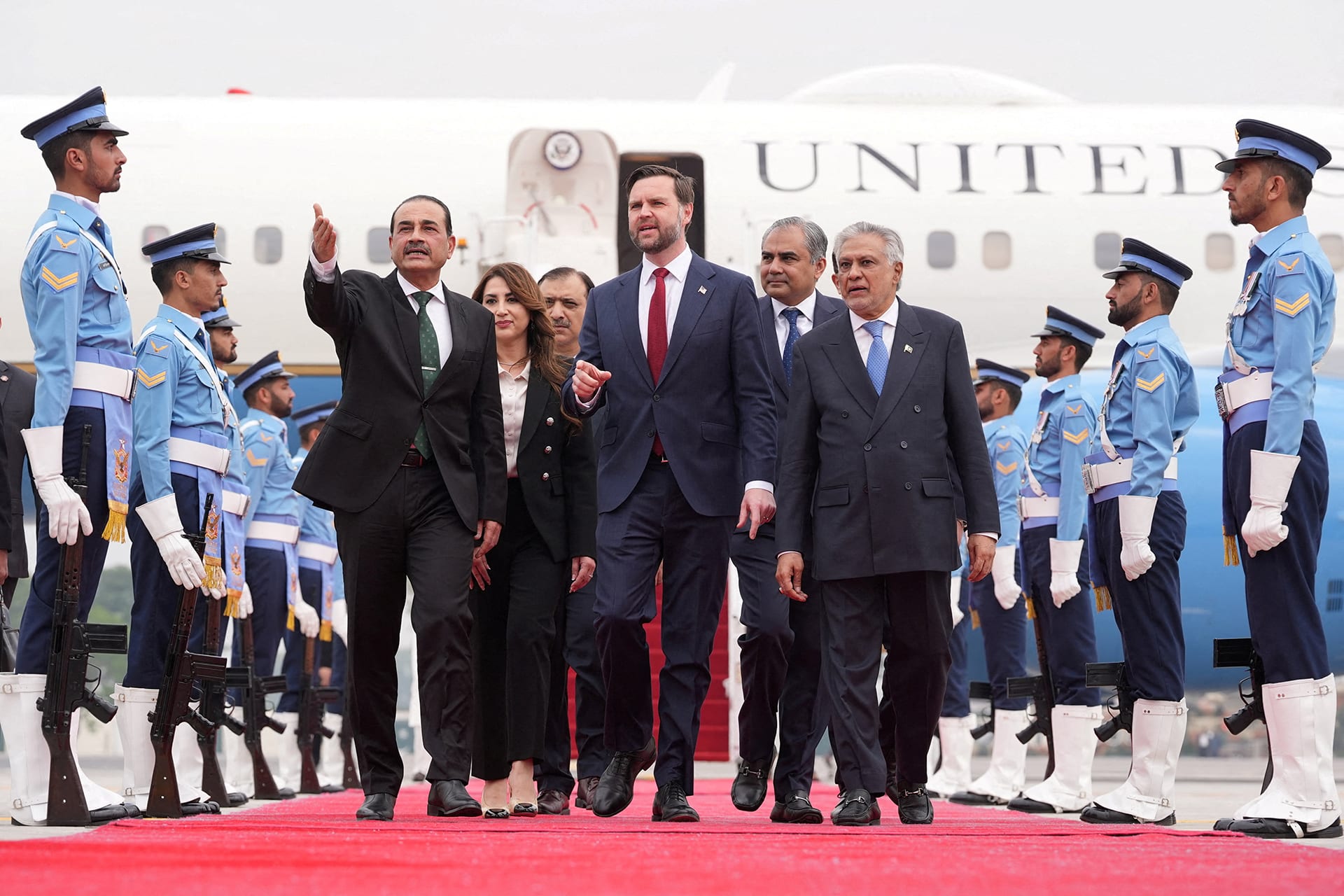
The White House has taken several steps to demonstrate its desire for warmer ties with Pakistan. Trump hosted a very friendly meeting with Pakistan Army Chief Field Marshal Asim Munir—the de facto ruler of the military-dominated state—at the White House in June 2025. It marked the first time a U.S. president had hosted the head of Pakistan’s army unaccompanied by the country’s political leadership at the White House. Trump later lavished more praise on social media for the field marshal during the Iran war negotiations, thanking Pakistan’s “great prime minister and field marshal, two fantastic people!!!”
Pakistan also has played on Trump’s ego very effectively. It nominated Trump for the Nobel Peace Prize shortly after the June lunch meeting, then joined Trump’s Board of Peace, signed a deal with the United States to help develop Pakistan’s oil reserves, launched a collaboration with World Liberty Financial—a crypto platform co-founded by Trump—and publicly praised the U.S. president at every opportunity. Pakistani leaders clearly recognize their success. “We read him right,” Mushahid Hussain Syed, former chairman of the Pakistani Senate’s Defense Committee, recently told the Washington Post.
Other prominent democracies have joined the United States in welcoming Pakistan back to diplomatic normalcy, despite Pakistan’s harsh military rule. They clearly see benefits to warmer ties with one of the most populous countries on earth and see that, despite all its flaws, Pakistan provides potentially lucrative investment opportunities. Beyond its rare earths, Pakistan estimates that its soil contains some $8 trillion worth of other minerals including lithium and copper.
Leading democracies also realize that Islamabad has a wide range of contacts in the Middle East that could make it an important interlocutor in the long run. The United Kingdom (UK) foreign secretary visited Pakistan in 2025 for the first time in four years. Pakistan and the UK boosted bilateral investment ties last year and are looking to sign a bilateral free trade deal in the future. France and Pakistan signed a bilateral road map in 2023 designed to improve ties in many areas. Canada and Pakistan also recently agreed to upgrade investment and trade collaboration, while Australia and Pakistan are negotiating to do the same.
A decade ago, the Iran war negotiations and potential security alliances, all of which rely on mutual trust, were exactly the type of talks and deals that pariah Pakistan would never have been allowed into. But today, that former outcast is now the one being courted by the world.
This work represents the views and opinions solely of the author. The Council on Foreign Relations is an independent, nonpartisan membership organization, think tank, and publisher, and takes no institutional positions on matters of policy.