India’s New Climate Statecraft
India’s climate diplomacy—selectively engaging with UN Framework Convention on Climate Change processes while separately mobilizing finance, technology, and market access for decarbonization without constraining its economic growth or energy access—stands in sharp contrast to the United States’.
By experts and staff
- Published
- Karthik NachiappanResearch Fellow, Institute of South Asian Studies, National University of Singapore
This memo is a part of CFR Expert Manjari Chatterjee Miller’s project on India and the liberal international order published by CFR’s China Strategy Initiative through its China 360° program.
Negotiating India’s Climate Pathway
Recent global shifts have exposed the vulnerabilities of the green transition (that is, the sector reforms undertaken by countries to make their economies more energy efficient). The post-pandemic recovery, inflation, the Russia-Ukraine war, and global energy market volatility have made the transition increasingly fragmented and contested, as major powers anchor their climate policy in domestic economic and strategic priorities. Consequently, the UN Framework Convention on Climate Change (UNFCCC) Conference of the Parties, or COPs, now function not only as negotiating forums for emissions targets, but also as arenas for signaling domestic ambition, securing climate finance, accessing technology, and defending national policy.
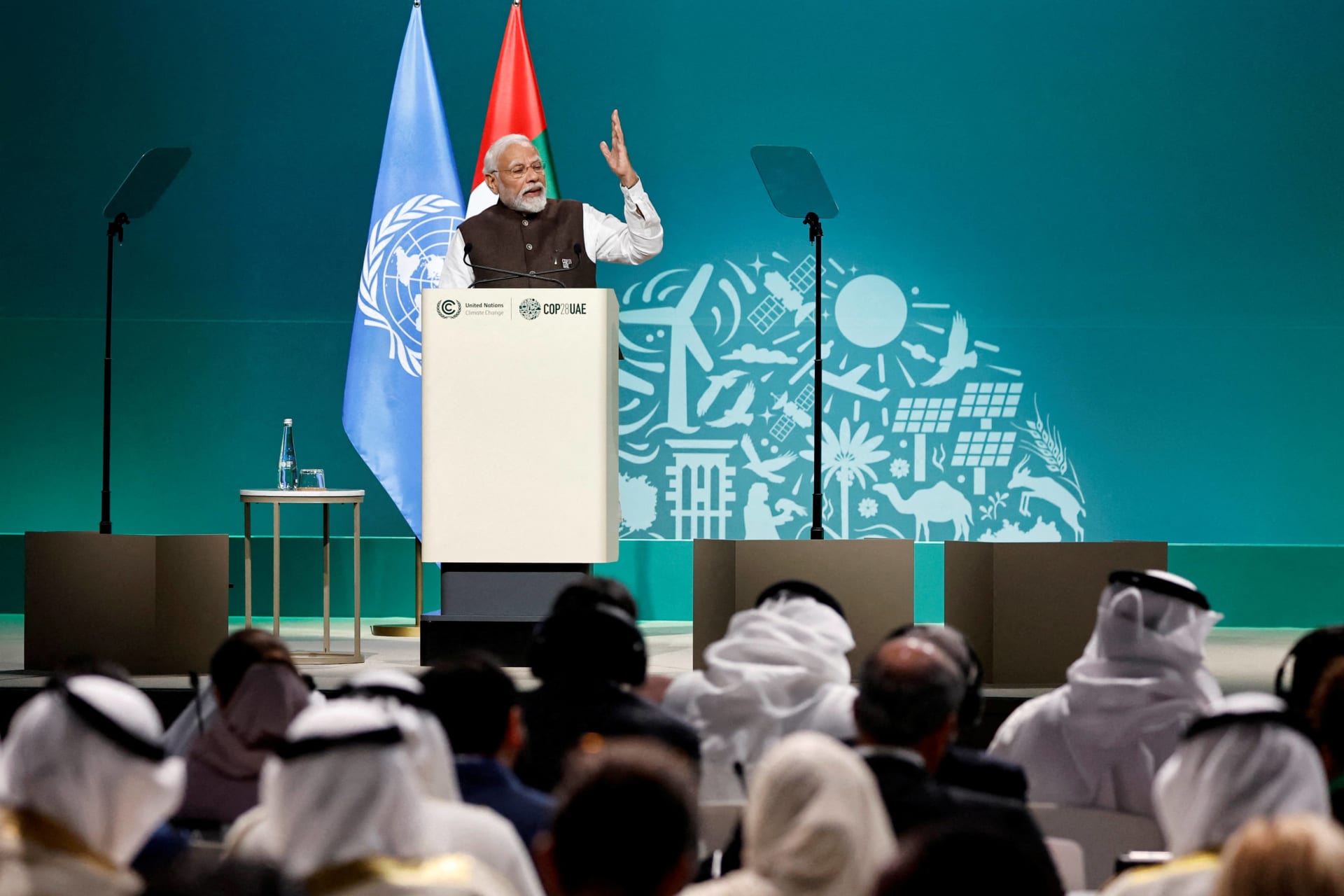
India’s climate diplomacy has evolved with those developments, changing from a primarily defensive, equity-centered posture within the UNFCCC into a strategic climate statecraft that operates across multiple fields. India increasingly frames decarbonization as an extension of its economic modernization, energy security, and industrial policy. It selectively engages with COP processes, while separately mobilizing finance, technology, and market access for decarbonization without constraining its economic growth or energy access.
That approach to climate diplomacy sharply contrasts the United States’. India selectively champions equity norms, while simultaneously seeking to shape climate outcomes favorable to its development priorities. In contrast, the United States calls for universal mitigation alongside strong energy nationalism and clean-energy industrial competition. The two countries’ differing stances raise broader questions about the future of multilateral climate institutions, the relevance of equity as a climate norm, and leadership in an increasingly geoeconomic climate order.
Complicating matters, India faces a strategic juncture defined by three developments, each aggravated under the Trump administration: the aggressive subordination of climate policy to national interests, the linking of decarbonization to industrial policy, and the spillover of the U.S.-China rivalry into climate cooperation. The United States’ forfeit of climate leadership and retreat from mitigation efforts risk further undermining the COP process. As major emitters such as China and the United States increasingly prioritize national climate strategies over multilateral bargains, countries such as India could be expected to shoulder greater mitigation responsibility, even as long-standing questions over finance, equity, and burden-sharing remain unresolved.
India’s normative and diplomatic dilemmas can be seen in three interrelated areas: its energy policy; its positions at COPs; and its engagements with climate finance, technology, and trade institutions.
India’s Energy Policy
India’s energy policy is anchored in coal, but it is increasingly diversifying into natural gas, nuclear, oil, and renewables. This mix is based on a dual-track approach, in which India emphasizes equity, justice, and conditional mitigation timelines, while separately prioritizing economic growth and energy access. India’s continued reliance on coal (still accounting for roughly 70 percent of electricity generation) helps explain its resistance to rigid carbon phase-out timelines.1 At the same time, India’s renewable surge—over 200 GW of installed capacity, roughly a quarter of its electricity generation, sustained annual additions of 20–25 GW, annual clean-energy investment of roughly $40–50 billion USD, expanded grid infrastructure, and a 500-GW renewable target by 2030—bolsters its credibility as a pragmatic climate actor.2
These energy practicalities shape India’s climate policy at the COPs and its negotiating positions in finance and technology institutions, calling for fair burden-sharing, predictable finance, and technology support for a just energy transition.
India at COPs
In the early 1990s, India proactively shaped the rules, language, and equity principles of the UNFCCC.3 New Delhi’s climate diplomacy was defensive, anchored in developmental sovereignty and distributive justice. It argued that developed countries bear historical responsibility for emissions and should, therefore, undertake binding reductions and provide finance and technology to the Global South. Developing countries, by contrast, were free to reject binding mitigation commitments while grappling with poverty reduction. India consistently invoked the principle of Common but Differentiated Responsibilities (CBDR), which provided it both legal cover and normative justification to resist mitigation commitments it considered misaligned with its developmental priorities.4
The emphasis on equity reflected India’s material constraints, low per-capita emissions, and limited state capacity, as well as its voice in the broader Global South coalition.
For example, although initially skeptical of market-based mitigation, India backed the Clean Development Mechanism (CDM) at COP-3 in Kyoto once it became clear that it could channel finance and technology without imposing backdoor commitments.5 India helped shape the CDM’s rules and governance structures, and it later delivered significant climate investment into India in the 2000s.6 The Kyoto framework preserved differentiation by requiring developed countries to reduce emissions while exempting developing countries from legally binding mitigation targets.
But even as Indian negotiators emphasized equity, New Delhi began shifting toward nationally determined contributions (NDCs) and enhanced transparency.7 Thus, India began drafting ambitious domestic climate initiatives through the National Action Plan on Climate Change (NAPCC) in 2008.8 Those pro-growth climate measures sought to reduce emissions while supporting development. This was a response to growing international scrutiny of India’s lackluster mitigation efforts after the 2009 Copenhagen COP, as well as a recognition of economic opportunities associated with low-carbon growth.
India further recalibrated after the 2015 Paris COP: the incoming Modi government embraced the Paris process and submitted India’s NDCs with specific, time-bound targets to reduce emissions intensity and expand renewable energy.9 India also recognized that transfers of finance and technology from developed countries were unlikely to materialize, and thereafter began tightly integrating climate mitigation with industrial policy, technology upgrading, and growth objectives.
Today, New Delhi still invokes equity and CBDR, but does so to negotiate flexibility rather than deflect responsibility.10 Rather than build a defensive equity-based coalition, India has pivoted toward more diversified, opportunistic climate leadership. Initiatives such as the International Solar Alliance and the Coalition for Disaster Resilient Infrastructure demonstrate this new entrepreneurial, market-oriented climate policy.11 The contingent and steady erosion of the differentiated global climate regime has also allowed India to flexibly pursue climate action aligned with domestic priorities without abandoning equity as a normative compass.
India in Climate Finance, Technology, and Trade Institutions
Governing climate change depends not only on COPs, but on a number of institutional venues covering decarbonization or issues including green finance, technology, and trade. COPs remain the core institutional anchors for adjudicating the political logic of climate action, especially around equity, finance, and technology transfer. But operational discussions on how those levers are mobilized increasingly occur across the Group of Twenty (G20), the BRICS (the bloc of nations including Brazil, Russia, India, China, and South Africa, as well as Egypt, Ethiopia, Indonesia, Iran, and the United Arab Emirates), the World Trade Organization (WTO), multilateral development banks (MDBs), plurilateral coalitions, and bilateral partnerships.
India’s engagement in such institutions is driven by several factors. Most climate-finance deliberations happen outside the UNFCCC, making MDB capitalization, lending reform, and debt-relief frameworks central for predictable, concessional lending. Through its G20 presidency in 2023, India pushed the “better, bigger, more effective MDBs” agenda, arguing that MDBs need to address global challenges such as climate and pandemics in addition to, not instead of, development and poverty reduction.12 The New Delhi Leaders’ Declaration and MDB Evolution Roadmap called for more climate and Sustainable Development Goals financing while protecting development mandates, country ownership, and policy space.13
Indian officials also argued that climate finance needs to be embedded in growth and infrastructure lending to support climate adaptation and initiatives such as grids, urban resilience, and transport. Through the New Development Bank and the Asian Infrastructure and Investment Bank, India has supported financing for renewable energy, sustainable infrastructure, and local-currency lending.14 The underlying logic is to marry climate action with international financial reform; such Global South–led MDBs could expand affordable climate financing and provide alternatives to more conditional or restrictive financing from developed countries.
Further, the spread of green industrial policies such as the Common Border Adjustment Mechanism (CBAM) has prompted diplomatic backlash from India, which sees such trade tools as coercive. New Delhi frames CBAMs as green protectionism that shifts costs onto developing countries, contravening CBDR and constraining national policy space.15 At the WTO, BRICS, and Group of Seventy-Seven (G77), India advocates for decarbonization facilitated through concessional finance, technology transfer, and predictable public funding, rather than unilateral border measures.
Finally, rule-making on climate-finance standards now occurs at technical venues. India has used those discussions to reframe climate-finance debates in favor of developing countries. At the G20 finance track, India has promoted language on “accelerated, adequate and additional” climate finance to ensure climate spending does not displace development lending.16 Through its role in the Network of Central Banks and Supervisors for Greening the Financial System, the Reserve Bank of India has supported integrating climate-risk work with the broader push for scaled-up MDB climate finance.17 And through the Coalition for Disaster Relief Infrastructure, India has encouraged MDBs to prioritize resilience-oriented infrastructure, arguing that climate action should extend beyond mitigation.18
India and the United States: Convergence, Competition, and Climate Diplomacy Amid the U.S.-China Rivalry
India’s approach to global climate negotiations differs significantly from that of the United States. Despite policy shifts across recent U.S. administrations, Washington has consistently resisted strong equity-based differentiation at COPs, instead calling for rapid and measurable mitigation from all countries, including India, under a broad notion of shared responsibility. The United States has been ambivalent about large-scale climate-finance transfers, while India has stressed equity, justice, CBDR, and predictable finance and technology from developed countries.19
Yet the United States and India have converged in some areas, driven less by shared climate attitudes than by the need for economic resilience given strategic competition with China. This impulse could even continue under the second Trump administration, which has all but given up on international climate negotiations.20
Three dynamics stand out. First, national interest is both countries’ organizing principle. India and the United States both root their COP strategies on domestic priorities, reinforcing national discretion and limiting the COP’s capacity to mobilize ambitious collective action. Second, climate and energy policy is increasingly economic policy. Decarbonization is tied to industrial strategy—subsidies, supply-chain diversification, and innovation platforms—not multilateral negotiations and bargaining. Much of the U.S.-India conversation on critical minerals, clean-energy, liquid natural gas, nuclear energy, and supply-chain security occurs through bilateral mechanisms, such as the U.S.-India Strategic Clean Energy Partnership and the Technology Partnership for Trust, as well as multilateral platforms, such as the Quad (the informal quadrilateral security dialogue between the United States, India, Australia, and Japan) and the Minerals Security Partnership.21
Third, climate action is increasingly shaped by the U.S.-China rivalry. As the geopolitical rivalry spills into the climate domain, India is engaging a diverse set of frameworks—including BASIC (Brazil, South Africa, India, and China), the BRICS, G77, the Quad, and bilateral climate partnerships—to preserve its autonomy and advance its interests. Negotiating outside the COPs allows India to align climate action with growth, energy security, jobs, and just-transition goals, rather than negotiate (and generally defy) externally imposed conditions.
India’s expanding network of bilateral climate partnerships—which includes not just the United States but also Australia, the EU, France, Germany, Japan, the Nordics, Southeast Asia, the United Arab Emirates, and the UK—serves strategic and developmental purposes beyond emissions reduction.22 Those partnerships serve as vehicles for technology access and co-development in areas such as renewables, hydrogen, grids, carbon markets, and batteries. The broader motivation is to use climate cooperation as a lever for economic upgrading, financial mobilization, and diplomatic influence, while preserving regulatory and developmental autonomy.
Further decoupling between the United States and China in clean-energy manufacturing and technologies has created incentives for closer U.S.-India coordination. Efforts to diversify clean-energy trade and supply chains have pushed the United States to identify production hubs for climate and clean-energy goods, with India emerging as a viable candidate given its scale, growth potential, and accommodating policy environment. New Delhi also seeks to strengthen the political legitimacy of its environmental agenda by building an indigenous green-manufacturing base and advancing a domestically anchored clean-energy transition.
Climate cooperation between the United States and India will likely remain conditional and commercial. India will anchor its position on equity and CBDR, resist fossil fuel phase-out timelines, and emphasize concessional public finance over private-finance mobilization. It will likely push back against trade-linked climate or energy measures that impose adjustment costs on Indian exporters. Convergence will likely be strong where climate cooperation supports India’s growth and regulatory autonomy while advancing U.S. geoeconomic objectives. U.S.-India climate alignment will be indirect, sector-specific, and opportunistic.
But India will also not turn wholesale toward China. India’s climate engagement with China is complex and layered. The two countries have historically cooperated at COP negotiations, working to defend developing-country interests.23 They have resisted binding mitigation mandates, notions of shared responsibility that dilute CBDR, and externally imposed fossil-fuel phase-out timelines. However, China’s economic ascent and its strategic rivalry with India have complicated this convergence. Beijing has increasingly accepted selective mitigation commitments, shown greater flexibility on timelines, and sought to present itself as a responsible climate stakeholder capable of delivering ambitious pledges.24
This evolution has narrowed the space for sustained India-China coordination at COPs, even as it creates new, albeit asymmetric, opportunities for bilateral engagement. China’s scale and cost leadership in solar, wind, batteries, and electric vehicles (EVs) present risks and opportunities for India.25 India could benefit from China’s experience and expertise in areas such as grid balancing, renewable intermittency, market-based pricing, and EV deployment, even if cooperation remains constrained in security-sensitive domains such as data and semiconductors.26
The sheer scale and scope of China’s transition matters for India’s objectives—securing critical minerals, scaling renewable infrastructure, decarbonizing heavy industry, and advancing electric mobility. Cooperation, however, will remain cautious and likely manifest through multilateral, commercial, or indirect mechanisms. Mistrust and prevailing tensions will likely limit how far India and China can directly cooperate.27 But targeted cooperation through investment, trade, technology, and MDB engagement could help India expand renewable energy capacity and support global decarbonization.28 For India, the central challenge is balancing strategic sensitivities with the imperative of accessing affordable and proven low-carbon technologies to meet its 2030 clean-energy goals and 2070 net-zero commitment.
Conclusion
India’s climate diplomacy reflects the broader transformation of global climate governance—from a multilateral bargaining process focused on burden-sharing and collective commitments to a fragmented landscape defined by national strategies, industrial policies, and competitive climate coalitions. By operating across COPs and non-COP venues, India has sought to reconcile climate goals with its domestic interests, using equity to negotiate flexibility, finance, and technological support. This approach has compelled India to pursue a domestically anchored energy transition while positioning itself as a consequential, if selective, climate stakeholder.
Yet this strategy carries implications. India’s growing reliance on bilateral, plurilateral, and minilateral climate frameworks risks further diluting the core of the UNFCCC and weakening the prospects for predictable, large-scale public climate finance for developing countries. That said, India’s refusal to fully abandon equity-based norms underscores the unresolved tension at the heart of the global climate regime: the gap between ambition and delivery, and between collective mitigation expectations and unequal development capacities. India’s climate trajectory, therefore, is not just a national adjustment to a changing order, but a reflection of the UNFCCC’s gaps and limitations.
India’s challenge ahead will be to convert its pragmatic, multitrack climate diplomacy into a form of effective leadership that does not simply exploit fragmentation but helps mainstream it by positioning decarbonization within global climate discussions, shaping inclusive and relevant climate-finance rules and standards, and ensuring multilateral climate discussions serve as sites of political accountability rather than endless negotiation.
Karthik Nachiappan is a Research Fellow at the Institute of South Asian Studies, National University of Singapore.