Constitutional Change in Japan
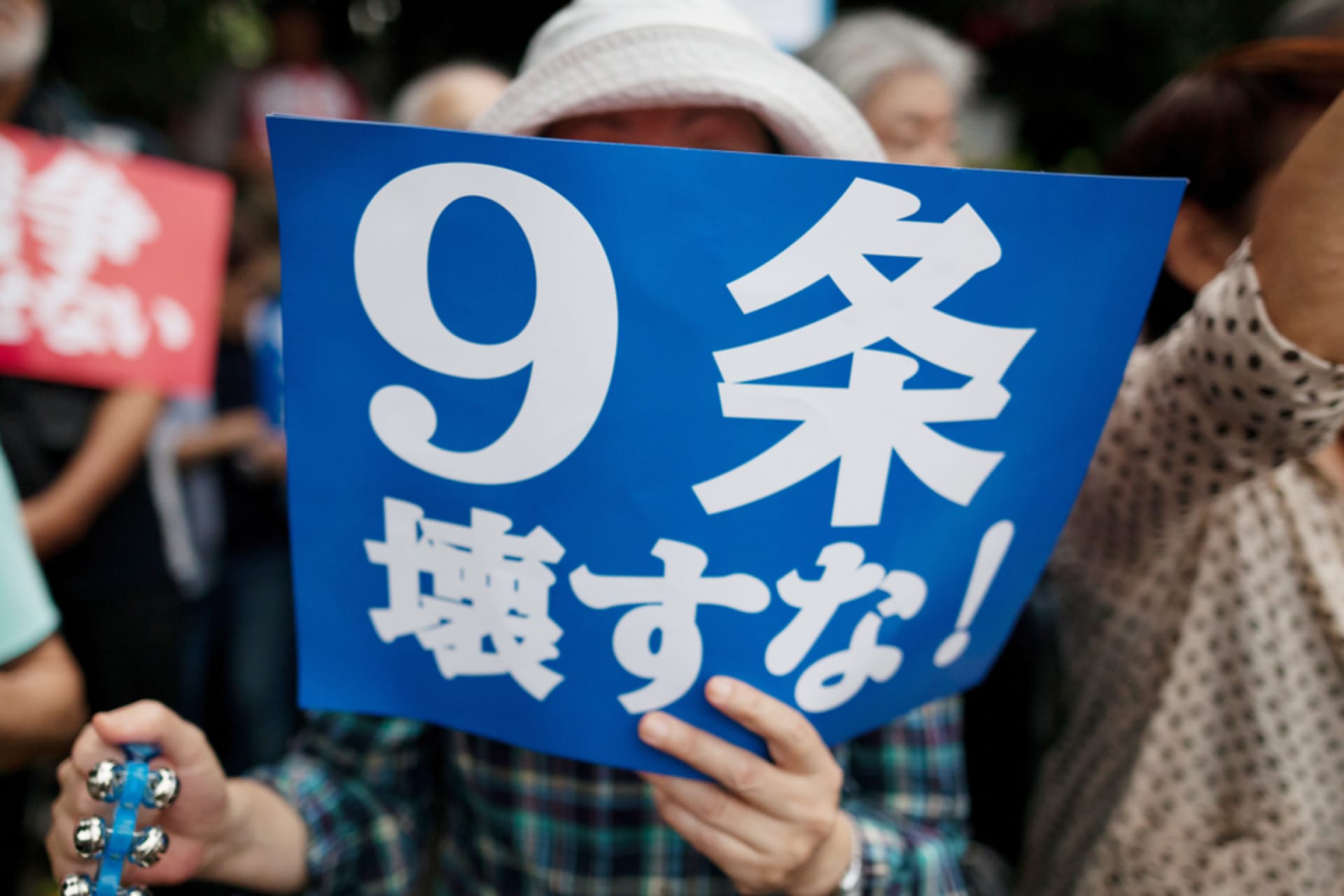
Japan’s constitutional debate is about not simply the document’s past but also the nation’s ability to respond to twenty-first-century challenges.
By experts and staff
- Updated
 Sheila A. SmithCFR ExpertJohn E. Merow Senior Fellow for Asia-Pacific Studies
For over seventy years, Japan’s constitution has remained untouched, a symbol of a reformed nation and a democratic society.
Introduced under U.S.-led occupation in the wake of World War II, Japan’s postwar constitution presented a unique promise: that the Japanese people will never again resort to war to solve international disputes.
The 1947 constitution transformed the lives of Japanese citizens, changing the role of the emperor, diminishing the power of the military, and creating new rights for women.
Today, as democratic practice has come under scrutiny around the world, Japanese citizens too are deliberating how effectively their government works.
Multiple challenges are prompting calls for reform. Japan’s aging population threatens its economic vibrancy. Repeated natural disasters highlight the need for better emergency management, as well as policies to adapt to climate change. The growing military power of Japan’s neighbors raises questions about the country’s defenses. New technologies also raise questions about privacy and citizen access to information.
Japan’s constitutional debate is about not simply the document’s past but also the nation’s ability to respond to these twenty-first-century challenges.
Japan’s Postwar Constitution
Debate over the constitution is not new: for much of the early postwar period, the Japanese were divided over the 1947 constitution. Some welcomed it as Japan’s “peace constitution,” while others decried it as “MacArthur’s constitution.”
The future of Japan was a source of contention among the Allied powers as they began to consider the new postwar order. Within Japan, too, opinions varied over how to reform and rebuild in the wake of Japan’s catastrophic defeat.
Once adopted in 1947, the constitution became a symbol of transformation for Japan, a commitment to a brighter, more peaceful future.
The Politics of Revision
Since its formation in 1955, the Liberal Democratic Party has advocated for rewriting the constitution.
In the 1990s, political realignment brought new parties and new ideas to the debate over constitutional revision. These forces gained influence in the Japanese parliament, while those parties opposed to any amendment waned.
Business and the media too pushed for change.
Today, almost all of Japan’s political parties have put forward their thinking on how to improve the constitution in their policy platforms, yet they differ on the issues.
The proposals for amendment have increasingly focused on governance reform rather than on restoring prewar practices and institutions.
Public Attitudes
While Japan’s politicians are less reticent about amending the constitution, the Japanese public remains cautious.
Politicians moved ahead with parliamentary deliberations on the constitution in the early 2000s, opening broader debate within Japan on the pros and cons of revision.
Roughly half of the Japanese public say they are willing to revise the constitution, but the Abe cabinet’s recent proposals faltered.
Politicians, scholars, and activists alike have joined the conversation, revealing an appetite for debate but no consensus on what to amend.
Japan’s Postwar Constitution
The 1947 constitution altered the relationship between state and society by introducing popular sovereignty. The constitution’s social reforms were transformative, designing a new role for the Japanese imperial family, placing the nation’s military firmly under civilian control, and establishing new rights for women. Those who have argued most strenuously for revision of the document chafe against its occupation origins. More recently, the Japanese people have been more open to thinking about how the constitution could be amended to reflect challenges Japan faces in the twenty-first century.
World War II left Japanese cities physically devastated and over two and a half million Japanese people dead. Those who lived through the war faced immense hardship.
Demilitarization and Democratization
In Potsdam, Germany, on July 26, 1945, the leaders of the United States, China, and the United Kingdom set forth the terms for Japan’s surrender. On September 2, Japan surrendered unconditionally to the Allied powers, and in doing so accepted the premise of democratic reforms.
Allied Occupation of Japan Begins
The Allied powers shared responsibility for post-surrender Japan, but it was U.S. General Douglas MacArthur who shaped the rewriting of Japan’s constitution. On September 2 the Allied occupation of Japan began, after surrender documents were signed on the USS Missouri in Tokyo Bay. MacArthur became supreme commander of the Allied powers and established headquarters in the Daiichi Insurance building, just across from the Imperial Palace.
The Allied Occupation and the Japanese Emperor
Post-surrender planning for Japan focused on the future role of Japan’s emperor. Some allies saw Emperor Hirohito as responsible for Japan’s military expansion across Asia and the Pacific. U.S. diplomat and Japan expert Hugh Borton, who helped draft planning documents for the Allied occupation of Japan, argued that retaining the emperor was the best means of gaining the cooperation of the Japanese people in the reform of their country.
Competing Interests
After the war, Japanese authorities sought simply to amend the 1889 Meiji Constitution. But the Allies wanted a far more ambitious change. In Washington, the U.S. State Department was finalizing its occupation plans, as outlined in the State-War-Navy Coordinating Committee’s document SWNCC 228. In Tokyo, Supreme Commander of the Allied Powers Douglas MacArthur was setting up his headquarters. Meanwhile, the Far Eastern Commission—comprising thirteen countries, with veto powers given to the United States, China, the Soviet Union, and the United Kingdom—was established to oversee Japan’s occupation. MacArthur and his staff felt the need to move quickly, as the members of the Far Eastern Commission were beginning to assert their interests in shaping postwar Japan.
MacArthur’s Three Principles
General MacArthur created three principles to guide the drafting of the new constitution and set the Supreme Commander of the Allied Powers staff (SCAP) to work. MacArthur wanted to make the emperor accountable to the Japanese people, eliminate Japan’s ability to wage war, and create a parliamentary system akin to the British system, abolishing the inherited power of Japan’s aristocracy.
About This Site
This InfoGuide is presented by the Japan studies program of the Council on Foreign Relations and made possible by the generous funding of the United States-Japan Foundation.
We would like to thank the following for their generous collaboration. In particular, we are grateful for the research and archives of:
- Asahi Shimbun
- Center for Japanese Legal Studies, Columbia University Law School
- Constitutional Revision Research Project, Reischauer Institute of Japanese Studies, Harvard University
- Gordon W. Prange Collection, University of Maryland Libraries
- NHK
- Nikkei Shimbun
- Nikkei Research
- Yomiuri Shimbun
The statements made and views expressed are solely the responsibility of the author.
Credits
Sheila A. Smith, Senior Fellow for Japan Studies
Jeremy Fuller, Research Associate for Japan Studies
Erin Gallagher, Research Associate for Japan Studies
Kyle Bezold, Intern for Japan Studies
Spencer Cohen, Intern for Japan Studies
Victoria Edwards, Intern for Japan Studies
CFR Digital
Katherine Vidal, Deputy Design Director
María Teresa Alzuru, Senior Product Manager
Aaron Braun, Design Consultant
Sabine Baumgartner, Photo Editor
Will Merrow, Data Visualization Designer
Karen Mandel, Associate Director of Quality Assurance
Joel Bousley, Lead Developer
Aaron Potter, DevOps Engineer